Tag: London

  • Chiltern Railways : London Marylebone to Warwick

    Chiltern Railways : London Marylebone to Warwick

    Back in London Marylebone, this time for a trip up to Warwick.

    I’ve written about Marylebone numerous times before, but I hadn’t noticed how much housing was demolished to construct it at the beginning of the twentieth century. The concourse of the railway station is where Harewood Square is on this map which is from just before the station was constructed.

    I was as early as ever arriving at the railway station, mine was the 12:34 to Birmingham Snow Hill.

    The platform number wasn’t announced until ten minutes before departure, which I didn’t think was ideal. It’s quite a pleasant little railway station to wait in and I meandered across to Pret to use my coffee subscription. There are numerous other coffee providers, free toilets, plenty of seating and a small selection of shops.

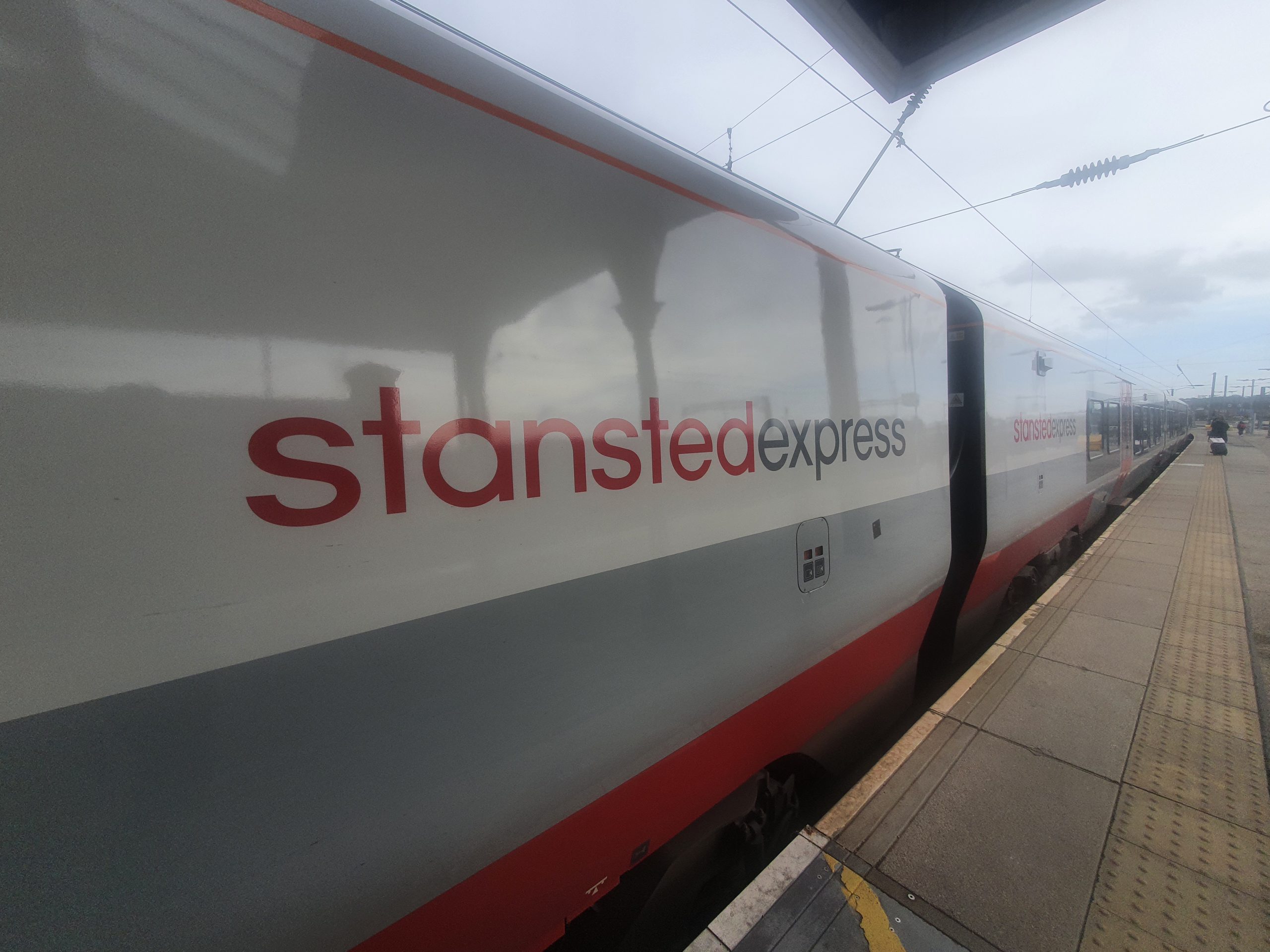
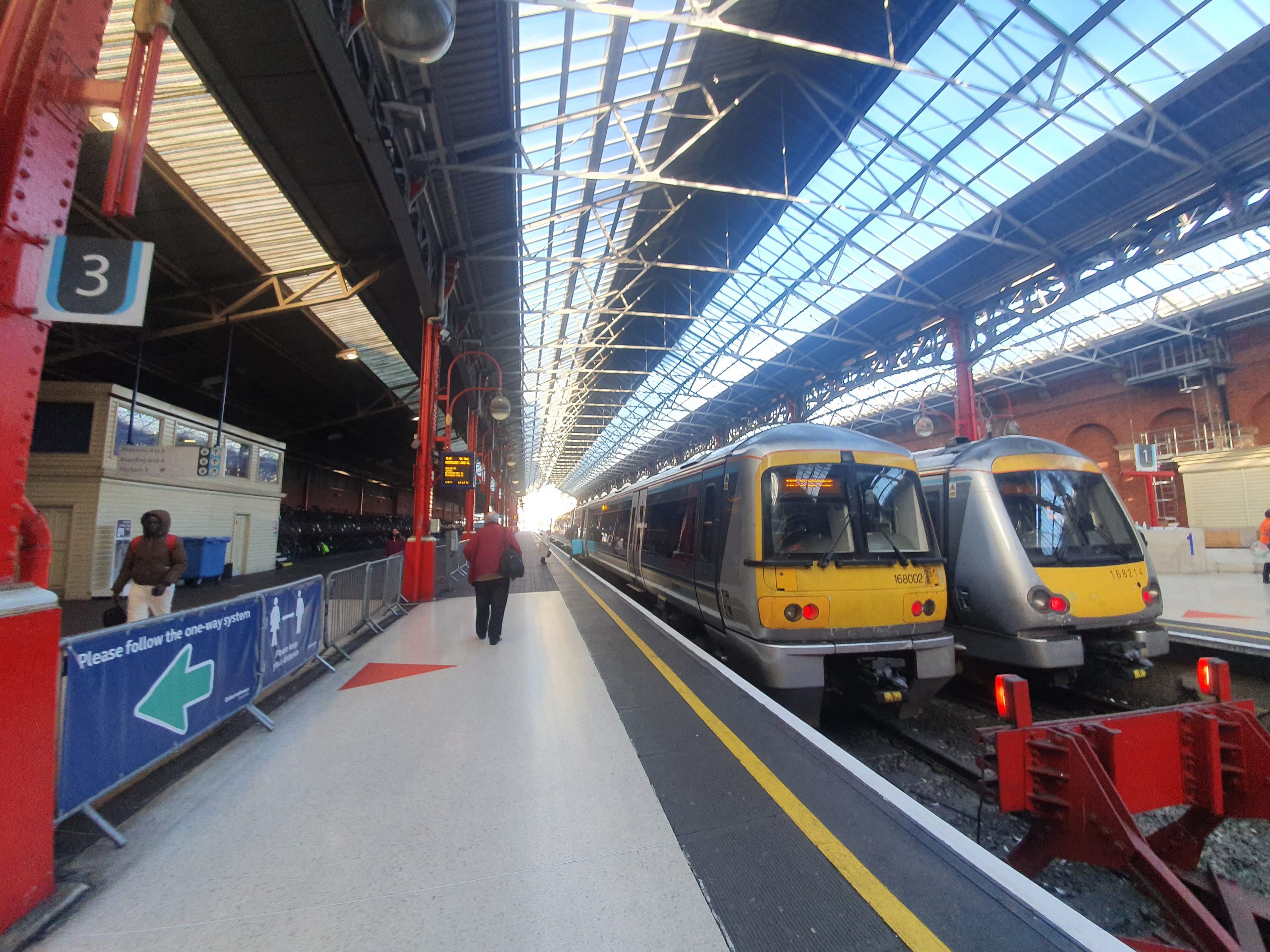
    There’s the Marylebone Thunderbolt on the left (my name for the service, it’s not the official name). Apparently this train is a British Rail Class 168 DMU train, but I had to look that up as I know nearly nothing about these matters. The trains though date from after privatisation, they were built from 1998 to service this route.

    The train was never really that busy and there were plenty of seats available. I got a table and access to a power supply which was handy. My ticket was checked by two different train guards, slightly unusual as I’ve recently rarely been asked to show my ticket at all. It’s a comfortable train, with spacious seats and it was clean throughout.

    And having safely arrived after a journey of just under 1 hour and 30 minutes. The railway station is located a ten-minute walk from the town centre, although there are buses for those who can’t be faffing about.

    And off the train goes to Birmingham.

    I was surprised that Warwick railway station wasn’t a little grander, it’s quite a minimal affair with limited facilities for customers.

    As for the service, it was on time, the train was clean, the staff were polite and the seats were comfortable. The fare cost £10, so I have no cause to be anything other than happy with the arrangement.

  • London – Camden (Borough of) – Shaw Theatre (Recording of the Unbelieveable Truth)

    London – Camden (Borough of) – Shaw Theatre (Recording of the Unbelieveable Truth)

    I saw an advert last week to get free tickets to be in the audience for a few BBC radio shows and television programmes being recorded this month, all advertised by Lost in TV. I applied for a couple of things and got them both, this one being the recording of BBC Radio 4’s comedy The Unbelieveable Truth. I’ve heard it before on a few occasions, although I hadn’t realised that it has been going since 2007.

    The first thing I misunderstood is how early people get here for these performances, I thought that I was arriving early by being thirty minutes before the time required by my ticket. Nonetheless, I go and stand at the back of the queue and wait patiently. A staff member was walking down the queue and that was useful as she told me that I had a priority ticket. I hadn’t given much thought to that, but the people with these decadent tickets are guaranteed a seat and they wait in another area, whilst the hopefuls can queue up to see if they can get a seat. Hence why the queue had formed early.
    The queue that I should have been in was much shorter which was rather lovely. I’m not sure why I had a priority ticket, but that was very useful. The location for all of this is the Shaw Theatre which is about a two minute walk from King’s Cross St. Pancras railway station.

    Everything seemed to be run like clockwork and I got my seat without any issues. There were two episodes being recorded back to back for the next series of the show, even though the current series only starting to air this week. Nothing like advance planning…..

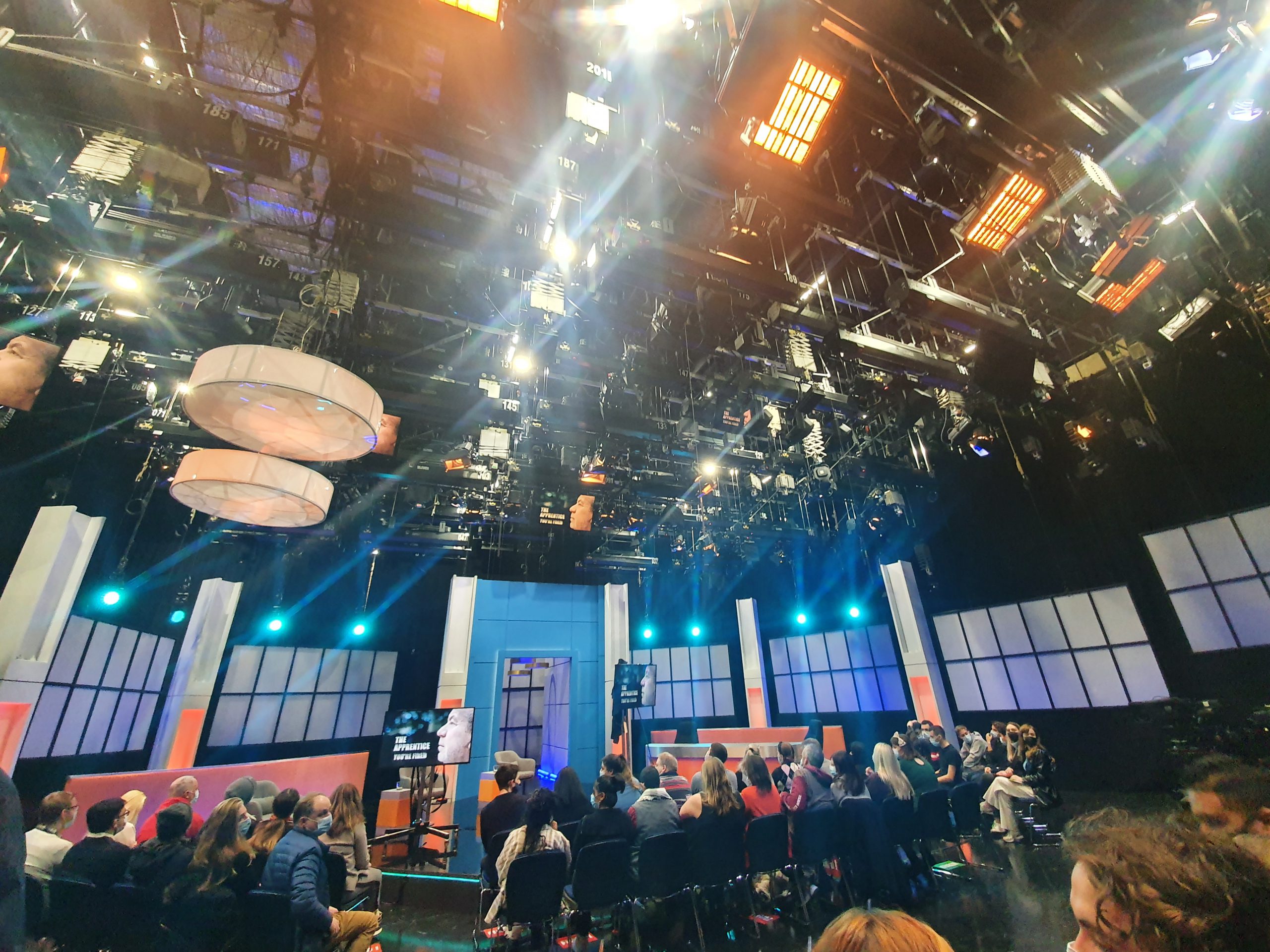
    I noticed that two people were taking photos with flash during the performance and others were recording bits, I’m not sure if the production company noticed or whether they weren’t too bothered. I suspect there isn’t a huge market for advance clips of a Radio 4 show, but I’m sure it’s not ideal. Either way, since lots of photos were taken between the two episodes (and I’ve seen several on social media already, which is the reason I’m justifying posting my photo), and therefore here’s mine. Incidentally, a lot of audience members seemed to think that the bit between the two shows was time to get drinks and have a long toilet break, with David Mitchell commenting an unusually number of people were leaving. But, they came back which was probably a relief to the production company, although the recording wasn’t held up to wait for that.

    I’m sure the contents of the show are not for public consumption yet, but I was impressed with David Mitchell in particular. And I was pleased to see Alan Davies was one of the panellists, but it was all really rather lovely from everyone of course. The producers weren’t sure when the episodes would be broadcast, but I’ll try and remember to listen in to hear just how much gets cut out of things like this. This was also a pleasant evening’s entertainment, especially since it was free.

  • London – Central London – The Hand and Shears

    London – Central London – The Hand and Shears

    There has been a licensed premises at this site near Smithfields since the middle of the sixteenth century, although the current building dates to 1849. I visited it as it’s in the Good Beer Guide and it’s tucked away a little, just behind St. Bartholomew’s Church.

    This location is noted on the list of CAMRA’s Historic Pub Interiors and they think that these signs date to around the 1930s. Usually swept away by endless refurbishments, the two separate areas of the pub still survive.

    The pub is Grade II listed and, since it’s so comprehensive, this is the listed building record:

    “The history of the Hand and Shears in Smithfield can be traced back to the C16. Whilst the name is recorded at this early stage, the plot it occupies and the surrounding street layout are of a slightly later date. The arrangement of Middle Street, between Cloth Street (to the east) and Kinghorn Street (west), is largely the product of the redevelopment of St Bartholomew’s Priory overseen by Lord Rich, for which leases of new properties were issued between 1597 and 1614. An etching of 1811 shows the prominent corner-plot position of the public house and the earlier building’s gambrel roof to Kinghorn Street with its two bar room entrances. The name ‘Hand and Shears’ references the important local cloth trade which thrived in the area, but it also relates to the famed St Bartholomew Fair which was held annually in August from 1133. The history of the Hand and Shears is closely intertwined with that of the fair, with important ceremonial traditions centred on the public house. One such example was referred to by E A Webb in a history of the fair of 1921:

    ‘There used to be a burlesque proclamation, the evening before the [official] proclamation by the Lord Mayor, by a company of drapers and tailors who met at the ‘Hand and Shears’… from whence they marched, shears in hand, to the archway leading from Cloth Fair into Smithfield, and announced the opening of the fair with a general shout and snapping of shears.’ (E A Webb, ‘Bartholomew Fair’, in The Records of St. Bartholomew’s Priory and St. Bartholomew the Great, West Smithfield: Volume 1, 1921, p300).

    As with other public houses positioned close to markets or fairs, the Hand and Shears hosted what was known as a Pye Powder Court (the name originating from ‘pied puldreaux’, an old French term for a pedlar). From the medieval period, such courts had responsibility for keeping order and settling disputes between merchants and the public at markets and fairs. The court held at the Hand and Shears became particularly notable owing to the notorious vice and disorderly behaviour associated with the Bartholomew Fair. A sense of how the court would have appeared and functioned can be gleaned from a drawing of a session held in the panelled dining room of the Hand and Shears, published in Londina Illustrata in 1811: this shows the Pye Court judge at his bench with his secretary presiding over a dispute between two actors in theatrical dress. Ultimately, the scandal and excess drove the authorities’ efforts to supress it. This culminated in the prohibition in 1843 of all performances and shows, which inevitably caused the popularity of the fair to wane. A report from the Illustrated London News dated the 5 September 1846, lamented the consequent decline of the Pye Powder Court, where its duties had been ‘confined to the receipts of piccage, stallage and tollage’. The suppression of entertainments and the consequent lack of interest meant that, on the eve of the feast of St Bartholomew in 1850, ‘the mayor found no fair worth proclaiming’ (Webb, p317).

    The decline of the Bartholomew Fair broadly coincided with – possibly even brought about – the redevelopment of the Hand and Shears and several neighbouring buildings. The rebuilding of the pub along with the adjoining house at 2 Middle Street was undertaken in around 1850 (sources record alternative dates of 1849 and 1852). The earliest known plan of the building’s bar arrangement is in a conveyance dated 1857, showing a similar configuration to the present arrangement, though with a smaller island counter and the stairs in a different position. The plan demonstrates that the main bar was entered from the corner door, with a private bar and distinct back parlour to Kinghorn Street, as remains the case. To the east, along Middle Street, was a large rectangular dining room with a specified area for bagatelle at its south end. The work of around 1850 appears to have been a private venture (the pub not being tied to a brewery at this stage). However, by 1872, the site was in the hands of the Whitbread Brewery. Save for a brief two-year spell when the freehold passed to the Lion Brewery, the Hand and Shears remained the property of Whitbread until 1896, when it was acquired by Barclay Perkins. In the same year the interior saw some remodelling, with a new internal vestibule added to the Kinghorn Street entrance, the island counter and stairs being reconfigured and a small office added at the back of the dining room. According to the plans, the proposed alterations were ‘before the Bench’ (the licensing magistrates) in February 1896 and were complete by December.

    Into the 1920s some minor alterations were undertaken. In April 1920, plans were produced by F G Newnham (Barclay Perkin’s chief architect) to reposition the stairs to the cellar in order to extend the saloon bar (the same bar room formerly marked as the ‘parlour’). It is probable that this phase of ground-floor work also included the introduction of some of the present bar room windows and the two brick and tile fireplaces, which are characteristic of the period. Six years after the work to the ground-floor rooms, Newnham produced plans to introduce a new service area with a hatch for the first-floor dining area, followed in 1929 with a plan to integrate an adjacent sitting room and the main dining room. This investment prompted a remarkable boom in lunch and dinner sales: the pub recording that in 1930 it served 28,500 meals during the year, this increasing to 650 per week in 1931. Among those served were some esteemed visitors, including Prime Minister Stanley Baldwin on 20 October 1930 and, on 11 February 1931, Winston Churchill.

    Since the inter-war work there have been only minor changes to the Hand and Shears. In 1962, the merged Courage and Barclay Brewery added a women’s WC in part of the former yard area to Kinghorn Street (accessed via an inserted door from the saloon bar). This has since been replaced with a first-floor WC and the rear passage now has steps from Kinghorn Street leading up to the first-floor level. In 1982-1983, the pub had to close for 18 months following structural damage caused by piling at Founders’ Hall on the opposite side of Kinghorn Street. Work was subsequently undertaken to strengthen the existing floors (consented in 1989), with new steel columns and beams inserted to the ground, first and second floors. The pub fittings, including the bar, screens and panelling were stored and reinstated whilst this was undertaken. In addition to the structural work, sensitive refurbishment of the ground-floor expanded the men’s WC into the rear (Middle Street) bar; this phase of work also involved the installation of the diagonal shelving over the servery, the replacement of the original iron columns and the reuse of an existing timber screen to create the counter in the first-floor room.”

    I like that Winston Churchill and Stanley Baldwin visited the pub and by all accounts, the venue hasn’t been that much changed since the popped in for their lunch. I’d confidently say that they aren’t doing 650 lunches per week today, but there is a function room upstairs that allows them to host larger-scale dinners and events.

    Warm and homely, with a fire going. This is the old saloon bar area of the pub and is probably the section that I wouldn’t have been in back in the day, I suspect I’d be saving a few pence and sitting in the public bar.

    The main bar servery and this really is a delightful venue. The staff member was helpful and personable, so it felt like an inviting pub and I liked his engagement. There’s plenty to look at in the pub in terms of heritage and I’m pleased that this hasn’t been turned into a high-end gastropub. This is one of the advantages of the Good Beer Guide, it’s highly unlikely to send me into an expensive pub which is mostly all about the food. They do serve lunches here, but one of their strengths judging from reviews are their sausages rolls and pork pies. A review said that there was no jelly inside the pork pie inside which disappointed them, but it would have surprised and delighted me.

    One negative review of the pub was:

    “The place itself is grimy and very old – it is in desperate need of refurbishing. I wouldn’t go there again.”

    And this is why companies refurbish places, they think it makes them better. But stampeding through this pub with a modernising plan would simply make things worse. Incidentally, everything was clean and organised on my visit, it was all really rather comfortable.

    The beer choice was a little limited, but the Stiff Lip from Portobello Brewing was well-kept and at the appropriate temperature. I liked the surroundings of this pub and two American tourists came in who were merrily enthusing about the heritage and authenticity. The staff member said that the pub had very few customers last week, but it had picked up a little this week, but these remain challenging times for the hospitality industry in this part of London. I very much liked the pub though, the staff member was a clearly competent barman and he made the effort to engage with every customer, welcome them and say goodbye when they left.

    Definitely a very worthy entry into the Good Beer Guide.

  • London – Tower Hamlets (Borough of) – Travelodge London Central Aldgate East

    London – Tower Hamlets (Borough of) – Travelodge London Central Aldgate East

    On my third and final Travelodge of my current trip, this is their outlet in Aldgate, a short walk away from Tower Gateway DLR and a relatively short walk away from Aldgate East Underground. It was on their special cheap deal which they’ve been running recently, otherwise I wouldn’t be spending the usual prices that they charge here, as this hotel can frequently be over £100 per night.

    I was welcomed with this and I thought I’d patiently wait whilst the staff member returned. A cleaner walked by after around three minutes and mentioned he’d get a staff member, which he did. I was moderately annoyed to discover that there was a manager in the office behind reception, he had just shut the door rather than deal with customers. Not ideal, but I wasn’t particularly inconvenienced time-wise as it was only three minutes.

    The set-up here was the oddest I’ve had at a Travelodge and relates to the fact that they have a passageway through the middle of their hotel. I support the right of old paths to be maintained, but this meant at this hotel that guests needs to walk through one door (reception is off through the right-hand door) to another (the rooms are through the left-hand door). It also meant that they needed to give me a key fob for one of the doors, even though the rest on my walk to the room just used the standard Travelodge swipe card.

    There’s the passageway through….. The hotel itself is located on Chamber Street, an odd little backstreet which runs by the railway line, and the road has a slightly dodgy feel to it. It used to be called Chambers Street and there’s an entire Wikipedia page about it at https://en.wikipedia.org/wiki/Chamber_Street. I noticed the shrapnel damage that it refers to, and that is being kept (or at least it’s still there and they’re working around it) as part of the new building project that they’re currently working on.

    The arrangement to get to the rooms and I’m surprised they didn’t just put offices or conference rooms here, as it all felt a bit odd. However, I suppose it’s no different to a motel where you go outside to get to the room, but it seemed unusual. I didn’t go off exploring for fear of setting alarms off, but I think that if they really want to then guests can use a staircase at the rear here to go up a floor, then walk through the hotel on the first floor and then back down the other side, avoiding the need to go outside.

    The room which felt like a prison cell with those high windows, but it was spacious and fitted out to brand standard. There was an ironing board in the room which is unusual for Travelodge, but I don’t concern myself with such fripperies. There was very little noise internally, a little more externally but nothing that proved to be annoying.

    The bathroom, which was larger than standard, a legacy of the strange building that the architects had to work with.

    The reviews of the staff are very positive, coming in at 4.7 out of 5 on Google, which is particularly high. The rooms are less popular, not least because a lot of them face the railway tracks and there are plenty of reviews about the noise issues caused by that. I think that I would have preferred a railway view as they intrigue me and I’m not put off by the noise, but the hotel might by default try and put people at the front of the hotel to minimise noise.

    I was quite happy with this hotel, especially as it cost under £25 per night, which is a ridiculous price for central London, although I booked it at a time of uncertainty (in the world, not in my life). The hotel could do with a bit of a refurbishment to replace the stained carpets and broken things, but that’s true of very many Travelodge hotels which take quite a battering from guests.

  • London – Lambeth (Borough of) – Winter Walks at Clapham Common Underground Station

    London – Lambeth (Borough of) – Winter Walks at Clapham Common Underground Station

    Just a photo, but I liked it, one of the roundels at Clapham Common underground station has been replaced with a “Winter Walks” sign. I approve…..

  • London – Southwark (Borough of) – Fourpure Tap Room

    London – Southwark (Borough of) – Fourpure Tap Room

    I’m slowly working my way through the Bermondsey Beer Mile bars, and anything close to them, which is difficult navigating the often wrong opening hours of venues. Fourpure was open, but it’s bloody hard work to find it, for anyone not sure, get close and then walk by Screwfix and then under the above bridge.

    In an unusually sociable moment, I noticed three people trying to find Fourpure and so I tagged along behind them whilst we agreed it was hard to find. I’m glad I did as it’s difficult to find the door and then when we got in, it all seemed to be deserted. I found the lack of signage a bit odd, but perhaps there’s something of the thrill of the chase that the breweries want.

    Enter here, which is easier to see when there are people sitting at the tables, which there weren’t when we approached it.

    Inside, whilst the other three people went to look for someone and I just hung about taking photos.

    The venue’s offerings are on Untappd at https://untappd.com/v/fourpure-brewing-co/1201218. There were a few guests, mostly from Magic Rock who are their sister company. There was only one darker option, which was a Fourpure beer that I’ve already had, which was slightly disappointing, but not surprising.

    I’m not a huge fan of Fourpure’s beers, I always find them a bit generic and unexciting, but I ordered two beers (just as thirds) which were the only core beers in the range that I hadn’t previously tried. They tasted OK, but I wouldn’t order them again as they weren’t of any great note. I’m also not keen on calling this craft beer, as they’re owned by Lion, an enormous brewer who have poured money into new equipment here. And slowly but surely, they’ve managed to deliver something as sterile and mundane as the other brewers.

    As for the taproom, it was clean and modern, with charging points dotted around the place which was handy. It was a bit cold inside, although fine for me, but there were heaters available at the press of a button for those who wanted them. The team member wasn’t rushed off her feet it’s fair to say, but she was friendly and engaging. All perfectly jolly, but it felt formulaic and like something a multi-national would build, which isn’t really what I’m looking for.

  • London – Central London – Punch Tavern

    London – Central London – Punch Tavern

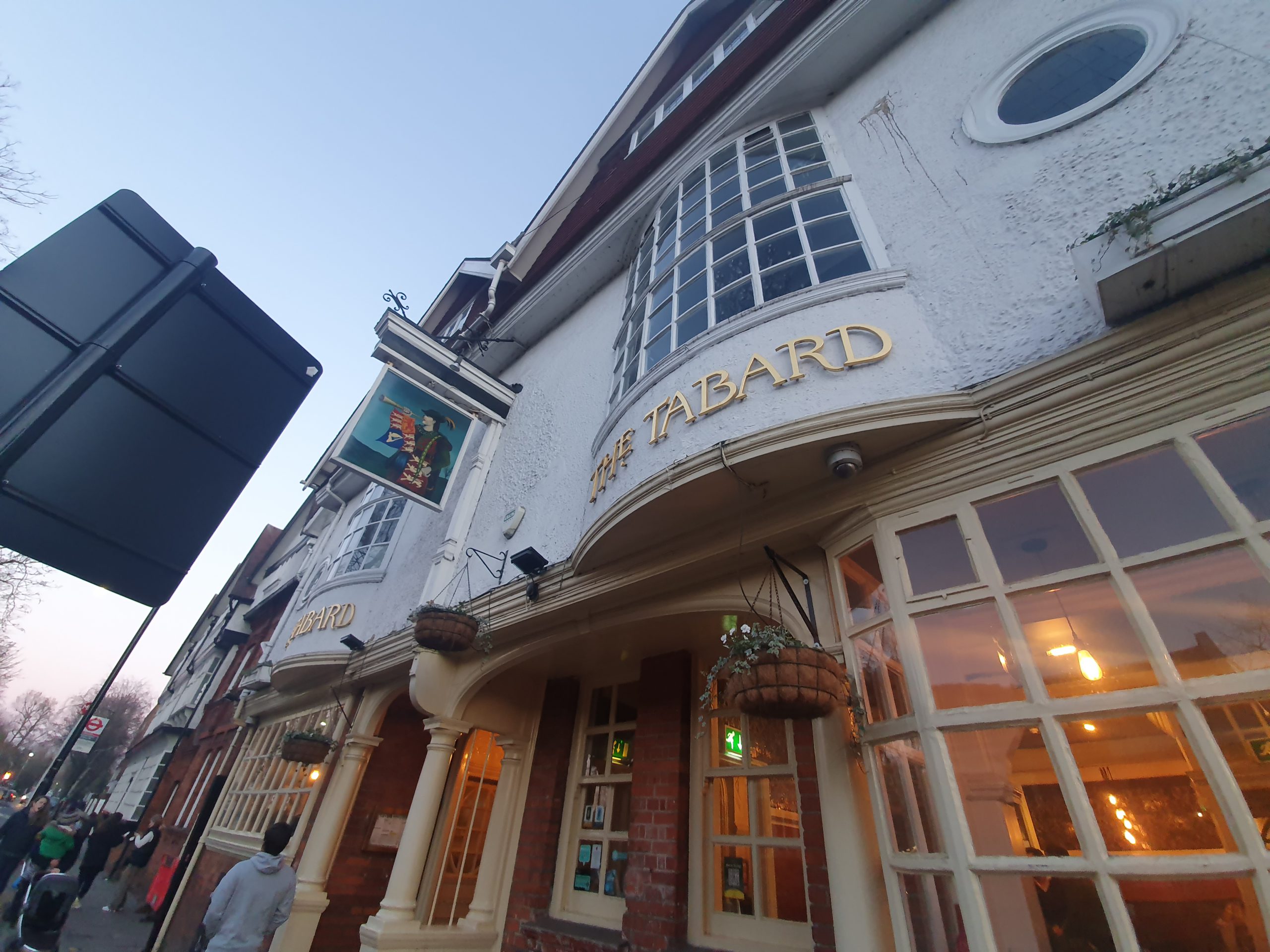
    This is some frontage for a pub and it’s the Punch Tavern located on Fleet Street, operated by Urban Pubs and Bars. I’m trying to visit some of the pubs in London city centre that I haven’t been to before, traditionally because they’re too busy.

    Once a gin palace, and it still has plenty of gins to choose from, it took its current name not from the dreadful Pubco, but from when Punch Magazine staff used to drink here. Every newspaper and major magazine on Fleet Street had its own pub their staff used and they must have drunk a lot at Punch as they had only been publishing for a couple of years when the pub named themselves after them.

    CAMRA have added it to their list of historic pub interiors, noting:

    “Rebuilt in two phases by Saville and Martin, first the main part of the pub and the Fleet Street frontage in 1894-5 and then the Bride Lane frontage with a Luncheon Bar behind in 1896-7.”

    A nicely decorated corridor into the pub, necessitated by the shopfronts on either side of this narrow entrance.

    It wasn’t packed with the customers in the pub, although a group on some sort of tour did pop in later on.

    The Hophead from Dark Star Brewing, which is a perfectly acceptable beer and it was well kept here, and at the appropriate temperature. It was also the only real ale available, so it was fortunate that they had a reasonable one and not Greene King IPA or similar. When things return to some form of normality a pub like this is going to need more choice than this though, it’s not ideal at the moment.

    This pub has a much stronger selection of gins, but there are some bottled beers (clicking on the image makes it bigger).

    The service in the pub was friendly and engaging, so it felt like a welcoming and comfortable place to visit. It’s also a very large venue, there’s a room at the back and additional space for private groups. The reviews are generally positive on-line and the manager answers them politely and professionally, which is usually a good sign. Anyway, everything felt well managed enough, but the beer options aren’t sufficient to want to tempt me back, even though I liked the environment.

  • London – Central London – Ye Olde Cock Tavern

    London – Central London – Ye Olde Cock Tavern

    I’ve meant to visit this historic pub on Fleet Street on numerous occasions in the past, but it’s operated by Greene King and that’s always put me off. However, it’s important to support the hospitality industry and so I thought I’d have a little visit since I was walking by.

    Indeed inspirational, but a slightly odd quote for a family pub, but there we go. Although to be fair, they can hardly advertise their beers given the choice they have inside.

    Slightly hard to read from this angle (I was avoiding my reflection being in the photo) but it reads:

    “The Cock was opened in 1888 with the original fittings from the original tavern on the site of the branch of the Bank of England opposite. The records of the tavern go back to the early seventeenth century. Pepys says “April 23 1668, to the Cock Alehouse and drink and eat a lobster, and sand and…. and then Knipp and I to the Temple again, and took boat, it being darkish. And to Foxhall, alas there are now no Vauxhall Gardens where we can take our Knipp but there is still the Cock.”

    The pub was visited by men like Pepys, Samuel Johnson and Charles Dickens, but they visited the pub that had stood since 1546 on the other side of the road. And the historic fittings brought across in the late nineteenth century were mostly destroyed by a fire in 1990. There’s still a depth of heritage here, but it’s a bit tenuous in places.

    Another history of the pub.

    As for the pub itself, this is a mess. The toilets had no hand-dryer, just a sign saying it was broken, but there was no thought to an alternative provision of hand towels or the like. There was no acknowledgement at the bar which didn’t concern me, but is unusual at the moment given how quiet pubs are. However, it was seeing the ‘exciting’ beer selection of Greene King IPA and bloody Rocking Rudolph which they were trying to discount at £2.50 per pint (I added the bloody BTW, that isn’t the beer name) that made me give up. These are not interesting beers (to me at least, and indeed to few people judging by their Untappd scores) and although there are some generic cask options, I lost heart at this effort from Greene King. There are so many good beers in the world, why do Greene King keep insisting on shying away from quality?

    Anyway, if Greene King don’t care about their pub, then nor do I, so I went to find another venue for a quick drink. I will say that there was a wide selection of gins, which would have once been one of their staple products so there’s some continuation of history there. Greene King make little effort to explain the history of the pub on their web-site and it’s a shame that another operator isn’t in control here. Mainstream as Nicholson’s might be, they’d put a touch of elegance into proceedings, and even JD Wetherspoon would do a far better job although the venue is a little too small for them. Maybe one day a pub like this will be independent and have owners that it deserves given its heritage, even if that heritage is a bit loosely defined.

    Moan over for the day.

  • London – Westminster (Borough of) – Only Fools and Horses The Musical at the Theatre Royal Haymarket

    London – Westminster (Borough of) – Only Fools and Horses The Musical at the Theatre Royal Haymarket

    I’m not normally a theatre goer, but my friend Nathan, who likes his culture and opera, mentioned a company called TodayTix who offer discounted theatre tickets. I noticed a ticket for the Friday night performance of ‘Only Fools and Horses – the Musical’ was available for £10 plus a £3 booking fee, but I also had a £5 discount voucher for having just signed up, so that meant I got a ticket for £8. It’s fair to say they’re normally more expensive than that, but this price suited me best.

    I arrived at 18:45, the earliest they allowed entry, as it said they were doing checks of Covid passes and the like. It transpired they didn’t do any of that, which is odd given their commitment to the process on their web-site. I didn’t mind them not doing the checks, but they might as well remove the instructions that say they’re a requirement if they’re not.

    The theatre holds 888 people, some down below in the more expensive seats, but there are also some above as well. When I purchased the ticket there were some seats available which had a restricted view, but mine was unrestricted, albeit quite a way away.

    I liked my seat of H1 (and I never knew that there was a site such as https://seatplan.com/ where seats are reviewed, a bit like the ones for aircraft), which was at the rear of this section with a lot of legroom as it was on the curve, which also meant space for my backpack which I decided to take out for the evening (I didn’t deliberately bring it out for a treat, I still had it from never going back to the hotel in the day). There were two people seated next to me on the left and I had the wall to my right-hand side. There was one boorish theatre-goer that the staff were struggling with at the beginning, and had to go back to warn later on, but he was more harmless and drunk than a serious problem, but I was glad that he wasn’t seated anywhere near me.

    The Royal Box, where my wealthy friend Gordon would sit. He will never read this, so that’s fine for me to note here.

    This photo is from the curtain call, as they asked for no photos during the performance as it disturbed other audience members. Since there was no-one behind me and I noticed others took photos at this point at the end of the performance, here’s my little effort to give an example of the stage.

    I’m not a theatre critic, so my observations aren’t going to be overly deep and meaningful. This though was a performance that I lost track of time of, so that’s a good sign, I’m normally hoping the end comes soon when watching films at the cinema, my attention span already snapped.

    For nearly all of the characters, it was easy to forget they weren’t the real actors playing the parts, so was the quality of the impersonations. Tom Bennett played Del Boy and Ryan Hutton played Rodney, both convincing and capturing the appropriate joie de vivre. Jeff Nicholson as Boycie was a clear favourite of the audience, an impeccable performance and indeed laugh. Unfortunately, John Challis died a few weeks ago, but Jeff Nicholson mentioned that he had been a helpful guide throughout to his performance.

    Paul Whitehouse played Granddad and Uncle Albert, and had particularly caught the mannerisms of the latter, in a suitably exaggerated style. Although a musical, there were long sections of dialogue and the balance seemed entirely appropriate, with old jokes from the series blended in along with new ones crafted in. They managed to get Waterloo Clock into the performance, as well as the three-wheel van, with no end of complex stage changes. The complexity of these and knowing where to stand is impressive in itself, I’m not sure how individuals can remember so many lines of dialogue, dance and be in the right place throughout.

    There were some obvious moments recreated, such as when Del fell through the bar, although no recreation of the falling chandelier, just a reference to it. The performance was fast-paced and the quality of the script was high, although some of the songs felt rather more worthy than others and almost felt included because they’d called this a musical. Maybe the story-line also jumped about a bit, but it remained coherent and it was always faithful in its intent to the original television programme. A chunk of the scripting had been done by Jim Sullivan, the son of the original author of the series, John Sullivan.  Anyway, I was very pleased with my £8 ticket, entirely recommended.

  • London – Westminster (Borough of) – The Ship & Shovell

    London – Westminster (Borough of) – The Ship & Shovell

    A quiet London gave me chance last year to visit a lot of Good Beer Guide pubs in the city which always looked too crowded to get in before. I’m not sure that’s ideal for the hospitality industry, but it certainly allowed me to see some historic interiors and venues packed with atmosphere. The Ship & Shovell is a new addition to the Good Beer Guide that was only added in the new 2022 edition of the book a couple of months ago.

    Unusually for a pub, it’s split in two opposite parts each side of the lane (the pub notes that this is unique in London), although it’s also apparently connected by the cellars which also contain the pub’s kitchen. This side was closed off when I visited, but it’s a handy way of having additional capacity. It’s located on Craven Passage, which is located underneath Charing Cross railway station.

    Here’s the site in the 1890s, with the PH in the middle of the map marking the main part of the pub today, but there’s nothing marked on the extension bit. The building was listed in 1970, with the listed building record noting:

    “Former pair of terrace houses, as one public house. c.1731-32, refaced late C.18 and with late C.19 public house front. Yellow stock brick, slate roof. 3 storeys and dormered mansard. 5 windows wide (3 windows to No. 2 and 2 to No. 3). Ground floor has wooden public house frontage with panelled and glazed doors and bar windows articulated by Corinthian pilasters carrying entablature-fascia. Upper floors have recessed glazing bar sashes under flat arches with stucco voussoirs. Parapet with coping. Pub interior retains good late C.19 mahogany bar fittings and some engraved glass. As originally built part of the Craven family’s C.18 development of their Brewhouse property; c.f. Craven Street.”

    The bar area, all nicely presented and there was a friendly team member who welcomed me as soon as I arrived at the bar. Indeed, the service was always personable and engaging. The pub is only taking cards at the moment for payment, and they take Amex (although I only saw that sign after I had paid with a different card).

    The ship element of the pub’s name is reflected here in the fireplace.

    The pub is operated by Hall and Woodhouse Brewery, so their beers dominate here. There are plenty of draught (or draft if you prefer) options as well as bottles. There were no dark beers available on draught, but there is an interesting looking milk stout Milk Made which is rated 3.84 on Untappd, so I might ask for that next time I’m in one of the brewery’s venues, of which there are six in the city centre.

    I rather liked the food menu, which I think is more substantial at lunchtime, but this caters for most snack tastes (well, no Wotsits I accept, but they do have Mini Cheddars) and there’s a 3 for £5 offer on. The prices for the drinks seem to be around £5 to £6 a pint, which is realistic given the central London location. I can imagine that when London is back to some form of normality that venues like this will be crowded once again, especially at 15:45 on a Friday evening which is when I visited.

    The on-line reviews for the pub are broadly very positive and they’ve clearly pleased CAMRA for their members to list it in the Good Beer Guide. Looking for the negative comments that are sometimes exciting, there’s a complaint and 1/5 star review which notes:

    “No preseco or sparkling wine, bar man just wanted to sell pints and bottles !!”

    Good.

    And another 1/5 complaint about a cold Scotch Egg that wasn’t reheated in a microwave. Personally, I’d rather have a cold Scotch egg and I can’t recall being given one that the pub has microwaved. And a 2/5 star rating from a customer that wasn’t allowed to use the tunnel.

    Anyway, welcoming staff, a clean venue and a laid-back and comfortable atmosphere, so it seems to me like an appropriate and sensible addition to the Good Beer Guide. One of the better options for anyone waiting for a train to depart Charing Cross railway station.