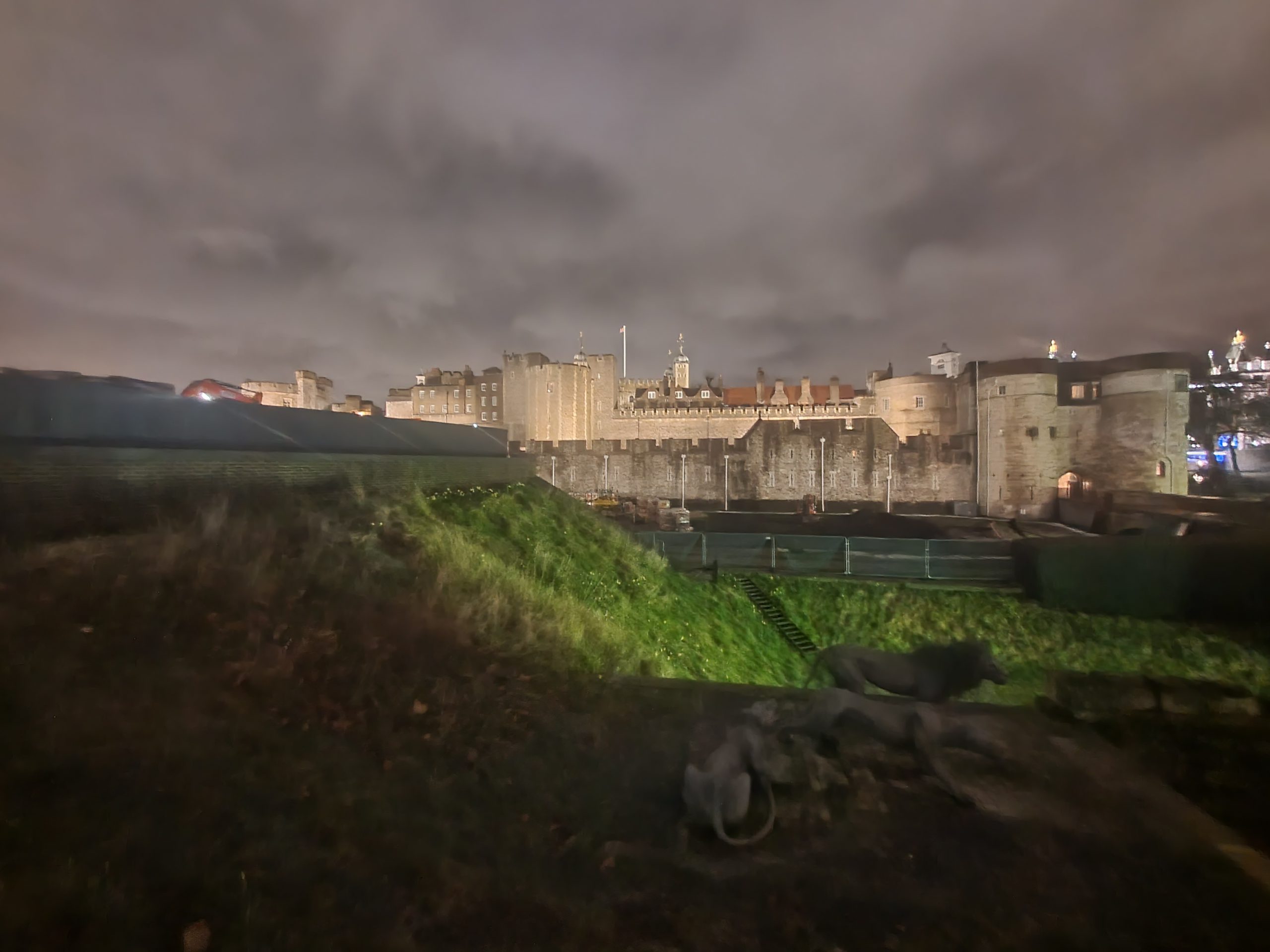
Last year I went to look at the poppies that they put in the moat of the Tower of London, this year they’ve dug the moat up to grow wildflowers. As an aside, I still think it’d look better with water in it, but it’s been a dry moat since it was drained during the nineteenth century.
The Tower authorities are making some big holes around the place as they’re planting 20 million seeds this spring so that they flower from June to September, to mark the Queen’s Platinum Jubilee celebrations. There will be chance to walk amongst the wildflowers, but I imagine that’ll be expensive, so I’ll just return in a few months to take photos from the same elevated position. I’m sure it’ll look impressive when the flowers grow (and probably play havoc with my hayfever), it certainly looks like they’re going to a lot of trouble to get it right.
And as an aside, here are a few more photos of the exterior of the Tower of London at night whilst I was meandering around it.
This visit to the Hard Rock restaurant at Marble Arch is from a couple of weeks ago, another funded by a promotion from The Fork.
Like another customer, I tried to be seated away from the stage, but they’re not having any of that. This has happened before and I think the staff are privately slightly annoyed that the restaurant is paying for entertainment, this is a music venue and that customers are trying to sit away from it. Fortunately, the music wasn’t too loud and seemed to my highly untrained ear to be suitably professional.
I was aware of the restaurant’s limited beer choice before going, but this was a tolerable option. It’s expensive at £5.50 and although I wasn’t paying, that really is at the high end of the scale. There are other options, such as a pint of Heineken which costs £5.95 and a Birra Moretti which costs £6.75. This isn’t a venue that will much care what CAMRA think, but they charge significantly more proportionally for a half than for a pint.
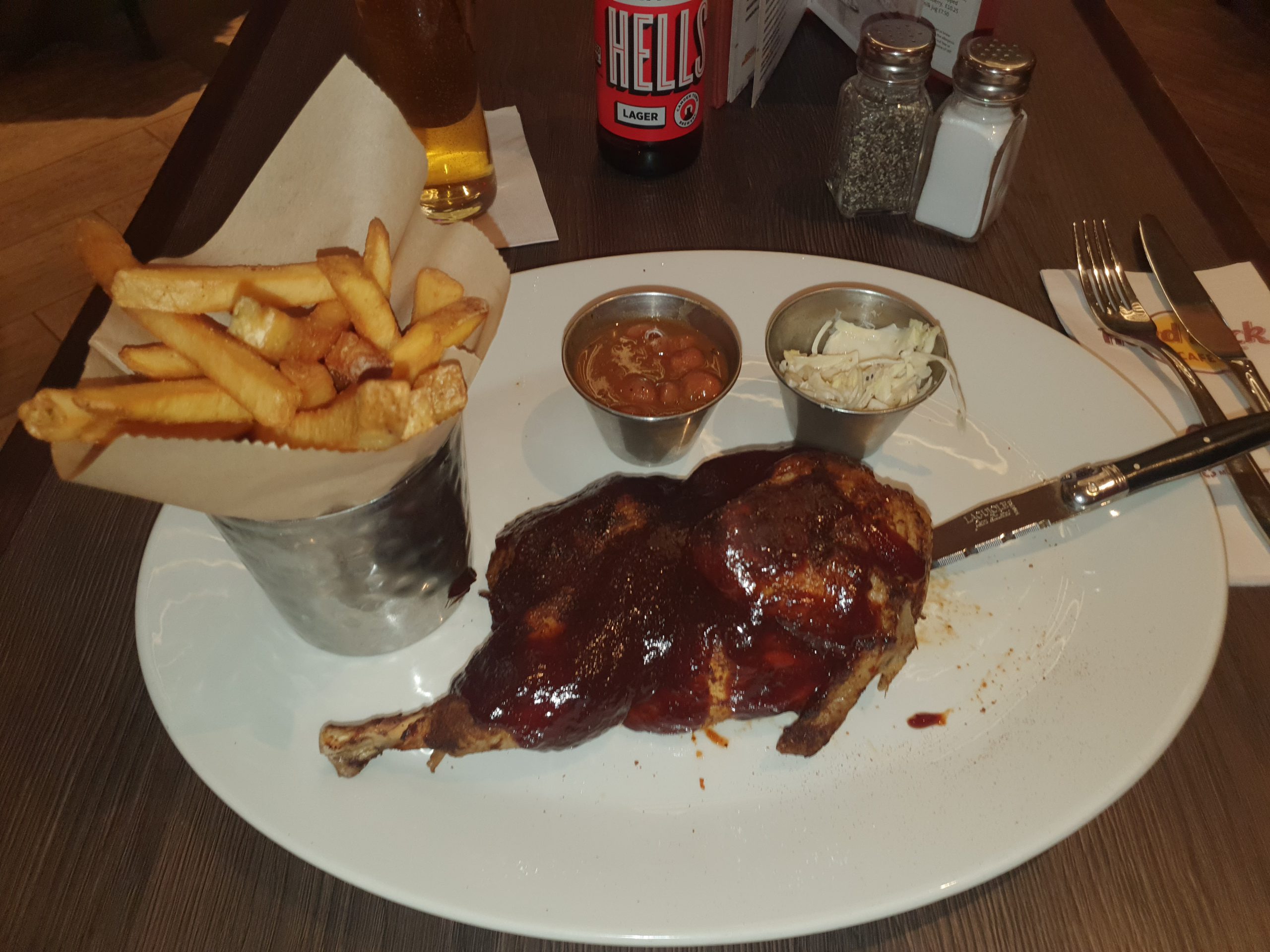
The BBQ chicken with fries, coleslaw and ranch style beans. This is a photo of the second meal, as the chicken they brought over on their first attempt was cold in the middle. I think they’re brought in pre-cooked as the chicken was entirely cooked, it was just cold rather than raw. I always have a moment of wondering whether the meal is tolerable to avoid having to waste it and complain, but it was fridge cold in the middle and that was far from ideal.
The staff member was apologetic and took it away immediately, and the wait for a new meal wasn’t too long. The chicken was tender and moist, with the half a chicken portion being entirely sufficient. The chips were the usual fluffy on the interior and firm on the exterior arrangement, with the coleslaw being of a good quality but rather sparsely portioned. For those paying full price, the meal would be £16.75, which isn’t cheap, but isn’t entirely unreasonable given the location and prestige of the restaurant. Although hopefully usually they’ll cook it properly.
The atmosphere in the restaurant was comfortable and the staff were attentive and polite, so the experience was once again positive. The number of offers here seem to be reducing, so I imagine that they’ll be gone nearly entirely in the next few weeks as the number of customers starts to return to normal. Anyway, I’d merrily recommend the restaurant, but would still recommend going on a voucher offer…..
For legal reasons (I don’t want to be sued) I usually have to be careful about blogging about group trips, but I’ve received permission to blog about a trip to London in late February that I think eight or so of us are going on. This is just a little trailer post and I like blogging weekends as they’re good for access numbers on this blog (mostly Gordon’s legal team) and so I need little convincing to do them.
We’ve been planning this for a while and this was initially meant to be a trip to Amsterdam, but Omicron and the like means it’s just a little too early for some of our party to want to go there. We’ll do a foreign overseas trip later in the year if this weekend doesn’t end in arguments and a punch-up.
It’s a cross between a walking weekend and a drinking weekend, but it’s mostly the latter, although this might not be clear to all of the group at this stage. Steve focuses on the walking arrangements and I focus on the drinking arrangements, because walking can lose its excitement without lots of beer. I’ll also put myself in charge of most of the food arrangements, although that will be less of a surprise to the group.
The itinerary is something like:
Fri 25 Feb: Bermondsey Beer Mile (1 mile / 17 breweries/pubs)
Sat 26 Feb: Tracing the line of Falcon Brook (8 miles, 6 pubs)
Sun 27 Feb: Walking the Monopoly Board (14 miles, 7 pubs)
Mon 28 Feb: Limehouse to Little Venice along the Regents Canal (9 miles, 7 pubs)
And Goose Island is booked for the Saturday evening, wooo!!! Now that is a delight and I can almost taste the decadent drinks already. Gordon is bringing cash to buy a barrel of the Bourbon County Stout as he’s kind like that.
Names to be confirmed, but we likely have the following:
Steve – supreme leader of one of Norfolk’s best walking groups, he’s cool, calm and very collected. Annoyingly photogenic, smooth and really lots of things that Gordon would want to be. Knowledgeable about cars, he’s going on a pilgrimage in a few months and I hope he’s quieter than when Gordon went shrieking along it.
Sarah – becoming one of the strongest walkers in Norfolk, she’s now entering LDWA events like a champion. A bit huggy, but I don’t say anything.
Andy – after strolling out bravely into the waters on the St. Cuthbert’s Way trip, nothing phases him. Steve nearly had us drowned doing that walk, but Gordon and I don’t mention that any more. Richard and Andy will be able to discuss sandals.
Gordon – he retired early in his 40s and now lives in Old Catton in a private gated community. Quite an exotic and challenging character, he is always good for telling gossip. He’s recovering from nearly being washed away a few months ago. As mentioned earlier, his legal team read this blog carefully ready to take action, so I’ll have to be careful.
Susanna – the model of the group, a Marilyn Monroe figure and another tough walker. Spiritually beautiful and has a great knowledge of history and culture.
Richard – a VIP guest and he’s getting better at this beer drinking thing. He might be bringing his Christmas jumper which will annoy at least four people (Andy will probably embrace the quirkiness though). Richard might not be doing much of the walking.
There are two more people I’m not sure if they’re coming or not, more on them when they’re confirmed 🙂
How exciting! I don’t get to go to London enough, so this is all rather lovely. As usual, I’ll be the calming influence on the group, as well as being the voice of sanity and reason.
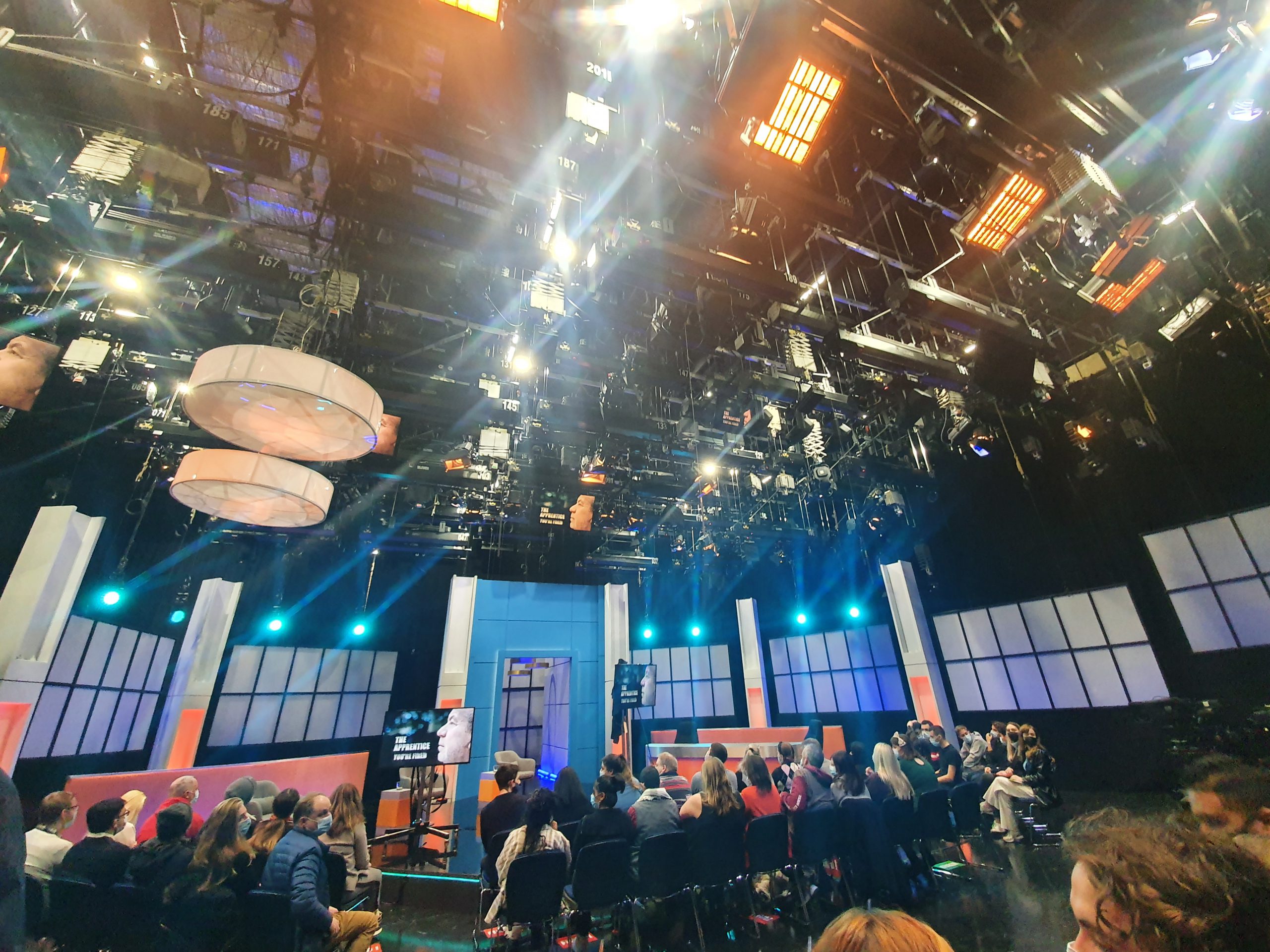
I got a ticket to see the third episode of the Apprentice – You’re Fired being filmed and this is the delight of the Riverside Studios in Hammersmith. I managed to stand in the wrong queue last week when waiting to watch the Unbelievable Truth being recorded as I should have been in the priority queue, but here there was just one queue and that was something that confused a fair few people who tried to walk straight to the front of the queue. I didn’t walk to the front of the queue as I’m not that brave to check such things, but I was impressed at the nerve of those people who did. Although they then looked sheepish walking back again.
There were thorough checks here unlike in other things I’ve been to recently, they needed to see proof of vaccination and proof of a negative test, hence the delay in proceedings to get everyone in. It was all efficiently managed though and the staff were keen to be helpful to everyone, which boded well.
Before the recording started it was fine to take photos, but after the floor manager gave an introduction to the process then phones were entirely banned from proceedings. There were some dire warnings made if anyone tried to use their phone during the recording and I didn’t see anyone brave enough to try and break the rules. We then got to watch this week’s episode of the Apprentice before the You’re Fired show was recorded.
And the rest I can’t say anything about as the episode doesn’t broadcast until Thursday, but it was interesting to watch how the programme was made. I was at the end of a row and the crane camera was very near to me when it panned across, so my hope of hiding in the background probably won’t have been met, but there we go….. I was told that I could wear my usual face mask if I wanted (my LDWA branded one), but I opted for a medical mask so I looked slightly more in keeping with most other people in the audience. One man was told twice to put his mask over his nose, but he ignored that and there wasn’t much they could do when filming had started.
Incidentally, I noted a few people tried to take the Hired and Fired card, even though they asked everyone not to. I think they managed to reclaim a fair few of them from leaving the studio and I decided a photo of it was all that I needed. The filming was a bit laborious in places, but they met the time schedules we had been given, so everything remained professional. An interesting experience and I’d go again in the future if I got chance, although you can only be in the audience for one episode per series.
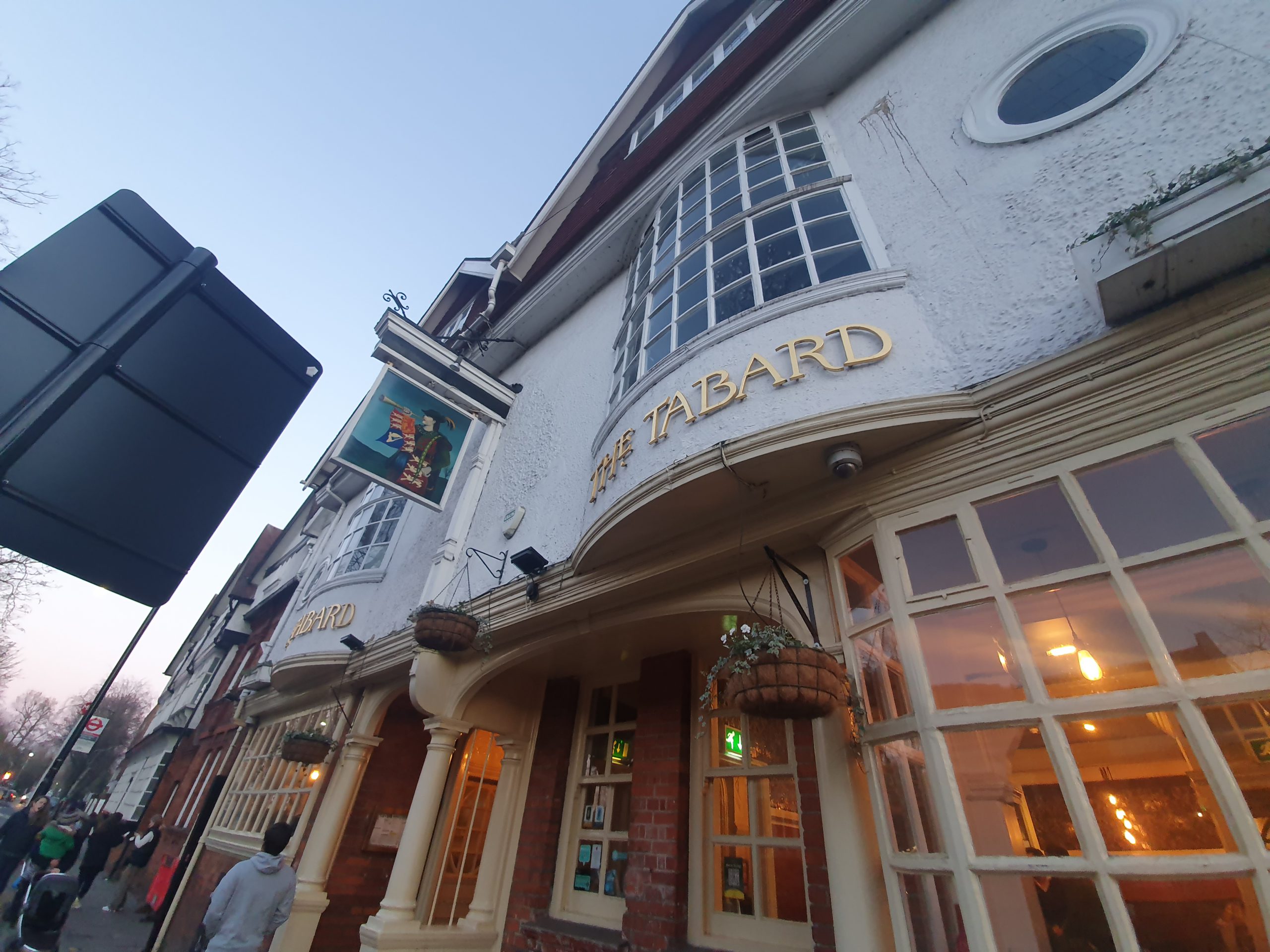
This is a Greene King pub, so I obviously didn’t come here for the beer, but instead because it’s listed in the Good Beer Guide and it was designed by Norman Shaw. There’s also the bonus that this was a building that Nikolaus Pevsner thought was “especially attractive”, so what could Greene King possibly mess up? Firstly, they make no effort to mention the history on the pub’s page on the Greene King web-site, the usual lack of effort they make in so many ways.
There’s a corridor type entrance, with doors to the left and right. Food is served throughout the day and there’s a menu board visible on entry, next to the rather nice pillars. CAMRA have some information about the pub’s history on their Historic Interiors pages.
And the same door, but my phone’s wide angle makes it look much wider. The central bar is visible at the rear, just behind my well travelled bag. The atmosphere was a bit excitable for my liking with staff members singing away, but there’s nothing wrong with that as this is a pub which is keen on its music.
The beer was half a pint of the XX Mild from Greene King, which was served too warm, I think because of the temperature of the glass. The beer was adequate, about as good as Greene King manage to churn out. The service was verging on rude at first with staff members just standing about talking, but the staff member who served me was friendly and helpful enough.
This building is exceptionally interesting and there’s even a theatre on the first floor. I can understand why it’s in the Good Beer Guide as it’s an historic pub and that makes it worth visiting in itself. There were five different real ales available, mostly generic and none that particularly interested me. However, it’s nice to see a mild, so I’ll credit that with being the most exciting option that they had.
The reviews of the pub on-line are a little below average, mostly about unfriendly staff and food that didn’t surprise and delight. That probably seems to fairly sum the pub up, but they do respond professionally to all reviews that I’ve seen, so it’s positive that they’re keen to engage. I can’t help but feel that this pub would be lifted if it wasn’t operated by Greene King though, this is something that Fullers or Nicholsons would handle a lot better, but ideally it could perhaps do with an independent operator.
What an appalling photo, but it’s what I have of the exterior of the Cinnamon Tree and so I’ll have to go with it. Richard was on one of his decadent business weekends to London, so we popped to Mikkeller at Exmouth Market as not enough people take me there and it’s one of my favourite bars. We had thought about eating there, but that plan fell apart as they weren’t serving food. I found that on TheFork (TripAdvisor’s booking system which keeps annoying me) the Indian restaurant over the road had 20% off food, so that seemed as good an option as any other.
We made the 30 second walk to the restaurant and there was a friendly welcome from the staff. It isn’t the largest Indian restaurant, but they had a couple of tables free. Richard is still wearing his Christmas jumper, even though it’s mid-January, but I didn’t say anything. We limited ourselves to just two poppadoms each instead of our usual three as it’s important to eat healthily. The quality was fine, nothing exceptional, but they met my expectations.
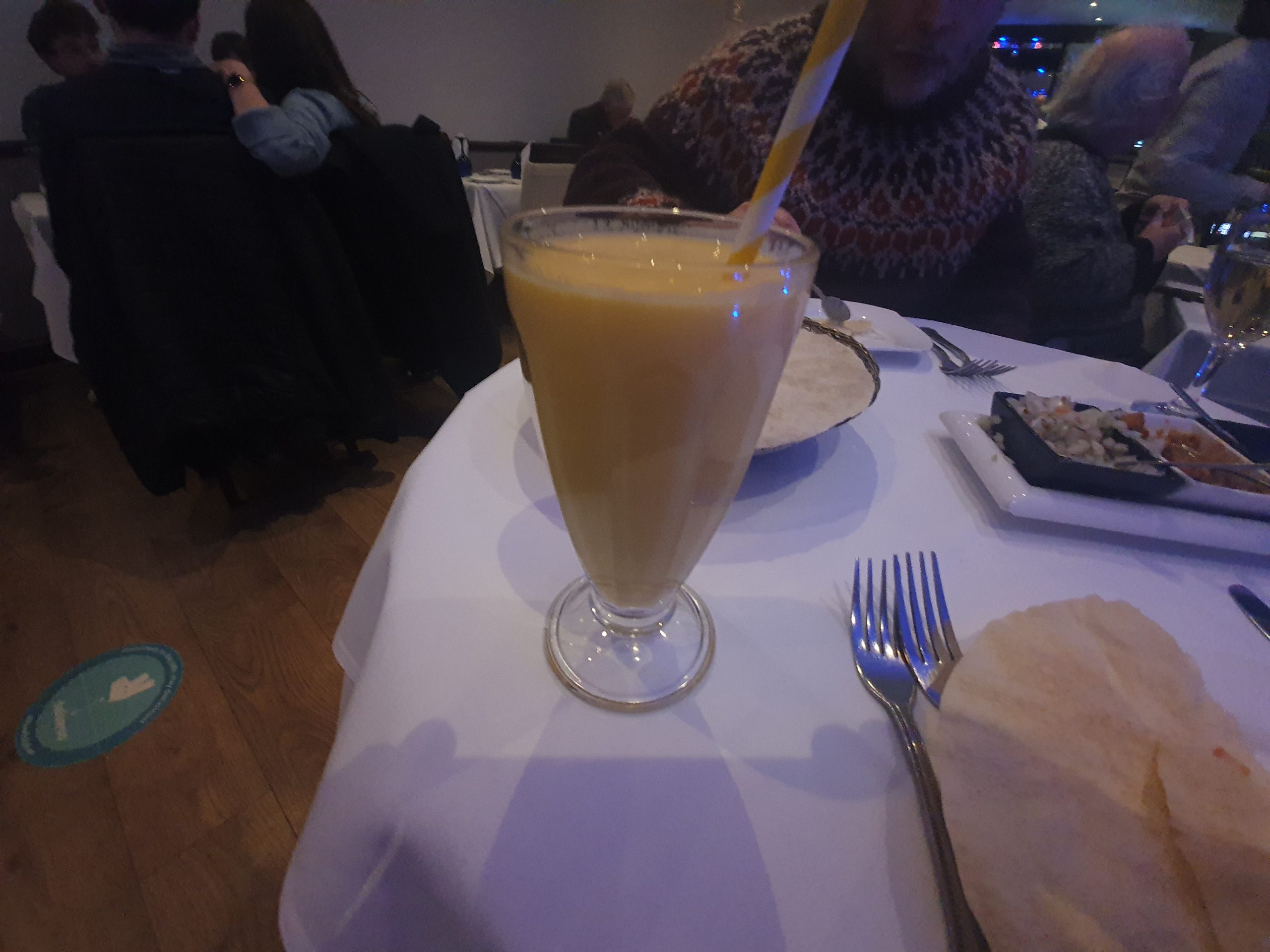
I’ve decided that any Indian restaurant that doesn’t serve a mango lassi is probably going to be disappoint me in general. The one here was a little expensive, but suitably rich. Richard went for a white wine which he didn’t think was exceptional, but I’m not a wine person so I wasn’t really that engaged with worrying about that. I noted the beer menu was generic though, they could just walk over the road to buy some cans from Mikkeller to give more options but I accept that it’s not always about the beer. Actually, I don’t accept that, it’s like an apology from Boris Johnson, a fake comment. Anyway, I mustn’t get engaged with politics on this blog, that’s not my aim…..
Another inadequate photo, this isn’t ideal. Richard had the salmon mach bahja which he was content with, whilst I had the chicken bhutako. I had never heard of that dish, but it transpires nor has Google, as my searches simply found the menu for this restaurant. It was similar in taste to jalfrezi and the chicken was tender, the sauce had a depth of taste to it and I thought it was perfectly decent. We shared a coconut rice that was acceptable, but not as deep in flavour as I’ve had before. The peshwari naan was suitably almondy, I enjoyed that. Everything was also at the appropriate hot temperature and it took around 12 minutes to be served after ordering. But, the food wasn’t as complex in flavour as I’d ideally like, there was a touch of the generic about it, although it was sufficiently tasty for me not to be disappointed.
The service was always timely and efficient, so the welcome felt authentic. Although three different people served us, there was no duplication of service, so everything felt well managed. I liked that they just lifted off the white tablecloth to reveal another white tablecloth underneath, which Richard had managed to stain as well. The staff didn’t say anything though….. I wonder why Indian restaurants bother with all this linen, it must be a bloody nuisance to keep sending off to be cleaned.
One review I noted, although it’s from 2016, is from a customer who went as a single diner and wasn’t welcomed. This is now incredibly rare, but I hate hearing about it (and hate how TheFork often don’t offer discounts for single diners) and hopefully that’s not their practice now. The review was titled about being an unhappy solo diner, noting:
“Despite restaurant being nearly empty insisted on seating me on a table next to door and at top of stairs by toilet. No sooner had fork touched the table each side dish mid meal was literally whisked away. Clearly just wanted you fed, paid up and out the door to clear the way for bigger parties.”
The 20% off food was taken off the bill, although a 10% service charge put on and the whole bill was hazy in its adding up so it was difficult to check. It came out at £20 each, which seems to be the fairly average price for a meal at an Indian restaurant, so that was fine. I’m not sure that I’d head here again as there was nothing exceptional here that I could think to mention. There was nothing wrong, but it just felt like so many run of the mill Indian restaurants about, and they need something to lift the experience. On the bright side though, we did get a chocolate each with the bill.
Back in London Marylebone, this time for a trip up to Warwick.
I’ve written about Marylebone numerous times before, but I hadn’t noticed how much housing was demolished to construct it at the beginning of the twentieth century. The concourse of the railway station is where Harewood Square is on this map which is from just before the station was constructed.
I was as early as ever arriving at the railway station, mine was the 12:34 to Birmingham Snow Hill.
The platform number wasn’t announced until ten minutes before departure, which I didn’t think was ideal. It’s quite a pleasant little railway station to wait in and I meandered across to Pret to use my coffee subscription. There are numerous other coffee providers, free toilets, plenty of seating and a small selection of shops.
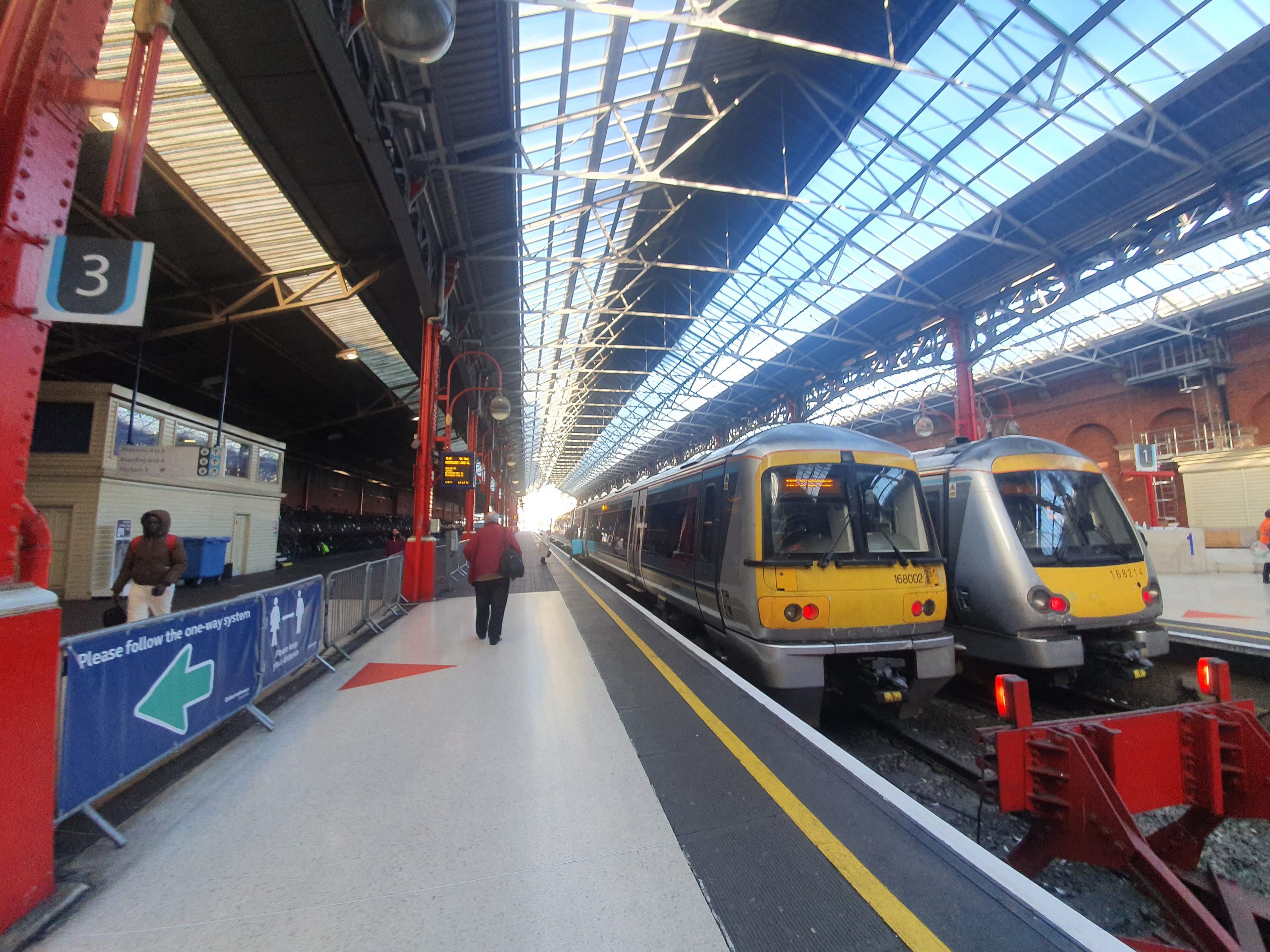
There’s the Marylebone Thunderbolt on the left (my name for the service, it’s not the official name). Apparently this train is a British Rail Class 168 DMU train, but I had to look that up as I know nearly nothing about these matters. The trains though date from after privatisation, they were built from 1998 to service this route.
The train was never really that busy and there were plenty of seats available. I got a table and access to a power supply which was handy. My ticket was checked by two different train guards, slightly unusual as I’ve recently rarely been asked to show my ticket at all. It’s a comfortable train, with spacious seats and it was clean throughout.
And having safely arrived after a journey of just under 1 hour and 30 minutes. The railway station is located a ten-minute walk from the town centre, although there are buses for those who can’t be faffing about.
And off the train goes to Birmingham.
I was surprised that Warwick railway station wasn’t a little grander, it’s quite a minimal affair with limited facilities for customers.
As for the service, it was on time, the train was clean, the staff were polite and the seats were comfortable. The fare cost £10, so I have no cause to be anything other than happy with the arrangement.
I saw an advert last week to get free tickets to be in the audience for a few BBC radio shows and television programmes being recorded this month, all advertised by Lost in TV. I applied for a couple of things and got them both, this one being the recording of BBC Radio 4’s comedy The Unbelieveable Truth. I’ve heard it before on a few occasions, although I hadn’t realised that it has been going since 2007.
The first thing I misunderstood is how early people get here for these performances, I thought that I was arriving early by being thirty minutes before the time required by my ticket. Nonetheless, I go and stand at the back of the queue and wait patiently. A staff member was walking down the queue and that was useful as she told me that I had a priority ticket. I hadn’t given much thought to that, but the people with these decadent tickets are guaranteed a seat and they wait in another area, whilst the hopefuls can queue up to see if they can get a seat. Hence why the queue had formed early.
The queue that I should have been in was much shorter which was rather lovely. I’m not sure why I had a priority ticket, but that was very useful. The location for all of this is the Shaw Theatre which is about a two minute walk from King’s Cross St. Pancras railway station.
Everything seemed to be run like clockwork and I got my seat without any issues. There were two episodes being recorded back to back for the next series of the show, even though the current series only starting to air this week. Nothing like advance planning…..
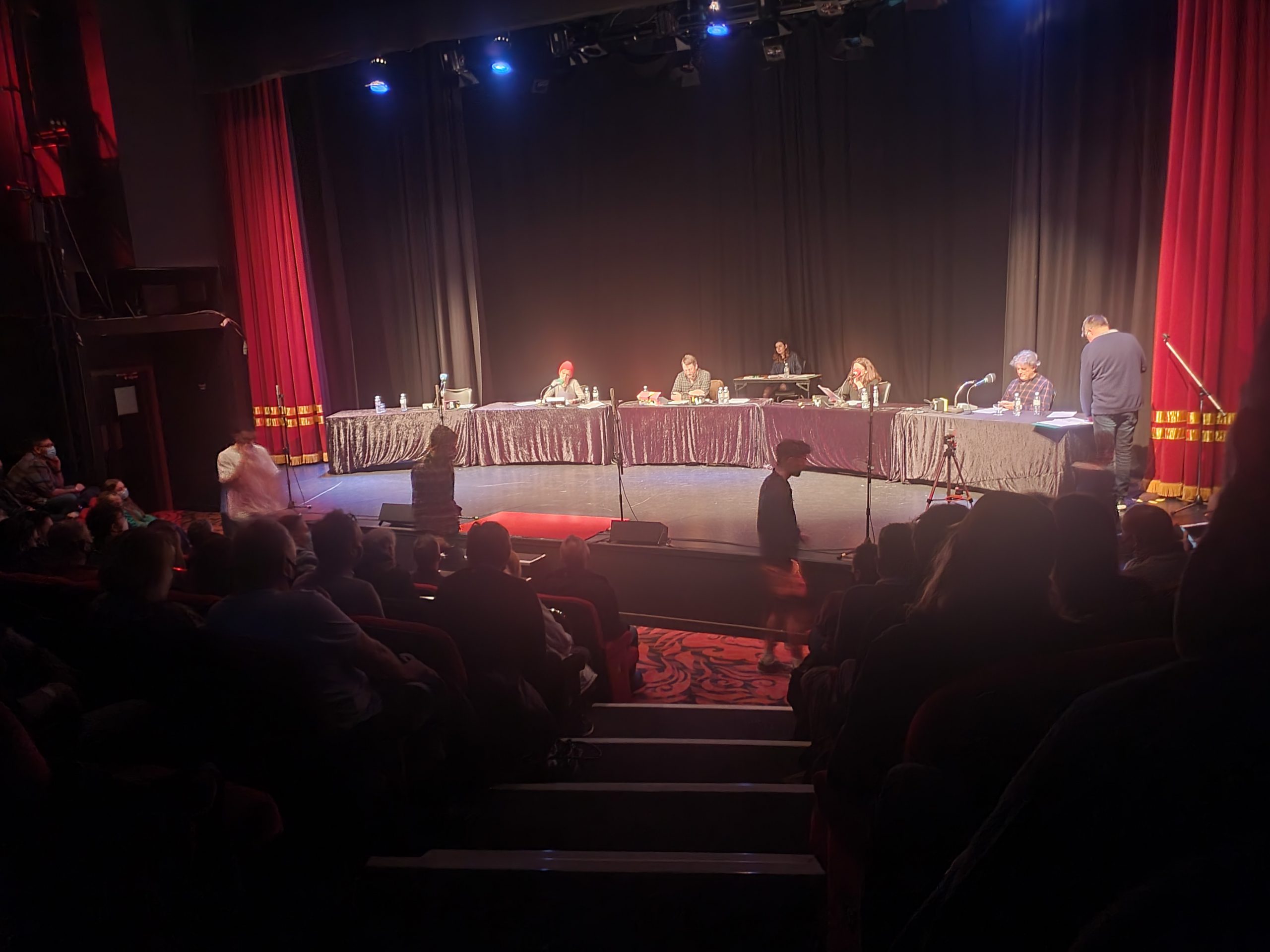
I noticed that two people were taking photos with flash during the performance and others were recording bits, I’m not sure if the production company noticed or whether they weren’t too bothered. I suspect there isn’t a huge market for advance clips of a Radio 4 show, but I’m sure it’s not ideal. Either way, since lots of photos were taken between the two episodes (and I’ve seen several on social media already, which is the reason I’m justifying posting my photo), and therefore here’s mine. Incidentally, a lot of audience members seemed to think that the bit between the two shows was time to get drinks and have a long toilet break, with David Mitchell commenting an unusually number of people were leaving. But, they came back which was probably a relief to the production company, although the recording wasn’t held up to wait for that.
I’m sure the contents of the show are not for public consumption yet, but I was impressed with David Mitchell in particular. And I was pleased to see Alan Davies was one of the panellists, but it was all really rather lovely from everyone of course. The producers weren’t sure when the episodes would be broadcast, but I’ll try and remember to listen in to hear just how much gets cut out of things like this. This was also a pleasant evening’s entertainment, especially since it was free.
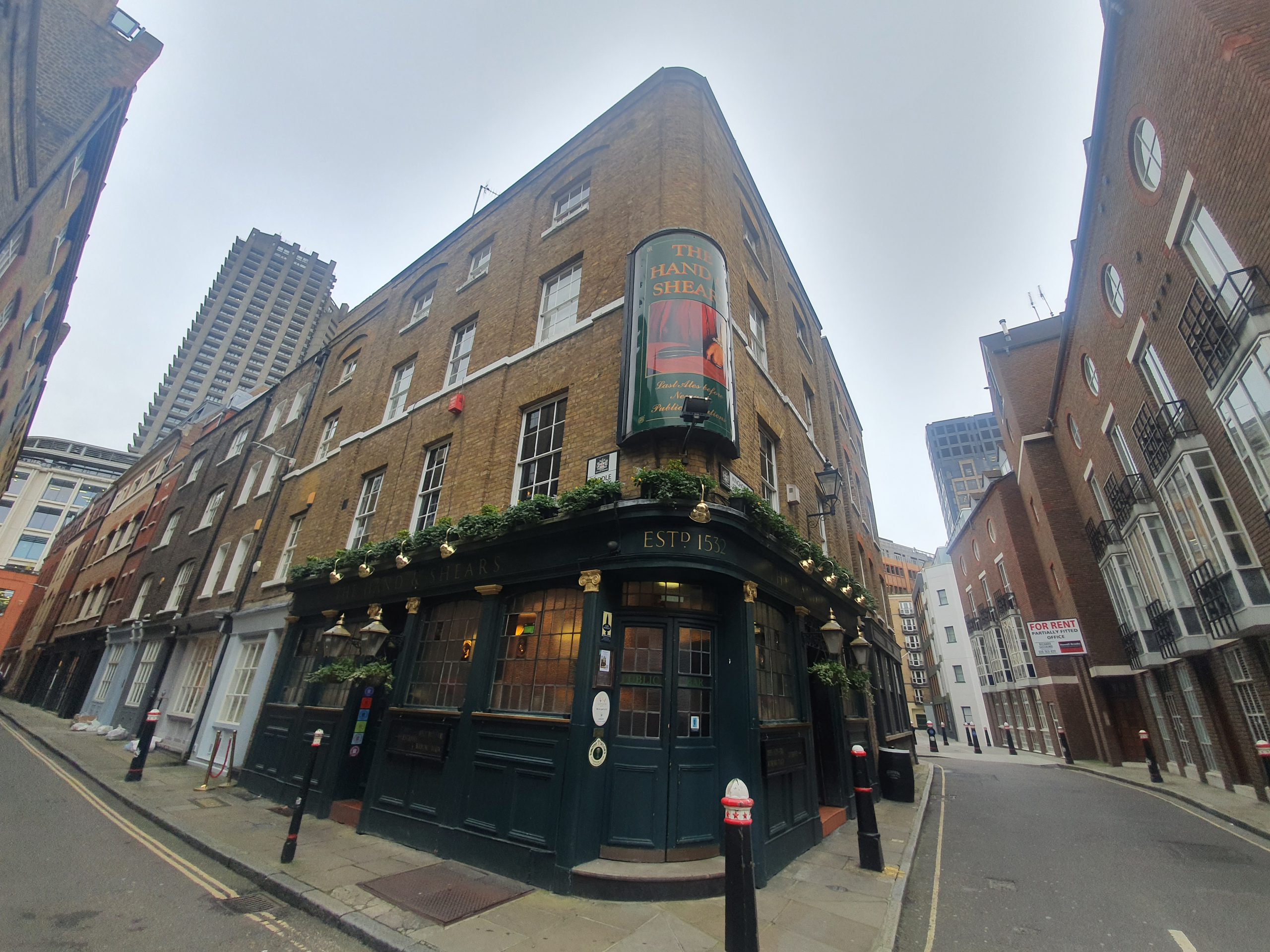
There has been a licensed premises at this site near Smithfields since the middle of the sixteenth century, although the current building dates to 1849. I visited it as it’s in the Good Beer Guide and it’s tucked away a little, just behind St. Bartholomew’s Church.
This location is noted on the list of CAMRA’s Historic Pub Interiors and they think that these signs date to around the 1930s. Usually swept away by endless refurbishments, the two separate areas of the pub still survive.
The pub is Grade II listed and, since it’s so comprehensive, this is the listed building record:
“The history of the Hand and Shears in Smithfield can be traced back to the C16. Whilst the name is recorded at this early stage, the plot it occupies and the surrounding street layout are of a slightly later date. The arrangement of Middle Street, between Cloth Street (to the east) and Kinghorn Street (west), is largely the product of the redevelopment of St Bartholomew’s Priory overseen by Lord Rich, for which leases of new properties were issued between 1597 and 1614. An etching of 1811 shows the prominent corner-plot position of the public house and the earlier building’s gambrel roof to Kinghorn Street with its two bar room entrances. The name ‘Hand and Shears’ references the important local cloth trade which thrived in the area, but it also relates to the famed St Bartholomew Fair which was held annually in August from 1133. The history of the Hand and Shears is closely intertwined with that of the fair, with important ceremonial traditions centred on the public house. One such example was referred to by E A Webb in a history of the fair of 1921:
‘There used to be a burlesque proclamation, the evening before the [official] proclamation by the Lord Mayor, by a company of drapers and tailors who met at the ‘Hand and Shears’… from whence they marched, shears in hand, to the archway leading from Cloth Fair into Smithfield, and announced the opening of the fair with a general shout and snapping of shears.’ (E A Webb, ‘Bartholomew Fair’, in The Records of St. Bartholomew’s Priory and St. Bartholomew the Great, West Smithfield: Volume 1, 1921, p300).
As with other public houses positioned close to markets or fairs, the Hand and Shears hosted what was known as a Pye Powder Court (the name originating from ‘pied puldreaux’, an old French term for a pedlar). From the medieval period, such courts had responsibility for keeping order and settling disputes between merchants and the public at markets and fairs. The court held at the Hand and Shears became particularly notable owing to the notorious vice and disorderly behaviour associated with the Bartholomew Fair. A sense of how the court would have appeared and functioned can be gleaned from a drawing of a session held in the panelled dining room of the Hand and Shears, published in Londina Illustrata in 1811: this shows the Pye Court judge at his bench with his secretary presiding over a dispute between two actors in theatrical dress. Ultimately, the scandal and excess drove the authorities’ efforts to supress it. This culminated in the prohibition in 1843 of all performances and shows, which inevitably caused the popularity of the fair to wane. A report from the Illustrated London News dated the 5 September 1846, lamented the consequent decline of the Pye Powder Court, where its duties had been ‘confined to the receipts of piccage, stallage and tollage’. The suppression of entertainments and the consequent lack of interest meant that, on the eve of the feast of St Bartholomew in 1850, ‘the mayor found no fair worth proclaiming’ (Webb, p317).
The decline of the Bartholomew Fair broadly coincided with – possibly even brought about – the redevelopment of the Hand and Shears and several neighbouring buildings. The rebuilding of the pub along with the adjoining house at 2 Middle Street was undertaken in around 1850 (sources record alternative dates of 1849 and 1852). The earliest known plan of the building’s bar arrangement is in a conveyance dated 1857, showing a similar configuration to the present arrangement, though with a smaller island counter and the stairs in a different position. The plan demonstrates that the main bar was entered from the corner door, with a private bar and distinct back parlour to Kinghorn Street, as remains the case. To the east, along Middle Street, was a large rectangular dining room with a specified area for bagatelle at its south end. The work of around 1850 appears to have been a private venture (the pub not being tied to a brewery at this stage). However, by 1872, the site was in the hands of the Whitbread Brewery. Save for a brief two-year spell when the freehold passed to the Lion Brewery, the Hand and Shears remained the property of Whitbread until 1896, when it was acquired by Barclay Perkins. In the same year the interior saw some remodelling, with a new internal vestibule added to the Kinghorn Street entrance, the island counter and stairs being reconfigured and a small office added at the back of the dining room. According to the plans, the proposed alterations were ‘before the Bench’ (the licensing magistrates) in February 1896 and were complete by December.
Into the 1920s some minor alterations were undertaken. In April 1920, plans were produced by F G Newnham (Barclay Perkin’s chief architect) to reposition the stairs to the cellar in order to extend the saloon bar (the same bar room formerly marked as the ‘parlour’). It is probable that this phase of ground-floor work also included the introduction of some of the present bar room windows and the two brick and tile fireplaces, which are characteristic of the period. Six years after the work to the ground-floor rooms, Newnham produced plans to introduce a new service area with a hatch for the first-floor dining area, followed in 1929 with a plan to integrate an adjacent sitting room and the main dining room. This investment prompted a remarkable boom in lunch and dinner sales: the pub recording that in 1930 it served 28,500 meals during the year, this increasing to 650 per week in 1931. Among those served were some esteemed visitors, including Prime Minister Stanley Baldwin on 20 October 1930 and, on 11 February 1931, Winston Churchill.
Since the inter-war work there have been only minor changes to the Hand and Shears. In 1962, the merged Courage and Barclay Brewery added a women’s WC in part of the former yard area to Kinghorn Street (accessed via an inserted door from the saloon bar). This has since been replaced with a first-floor WC and the rear passage now has steps from Kinghorn Street leading up to the first-floor level. In 1982-1983, the pub had to close for 18 months following structural damage caused by piling at Founders’ Hall on the opposite side of Kinghorn Street. Work was subsequently undertaken to strengthen the existing floors (consented in 1989), with new steel columns and beams inserted to the ground, first and second floors. The pub fittings, including the bar, screens and panelling were stored and reinstated whilst this was undertaken. In addition to the structural work, sensitive refurbishment of the ground-floor expanded the men’s WC into the rear (Middle Street) bar; this phase of work also involved the installation of the diagonal shelving over the servery, the replacement of the original iron columns and the reuse of an existing timber screen to create the counter in the first-floor room.”
I like that Winston Churchill and Stanley Baldwin visited the pub and by all accounts, the venue hasn’t been that much changed since the popped in for their lunch. I’d confidently say that they aren’t doing 650 lunches per week today, but there is a function room upstairs that allows them to host larger-scale dinners and events.
Warm and homely, with a fire going. This is the old saloon bar area of the pub and is probably the section that I wouldn’t have been in back in the day, I suspect I’d be saving a few pence and sitting in the public bar.
The main bar servery and this really is a delightful venue. The staff member was helpful and personable, so it felt like an inviting pub and I liked his engagement. There’s plenty to look at in the pub in terms of heritage and I’m pleased that this hasn’t been turned into a high-end gastropub. This is one of the advantages of the Good Beer Guide, it’s highly unlikely to send me into an expensive pub which is mostly all about the food. They do serve lunches here, but one of their strengths judging from reviews are their sausages rolls and pork pies. A review said that there was no jelly inside the pork pie inside which disappointed them, but it would have surprised and delighted me.
One negative review of the pub was:
“The place itself is grimy and very old – it is in desperate need of refurbishing. I wouldn’t go there again.”
And this is why companies refurbish places, they think it makes them better. But stampeding through this pub with a modernising plan would simply make things worse. Incidentally, everything was clean and organised on my visit, it was all really rather comfortable.
The beer choice was a little limited, but the Stiff Lip from Portobello Brewing was well-kept and at the appropriate temperature. I liked the surroundings of this pub and two American tourists came in who were merrily enthusing about the heritage and authenticity. The staff member said that the pub had very few customers last week, but it had picked up a little this week, but these remain challenging times for the hospitality industry in this part of London. I very much liked the pub though, the staff member was a clearly competent barman and he made the effort to engage with every customer, welcome them and say goodbye when they left.
Definitely a very worthy entry into the Good Beer Guide.
On my third and final Travelodge of my current trip, this is their outlet in Aldgate, a short walk away from Tower Gateway DLR and a relatively short walk away from Aldgate East Underground. It was on their special cheap deal which they’ve been running recently, otherwise I wouldn’t be spending the usual prices that they charge here, as this hotel can frequently be over £100 per night.
I was welcomed with this and I thought I’d patiently wait whilst the staff member returned. A cleaner walked by after around three minutes and mentioned he’d get a staff member, which he did. I was moderately annoyed to discover that there was a manager in the office behind reception, he had just shut the door rather than deal with customers. Not ideal, but I wasn’t particularly inconvenienced time-wise as it was only three minutes.
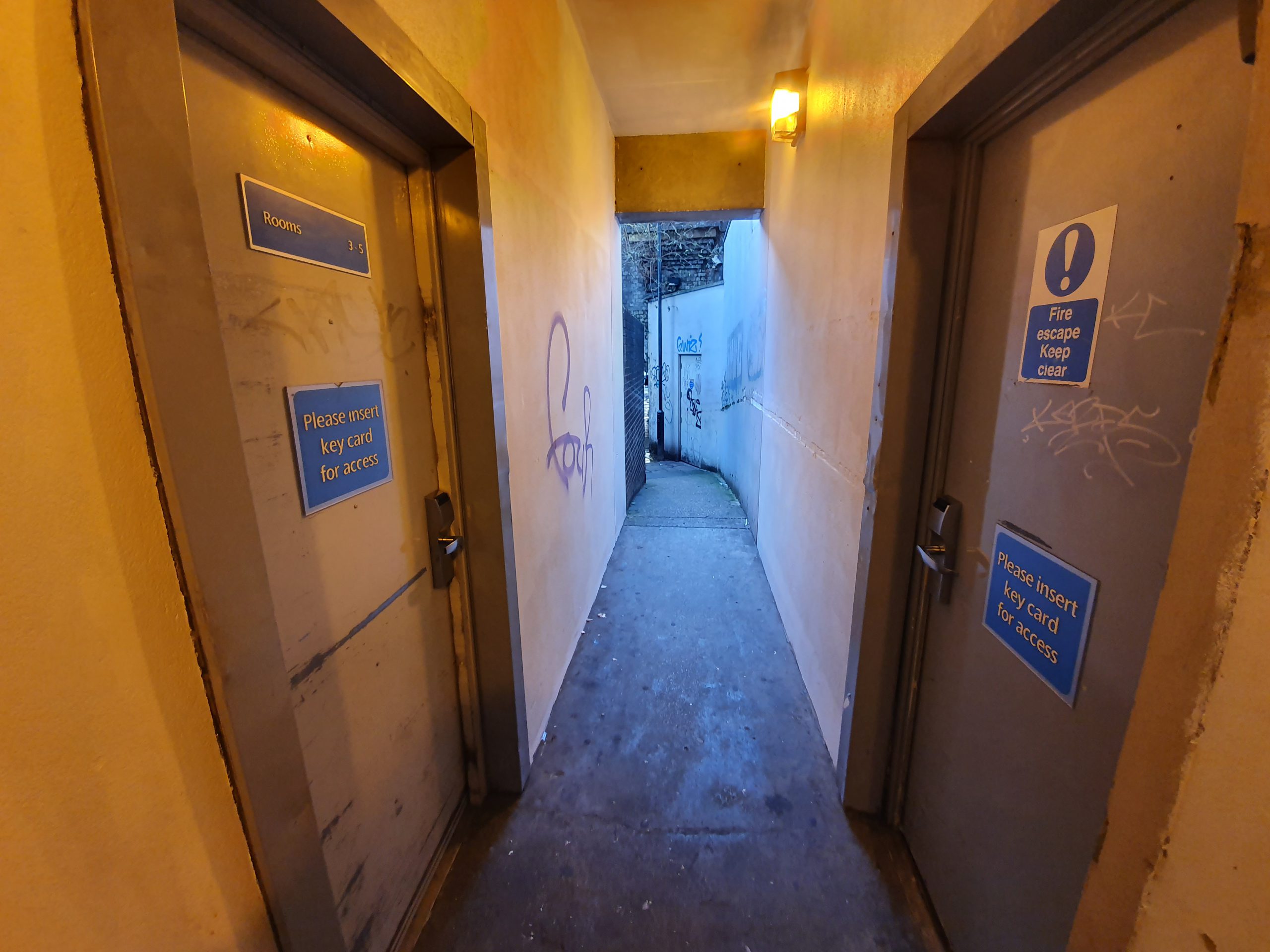
The set-up here was the oddest I’ve had at a Travelodge and relates to the fact that they have a passageway through the middle of their hotel. I support the right of old paths to be maintained, but this meant at this hotel that guests needs to walk through one door (reception is off through the right-hand door) to another (the rooms are through the left-hand door). It also meant that they needed to give me a key fob for one of the doors, even though the rest on my walk to the room just used the standard Travelodge swipe card.
There’s the passageway through….. The hotel itself is located on Chamber Street, an odd little backstreet which runs by the railway line, and the road has a slightly dodgy feel to it. It used to be called Chambers Street and there’s an entire Wikipedia page about it at https://en.wikipedia.org/wiki/Chamber_Street. I noticed the shrapnel damage that it refers to, and that is being kept (or at least it’s still there and they’re working around it) as part of the new building project that they’re currently working on.
The arrangement to get to the rooms and I’m surprised they didn’t just put offices or conference rooms here, as it all felt a bit odd. However, I suppose it’s no different to a motel where you go outside to get to the room, but it seemed unusual. I didn’t go off exploring for fear of setting alarms off, but I think that if they really want to then guests can use a staircase at the rear here to go up a floor, then walk through the hotel on the first floor and then back down the other side, avoiding the need to go outside.
The room which felt like a prison cell with those high windows, but it was spacious and fitted out to brand standard. There was an ironing board in the room which is unusual for Travelodge, but I don’t concern myself with such fripperies. There was very little noise internally, a little more externally but nothing that proved to be annoying.
The bathroom, which was larger than standard, a legacy of the strange building that the architects had to work with.
The reviews of the staff are very positive, coming in at 4.7 out of 5 on Google, which is particularly high. The rooms are less popular, not least because a lot of them face the railway tracks and there are plenty of reviews about the noise issues caused by that. I think that I would have preferred a railway view as they intrigue me and I’m not put off by the noise, but the hotel might by default try and put people at the front of the hotel to minimise noise.
I was quite happy with this hotel, especially as it cost under £25 per night, which is a ridiculous price for central London, although I booked it at a time of uncertainty (in the world, not in my life). The hotel could do with a bit of a refurbishment to replace the stained carpets and broken things, but that’s true of very many Travelodge hotels which take quite a battering from guests.