Category: Virginia

  • 2022 US Trip – Day 8 (Charlton’s Coffeehouse at Williamsburg)

    2022 US Trip – Day 8 (Charlton’s Coffeehouse at Williamsburg)

    20220925_105751

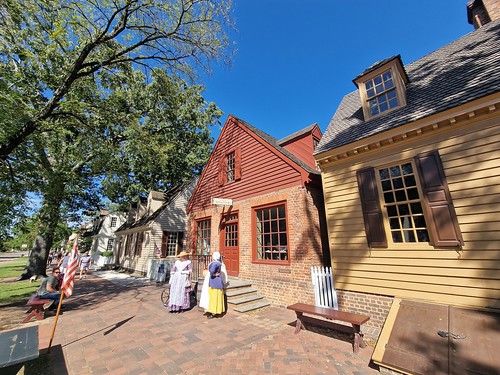
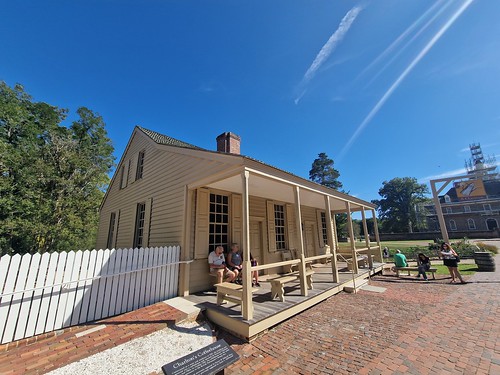
    This building is new and is one of the few recent additions to Colonial Williamsburg, which was mostly laid out in the 1930s. Given that it’s a recent construction, it’s allowed historians to have more knowledge and resources into ensuring its historical accuracy, so although it’s not an original building there is still an authenticity to it. The original structure was built as a store and private residence in 1750, before being turned into a coffeehouse which was operated by Richard Charlton in the mid 1760s.

    The element that interests me most about this location is that in October 1765 this is where there was resistance against the Stamp Act which had been imposed by the British Parliament. And as it was a coffeehouse, this is where the centre of gossip would have been, where chat took place about the state of politics as well as where business was transacted. So, on this spot, debate raged about the impositions that the British were placing on those living in Virginia and the locals stoked up division in some Daily Mail sort of way.

    Back to the Stamp Act though, a ridiculous piece of legislation which meant that most documents issued in Williamsburg and across the colonies would have to be published on paper from London which had been embossed with an official stamp. Not only that, but this paper had to be paid for using British money and not the money that the colonists used. Local man Patrick Henry had earlier on in 1765 given a speech against the Stamp Act in the House of Burgesses, but the situation got worse and protests broke out in the street. On 30 October 1765, a crowd harassed George Mercer when he was walking down Duke of Gloucester Street (which is the street I’m standing on in the above photo) as they wanted to know whether he would become the Commissioner in charge of enforcing the Stamp Duty tax in Virginia. Not content only with chasing him down the street and onto the porch of the coffeehouse, the locals then burnt an effigy of him. Mercer had a little think about this whole arrangement and decided not to take the job of Commissioner, which seems a very sensible call to me.

    Anyway, although the building here might not be original, the location where all this happened is authentic and this is a piece of American history that I’ve only really read about before.
  • 2022 US Trip – Day 8 (Alexander Craig House at Williamsburg)

    2022 US Trip – Day 8 (Alexander Craig House at Williamsburg)

    20220925_105921

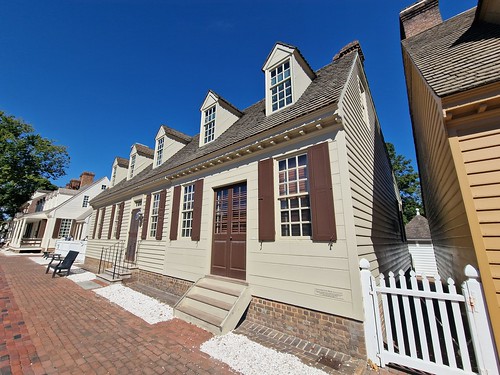
    There are literally hundreds of buildings in Colonial Williamsburg and the element that I liked is that just about all of them have a little plaque on them explaining the history of the structure and also whether it’s original or reconstructed. This is Alexander Craig House and he was a saddler who purchased this house in 1755. Until his death in 1776, he lived in the section to the left and ran his business from the section on the right.

    This is also one of the original buildings, known about from as early as 1712 although would have been constructed earlier than this, first owned by Susanna Allen and then transferred to a glazier J White (not Julian, it was John, but I liked the link) in 1734 and then were a series of owners from thereon in. In 1752, the barber and wigmaker William Peake purchased the building and it was him who sold it to Alexander Craig. One thing that is remarkable about the town is the survival of documents (not least down to the building that they constructed for that purpose) and not only have leases of sale survived, but they even have inventories of what was in each property.

    I can’t list everything that Susanna Allen, as an example, owned, but the level of detail is exceptional. Below is just one part of the inventory of her property in 1720:

    1 Long Oval Table £ 1.1.5.0
    1 large looking Glass 2.10.0
    1 Small Do 0. 6.0
    1 pr window Curtains 0. 2.0
    1 pr Small Iron doggs 0. 4.0
    1 pr Small money Scales 0. 4.0
    7 leather Chairs high backs 2. 5.0
    8 old Chairs 1. 5.0
    1 pr large doggs 1. 0.0
    1 pott Rack 0. 1.0
    3 brass pails 2. 5.0
    2 Tables 1 Chest & Lumber 0.12.6
    5 old Chairs 0.15.0
    [torn] Curtains 0.55.0
    [torn] Do 1.0.0
    [torn] 0.10.0
    [torn] jugs & 1 old Counterpin 2.5.0
    7 beds & 1 old quilt 16.5.0
    1 torn] Table & press bedsteads 10.0.0
    6 old Chairs 1.5.0
    2 old Chests 0.8.0
    1 bedstead & hyde 0.10.0
    1 Tea Kettle 0.10.0
    2 Sifters 0.1.10
    1 pr money Scales 0. 7.6
    130 lb old pewter @ 9d 4.17.6
    5 Tankards & 1-qt pott 0.10.0
    11 old Spoons 0.1.3
    1 looking Glass 0.2.6
    11 knives 0.5.6
    1 doz. Napkins 2 Table Cloths 0.19.0
    6 Course Towels 2 pillow Cases 0. 9.6
    14 pr Sheets 7. 5.0
    2 old Table Cloths 2 pillow Cases 0. 5.0
    1 press of Books 0.10.0

    Holmes, Clyde, “Alexander Craig House,” John D. Rockefeller Jr. Library, Colonial Williamsburg Foundation, accessed October 7, 2022, https://rocklib.omeka.net/items/show/1751.

    And here’s what the property looked like (it’s the one on the right) in the early 1930s, before it was restored as part of the Colonial Williamsburg project. Going back to an earlier point that I made about not visiting Jamestown, this was the sort of story that I was engaged with, how the very early colonists lived their lives whilst still sort of under British rule. Alexander Craig was apparently one of the most successful early saddlers in the colonies and he went there in around 1748, moving him and his wife from Glasgow to seek new opportunities, as well as having six children in Virginia.

    I know this sort of text must sound very dry and perhaps lacking in much interest to most people, but this whole town is so packed with social history from the seventeenth century, not just relating to the colonies themselves, but also the areas from which they came.

  • 2022 US Trip – Day 8 (Margaret Hunter Shop at Williamsburg)

    2022 US Trip – Day 8 (Margaret Hunter Shop at Williamsburg)

    20220925_110105

    With some period reenactors standing outside, this is an original building, known today as the Margaret Hunter shop. She established her business here in around 1770, making hats, cloaks and fans, remaining here until her death in September 1787. I understand that she came to Williamsburg from London in the late 1760s and she established some wealth, whether before or after arriving here, and it’s known that she ‘owned’ at least six slaves. She also faced the challenge of trying to ensure that the products she sold were fashionable, with trends in Virginia often reflecting the latest on-trend look in London.

    This is the problem that they had with the restorations, namely that buildings had been so changed and faffed about with since the colonial period. It’s hard to picture this being the same building as the one in the top photo, so when they refer to it as “an original building”, there’s a lot of artistic license in that. It also took a lot of research, primarily from newspapers and old documents, to work out which building was which given what was left. I can imagine a lot of historians have spent many hundreds of hours trying to piece all this together over the last century.

    This is what the house looked like in the 1930s after the restoration (so, just as it looks now really) and it can be seen just how many buildings had to be recreated as part of the Colonial Williamsburg project to complete the street as it once looked.

  • 2022 US Trip – Day 8 (Colonial Courthouse at Williamsburg)

    2022 US Trip – Day 8 (Colonial Courthouse at Williamsburg)

    20220925_111110

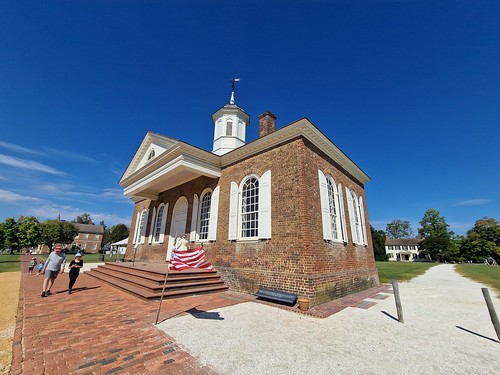
    The courthouse in Williamsburg was constructed, although the designer is unknown, between 1770 and 1771, originally holding two separate courts, the James City County Court for hearing cases in the wider region and the Hustings Court for matters which happened in Williamsburg itself. The building is located in the middle of old Williamsburg, a deliberate decision to note that it was at the centre of the community.

    Benjamin Waller read aloud the Declaration of Independence at this courthouse on 25 July 1776, just a few weeks after it was declared in Philadelphia, so I can imagine there was some gossip which continued on at the Charlton’s coffeehouse about that little arrangement. Following the Battle of Williamsburg in 1862, which was part of the American Civil War, the building was used as a hospital for Confederate troops, which is also when all the wood from the doors and windows mysteriously went missing.

    The building is mostly original, but the original furnishings were stripped out in the nineteenth century (some recent replicas have been installed instead) and a fire damaged the entire structure in 1911. What was left of the building was taken over as part of the Colonial Williamsburg project in 1928 and the columns added to the frontage in 1911 (it’s not clear whether the designer ever wanted them, although it looks like they might have done) were removed. For those who had argued for decades about the columns, they would have been most disappointed that they lasted for just 17 years.

    20220925_111048

    And some of the punishment devices on display next to the courthouse.

  • 2022 US Trip – Day 8 (Precarious Beer Project at Williamsburg)

    2022 US Trip – Day 8 (Precarious Beer Project at Williamsburg)

    20220925_130454

    After a morning of walking around the historic buildings of Colonial Williamsburg, I thought I had better see what the craft beer options were like in the town. Given that this was such a touristy location I wasn’t entirely optimistic, but the Precarious Beer Project was centrally located in the town, was Untappd verified and was also well reviewed.

    20220925_141658

    I must change that photo of me on Untappd. But, anyway, here’s the beer list, although I’ve also taken a photo of the printed menu which is further down this post. Credit to them for being listed on Untappd incidentally, it makes it much easier to look at the available beers in advance.

    20220925_130748

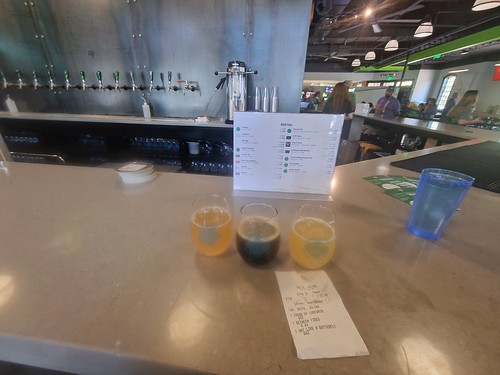
    I went with three different beers to start off proceedings and they were all of a very decent standard, despite being across a number of beer styles. The Hip Hop’d Blues and the Oat Like a Butterfly Sting Like a Bee were my favourites, the latter was a oatmeal stout which was rich in taste and had an additional flavour of honey.

    20220925_131558

    There’s a central bar area and then numerous food outlets around it including burgers and tacos, which you can purchase from and then eat at the bar itself or at the plentiful nearby bench seating. I went for tacos, but more of those in the next post.

    20220926_134203

    Jumping ahead to the next day, as I returned to this bar before I got my train, I had another couple of beers and they were excellent again, the very agreeable Knuck if You Buckwheat brown ale and the Kung Fu Kittens NEIPA. As a brewery, I was impressed that they were producing such a wide range of different beer styles whilst also maintaining the quality. Some of the beers they were brewing seemed to be quite innovative, especially brown ale which isn’t widespread across this part of the United States.

    20220926_141700

    There was a minor incident with this, as I needed to visit the facilities and I asked the barman to put my two drinks behind the bar. He willingly did that, but when I returned he couldn’t find them and he guessed his colleague had thrown them away. I mentioned I had nearly finished the brown ale, but he repoured both drinks back up to their original level so that was handy.

    20220925_130852
    I mentioned that the reviews were very positive, although this one seemed very angry:

    “The establishment itself has a great feel for downtown Williamsburg however the beer selection is very narrow minded, if you like hazy IPA’s your in the place but nothing else is worth while.”

    I’m slightly puzzled how anyone took a look at their beer menu and thought that, unless the brewery had recently decided for one day to just stock IPAs…. But, above is the beer menu from the day that I visited. And another student was angry they had been carded (IDed)….

    “Bad service, targeted specific groups for carding. Would not go with friends again!”

    I liked the brewery’s response.

    “Martha, we are legally obligated to card any patron under the age of 35. If you were with a younger group, and/or appeared under the age of 35 than our team did their jobs. We are sorry if this legal obligation created a poor experience for you. Calling this “discrimination” however is completely and totally ridiculous. Might we suggest that you lobby for a change to the legal statute mandated by the Virginia ABC.

    In addition, it is our assumption you were a part of the group we asked to leave, as a result of having under aged patrons who refused to show ID, and we’re then discovered attempting to pass beer between each other. Your entire group was asked to leave, as this is company policy for any groups discovered to have under aged drinkers attempting to consume alcohol. Lastly, our assumption is the school of William and Mary, with whom your affiliated with would frown on students under the age of 21, consuming alcohol illegally.

    There are plenty of other local college hangouts that may turn an eye to this type of thing, but fortunately we are not one of them.”

    Sounds reasonable and I like a robust response from a venue. But, once again, I’ve digressed and so I’ll conclude that I very much liked this bar. As noted, I visited twice because I felt the beer options were so strong and the service was friendly and efficient on both occasions. Despite being in such a touristy location, I think they’ve delivered an authentic package of decent beer, clean and modern surroundings with friendly and engaged staff.

  • 2022 US Trip – Day 8 (Electric Circus Taco Bar in Williamsburg)

    2022 US Trip – Day 8 (Electric Circus Taco Bar in Williamsburg)

    20220925_145117

    This taco bar is one of the food outlets located at the Precarious Beer Project in Colonial Williamsburg. You order the tacos at their outlet and they give you a buzzer to collect the food when it’s ready, meaning that you can then sit anywhere in the venue. I choose to go back to sit at the bar with my beers, but I can’t imagine that coming as much of a surprise. This whole food and drink arrangement feels on-trend without being formulaic, which is a difficult balance to get sometimes, but the staff were welcoming and it all felt informal and relaxed.

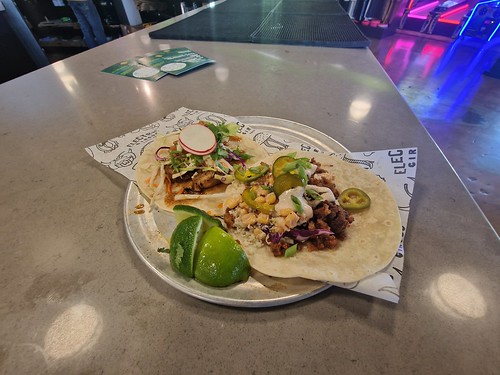
    I went with the Circus Shrimp and the Spicy Chorizo tacos and they well presented and that lime created a handy zesty finish, with the ingredients being of a high quality. Lots of flavour from the shrimp and chorizo, although they were a little small and something larger would have been even more delicious. I adore jalapenos and am always pleased when they’re generously served to add some extra heat and texture to the food. Refreshing though, they went well with my IPA, despite being slightly awkward to eat without making a mess.

  • 2022 US Trip – Day 7 (Hollywood Cemetery in Richmond – Agnes Lee)

    2022 US Trip – Day 7 (Hollywood Cemetery in Richmond – Agnes Lee)

    20220924_092504

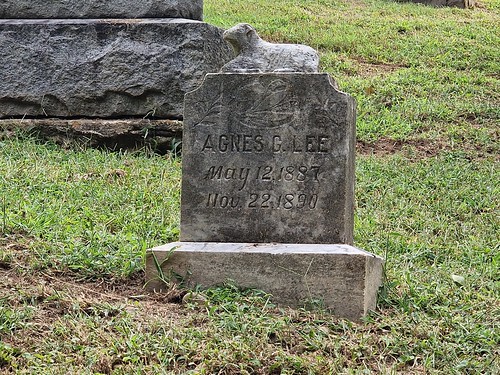
    I can’t offer anything on this other to note that Agnes Lee lived between 12 May 1887 and 22 November 1890, dying at three years of age and then being buried at Hollywood Cemetery. The average life expectancy, from birth, in the United States in 1860 was just 35, although by the time that Agnes was born it had increased to 41, but that’s still a lot of deaths in early life.

    So why is there a blog post about this? Well, primarily as I liked that little sheep (I assume that’s what it is) on the grave, it’s quite an emotive image and it made me wonder what the family must have thought when standing there in 1890. And, also, because time was so incredibly cheap at that point in time of Richmond’s heritage, not least meaning that information about Agnes seems to have been lost to history.

  • 2022 US Trip – Day 7 (Hollywood Cemetery in Richmond – Jefferson F Davis)

    2022 US Trip – Day 7 (Hollywood Cemetery in Richmond – Jefferson F Davis)

    20220924_092103

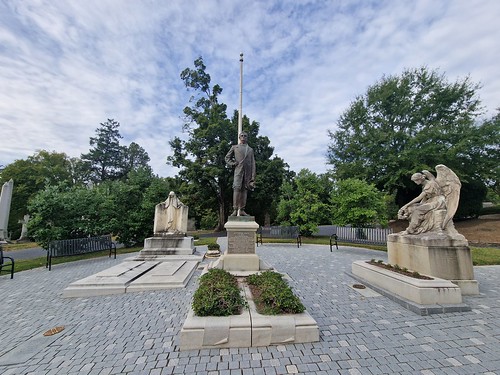
    The history of the world would have been very different (and I doubt in a positive way) if this man, Jefferson F Davis, had been able to lead the Confederate States to a victory in the American Civil War. Davis was the only President of the Confederate States as it was a short-lived office, but for the years he was in power (1861-1865) he was a very important political figure around the world. By most accounts, he wasn’t the most competent of leaders and his time in office was very troubled to say the least. His support for slavery has also meant that his historical reputation has gone from one of respect at the time to one more of contempt, although as with everything, views differ.

    20220924_092118

    As this tablet suggests, Davis had previously been the Secretary of War between 1853 and 1857. Davis had close links to Richmond, it’s where he lived and was inaugurated as President and hence that was why he was buried here at Hollywood Cemetery, although other US cities put in claims as well. He had died and was buried in New Orleans, but his remains were quickly exhumed and transport to Richmond.

    20220924_092124

    I’d like to think that his statue is safe in this graveyard, but images of Davis have been attacked throughout the United States over recent years. Davis was arrested after the end of the Civil War and many people tried to unite the nation that had nearly split in two, with Davis not being adverse to helping with that. Certainly a controversial figure even today, it was certainly interesting to see where he was buried.

  • 2022 US Trip – Day 7 (Hollywood Cemetery in Richmond – President John Tyler)

    2022 US Trip – Day 7 (Hollywood Cemetery in Richmond – President John Tyler)

    20220924_085408

    As I mentioned earlier, there are two Presidents buried at Hollywood Cemetery in Richmond, John Tyler and James Monroe.

    20220924_085612

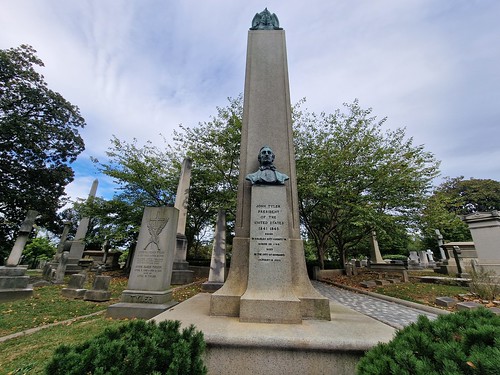
    The grave of John Tyler (1790-1862), who was President between 1841 and 1845, and there is something quite thrilling about seeing where a former leader of the United States is buried. Perhaps I just need to get out more, but there’s some considerable heritage here.

    Tyler was the tenth President of the United States, slightly unexpected as his predecessor William Henry Harrison had only lasted for one month before dying and that’s still the shortest period in office for a US President. There’s an historians’ view of former Presidents at https://www.c-span.org/presidentsurvey2021/?category=6 which puts Tyler towards the bottom of the list, although not as far down as Trump so that’s one thing.

    Tyler had fifteen children, a record for any US President which is unlikely now to be surpassed, and in terms of his political legitimacy, some of his political opponents referred to him as “His Accidency”. This was a tricky route to navigate as Presidents hadn’t previously died in office and some thought that Tyler should just temporarily manage the responsibilities of the President and not take over the entire role which is what he ended up doing. This whole situation wasn’t formally resolved until the 25th Amendment to the Constitution in 1967, but credit to Tyler for managing to stay in the post for the full four years.

    The burial of Tyler took place in 1862 and Jefferson Davis started to get involved with that whole arrangement, ignoring Tyler’s wishes for a simple funeral. Tyler was buried under a Confederate flag, the only former US President not to have been covered with the flag of the United States.

  • 2022 US Trip – Day 7 (Hollywood Cemetery in Richmond – President James Monroe)

    2022 US Trip – Day 7 (Hollywood Cemetery in Richmond – President James Monroe)

    20220924_085408

    There are two former Presidents buried at Hollywood Cemetery, James Monroe and John Tyler.

    20220924_085506

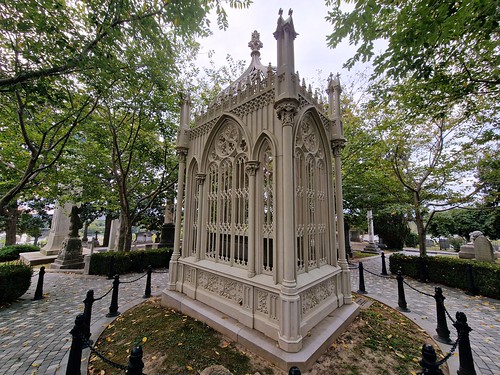
    The grave of James Monroe (1758-1831) who was the fifth President of the United States, serving between 1817 and 1825, and one of the Founding Fathers. Often noted for the Monroe Doctrine, which defined the foreign policy of US politics for over a century, as well as being one of the people responsible for the Louisiana Purchase earlier on in his career. That purchase is still staggering, Monroe and others were meant to go and buy New Orleans from the French for no more than $10 million, but he managed to buy half of what is now the United States for $15 million.

    20220924_085534

    Quite an ornate exterior, Monroe was initially buried in New York at the Marble Cemetery and wasn’t re-interred here in Richmond for 27 years. I’m not entirely sure what he would have thought about that little arrangement.

    And here he is in a painting by Samuel Morse from 1819. Two potential quiz questions here, Monroe died on Independence Day, 4 July, the third of the first five US Presidents to do so, but none have since. Also, with the exception of George Washington, he’s the only US President to have a capital city named after him, in this case, Monrovia in Liberia.