For Bart Jezierski, long-distance walking has become a way of exploring questions of peace, displacement and our responsibility towards others in the community. Since beginning Peace Walking while studying at the University of Glasgow in 2016, he has walked approximately 18,000 kilometres across 39 European countries, spending around 850 days on foot. His journeys have included walking without money and relying on the kindness of strangers and in this interview, Bart discusses the physical and emotional demands of his walks, the encounters that have stayed with him and how LDWA members could support Peace Walking’s humanitarian aims.
Q. Peace Walking began in 2016 while you were at the University of Glasgow. What first gave you the idea of using long-distance walking to explore questions of peace, displacement and humanitarian responsibility?
A.Peace Walking started in 2016, when I was studying at the University of Glasgow and felt that the only honest way to understand migration was to experience parts of that journey myself : walking without money, without support, and often outside formal routes. At the same time, I was increasingly upset by how media portrayed irregular migrants in a harsh and dehumanising way, without acknowledging how unimaginably difficult it is to walk across half of Africa or Asia and then continue through Europe toward places like the UK. I wanted to see the human reality behind those headlines. Walking became my way of listening, learning and countering those narratives with lived experience rather than distant judgement
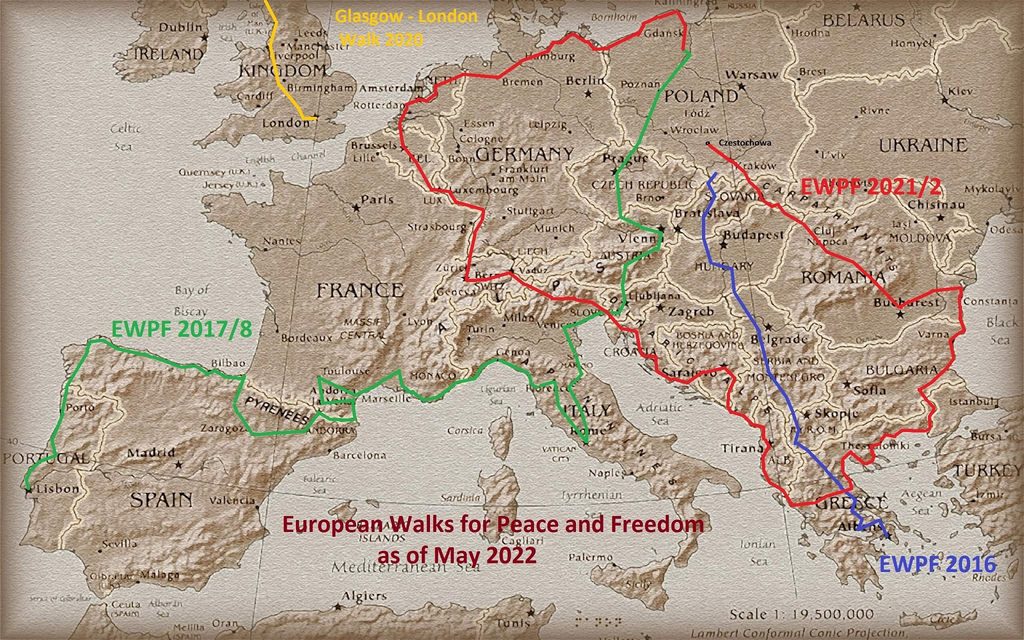
Q. You have now walked approximately 18,000 kilometres across 39 European countries. How did you decide where each European Walk for Peace and Freedom would begin and end, and how much of the route was planned before you started?
A. Each expedition began with a purpose, not a map really. The first EWPF in 2016 was simple and followed against the Balkan migration corridor – from the north to the south. The second, in 2017/18, explored the western/Spanish migration route and I was relying on pictures I took from Illustrated Atlas of the World but not so helpful as they’re in 1:6,000,000 scale. The third, in 2021/22, was an attempt to walk as far as I possibly could and it became an 8,000‑kilometre journey across 19 countries. I was simply to exhausted to continue further. In all three walks, intuition shaped the route. I adjusted my direction constantly to explore the most interesting landscapes, cultural regions and historical places ahead.
Q. Several of your journeys involved walking without money, sleeping outdoors and carrying only limited equipment. What did this approach teach you, and where do you think the limits lie when comparing a voluntary expedition with the experiences of refugees and people who have been forcibly displaced?
A. Walking without money stripped life down to its essentials. I relied on wild food, freeganism, fireplaces, and the kindness of strangers. Because I had no money, I had to rely on faith – and many beautiful, unexpected moments strengthened that faith. Help often appeared exactly when I needed it, teaching me that having less becomes a journey inward. You learn to trust your skills, your intuition, and something larger than yourself. It showed me who I really am. But I never confuse my experience with forced displacement. My minimalism was voluntary and I knew that I have home to which I can always come back; many refugees walk because they have no choice because their homes were destroyed or taken away from them. They face uncertainty without the option to stop or turn back. That difference is enormous.
Q. You met displaced people, homeless communities and many others along the way. Is there one encounter or act of kindness which particularly changed your understanding of the people travelling through Europe?
A. During EWPF 2017/18 I lived alongside homeless people of many nationalities, shared their daily challenges, and even learned how to beg for money on the street. Those moments changed me. I met migrants, villagers, travellers, families – people from every corner of Europe – and I can truly say that the world is full of kindness. People who have the least are often the most generous. They shared food, shelter and warmth with a sincerity that stays with me to this day. Because I looked like homeless myself, the way people treated me was honest and unfiltered; it showed their real selves, without the mask people often wear in everyday life. I also noticed a clear difference between places: in big cities, many people seemed overwhelmed by work, business and money, and were less open or warm, while people who travel or live simply were far more willing to help. Their kindness reshaped my understanding of humanity on the move. I can say it was a journey into humanity itself.
Q. What were the most difficult physical and psychological periods during the walks, and what enabled you to continue when you were exhausted, unwell, isolated or facing difficult weather?
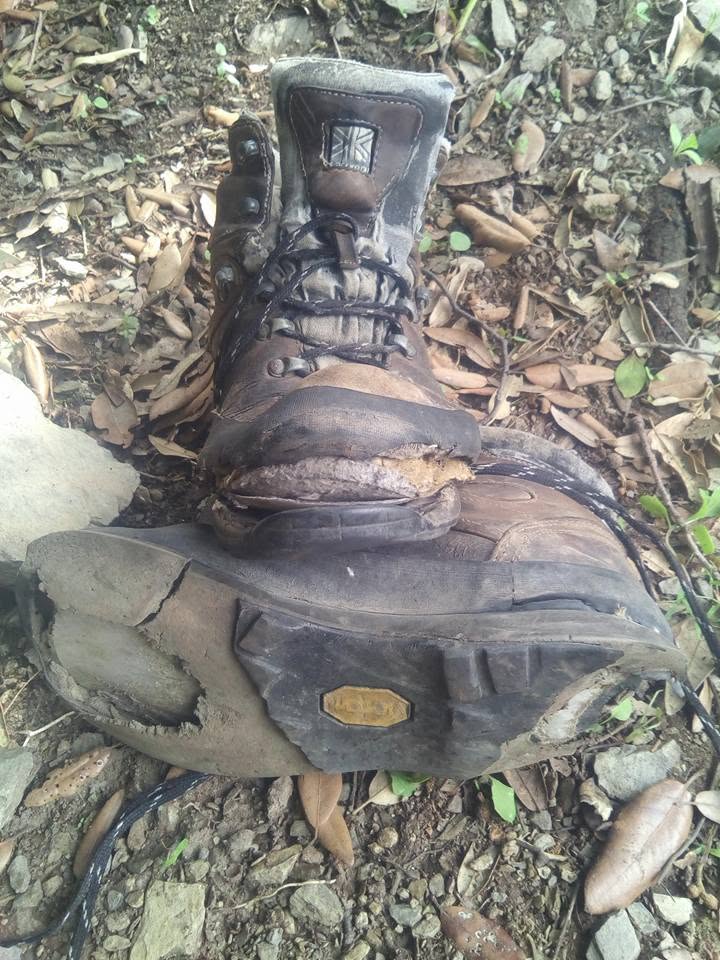
A. The hardest moments were those when exhaustion, isolation and harsh weather came together. I faced wild bears, severe blisters, illness, strong winds and long stretches of cold rain. Winters were the most dangerous, temperatures at times dropping to −30 °C at night and during the passage through the mountains of Republika Srpska when I had to camp in the snow with all my clothes wet, I genuinely feared for my life. Having no money to return home and often no access to internet or a phone in remote areas made accidents or illness frightening, because there was simply no way to call for help. Long periods of caloric deficiency, searching for food and shelter while still needing to continue walking, were at some points mentally and physically draining. What kept me going was beautiful landscapes, the feeling of freedom, my stubbornness, and the unexpected kindness of people.
Q. After spending around 850 days travelling on foot, how have the experiences changed your relationship with walking, possessions, national borders and the idea of home?
A. After around 850 days on foot, walking became something spiritual and really rewired my brain. I stopped being afraid of life. My faith became the most precious thing I carry now, it guides me through uncertainty and gives my life purpose. I learned that true happiness comes from focusing on purpose, not possessions. The material world often distracts us and leads to emptiness. I also noticed that people who have the least are often the softest yet the strongest individuals. And I realised how much technological and cultural pressure can damage our spiritual lives, pulling us away from simplicity, solidarity and clarity. I think It’s very easy to get lost in all this and forget what really matters. Life is short, live it properly.
Q. What is the next stage for Peace Walking, and how could LDWA members or other experienced long-distance walkers help support its humanitarian aims or contribute their own knowledge and experiences?
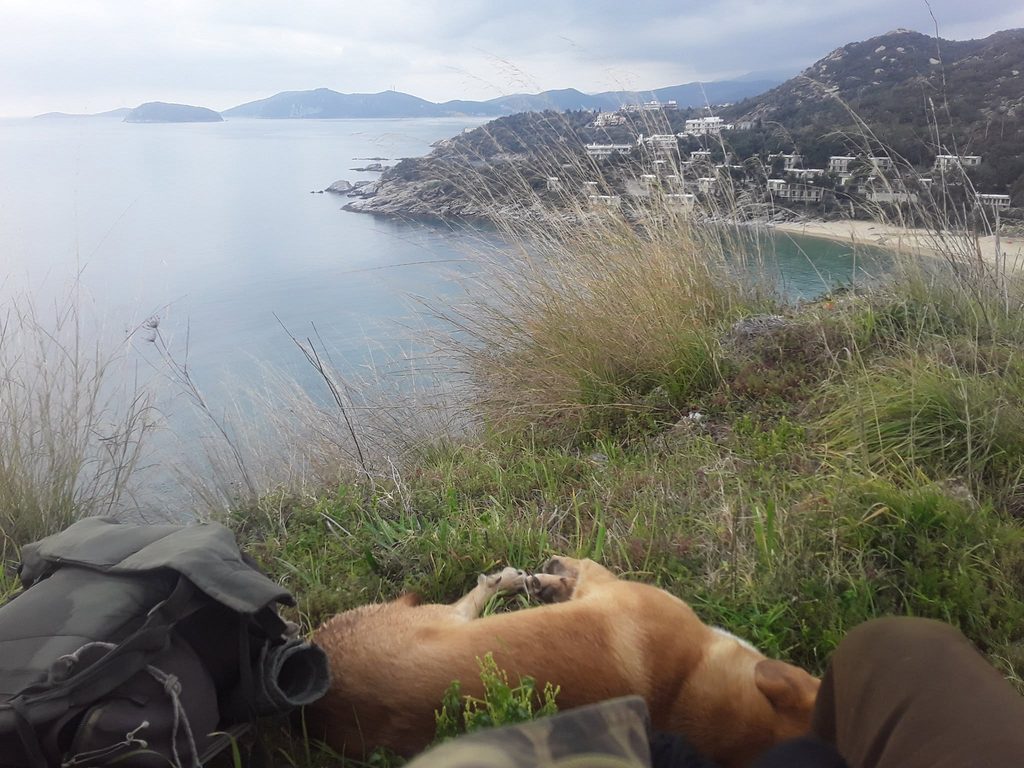
A. Peace Walking is slowly becoming a foundation built on compassion for those who walk and those who suffer, with humanitarian fundraising focused on children affected by conflict and disaster. The next stage is to expand its educational and humanitarian mission, using long‑distance walking to raise awareness of displacement, solidarity and human vulnerability. LDWA members can help by sharing their experience, joining collaborative walks, offering guidance on endurance and navigation, or helping spread humanitarian messages within the walking community.
Q. Do you find that being open to experiences and people lets to see the kindness of stranger and helps you gain a much deeper connection to your surroundings in general?
A. Absolutely. Walking teaches you that real understanding arises from experience, and that solidarity comes from being physically present. Moving slowly and simply makes encounters more genuine. The spiritual dimension of the EWPF journeys strengthened my ability to love and when we reduce our requirements to loving and being present, we begin to see beauty in everything around us. Openness reveals kindness in unexpected places and turns the world into something clearer, softer and more meaningful. All those encounters and diversity increased my tolerance; I met people with completely different cultures, characters and traditions, many of which do not align with ours, yet each of them carries their own truth and dignity.
There’s more information about the project at https://en.wikipedia.org/wiki/Peace_Walking.