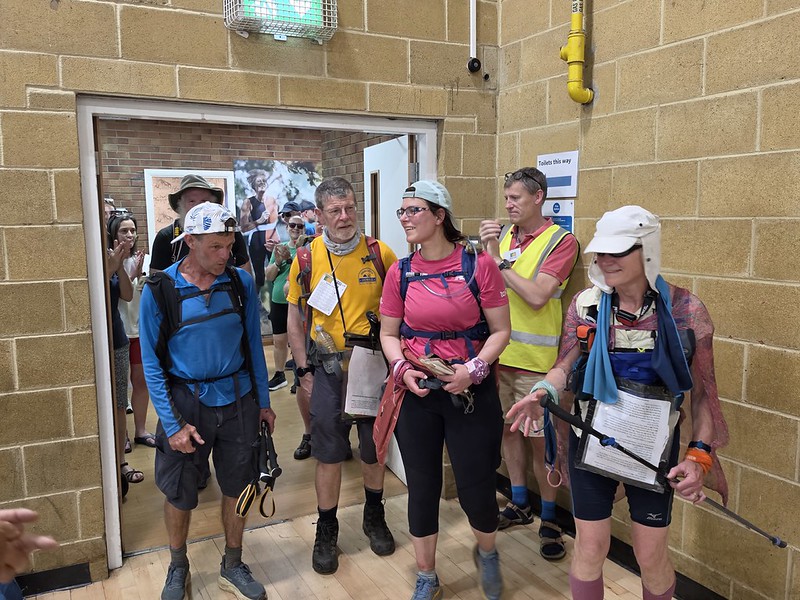
This is the sixth podcast in the series, and this time I’m joined by travel writer Tom Chesshyre. Tom has made a career out of travelling to interesting places, meeting people and then sensibly turning the experience into books, which is a rather more organised version of my own approach of taking several hundred photographs and hoping that a coherent narrative eventually presents itself. It’s good to talk to a professional about these things.
Tom is the author of fourteen travel books, with journeys taking him everywhere from North Korea and the Maldives to rather more familiar adventures around Britain. His walking books include From Source to Sea, covering a 215-mile walk along the Thames, Lost in the Lakes, based on a 379-mile circuit of the Lake District centred on its sixteen principal lakes, and his latest book, Wild Peaks, which follows a 364-mile journey from Manchester, around the Peak District and onwards to Sheffield. There’s a full list of Tom’s books at https://www.tomchesshyre.co.uk/books/.
I very much enjoyed recording this episode and reading Tom’s books. I’ve always been interested in how being open to adventure can lead to unexpected experiences and encounters with fascinating people who have countless stories to tell. We touch on that, as well as walking and pubs, during the episode. As a reminder, these podcasts will be moved to the new LDWA digital platform when it launches in early 2027 and there’s a podcast with Richard May about that project.
The conversation was also a reminder that good travel writing, like a good walk, is often as much about communities, pubs, chance conversations and becoming slightly lost as it is about the scenery.
This is the fourth LDWA podcast and this one is with Richard May, who is often mentioned on this blog, but this time it’s in relation to the LDWA’s IT project. These podcasts will be moved to the LDWA digital platform when it is launched, so it seemed appropriate to have an episode about it. The digital platform will introduce not just a new website, but also an app and will also include a new online magazine which will complement Strider, our printed magazine.
Richard is on the NEC as the IT officer and he’s part of the team overseeing the new digital platform, which the LDWA hopes to launch in early 2027. This podcast was recorded in early June 2026 and anyone with queries about the IT projects can email Richard at it@ldwa.org.uk.
For various sub-optimal reasons, we were unable to see Rob finish later on in the event, but we saw him mid route and this was at about 75 miles. The length of this challenge hides that although this feels towards the end, it’s still an entire challenge event to be completed at this stage. Rob, who is naturally brave, was worn and tired at this stage with the heat having gotten to him. His plan was to spend longer at the checkpoint until the temperature calmed down a bit.
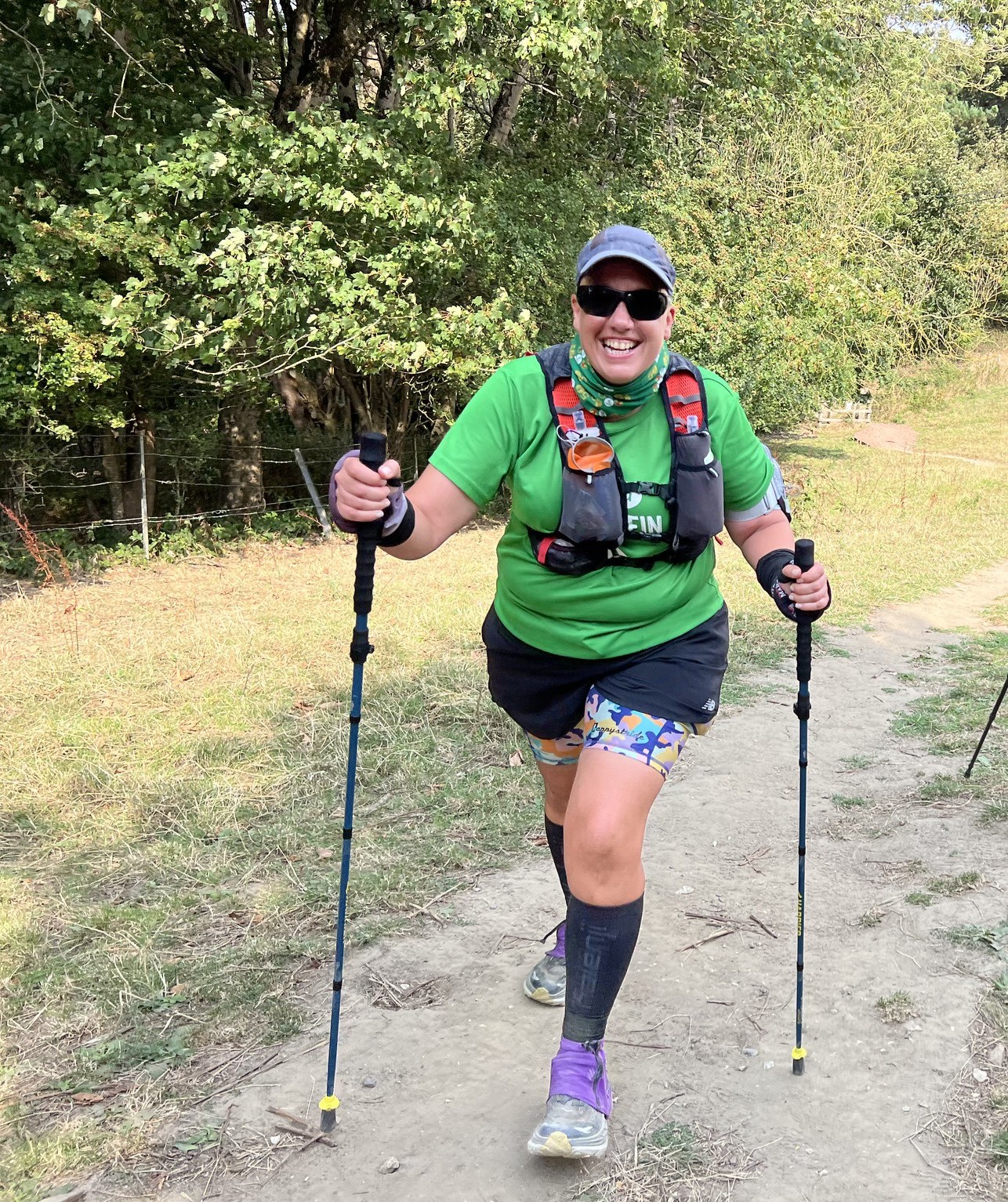
I’m pleased to say that his strategy worked and he finished the event after around 44 hours. Here’s Sarah’s photo of him after his lovely little stroll. Rob has also been kind enough to answer some questions about the event.
Q. What are your main overall memories of the Hunnypot 100?
A. The heat combined with the rolling hills. The amazing checkpoint marshals who, without their care and intervention to cool me down, I would never have finished. I have special thanks to the marshals at checkpoints 9 (Wiltshire and Dorset) and 10 (Cornwall and Devon). The superb organisation from Peter and his team, along with all marshals should be applauded.
I was very nervous before the start with the weather forecast. I came up with a plan that would see me take it slowly in the day and spend extended time in the checkpoints. Then walking faster in the evening and overnight when cooler. This put me in a mind frame that I would finish on the 2nd morning. This mostly worked.
The start affected many mentally as well as physically. The intense humidity and the number of walkers struggling early on was quite frightening. Before checkpoint 3, I was passing people who had stopped to rest as they struggled in the heat.
I liked the the Ashdown Forest even in the dark and the long climb up, I came face to face with a Stag Deer at one point (or maybe it was a Woozle or a Heffalump!), However the long 9 mile gap from the Horsted Keynes (checkpoint 8) through that hot shadeless Eden Valley I’ll always remember. I was overheating but kept shivering. Which made me worried about heat exhaustion, despite me ensuring I drank enough, hence why I stopped for so long at checkpoint 9.
I liked the climbs up the big hills near the end especially at Chevening and the amazing views from the Downs at night over the towns and villages below.
Finally the amazing feeling of finishing and the welcome at the end.
Q. I saw you at Ide Hill after around 75 miles and although you were looking very brave, you mentioned how hugely challenging it was. How did you get the energy to keep going?
A. Time. My overall desire was to retire at Idle Hill, but I knew I could spend an hour or more if I wanted, eat, drink, cooler down and leave a new person. Also to keep telling myself that was in the peak heat of the day and the weather would cool down mentally gave me confidence.
Q. Now that the heat and tiredness have been at least partly forgotten, which part of the walk did you enjoy the most?
A. The North Downs at the end, with amazing views, even at night. I felt that the best views I missed, being the Ashdown Forest (I never did get to play Pooh Sticks!) and the North Downs past Chevening. There is a connection with the 100’s and Kent for me. My first 100 was the Cinque Ports, also it was the Kent checkpoint that stopped me from retiring on the Hadrian Hundred when I got in trouble. Brian Buttifant was one of the marshalls that helped me so it was good to visit his bench, I’d like to do that again in the daytime.
Q. How are you feeling a few days on?
A. OK now, feet have mostly healed calves still feel a bit tight. Otherwise just cannot stop eating.
Q. Will you be doing it again? Or is it too early to say?
A. My initial thoughts after the event were no more. A few days on I’m now looking forward to next year, it should be a superb route in the beautiful Devon and Dorset countryside.
Q. Do you have any suggestions for organisers of future LDWA 100s?
A. If it is hot make salt/more salty snacks more available. I found that a bit lacking on the Hunnypot 100. I have seen debate around bringing the 100 forward, I think it’s something for discussion with the impact of climate change, albeit being mindful it did cool down later in the week.
I actually think there should be more comprehensive advice for entrants. Although every entrant is different, the only person you are racing against in an LDWA challenge is yourself. The 48 hours is there to be used, it’s not an aim to get a fast time. Tactically I feel I got it mostly right and finished. Although the Hunnypot 100 was extreme in its weather, some of the normally faster walkers would have benefited from slowing down and spending more time in checkpoints.
Before the Hunnypot 100, I interviewed a number of entrants about what they expected from the event and how their training was going. One of the entrants was Guy Evans, and he has kindly agreed to answer some post-event questions as well. It was also rather lovely to walk Guy in at the end, well, the last fifty metres anyway.
Q. What are your main memories of the Hunnypot 100?
A. Well the sun and the heat are the obvious and overriding memories. I’ll also remember the route – Kent might not have massive hills but it also doesn’t seem to have any flat bits either!
Q. You completed the event and came in the fastest 30 entrants. What strategies did you use to get around what appears to have been the hottest ever 100?
A. I slowed down. For the first 10 miles I was jogging the downhills, but after the first CP I walked everything. Even walking, I was still overheating. It quickly became apparent that it was much more about finishing lines than finishing times. I resolved to take it easy – in particular on the hills. I had a rough plan for when I was expecting to get to each checkpoint but I threw it away.
I was also taking more time at the checkpoints than normal to help cool down and recover. The volunteers at the checkpoints were brilliant. They must have been hot and tired too but were very patient and understanding – having water tipped onto the back of my neck was bliss.
I had a wetted buff but I’m not sure how much that helped – it dried out very quickly after each checkpoint! I also had electrolytes and salt tablets. I think I should have taken more of these. I made sure I was well hydrated – but from reading around afterwards suspect I might have taken on too much water and that was causing my blood sodium levels to drop.
Above all else, I took it from checkpoint to checkpoint. I had a wobble very early on when the thought of carrying on in this heat for the whole of Saturday, the whole night and then for the whole of Sunday (which was forecast to be hotter) just seemed too much. But just focus on the next checkpoint and the overall distance will take care of itself.
Q. Which part of the walk did you enjoy the most?
A. I said before that the night section wasn’t my favourite. This time it was! The coolness when the sun eventually set on Saturday was wonderful. The scenery in the last quarter was great and I just about had enough energy left to enjoy it (although I had a bit of a loss of sense of humour with the repeated ascents and in particular descents into Ide Hill checkpoint).
Q. Will you be doing it again? Or is it too early to say?
A. Another LDWA 100? Yes, for sure. 100%. I’m really looking forward to the next few which are in great parts of the country. I hear that the provisional Devon and Cornwall route has a lot of elevation – great!
Q. Do you have any suggestions for organisers of future LDWA 100s?
A. For me personally, don’t be afraid of making the route challenging. But, I really don’t feel in a position to make any suggestions. I’m incredibly grateful to the organisers and volunteers of the 100s for all the time and energy that they invest in putting them on. It’s a real privilege to be able to turn up and take part.
Before the 100, I interviewed a number of the entrants and so I’m catching up with some to find out how it all went. I love the phoenix from the ashes comment!
Q. What are your main memories of the Hunnypot 100?
A. I feel in some ways like the specifics are a bit of a blur, but the beautiful rolling countryside, and the chatter and buzz of the people is what pervades.
Q. Along with over half the entrants, you retired during the event, was it mostly heat related for you?
A. The heat was an indirect cause for me, in that I didn’t feel hot or ill at any point on the walk, but because I took too many electrolyte tablets, I felt uncomfortably thirsty for a couple of legs. I didn’t learn this until I spoke to the medic at checkpoint 4. Essentially I retired because knowing I had messed up, and sensory overload caused by a combination of several factors, prompted me to have a meltdown / panic attack. At that point I didn’t want to push through and risk needing assistance in the middle of nowhere in the dark, potentially jeopardising the finish for my walking buddy. Ultimately it comes down to lack of experience, and I have learned a lot from it that I will take forward to future events. Before the Hunnypot finished I had booked the Sussex Stride so that I can qualify for the Jurassic 100 next year.
Q. Which part of the walk did you enjoy the most?
A. I genuinely enjoyed all of it. The scenery was fab, the volunteers were amazing, the food was great, and the other participants were lovely. One thing I love which I think is a bit unusual is being overtaken by the speedy folk on the later starts as I love to see how smooth their form is and the glide past.
Q. Will you be doing it again? Or is it too early to say?
A. A phoenix always rises from the ashes and this Phoenyx is no exception.
Q. Do you have any suggestions for organisers of future LDWA 100s?
A. I’d like to see a more evenly staggered start. The entrants were split across the three start waves in 450/50/6 proportion which makes for a logistical nightmare. I arrived at HQ as soon as it opened so I didn’t get stuck in queues for registration, but as a mid pack walker I was right in with the masses at checkpoints. This meant queueing in hot stuffy halls, and I witnessed lots of people struggling to find space to sit. I think splitting the 450 across 9am, 9:30 and 10am starts would resolve this. I appreciate it means an hour earlier start for many volunteers, but I think it would make it less stressful for them too in terms of replenishing stocks at checkpoints.
I think with the unprecedented heat this year, now is a good time to look to the future and create a heatwave-proof contingency to set people up for success after the massive drop out rate this year. This might mean adjustments like a hot weather mandatory kit list where waterproofs can stay in the breakfast bag, checkpoints being closer together [I notice FOS100 had 16 vs HP100 having 13] or moving the south of England events to Easter and Mayday rather than Mayday and Spring Bank Holidays.
Either way, I have had such a positive experience I will be entering more LDWA events, and I even took the opportunity mid-walk, to volunteer myself to help at the Stansted Stagger as I have completed it twice now. I’ve also signed up for the BBN Pic n Mix this Sunday so I might see some of you there.
Guy Evans created this interesting infographic of where the retirements took place on the 100 this side, it’s an interesting snapshot of what happened along the route. The actual number was 471 started and 209 finished, the tracking data is slightly faffy but this is still an intriguing use of data. Over 100 retirements by CP5 shows how the hot weather was impacting entrants, many of them just didn’t feel that they could carry on.
Enfys was one of the entrants that I interviewed before the Hunnypot 100 and she kindly agreed to answer some questions about her experience of the whole hot 100. Enfys reached checkpoint 8, a considerable achievement in itself with the heat.
Q. What are your main memories of the Hunnypot 100?
A. My main memories of the Hunnypot are the heat. That made this event so incredibly challenging, as just two days before I had been on the beach in 12-degree weather with hailstones pounding down on me. The contrast was crazy. Other than that, I’ll remember the volunteers keeping me cool and taking the time to play Pooh sticks, which I lost.
Q. Along with over half the entrants, you retired during the event. Was it mostly heat related for you?
A. It was definitely heat related. My feet had blistered, as had my back, with more hot spots coming. I had to make a choice between finishing early on a high, having completed an excellent route with a medium amount of blistering, or finishing like last year, when I was in tears from the pain. I chose happy and satisfied, with wonderful memories.
Q. Which part of the walk did you enjoy the most?
A. The route delivered picturesque villages, shaded woodland and some lovely hills. My favourite part was climbing the hill from Pooh Bridge just as the sun was setting.
Q. Will you be doing it again? Or is it too early to say?
A. Of course I will be doing it again, it’s so much fun. In 2027 I’m taking a year out to do some events that I normally can’t do, as I prioritise the Hundred. However, in 2028 I will be back and can’t wait to get on the paths in the place where my long-distance walking began.
Q. Do you have any suggestions for organisers of future LDWA 100s?
A. The organisation and volunteers on the Hundred are unmatched. However, I would be interested to know if it is logistically possible to move event start times forward in the future, if we encounter another hot event.
This is the fifth podcast (yes, I know the fourth might come after the fifth, but successful podcast editing comes in many forms and the strategy is not always necessarily linear or defensible…..) in the series as part of a trial and apologies that it has taken some time to get the season continuing! There will now be an episode every two weeks so that’s something to look forward to with some cautious optimism.
Firstly, this episode had serious technical issues from my end and so apologies it doesn’t quite flow right and the audio quality from my end isn’t perfect. But this is part of practising these and getting better. I was very fortunate in having an interviewer as helpful and personable as Andy Kind, he was a delight and very tolerant of my faffing about which at times was reaching professional standards.
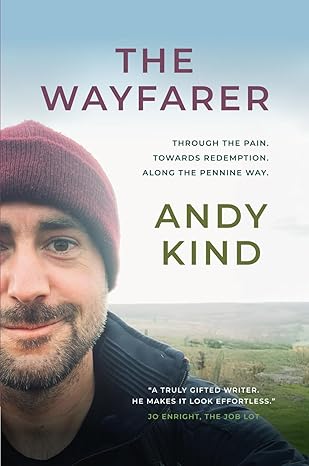
Andy is a comedian and a preacher, he’s written a number of books which include Stand Up and Deliver, which is about his experiences of entering the world of stand-up comedy. He then wrote the Wayfarer, a book about Andy’s walk along the Pennine Way. It’s written in an informal manner which is humorous and is very much based on the characters he meets along the way. These adventures are good for the soul and reading Andy’s book made me want to start doing more long distance trails in the UK. He reminded me of the people you can meet along the way, which is one of the great joys of walking, assuming they are not blocking the only available bench.
Very many thanks again to Andy for his patience, good humour and willingness to endure my technical shortcomings. Sorry that listening to me is even more challenging than usual, but at least this episode proves that the podcast is improving in the most traditional way possible: by making mistakes in public.
This is the third podcast in the series as part of a trial and apologies that it has taken some time to get the season continuing! There will now be an episode every two weeks so that’s something to look forward to 🙂
This episode is with Jonathan Smith, an experienced traveller who has visited over 100 countries and has meandered along long distance paths across the world. There will be more interviews with Jonathan, but we started with Caminos in this episode.
Huge congratulations to Fiona Gosling, Adrian Gosling, Alan Gray and Alzbeta Benn, who were the final four entrants to come back in. They were within the 48 hour time limit and their achievement is astounding, to walk for that length of time and in those extremely hot conditions is pushing the human body to what it can achieve.
To have the willpower to carry on with the requirement not to be timed out during the event is amazing. Heroes I tell you…… To come in at that point, still moving forward after everything the event had thrown at them, was a wonderful and rather humbling sight.