
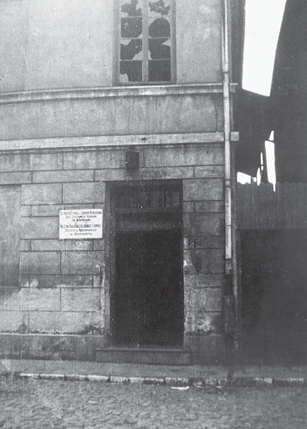
I was intrigued by this photo, which shows the offices of Radom’s Judenrat. This is a particularly difficult part of the city’s wartime story. Established in December 1939 under German occupation and headed by Józef Diament (1894–1942), the Judenrat was a Jewish council required to carry out the occupiers’ orders. This was not an independent council representing a community with the freedom to govern itself. Its members operated within a system of persecution imposed by Nazi Germany, with responsibility for administering aspects of Jewish life but little power over the conditions determining whether people could survive.
The council’s headquarters were at 8 Ulica Grodzka. Its departments dealt with matters including housing, food supplies, sanitation and welfare, while also having to meet German demands for forced labour and administer property taken under occupation. These responsibilities brought the council into the daily lives of people facing dispossession, hunger and increasingly severe restrictions. There were also efforts to maintain cultural life as best as could be managed in the circumstances.
In late 1940, before the ghettos were established, the German authorities ordered the removal of Jewish residents from Radom to other towns. According to POLIN Museum’s Virtual Shtetl, the council selected predominantly poor, elderly and ill people for removal. In spring 1941, the Germans established two ghettos, a larger district near the historic centre and a smaller one in Glinice. The Judenrat administered the community under German control, placing its members between the occupiers’ demands and the needs of the persecuted community.
The wider history ended in the destruction of almost the entire Jewish community in Radom. During the liquidation of Radom’s ghettos in August 1942, German forces murdered residents and deported thousands to the Treblinka extermination camp. The date of Józef Diament’s death is unknown, but he died in Auschwitz.
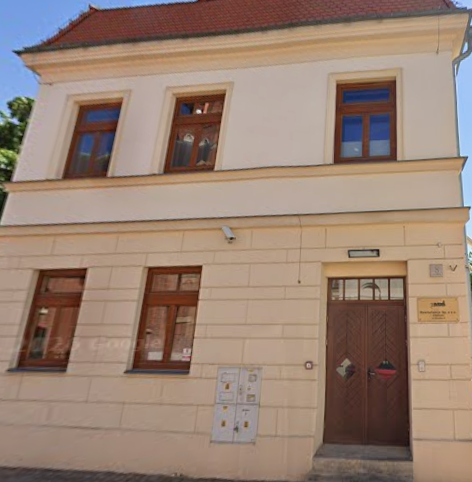
The building is still standing. I only found the earlier photo after I had visited Radom, so this is a photo from Google Street View, but if I return to Radom there are numerous buildings that I would like to see.