Tag: Radom

  • Radom to Warszawa Służewiec – PKP Intercity Train

    Radom to Warszawa Służewiec – PKP Intercity Train

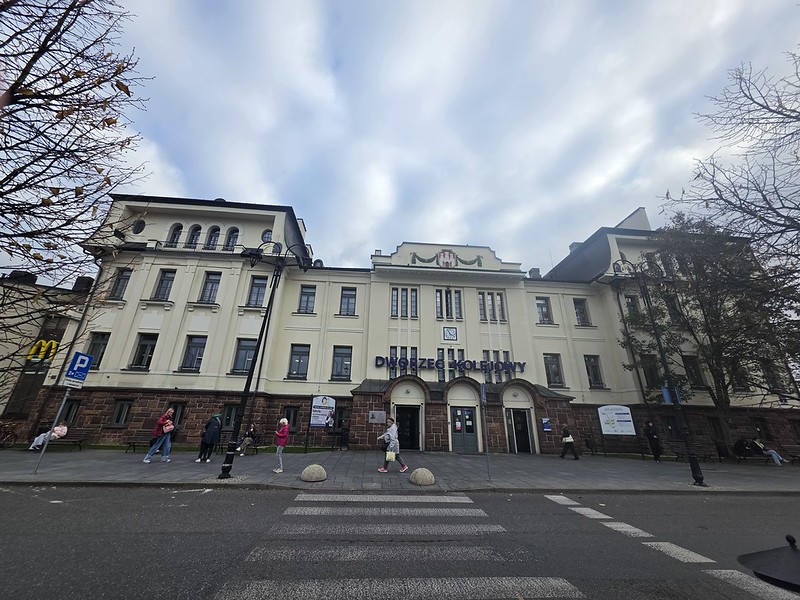
    Back to my Polish travels after a distraction with an eighteenth-century artwork of Norwich and the Norwich Beer Festival. This is Radom’s main railway station (Radom Główny) which opened on 25 January 1885 as part of the railway linking Dęblin, then known as Ivangorod, with Dąbrowa Górnicza. Designed by the Warsaw architect Adolf Schimmelpfennig, the station building originally stood outside the city’s boundaries on land belonging to the village of Prędocinek, with its arrival helping to encourage Radom’s industrial and urban expansion.

    The station’s original appearance was rather grander than today, with decoration inspired by Baroque palace architecture, but retreating Russian troops partially burnt the building in July 1915. The Austrian authorities subsequently rebuilt it in a simplified form and it passed into Polish hands in 1918.
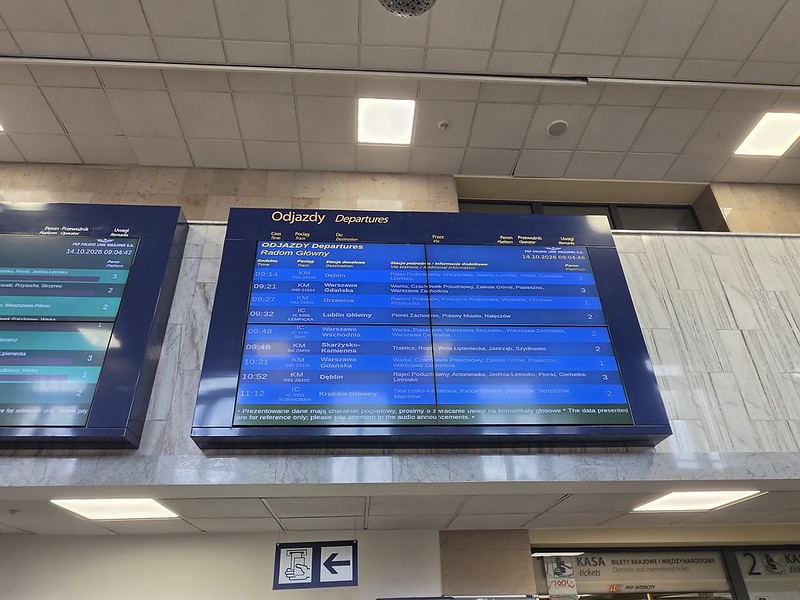
    Mine was the 09:48 service to Warsaw. I had stayed in Radom partly because I hadn’t been there, but also as Warsaw hotels were expensive. I was also meeting up with the delightful Roy and Jen to welcome them at Warsaw Chopin airport, so I needed an early morning train.
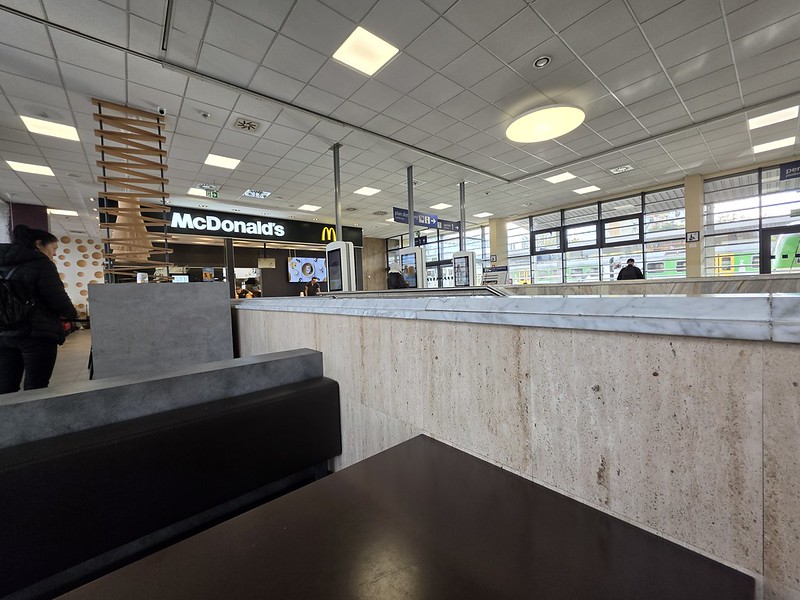
    My hotel was a one-minute walk from the railway station, but I left thirty minutes to get there in case of some unexpected delay. I arrived at the railway station 29 minutes earlier than necessary, so I popped into this little cafe.
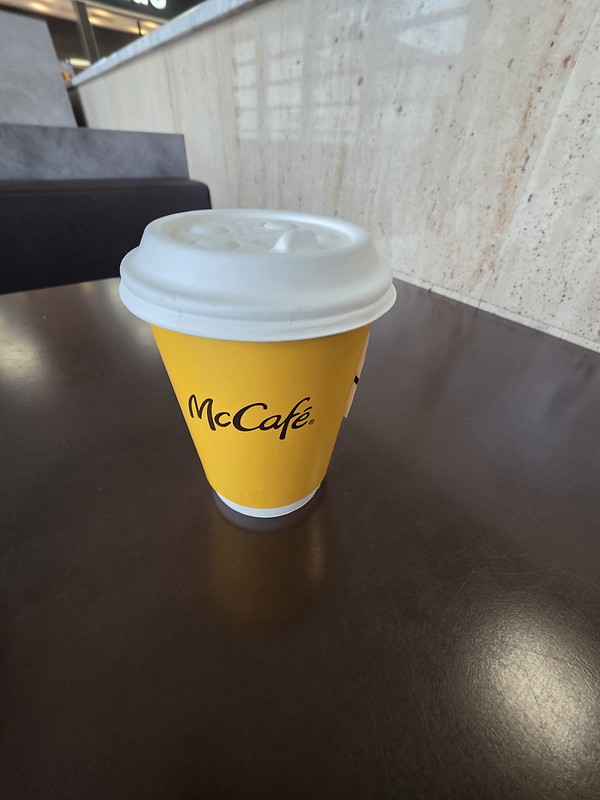
    There was an offer of a latte for the equivalent of £1 and I paid an extra 60p to get a shot of espresso added to it. This is proper continental living. I didn’t bother with breakfast as I felt that the additional espresso had addressed the main nutritional concern.
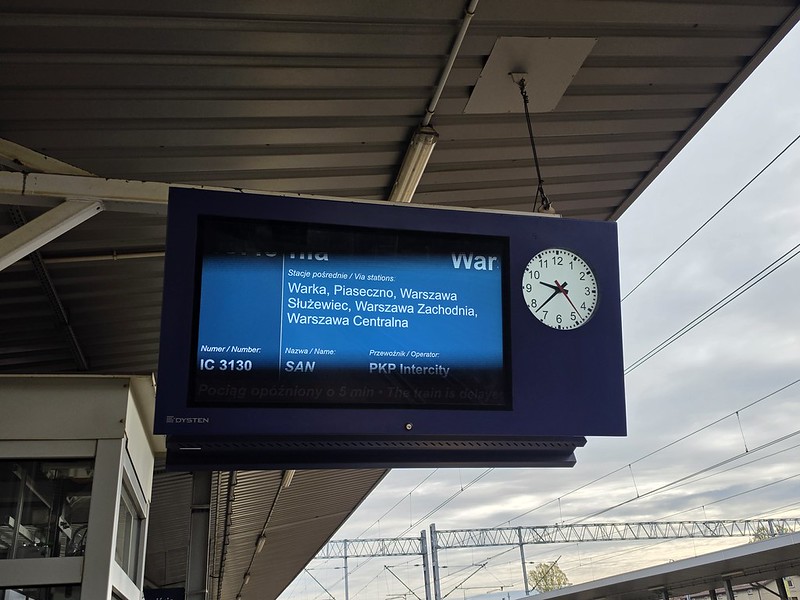
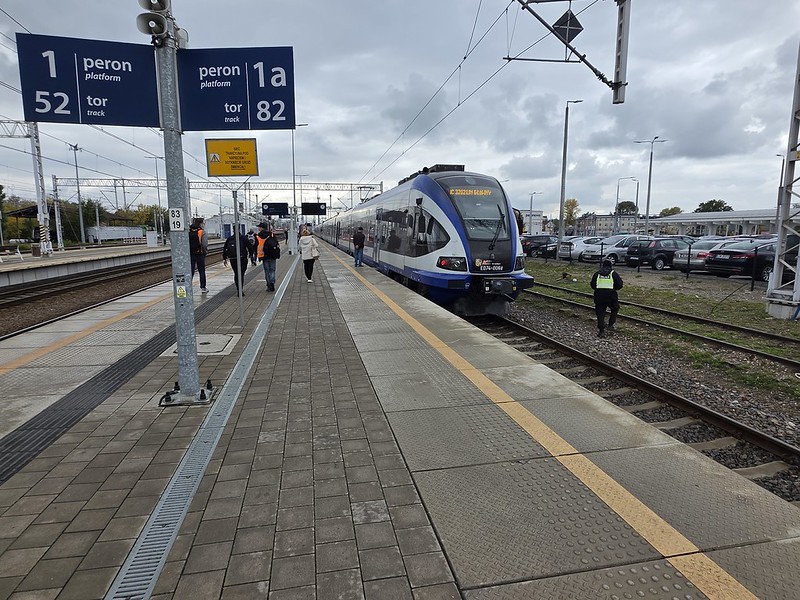
    Safely on the platform.
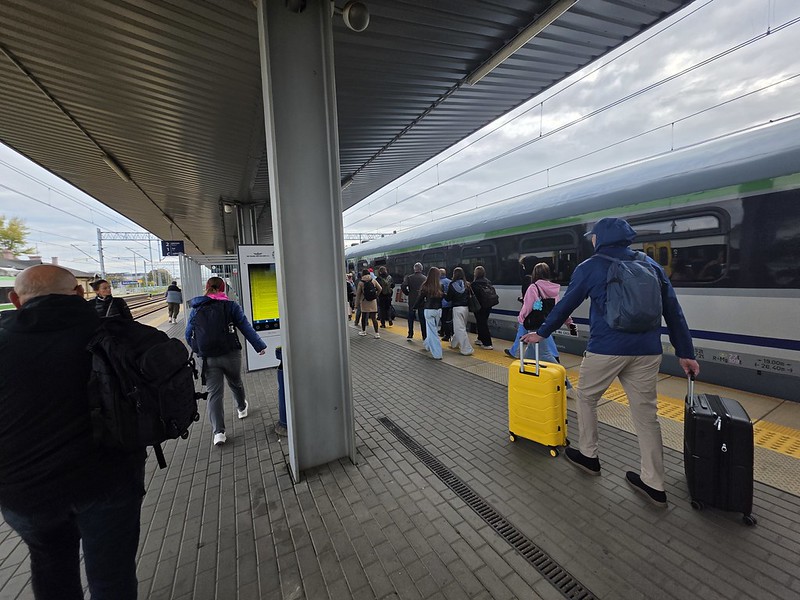
    For reasons I’ve mentioned before numerous times on this riveting blog, I don’t much like reserved seats and that’s particularly true in the UK. There’s usually someone sitting in the seat and I like finding my own seat. However, Polish Intercity train tickets come with a seat reservation and that means there’s a stampede of passengers trying to find their carriage.
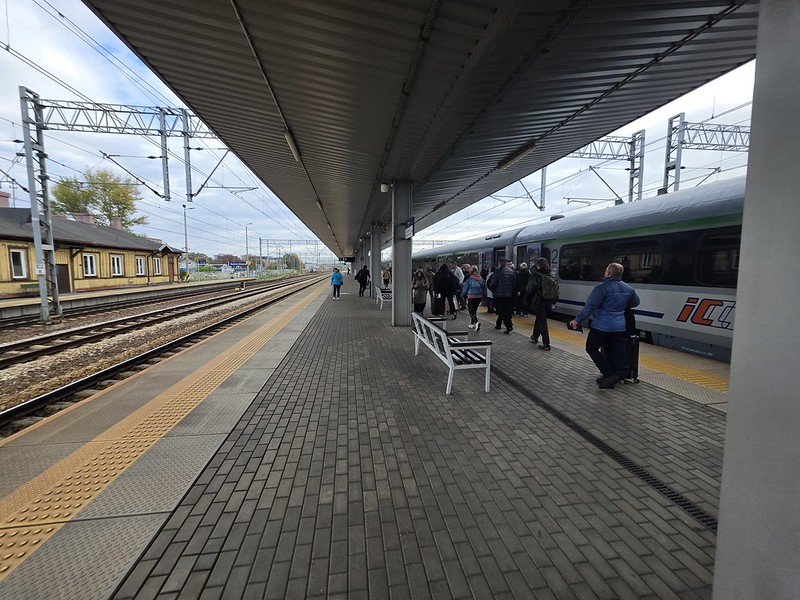
    I joined the stampede, albeit from the other side of the platform as I don’t want too much frivolity. However, due to my trying to play a game on my phone at the time, I got muddled up and realised I had walked about three carriages too far.
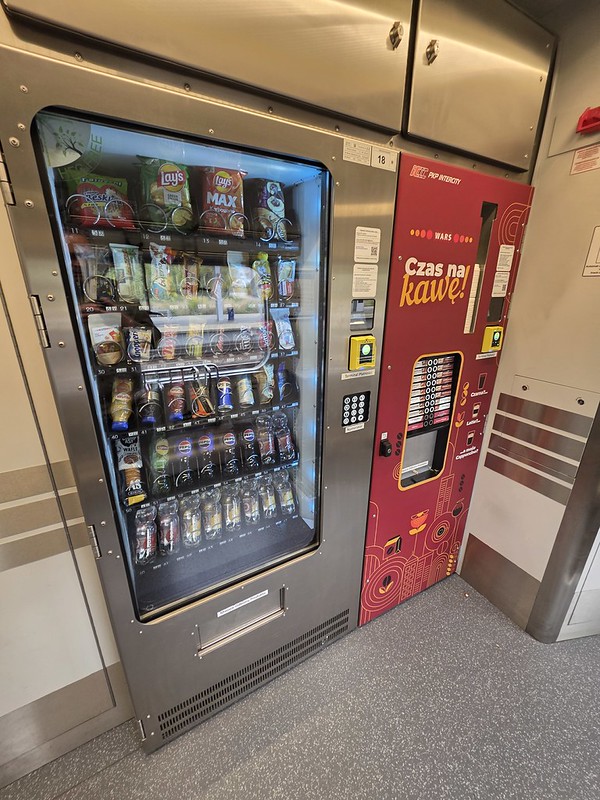
    Whilst traipsing through the train back to my seat, I noticed a vending machine which I hadn’t realised they had on board these services. I don’t tend to wander about the train, I should probably explore more.
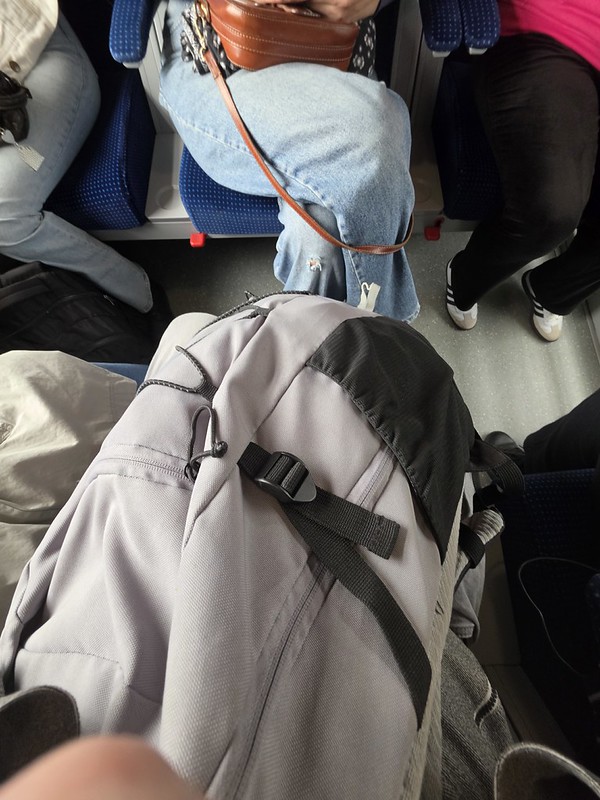
    I knew this in advance, but I had a middle seat in a compartment carriage. I don’t like these compartments which seat six people, but I appreciated that no-one had sat in my seat. I prefer open-plan trains and I think, if my readers will pardon the pun, that this is the general direction of travel when new trains are built. One of the reasons that I don’t like these compartment carriages is that they can promote sociability, which is the last thing that I need on a relaxing rail journey, but more importantly, they can be too hot. Fortunately, neither was a problem on this service which seemed to be just about at capacity.
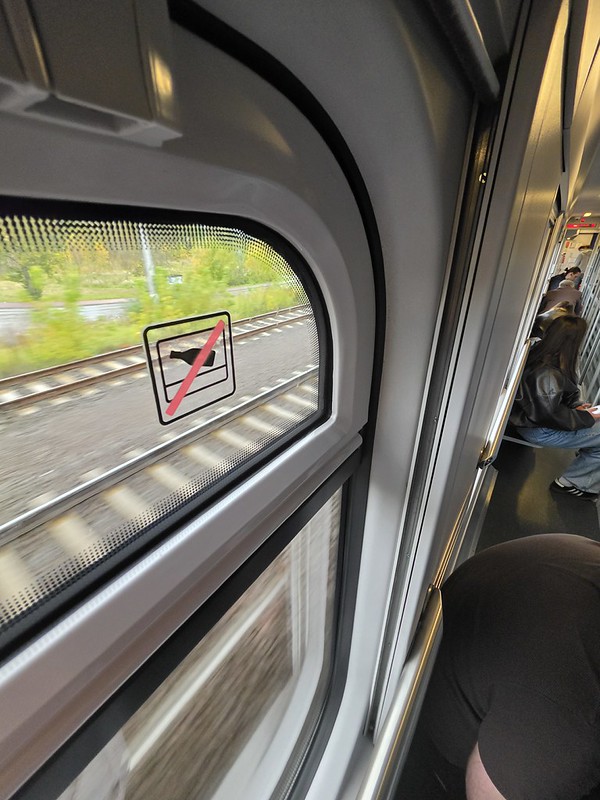
    I was trying to avoid taking photos of people, but this is the corridor section of the train with the compartments leading off it. I hadn’t noticed before that there were fold-down seats here, which were handy for those passengers who wanted to sit down, but inconvenient for anyone wanting to walk down the corridor. Ultimately, it’s thoughtful arrangement which allowed passengers to obstruct the corridor in greater comfort.
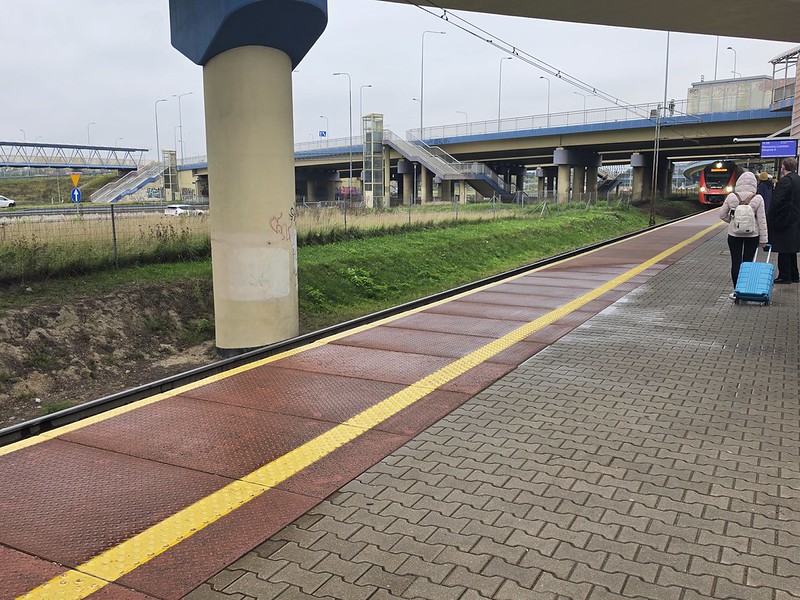
    My train ticket was to Warszawa Centralna, but the service was delayed by over 45 minutes en route and that would have made it hard to get to the airport to meet Roy and Jen. I noticed that the train stopped at Warszawa Służewiec which is near to the airport and so I got off there. Warszawa Służewiec railway stop first opened in 1962, during the development of the surrounding area as a major industrial district. It was substantially modernised and improved between 2009 and 2012, which is when it took on its new role as a junction between the airport railway and the main line towards Radom.
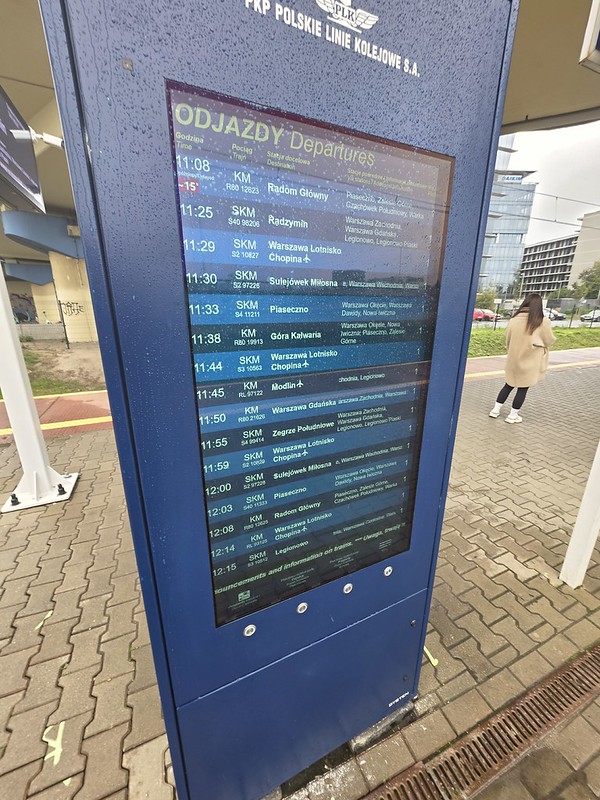
    And the 11:29 service to the airport, so all was well and I arrived to meet Roy and Jen without them having to sit and wait for me.
  • Radom – Judenrat Building

    Radom – Judenrat Building

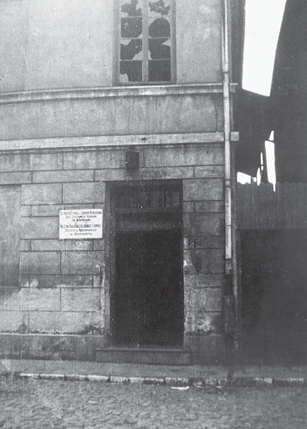
    I was intrigued by this photo, which shows the offices of Radom’s Judenrat. This is a particularly difficult part of the city’s wartime story. Established in December 1939 under German occupation and headed by Józef Diament (1894–1942), the Judenrat was a Jewish council required to carry out the occupiers’ orders. This was not an independent council representing a community with the freedom to govern itself. Its members operated within a system of persecution imposed by Nazi Germany, with responsibility for administering aspects of Jewish life but little power over the conditions determining whether people could survive.

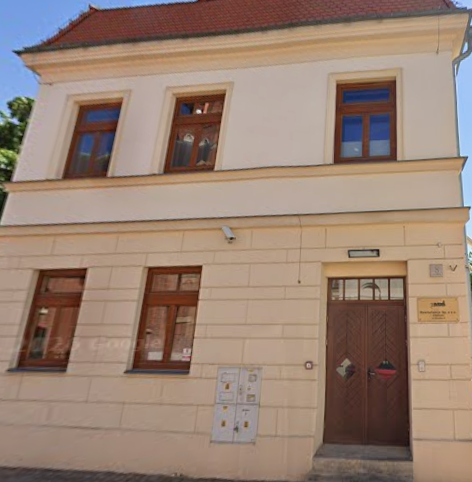
    The council’s headquarters were at 8 Ulica Grodzka. Its departments dealt with matters including housing, food supplies, sanitation and welfare, while also having to meet German demands for forced labour and administer property taken under occupation. These responsibilities brought the council into the daily lives of people facing dispossession, hunger and increasingly severe restrictions. There were also efforts to maintain cultural life as best as could be managed in the circumstances.

    In late 1940, before the ghettos were established, the German authorities ordered the removal of Jewish residents from Radom to other towns. According to POLIN Museum’s Virtual Shtetl, the council selected predominantly poor, elderly and ill people for removal. In spring 1941, the Germans established two ghettos, a larger district near the historic centre and a smaller one in Glinice. The Judenrat administered the community under German control, placing its members between the occupiers’ demands and the needs of the persecuted community.

    The wider history ended in the destruction of almost the entire Jewish community in Radom. During the liquidation of Radom’s ghettos in August 1942, German forces murdered residents and deported thousands to the Treblinka extermination camp. The date of Józef Diament’s death is unknown, but he died in Auschwitz.

    The building is still standing. I only found the earlier photo after I had visited Radom, so this is a photo from Google Street View, but if I return to Radom there are numerous buildings that I would like to see.

  • Radom – Photos at Night

    Radom – Photos at Night

    The distraction of Norwich Beer Festival now over, I will excite all my blog readers (both of them) with a continuation of my journey across Poland a couple of weeks ago. Having never been to Radom before, I took the opportunity to meander around the city centre during the evening.

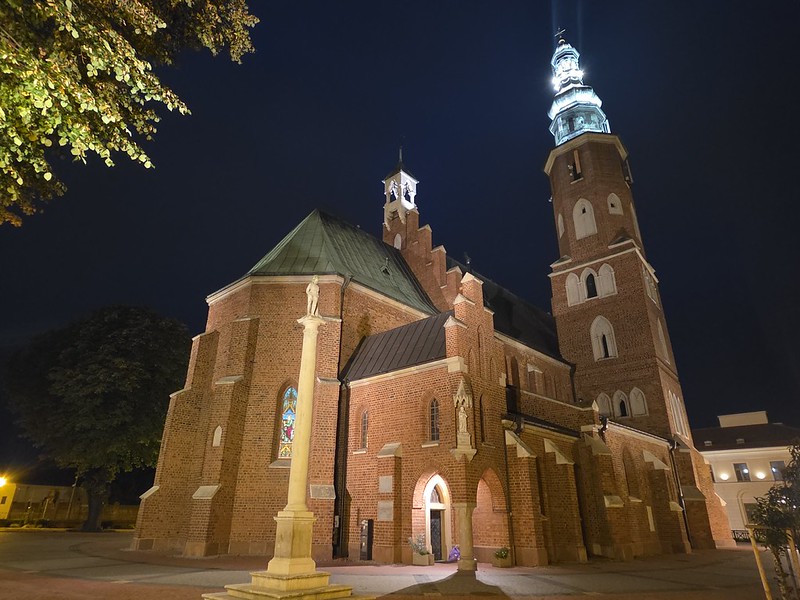
    This is the Church of St John the Baptist (Kościół św. Jana Chrzciciela), usually known as Radom’s Fara, or parish church. Its origins lie in the fourteenth-century town developed under King Casimir III the Great, although the building has been extended and altered considerably since then. Much of its present appearance comes from a substantial neo-Gothic rebuilding between 1908 and 1909 by Józef Pius Dziekoński, the architect also responsible for Radom’s cathedral.

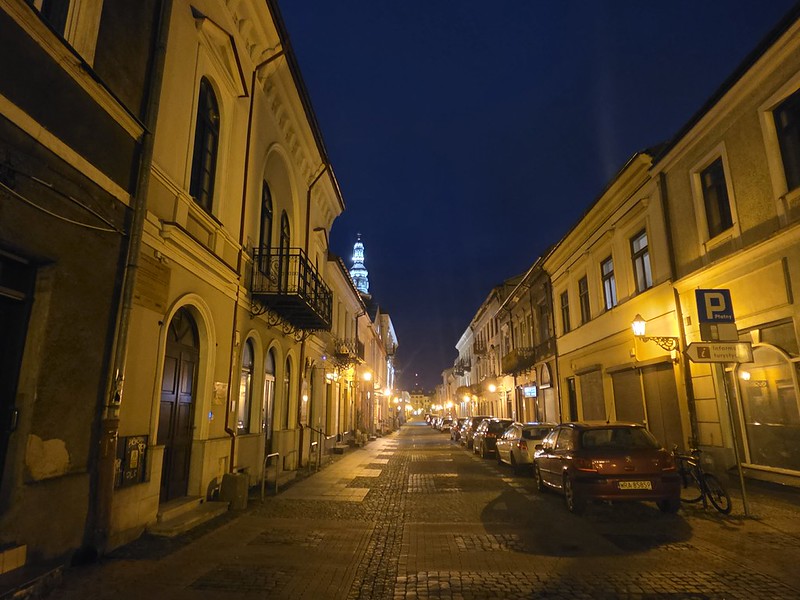
    This view along Rwańska shows something of the scale of Radom’s medieval centre, with narrow plots and closely packed buildings rather than the broader streets of its later expansion. Rwańska connected the market square with the Lublin Gate (Brama Lubelska), one of the entrances through the town’s defensive walls. Beyond that gateway, the road continued towards Lublin, linking this relatively compact town with a much wider trading network. The parked cars are a slightly more recent contribution to the historic streetscape.

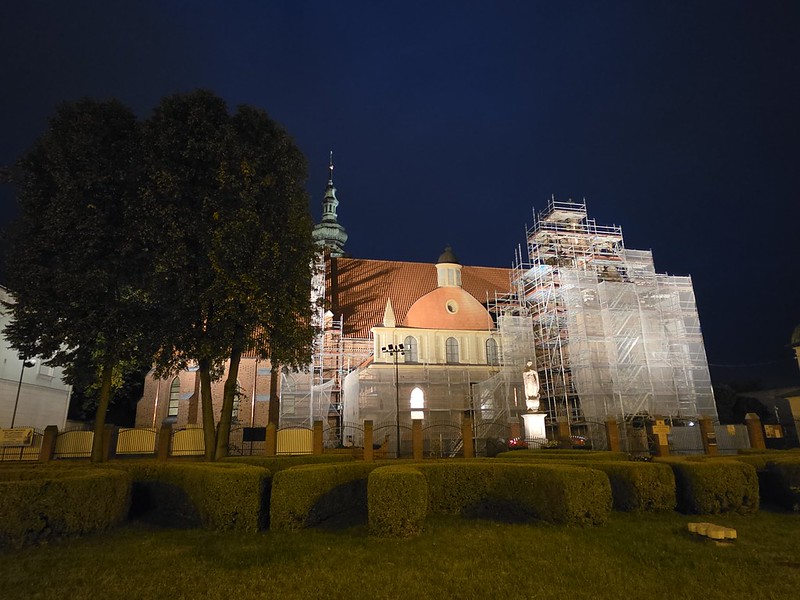
    Behind the scaffolding is the Church of St Catherine of Alexandria and the Bernardine monastery (Kościół św. Katarzyny Aleksandryjskiej i klasztor Bernardynów). The friars arrived in 1468 following royal permission from Casimir IV Jagiellon, settling outside the medieval walls beside the route towards Lublin. Their first buildings were wooden, with construction of the brick Gothic church beginning in 1480. The monastery later became involved in the Polish independence movement, hosting insurgent meetings and administering oaths to insurgents during the January Uprising of 1863. Russian reprisals followed, including the suppression of the monastery in 1864, and the Bernardines did not return until 1936.

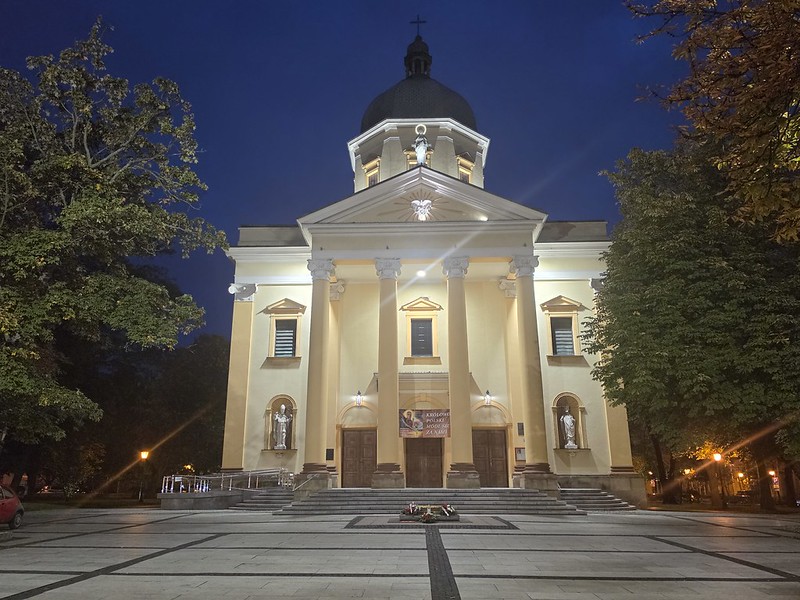
    The Garrison Church of St Stanislaus (Kościół garnizonowy św. Stanisława Biskupa i Męczennika) has a rather different background from the older Catholic churches. Completed in 1902, it was originally the Orthodox Church of St Nicholas, built when Radom was under Russian rule. Its prominent position on what is now Plac Konstytucji 3 Maja made it a conspicuous part of the imperial cityscape. Following Polish independence, the building was retained and extensively remodelled during the interwar period as a Catholic church serving the Polish military.

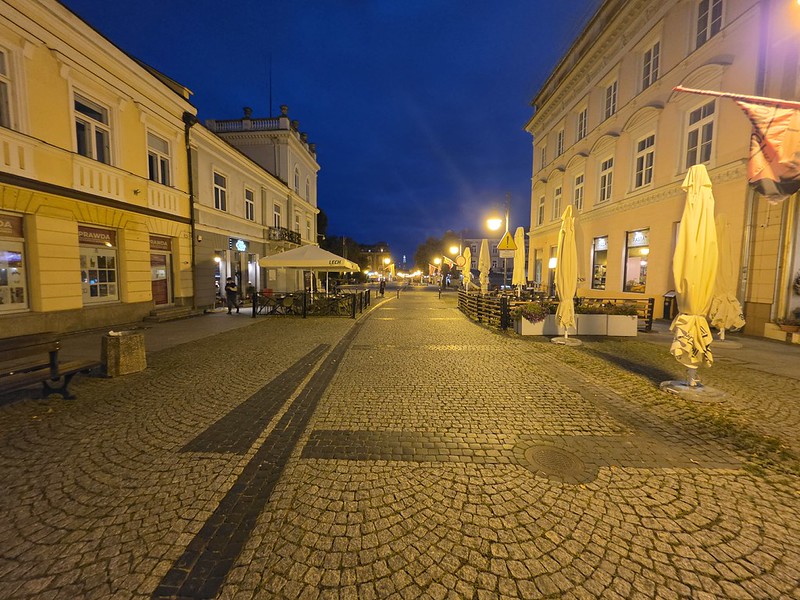
    Ulica Stefana Żeromskiego represents Radom’s expansion beyond its medieval boundaries. Formerly known as Lubelska, it followed the old road towards Lublin before nineteenth-century development turned it into the city’s main street. A planning scheme adopted in 1822 helped shape that transformation, with substantial townhouses, commercial premises and public buildings establishing a new centre of urban life. The surviving nineteenth-century façades still give the street much of its character, with café terraces now occupying space once used by through traffic. Indeed, I generally consider replacing traffic with somewhere to sit down as a substantial improvement in town planning.

    After the narrowness of Rwańska, this feels like a different chapter in Radom’s history, with rather more room for an evening meander. It wasn’t particularly busy in the city centre and I noted how clean and well maintained it all was, although I always tend to note the positive elements in Poland. My application to become an entirely impartial observer remains unsuccessful.

  • Radom – Cathedral of the Protection of the Blessed Virgin Mary

    Radom – Cathedral of the Protection of the Blessed Virgin Mary

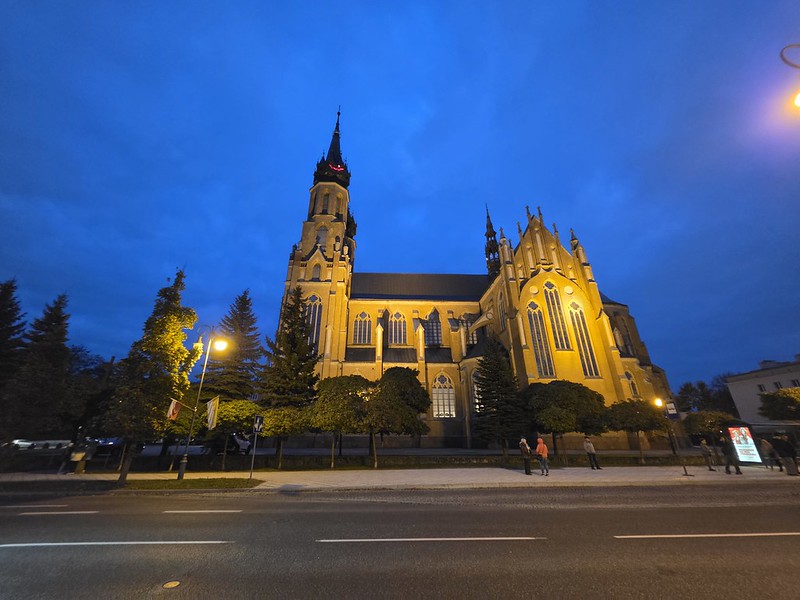
    This rather impressive building is Radom’s Cathedral of the Protection of the Blessed Virgin Mary (Katedra Opieki Najświętszej Maryi Panny), photographed during my evening meander around the city. The neo-Gothic church was designed by the Warsaw architect Józef Pius Dziekoński (1844-1927) and construction started at some point around 1899, and its two 72-metre towers were modelled on the taller tower of St Mary’s Basilica in Kraków. I feel that I was rather fortunate with the photo as the yellow brick and the blue sky make the church look quite imposing.

    The whole arrangement took a while to deliver. Radom was at the time under Russian rule and the first request to construct a larger Catholic church went to the authorities in 1873. It took until 1898 and a city that had grown to a population of 80,000 people until the building was agreed. The situation by then had become a little sub-optimal and even then it wasn’t a cathedral. That exciting promotion waited until 1992 when the Diocese of Radom was finally established.

    One of its proudest moments comes from June 1972, when Cardinal Stefan Wyszyński (1901-1981) and Cardinal Karol Wojtyła (1920-2005), the future Pope John Paul II, led the bishops into the church carrying something the congregation had by that point stopped expecting, namely the copy of the Black Madonna of Częstochowa. The communist authorities had prevented the copy from leaving Jasna Góra since 1966, so for six years the faithful had processed behind an empty frame, which shows something of a rebellious stance.

    My two loyal blog readers will note that I didn’t get chance to see the interior, so they’ll have to manage with just seeing the exterior.

  • Radom – The Former Synagogue

    Radom – The Former Synagogue

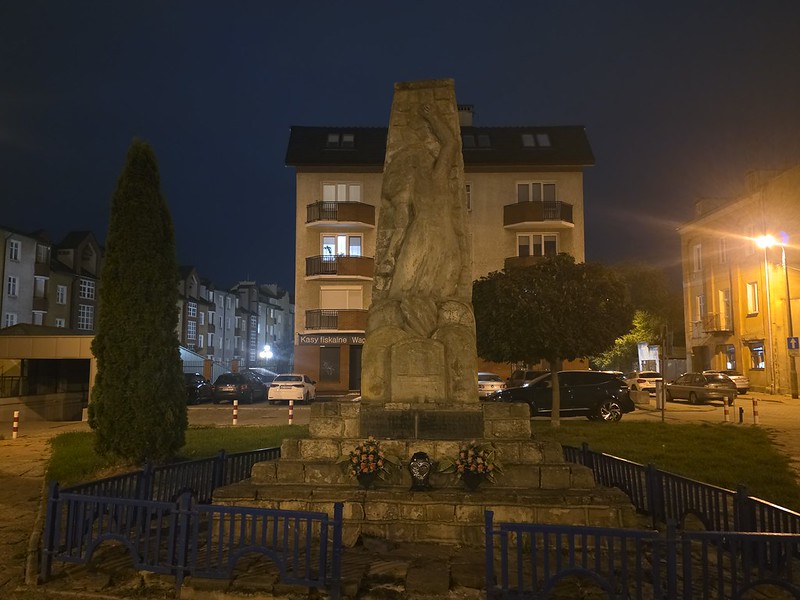
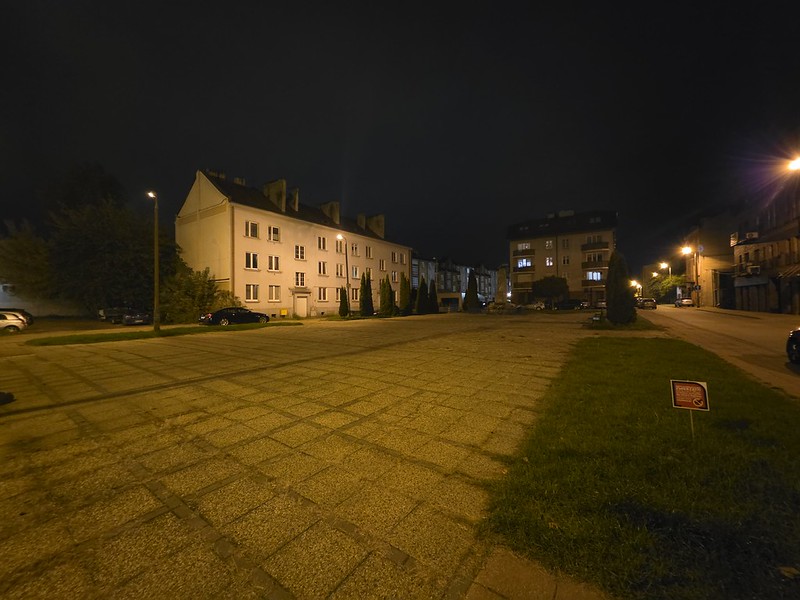
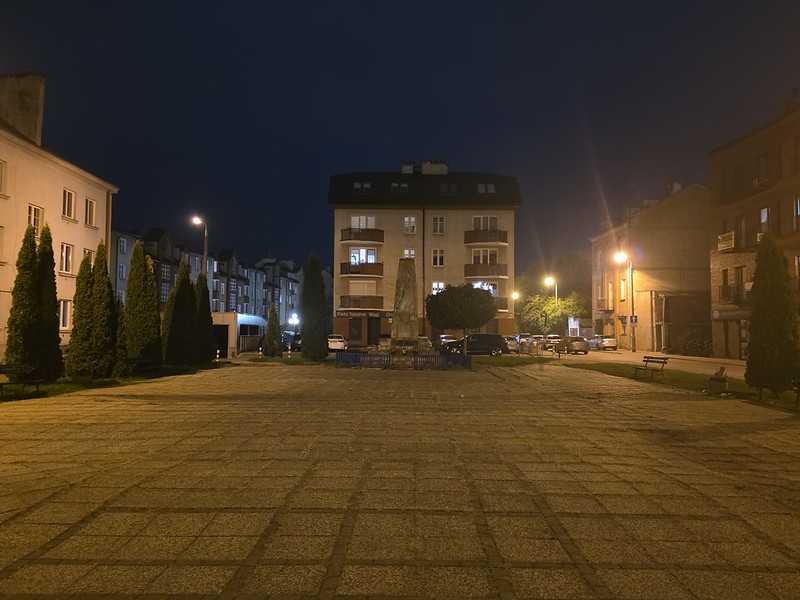
    I wanted to see this square in Radom, located at Bożnicza and Podwalna streets, as it is where the city’s main synagogue once stood. Apologies for the quality of the photographs, as the lighting wasn’t particularly helpful, but I wanted to record the location and its history. Before the Second World War, Radom had a substantial Jewish community of around 30,000 people, representing approximately one-third of the city’s population. Jewish residents played an important role in local commerce, manufacturing and cultural life, with their own schools, religious institutions, political organisations and charitable societies. The synagogue, built in 1844, was at the centre of this community, serving as a place of worship and religious education. It was a substantial brick building with a central prayer hall, supported by four wooden columns beneath a raised roof structure. By the late 1930s, however, Jewish residents were also facing growing antisemitism and economic difficulties, even before the catastrophe that would follow the German invasion.

    German forces occupied Radom on 8 September 1939, and persecution of the Jewish population began almost immediately. Jewish businesses and property were confiscated, residents were subjected to violence and forced labour, with restrictions being imposed on everyday life. In April 1941, the German authorities established two ghettos, one in the city centre and a smaller one in the Glinice district, confining approximately 32,000 Jewish people in overcrowded and increasingly desperate conditions. Food shortages, disease and violence became part of daily life. In August 1942, the Germans began liquidating the ghettos, deporting thousands of residents to the Treblinka extermination camp, where they were murdered. Others were killed during the deportations or forced into labour camps, with some subsequently transferred to concentration camps elsewhere in occupied Europe. By the end of the war, the Jewish community that had been such an important part of Radom for generations had been almost entirely destroyed.

    The synagogue itself was another casualty of the occupation. Following the German takeover of the city in 1939, it was closed and its interior was destroyed. During the occupation, the building was also used as a quarantine facility for people who had been exposed to typhus in the ghetto. The structure was left in ruins and demolished after the war, with the site remaining an open space rather than being redeveloped. In 1950, a memorial to Radom’s murdered Jewish population was erected here, designed by Jakub Zajdensznir, a local Jewish artist. The monument incorporates material associated with the destruction of Jewish heritage and carries an inscription commemorating the victims of Nazi crimes. It stands where the synagogue once served a thriving community, although little of the original building or the surrounding Jewish neighbourhood remains visible today.

    The end of the war did not bring an uncomplicated return to normality for Radom’s surviving Jews. Some returned to the city, while others arrived after surviving concentration camps or spending the war elsewhere. During 1945, a Jewish committee was established, along with a prayer house and facilities to support those attempting to rebuild their lives. However, antisemitism and violence continued, including attacks on Jewish residents in Radom itself. The murder of four Jews in the city in August 1945, followed by the Kielce pogrom in July 1946, contributed to a growing sense that remaining in Poland was unsafe. Many survivors emigrated or moved elsewhere, and the Jewish population of Radom declined rapidly. By 1947, fewer than 100 Jewish residents remained, a remarkable and tragic change from the tens of thousands who had lived here only a decade earlier.

    The memorial was unveiled in August 1950, with members of the remaining Jewish community attending what became one of their last significant public gatherings in Radom. The square today is a relatively ordinary urban space, surrounded by residential buildings, parked cars and streets that continue to serve the modern city. Without knowing its history, it would be easy to walk past without appreciating what once stood here or the scale of the loss it represents. I found it particularly striking that a community which had accounted for around a third of Radom’s population could disappear so comprehensively within such a short period.

    I was pleased to have made time to visit this memorial, which I thought was sensitively designed. It was particularly interesting to see the four surviving column bases from the synagogue, while the monument itself incorporates rubble from the demolished building. I’m glad that the site has been left undeveloped, preserving a space in the city to remember the thousands of Jewish residents who once lived here and the community that was almost entirely destroyed.

  • Lublin to Radom – Koleje Mazowieckie Train

    Lublin to Radom – Koleje Mazowieckie Train

    After a stay of only one night, although I think that I’ve dragged enough blog posts out of it, the next part of my journey was a train from Lublin to Radom. I had selected Radom as it meant that I could get into Warsaw early on the following morning and it was also a location that I hadn’t visited before.

    Lublin Główny railway station opened on 30 August 1877 as part of the Vistula Railway, which connected Warsaw with Kovel, now in Ukraine. Its construction was an important moment in the city’s development, providing improved transport links and encouraging industrial growth in the surrounding area. The original station building was designed by Witold Lanci, although it underwent substantial alterations during the 1920s, following Poland’s restoration of independence, when its architecture was given a more distinctly Polish appearance.

    As with seemingly every railway station I’ve visited in Poland recently, some money has been spent on refurbishing the building. It’s all looking rather smart, another reminder of how much investment has gone into the country’s railway infrastructure.

    The train started at Lublin and was heading to Kraków, which meant that getting my reserved seat was an easy process as I was one of the first to board.

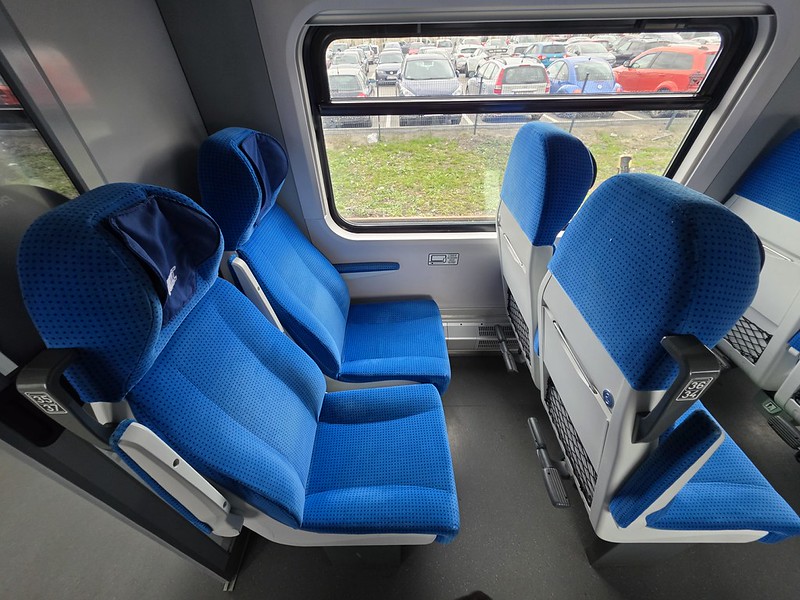
    I had the aisle seat, which suited me perfectly, although the recline was a bit excessive. I was concerned that I might break the seat trying to correct it, so I just left it. I’ve already got an engineer visiting my flat tomorrow to deal with a light bulb I tried to change and a smoke alarm that keeps bleeping. He’s long since told me not to attempt fixing anything myself, as it only makes his job harder.

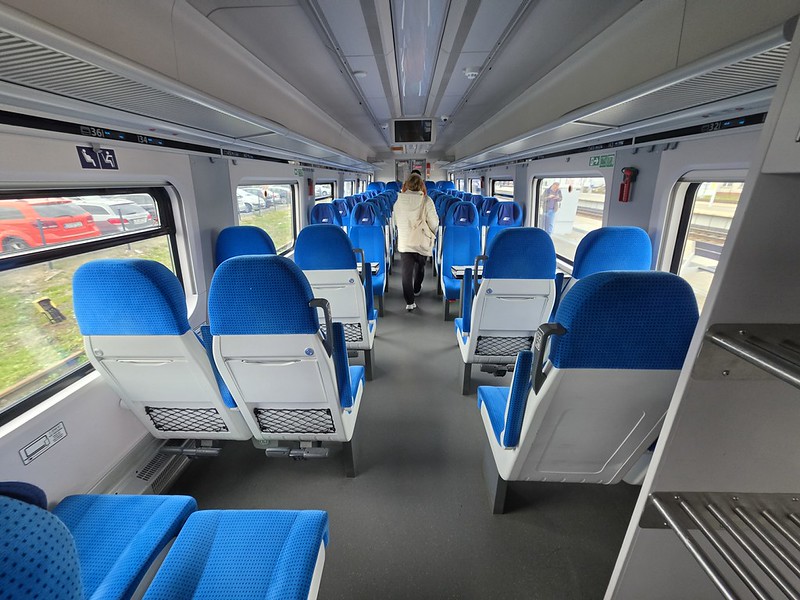
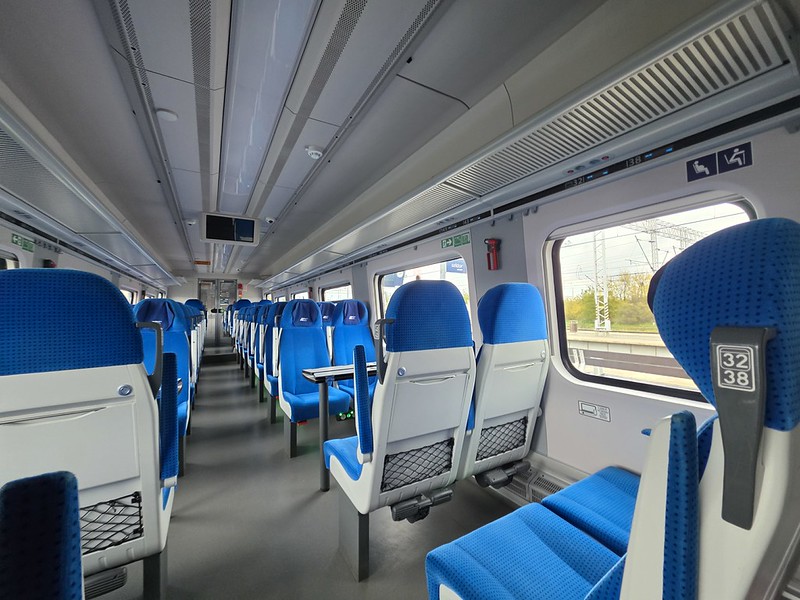
    Clean, organised and with plenty of space. The fare was also reasonable at around £8, particularly as I’d only booked the ticket the day before.

    The train had a power outlet at every seat and there was also Wi-Fi available. The service got busier, but I was delighted to see that no-one put their feet on seats and there was no music playing from phones.

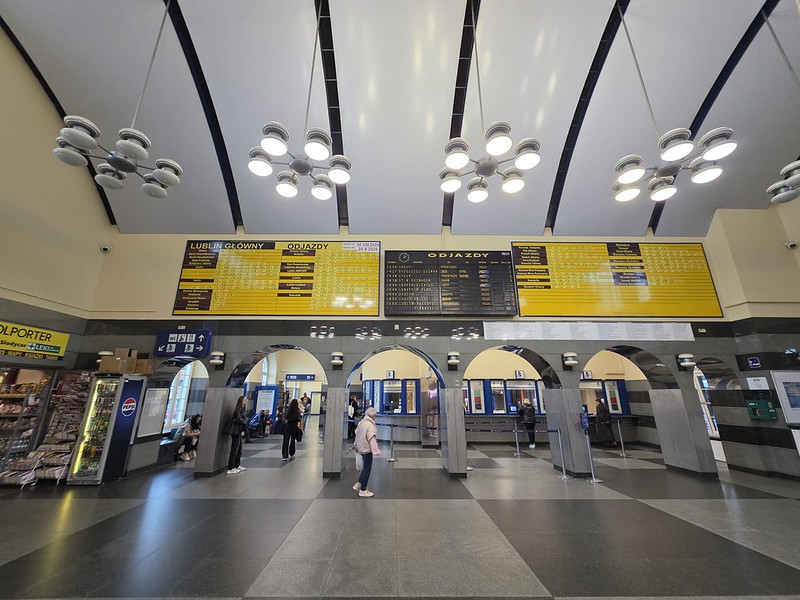
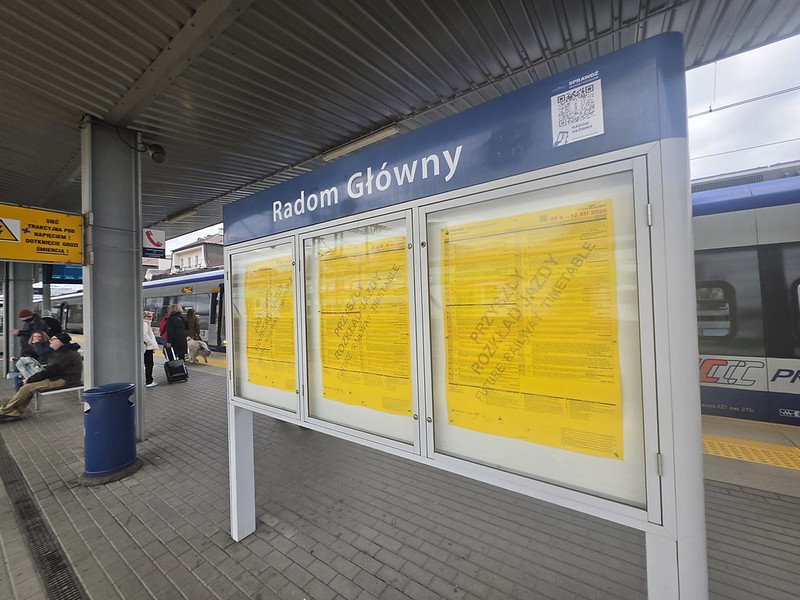
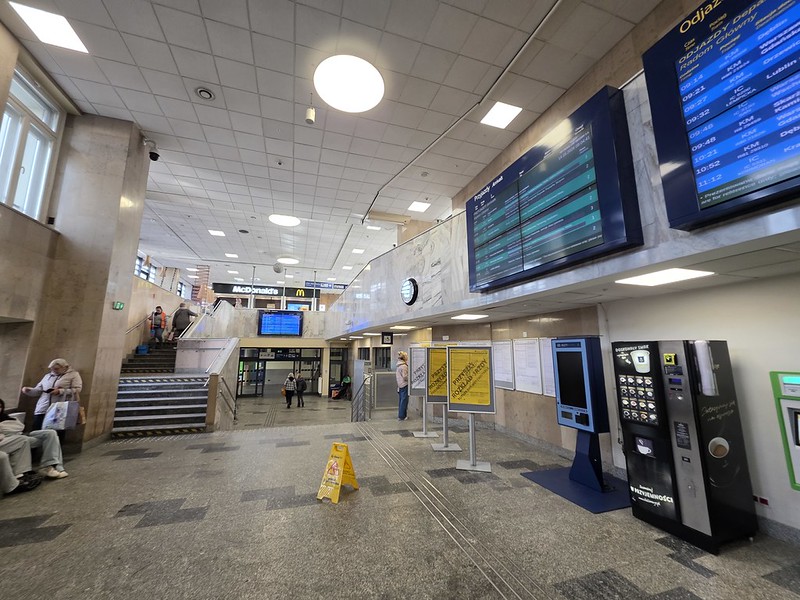
    Safely at Radom Główny railway station and the yellow sheets that I would quite like introducing into the UK. For those who read carefully, these ones are future railway timetables to add some anticipation into the whole arrangement.

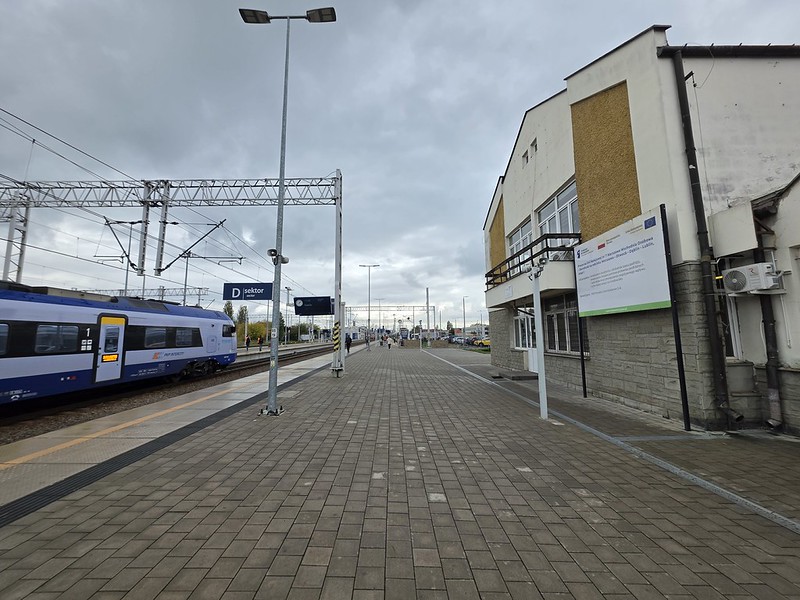
    Radom Główny railway station opened on 25 January 1885 as part of the Ivangorod–Dąbrowa Railway, which connected Dęblin with the industrial region of southern Poland. In June 2025, the station was named in honour of Jan Bloch, the Radom-born industrialist and railway pioneer who helped develop Poland’s nineteenth-century railway network.

    As a little bonus, I hadn’t checked the exact location of my hotel until shortly before arriving in the city centre, but I was pleased to discover that it was just a one-minute walk from the station. Even my friend Richard could manage that, although he might have had a little sit down en route.