Search results for: “railway”

  • Balkans Trip Day 6 – Belgrade – Belgrade Center Railway Station

    Balkans Trip Day 6 – Belgrade – Belgrade Center Railway Station

    Belgrade Centre railway station, usually known as Prokop, is now the Serbian capital’s principal rail station, although its name is slightly aspirational about how central it actually is. The station lies south of the historic centre in the Savski Venac district, partly beneath a large concrete deck. Construction began during the 1970s, but progress was intermittent enough to make it one of those infrastructure projects that appeared determined to outlive everyone responsible for building it. It was all a bit sub-optimal and rather like HS2 in the end, although they did get there.

    I arrived at the station from the non decadent side and thought that it was all a bit basic. It transpired that this was the old section of the building which hadn’t really been modernised.

    This is the decadent entrance that has been constructed. Passenger services were introduced gradually, with the station taking on a larger role from 2016 before officially replacing the old Belgrade Main station on 1 July 2018. That elegant station had stood beside the River Sava since 1884 and was once used by the Orient Express, but its platforms and railway land were cleared as part of the Belgrade Waterfront development. I went to see that station on my last trip to Belgrade and it’s something of a ghost building now, a former transportation hub just sitting empty. This meant that the city’s main station moved away from the traditional centre and into Prokop, leaving arriving passengers to discover that Belgrade Centre is more of an institutional aspiration than a useful central location.

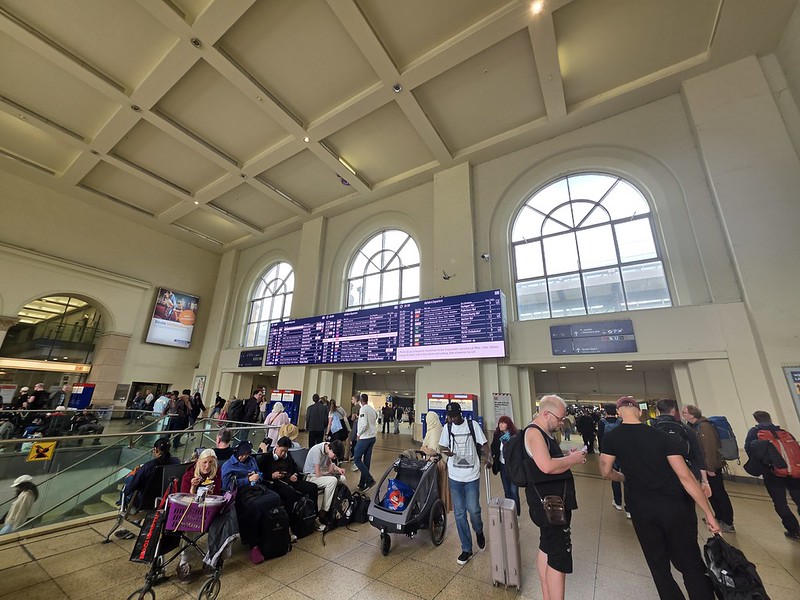
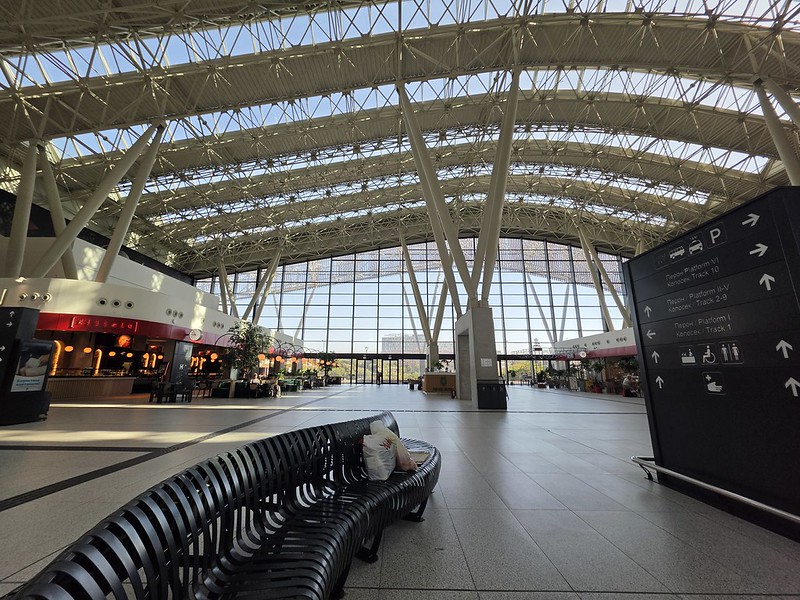
    For several years Prokop operated without a proper station building, leaving a rather unfinished first impression for the capital’s principal railway gateway. A modern glass and steel terminal finally opened above the platforms in October 2023, providing ticket offices, waiting areas, shops and improved access. It is now certainly decadent.

    I purchased snacks for the journey from a nearby shop in a housing estate, before I realised that there was a shop at the station building itself. On the bright side, I likely paid a little less for my bag of healthy snacks. This is where Jonathan joined me as he had gone on something of a journey to get to the station, a story that I’ll tell later on.

    And here are the platforms and our service was the 09:45 service to Bar.

    Ready on the platform for our journey to Podgorica, but more of that two-part journey in the next post.
  • Nantes – Meander to Railway Station

    Nantes – Meander to Railway Station

    I was only staying in Nantes for one night as I had to get to Lyon, more on which in the next post actually, and I decided to have a walk around the city taking in the Mechanical Elephant. It meant around an hour of walking, but I had plenty of stops given the extreme heat in Nantes, although it was fortunately a little cooler than the previous day. This also meant that I could walk for several minutes at a time before needing to stand in the shade and reconsider every decision that had brought me to western France in July.

    Anyway, the photo above is ‘Éloge du pas de côté’, or ‘In Praise of the Sidestep’, a bronze sculpture by Philippe Ramette in Place du Bouffay. Created for Le Voyage à Nantes in 2018, it shows a suited man stepping beyond the edge of his pedestal, celebrating the idea of looking at the world differently rather than obediently remaining where public monuments are usually expected to stand.

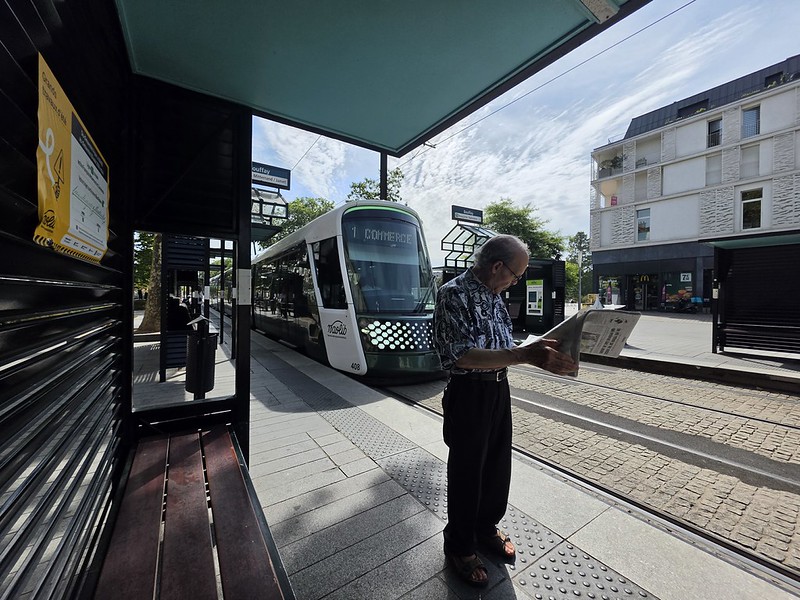
    I thought I’d take a photo of a Nantes tram as, well, this is the sort of riveting content on which I thrive. There I stand, phone in hand, and a man decides to walk over, stop and read his newspaper. I decided this felt like a traditional French scene, so there we go.

    This is Feydball, a permanent public artwork created for Le Voyage à Nantes in 2015, combining a deliberately uneven, crescent-shaped football pitch with a large warped mirror. The reflective surface makes the distorted pitch and goalposts appear reassuringly normal while bending the players and ball out of shape instead, which is perhaps contemporary art’s most accurate contribution to amateur football. The site retains its natural slope and irregularities, so anyone attempting a serious match must contend with geometry, gravity and the possibility that the mirror is making them look considerably more athletic than they really are. This might encourage me to play more five-a-side to be fair if it made me look athletic as there’s only so much that bar billiards can do for my sporting physique.

    This monument in Place de la Bourse commemorates Colonel Georges de Villebois-Mareuil, a Nantes-born French officer who volunteered to fight alongside the Boer republics against the British during the Second Boer War and was killed in South Africa in 1900. The bronze sculpture, created by Raoul Verlet and unveiled in 1902, shows the dying officer supported by an allegorical figure of France, complete with flag and enough heroic drama to remove any possibility that he had merely sat down for a rest. I assumed that they no longer held any ill-feeling towards the British over the arrangement.
    And safely at the railway station with just 53 minutes to spare before my train as I like plenty of time to find my platform. This transpired to involve 18 minutes of staying in front of a giant fan, 14 minutes finding Carrefour to get a drink and 1 minute finding the platform before boarding the train early.

  • Bath – Closure of Bath Spa Railway Station

    Bath – Closure of Bath Spa Railway Station

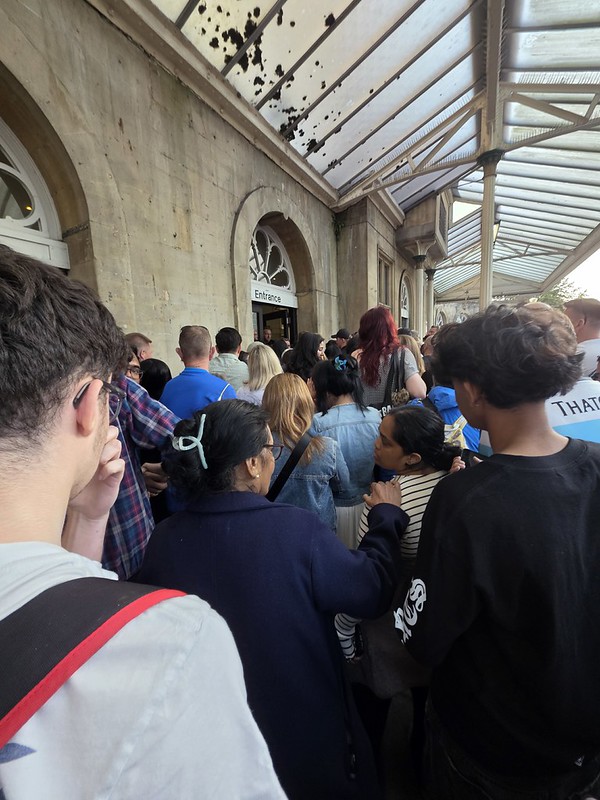
    It’s not entirely optimal to approach a railway station and see that it’s a bit shut and there are people milling about outside.

    It either meant that someone famous was there or the bloody railway network had broken again.

    It soon became apparent that this was another Network Rail debacle.

    But, having noted that, I like a bit of drama in my life. I am not seeking genuine peril, civil disorder or an unscheduled night on a station concourse. Just a little deviation from the norm, that sort of thing.

    The difficulty was that I did actually want to get to Swindon, which is perhaps not a sentence people write very often. Indeed, most people spend their lives trying to avoid needing to get to Swindon, and yet here I was, standing outside a closed railway station, regarding it as a cherished destination.

    At least I could see the entrance now, it’s a bit like seeing a lifeboat on a slightly sinking ship.

    The police told people not to push, although by trying to hear what they were saying they pushed forward. Fortunately, I am sufficiently well built that it is quite hard to push me very far. I have many flaws, but being easily displaced in a railway related crowd is apparently not one of them.

    There was more vibrancy to the arrangement at this stage. By vibrant I mean a combination of confusion, annoyance and the need for signage.

    So near and so far from entering….

    I was let through soon after this and was rather pleased as I did need to get to Swindon at some point as it was getting late and there was no alternative way of getting there as taxis were over £125 and there weren’t any buses. Praise to the British Transport Police and the station staff who were doing their best to manage the crowds and entry onto the platforms with some rather difficult circumstances.

  • Skopje – Museum of the City of Skopje (1873 Railway Station Roof Tile)

    Skopje – Museum of the City of Skopje (1873 Railway Station Roof Tile)

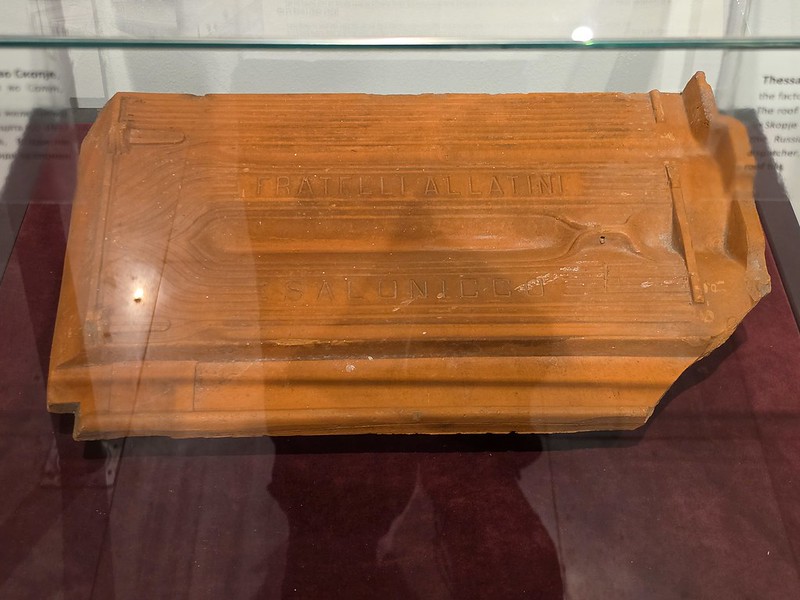
    This is a roof tile, but not just any roof tile, this is from the 1873 railway station that was built in Skopje. It was demolished in 1937 to make way for the new central railway station, although that’s now mostly fallen down due to the earthquake in 1963. During the demolition of the city’s first railway station, it was suggested that two tiles and two bricks were taken as some sort of memory of Skopje’s early railway history. One of them is displayed here and I like that things such as this survive, it’s a little survivor of the arrival of the railways into the city.

    This is what the city’s first railway station looked like, opened in 1873 when the Ottomans opened the line from Skopje to Thessaloniki in Greece. I’m not sure that the First Balkan War between 1912 and 1913 is much referenced in the history taught in UK schools (which seems to mostly be Tudors to trenches with a few mentions of steam engines, but there we go), but this is when the Ottoman Empire lose most of their European lands, include the city of Skopje.

  • Skopje – Skopje’s Former Railway Station

    Skopje – Skopje’s Former Railway Station

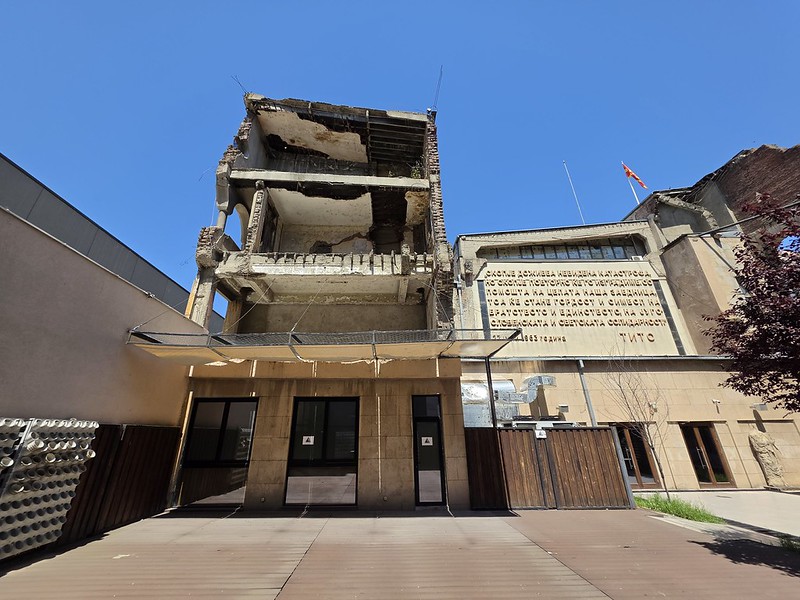
    This is Skopje’s former railway station which was built between 1938 and 1940 and was designed by the Serbian architect Velimir Gavrilović. At 05:17 on 26 July 1963, an earthquake struck Skopje which killed over 1,070 people, injured thousands more and destroyed about 80 percent of the city. The clock on the facade of the railway station stopped at the exact moment the tremor struck.

    This is what it looks like now, the left hand side of the station has gone, the central section is mostly standing and the right hand side has been turned into a museum. More on that in future posts.

    A photograph from the time shows the damage and this scene isn’t recognisable today other than the surviving bit of the railway station, as there’s now a large shopping centre where the railway line once was. That’s a little symbolic of the city perhaps, there needs to be a significant overhaul of the current central railway station, a brutalist designed building that needs repair, but the new Diamond shopping centre is quite decadent and evidently expensive to have built.

    It was decided to keep this damaged section, now in the garden of the museum, as a memorial. There’s a sharp bluntness about keeping a broken building, it’s quite powerful.

    It was interesting to see how it was constructed and a little sub-optimal that it lasted under 25 years. It had been constructed on the site of the city’s first main railway station that opened in 1873, but more on that later as well. Such excitement stored up and my two loyal blog readers can pace themselves accordingly.

    The remaining arches can be seen from the rear. It’s nice that there’s a little museum here for free, although that’s more about the city’s history, but there is a video playing inside which gives more information about the earthquake and the massive damage that it did to the city.

  • Hanover’s Expensive Sanifair Railway Station Toilets

    Hanover’s Expensive Sanifair Railway Station Toilets

    The toilets at Hanover railway station cost €1.50, which feels a bold amount of money for what is, biologically speaking, not really an optional activity. I appreciate that toilets need cleaning, maintenance and supervision, but there is still something faintly dramatic about standing in a major railway station and being asked to make such a substantial a financial commitment. But, this is Deutsche Bahn and passengers are really just an inconvenience to their general operations. There was also a substantial queue for the female toilets, so paying a premium price doesn’t even allow for a fast visit although I suppose it gives better value for money if there’s a twenty minute wait for the facilities.

    The toilets are run by Sanifair, a company that operates paid public toilet facilities across Germany, including at a number of railway stations, shopping centres and motorway service areas. At Hanover Hauptbahnhof everyone gets a €0.50 voucher when going through the barriers, but there were literally hundreds of these dumped on the floor which had become mildly damp which all felt slightly sub-optimal. Sanifair didn’t really trouble themselves with cleaning their expensive toilets so it’s not entirely clear to me where all this money is going.

    To be fair, the facilities were functional and not entirely filled with railway-station despair, so this slightly undermines the full force of my grievance. But they were also not so luxurious that I emerged feeling I had been treated to an experience. And the disabled facilities were entirely out of order which is sub-optimal, but so is much about Hanover railway station. As I’m quite petty, I decided against spending any money at the railway station and instead went to the Aldi in Dortmund where the financial transaction didn’t end in mild resentment.

    And since I paid €1.50, I wanted to at least get a blog post out of it in an attempt to turn a basic inconvenience into content. Right, that’s enough moaning for the moment.

  • Warsaw – Warszawa Śródmieście Railway Station

    Warsaw – Warszawa Śródmieście Railway Station

    I was only in Warsaw for a few hours before it was necessary to return to the airport for the next part of my little expedition. In the centre-left of the photo is Warszawa Śródmieście railway station.

    Down to the platforms.

    The station was built between 1955 and 1963, initially using the Spanish solution of platforms (where passengers disembark from one side and get on from the other side) although they had abandoned that by the 1980s.

    It would not be unkind to say that the station is past its best.

    The station was modernised a bit in 2006, but has remained fairly unloved since then.

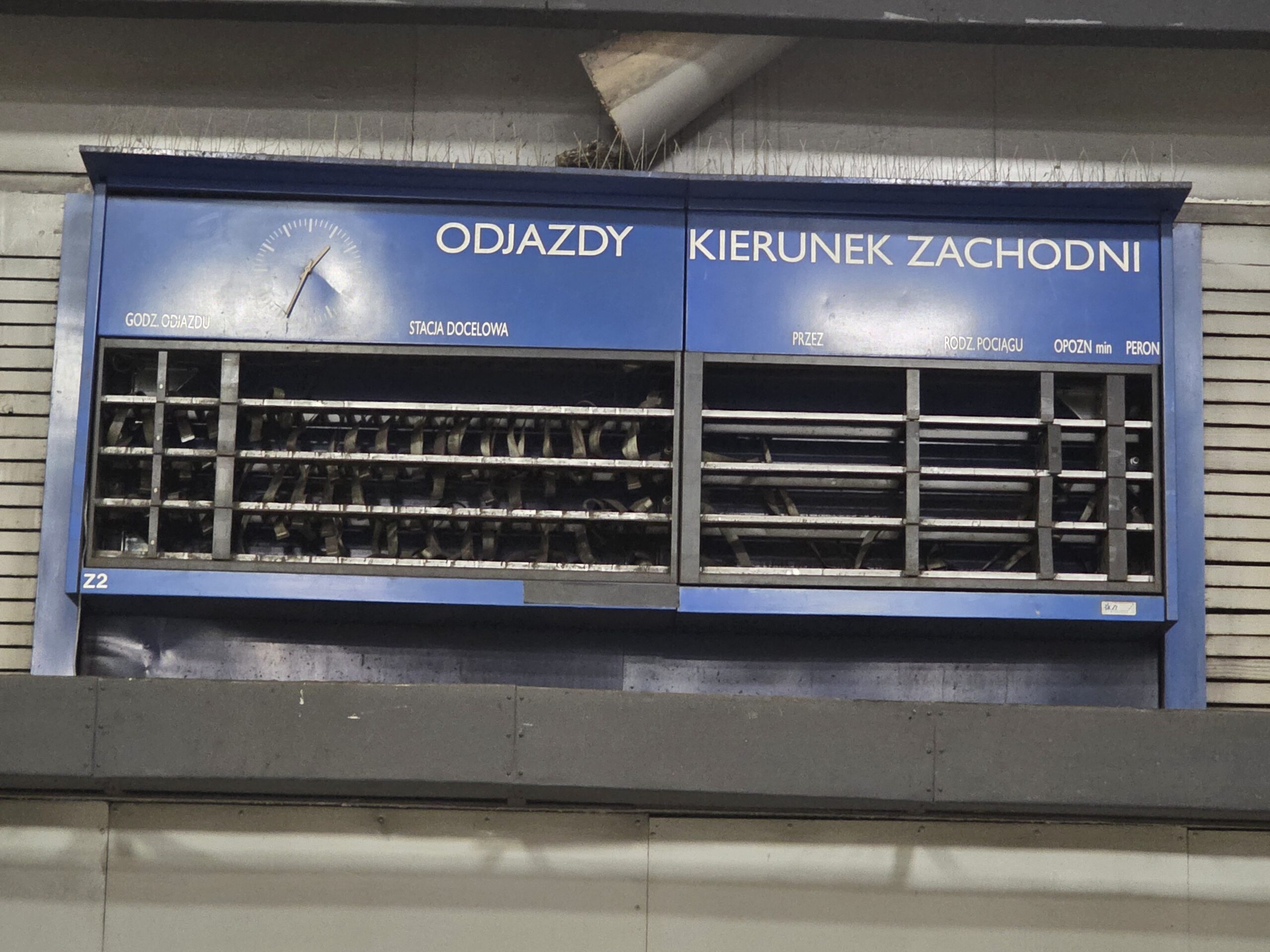
    This book stall hasn’t been open in the years that I’ve been using this station.

    The station is useful for S2 connections to Chopin airport, and this journey means that it’s the end of another Warsaw trip. This one was really quiet brief.

  • Management Problems at Luton Airport Parkway Railway Station

    Management Problems at Luton Airport Parkway Railway Station

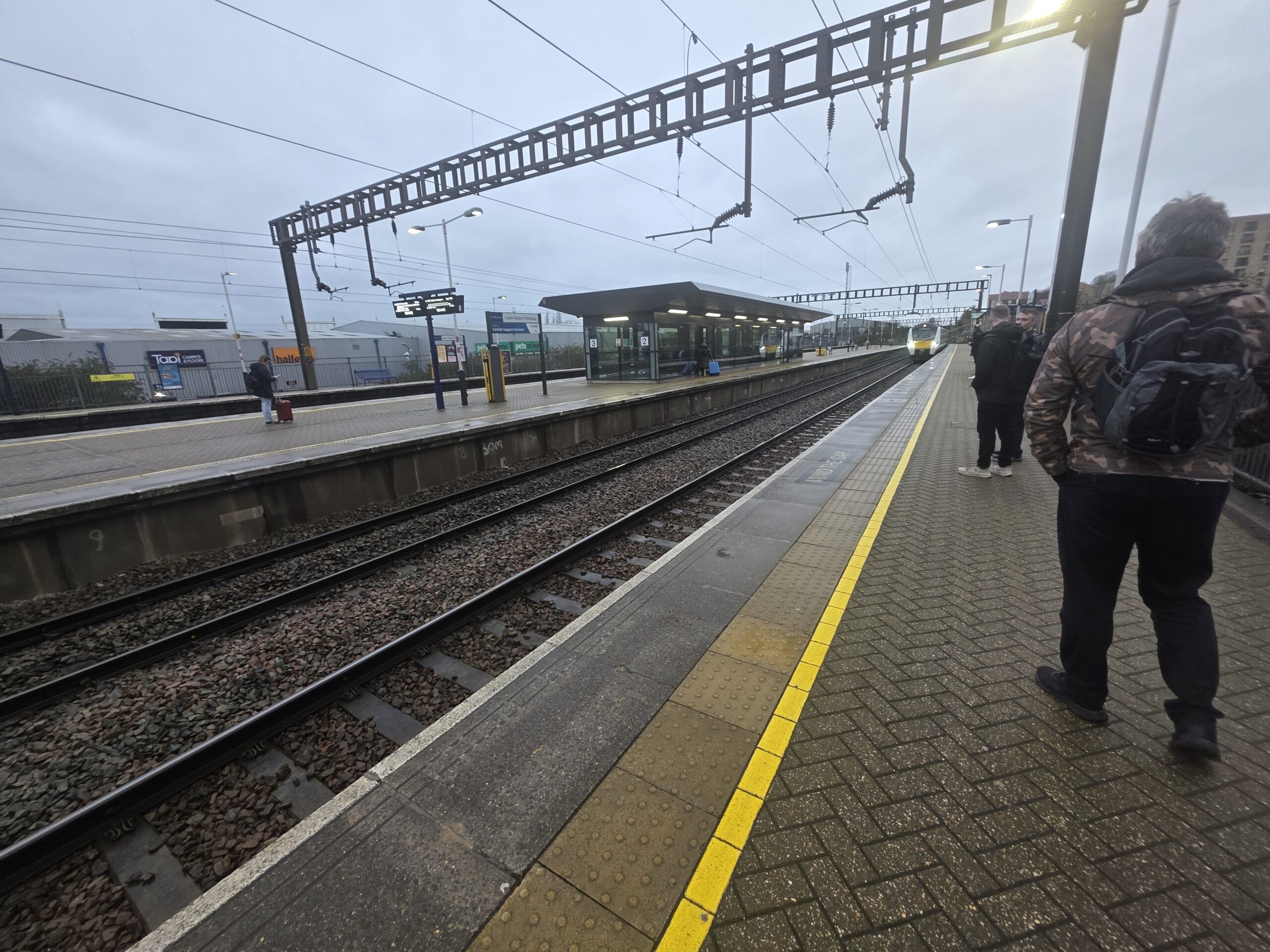
    Luton Airport Parkway is one of the most bizarre railway station operations that I’ve experienced. On two occasions now over recent months, the staff here have launched into quite direct attacks about the management of the railway station at a local level. As I’ve never asked a staff member about their thoughts on the management (nor indeed their thoughts on anything), it seems like there are issues and I’m not sure that customers should be bearing the brunt of this.

    There’s a problem at the railway station that the waiting room is not accessible to anyone on a timed ticket. Initially I was told that customers can’t enter the station more than twenty minutes before the train and then I was told it was fifteen minutes a few months ago. It’s been on those occasions that the, likely harassed by endless passengers, team members explained the problems they’ve had enforcing new rules.

    So, with the comfortable waiting room out of bounds, passengers have to wait here. I just waited without saying anything, but when I tried to put my ticket through at the barrier fifteen minutes before the train left, it failed. There was a staff member sitting down nowhere near the barriers by a heater who managed to get called an “a***hole” by one passenger he ignored, although he didn’t come and help me.

    I got the attention of another staff member and she was very friendly and let me through. She said that the rules had changed again and that customers couldn’t enter the railway station with a timed ticket until the previous train had departed. It’s to stop them boarding it with a timed ticket…..

    The train arrived on time and it was hard not to miss Poland, where I had just returned from. They have the radical idea that passengers on their services can always use their waiting rooms to wait in. It’s all a bit sub-optimal from Thameslink, especially given the huge sums of money invested in this railway station over recent years.

  • Łask – Łask Railway Station

    Łask – Łask Railway Station

    I didn’t go to Łask itself, other than passing through it on the train. Their railway station is a little bit of heritage though and I wonder whether it’ll be renovated over the next few years. It’s owned by the local area rather than by the rail network, otherwise perhaps the work would already have been completed. The central reservation and platform areas have been upgraded, although I suspect passengers might not have seen that as a priority.

    The current railway station is boarded up and there is no ticket office at the moment, but they’ve at least put the timetables on the wall. The railway station was first built in 1902 and was part of the Warsaw to Kalisz Railway.

    I’d say that it’s a fair bet that this sign has been there since I was born….

    Anyway, I thought I’d post about this so that I can look back in twenty years and see what’s changed.

  • Oleśnica – Oleśnica Railwaymen’s Park

    Oleśnica – Oleśnica Railwaymen’s Park

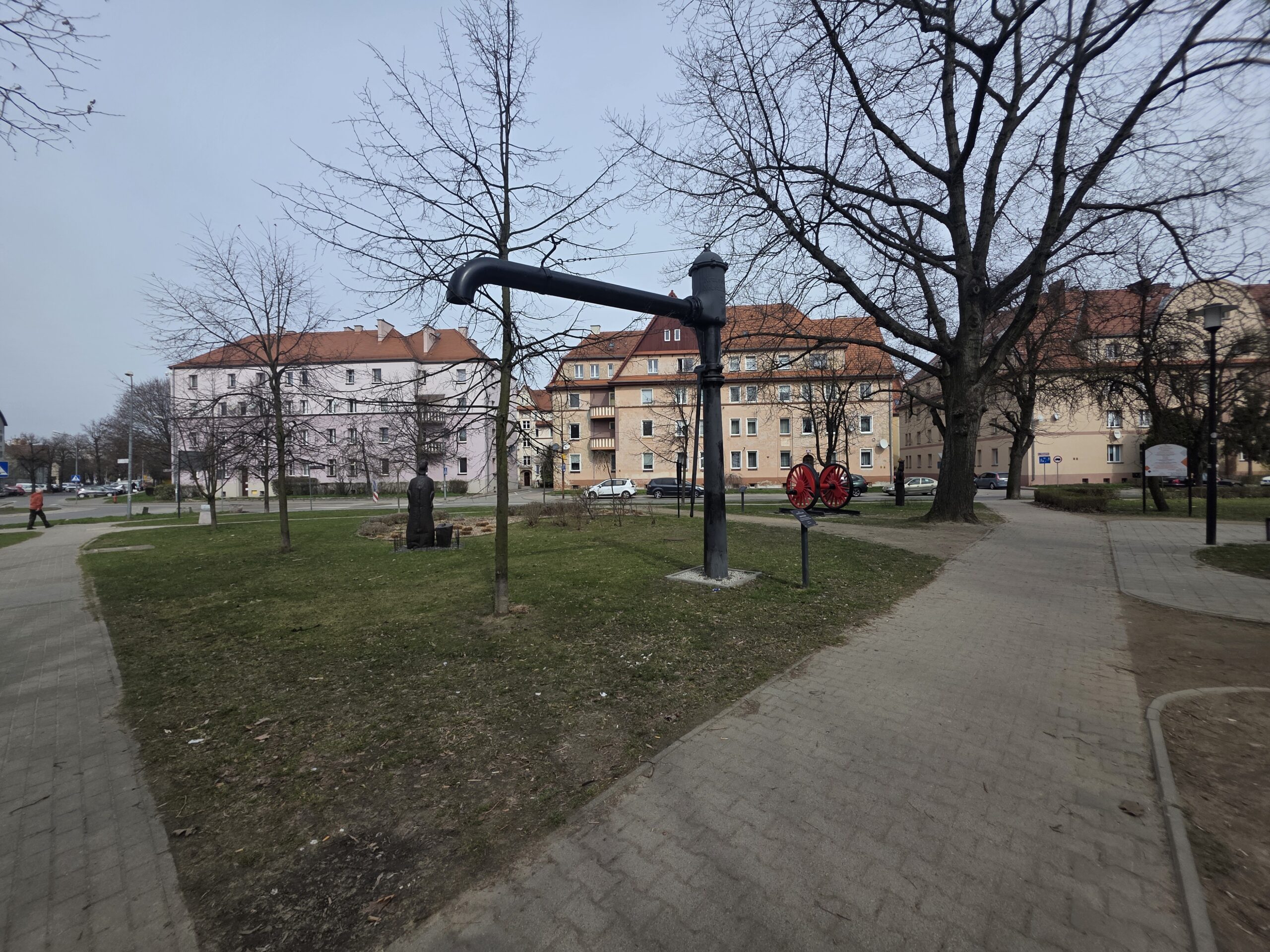
    I like a park with a bit of railway stuff in and this is a wheelset from a Polish locomotive dating to 1953. I accept that this isn’t exactly the National Railway Museum, but I did a bit of railway heritage. Incidentally, I’m not an expert on 1950s trains, there was a sign by it which gave the date of manufacture.

    Slightly less subtle is this water crane that was made for railway usage in 1942 to ensure that steam engines had enough water. For anyone interested, which I accept is precisely zero, it weighs 1,800kg.

    I have no idea what this represents, but I assume it’s something to do with the railways. Is it a passenger with their bag waving goodbye? I have no idea….