
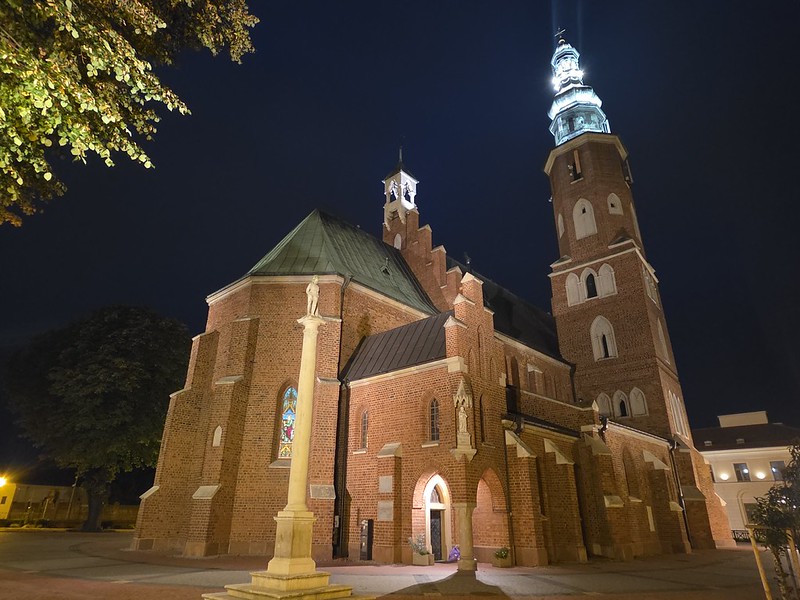
The distraction of Norwich Beer Festival now over, I will excite all my blog readers (both of them) with a continuation of my journey across Poland a couple of weeks ago. Having never been to Radom before, I took the opportunity to meander around the city centre during the evening.
This is the Church of St John the Baptist (Kościół św. Jana Chrzciciela), usually known as Radom’s Fara, or parish church. Its origins lie in the fourteenth-century town developed under King Casimir III the Great, although the building has been extended and altered considerably since then. Much of its present appearance comes from a substantial neo-Gothic rebuilding between 1908 and 1909 by Józef Pius Dziekoński, the architect also responsible for Radom’s cathedral.
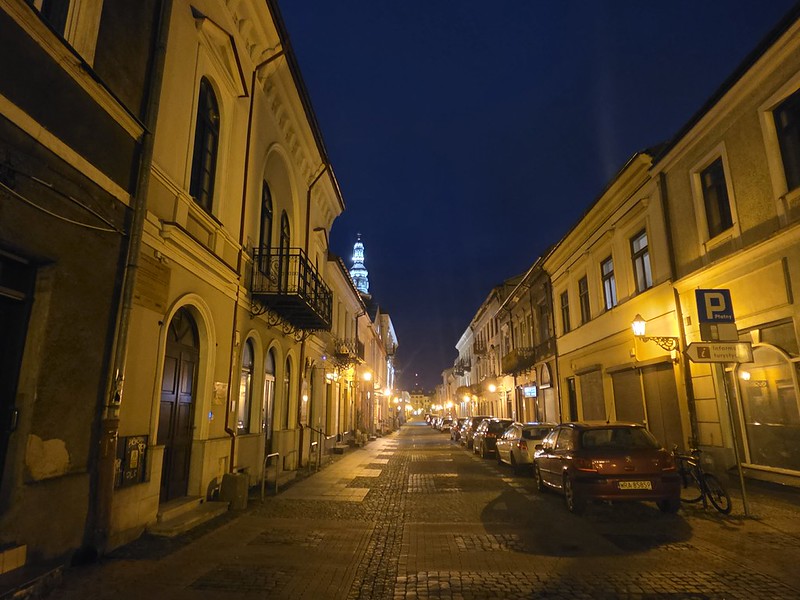
This view along Rwańska shows something of the scale of Radom’s medieval centre, with narrow plots and closely packed buildings rather than the broader streets of its later expansion. Rwańska connected the market square with the Lublin Gate (Brama Lubelska), one of the entrances through the town’s defensive walls. Beyond that gateway, the road continued towards Lublin, linking this relatively compact town with a much wider trading network. The parked cars are a slightly more recent contribution to the historic streetscape.
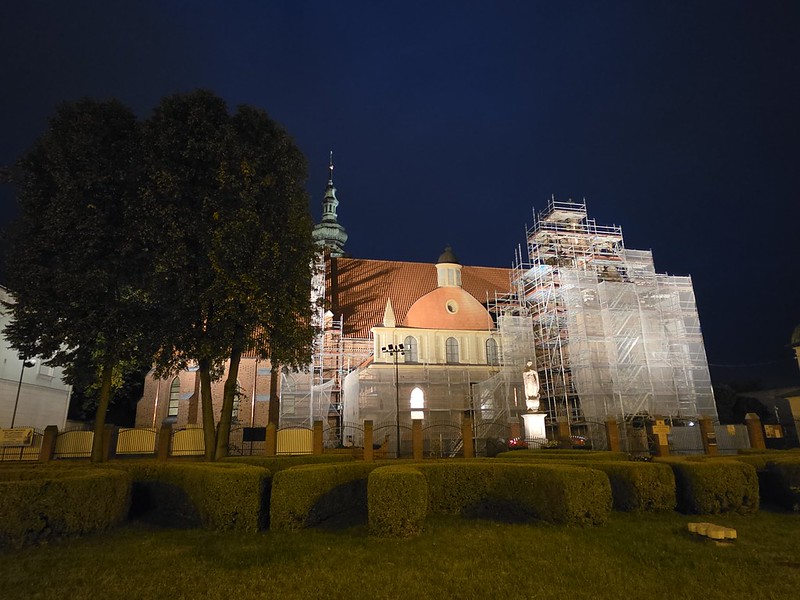
Behind the scaffolding is the Church of St Catherine of Alexandria and the Bernardine monastery (Kościół św. Katarzyny Aleksandryjskiej i klasztor Bernardynów). The friars arrived in 1468 following royal permission from Casimir IV Jagiellon, settling outside the medieval walls beside the route towards Lublin. Their first buildings were wooden, with construction of the brick Gothic church beginning in 1480. The monastery later became involved in the Polish independence movement, hosting insurgent meetings and administering oaths to insurgents during the January Uprising of 1863. Russian reprisals followed, including the suppression of the monastery in 1864, and the Bernardines did not return until 1936.
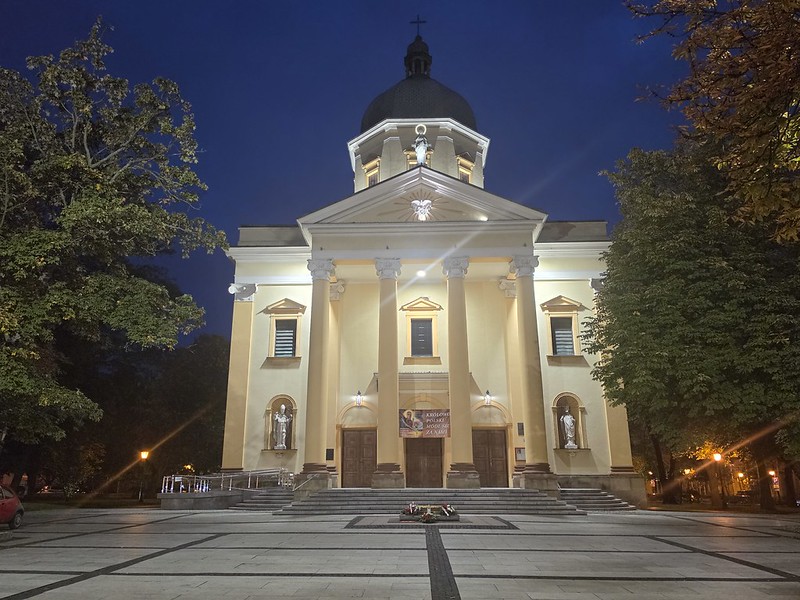
The Garrison Church of St Stanislaus (Kościół garnizonowy św. Stanisława Biskupa i Męczennika) has a rather different background from the older Catholic churches. Completed in 1902, it was originally the Orthodox Church of St Nicholas, built when Radom was under Russian rule. Its prominent position on what is now Plac Konstytucji 3 Maja made it a conspicuous part of the imperial cityscape. Following Polish independence, the building was retained and extensively remodelled during the interwar period as a Catholic church serving the Polish military.
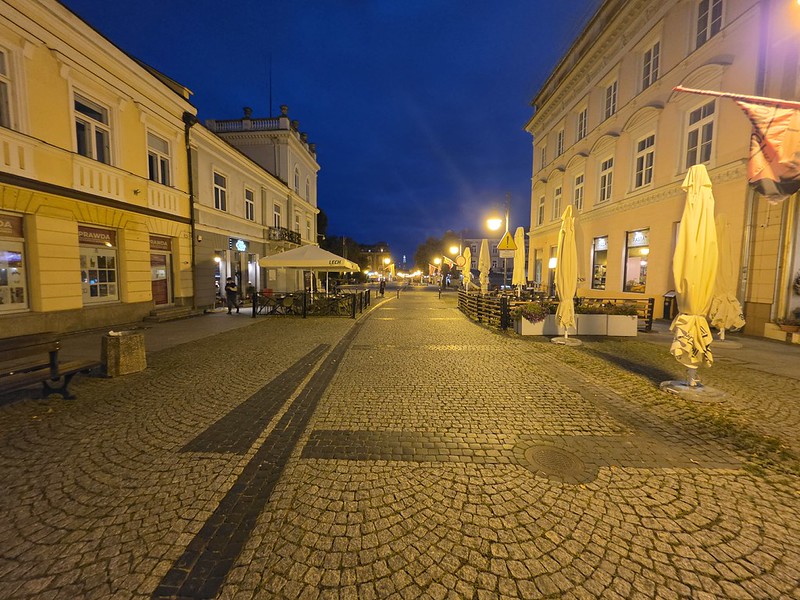
Ulica Stefana Żeromskiego represents Radom’s expansion beyond its medieval boundaries. Formerly known as Lubelska, it followed the old road towards Lublin before nineteenth-century development turned it into the city’s main street. A planning scheme adopted in 1822 helped shape that transformation, with substantial townhouses, commercial premises and public buildings establishing a new centre of urban life. The surviving nineteenth-century façades still give the street much of its character, with café terraces now occupying space once used by through traffic. Indeed, I generally consider replacing traffic with somewhere to sit down as a substantial improvement in town planning.
After the narrowness of Rwańska, this feels like a different chapter in Radom’s history, with rather more room for an evening meander. It wasn’t particularly busy in the city centre and I noted how clean and well maintained it all was, although I always tend to note the positive elements in Poland. My application to become an entirely impartial observer remains unsuccessful.