Category: UK

  • Gothenburg Trip – Day 0 (Botwell Inn)

    Gothenburg Trip – Day 0 (Botwell Inn)

    Safely into Hayes and Harlington, I knew that Richard would be pleased with a decadent little restaurant. So, we went to the Botwell Inn, a JD Wetherspoon operated pub which appears to have lost its entry in the Good Beer Guide. As usual, I’ll revert to the venue’s history behind the pub name:

    “This pub takes its name from the hamlet of Botwell which once stood in what is now Hayes’ town centre. These premises were the home of the furnishers S Moore & Son, which moved here in 1933 and remained for 65 years.”

    There are no team members in the photo as they had a meeting as to why there was a customer in a Christmas jumper. I didn’t say anything though.

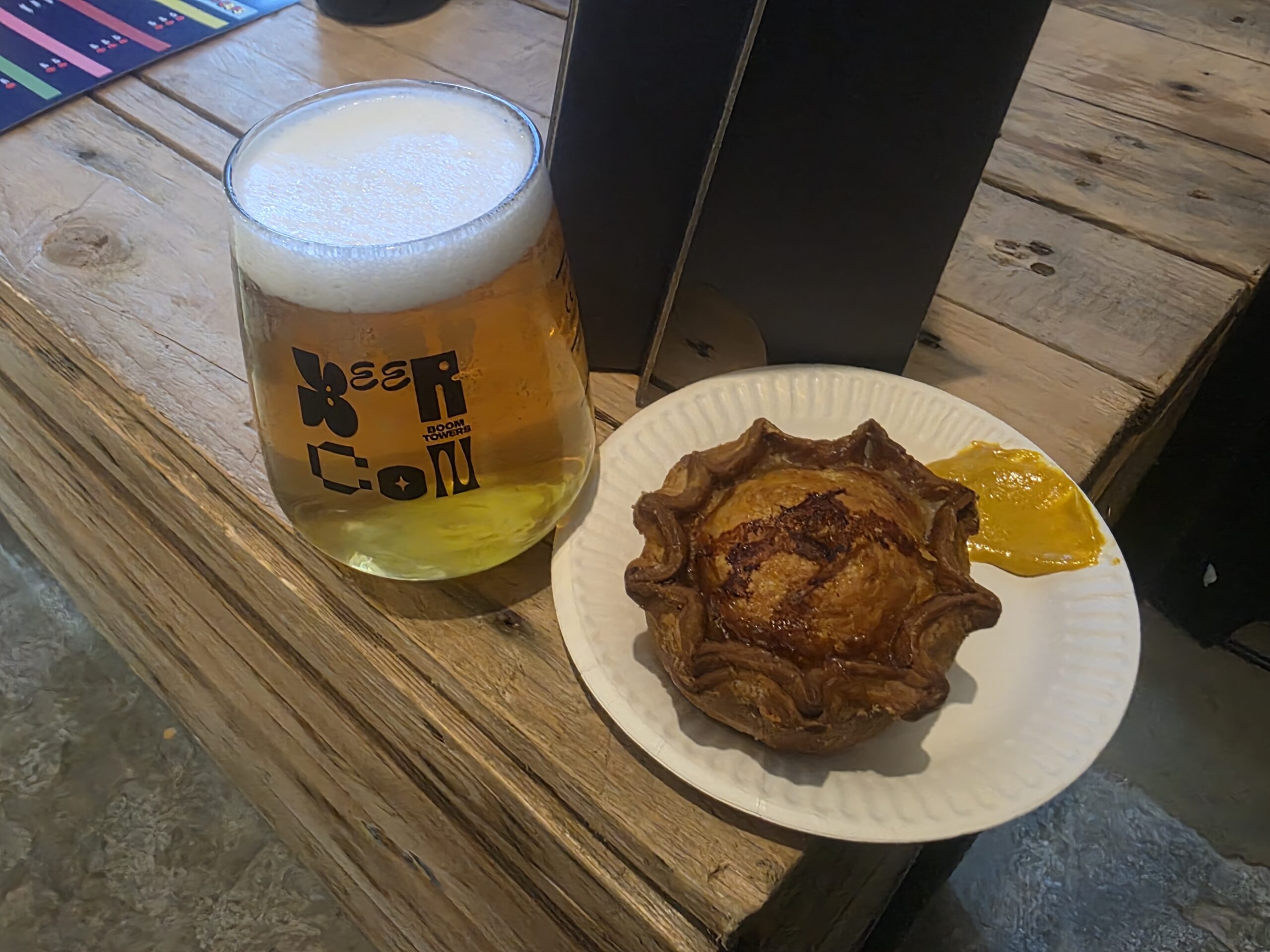
    The steak pie and chips, along with the pint of Brewdog Elvis Juice, came to £7.20 which is ridiculously good value. I accept that it’s not world class food, but it’s hot, tastes fine and is filling.

    Aperol Spritz, chicken in BBQ sauce, spicy rice, a mushroom, peas and coleslaw, very decadent.

    It’s the JD Wetherspoon beer festival and they had some tempting options available.

    I was charged £2.09 for a pint of the Exam Room Tears from Stu Brew and this is perhaps nearly as good as cask beer can get. It’s a maple syrup and pecan stout, it had a nice nuttiness along with the sweetness from the maple syrup. I was very pleased with this.

    My now obligatory carpet photo.

    As for the online reviews, this venue is right towards the higher rated end of JD Wetherspoon establishments.

    “i ordered a drink here when i wasnt even at the pub and i couldnt get a refund, the stupid app was broken”

    Might be sensible not to order at a pub that you’re not in….

    “Meals are served to you without condiments and when you ask the waitress tells you to go get it yourself from inside the pub. So if you are on your own you are expected to leave your meal unattended to go inside to pick up the condiments your self. Very poor service.”

    This customer notes that their meal cost £60 to £70. That buys most of the entire menu….

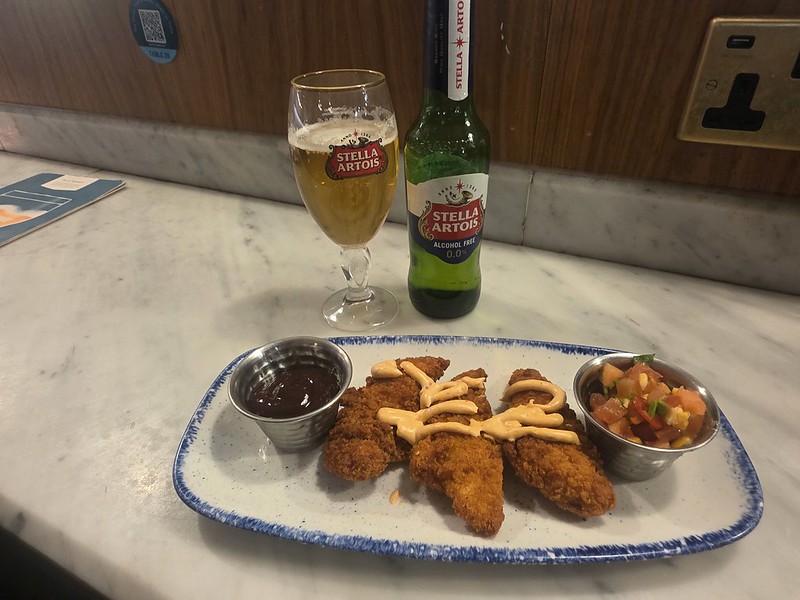
    “After touring the UK with my family we stopped at many weatherspoons as we all loved the food and cat beat the prices. Well this one had to be the worst by far and that’s a nice way of putting it. The staff were unbelievably rude and unhelpful. For our last meal in uk before flight it was utterly disappointing. Only good thing was leaving after our meal. Thanks for the stella glass though.”

    So it seems that they stole a Stella glass. Classy.

    “Used to be a good pub but the new manager has a problem. His attitude stinks. Took an overseas call whilst having breakfast with my work colleagues to be told I can’t do that inside the pub.”

    I like this new manager.

    Anyway, I digress. I was very impressed with the cleanliness, the friendliness of the team members, the value for money and the drinks selection. I can see why the pub is relatively well reviewed online, it feels well run and it was just a little disappointing to see it so quiet on a Thursday evening. A really rather lovely start to the trip away.

  • Gothenburg Trip – Day 0 (We’re Off)

    Gothenburg Trip – Day 0 (We’re Off)

    And we’re off in Richard’s rickety old car, but I was very positive about it by talking about my friend Liam’s decadent car which does massages for the passenger seat…. I think Richard feels better when he hears about positive things.

    Safely at the car park at Stratford with none of Richard’s eggs being broken on the journey. Richard reassured me that all the cars sounding their horns at him was just typical London behaviour.

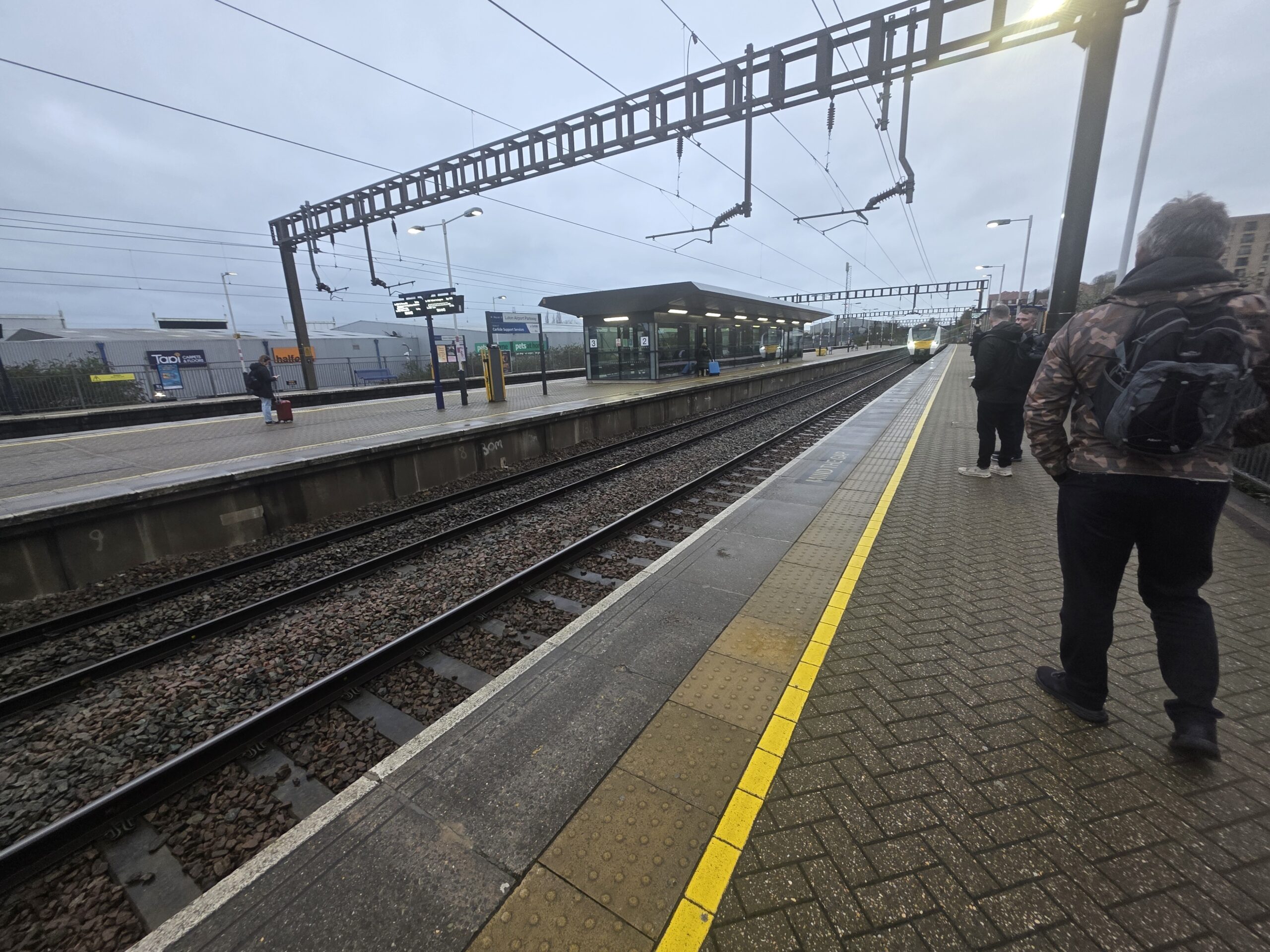
    There were some cancellations on the Elizabeth Line, but we had a wait of just a few minutes. Most of the delays were because Richard has bought a suitcase bigger than me that he’s trailing behind him, whereas I have my backpack to allow for efficient travel. I didn’t say anything though.

    Top travel tip, don’t use the Elizabeth Line to go to Heathrow Airport if you can avoid it, it’s around four times more than going to Hayes and Harlington on the Elizabeth Line.

    And safely into Hayes and Harlington where I had found a little restaurant for us to eat our evening meal in. But more of that in the next post….

  • Norwich – Anglia Square Demolition (4 March 2026)

    Norwich – Anglia Square Demolition (4 March 2026)

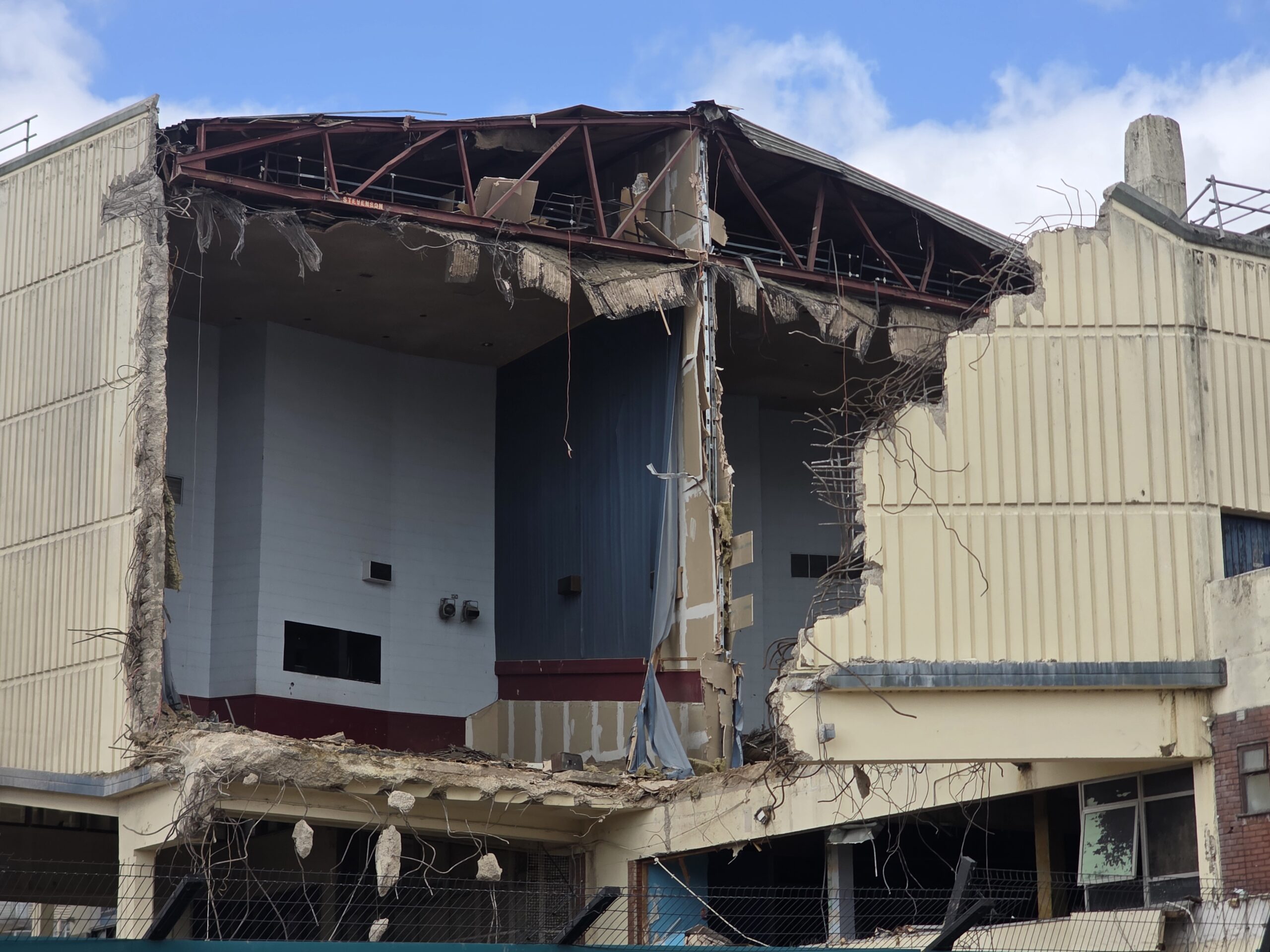
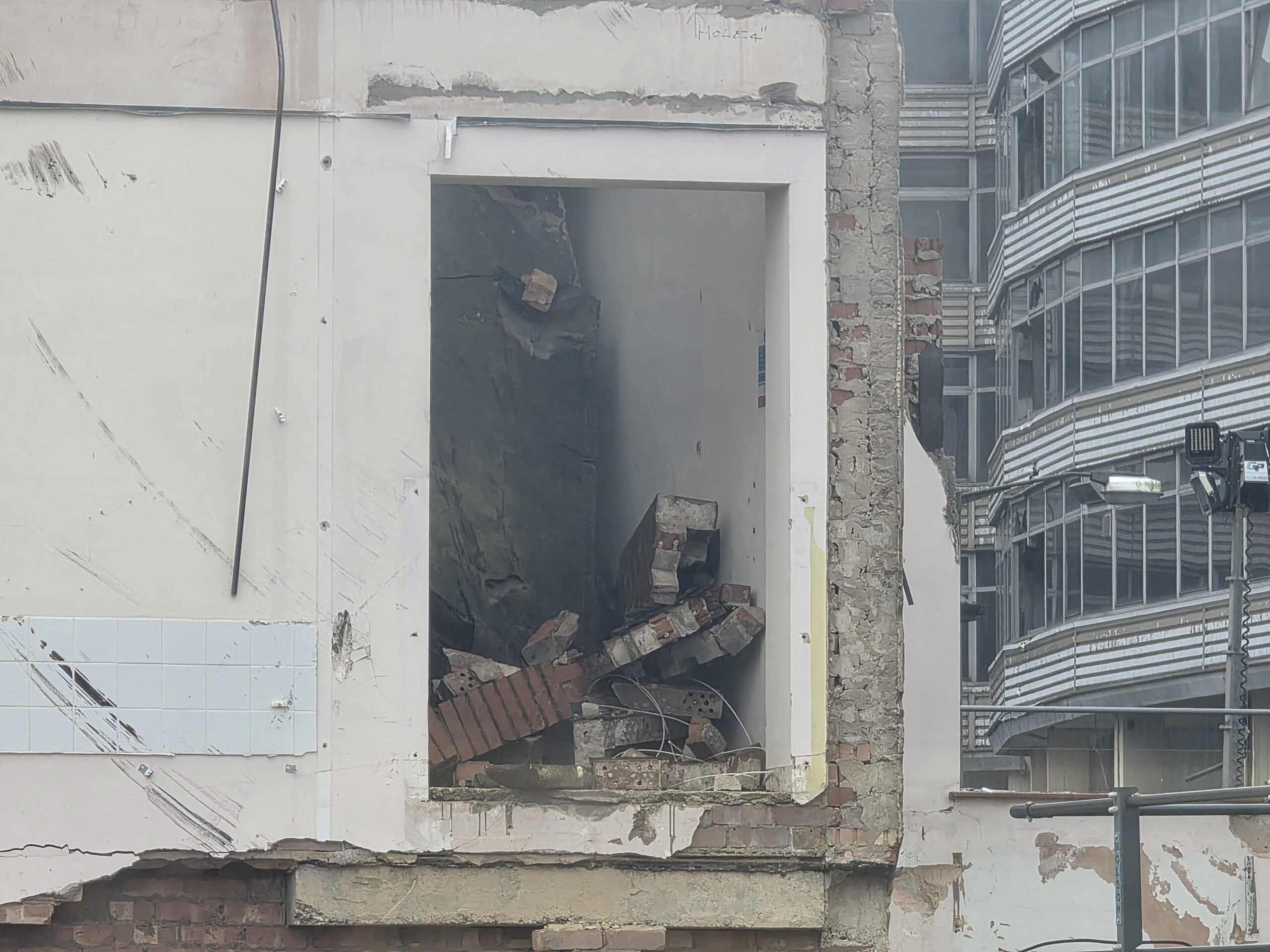
    And just some more photos to remind myself of what was demolished and when at Anglia Square…. They’re making good progress, although it’ll be interesting to see the cinema when the side is taken off of that.

  • 200 Years Ago in Norwich : Thomas Massey and his Brewery

    200 Years Ago in Norwich : Thomas Massey and his Brewery

    Back to my series of posts from 200 years ago, I think it might be useful to touch upon the brewery arrangement run by Thomas Massey. He advertised in the Norwich Mercury in March 1825 with this text:

    “Thomas Massey, Ale and Table Beer Brewer and Maltster, St. Stephen’s Gates, Norwich. Most deeply impressed with a sense of gratitude for the support which he has received & which he continues daily to receive from his many Friends in the city of Norwich and county of Norfolk, begs thus publicly most respectfully to offer them his sincere and heartfelt thanks, at the same time assuring them his constant endeavours shall be to vend a beverage genuine in quality and pleasing to the palate. Families supplied with Malt and Hops.”

    This was the St. Stephen’s Brewery which Massey operated and it was trading from the 1820s. He was still going into the early 1840s and by then he was brewing from the newly opened Champion pub (which is still there and I visited last year), which he appeared to own. In 1844, he decided that he would sell his entire operation off and that included the brewery, malting house, surrounding buildings and some land as well.

    In 1899, following the death of Charles Crawshay, there was an interesting article in the local press which touched upon this brewery.

    “It is with deep regret that we record the death of Mr Charles Crawshay, of Hingham, who passed away on Wednesday evening, after a very brief illness. The deceased was in his usual health on Tuesday, and enjoyed a long drive in his carriage in the forenoon, but shortly after his return he was suddenly seized with paralysis, which terminated fatally. Mr Crawshay was in his 85th year. Born at Rowfant, Surrey, the deceased gentleman, at the age of 18, went to the London firm of Messrs Charrington, Head, and Co., to undergo a three years training in all that pertains to a brewer’s business. In 1845 he took charge of his father’s St Stephen’s Brewery, Norwich, and in 1850 entered into partnership with Mr John Youngs (Youngs, Crawshay, and Youngs).

    In 1876 by a maiden bid of £30,000 at auction he secured the Diss Brewery, which has since proved a valuable adjunct to the Norwich Crown Brewery, which latter has been recently converted in a limited liability company. For the greater part of the century Mr Crawshay has been a familiar figure in the county, and the older inhabitants of Norwich well remember his style and dash. He was one of the best “whips” in the neighbourhood, and the manner in which he handled his four-in-hand team was indeed a sight to witness. He subsequently turned his attention to yachting, and in 1852 his boat, the Kestral, won prizes at Cantley and Coldham Hall regattas and at Yarmouth water frolics. In 1856 he married Miss Cubitt, a relative of Sir William Cubitt, who constructed Lowestoft Harbour. The following year he served the office of Sheriff of Norwich, and received the thanks of the city for his services and hospitality.

    On removing to Hingham in 1858 Mr Crawshay went in for farming, and gained considerable fame as a breeder of Southdown and cross-bred sheep. A keen sportsman, he was a big preserver of game. His love of sport is inherited by members of his family. His connection with politics was but slight, but he held that a parson should under no circumstances take part in magisterial affairs. By his death the poor of the district have lost a generous friend.”

  • Sheringham – The Debacle of Norfolk County Council and Sheringham Bus Shelter (Update 2)

    Sheringham – The Debacle of Norfolk County Council and Sheringham Bus Shelter (Update 2)

    I’ve written already about the excitement at the bus shelter in Sheringham and how politicians have managed to throw a heap of money away on a muddled and confused project. Well, here it is now, boarded up for the summer as a little treat for tourists. They don’t want to start the work until the autumn, but they want to start the boarding up now. Makes sense…

    The new plan is to widen the pavement and keep a bit of the old bus shelter that so many residents wanted to retain. They decided that they’d sleep in it for over a week to show their love for it. The argument is that the pavement needs to be widened, but as cars are king, they’re going to encroach on the public space and the old bus shelter is in the way of that.

    Well, the pride of north Norfolk.

    I can’t see the point in keeping half of this shelter, it loses its meaning, relevance and integrity. Although I very much wanted to keep the shelter, I’d personally just pull it down now. It’s either worth saving or it isn’t, it’s like saving the facade of a building and knocking the rest down.

    It’s entirely unclear to me why they couldn’t build the new bus shelter next to this one, leaving this one intact but not in the way of anything or anyone. Or, they could have been radical and made this road one-way and narrowed it so that they didn’t need to fiddle with anything.

    But, if this is what the residents of Sheringham want, who am I, as a former resident, to comment…. I wonder what Ralph Howell would have done.

  • 200 Years Ago in Norwich : National Lottery Comes to an End

    200 Years Ago in Norwich : National Lottery Comes to an End

    In the early 1820s, the British public was gripped by a peculiar form of gambling fever orchestrated by Thomas Bish, someone who seemed quite a character to say the least. The advert above was in the Norwich Mercury from 200 years ago, although the lottery arrangement was a national one.

    Bish was the most prominent lottery contractor of his day and he turned the sale of state lottery tickets into a massive marketing spectacle. Operating out of offices at 4 Cornhill and 9 Charing Cross in London he managed to get his whole lottery system sanctioned by the state. He put bold ads in newspapers, such as the Norwich Mercury, he created eye-catching handbills and used humour in his adverts. He was ahead of his time.

    The era of these grand lotteries came to a close in 1826 when the Government finally abolished the state lottery as it didn’t suit their needs. Bish did not go quietly as he campaigned vigorously against the ban and even managed to get himself elected as an MP for Leominster twice although his first win was unseated because of his Government lottery contracts. Bish advertised that it would be the last ever lottery conducted in the Kingdom, but then in the 1990s, John Major came along and introduced the National Lottery once again.

  • Norwich – Anglia Square Demolition (27 February 2026)

    Norwich – Anglia Square Demolition (27 February 2026)

    And some photos of the demolition of Anglia Square….

    And a little video…. I know that there some rather better quality videos and photos being uploaded elsewhere, but I’m not letting that stop me.

  • Brigstock – Lyveden New Bield and the National Trust Cafe

    Brigstock – Lyveden New Bield and the National Trust Cafe

    And the centrepiece of the National Trust’s focus at this historic site, their cafe which was full of decadently priced things to appeal to decadent people. Namely Richard in our case. There was a fine selection of scones and a ridiculously priced sausage roll at £6.75.

    To calm my nerves at the high pricing, Richard treated me to a plum & ginger cider.

    Richard quickly transferring some money to his current account to fund his purchases. He was delighted by his scone I’m pleased to say, he went for the monthly special of the cheese and marmite one.

    An old sign to the historic unfinished house.

    Anyway, as cafes go it was certainly quite extensive as well as being the busiest part of the site. It did seem to be the case that some members had driven out to the venue just so that they could visit the cafe, which I suppose is why there’s such a focus on it…..

  • Brigstock – Lyveden New Bield and the Botched National Trust Purchase of the Manor House

    Brigstock – Lyveden New Bield and the Botched National Trust Purchase of the Manor House

    This is the manor house at Lyveden, a site which is perhaps best known for the incomplete Lyveden New Bield. The National Trust have owned the latter for over a century, but in 2013, they also acquired this manor house. Not much is known about the manor house that Sir Thomas Tresham lived in, this one dates to after 1615 and after his death.

    In my radical view, that no-one will care about as I complain about many things, I think that the National Trust has rather botched this. They’ve acquired, at significant expense, this entire property and they’ve done pretty much nothing of note to it that explains the history of the site.

    They’ve got one room painted in bright colours which is a very potted history of the estate, but it seems that they’ve primarily taken the opportunity to build themselves a substantial cafe, numerous offices for their own usage and some empty rooms. There is so much potential for more imagery, deeper histories, maps and just information about the site.

    I got free access as I’m a National Trust member, but this site costs around £13 per person to get in and that gives access to the exterior only of the unfinished building, along with entry into this former manor house. If a family came here because a child was interested to see the former manor house, I’d suspect they might feel conned by the cost of entry. It’s £33 for a family and although I know the National Trust price entry highly to get people to join, this feels like they’ve taking advantage at this point.

    “Very little to see for the money, only 3 rooms open in the manor house, one used to sell books, one for the cafe and the other painted a garish magenta colour had a few info boards on”

    I don’t disagree with this review….

    What appears to have actually happened is that the National Trust has acquired this property to operate as a cafe. Lovely as that is, it would be nice if they gave some sort of priority to the telling of history and explaining what is happening at the site.

    Absolutely interesting, but does this have to be shoved at the bottom of the stairs?

    Anyway, in fairness, I’m not entirely grumpy and I liked this exhibit. Although I wasn’t overwhelmed with things to look at in the house, other than the fine selection of scones.

    They had some books for sale in a room that I felt was really being used as an overflow area for the cafe.

    No expense has been spared with the television that they’ve put in the fireplace.

    Anyway, the next post is about the cafe, as I think that’s what the National Trust would like visitors to focus on.

  • Brigstock – Lyveden New Bield

    Brigstock – Lyveden New Bield

    My friend Richard loves scones and I love historic properties, so that meant we decided to go to a National Trust property for the day in mid-January. We opted for Lyveden New Bield, which is located near to Oundle, so roughly it’s somewhere inbetween Corby and Peterborough.

    Lyveden New Bield was conceived in the late sixteenth century by Sir Thomas Tresham, a wealthy Northamptonshire landowner and devout Catholic. Tresham designed the building during a period of intense religious persecution under Queen Elizabeth I, intending for it to serve as a secret oratory and a powerful symbolic expression of his faith. Tresham’s vision was partly for a nice summer house when not as his main manor house just down the road, but it was also for a physical manifestation of his religious devotion at a time when taking part in Catholic services was a criminal act punishable by imprisonment or even death.

    Full credit to the builders of this structure, it’s still in really quite decent condition centuries on, despite never having had a roof. Unfortunately, there’s no public access to the interior now, the National Trust have decided that it’s too risky.

    The planned main entrance to the house. Construction on the New Bield began around 1595, but the project was never brought to completion as the work came to an abrupt halt following Sir Thomas Tresham’s death in September 1605.

    Just months after Thomas’s death, his son and heir, Francis Tresham, became embroiled in the Gunpowder Plot, the failed Catholic conspiracy to blow up King James I and the Houses of Parliament. Francis died in the Tower of London on 23 December 1605, just before he could be executed, and the family’s estates were subsequently heavily fined or confiscated. Deprived of the funds and the leadership necessary to finish the intricate stonework and roofing, the house was left as an empty shell, preserved exactly as the builders had left it over four hundred years ago.

    The site remained a ruin for centuries, eventually passing into the care of the National Trust in 1922. The survival is something of some note as it would have been easy for the building to be demolished at any time, or for it to be repurposed into a cattle shed or something.

    I had to take this photo through the hole in the locked gate, but I did want to go and explore inside…… It’s not clear if the National Trust will ever allow entry again, they say that the closure is temporary but they don’t seem to be rushing to resolve the problems of what they claim is falling masonry.