Category: UK

  • Reading – Allied Arms

    Reading – Allied Arms

    There are more Good Beer Guide listed pubs in Reading than I had expected, over ten in the centre (or within easy walking distance of it) and I’ll try to get to as many as possible. This is the Allied Arms, one of the few pubs that doesn’t serve food (other than bar snacks) and it has some history to it, which I might as well quote from their web-site:

    “The Allied Arms has been a pub since 1828 but the building dates back to the 16th Century. Over the years it has been used as a butchers and brewery as well as a pub. The inside decor is warm and cosy and includes old beams which likely came from the ruins of Reading Abbey after the dissolution by Henry VIII.”

    I liked a building with some heritage to it and it’d be good to think that the old beams theory is true.

    Unfortunately, the stout I ordered ran out as it was being poured, so I switched to the Loddon Hullabaloo which was adequate and at the appropriate temperature. I had hoped for something darker and the pub will usually have that offer available, I was just slightly unfortunate today that the barrel ran out. Nonetheless, there were a range of beer styles, and although nothing exceptional, it was entirely adequate. Pricing here, which I knew about in advance from reviews, is a little expensive and I suspect that might cost them some custom, although it’s not unreasonable.

    The interior of the pub, all bright and feeling historic. There’s a front and back room, both served by the same bar, as well as a large outdoors garden. I can imagine that on most weekends the seating gets taken quickly, so the extensive external area must be quite handy.

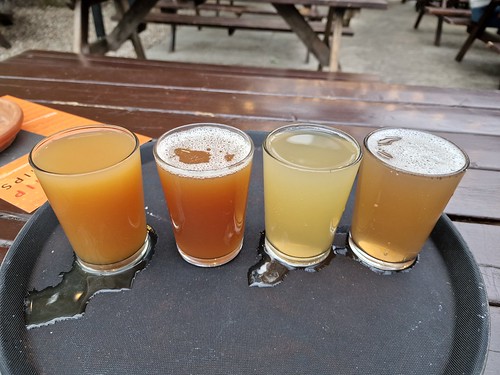
    The Loddon Hullabaloo, which is the pub’s house ale, produced by the Loddon Brewery who are based on Dunsden in Oxfordshire (I thought that sounded quite a long way away, but I’ve realised how near Reading us to the border of Berkshire and Oxfordshire).

    It’s a nice enough little pub, with the staff member being friendly and welcoming, so there was an inviting and quite cosy atmosphere. They’re still requiring masks to be worn, which I’m happy with that their being choice and I had one ready, so all was well. Given the building’s heritage and the range of real ales, I can see why it’s in the Good Beer Guide.

  • Reading – Museum of English Rural Life (Upstairs Stores)

    Reading – Museum of English Rural Life (Upstairs Stores)

    I like it when museums do this, which is placing items from their stores on public display rather than keeping them hidden and inaccessible. The National Railway Museum do this particularly well with the Warehouse, now called the North Shed (but I prefer Warehouse so I’m going to persist in calling it that). The Museum of English Rural Life have clearly spent some money on their set-up, but it’s visitor friendly and it keeps everything safe, but still visible.

    Some of the clothing, including smocks and the like.

    Bits from coffins, which to be fair are probably a little harder to incorporate into the main displays.

    There’s no end of material on these shelves, and there’s also an area at the back which can’t be accessed without a prior appointment, but this has even more items visible.

    The problem with running a museum on English rural life is that quite a lot of the exhibits are really quite bulky.

    Anyway, I liked this upstairs section to the museum, there’s an exploration element to the whole arrangement. The museum has a total of 25,000 items and only a limited amount of space to display them, but they’re used what they have really well. They’ve also carefully, and no doubt laboriously, listed everything in their collections and this is available at https://merl.reading.ac.uk/merl-collections/search-and-browse/databases/.

  • Reading – Museum of English Rural Life (Ladybird Books Collection)

    Reading – Museum of English Rural Life (Ladybird Books Collection)

    More on this museum in other posts, but I was told by a friendly member of staff at the entrance when she was giving me directions that there was a Ladybird display. As the museum is about English rural life I thought it would be something about ladybirds in terms of beetles (expecting something similar to what Stuart wrote in the LDWA’s Strider magazine about bumble bees), but I was surprised and delighted to see that it was all about Ladybird books.

    The cover of Bunnikin’s Picnic Party, the first Ladybird Book which was produced in 1940.

    The pages of a Ladybird Book before cutting.

    The original artwork from one of the Ladybird books.

    One of the challenges for adapting books for the Arabic market, not least the days of the week all needed amending.

    The dog was seen as unclean and was replaced by a goat.

    Head coverings were added for this book.

    And a switch from a pig to a sheep in this illustration.

    An internal memorandum from Ladybird Books, indicating that the Saudi Government didn’t like a girl being used in one of the images, it needed to be a boy. it was duly changed.

    And there’s the change that the Saudi Government requested.

    Some of the foreign language editions.

    And some of the collection of books that the museum has, which is a fairly comprehensive set. I remember having some of these, indeed quite a lot of them, and they remain a design classic.

    This is the only permanent display of Ladybird Books anywhere in the world and I think that they’ve done a nice job here in presenting some of the titles and giving a background to their history. They change the main feature every few months to keep the displays seem fresh and I’d pop in and see what they’ve done if in the area again. This collection could perhaps do with a little more space to allow the museum to do everything they want, but this was a nice surprise to end my visit with.

  • Greater Anglia : Norwich to London Liverpool Street

    Greater Anglia : Norwich to London Liverpool Street

    As this is a journey that I often take, I wasn’t going to write about it, but Greater Anglia’s choice of train annoyed me. So, I have.

    Norwich railway station on a Wednesday lunch-time in February, it’s getting busier, but I’m sure that passenger numbers aren’t there yet. Shame that West Cornwall Pasty, which was to the left of Starbucks, has closed, but that unit could perhaps be turned into a Greggs…. The M&S at the railway station is still closed, it’s been like that for two years now.

    Here’s the train, all shiny on Platform 2.

    And then I realised this. It’s the bloody Stansted Express train they’re using again. I thought to myself just how not ideal this was.

    I have no idea why Greater Anglia keep using these Stansted Express trains, they were never designed for this route. They don’t have tables, they don’t have first class (not that that much matters to me) and they don’t have a buffet car (actually, that doesn’t much matter to me either). Other customers have asked Greater Anglia why they use these trains on social media, but it’s seemingly a mystery to customers and Greater Anglia alike. Two groups came walking by me on the train on a hunt for tables, but their search would have been forlorn. The conductor, who was friendly and helpful, made an announcement saying that a last minute train change was required, but this train continually goes up and down the Norwich to London mainline so it’s not a rare occurence.

    A lack of table is annoying when using a laptop, although the power points worked. It’s quite hard to sit at these seats without wanting to put your feet on the chairs opposite, because that would make using a laptop much easier. However, I consider that to be a crime against humanity, although it’s possible to put one foot on the heating panel below the window. Greater Anglia have also decided they’d like their trains to be like rolling furnaces along the track in some sort of commemoration of the heat of steam engines, and there’s no way for a customer to cool the carriage themselves.

    We arrived into London Liverpool Street at the unusual platform 4 (unusual as in this train doesn’t usually stop there, it’s otherwise a normal platform) which I guess is because they’ve decided that the Stansted Express train was going to be used to go to Stansted.

    London Liverpool Street is definitely looking busier. All of the e-tickets were failing (again) so the gate guard was busy checking tickets manually, which I’m not sure is how the system is meant to work.

    As an aside, I went to the rear of the station and this is all looking much tidier.

    I don’t know when this was landscaped, but the whole area around London Liverpool Street appears to be being modernised, it’s all a clear improvement.

    I suppose it’s hard to complain with a fare that’s only £10 from Norwich to London (although, as is evident here, I’ve had a good go), but this would be a nicer journey if the train was more comfortable. But, the staff on board were friendly and conversational, although the train was rather hot, but everything ran to time and was efficient.

  • Crossrail : London Paddington to Reading

    Crossrail : London Paddington to Reading

    One thing that I have realised is just how confusing the rail pricing is from London to Reading, with the rail fare being at least £20 if looking to use rail booking web-sites. I discovered, to my surprise and delight, that it’s a little over £11 if travelling off-peak on the new Crossrail service, which is much more realistic. It’s not ideal though that this train journey pricing isn’t on the rail matrix for those trying to book tickets, another failing of the whole Crossrail set-up. Anyway, complaining aside, the signage at London Paddington is clear and I caught the train with just a minute to spare.

    Inside the Crossrail train carriages, this really could do with power points, but they decided early on that they weren’t going to bother with that burden. Nor does the train have toilets, despite the length of the journey and they had to bend the rules as a train service of this length would usually require toilets on board. I suspect they’ll retrofit power points at some random time in the future, it’s rare for services not to have them now. But, to be fair, these decisions were made by Boris Johnson when he was London Mayor, so it’d be unkind to expect them to be any good. Anyway, enough politics.

    At the moment the train is departing from London Paddington to get to Reading, they still haven’t quite finished the testing of the middle section between London Liverpool Street and London Paddington. This whole line was meant to open in 2018, just as an indication of how messed up the entire project has become, billions over budget. However, it is a very useful line to cut across London and it increases capacity as well as speeding up many journeys. Unfortunately, the Crossrail 2 project which would have been equally useful was scrapped by Boris Johnson in his Prime Ministerial role in 2020. It will probably be reinstated in the future, although the earliest opening date would now be in the late 2040s at very best according to TFL.

    It wasn’t a particularly packed service, but it was clean throughout.

    There’s the journey section between London Paddington and Reading. Hopefully this signage will all be removed this year as the entire line should be formally opening in late 2022.

    And getting off at Reading, on time and as expected.

    I didn’t linger at Reading station as the weather was quite stormy, but the railway station feels quite modern with a new section added onto the older building.

    This proved to be an easy way into Reading from London, with the journey taking under an hour. The facilities have actually been downgraded since GWR ran this line, as they offered more comfortable seating, power points and toilets. But, there has been an increase in capacity and for any passenger wanting to go through to east London, this is a much more efficient service than changing at Paddington and then switching to the underground and then another train.

  • London – Tower of London (Wild Flowers)

    London – Tower of London (Wild Flowers)

    Last year I went to look at the poppies that they put in the moat of the Tower of London, this year they’ve dug the moat up to grow wildflowers. As an aside, I still think it’d look better with water in it, but it’s been a dry moat since it was drained during the nineteenth century.

    The Tower authorities are making some big holes around the place as they’re planting 20 million seeds this spring so that they flower from June to September, to mark the Queen’s Platinum Jubilee celebrations. There will be chance to walk amongst the wildflowers, but I imagine that’ll be expensive, so I’ll just return in a few months to take photos from the same elevated position. I’m sure it’ll look impressive when the flowers grow (and probably play havoc with my hayfever), it certainly looks like they’re going to a lot of trouble to get it right.

    And as an aside, here are a few more photos of the exterior of the Tower of London at night whilst I was meandering around it.

  • Finding the Source of the River Wensum Part 3

    Finding the Source of the River Wensum Part 3

    PART 3 OF FINDING THE SOURCE OF THE RIVER WENSUM


    When Nathan and I were training for the LDWA 100, we started on a series of expeditions to find the source of the River Wensum. I accept this isn’t as challenging as finding the source of the Nile or the Ganges, but there was limited ability to use public transport and venues open during the lockdown, so we had to be a little resourceful. Anyway, we got as far as Lyng, and I wanted to go further to complete what we started. Nathan has retired from walking now, so this time, I convinced friends Richard and Liam to come with me. It took us a while to organise, but with my complaining that I was tired after marshalling the LDWA Winter Poppyline on the Saturday (more on which later) we were ready to go.

    Standing in the same spot as my photo from the last section of the walk, we started at Lyng Mill. The fun fact for this mill is that there is some support for the theory that it was where blotting paper was first created, a mistake caused by messing up production of normal paper. Another great Norfolk achievement.

    I was still quite sleepy when I took this photo, but Richard noted that the village sign notes some other spellings of the village’s name. The village sign was placed here in 2010 and shows the church, the now disappeared medieval abbey, the mill, a blacksmith and Humphry Repton who designed the gardens at Lyng Rectory. Lyng might now feel like quite a sleepy village, but it was once an important settlement with its two religious buildings.

    An old heritage map of the village. Some far-sighted council likely put this up 20 years ago and it’ll probably stay here until it falls down. We walked through the courtyard of the Fox at Lyng to get through to the church, reminding ourselves that next time we do this then we’ll get a Sunday lunch at a pub en route.

    St. Margaret’s Church in Lyng, which deserves a longer visit, as this was a building with some considerable character.

    The west tower dates to the thirteenth century, as does the bulk of the nave. The font is also from this period, another remarkable survival.

    This is rather odd (the church I mean, not Richard standing in the foreground), as the chancel is off-centre compared to the rest of the building. It transpires that the chancel was rebuilt in the 1860s on the site of the original floorplan, which suggests to me one of two things. Either there was an north aisle which has been brought under one larger roof later on, or the church was widened in the late medieval period and they never got to widening the chancel as well. I suspect it’s the latter, there’s not much space on that north aisle.

    The Victorian plan for the new church.

    I think this was appropriate to the day’s quest, a map of the local area on the wall of the church, with the river’s route being clearly noticeable.

    This is a legacy of when some pews were available for free usage, as opposed to those who got a seat up-front but had to pay pew rental for that benefit.

    A blocked up door, which I initially couldn’t work out, but I think it was the former entrance to the two-storied fifteenth century porch.

    There are numerous more stories to tell about this church, I’ll return…..

    Given the walk, I felt the need to take a photo of this sign.

    Our rule was to try and catch sight of the Wensum whenever we could. Walking through Lyng, this isn’t it, these are the lakes formed from the former quarry that was located here. However, the Wensum winds it way behind here, so we went to investigate.

    We walked by the lakes, located on Quarry Lane, in the hope of seeing the river at the rear of the lakes. Liam took the lead here in case there were any dangerous animals in the undergrowth.

    To cut a long story short, it’s not really quite possible to see the river, but we could see the route that it was taking in the distance. So we walked back to the road, but pleased that we had investigated.

    Back on the main road we walked through the metropolis of Fustyweed, which seemed to consist of four houses, of which one was a treehouse. This small hamlet has name origins which are uncertain, although there’s a guess at trying to explain the situation at http://www.lyngonline.org.uk/whats-in-a-name.html.

    This is the bridge on Elsing Lane, with Richard and Liam standing in front of the river as it heads towards Norwich.

    And there’s the landscape from the other side of the road, looking towards the source of the river.

    A photo from the same location, without the bridge’s ironwork in the way.

    The village’s mill is visible.

    As we walked northwards, a rather fancy wall appeared, which I imagine is the country estate wall of Bylaugh Park.

    One of the lodges at the entrance to the road leading to Bylaugh Park.

    This will definitely need further investigation, St. Mary’s Church at Bylaugh. This is kept permanently locked, but there’s keyholder information and we’re planning to get in touch to visit this church in the future. Richard, who is the most social, is going to get in touch with the church as there are some interesting things to see inside it seems.

    The tower is late Saxon or early Norman, the rest is a much later rebuild from when a grander building was needed for the hall. It’s positive that this church survives as there’s no real congregation here, the hall isn’t lived in and there are very few residential properties nearby.

    Richard and Liam standing in the graveyard, and this is really quite a pleasant place to be buried (as far as these things go….) with its view over the River Wensum.

    All very tranquil and there’s a newer section to this graveyard a little nearer to the road. The Wensum is quite wide at this point, it’s showing few signs of narrowing at the moment.

    The pleasant path from the church back to the road.

    The second lodge of the hall. The road here goes to the north of the Wensum and we could see the river’s route, but couldn’t get near to it. The hall is worthy of more investigation and I wonder whether it might be possible to visit, although it’s currently in use as a training centre. The hall had been completed in 1852 and was designed by the architects Charles Barry, Jr. and Robert Richardson Banks. It was one of the most substantial residential buildings in Norfolk and one of the first to be constructed with a steel girder frame. The building was damaged during the Second World War after it was used by the military, and there were attempts to turn it into a nursing home following the end of the conflict. The core of the building was flogged off in 1950 at an auction, including the roof and the interiors.

    I noted this destruction to Richard and Liam as I had found that information on-line. So imagine my surprise when three minutes later we walked near to the entrance to Bylaugh Hall and it looks very complete with not much evidence of destruction. It transpires that it was only around twenty years ago that it was decided to save the building, and a grand reconstruction has taken place at what was previously a wreck. There’s more about this work at https://thecountryseat.org.uk/2013/02/22/bylaugh-hall-the-hidden-history-to-a-remarkable-restoration-opportunity/.

    There is some evidence that President Eisenhower came to the building during the Second World War and apparently Winston Churchill visited on a few occasions. It’s hard to imagine that a former President of the United States has been driven down this quiet back road, but I rather hope that the story is true.

    The walk then goes to the Swanton Morley Waterfalls. You can see the look of excitement in the faces of Richard and Liam, I think they felt quite humbled to be near such an important site. This is very much Richard’s patch of Norfolk (I mean Dereham, rather than this particular stretch of mud), although he hadn’t been aware of this water feature despite driving by it on numerous occasions.

    I’m surprised that there isn’t a visitor centre by this major attraction, although I accept that it’s not quite Niagara Falls. This isn’t the River Wensum, it’s a channel that was created from it for the purposes of constructing a mill. I think that’s one thing that I’ve learned from this whole process, there were a lot of mills along stretches of the river, an essential early power source. We saw a few fishermen in the area, and although this isn’t a hobby that is in the slightest bit of interest to me, I can imagine it’s a quiet and peaceful location if they can ignore the sound of the thundering waterfall.

    The river reappears at Swanton Morley, including this rather lovely bridge, but more about that in the next post.

    And here are Richard and Liam on the bridge, celebrating the completion of our short walk.

    Despite Richard being told clearly not to look at the next part of the river walk, which we’ll tackle in a few weeks, he ignored that and excitedly ran towards it pointing. I disregarded his exuberance and obsession with questioning authority. I mentioned that Nathan would have been appalled at this continued breach of the rules that we had established, but Richard didn’t seem concerned at his lack of river walking etiquette. Anyway, I digress….

    And that’s that, not the longest of walks, just 7.3 kilometres, but it was really rather lovely to get nearer to the source of the River Wensum……. And just as we finished the walk, I had woken up after my lack of sleep from the previous evening, which perhaps wasn’t ideal timing.

  • London – Westminster (Borough of) – Oxford Street – Hard Rock Cafe (3rd Visit)

    London – Westminster (Borough of) – Oxford Street – Hard Rock Cafe (3rd Visit)

    This visit to the Hard Rock restaurant at Marble Arch is from a couple of weeks ago, another funded by a promotion from The Fork.

    Like another customer, I tried to be seated away from the stage, but they’re not having any of that. This has happened before and I think the staff are privately slightly annoyed that the restaurant is paying for entertainment, this is a music venue and that customers are trying to sit away from it. Fortunately, the music wasn’t too loud and seemed to my highly untrained ear to be suitably professional.

    I was aware of the restaurant’s limited beer choice before going, but this was a tolerable option. It’s expensive at £5.50 and although I wasn’t paying, that really is at the high end of the scale. There are other options, such as a pint of Heineken which costs £5.95 and a Birra Moretti which costs £6.75. This isn’t a venue that will much care what CAMRA think, but they charge significantly more proportionally for a half than for a pint.

    The BBQ chicken with fries, coleslaw and ranch style beans. This is a photo of the second meal, as the chicken they brought over on their first attempt was cold in the middle. I think they’re brought in pre-cooked as the chicken was entirely cooked, it was just cold rather than raw. I always have a moment of wondering whether the meal is tolerable to avoid having to waste it and complain, but it was fridge cold in the middle and that was far from ideal.

    The staff member was apologetic and took it away immediately, and the wait for a new meal wasn’t too long. The chicken was tender and moist, with the half a chicken portion being entirely sufficient. The chips were the usual fluffy on the interior and firm on the exterior arrangement, with the coleslaw being of a good quality but rather sparsely portioned. For those paying full price, the meal would be £16.75, which isn’t cheap, but isn’t entirely unreasonable given the location and prestige of the restaurant. Although hopefully usually they’ll cook it properly.

    The atmosphere in the restaurant was comfortable and the staff were attentive and polite, so the experience was once again positive. The number of offers here seem to be reducing, so I imagine that they’ll be gone nearly entirely in the next few weeks as the number of customers starts to return to normal. Anyway, I’d merrily recommend the restaurant, but would still recommend going on a voucher offer…..

  • Wizz Air (Gdansk to Luton Airport)

    Wizz Air (Gdansk to Luton Airport)

    And it was time to come back to the UK, departing from Lech Wałęsa airport in Gdansk. As an aside, it must feel odd for Lech Wałęsa when he uses this airport to know that the entire place is named after him. I’m always slightly saddened to leave Poland, but I’ll be back in a few weeks and so can look forwards to that.

    Usually I’d just download my boarding pass on my phone and go straight through security, but Wizz Air don’t have any on-line processes in place to check the documents of travellers, so everyone is directed to the check-in desks first. It’s positive that they’re checking the UK’s Locator Form, although to be fair they’re legally obliged to, but a shame they don’t have a set-up similar to that BA have with VeriFLY.

    I tried to get through a little earlier, but the friendly member of staff at check-in said they would only open the boarding desk for my flight two hours before the flight departed. She also helpfully mentioned that my mask wouldn’t be accepted by Wizz Air on any of their flights, although I did silently think it had been accepted on the Wizz Air flight out to Gdansk. But, I wasn’t sure on their policy and had a spare mask, so that was all fine. I was told to check the boarding screens around 150 minutes before the flight, which transpired to be useful advice, as that’s when the check-in desk for my flight opened. I was fortunate to be nearly at the front of the queue, as it snaked back to the entrance to the terminal within a few minutes. The member of check-in staff quickly checked that I had a passenger locator form confirmation and then my boarding pass was printed, which is a free service when customers can’t check-in on-line.

    Safely through security (where I was praised by the security staff for my efficiency, which I lapped up willingly) and into the lounge (more on which in another post) it was time to trek to the corner of the airport and Gate 1, located in the non-Schengen zone. There was a queue, but there’s always a queue with Wizz Air…..

    This process is the same with Wizz Air and Ryanair, they call passengers forwards to wait before the aircraft is ready for boarding. Which means a wait on the steps down to the tarmac, which is fine for me leaning against a wall reading a book on my phone, but less so for those who don’t feel quite as comfortable standing on steps for twenty minutes.

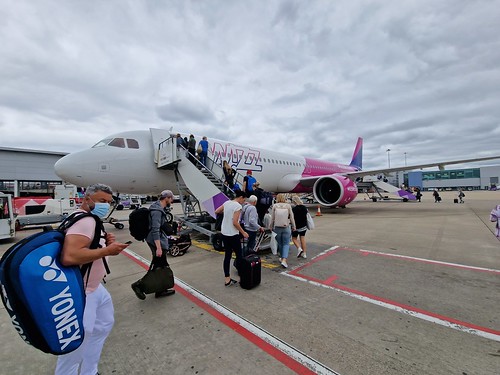
    And it started to rain quite heavily, but it was only a short walk to the aircraft. Wizz Air rarely use airbridges, which has the advantage of meaning that I can take photos of the aircraft.

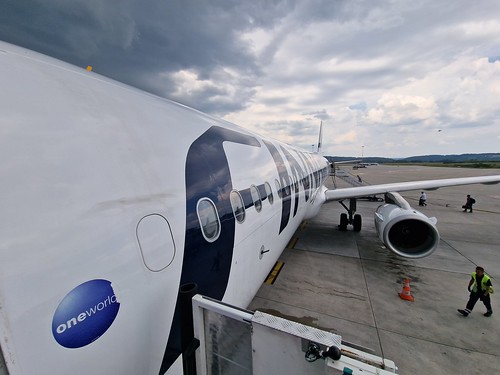
    The aircraft was registration HA-LXS, an Airbus A321, which has been in the Wizz Air fleet since June 2017.

    I boarded via the back of the aircraft and the flight was clearly busy, and I think just about full.

    I had the middle seat, which is the first time I’ve had this in years, although the other passengers on each side were ideally behave which makes things easier. The leg room on Wizz Air really isn’t ideal, but the flight was only for two hours and so is bearable. The crew were friendly and helpful, although I couldn’t work out where they were from as their ability so speak so many different languages is really quite impressive. The pilot announcements were hard to hear, but we landed on time although the wind made the landing quite bumpy. Well, very bumpy actually, but it added to the excitement, although the babies on board decided at this moment that they really didn’t like what was happening.

    It’s also fair to add here that this flight cost me £7.50, so it’s hard to fault Wizz Air for anything given that. The service ran as expected, the aircraft was clean, the flight was on time and everything was as comfortable as could be expected. The arriving into Luton Airport on time was fortunate as my friend Liam was there to pick me up, so he didn’t have to wait for endless amounts of time in an industrial park in Luton. Anyway, based on this flight I’d happily fly with Wizz Air again, they fly to a wide number of destinations that I want to visit and although I can’t claim the flight was luxurious, it’d be ridiculous to complain at the price that they charged.

  • London – Trailer for Group Trip in February

    London – Trailer for Group Trip in February

    For legal reasons (I don’t want to be sued) I usually have to be careful about blogging about group trips, but I’ve received permission to blog about a trip to London in late February that I think eight or so of us are going on. This is just a little trailer post and I like blogging weekends as they’re good for access numbers on this blog (mostly Gordon’s legal team) and so I need little convincing to do them.

    We’ve been planning this for a while and this was initially meant to be a trip to Amsterdam, but Omicron and the like means it’s just a little too early for some of our party to want to go there. We’ll do a foreign overseas trip later in the year if this weekend doesn’t end in arguments and a punch-up.

    It’s a cross between a walking weekend and a drinking weekend, but it’s mostly the latter, although this might not be clear to all of the group at this stage. Steve focuses on the walking arrangements and I focus on the drinking arrangements, because walking can lose its excitement without lots of beer. I’ll also put myself in charge of most of the food arrangements, although that will be less of a surprise to the group.

    The itinerary is something like:

    Fri 25 Feb: Bermondsey Beer Mile (1 mile / 17 breweries/pubs)
    Sat 26 Feb: Tracing the line of Falcon Brook (8 miles, 6 pubs)
    Sun 27 Feb: Walking the Monopoly Board (14 miles, 7 pubs)
    Mon 28 Feb: Limehouse to Little Venice along the Regents Canal (9 miles, 7 pubs)

    And Goose Island is booked for the Saturday evening, wooo!!! Now that is a delight and I can almost taste the decadent drinks already. Gordon is bringing cash to buy a barrel of the Bourbon County Stout as he’s kind like that.

    Names to be confirmed, but we likely have the following:

    Steve – supreme leader of one of Norfolk’s best walking groups, he’s cool, calm and very collected. Annoyingly photogenic, smooth and really lots of things that Gordon would want to be. Knowledgeable about cars, he’s going on a pilgrimage in a few months and I hope he’s quieter than when Gordon went shrieking along it.

    Sarah – becoming one of the strongest walkers in Norfolk, she’s now entering LDWA events like a champion. A bit huggy, but I don’t say anything.

    Andy – after strolling out bravely into the waters on the St. Cuthbert’s Way trip, nothing phases him. Steve nearly had us drowned doing that walk, but Gordon and I don’t mention that any more. Richard and Andy will be able to discuss sandals.
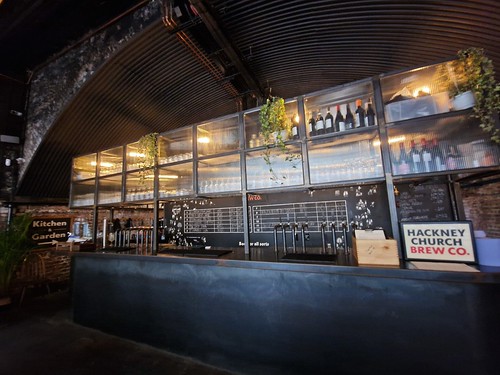
    Gordon – he retired early in his 40s and now lives in Old Catton in a private gated community. Quite an exotic and challenging character, he is always good for telling gossip. He’s recovering from nearly being washed away a few months ago. As mentioned earlier, his legal team read this blog carefully ready to take action, so I’ll have to be careful.

    Susanna – the model of the group, a Marilyn Monroe figure and another tough walker. Spiritually beautiful and has a great knowledge of history and culture.

    Richard – a VIP guest and he’s getting better at this beer drinking thing. He might be bringing his Christmas jumper which will annoy at least four people (Andy will probably embrace the quirkiness though). Richard might not be doing much of the walking.

    There are two more people I’m not sure if they’re coming or not, more on them when they’re confirmed   🙂

    How exciting! I don’t get to go to London enough, so this is all rather lovely. As usual, I’ll be the calming influence on the group, as well as being the voice of sanity and reason.