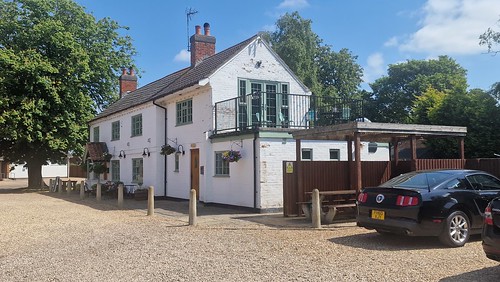
The Green Man in Norton Disney has one of the more detailed pub histories on their web-site that I’ve come across, it’s always a delight when a venue is proud of their heritage. The Green Man is an early name for the pub, which was trading in the early 1840s, but it changed its name to the Sportsman by 1851. From around 1909, the pub was renamed as the St Vincent Arms in honour of the local landowner Viscount St Vincent. It was unfortunate enough to have been taken over by Punch Taverns in the early part of this century, but after they messed it about the pub was sold in 2009 and renamed as the Green Man, remaining as a free house.
The interior has been sensitively restored.
There’s a nice open and clean feel to the whole arrangement. The service was immediate and welcoming, with the pub having an inviting feel to it. The pub is also very well reviewed on-line and it appears to have a strong food, particularly Sunday lunches, offering judging from those reviews. They do seem to have picked up a small number of negative reviews which are just odd, at least the pub has responded in full to each one and I can imagine they feel a little hard done by given the nature of some of them.
The beer choices and there was a brewery I hadn’t known about before, Beermats Brewing Co of Winkburn in Nottinghamshire. I went for the brewery’s Legitimate bitter, all very agreeable and well kept. This was the best selection of real ale in the local area, I’m not entirely sure why it isn’t in the Good Beer Guide, although maybe it’ll be in the next edition.
The pub wasn’t serving its usual food menu, but they did have a BBQ going so a pint of beer, a hot dog and warm weather all combined to make a rather lovely afternoon. Those cabins in the background are part of the accommodation offer, in conjunction with Outdoor Inns, but more about them in later posts.
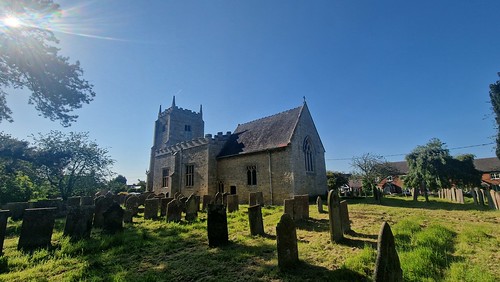
The Church of St Michael and All Angels in the Lincolnshire village of Bassingham is Grade II* listed and has elements from as early as the eleventh century and it was also listed in the Domesday Book. Much of the older section of the church dates to the thirteenth century, but it was extensively restored in 1860 under the supervision of JH Hakewill.
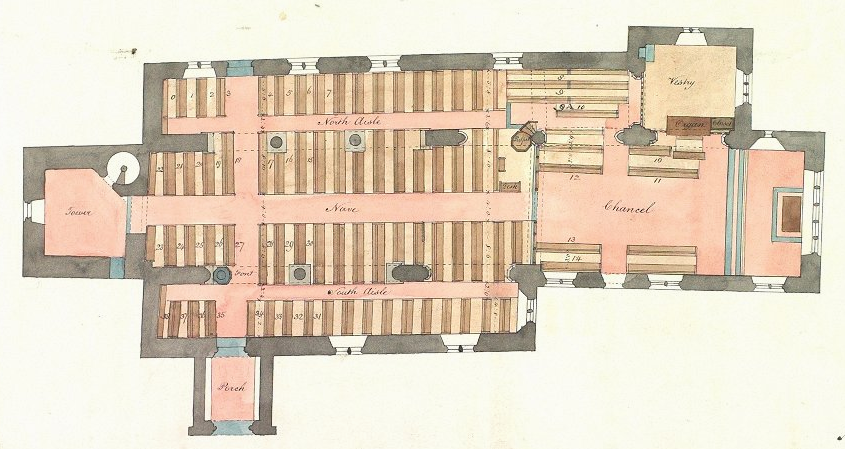
The design drawings prepared by JH Hakewill in advance of the 1860 restoration. During this work they discovered two Anglo-Saxon grave covers which are now located near to the altar, used as a table for the sacraments.
The entrance gate to the church from the road, with the rear of the churchyard reaching the River Witham.
The pretty long graveyard leading to the church from the road.
The rather blocky tower was rebuilt in 1782.
The south porch.
We weren’t able to visit inside the church, but the listed building record notes that there are the remains of a fifteenth century screen, the altar rail and organ are from the nineteenth century, the nineteenth century pulpit has a panel from 1674 and the alms box is from 1668. Also inside the church is the bell from the minesweeper HMS Bassingham, which was given to the community in 1999 after it was decommissioned by the Royal Navy. It was explained at the service that at the time, minesweepers were named after villages which ended in ‘ham’.
This Grade I listed church in the Lincolnshire village of Carlton-le-Moorland has elements dating from as early as the eleventh century and reference was made to it in the Domesday Book. The bulk of the structure today is from the sixteenth century rebuild and the 1890 reconstruction overseen by C Hodgson Fowler.
Being very different in design, the chancel’s roof dates from the sixteenth century and the nave’s roof dates from the nineteenth century. The church wasn’t open when we visited, but the listed building record notes that screen is from the the fifteenth century, the wooden pulpit from the eighteenth century and the pews are from the nineteenth century. There are tablets inside the church which are memorials to the Disney family, dated 1595 and 1611.
Some of the church graffiti.
The church’s lychgate was unveiled in October 1920, built at a cost of £174 to commemorate those villagers who had lost their life during the First World War.
Located outside of the church, this is one of the fountains which were placed around the local area.
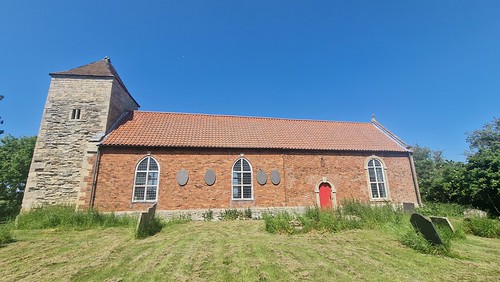
Located down a track this pretty church was built to serve a village which has long since gone. The settlement that was once here was prone to flooding from the River Witham, meaning that this is the only building surviving. It’s also not the only medieval village to have been lost, just to the south was Stapleford Parva, with nothing now remaining of that settlement.
Although most of the structure is from a later period, there are elements from the eleventh century in the building and the church was referred to in the Domesday Book. The belfry had to be reconstructed in around 1300 as the local parishioners had become a little bit careless and it fell down.
There was an extensive rebuilding effort in 1770 with the mostly new structure being built on top of the earlier church, using brick rather than stone. In 1903, a restoration took place and the Cambridge Independent Press reported:
“The parish church was re-opened for Divine service on Sunday, after being closed for a fortnight. A great improvement has been effected by re-arranging the choir seats, pulpit and reading desk. In addition the chancel arch has been beautified, and two hagioscopes opened between the chancel and the nave.”
Unfortunately the church was closed, but it was possible to see through one of the windows. I’m not sure where they are now, but in July 1935, the owners of the neighbouring Stapleford Hall donated to the church a number of items from the Civil War period including a helmet and bottle found in the hall’s priest hole.
The listed building record notes that there is an eleventh century pillar piscina, eighteenth century altar rails, nineteenth century pews and twentieth century choir stalls, reredos and wooden screen.
The pretty graveyard, with Liam’s bike hiding the sign noting that dogs shouldn’t foul the area. It is a constant mystery to me that they need signs like this as one would hope it was obvious, but there we go…..
Charles Tonge who died in 1809 at the age of just 34, with this memorial noting “the time is short”.
Elizabeth Tonge who died in 1826 at the age of 48, alongside her son Joseph, who died at the age of just 14.
Edward and Ann Tonge, further dominating the side of the church wall.
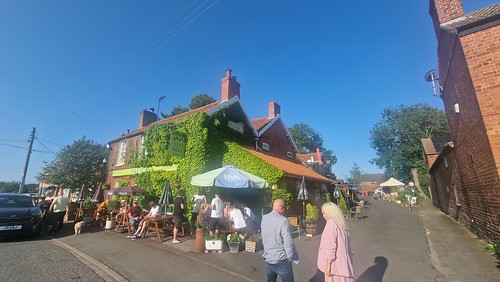
I suspect some local wags and pesky kids might well have been having a go at the pub signage of the Bugle Horn, a Good Beer Guide listed pub in the Lincolnshire of Bassingham. The pub has been serving alcohol to customers since the seventeenth century, it’s a sizeable building and there’s also a large beer garden. I’ve tried to work out the reasons for the pub’s name, but I can’t see any local military connection and the actual reason is likely lost to history.
Here it’s the Te Buge Horn.
Here the Ugle Horn.
And here the Bugle Orn. It’s like something out of Fawlty Towers and the kids changing the letters on the sign. But, I won’t linger any further on the external signage.
This wasn’t what I expected to see from a Good Beer Guide listed pub if I’m being honest, especially as this appears to be a free house which isn’t manacled to a pubco or brewer. As there was another bar where more exciting options might be available, I asked if there were any other ales to choose from.
The friendly staff member, who I assume to be the landlady, politely pointed me straight towards the keg options from Beavertown. I’m not averse to these, although I’ve obviously worked through them all before, so I was hoping for a local beer that I might not get anywhere else. Prices of these were towards the higher end of the scale, but I liked the inviting nature of the pub so I felt it was a price worth paying to not have to drink Greene King IPA.
I went for the Bloody ‘Ell from Beavertown, an entirely agreeable blood orange keg IPA. It’s a nod towards craft beer, I approve of the pub’s attempts to widen their beer range.
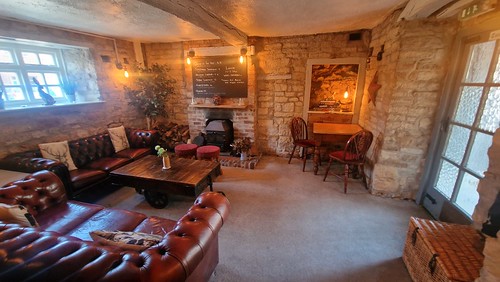
There are two separate bar areas, the one in which we seated was comfortable enough but they do perhaps need a refurbishment as some of the seating is heavily stained and things are a bit wobbly in places.
Having said that, the pub still felt traditional and if there is a refurbishment, I hope that it doesn’t change the layout and separate areas of the interior that currently exist.
Liam’s gammon (that’s a description of the food he ordered, not his politics which are far more reasonable), delivered just seconds after he had gone off to explore the toilet facilities in the pub.
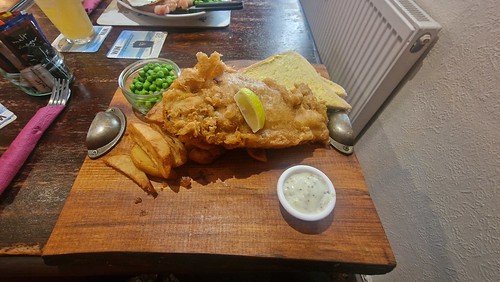
Although the Beavertown beers might have been just a little decadently priced, the meals certainly weren’t, this fish and chips was at the very agreeable price of £10. The home cut chips are mostly hidden here by the fish, but there were more than I could eat and so I let Liam finish them up. For the perfect arrangement, the fish could have been drained better and the oil could do with changing, but the batter had a decent depth of flavour and the fish flaked away. I think they’re using some form of margarine on the bread, that wasn’t a highlight if I’m being honest. But, for the price, this was a satisfying and filling meal, if I was a local I’m fairly sure I’d eat here on a regular basis.
The pub is well reviewed on-line, with the staff member giving the atmosphere a family friendly atmosphere where customers feel welcome being there. They’ve built up a reputation for large portions of home-cooked food at reasonable prices, which is quite a selling point as far as I’m concerned. Although I can’t say that I was surprised and delighted by the range of real ales, they’ve made an effort with offering Beavertown beers as an additional option. Definitely recommended, although some form of minor renovation might improve the ambience, as it’s an element customers have mentioned on-line for a few years. But, times are hard for pubs, and at least they’re keeping the food prices down. It felt like a proper pub to me, a phrase that’s over-used I admit, but some things are timeless and too much change here would be a bad thing.
The Five Bells at Bassingham looks like a rural pub should perhaps look like, although the foliage is rapidly consuming the venue’s signage. I can’t say I’m overly taken with the pub’s opening times which are caveated with “we may close earlier on very quiet nights or open later if need be”, which don’t exactly make planning entirely easy.
Anyway, gripes about opening times put to one side, the pub felt an inviting place to visit and my hopes were high.
I was a little disappointed with this to be honest, as ideally a venue with four different real ales would have something a slightly more interesting available. No local breweries, no milds or dark beers, all just a little generic. But, at least they have a choice and if that’s what the locals want to drink, perhaps I shouldn’t complain. Although I will.
I went for the Timothy Taylor Landlord, with a food pairing of Mini Cheddars, with the beer being well kept and tasting as expected. The Mini Cheddars were delicious as ever.
The pub did have plenty of character, including the hops above the bar, and a tree. I’m reminded of the rather larger tree in the Raleigh Beer Garden, a venue I’m keen to go back to. But I digress, dreaming of the United States once again.
All very British, there was a pleasant atmosphere to the pub. Well, there wasn’t from a few drunken customers loudly announcing they were from London who were busy upsetting some locals, but these warm days seem to bring out these type of arguments. The staff didn’t seem to notice an awkward altercation between the two groups, which fortunately didn’t develop further so peace of sorts was maintained.
The pub was once owned by Highwayman Inns who in the 1980s specialised in offering steaks and seafood. The pub itself was built in 1815, although it does feel older because of how the interior has been designed.
The service in the pub was friendly and what I think was the manager asked how we were, it all seemed authentic and genuine. There’s quite a wide menu, perhaps priced a little towards the higher end of the scale, and food is what many customers were coming in for during our Saturday early evening visit. It is very well reviewed on-line, so they seem to be doing a marvellous job in serving the community and the environment felt warm and cosy. Definitely worth a little visit for anyone in the area, if time hadn’t been pressing I would have liked to have spent longer in here.
At some stage of this pub’s history, although not recently, someone thought it would be a marvellous idea to brick up the frontage of the building. I’ll refrain from making comments on their design choices, but it doesn’t look the most inviting of pubs from the exterior. Or, to put it another way, it looks like it has been turned into a residential property.
The building dates from the sixteenth century, although I know little more than that, but there were once two pubs in the village. More recently, in 2016, the landlady of 21 years, Heather Richmond, retired from the venue to enable her to travel around the world which sounds a marvellous idea. Fortunately, the pub wasn’t lost to the community as it was taken over by new owners who also sensitively refurbished the interior.
I did note the lack of “day” from Monday which marginally upset my sense of order for just a brief moment. The opening hours are a little limited, but Carlton-le-Moorland is a relatively rural Lincolnshire village and this must be what works for them in terms of customer numbers.
Unsure of which door to enter from, although I don’t think it matters, we walked through a dining area and I wasn’t entirely sure that the pub was even open. When we got to the bar there was silence which made me wonder whether we were about to be asked to leave and return when they were actually open, it was a slight relief when we were politely asked what drinks we’d like.
They had a keg beer from Timothy Taylor’s, the Hopical Storm Pale, alongside two real ales, including the Lion’s Pride from Milestone Brewery and Timothy Taylor’s Landlord. Mine was the first check-in to Untappd for a year, so it’s rather difficult to tell what other ales they’ve been serving over recent months. The service was welcoming and efficient, but I suspect that this is something of a locals’ pub outside of food service times.
We decided to sit in the garden area, but I have to note how cosy the interior looked as we walked through it. There’s some considerable heritage here behind the bricked-up front entrance.
It was a beautiful day outside with the sun shining and the beer garden looked warm and inviting.
But, I don’t like the sun, so I made Liam sit in the sheltered bit so I didn’t overheat.
All was well with the Lion’s Pride, a local beer brewed in Newark, a well-kept session bitter.
This is very much a food pub, although drinkers are welcome and the outdoor space is relatively expansive and there’s some playground equipment for children. The venue is well reviewed and seems to surprise and delight many customers, although not quite all, with its Sunday lunches. All rather pleasant, particularly during the summer months when the garden feels an appropriate place to sit and I’m sure that it offers a cosy interior during the colder winter months.
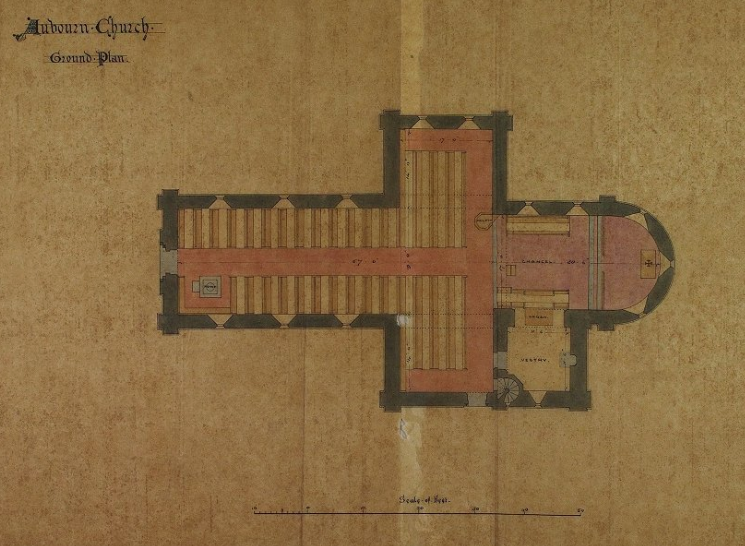
They were hopeful times for the Church of England in the Victorian period, congregations were often growing and there was a need for new church buildings to cope with that demand. There was a church in the village of Aubourn, St. Peter’s, but it just wasn’t big enough for the number of people wanting to spend their Sundays deep in prayer.
That increased demand meant a new church was needed, so the old St. Peter’s was mostly demolished and a new one constructed.
The new church was designed by J H Hakewill and constructed between 1862 and 1863 in the Early English style. Unusually, the spire had oak shingles, something which has recently been a problem as it’s not easy to replace and restore them. I’m always intrigued to look back and see what locals thought at the time about changes such as this and in July 1861 an anonymous correspondent wrote to the Stamford Mercury:
“The old church might have been preserved. This is a mistake. The [existing] church now stands in the village near the old Hall, in its time honoured and natural site. The new church will stand out of Aubourn. It was an interesting old church, but neglected. Would it not be wiser to bring the church to the person rather than the person to the church? Mr Editor, the very noblest mission you could have would be to be the conservator of the noble churches within your circulation”.
He wasn’t the only one, another correspondent wrote in the same month:
“We observed that Aubourn church is about perhaps now being pulled down, to build a wall around the new churchyard! Is there nothing about the old church to win the regard of the parish clergyman? Nothing in its Norman tower, its Early English north door, the peculiar construction of the nave, its really handsome chancel, with the monuments of the Nevile family upon its walls?”
There was more excitement about the opening, with the Lincolnshire Chronicle reporting in July 1862:
“The new church of St. Peter at Aubourn was consecrated on Thursday 17 July. The church is Early English, has a nave, north and south transepts and is a very beautiful specimen of modern skill in ecclesiastical architecture. It has been erected at the sole expense of the late Hy. Nevile of Walcot Hall, near Stamford, the leading of the greater part of the materials having been cheerfully and gratuitously done by the tenants and others residing in the parish”.
At least the old church wasn’t entirely demolished, the chancel was kept and that survives today.
But just as congregations had risen in the nineteenth century, they fell away in the twentieth century and this church started to fall into disuse by the 1960s. In 1968, the writing was on the wall and the church became redundant. The Church of England, who had quite a shoddy reputation in this period for looking after their buildings, would have likely wanted the whole thing demolished but the local Archdeacon wanted to save some of it. The local population also weren’t enthusiastic of losing one of the most charming structures in their area, so there was a compromise. Some was knocked down, some was saved.
The building was placed into the care of Aubourn and Haddington Parish Council in 1974 and they’ve been looking after it since. The council have done an excellent job, including ensuring that funding was raised in 2004 to ensure that the structure didn’t fall down.
The clock, which was given as a memorial gift, is the highlight of the whole arrangement now, evident by the name of the structure is the Aubourn Clock. The irony is that the old church, which was mostly demolished for this out of town extravaganza, is now back in use as the parish church. The replacement was too large, in the wrong place and its demise was perhaps inevitable. The remaining parts of this former church have at least been made secure and they are now used by the community. It’s a marvellous way of evolving buildings so that they can remain in use but with a purpose which ensures their survival.
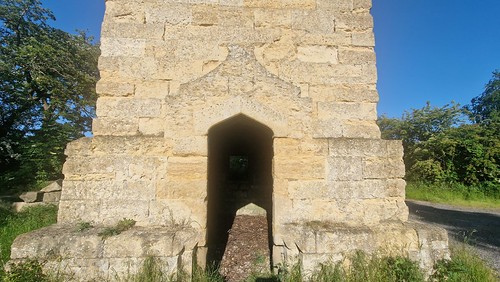
Now standing just over 60 feet in height, Dunston Pillar looks rather incongruous in its current surroundings, but it was once something of a tourist attraction and also more substantial until the RAF knocked a bit off the top in 1940.
Known as the Lincoln Lighthouse at the time, it was constructed in 1751 because the landowner Sir Francis Dashwood wanted to make the bleak moorland area which went from Sleaford to Lincoln safer. There were highwaymen in the area, not least Dick Turpin who, on Dashwood’s lands, had murdered Christopher Wilkinson who refused to give into his demands.
Sir Francis Dashwood (1708-1781) was, I think it’s entirely fair to say, something of a character. Known for his links to the hedonistic Hellfire Club, he developed something of a reputation for fine living. In spite of this reputation, or indeed perhaps because of it, he later became the Chancellor of the Exchequer between 1762 and 1763 before being elevated to the Peerage as Baron le Despencer and serving as the Lord Lieutenant of Buckinghamshire until his death. Betty Kemp wrote a book about the seemingly very full life of Francis Dashwood, titled “An Eighteenth Century Independent”.
One of the tower’s design plans.
The interior once had a wooden staircase which led to the gallery around the lantern area at the top of what was known as a land lighthouse. There were only three of these constructed in England and Dashwood hoped that the lights would deter highwaymen from prowling around the area. It did have some success, although the development of a better road network in the area meant that it had started to become less relevant by the 1780s. By 1788, the lantern was no longer lit, as the threat of highwaymen had sufficiently diminished.
The site became something of a tourist attraction and a bowling green and assembly rooms were built around the base, with the location being advertised as Pleasure Gardens although these had fallen into disrepair by the late 1780s. The lantern at the top of the tower was removed in 1808, although that primarily was because bits of it had already fallen down as the ironwork had rusted away. This was replaced by a bust of King George III, which is now located in the grounds of Lincoln Castle.
This vignette dates to 1801 and the writing on the pillar is still visible at this point.
In 1940, the RAF had some considerable concerns that one of their aircraft from the nearby airfield at RAF Coleby Grange might fly into the tower. This wasn’t just them being over cautious, the RAF base was located under one mile away and was used for night flights, meaning a 93 foot tall stone monument was sub-optimal for their purposes. So to avoid incidents, they lopped 30 feet from the top of the pillar and the stone that they removed is still piled up around the base of the monument.
There were once views of Lincoln and Newark for those brave souls who went to the top of the tower, but that touristic endeavour has long since become unavailable. It appears that there are occasional suggestions that the tower could be put back to its pre-1940 height and I’m sure it would make a notable tourist attraction if the wooden staircase returned, but the cost of such works likely make this plan prohibitive despite the heap of stone that’s there ready for the purpose. The tower likely also has a new owner, as the structure and the property next door were put up for sale in late 2022, it’d certainly be an intriguing thing to own.
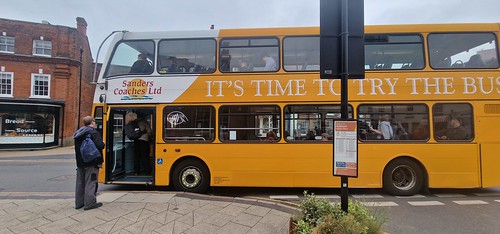
After completing the pubs in North Walsham, Dereham and Bungay, it was time for Julian and I to turn our attention to completing the hospitality venues of Aylsham. After a moderately uncomfortable ride on a Sanders bus which didn’t seem in quite the condition it was likely once delivered to them in, we arrived safely in the beating heart of Aylsham and its central car park which was formerly known as the market place.
For our study tour, we were planning on visiting three venues in the day which were:
Here’s some history and I liked that there were numerous of these boards located around the town.
And some more history, which saves me writing it.
After visiting our four venues, we also had time to pop into the town’s church, but more about that in future posts. We then meandered to the town’s central car park to get the bus back, but then found the previous bus was running over thirty minutes late so we caught that one instead. En route, there were some fraught discussions between a passenger and the driver about that which I’d suggest were sub-optimal to say the least, but it’s perhaps best not to dwell on that.
Anyway, back to some thoughts about the day. There aren’t many pubs left in Aylsham now compared to how many that there were once were, but all of them offered a friendly welcome and they had at least two real ales available. The pubs were all clean, comfortable and well maintained, with the prices being reasonable for beer, although the Black Boys was a little punchy in terms of its food pricing. However, there was a selection of venues to suit probably most tastes, but I have to note that the best beer options that I saw during the day were in Stamp. This isn’t really how I think things should ideally be, pubs should perhaps be offering a wider selection of craft beer and especially so if they’re free from tie.
Once again, I feel the need to note that it’s marvellous that the three pubs and one pizzeria are trading and open to be used by the local community, especially as Stamp has only been open for a couple of months. These are difficult times for pubs and I’d suggest to others that a little pub crawl around Aylsham is a perfectly fine way to spend the afternoon. Your experiences may well differ, but I’d say that Julian and I had another marvellous day out. But these study tours remain hard work, and I have to repeat that we don’t do them for fun, but as a service to the community.