Author: admin

  • London – Lambeth – Imperial War Museum (War Recruitment Poster)

    London – Lambeth – Imperial War Museum (War Recruitment Poster)

    This poster can be found on the on-line collection (© IWM Q 71310) rather than the physical displays of the Imperial War Museum, but it’s an interesting poster and I was intrigued by the reference to Lovain as I hadn’t heard of it. The town is in Belgium, better known as Leuven today, and on 25 August 1914 the Germans attacked the town and went on a frenzy of destruction, including wrecking the university’s library and destroying 230,000 books including over 1,000 incunables. The British helped to re-equip the library after the war, although it was destroyed again during the Second World War with over one million books destroyed.

    Anyway, the poster is a reminder of how the Government wanted the Germans to be portrayed during the First World War, which was as a population who couldn’t be trusted. The allegations of firing on the sacred Red Cross and trashing cities certainly caused anger and concern amongst the British people, so I imagine this was a particularly successful campaign.

  • London – Shepherd’s Bush – Brewdog

    London – Shepherd’s Bush – Brewdog

    Still working through the Brewdogs in the UK, the Shepherd’s Bush location has gone through a few incarnations of pubs over the years, but has been part of the Brewdog empire since 2013. This bar is well-reviewed on-line and has managed to pick up nearly no negative reviews, an impressive effort. Some of the negative reviews they have got are ridiculous, one accusing them of charging more than another pub for a beer, which was one Brewdog don’t even serve anyway.

    Brewdog customer service is usually excellent and there was no exception here, with a couple of engaging and helpful staff. There was an extensive and well-measured beer selection as usual, with some interesting and exciting options. There were some tempting more expensive beers, but I managed to resist the allure of the pricey….

    There’s the usual modern decor in the pub with a variety of seating, including tall tables and more comfortable lower level seating. All on-trend, clean and crisp.

    This is the Plum Pudding Porter from Wiper and True, I thought it was served marginally too cold (and I hope a certain someone doesn’t read this and tut) as the flavour was just a bit weak. There were elements of coffee and plum, which were pleasant flavours, but there wasn’t much of an aftertaste. Not a bad beer at all though, I’d have just like some stronger flavours.

    The environment of this Brewdog is relaxed and comfortable, although that was aided by there only being a few people in it, as that does help with the peaceful element. I’m sure it gets busy in the evenings, but I like the vibe to the bar, all seeming well managed and welcoming.

  • London – Westminster – Tate Britain (Portrait of Elizabeth Roydon by Hans Eworth)

    London – Westminster – Tate Britain (Portrait of Elizabeth Roydon by Hans Eworth)

    This painting of Elizabeth Roydon was completed in 1563 when she was aged 40. The artwork was painted by the Dutch-born Jan Eeuwowts, better known in English as Hans Eworth, and there are over 40 paintings by him that have survived. It’s not known for sure, but it may have been that Eworth was the court painter during the period of Queen Mary I’s reign between 1554 and 1558. Roydon was wearing all black as her second husband, Cuthbert Vaughan (1519-1563), had just died in a military engagement in Le Havre in France. She was though later to remarry a final time, to Sir Thomas Golding in 1564.

    This is beyond my art knowledge (as most things are), but the gallery notes that “the present painting is in extremely good condition for its age and, with its very fine brushstrokes, is carried out in a technique similar to that of a miniaturist. The translucency of the paint in the flesh areas means that the freely drawn underdrawing is now visible”.

    The heraldic arms in the corner of the painting were also added later on, for reasons likely related to wanting to prove some heritage line. The Tate acquired the artwork in 1972, when it was bequeathed to them by Miss Rachel Alexander and Miss Jean Alexander.

  • London – Westminster – Tate Britain (A Young Lady by Artist Unknown).

    London – Westminster – Tate Britain (A Young Lady by Artist Unknown).

    It’s not known who painted this artwork (given by the Friends of the Tate Gallery in 1961), which must be annoying as the Tate says that the same artist was thought to have had quite a body of work from the 1560s. It’s thought that the sitter was likely the Swedish-born Helena Snakenborg, later the Marchioness of Northampton, who was to be the chief mourner at the funeral of Queen Elizabeth I.

    The painting is also a reminder of the corset and bodice arrangement that was likely seen as a fashion necessity by women of wealth and prestige at this time. The artwork is from 1569 and, two years later, she married the Marquis of Northampton who was a fair bit older than her. The gallery notes that the carnation behind her ear was likely a symbol of that betrothal.

  • London – Westminster – Tate Britain (A Man in a Black Cap by John Bettes)

    London – Westminster – Tate Britain (A Man in a Black Cap by John Bettes)

    This is the oldest artwork in the Tate’s collections, painted by John Bettes (?-1570) in 1545. It’s not known who the sitter was, other than he was aged 26. Bettes was a court painter for King Henry VIII, so likely to have worked with Hans Holbein the Younger and records note that Catherine Parr paid Bettes for several of his paintings in miniature.

    The background was painted with smelt, a blue pigment, but this has over the centuries turned brown. Which isn’t ideal, although some Holbein’s paintings of King Henry VIII have avoided that fate and have retained their blue.

    It’s only through this painting that anything at all of use is known about John Bettes, as he wrote on the back of the artwork “done by John Bettes, Englishman”. This, along with the 1545 date on the front of the painting, meant that a few other artworks could be credited to Bettes as well. His son, John Bettes the Younger (?-1616) also became an artist who worked in London.

    The Tate acquired this artwork in 1897 and it’s oil painted onto oak.

  • Dictionary of the Vulgar Tongue – Day 153

    Dictionary of the Vulgar Tongue – Day 153

    The Dictionary of the Vulgar Tongue was first published at the end of the eighteenth century, and given that the current health crisis is giving too much time to read books, I thought I’d pick a daily word from it until I got bored….

    Hidebound

    The dictionary defines this as “stingy, hard of delivery; a poet poor in invention, is said to have a hidebound muse”. The word evolved with Middle English and was with reference to emaciated cattle (thereby having its back and ribs wrapped tightly by its hide), but then got extended to also meaning humans in a more general sense. It then became to mean ‘narrow in outlook’, before evolving into what the dictionary refers to as “hard of delivery”.

    Since the eighteenth century, the word has evolved again into meaning someone or something which is unwilling to change and has fixed opinions, back to the narrow in outlook meaning. With that, there has been been an increase in the word’s usage over the last two centuries and it’s usually used in a negative sense.

  • London – Canary Wharf (Couple on Seat by Lynn Chadwick)

    London – Canary Wharf (Couple on Seat by Lynn Chadwick)

    This pair of figures are located in the heart of the Canary Wharf development and, like many things, they confused me as I knew that I had seen something similar before. And, this is why I keep a blog, to remember the things I keep forgetting. I was able to establish that I had seen the Pair of Walking Figures before back in Norwich, at the Sainsbury Centre for Visual Arts.

    For rush hour Canary Wharf, it wasn’t the busiest…..

    Lynn Chadwick (1914-2003) produced numerous sculptures with a heritage similar to that of Henry Moore, with this design created in 1984. There are six bronze castings and they were produced in the Morris Singer Foundry in London, with one of them selling for £1.4 million in 2006.

  • London – Canary Wharf (Floating Hot Tub)

    London – Canary Wharf (Floating Hot Tub)

    Whilst taking photos of Canary Wharf, there was a noticeable murmur of interest in what was passing by, visible in the centre of the above photo. It’s a floating hot tub, operated by Skuna Boats, which is an interesting concept, although I can think of slightly less public places to do it.

    And here’s the boat and its happy occupants, without much privacy and there were a fair few people taking photos. For those not facing a hot tub boat, there’s also a BBQ boat and the theme of that is fairly self-evident. The experience lasts for ninety minutes, with 75 minutes of that being floating about in the freshwater of the hot tub, replaced after each use.

    For anyone tempted, it costs between £225 and £250 per session for the entire boat, which is a bit over £30 per person if it’s at its maximum capacity of seven people. Booking is at https://www.skunaboats.com/, although I’m not entirely sure that it’s for me…… Having written that though, the reviews for this experience are very positive and it’s certainly something a little different.

  • London – Canary Wharf

    London – Canary Wharf

    Just photos in this post, as I wanted to visit Canary Wharf to see how busy it was at the moment. Despite going in what would normally be the rush-hour, it was relatively quiet and peaceful. Although London’s economy inevitably can’t take much more of this, it does make it a much more relaxing visit.

  • 4G on the Jubilee Line

    4G on the Jubilee Line

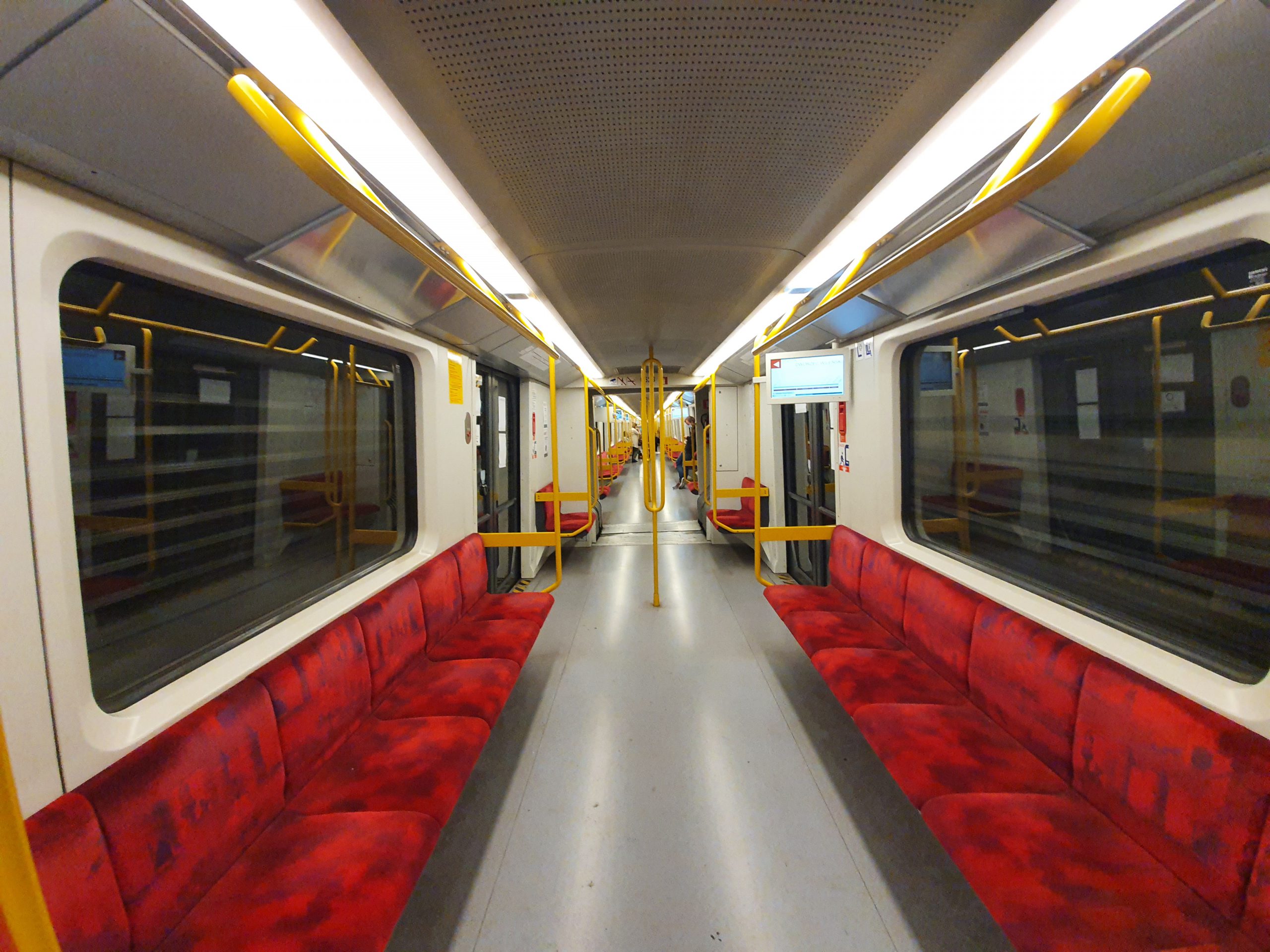
    Another of my random posts, but I’m pleased to have discovered that over the summer months TFL has installed 4G connectivity within the tunnels of the Jubilee Line. I remember using that line a lot and was pleased enough when they installed wi-fi at every station, but now they’ve gone much further.

    It sounds like it has been an expensive project, but there were plans to take it forwards to extend connectivity further. Currently, the 4G is available from Westminster to Canning Town, but with TFL’s current cash crisis that might be as far as it gets for some time….