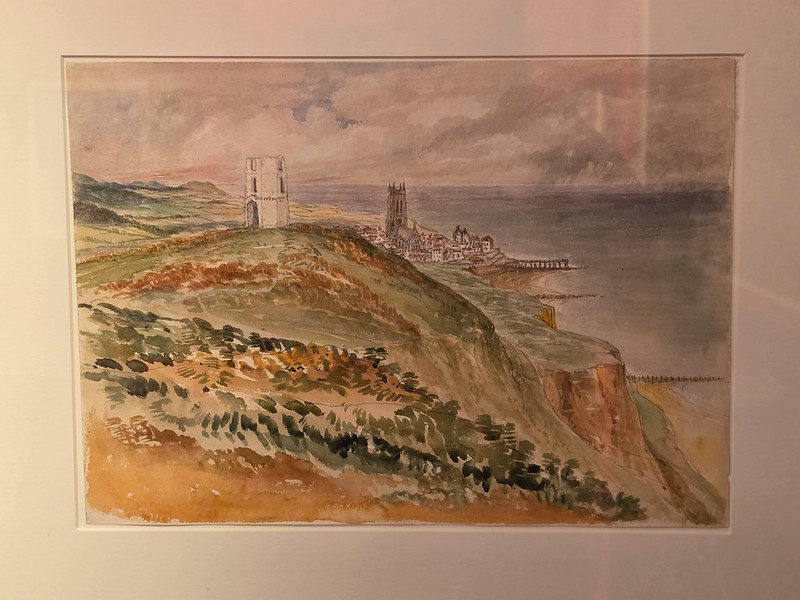
This watercolour is Views Along Cromer Cliffs and Beach by Catherine Buxton, painted in around 1860, and the artist was the daughter of Catherine Gurney (1814-1911) and Sir Edward North Buxton (1812-1858). This meant that she was brought up in the wealthy and very well-connected Quaker family, so she would have had access to education, travel and money.
The painting shows the coastline looking down towards Cromer, with the church tower rising above the town and the jetty built in 1845 stretching out into the sea. It also shows a Cromer that has expanded slightly, but the rapid growth wasn’t until after 1877 when the railways reached the town. This was from a time when the town wasn’t burdened by hotels and people trying to eat fish and chips in a strong wind. It was also before Greggs reached Cromer, which makes the whole scene look calm, elegant and faintly deprived.
But what I found the most interesting is that in the foreground is the ruined tower of the old lighthouse, built in the early eighteenth century and already looking as though the cliff had begun making firm plans for its removal. The lighthouse finally disappeared over the cliff in 1866, only a few years after this painting was completed, with Trinity House having more information about the structure.
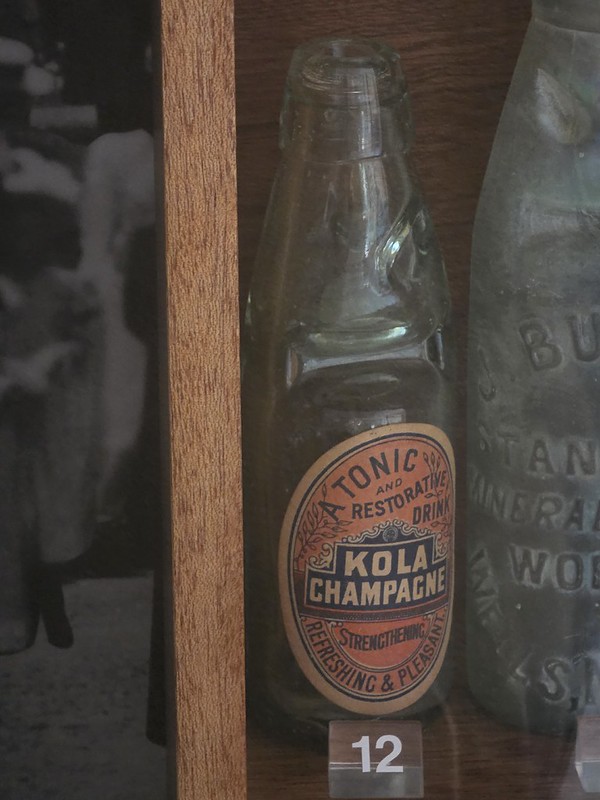
This bottle of Kola Champagne was one of the smaller exhibits at Cromer Museum, but it immediately caught my attention because “Kola Champagne” sounds like the sort of drink invented by someone who had access to both sugar and optimism. It’s a bit like Greene King saying that they’ve made a craft beer, the words are all technically present but I’d suggest a degree of caution.
The label describes it as “a tonic and restorative drink”, as well as “refreshing and pleasing”, which is quite a lot of responsibility to place on one bottle and I have a sense that it might have been a disappointment. Despite the name, it was not champagne and almost certainly had no meaningful connection with France and it would fall foul of labelling laws today.
The “kola” element would have referred to kola nut flavouring or extract, an ingredient associated with stimulant and tonic drinks long before cola became dominated by international brands and advertisements involving improbably happy people near swimming pools. It’s one of those bottles which has an internal closure arrangement at the neck, possibly with a little glass ball.
The local link is that this was sold by W. Everett of Bond Street in Cromer and they produced a range of soft drinks for supply locally. What I didn’t realise before writing this is that there is a drink still produced in the UK which has the same taste, namely KA Karibbean Kola, with Champagne Cola still being a thing in parts of Latin America. I wonder if I’d be restored after drinking one…..
I had a little time to spare in Cromer and so I went to the museum, which I’m not sure that I’ve visited before. There’s usually an admission charge of £5.30 for adults and £4.80 for children, but I had my national Art Pass card so I got in free. There was a friendly welcome from the staff member at the entrance who explained what there was to see at the site and didn’t seem alarmed by the prospect of me photographing most of it.
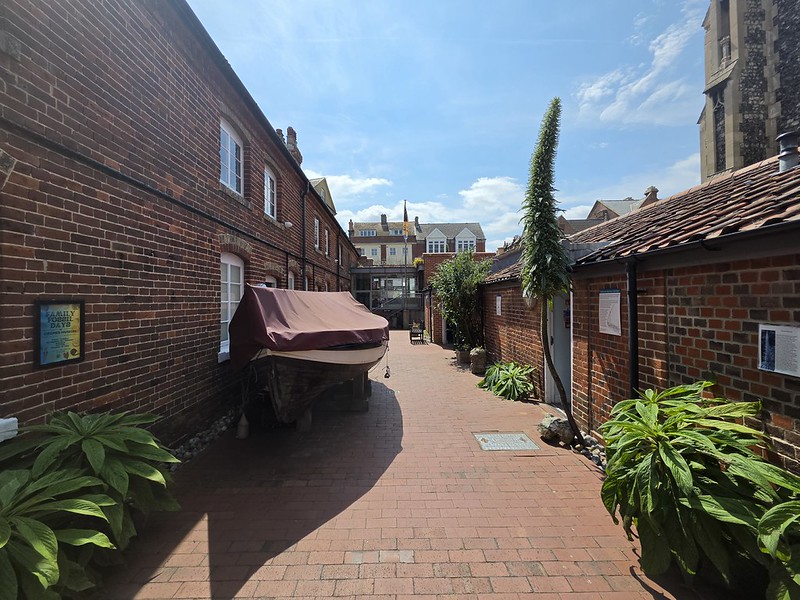
Cromer Museum is housed in a group of former fishermen’s cottages beside the parish church, so behind the modern frontage there’s an authentic yard. Inside, the rooms have been used to recreate aspects of life in a Victorian fisherman’s home, while the wider displays explore the history of the town, its fishing industry, its development as a seaside resort, the constant local difficulty of preventing parts of Cromer from entering the North Sea without permission and a mammoth. It is important not to forget the mammoth, as museums rarely improve by having fewer mammoths.
There’s a new room that has opened up this year and I feel that this might need some rethinking. It did though at least have the only cooling that I found in the entire museum, that fan in the corner which was struggling to be effective and more of a symbolic struggle against the reality that it was too hot in Cromer.
And it certainly is in the shadow of the town’s church.
There will now be a flurry of posts about the museum until I either run out of photographs or become distracted by another old building or a cheap Wizz Air flight. The museum is a rather lovely little place with a genuine sense of authenticity, although the displays felt slightly erratic in places, but there is a great deal of local history to cover and not much space in which to cover it, so some compression is inevitable. The welcome was friendly and the staff seemed genuinely keen to engage with visitors and explain the history, which always makes a small museum feel more alive.
I can’t help thinking that the admission charges are at the top of what is reasonable though, as it would cost a family over £20 to get in here. As someone who tends to spend far longer in a museum reading everything than is necessary (although not as much as my friend Susanna who it’s hard to prise out of the museum and staff normally end up turning off the lights around her) I would have been hard pushed to spend more than forty minutes here. But, it was a handy use of my Art Pass and, as I mentioned in my last post, it will allow me to surprise and delight my two loyal blog readers for a little while yet.
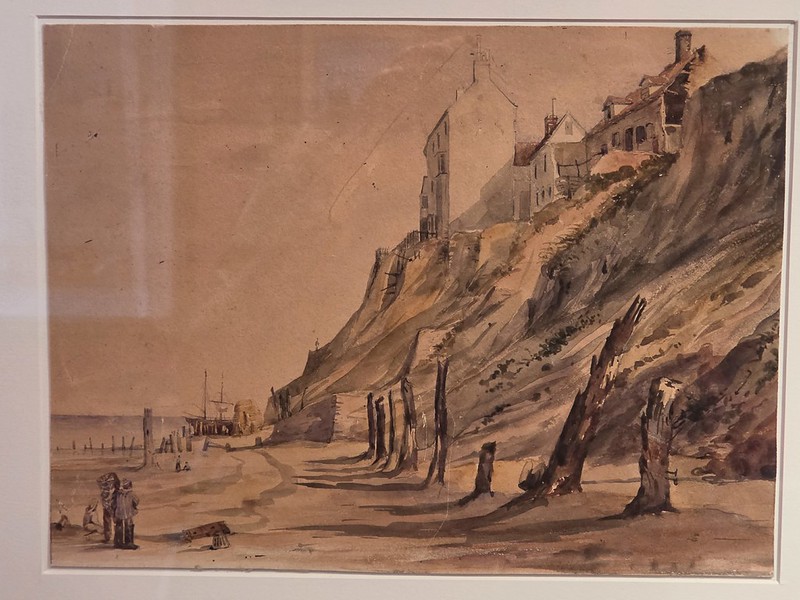
This watercolour on display at Cromer Museum is titled West Cliff and the Beach and was painted by an unknown artist in 1845. It shows Cromer before the cliff was properly defended, when the town’s approach to coastal erosion appears to have involved driving wooden piles into the sand and hoping the North Sea would respect local initiative so that they didn’t have the sub-optimal situation of all the buildings falling into the sea. Actually, more on that in another post about Shipden, the lost village near Cromer.
The wooden posts were intended to slow the sea and prevent the cliff from being steadily eaten away, but they were not a particularly effective long-term solution. The year after this painting was completed, Cromer’s first effective sea wall was built, together with a narrow promenade. This was a significant improvement on the previous arrangement of timber and optimism which really wasn’t very sustainable as the North Sea has never really especially good at respecting boundaries.
It’s another rather charming look at old Cromer, those buildings were later replaced by hotels and lodging houses as the town became connected to the railways and the tourists flooded in. I quite like the slightly precarious nature of this scene, with the large property above looking entirely self-assured despite the fact that the geology beneath it appears to have had reservations.
This one visit to Cromer Museum has helpfully produced enough material to sustain the blog for a couple of days. Museums are useful like that, they organise all the exhibits and history and I merely have to stand nearby taking photographs before later presenting the whole arrangement as organised cultural research. All rather lovely.
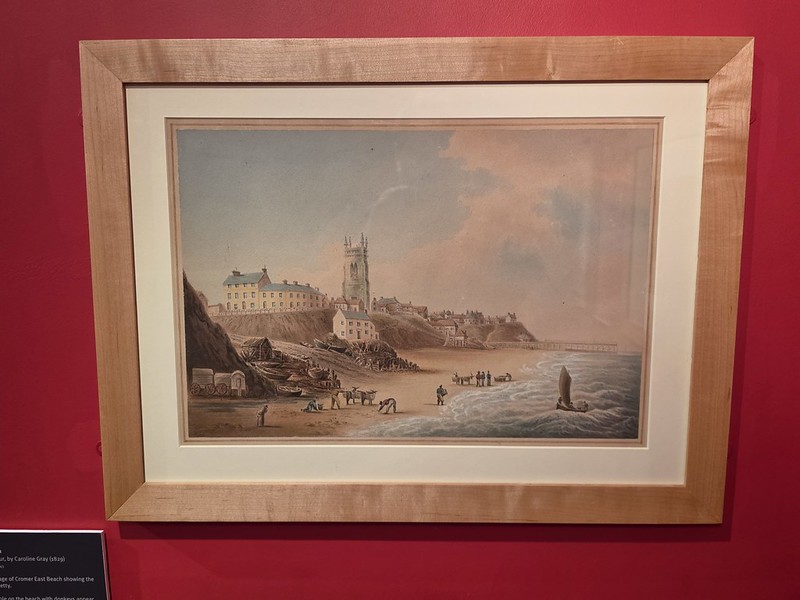
Anyway, this is a watercolour of East Beach by Caroline Gray, painted in 1829, and it shows Cromer’s shoreline with the town rising behind it. The church tower is immediately recognisable and the jetty built between 1822 and 1823 is visible. This was Cromer before all the tourists came for the day to eat their fish and chips before meandering along the pier and commenting negatively on the parking charges.
The back of the painting carries the inscription: “‘Twas here my careless Childhood stray’d, a stranger yet to pain”, although the museum notes that it’s not clear whether the artist wrote those words, but it’s a nice little addition. But it shows Cromer from another age and I rather like that.
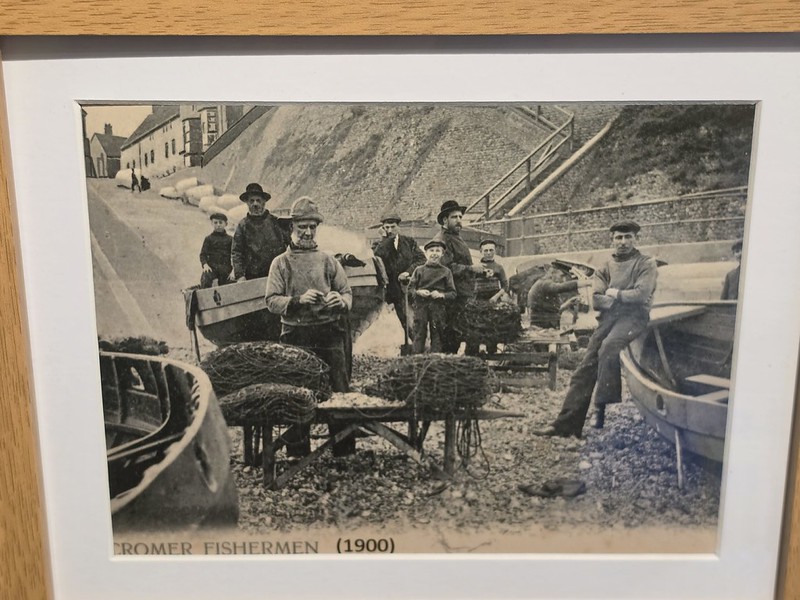
This photograph, which I thought was one of the more evocative in the museum, shows a group of Cromer fishermen in 1900, standing beside their boats, ropes and traditional crab or lobster pots on the beach. These would have been hard times and being a fisherman was a dangerous and rather unglamorous job. There weren’t many safety arrangements, certainly no risk assessments and no-one popping around from the council to check the electrical safety certificates.
Cromer did not have the protection of a proper harbour, so fishing boats had to be launched directly from the beach and brought back through the surf. The small open boats in the photograph were practical working craft rather than anything designed for comfort and the fishermen caught crabs and lobsters, but also worked for herring, cod, plaice and other fish depending on the season.
The photograph appears to have been posed, but it still gives a strong impression of the working beach. Some of the men look directly at the camera, while others seem slightly less convinced that photography is an adequate reason to stop what they are doing, something which I have a lot of sympathy for. There are a range of expressions suggesting that nobody had been instructed to look cheerful for tourism purposes, but I imagine that it would have been an interesting distraction. The central figure has the air of a man who has spent many years dealing with both the sea and other people, and has reached no particularly flattering conclusions about either.
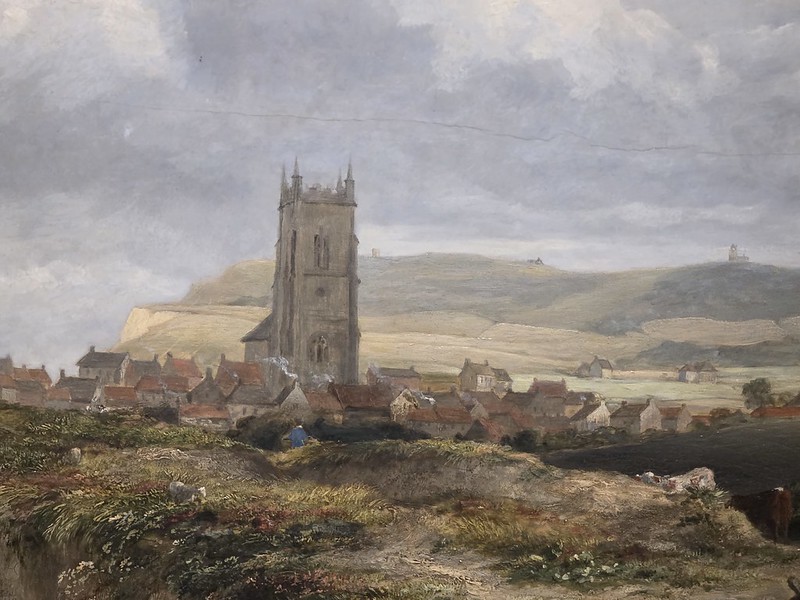
This is an artwork by James Stark (1794-1859) which is in the collections of Norwich Castle Museum. It was purchased for the museum in 1975 with grants from the Art Fund, Watney Mann (I don’t specifically know why the brewery contributed to this) and the Victoria & Albert Museum.
Stark was a Norwich School landscape painter, best known for his big and usually windswept skies along with his slightly melancholy countryside scenes. He trained in Norwich, showed at the Royal Academy, and later taught drawing, including a spell as a master at Queen’s College, Cambridge.
In terms of this rather serene artwork, in the bottom-left of his painting there are some fishermen going about their business in what would have been a very different town. With no bus or train services at this point, this would have likely felt a rather remote destination.
Stark painted this in the mid-1830s, at a time when Cromer was starting to evolve as something of a summer tourist destination for those in Norwich and environs. The railways didn’t arrive here until the 1870s, so the town would remain relatively unchanged for some decades.
Of course, I feel the need for AI to join the party and this is what it believes the scene would look like today if painted in a similar style. I rather like this. The addition of Cromer pier, constructed in 1901, is an accurate one even if some other elements aren’t exactly perfect here.
This post, and all the linked ones, are also available at www.norfolksuffolk.org.uk where lucky readers can also find the ‘back catalogue’ of posts from our previous trips around Norfolk and Suffolk.
Another day, another onerous study tour. This time we boarded the Sanders thunderbolt to Cromer where we expected to visit nine pubs during the day. These were:
With two pubs that we couldn’t access, that took our total number of venues to seven during the day, which is still a creditable effort we thought.
We also made time to visit the town’s church.
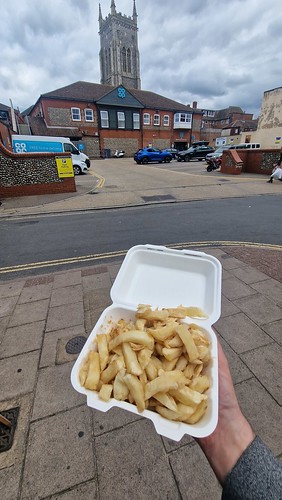
Since we were at the seaside our sustenance was chips. These were £2.50 from Mary Jane’s Fish Bar, suitably filling and the service was efficient so I wasn’t left waiting in the queue full of anticipation for them.
Back again at the transportation hub of North Norfolk, connecting in with routes to the international multimodal hub at North Walsham.
I was pleased with my view out of the window on the way back to Norwich.
Julian commented on his rather more obstructed view.
Safely back in Norwich. It was another fulfilling day, with perhaps the unexpected treat being the Cliftonville Hotel and the wide range of local beers at the Red Lion. The Gangway offered the best craft beer and I’d say it was also the friendliest welcome of the day. However, the pubs were all credits to the community that they serve and they’re doing a marvellous job of staying open in these troubled times. All of the pubs that we visited served real ale in some form, with most having at least some effort at offering craft beer as well.
The final pub on our study tour to Cromer was the Good Beer Guide listed White Horse and the owners mention on their web-site that it has been a coaching inn since the sixteenth century, although I’m assuming that it has been entirely rebuilt since then as it feels more Victorian.
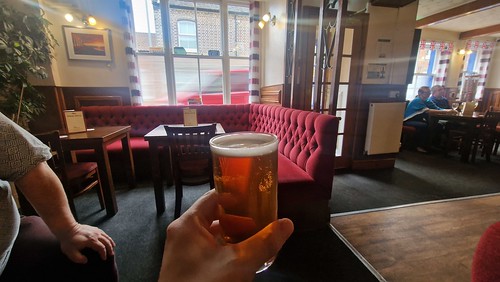
There were three real ales to choose from, although nothing which surprised and delighted me. We went with the Ghost Ship from Adnams which was well kept and tasted as expected. The service was again efficient and friendly, with a prompt welcome after I reached the bar.
The pub seems to have a generally very good reputation for food judging by the on-line reviews and there was some interesting specials available.
And the standard menu.
The food area of the pub. Timing meant that we had a bus to catch (which meant we had opted for chip shop chips…..), as there are a limited number of evening options back to Norwich, otherwise this looked like one of the most tempting locations to get food. The pub is close to the town centre, but it’s located just away from the main area and it seemed to be getting more local trade than from visitors.
And the main bar area, with another section of the pub to the other side of the bar having a pool table. It was all clean and tidy with a laid-back and relaxed atmosphere. They also offered accommodation, with one family room, three doubles and two singles. Perhaps, from the customer perspective and I’m conscious that there are a number of factors with this, on the margins of the Good Beer Guide as the real ale choice wasn’t spectacular, but it was a welcoming pub which clearly has a loyal following. All clean and comfortable, this was a perfectly respectable way to end the day’s study tour and just a short walk to the bus station.
The next venue in our Cromer study tour was the Cliftonville Hotel which opened in 1867 and received its licence to serve non residents in 1963. After our failed visit to the Hotel de Paris we were a little unsure what to expect, but we could see a sign saying that non residents were welcome and the doors were open so it looked positive.
Some drinks offers to tempt passer-bys.
This is a bit decadent.
There were two real ales, both from Barsham Brewery, the Oaks and the Golden Close IPA. Some craft beer options there and no bloody Cruzcampo, so another win.
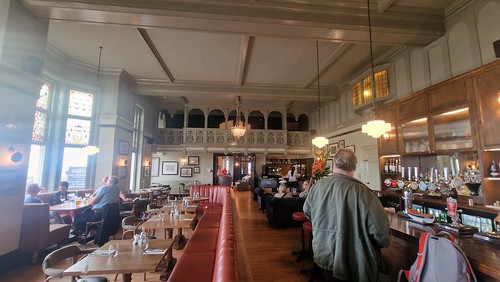
I’m not sure what I expected, but it wasn’t this. The bar and restaurant is in this grand room with a Minstrel’s gallery and plenty of character. It wasn’t particularly busy, but it seemed a suitably glamorous location for us to discuss how the study tour was progressing.
Oops, the photo is slightly on the lean…. The beer was the Oaks bitter from Barsham Brewery and it was well-kept and tasted as it was meant to. The prices were moderate and there was no obvious hotel premium charged.
Other than needing a lick of paint, it was all in a good state of repair and everything seemed clean and well maintained.
I was impressed by the whole arrangement here, the hotel had a bar which was interesting enough for non residents and I’m sure that the hotel’s guests would mostly find what they needed here as well. The staff were friendly, helpful and polite, with the atmosphere feeling inviting.