
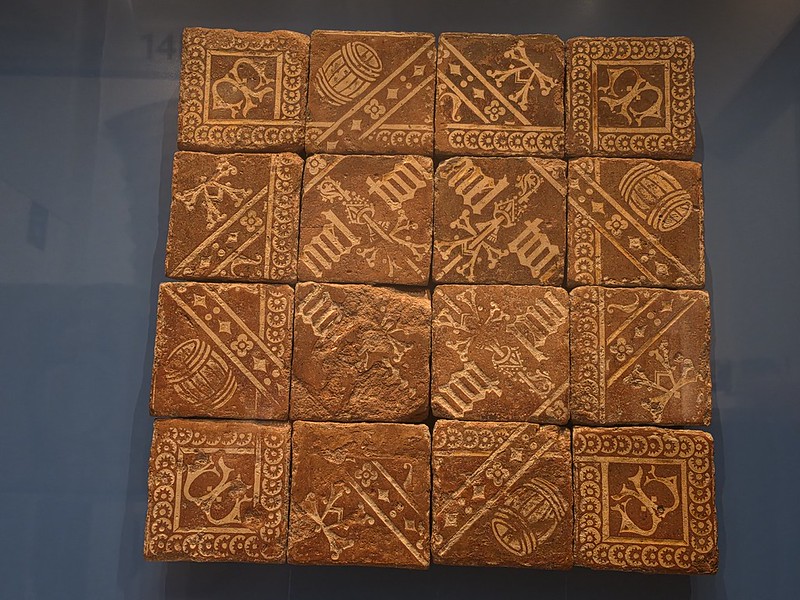
Having recently written about the rather lovely alphabet tiles from Chertsey Abbey, I appear to be developing a little interest in medieval flooring, which is perhaps an unexpected direction for this blog to take. These tiles at the British Museum were commissioned for Anthony Melton, Abbot of Hailes in Gloucestershire from 1509 to 1527, and formed part of the floor in his private residence. They include his name, initials and symbols of his office, so he sounds like he considered himself quite important. It’s like how I wear the radio at Norwich Beer Festival.
The decoration includes a mitre and crozier, reminding everyone that he was the abbot, along with barrels known as tuns, providing a visual pun on the final part of ‘Melton’. This sort of picture puzzle is called a rebus and I didn’t work this out, it’s in the museum text. Left to my own devices, I would have concluded that he liked barrels, which would at least have given us something in common. I’ve recently encountered something similar with the ‘I want relief’ token at the Foundling Museum. I rather like that Melton didn’t consider simply having his name on the floor sufficient, but he added a little wordplay for anyone who wanted to give the arrangement further thought.
An abbot was responsible for much more than leading worship and doing the praying thing, as running a monastery required the management of property, money, staff and relationships with influential and powerful people. His lodgings had to reflect his position and so these tiles had a meaning beyond making the place look decadent. Even so, there’s something rather pleasing about an early sixteenth-century administrator having personalised flooring, whereas I’m usually content if I can find somewhere to put my bag in my flat. Indeed, putting my initials on the floor would be ambitious when I can’t always reliably see it.
Hailes Abbey closed in 1539 during the Dissolution of the Monasteries, after Melton’s time as abbot, and tiles were subsequently removed and reused at the de la Bere family’s home at Southam. Their reuse helped preserve them and I wonder what later occupants thought of walking across someone else’s name, although I suppose that once you’ve acquired a decent floor, it would seem wasteful to reject it just because it keeps reminding you of Anthony Melton.