The not disagreeable entrance to the coach station, which is more a lengthy piece of landscaped road than a conventional station but it all looks rather nicely done. And let’s be ridiculous, not everywhere can be as lovely as North Walsham’s International Bus Interchange.
Swindon glistening in the sun.
I got there half an hour early in case I couldn’t find the stop, but the coach was already parked up. A woman pushed past me in the queue and I swore at her in my mind, annoyed if she took the emergency exit row seat. I like to think of myself as a patient and generous person (well, sort of), but there are limits, and those limits are legroom related.
She didn’t take it, so diplomatic relations were restored.
The coach wasn’t overly burdened with passengers, there were about fifteen of us.
The journey was without incident, the driver made some announcements and a woman played her phone loudly because seemingly no form of public transport is complete without someone deciding that everyone else needs to experience their media choices.
And safely into London Victoria coach station in all its greyness.
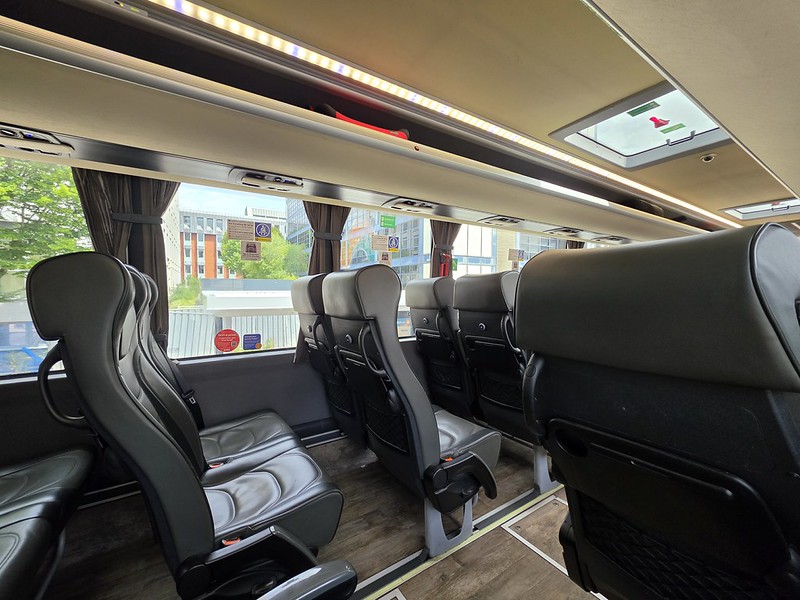
The rail fares from Swindon into London were ridiculously high, so I was pleased that this coach was rather more affordable at around £12. Everything went to schedule, the coach was clean, the seats were comfortable, the temperature met my expectations and I had plenty of space in my emergency exit row seat, so all to the good. But this was the third National Express journey I had taken in a weekend and the passenger numbers seemed lower than would even make the journey viable.
After the first part of my coach journey from London Luton to London Victoria coach station, it was now time for the second part which would get me to Bristol. I’ll note here that I was getting a coach because GWR’s fares are far too expensive and although I do enjoy trains, I prefer not to fund them as though I am making a modest contribution to railway infrastructure personally.
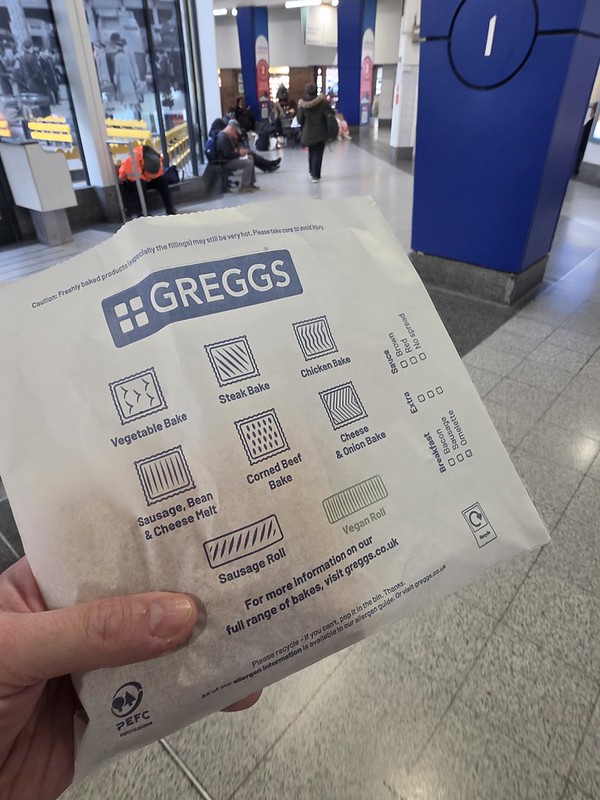
O2 give me one baked item, or coffee, at Greggs for £1 every week, so I thought now was an ideal time to get a chicken bake for £1. It was hot and delicious.
I managed to find a seat at the packed gate. It is not an especially glamorous place if I’m being honest, but it does at least provide a useful reminder that all forms of travel eventually involve sitting near strangers and hoping everyone behaves. Unless you’re my friend Richard who tries to avoid people unless it’s in a VIP area.
Much as I’m sure these warnings are useful to avoid anyone doing something dangerous, a number of passengers were struggling to read the departure information which is a little lost at the bottom of the screen.
And time to board.
And the emergency exit row seat again, very lovely.
This turned into something of a sleeper service for me as I fell asleep in London and woke up in Bristol. This tells its own story that the coach must have been peaceful and the driving smooth, so I was suitably impressed and refreshed ready for the excitement of Bristol which I knew was going to involve food, craft beer and a museum. And is there anything more to life?
It was another reminder though that National Express services seem to be getting quieter, it might now be the time to increase the space between seats and address some of their high pricing, before FlixBus steals their entire market. FlixBus are getting a little bit unstoppable, they’re already knocked most Megabus services out of business…..
As I always allow far too much time for connections, I had a wait of three hours at London Luton Airport after my flight from Skopje. I tried to get a filter coffee at Pret as they’re a cheap option, but they told me that they had run out. I remained at Pret anyway as they had a power point which suited my needs. At this stage, the commercial transaction was less about food and drink and more about temporary access to electricity whilst sitting in a chair. But, I couldn’t board a coach hungry and so I obtained a breakfast of champions meal deal at the new Sainsbury’s at the airport. Does travel get any more exciting than this?
And is there anything more beautiful than London Luton Airport at sunrise? OK, there probably is, but it’s intriguing watching the light appear whilst also observing already pre-annoyed families wheeling their cases and angry children into the airport.
Mine was the 05:40 which was showing as delayed by six minutes. This didn’t overly worry me, but I was conscious that National Express often saw their delays extend and I only had a thirty minute connection at London Victoria Coach station. I decided to ask the driver of the 05:25 service before if I could get on his coach and he told me that I could do what I liked, which I took as a yes. In fairness, the driver was very friendly and it was early.
Two of us boarded the coach, so I understood the driver’s lack of concern about whether I boarded or not.
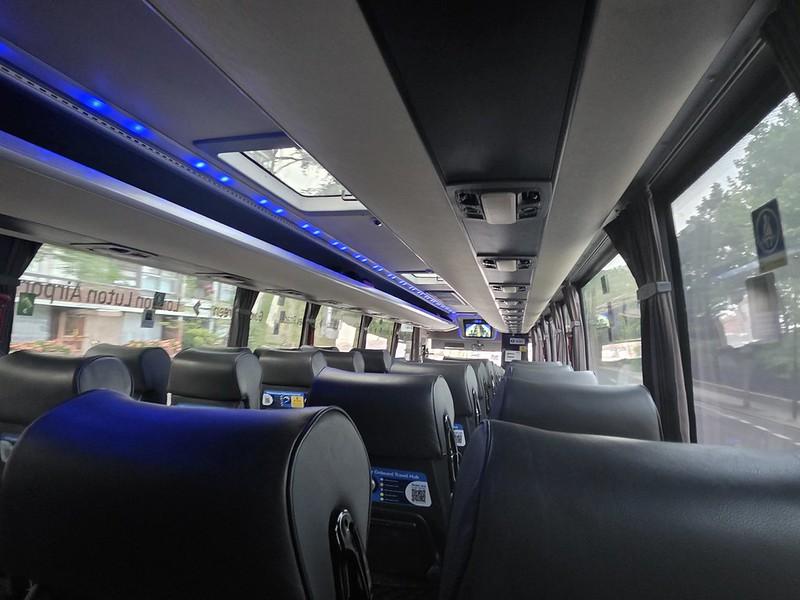
I got the emergency exit door seat, although there wasn’t a huge demand for it as the other passenger had sat at the front of the coach. It was too early for a logistical dilemma over seating, so I was pleased at the efficiency of this arrangement. I think this service regularity is more for getting passengers to the airport for their early morning flights, so there is likely usually a surplus of spaces for taking passengers away from the airport.
And safely into London Victoria coach station. As an aside, National Express seems to have been struggling recently and their services rarely seem very full. It’s been a while since I’ve been here and half the services appear to now be run by FlixBus, perhaps an observation that National Express got greedy with their prices and customers walked away. Anyway, it was then time to find the coach that would take me to Bristol.
Another post for the sake of completion, so there were no major dramas getting from Heathrow to Luton. It was rather odd that I was staying around twenty metres from the country’s major airport and had decided to fly from Luton Airport. Such is the lure of the £8.99 Wizz Air flights. Geographical inconveniences don’t concern me though…..
It was raining so I decided against walking the one hour to Hayes and Harlington railway station.
I don’t find buses very exciting, but this was a handy option which only took around ten minutes. I also appreciate that bus content is not traditionally where great travel writing finds its highest expression, but there we go.
I remember when this was all fields…. Well, I remember it before it was on the Elizabeth Line and it had this fancy frontage anyway.
I might not love buses, but I do like trains and here’s the Elizabeth Line train sweeping in. I got the train into Farringdon to complete a little task involving free food and then decided that I’d walk the 30 minutes to King’s Cross St Pancras as the rain had stopped. I’m a natural athlete me, albeit one whose sporting career is mostly based around refusing to pay for short tube journeys.
The delights of St. Pancras, a really rather beautiful shopping centre with some train lines.
Platform 1 was the train to Corby and that would get me to London Luton Airport Parkway in under 30 minutes. I would add that the rail fare was £4.20 which is rather decent value for money I think bearing in mind I only booked it yesterday.
One day I’ll find getting trains boring, but for the moment, it still excites and delights.
In crawls the train…
I don’t like five seats across as I don’t think trains were originally designed for this, but anyway, it wasn’t that busy. I also provided a free tourist service to the guy who was trying to get to Luton and I didn’t once ask him why he wanted to go to Luton which I think showed considerable restraint and perhaps even personal growth.
Still the worst managed railway station in the country in my view, but I won’t labour that point as I might have drivelled on several times before about it.
I walked the twenty minutes to Luton Airport and passed by the Vauxhall building, now closed down and staffed only by security teams and guard dogs.
And safely at London Luton airport.
And the longest queues which I’ve seen at London Luton, although, to be fair, I was still through in under 25 minutes and I was hardly in a rush as I had, once again, arrived five hours early for my flight. I can imagine that my two loyal blog readers can hardly contain themselves with excitement for the next post….
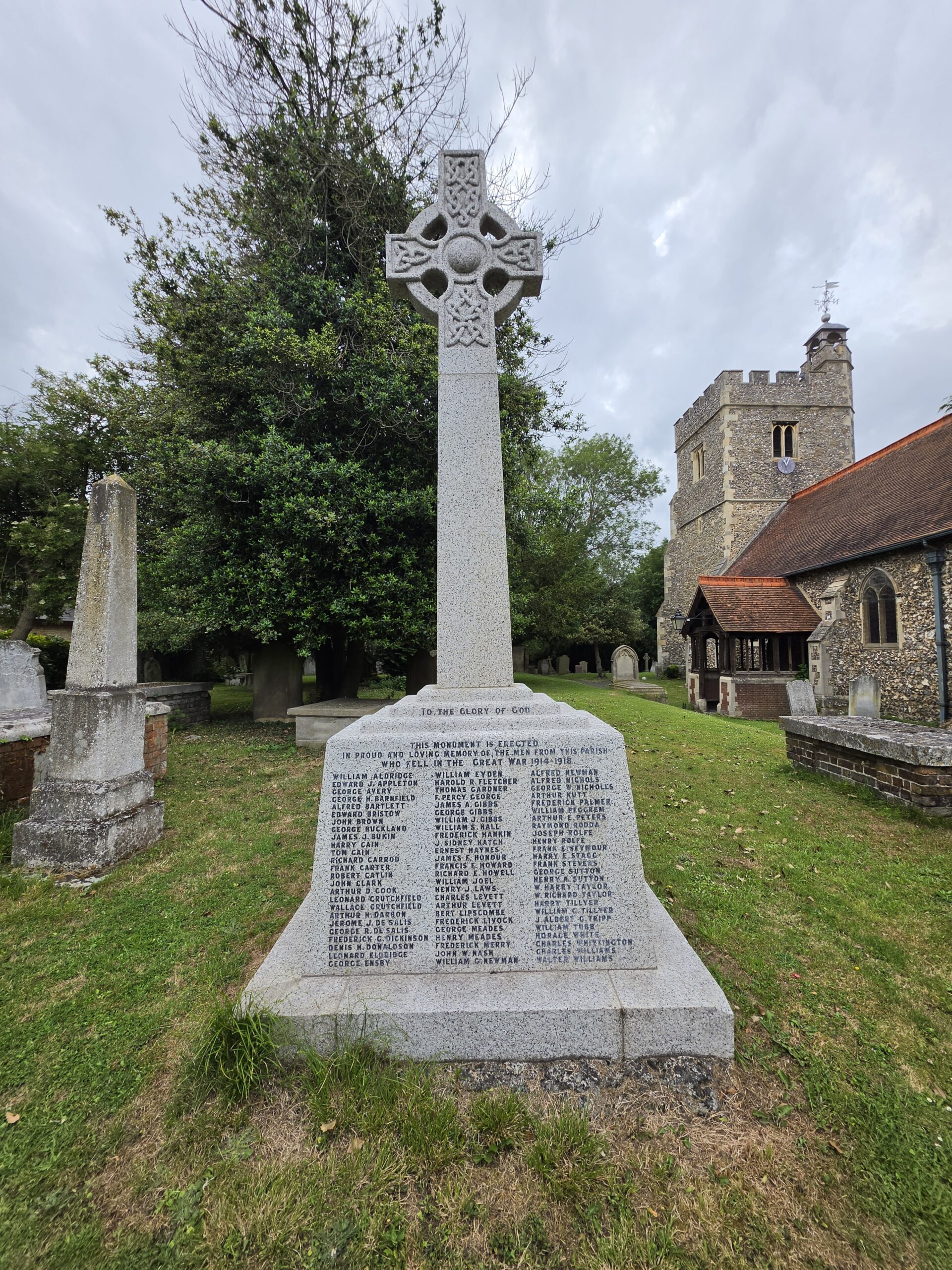
This is the war memorial at Harlington church which was designed by Charles Oldrid Scott and unveiled in 1920. At the time it was noted that it stood overlooking the main street so that it would be seen as a reminder for future generations. Harlington has changed somewhat since then, the road has been diverted because the M4 was built across it, the town has been moved out of Middlesex and the war memorial had to be updated with those died in the Second World War and the Korean War. I’m not sure what the friends and family of those who lost their lives would have thought about the changes ahead for their town.
I was going to pull out just one name, in this case Horace White since that was the nearest to my name, but his name isn’t on the CWGC site and I can’t find out anything about him. There are a few Horace Whites in the wider area, but the only standard search identifies him only from being on this memorial which is all a little circular. So that’s another rabbit hole I’ll have to go down to resolve that to my satisfaction…. Also, more prosaically, I need to get out more.
Whilst meandering to the hotel last night, I made the effort to walk around the Church of St Peter and St Paul in Harlington for the first time. The church was mostly built in the twelfth century and is mentioned in the Domesday Book, so there was probably a Saxon religious building here as well. The chancel was rebuilt in the fourteenth century, the tower added in the fifteenth, and the porch in the sixteenth, with a Victorian restoration and a new north aisle added in 1880.
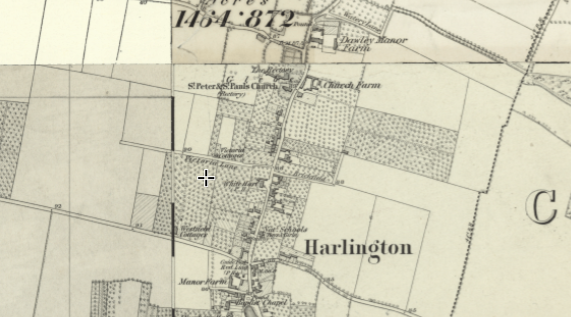
I find this an intriguing building as it was once a country church in a rural setting and now it’s a few hundred metres from Heathrow Airport and around fifty metres from the M4. However, this is what the area looked like around 180 years ago when everything was much more peaceful in this area. I think it’s fair to say that anyone from 180 years ago the main drama would have been someone with strong opinions on turnips compared to today’s A380 or similar flying overhead.
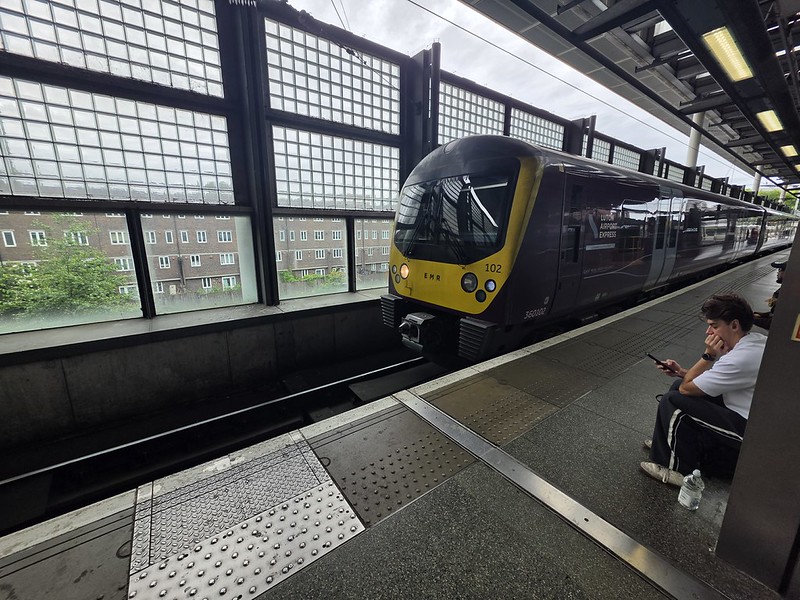
I set off for Heathrow yesterday as there was a cheap offer advertised by Accor and, naturally, I hadn’t formed any other plan. This is what travel looked like before people insisted on having itineraries, aims and a vague sense of personal responsibility. Anyway, here’s the train to Stansted Airport which departed on time and without issue. There was no driver until one minute before departure and I was slightly hoping for a delay repay, but it wasn’t to be. I’d add at this stage that there isn’t any fascinating content in this post (not that there usually is), but I like a complete write-up for my own memory. And, imagine, a future historian might query why civilisation failed and they might discover the answer from this blog.
Safely in Cambridge.
There was a six minute connection time to get the Great Northern train to King’s Cross and it took me four minutes to cross Cambridge railway station so anyone with accessibility issues would have likely missed it.
Setting off and the train remained relatively quiet, which made it easier for all the people with seats to keep them there. These trains, similar to Thameslink, don’t have power points but I do like the ironing board seats, although I seem to be about the only person who does.
I always like arriving into King’s Cross, it’s a beautiful station.
And safely into Hayes and Harlington railway station using the Elizabeth Line. There’s a decent fair from Norwich to here, it came in at £12 which felt rather reasonable.
I thought I’d pop to the Botwell Inn, the JD Wetherspoon operated pub located near to the railway station. This real ale went back, it was vinegary on the taste, but the manager was quick at checking it and replacing it. Actually, the manager was very good in general, this always feels like a well-run pub and real ale based issues are inevitably going to occur.
The replacement beer was the Wolf of the Woods from Twickenham Fine Ales with a biscuity, toffee and nutty taste to it. It also cost only £2.39 a pint which is the usual bargain price from the chain.
I decided that it might be useful to actually plan my week at this stage, since it was already Sunday evening and I had no idea where I was going. I do know that I needed to be back in Bristol for Friday morning, so I needed a plan to get there cheaply. I decided on a route via Skopje, booked the flights, trains and National Express, ready now for the craft beer festival. I mentioned a few days ago that this is one of the countries that I haven’t visited, so it felt a wise choice.
Given that I was lingering here, I paid £6.39 for the steak pudding with chips and that included the Guinness 0%. It’s not exactly going to surprise and delight those who like fine dining, but it’s hard to complain too much at that price.
It was an hour walk to the hotel and this time I decided to have a look at the church in Harlington for the first time, but more of that in a separate post as I don’t want some ecclesiastical masonry interfering with this post.
Back at the Heathrow Ibis hotel which I’ve stayed at numerous times before. The reason I stayed here is that with the Accor offer it came to £13 for the night, which I thought was reasonable.
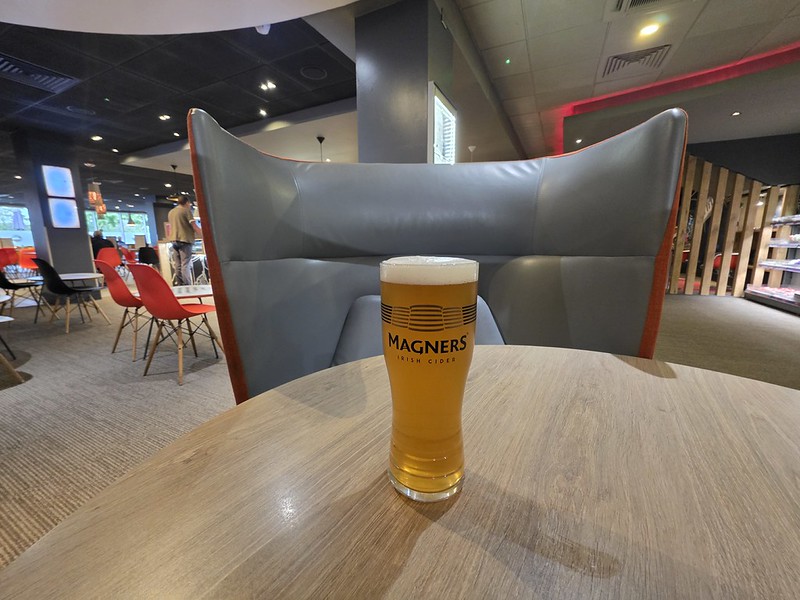
I also get my free welcome drink and here are some of the options.
Not Magners, but the Eazy from Camden Town Brewery which is growing on me, it’s got flavours of orange, it’s hazy and it’s quite intriguing. That is a pint glass, it’s just that the chair the other side of the table is unusually large.
A room. This blog really doesn’t fail to delight with riveting content…. But, I arrived here with a plan for the week and that felt like an achievement in itself.
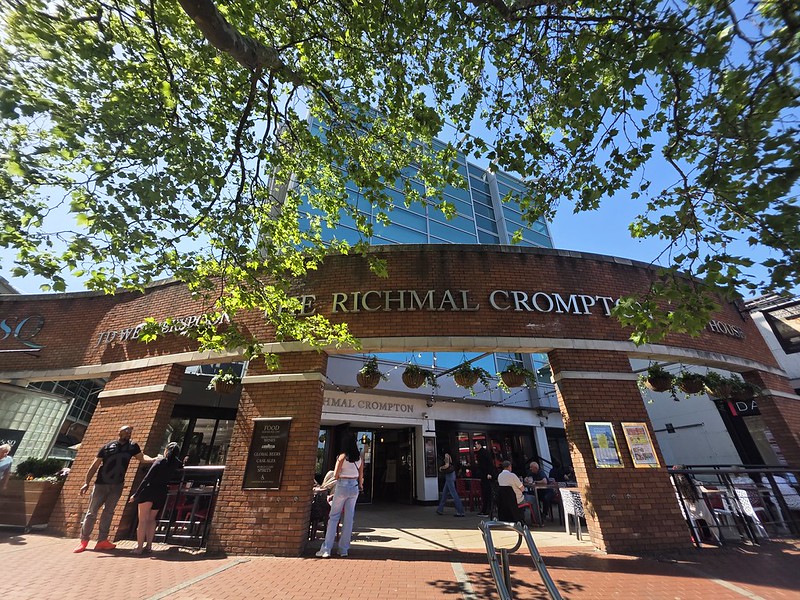
I had a rail connection at Bromley South railway station today to get to Kent, so I thought that I’d meander over the road to the JD Wetherspoon operated Richmal Crompton which I’ve visited a couple of times before. The sun was shining, the pub had a beer garden and it was just too hot. But, I didn’t complain to myself about the extreme temperatures.
The chain explains the reasoning for the pub name:
“This is named after Richmal Crompton, the author best known for her ‘William’ books. William Brown first appeared in a series of short stories written in Richmal’s spare time, while she was a teacher at Bromley High School for Girls. She lived in Bromley for 26 years, first in Cherry Orchard Road and later in nearby Oakley Road.”
It’s cavernous and not overly interesting as a building. It got busier at lunchtime, but the chain also has a pub just a short walk away, the Greyhound. Incidentally, and I write this without having a view either way, but this is one of those venues where customers queue in a line to order rather than wait along the bar. There’s an area which feels like a dining area off to the left, although the tables were all in long lines and it wasn’t clear whether they were expecting groups of 24 to turn up, or they had just crammed them in there. There were bookshelves to the rear of the pub and I thought that added to the arrangement. It’s all affordable and reliable, spacious and predictable.
My obligatory carpet shot.
In terms of the beer, the prices were moderate as usual and they had a selection of craft cans alongside six real ales, with beers from Thornbridge, Adnams and Theakston.
I decided to get unlimited coffee for £1.85 rather than anything beer related, although they had run out of milk and didn’t bother replacing it for the two hours that I was there. I decided raw coffee would just have to do.
The online reviews are about average for the chain and I couldn’t resist having a little look….
“Came in for a quick bite to eat with my dog who’s sitting outside and I’ve been told by every bar staff in here dogs aren’t even allowed on the premises that means even outside the door , Food is absolutely disgraceful as you can see from the photo, The manager with the wonky eyes said I need to get out as soon as I’ve eaten my food absolute joke stay clear unless you’re on a budget”
I suspect that JD Wetherspoon would be pleased that a customer who insults their staff like that goes elsewhere….
“We reserved an area for our wedding reception, no help in moving tables was offered, on the day there was glass in the reserved area that hadn’t been cleared prior to us arriving. We appreciate we had a large party but we waited ages for our meals, and drinks. Having booked in January for September plenty of notice had been given that we’d require food. They’d ran out of chicken nuggets, and the large mixed grill, and this was only early afternoon. When the steak came up and we asked which was medium rare, the waiter said that they’d all been done to the same (medium) even though we’d asked for different. We had one waiter serving almost 30 of us and it took almost an hour for tables to be cleared of plates. Me and my wife met in this wetherspoons 2 years ago but we will not be returning unfortunately.”
I’m not wholly convinced that JD Wetherspoon pubs are usually well equipped to deal with entire wedding parties….
“On top of that, after we left a pub, I came back to go to the toilet, it was around 23.00. On my way to the toilet i have been stopped by the waiter saying that ‘I’m banned in this pub and I have to leave’ after my statement that I AM PREGNANT AND I NEED TO USE A TOILET he insisted me to leave. How comes pregnant woman cant use a toilet in such a big pub? What policy are you based on? Of course I will proceed with further excalations and highlighting this situation everywhere possible as IT IS NOT ACCEPTABLE TO NOT ALLOW A PREGNANT WOMAN TO USE A TOILET.”
The customer was refused service for allegedly being drunk, they left the venue after an argument and then are furious that the venue wouldn’t let them back in. I like a bit of drama to be fair….
“Being Xmas everyone was having a great time and we were playing a game with an I top, a harmless tabletop game . When we were laughing and jeering eachother on ,the staff came over and told us to keep the noise down. What happened to the good old days when they had juke boxes in pubs and everyone singing along to Xmas songs and having a great time.”
Good, there’s no need for frivolity even at Christmas….
“Bar staff and management told us to leave because we were being to loud and noisy we were having a laugh we weren’t being rude or we were having a laugh. But we had to leave all because we were having a laugh”
Reassuringly peaceful, I like it.
“Not worth posting a review”
I think that’s a review.
Anyway, I digress enough. It seemed like a perfectly serviceable pub, although they rather abandoned the coffee machines, but in fairness I didn’t say anything to let them know. It was all clean, the team members were friendly, it was value for money and it wasn’t too loud. All really rather lovely.
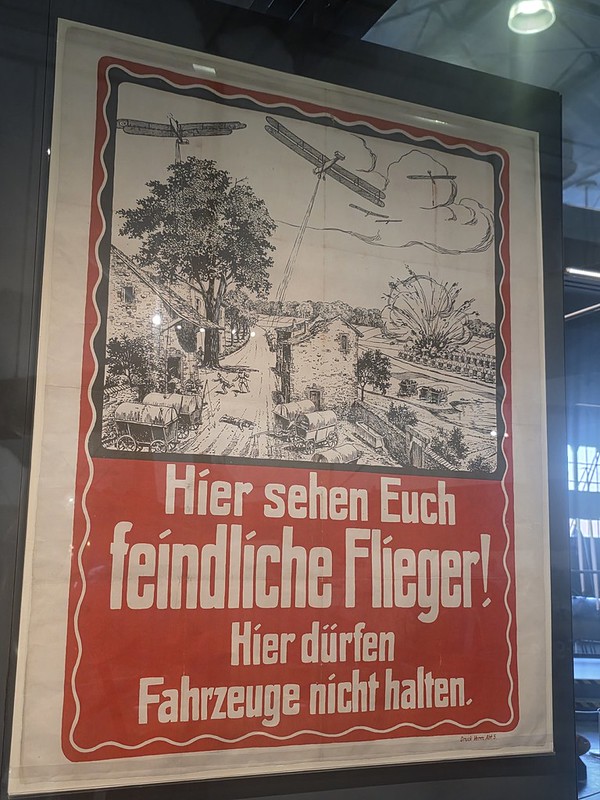
I’m not sure how I get from writing about bar billiards to writing about German air raid posters from the First World War, but yet here we are. Back in the medieval period, people had a genuine fear of being attacked where they lived, but war evolved to be much more about front-line conflict. That was until the development of aircraft that had the ability to bypass the troops on the front-line and strike fear into the hearts of everyone.
This poster reads:
“Hostile aircraft can see you here! Vehicles must not stop here.”
A combination of the Government needing to warn people of the new threat, but this must have been terrifying to people living in Germany when they realised that aircraft could attack them in their homes. The number of actual attacks was relatively low and the British never attacked Berlin by air, the first planned raid would have been in November 1918, but the armistice saw the end of that.
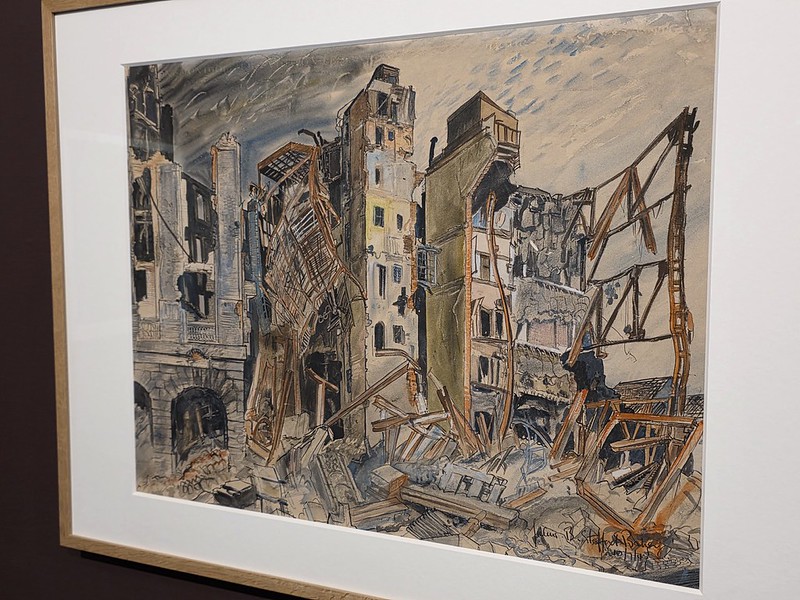
Julius Stafford-Baker (1904-1988) painted this view of the Eden Hotel in Berlin on 20 July 1945. He was particularly drawn to ruined Germany, which in artistic terms was understandable and I suppose there’s optimism that can come from the chaos. Although it was painted only weeks after the war in Europe ended, it belongs to that slightly odd period when the fighting had stopped but the consequences were still sitting in full view, impossible to tidy up with slogans.
The Eden Hotel itself had once been one of Berlin’s grand establishments, it was built in 1912 and it was situated on the Kurfürstendamm before it was destroyed in the war. It had become infamous in 1919 as it’s where the military who killed Karl Liebknecht and Rosa Luxemburg were based, and the executions took place outside the hotel.
Stafford-Baker, eldest son of the illustrator, Julius Stafford-Baker (1869-1961), worked for the RAF Public Relations Directorate and he remained working as an illustrator after the war.