

Just a photo, but I liked it, one of the roundels at Clapham Common underground station has been replaced with a “Winter Walks” sign. I approve…..
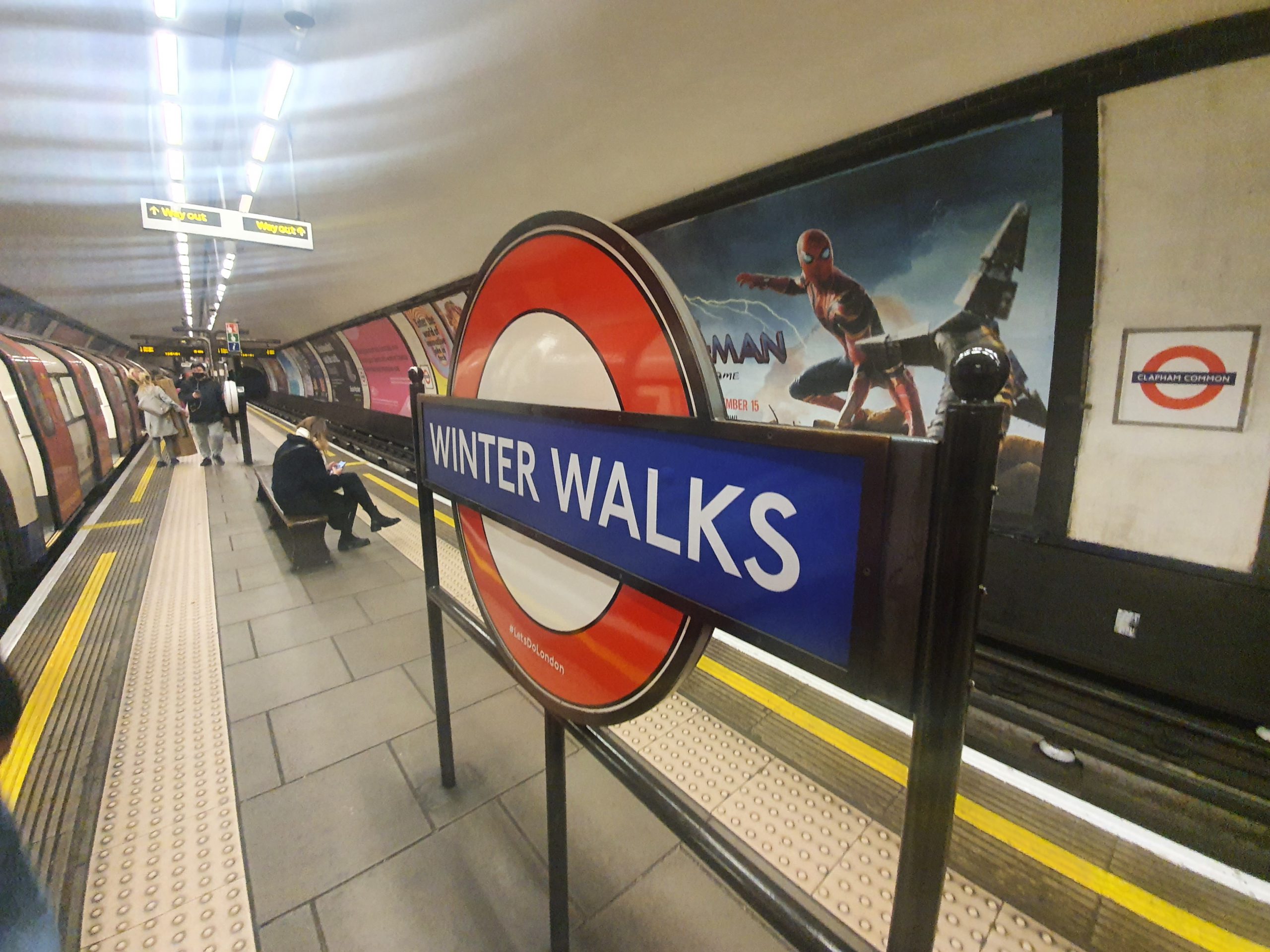
Just a photo, but I liked it, one of the roundels at Clapham Common underground station has been replaced with a “Winter Walks” sign. I approve…..
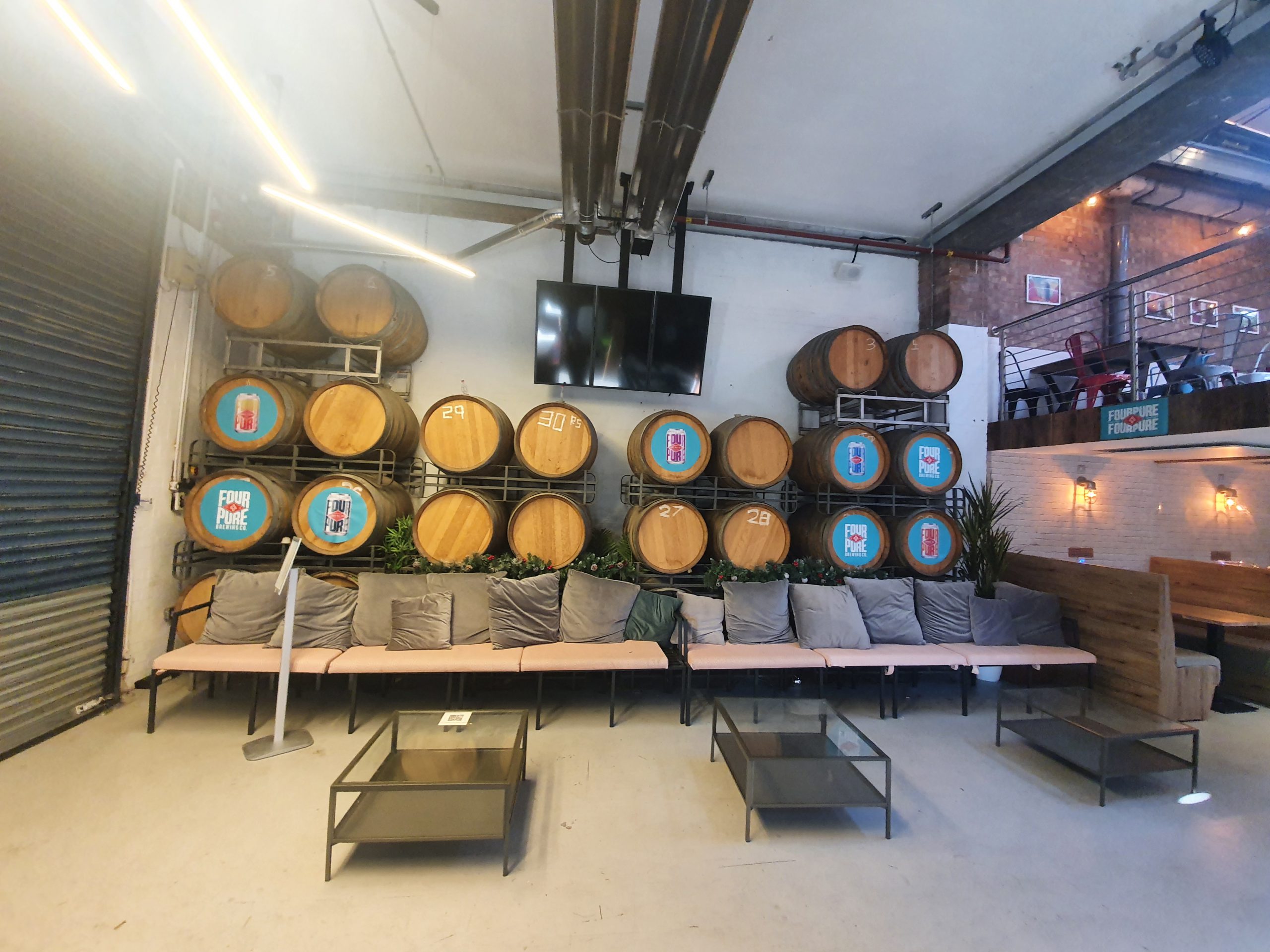

I’m slowly working my way through the Bermondsey Beer Mile bars, and anything close to them, which is difficult navigating the often wrong opening hours of venues. Fourpure was open, but it’s bloody hard work to find it, for anyone not sure, get close and then walk by Screwfix and then under the above bridge.

In an unusually sociable moment, I noticed three people trying to find Fourpure and so I tagged along behind them whilst we agreed it was hard to find. I’m glad I did as it’s difficult to find the door and then when we got in, it all seemed to be deserted. I found the lack of signage a bit odd, but perhaps there’s something of the thrill of the chase that the breweries want.

Enter here, which is easier to see when there are people sitting at the tables, which there weren’t when we approached it.

Inside, whilst the other three people went to look for someone and I just hung about taking photos.

The venue’s offerings are on Untappd at https://untappd.com/v/fourpure-brewing-co/1201218. There were a few guests, mostly from Magic Rock who are their sister company. There was only one darker option, which was a Fourpure beer that I’ve already had, which was slightly disappointing, but not surprising.
I’m not a huge fan of Fourpure’s beers, I always find them a bit generic and unexciting, but I ordered two beers (just as thirds) which were the only core beers in the range that I hadn’t previously tried. They tasted OK, but I wouldn’t order them again as they weren’t of any great note. I’m also not keen on calling this craft beer, as they’re owned by Lion, an enormous brewer who have poured money into new equipment here. And slowly but surely, they’ve managed to deliver something as sterile and mundane as the other brewers.
As for the taproom, it was clean and modern, with charging points dotted around the place which was handy. It was a bit cold inside, although fine for me, but there were heaters available at the press of a button for those who wanted them. The team member wasn’t rushed off her feet it’s fair to say, but she was friendly and engaging. All perfectly jolly, but it felt formulaic and like something a multi-national would build, which isn’t really what I’m looking for.

This is some frontage for a pub and it’s the Punch Tavern located on Fleet Street, operated by Urban Pubs and Bars. I’m trying to visit some of the pubs in London city centre that I haven’t been to before, traditionally because they’re too busy.

Once a gin palace, and it still has plenty of gins to choose from, it took its current name not from the dreadful Pubco, but from when Punch Magazine staff used to drink here. Every newspaper and major magazine on Fleet Street had its own pub their staff used and they must have drunk a lot at Punch as they had only been publishing for a couple of years when the pub named themselves after them.
CAMRA have added it to their list of historic pub interiors, noting:
“Rebuilt in two phases by Saville and Martin, first the main part of the pub and the Fleet Street frontage in 1894-5 and then the Bride Lane frontage with a Luncheon Bar behind in 1896-7.”

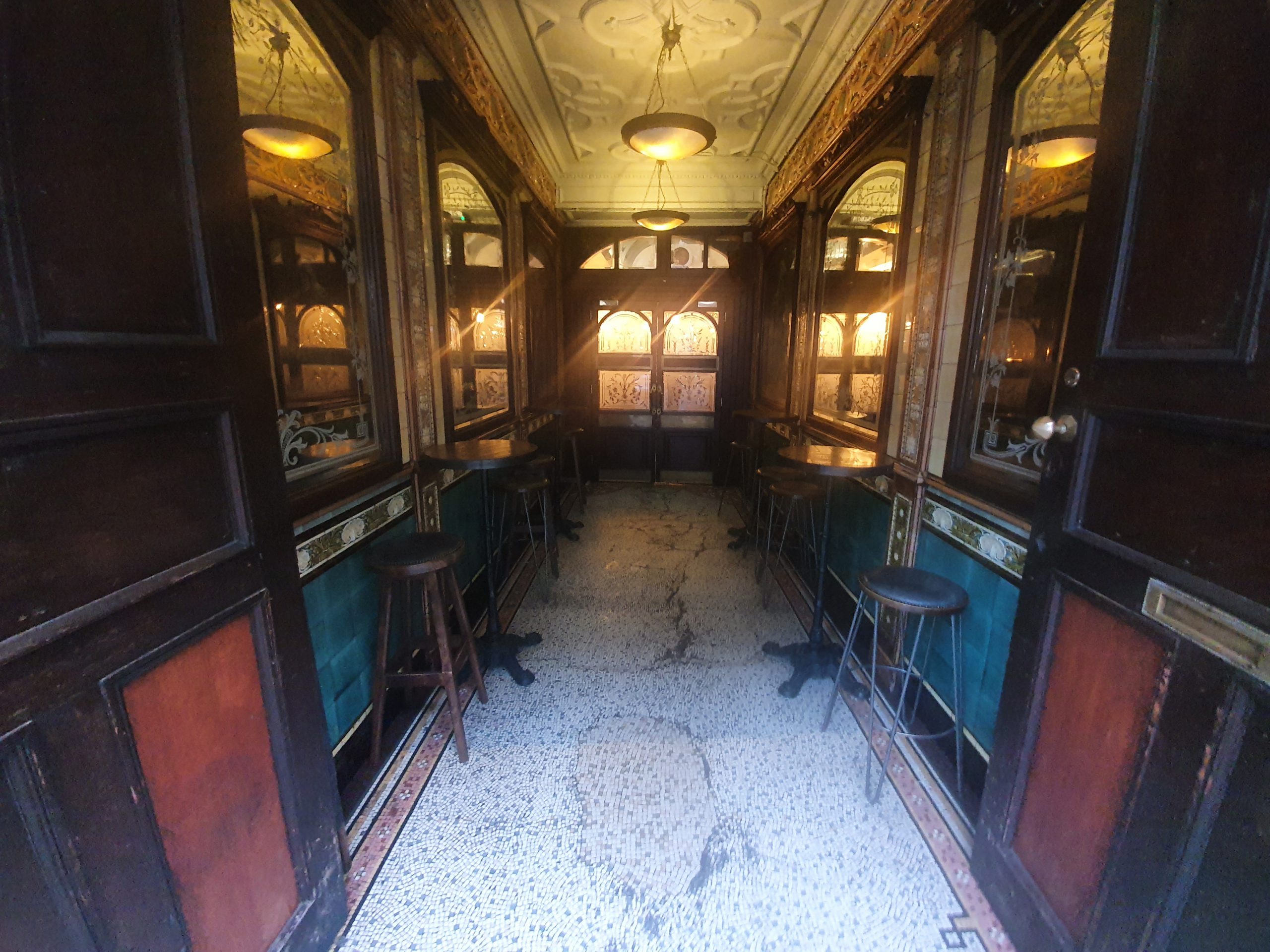
A nicely decorated corridor into the pub, necessitated by the shopfronts on either side of this narrow entrance.

It wasn’t packed with the customers in the pub, although a group on some sort of tour did pop in later on.

The Hophead from Dark Star Brewing, which is a perfectly acceptable beer and it was well kept here, and at the appropriate temperature. It was also the only real ale available, so it was fortunate that they had a reasonable one and not Greene King IPA or similar. When things return to some form of normality a pub like this is going to need more choice than this though, it’s not ideal at the moment.

This pub has a much stronger selection of gins, but there are some bottled beers (clicking on the image makes it bigger).
The service in the pub was friendly and engaging, so it felt like a welcoming and comfortable place to visit. It’s also a very large venue, there’s a room at the back and additional space for private groups. The reviews are generally positive on-line and the manager answers them politely and professionally, which is usually a good sign. Anyway, everything felt well managed enough, but the beer options aren’t sufficient to want to tempt me back, even though I liked the environment.
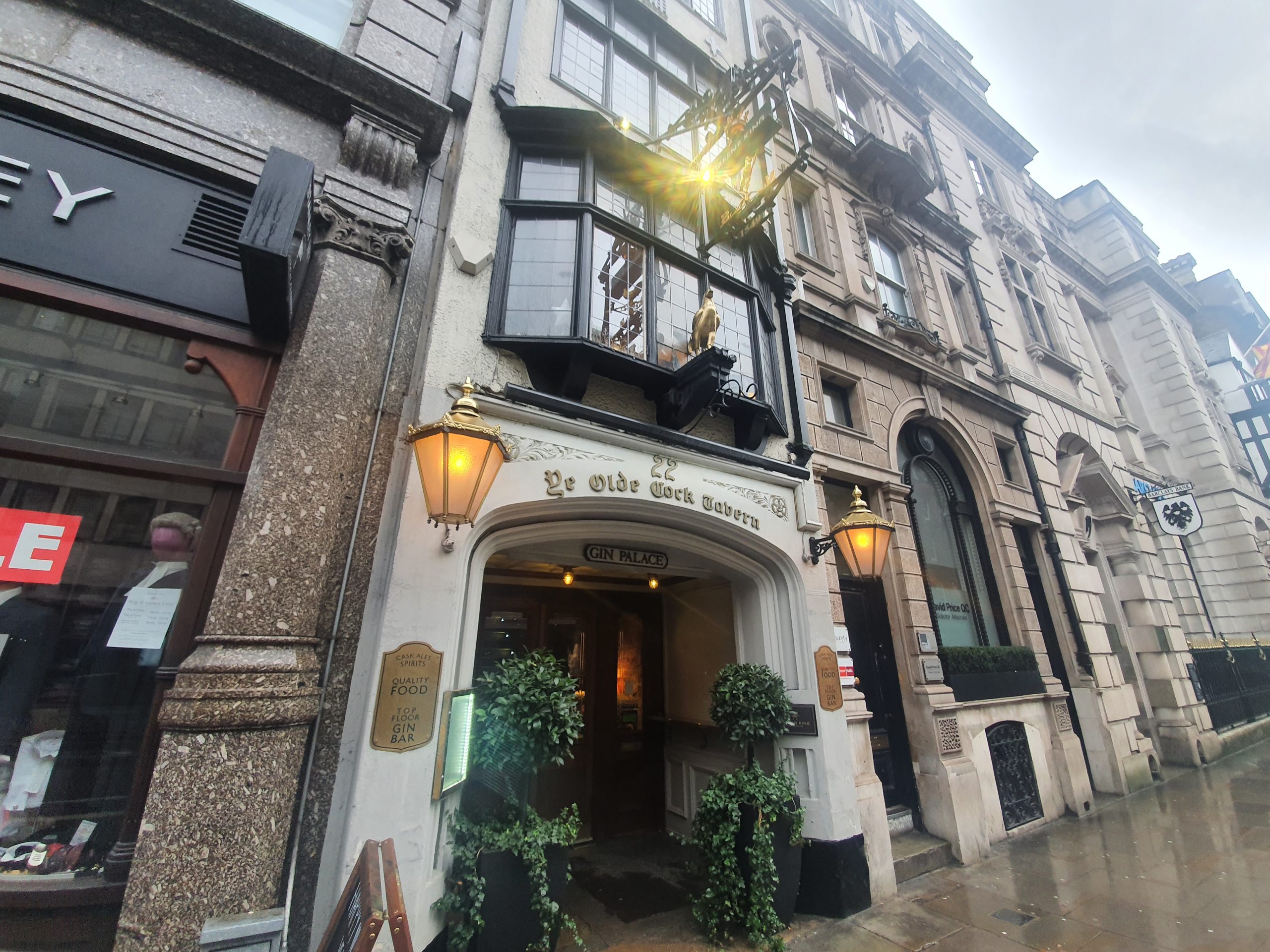

I’ve meant to visit this historic pub on Fleet Street on numerous occasions in the past, but it’s operated by Greene King and that’s always put me off. However, it’s important to support the hospitality industry and so I thought I’d have a little visit since I was walking by.

Indeed inspirational, but a slightly odd quote for a family pub, but there we go. Although to be fair, they can hardly advertise their beers given the choice they have inside.

Slightly hard to read from this angle (I was avoiding my reflection being in the photo) but it reads:
“The Cock was opened in 1888 with the original fittings from the original tavern on the site of the branch of the Bank of England opposite. The records of the tavern go back to the early seventeenth century. Pepys says “April 23 1668, to the Cock Alehouse and drink and eat a lobster, and sand and…. and then Knipp and I to the Temple again, and took boat, it being darkish. And to Foxhall, alas there are now no Vauxhall Gardens where we can take our Knipp but there is still the Cock.”
The pub was visited by men like Pepys, Samuel Johnson and Charles Dickens, but they visited the pub that had stood since 1546 on the other side of the road. And the historic fittings brought across in the late nineteenth century were mostly destroyed by a fire in 1990. There’s still a depth of heritage here, but it’s a bit tenuous in places.

Another history of the pub.
As for the pub itself, this is a mess. The toilets had no hand-dryer, just a sign saying it was broken, but there was no thought to an alternative provision of hand towels or the like. There was no acknowledgement at the bar which didn’t concern me, but is unusual at the moment given how quiet pubs are. However, it was seeing the ‘exciting’ beer selection of Greene King IPA and bloody Rocking Rudolph which they were trying to discount at £2.50 per pint (I added the bloody BTW, that isn’t the beer name) that made me give up. These are not interesting beers (to me at least, and indeed to few people judging by their Untappd scores) and although there are some generic cask options, I lost heart at this effort from Greene King. There are so many good beers in the world, why do Greene King keep insisting on shying away from quality?
Anyway, if Greene King don’t care about their pub, then nor do I, so I went to find another venue for a quick drink. I will say that there was a wide selection of gins, which would have once been one of their staple products so there’s some continuation of history there. Greene King make little effort to explain the history of the pub on their web-site and it’s a shame that another operator isn’t in control here. Mainstream as Nicholson’s might be, they’d put a touch of elegance into proceedings, and even JD Wetherspoon would do a far better job although the venue is a little too small for them. Maybe one day a pub like this will be independent and have owners that it deserves given its heritage, even if that heritage is a bit loosely defined.
Moan over for the day.
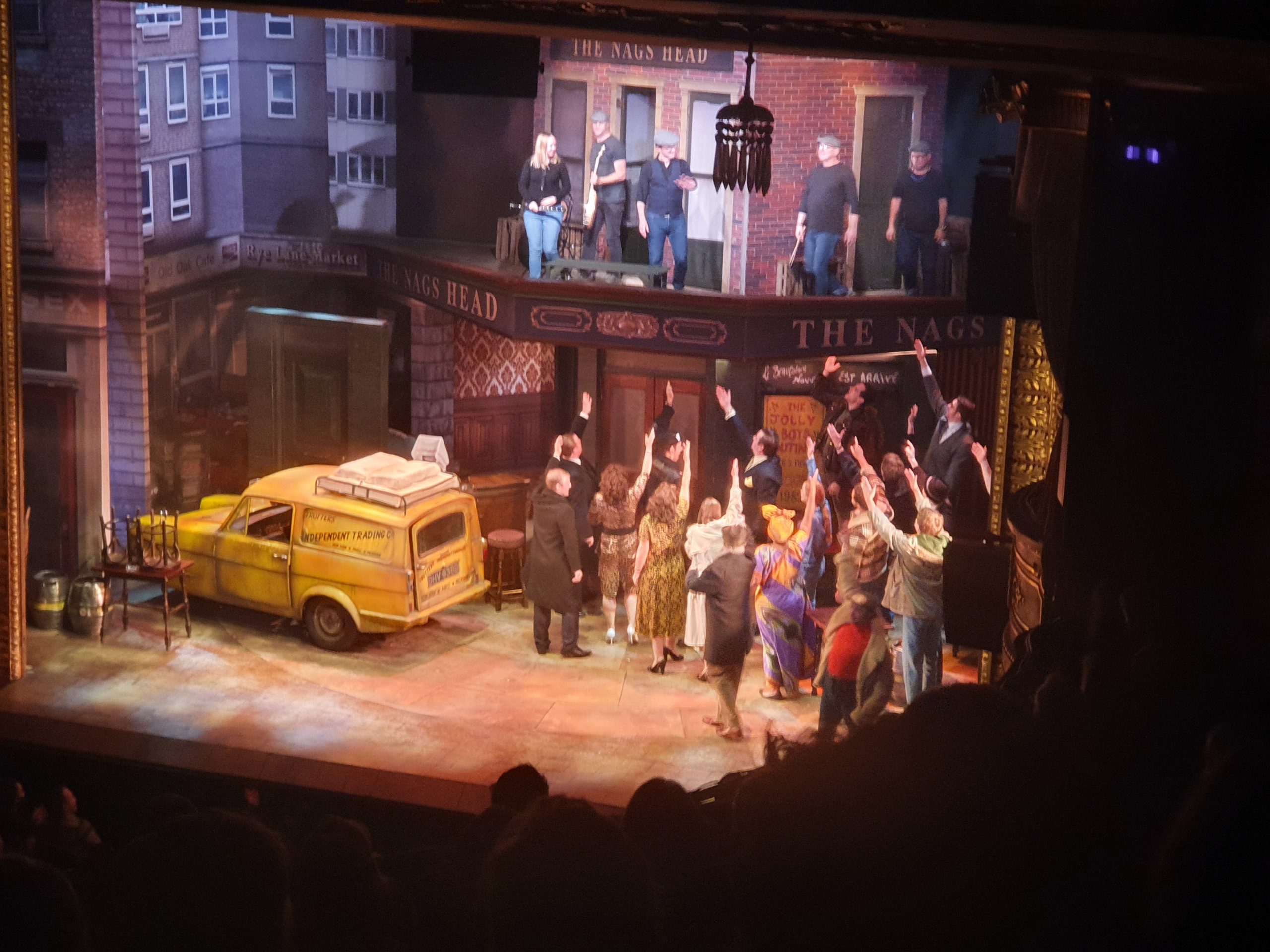

I’m not normally a theatre goer, but my friend Nathan, who likes his culture and opera, mentioned a company called TodayTix who offer discounted theatre tickets. I noticed a ticket for the Friday night performance of ‘Only Fools and Horses – the Musical’ was available for £10 plus a £3 booking fee, but I also had a £5 discount voucher for having just signed up, so that meant I got a ticket for £8. It’s fair to say they’re normally more expensive than that, but this price suited me best.

I arrived at 18:45, the earliest they allowed entry, as it said they were doing checks of Covid passes and the like. It transpired they didn’t do any of that, which is odd given their commitment to the process on their web-site. I didn’t mind them not doing the checks, but they might as well remove the instructions that say they’re a requirement if they’re not.

The theatre holds 888 people, some down below in the more expensive seats, but there are also some above as well. When I purchased the ticket there were some seats available which had a restricted view, but mine was unrestricted, albeit quite a way away.

I liked my seat of H1 (and I never knew that there was a site such as https://seatplan.com/ where seats are reviewed, a bit like the ones for aircraft), which was at the rear of this section with a lot of legroom as it was on the curve, which also meant space for my backpack which I decided to take out for the evening (I didn’t deliberately bring it out for a treat, I still had it from never going back to the hotel in the day). There were two people seated next to me on the left and I had the wall to my right-hand side. There was one boorish theatre-goer that the staff were struggling with at the beginning, and had to go back to warn later on, but he was more harmless and drunk than a serious problem, but I was glad that he wasn’t seated anywhere near me.

The Royal Box, where my wealthy friend Gordon would sit. He will never read this, so that’s fine for me to note here.

This photo is from the curtain call, as they asked for no photos during the performance as it disturbed other audience members. Since there was no-one behind me and I noticed others took photos at this point at the end of the performance, here’s my little effort to give an example of the stage.
I’m not a theatre critic, so my observations aren’t going to be overly deep and meaningful. This though was a performance that I lost track of time of, so that’s a good sign, I’m normally hoping the end comes soon when watching films at the cinema, my attention span already snapped.
For nearly all of the characters, it was easy to forget they weren’t the real actors playing the parts, so was the quality of the impersonations. Tom Bennett played Del Boy and Ryan Hutton played Rodney, both convincing and capturing the appropriate joie de vivre. Jeff Nicholson as Boycie was a clear favourite of the audience, an impeccable performance and indeed laugh. Unfortunately, John Challis died a few weeks ago, but Jeff Nicholson mentioned that he had been a helpful guide throughout to his performance.
Paul Whitehouse played Granddad and Uncle Albert, and had particularly caught the mannerisms of the latter, in a suitably exaggerated style. Although a musical, there were long sections of dialogue and the balance seemed entirely appropriate, with old jokes from the series blended in along with new ones crafted in. They managed to get Waterloo Clock into the performance, as well as the three-wheel van, with no end of complex stage changes. The complexity of these and knowing where to stand is impressive in itself, I’m not sure how individuals can remember so many lines of dialogue, dance and be in the right place throughout.
There were some obvious moments recreated, such as when Del fell through the bar, although no recreation of the falling chandelier, just a reference to it. The performance was fast-paced and the quality of the script was high, although some of the songs felt rather more worthy than others and almost felt included because they’d called this a musical. Maybe the story-line also jumped about a bit, but it remained coherent and it was always faithful in its intent to the original television programme. A chunk of the scripting had been done by Jim Sullivan, the son of the original author of the series, John Sullivan. Anyway, I was very pleased with my £8 ticket, entirely recommended.
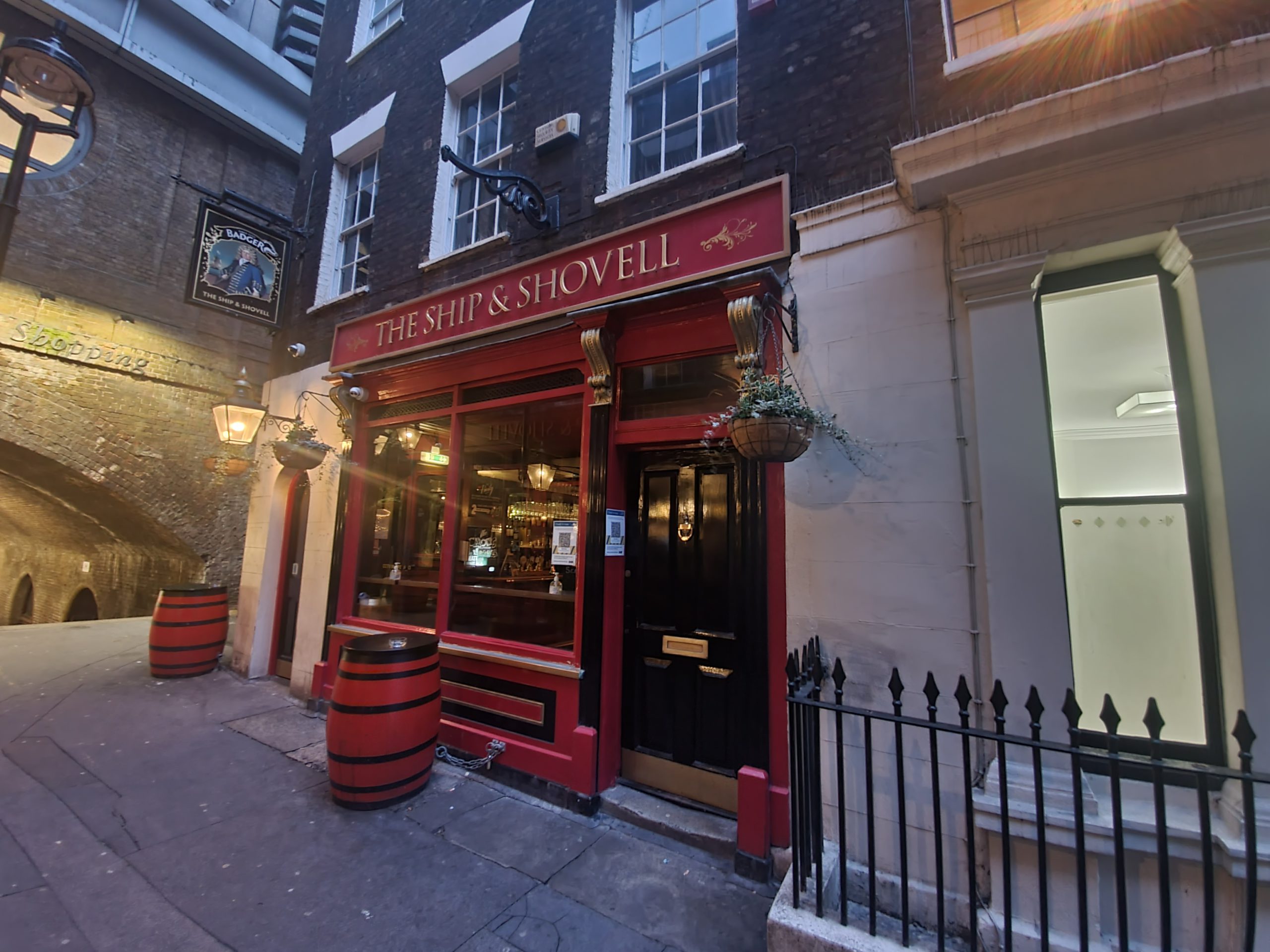

A quiet London gave me chance last year to visit a lot of Good Beer Guide pubs in the city which always looked too crowded to get in before. I’m not sure that’s ideal for the hospitality industry, but it certainly allowed me to see some historic interiors and venues packed with atmosphere. The Ship & Shovell is a new addition to the Good Beer Guide that was only added in the new 2022 edition of the book a couple of months ago.

Unusually for a pub, it’s split in two opposite parts each side of the lane (the pub notes that this is unique in London), although it’s also apparently connected by the cellars which also contain the pub’s kitchen. This side was closed off when I visited, but it’s a handy way of having additional capacity. It’s located on Craven Passage, which is located underneath Charing Cross railway station.

Here’s the site in the 1890s, with the PH in the middle of the map marking the main part of the pub today, but there’s nothing marked on the extension bit. The building was listed in 1970, with the listed building record noting:
“Former pair of terrace houses, as one public house. c.1731-32, refaced late C.18 and with late C.19 public house front. Yellow stock brick, slate roof. 3 storeys and dormered mansard. 5 windows wide (3 windows to No. 2 and 2 to No. 3). Ground floor has wooden public house frontage with panelled and glazed doors and bar windows articulated by Corinthian pilasters carrying entablature-fascia. Upper floors have recessed glazing bar sashes under flat arches with stucco voussoirs. Parapet with coping. Pub interior retains good late C.19 mahogany bar fittings and some engraved glass. As originally built part of the Craven family’s C.18 development of their Brewhouse property; c.f. Craven Street.”

The bar area, all nicely presented and there was a friendly team member who welcomed me as soon as I arrived at the bar. Indeed, the service was always personable and engaging. The pub is only taking cards at the moment for payment, and they take Amex (although I only saw that sign after I had paid with a different card).

The ship element of the pub’s name is reflected here in the fireplace.

The pub is operated by Hall and Woodhouse Brewery, so their beers dominate here. There are plenty of draught (or draft if you prefer) options as well as bottles. There were no dark beers available on draught, but there is an interesting looking milk stout Milk Made which is rated 3.84 on Untappd, so I might ask for that next time I’m in one of the brewery’s venues, of which there are six in the city centre.

I rather liked the food menu, which I think is more substantial at lunchtime, but this caters for most snack tastes (well, no Wotsits I accept, but they do have Mini Cheddars) and there’s a 3 for £5 offer on. The prices for the drinks seem to be around £5 to £6 a pint, which is realistic given the central London location. I can imagine that when London is back to some form of normality that venues like this will be crowded once again, especially at 15:45 on a Friday evening which is when I visited.
The on-line reviews for the pub are broadly very positive and they’ve clearly pleased CAMRA for their members to list it in the Good Beer Guide. Looking for the negative comments that are sometimes exciting, there’s a complaint and 1/5 star review which notes:
“No preseco or sparkling wine, bar man just wanted to sell pints and bottles !!”
Good.
And another 1/5 complaint about a cold Scotch Egg that wasn’t reheated in a microwave. Personally, I’d rather have a cold Scotch egg and I can’t recall being given one that the pub has microwaved. And a 2/5 star rating from a customer that wasn’t allowed to use the tunnel.
Anyway, welcoming staff, a clean venue and a laid-back and comfortable atmosphere, so it seems to me like an appropriate and sensible addition to the Good Beer Guide. One of the better options for anyone waiting for a train to depart Charing Cross railway station.

One of the war grave areas at Chingford Mount Cemetery.
I’d better start these posts by saying I haven’t selected stories from war heroes that have legendary status for whatever reason, but the other route of taking photos of graves and looking for what information I can find about the lives of the less noted. Everyone is unique and the sacrifice of their lives were all equally enormous, with a surprisingly limited amount of records about many of the war dead.

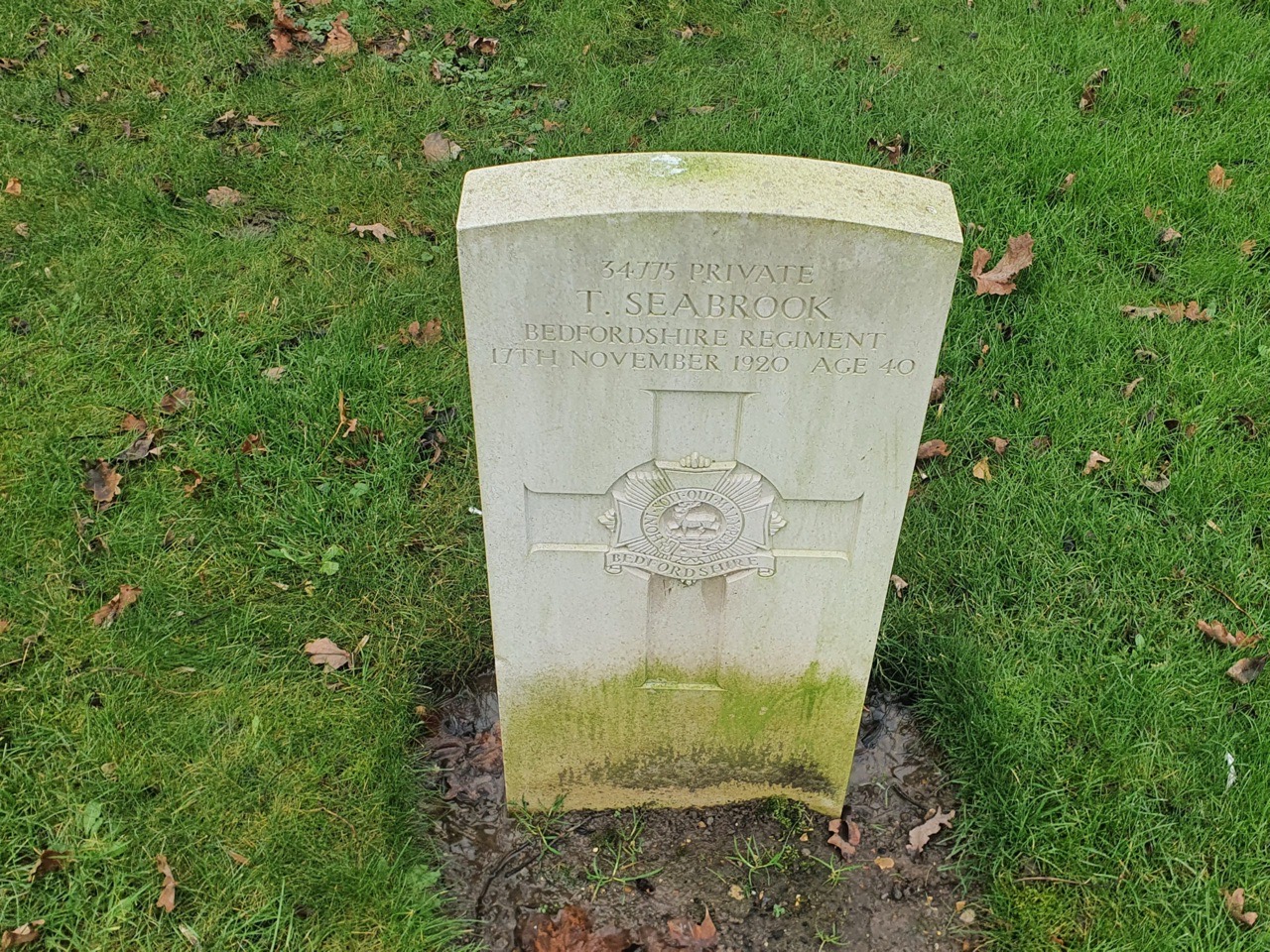
This is the war grave of Thomas Seabrook, the son of William John Seabrook (born in Shoreditch in 1845) and Lavinia Jane Seabrook (born in Colchester in 1849). Thomas was born in Bethnal Green, London in 1881 and at the time of the 1901 census he was living with his parents and younger sister Sophia at 3 Gossett Street in Bethnal Green, being listed as working as a wood carver. Thomas had a number of older siblings though, as at the 1881 census when they lived in the same property, there was a 9-year old Lavinia, a 7-year old William, a 5-year old Elizabeth and a 2-year old Matthew.
Thomas was a private in the 13th Battalion of the Bedfordshire Regiment, service number 34775, although I don’t know why he was in that regiment. Thomas died on 17 November 1920 at the age of 40, but there’s nothing I can find in the media about how he died. It looks like the troops from the regiment had all returned by the previous year at the latest, so I assume it was some sort of accident that took place in the UK. But, I’d like to know more…..
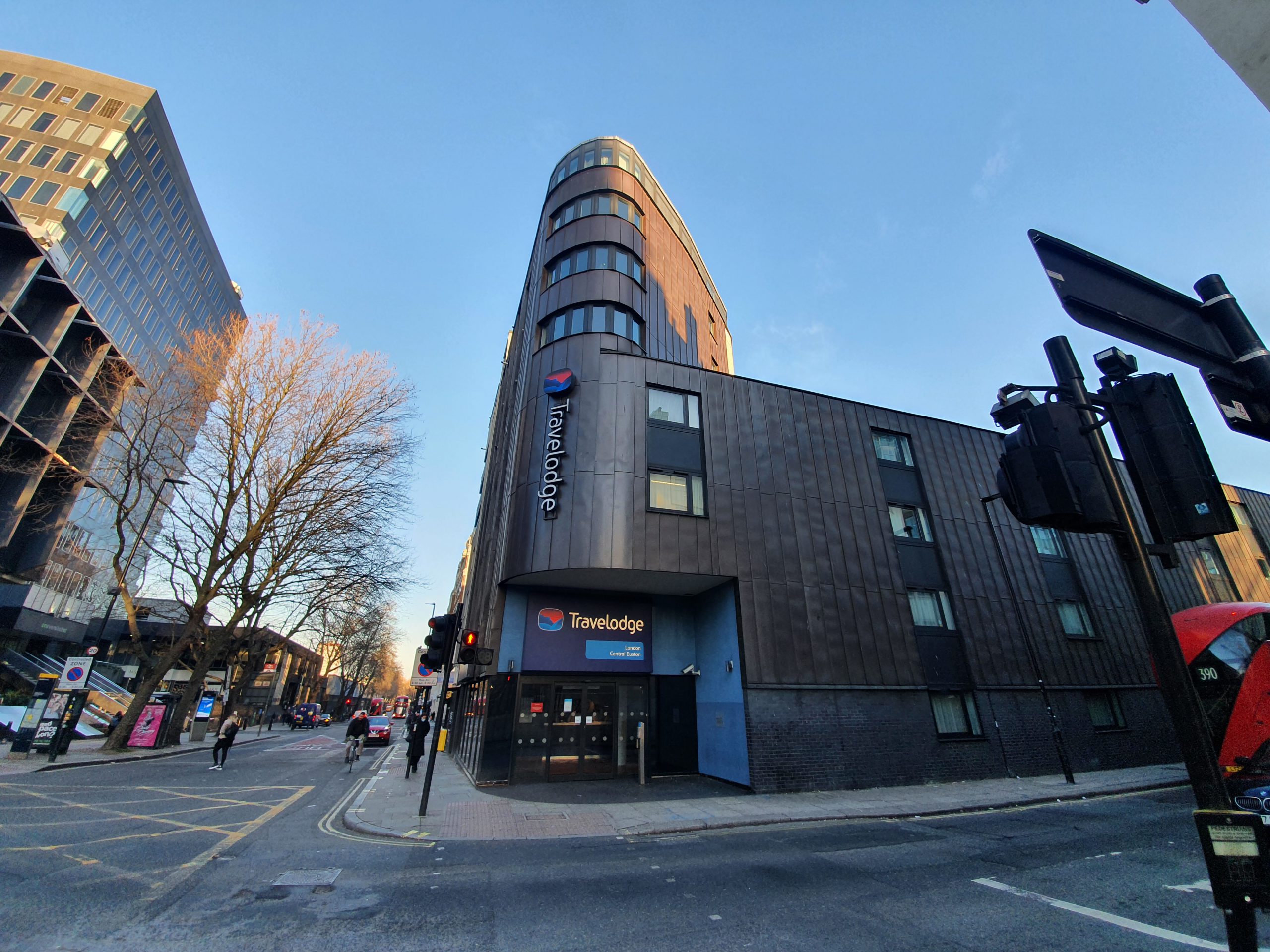

Travelodge had an offer on a week or so ago which was get one night half price when booking at least two nights, which meant that this hotel became really quite affordable despite its central location. It’s literally a one-minute walk from Euston railway station, and around five minutes from King’s Cross St Pancras railway station, so ideal for those needing to catch a train.
When I entered the hotel I was surprised and delighted to see that they had ripped up most of the floor, and even more surprised when I left to go out two hours later and they had restored the flooring. Whatever work they were doing, the tradespeople were very efficient at least. The staff member at reception was helpful and everything seemed in order, other than I struggled to hear her amidst noises of the floor being ripped up. No mention was made of breakfast or the cafe, which was of no relevance to me anyway as I wasn’t using them, but I was slightly surprised there was no upsell tried. Although, to be fair, the staff member already could hardly hear themselves think with the sound of their floor being ripped up around them.

The room is standard Travelodge fare, but actually it was entirely satisfactory and I had no complaints. The window opened and the air conditioning was very effective, something that I don’t necessarily expect in budget hotels. There was a bath in the bathroom, another feature that many hotels lack. I was given the quiet side of the hotel, although I don’t mind road noise, but reviews of the hotel are littered by complaints about the sound of traffic keeping people awake.
The hotel has started to renovate its rooms and they have the SuperRooms which you pay a bit extra and get a decadent coffee machine and a KitKat. I decided against going for such luxury. I didn’t have any noise problems internally or externally, despite this seeming to be the most common complaint from guests.
As for the reviews, the staff are being creative with excuses and not blaming Covid for shortages:
“Rooms are unvacuumed and dirty. Toilet is dirty. Shower curtains ( bleurgh) Rooms are sprayed liberally with air freshener instead of cleaned and it’s suffocating. The reason, apparently, is ‘Brexit’.”
Firealarmgate doesn’t sound ideal either…..
“Finally, on the second night when I was getting out baby ready for bed, the fire alarm went off. I scrambled to get us both semi-decent and grab the essentials, then ran down to the foyer. I didn’t take the room key as I thought there was a fire tearing through the building. The fire alarm stopped on the way down. I reached the foyer, and stood there, with a half-dressed baby and myself shoeless, for 20 minutes with no sign of staff.”
And I know some people like this:
“I spent half of my time going down to the reception to complain about something.”
There are over twenty reviews of guests who have been given keycards to already occupied rooms, something which I still think is unforgivable incompetence from a hotel. I merrily barricade a room with a chair behind the door to try and prevent such things, but I’d be demanding my night be refunded should it ever happen…. Fortunately, it hasn’t (although it has to Nathan, he gets all the excitement….).
Although one customer was livid about a series of things and noted:
“We advised of the issues and all they were able to do was give us a handful of free Kit Kat’s, not exactly a suitable response.”
That would have won me over…..
Anyway, I liked this hotel as it was central, clean and quiet, although I likely won’t stay here again as it’s normally relatively expensive. I understand that there are some rooms in the cellar and that doesn’t sound ideal, probably best to try and refuse those at reception if possible.
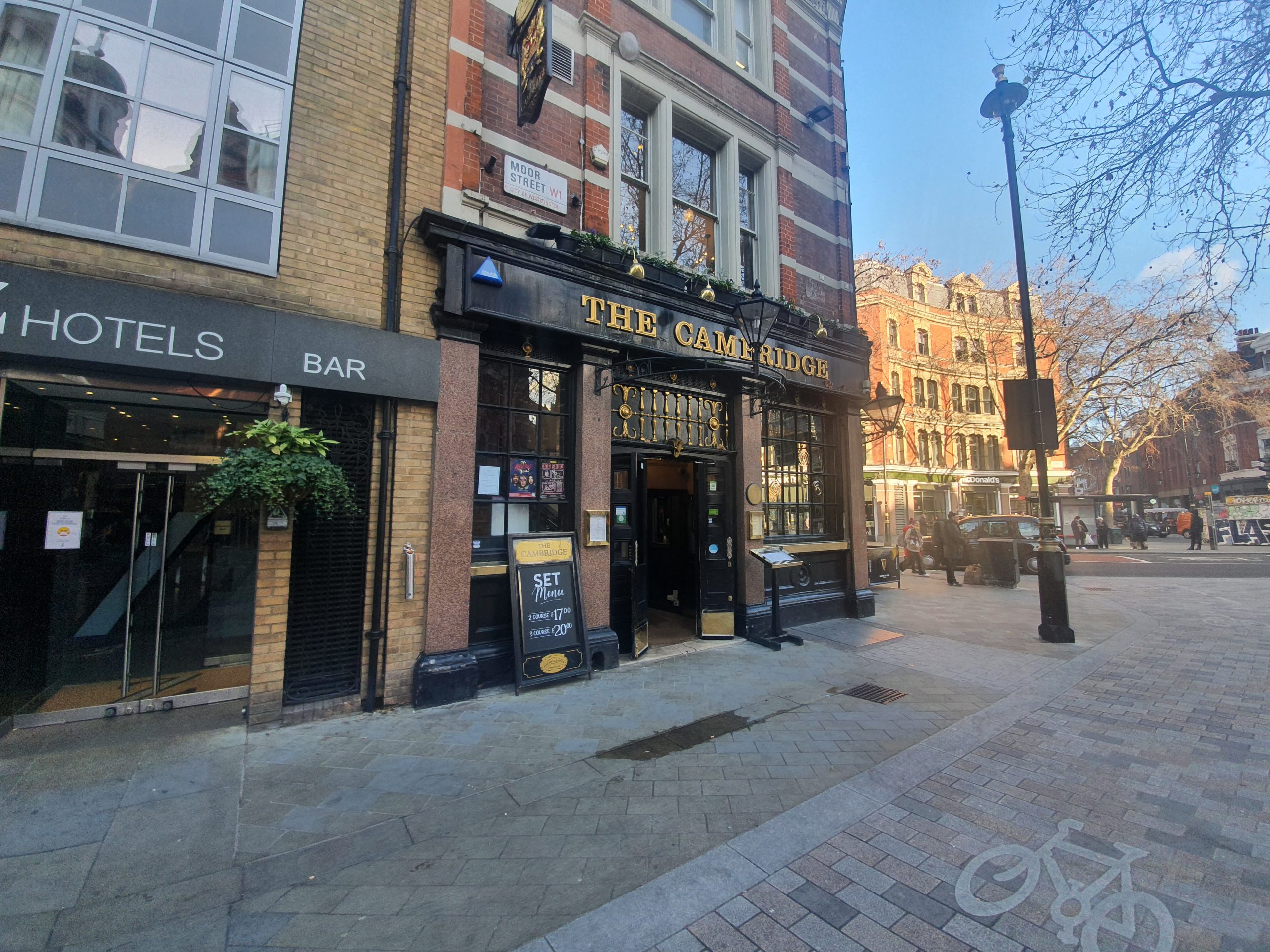

I got an e-mail from Nicholson’s pubs last week that said they had half-price main courses available on most weekdays over the next couple of weeks. That seemed like a very reasonable deal, so I thought that I’d pop to some of their London establishments that I haven’t been to before.

This is the Cambridge pub in Charing Cross, which is in the area of Soho. Nicely decorated ceiling and it’s also got an upstairs dining area. The pub says about its history:
“Deep in London’s theatre district, The Cambridge is popular with audiences and actors alike. Built in 1887 on the site of The King’s Arms, it is next to the Palace Theatre, formerly the Royal English Opera House. The Cambridge lies in the heart of Soho, a royal hunting ground in the days of Henry VIII. We bet you didn’t know that Soho takes its name from a hunting call.”

The pub’s location (the PH just above the CAM of Cambridge Circus) on a map from the early twentieth century, an arrangement named after the Duke of Cambridge.

The beer choice is quite limited here, or at least for my decadent needs, so I sufficed with half a pint of London Pride. It was well-kept, at the appropriate temperature and tasted as it should, that’s about all I can say.

The fish and chips, which looked a smaller portion that it actually was, I think because of their plate of choice. Anyway, this was actually very good, the fish flaked away and was of a decent quality, with the batter having some flavour to it. The batter wasn’t greasy, the chips were fluffy inside and the mushy peas had an air of sophistication to them although they were a tad cold. And lots of tartare sauce, I liked that.
Service in the pub was friendly and engaging, with the member of bar staff being warm and conversational. The pub was clean and comfortable, as well as being surprisingly busy. I can imagine how busy this pub must get when things are a little more normal in the country and the nearby theatres are packed. The reviews are generally very positive and the management responses on TripAdvisor to the negative ones are some of the longest and most comprehensive that I’ve seen. They’re actually very professional responses, it made me like the venue even more as I imagine they’d resolve any actual problems if they occurred.
The whole cost of this decadent lunch was £10, which I thought was reasonable as it’s the same as the nearest Wetherspoons and it’s good to visit somewhere different. I’d rather Nicholson’s work on its beer options, but the venue seemed very well managed and so I haven’t got any complaints beyond the lack of decent and perhaps even innovative beers. Certainly not a bad lunch option, although the pricing is a little rich for me when there aren’t offers on.
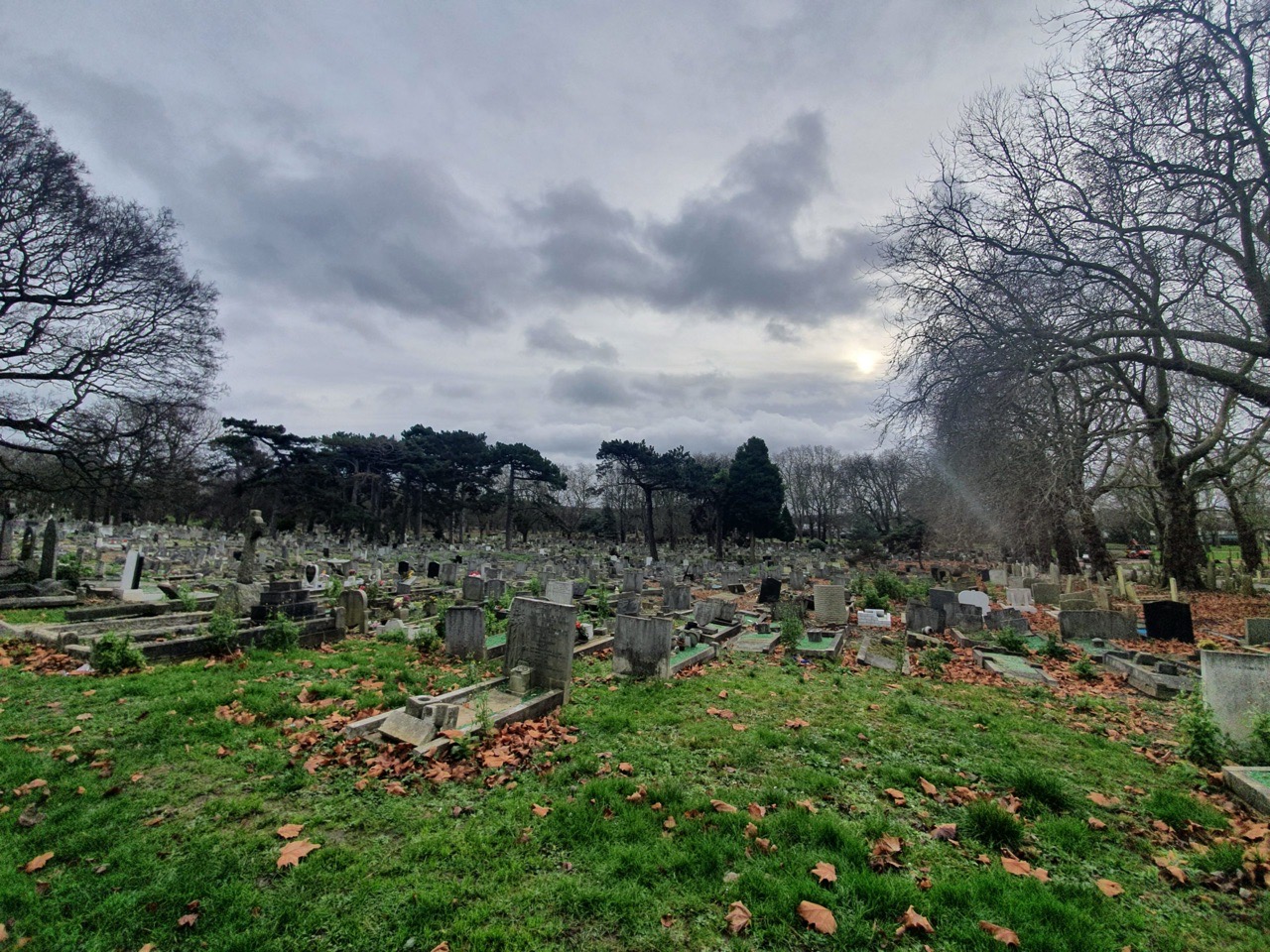

There’s something quite reassuring about the large ‘no’ in the above photo since it’s the entrance to the cemetery in Chingford Mount.

This information plaque notes “developed in 1884 by the Abney Park Cemetery Company on land originally called Caroline Mount, named after the landowner. The original chapel and gate lodges are now gone, but the impressive gates, railing and gate piers survive”. The Abney Park cemetery had been created in Hackney as a non-conformist site, but it was running low on space, hence this new opening.

It’s an enormous site, taking up just under 42 acres. It was run by a private management company who managed to go bust in the 1970s, meaning that some of the unused section of the site would have been turned into housing. Local opposition to this arrangement was quite strong, with the site eventually being taken over by the London Borough of Waltham Forest in 1977. Unfortunately, the lodges and chapel had become vandalised by this time, hence their demolition.

The war memorial at the cemetery. There are 137 war graves from the First World War and 182 from the Second World War located around the cemetery.

One of the avenues which was useful during my visit as the graveyard was particularly soggy in places as I tried to look for some of the war graves.

One of the most infamous graves in the cemetery, the gravestone of Ronnie and Reggie Kray.