
Category: Poland

  • Lublin – St. Michael’s Church (Ruins)

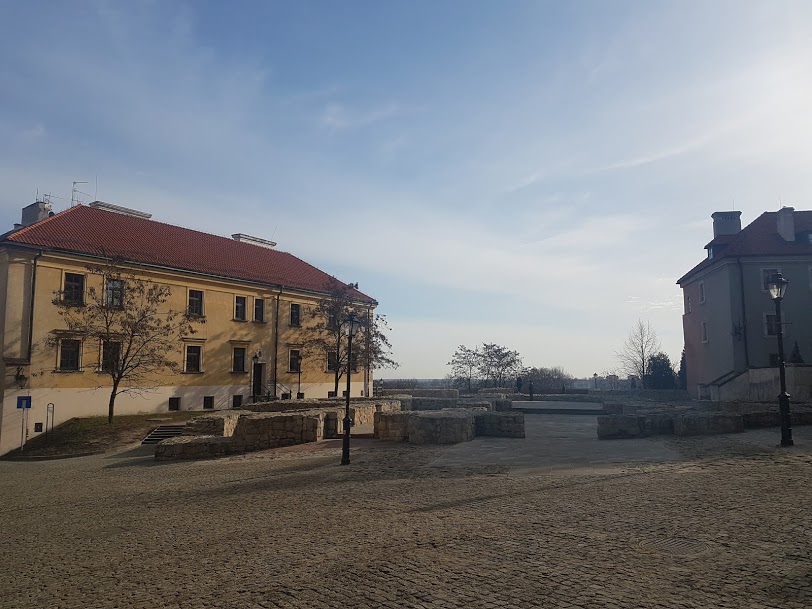
    St. Michael’s Church is no longer standing, although the ruins are still clearly visible. Work started on the church’s construction in the thirteenth century and it was rebuilt at the end of the sixteenth century when the original building was badly damaged by fire.
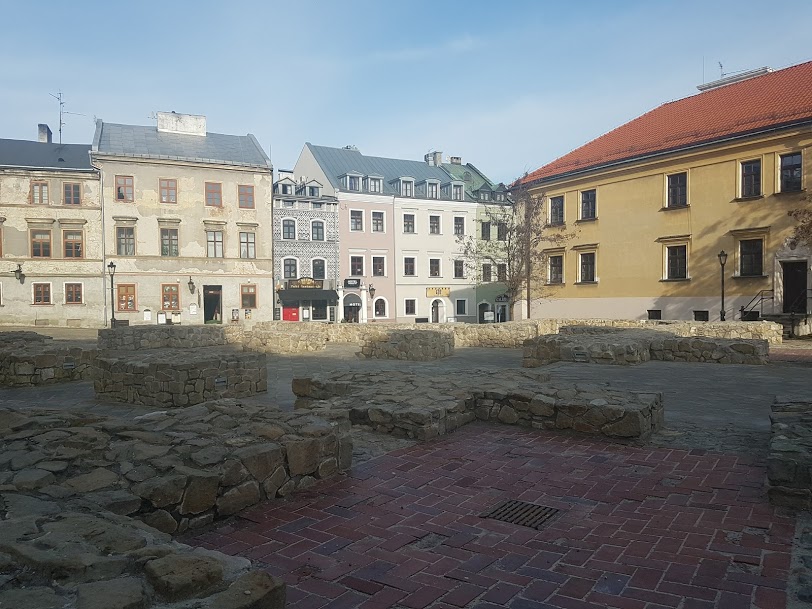
    The new sixteenth century building was substantial and it became one of the largest and tallest churches in Lublin. With the opening of the new cathedral building in 1832 the parish moved from St. Michael’s and the church was demolished between 1852 and 1855. Human remains were carefully removed from the cemetery at the site to the city’s new cathedral.
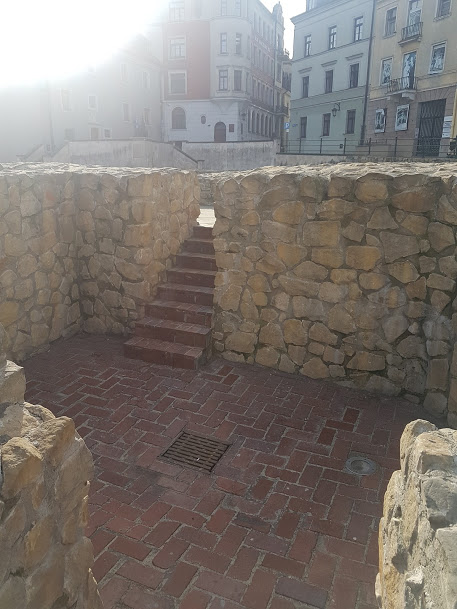
    The church’s stone was reused to build properties and also to use in road construction. Not an entirely ideal use for such an historic building.
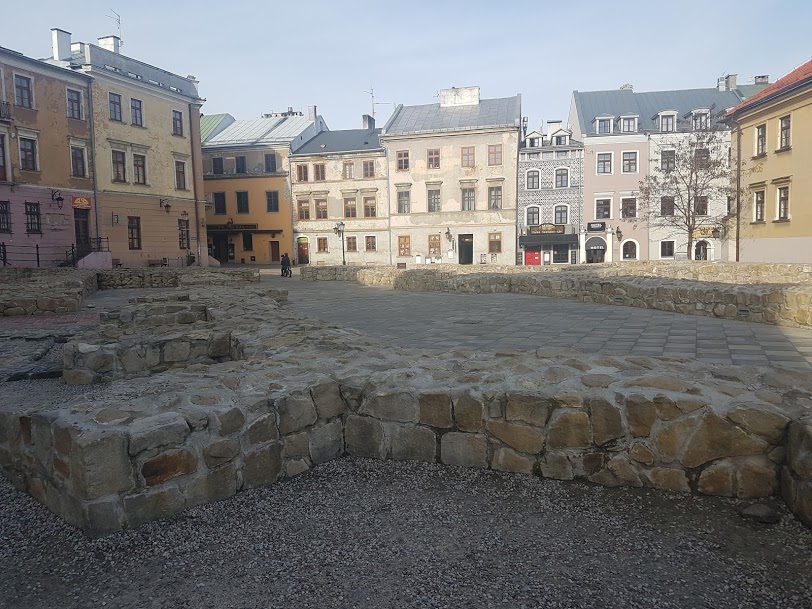
    The site was uncovered again in the 1930s and a large scale archaeological dig took place in 1970s. The remains of the church were then permanently revealed in the 1980s and are a reminder of what a beautifully location it was once located in.

  • Lublin – Sexy Duck

    Part of a small chain of two restaurants, which I admit is a small chain, with the other outlet being in Warsaw. Specialising in Italian food, which no end of other Polish restaurants seem to do, it was clean and comfortable inside the restaurant. The service was attentive and helpful, with the staff member finding me a table even though it was relatively busy during my visit.

    Quirky decor…..

    There was a dark beer option, which had a sufficiently interesting taste and was at least refreshing.

    The chicken pasta, clean in its presentation and with a depth of taste to it. The pasta retained some bite whilst the chicken was tender and flavoursome, and the rocket added some texture. The meal cost around £4 and the portion size was sufficiently generous.

    Towards the higher end of the price scale for Lublin, although still not particularly expensive by UK standards, I thought this was a better than average meal and the surroundings were comfortable. There were plenty of duck based dishes which was in keeping with the restaurant’s name, but I wasn’t tempted on this occasion.

  • Lublin – Lublin July (1980s strikes)

    This monument marks Lublin July, a series of stoppages and strikes which took place in the city in July 1980. The complaints were originally about the quality of the food available to workers and also about the increasing costs. The strikes soon spread across the city, and to neighbouring towns, causing great concern to the communist authorities, especially when political demands such as freedom of speech were made.

    The authorities desperately tried to buy the workers off to stop the strikes from spreading, but the discontent was too much to quell. The workers were organised and effective, causing industry to grind to a halt. Within a week of the first workers going on strike the dispute had grown to over 50,000 workers across tens of factories.

    Instead of marching on the streets, which had been a strategy which had failed before, the workers remained in their factories and articulated their grievances from there. The bloodless protest was a pre-cursor to the wave of Solidarity strikes across Poland, which the hapless authorities had little idea how to deal with. Within ten years of the strikes in Lublin the communist authorities collapsed and Lech Wałęsa was the President of Poland.

  • Lublin – Street Art (Interesni Kazki)

    I know very little about street art, but this is apparently by Interesni Kazki and was painted in 2012. It certainly livens up the end of the buildings on this street in Lublin.

  • Lublin – Majdanek Concentration Camp (Photos from the Site)

    Some photos of the external areas at Majdanek concentration camp.


  • Lublin – Majdanek Concentration Camp (Zyklon B)

    What is undeniable is that these Prussian blue stains have been caused by the use of Zyklon B. This is now known to be what was used to kill hundreds of thousands of people in gas chambers at locations such as Auschwitz Birkenau, but it was originally used as a cyanide based substance used to delouse clothes.

    And this area of the camp are barracks 41, with signage indicating that this is where prisoners were gassed. However, there is some considerable argument about whether this can possibly be true, and on the camp’s own web-site there’s a document saying:

    “It is certain, however, that gas chambers were not used for extermination after the executions of 3 November 1943 and that the chamber adjoining the shower room in barracks No. 41 and the chamber in the west part of the bunker were used for the disinfection of blankets and clothes, including those belonging to murdered Jews. These were disinfected using Zyklon B. First, the chamber was warmed up with heated air and, after disinfection was complete; the gas was removed through openings in the roof with the use of a ventilation fan.”

    So although it’s clear that significant numbers of people were killed at Majdanek, I’m not sure that this area is where they actually were murdered. The blue stains do appear to be from when the room was used to delouse blankets and clothing, although it is possible that killings took place earlier on.

    I have to admit to be entirely confused by much of the signage at Majdanek, I ended up with far more questions than answers.

  • Lublin – Majdanek Concentration Camp (Bathing)

    Later on during the war the whole concept of showers in concentration camps took a sinister turn as it was where prisoners were killed using poisonous gas. Here at Majdanek though these showers were intended to clean and disinfect prisoners, usually new arrivals.

    The shower heads and there are numerous reports that these dispensed water that was either freezing cold or boiling hot.

    The large sinks, which were also used to bathe prisoners to disinfect them.

    The prisoners would walk along the wooden slated floor before being herded out of the room. It seems that later on during the war the prisoners were given the opportunity to take more showers to try and get rid of the problem of lice, although since the living accommodation was riven with them it seems a slightly forlorn exercise.

  • Lublin – Majdanek Concentration Camp (Barracks)

    A photo from one of the barrack buildings at Majdanek. Initially the prisoners at the camp needed to sleep on straw filled mattresses on the floor, but from early 1942 this bunk bed arrangements was introduced. Each of the barracks were designed to house 250 people, and even that is at quite a push, but they were soon housing over 500 people.

    The initial intention of the camp was to hold Soviet prisoners of war and also civilian prisoners, so the standard of accommodation was meant to be at least bearable. There were 108 barracks erected in total across the site, with the conditions being ever more intolerable as the war progressed and the purpose of the site changed.

  • Lublin – Majdanek Concentration Camp (Memorial)

    Majdanek’s memorial is an imposing structure built at the entrance to the camp and it was erected in 1969 to mark 25 years since it was liberated. The memorial was designed by Wiktor Tołkin, a Polish sculptor who had been incarcerated at Auschwitz Birkenau and had managed to survive a death march.

    The memorial is, I understand, meant to represent the enormity of what happened here. It is intended to be both bleak and to also represent hope for the future.

  • Lublin – Majdanek Concentration Camp (Execution Ditches)

    Located towards the rear of Majdanek, these are execution ditches which were dug in November 1943 to bury the bodies of around 18,000 Jewish prisoners who had been murdered. There are three of these ditches and bodies were stacked and then set on fire.

    There are some questions about why these ditches were dug in a zig zag shape and why so close to the houses at the rear of the site. It’s said that the Nazis played loud music to disguise the sound of the killings, although I suspect it would have been hard to entirely hide from local people what was happening here.