Category: Poland

  • Częstochowa – Various Photos of the City

    Częstochowa – Various Photos of the City

    Just some random photos of Częstochowa…….

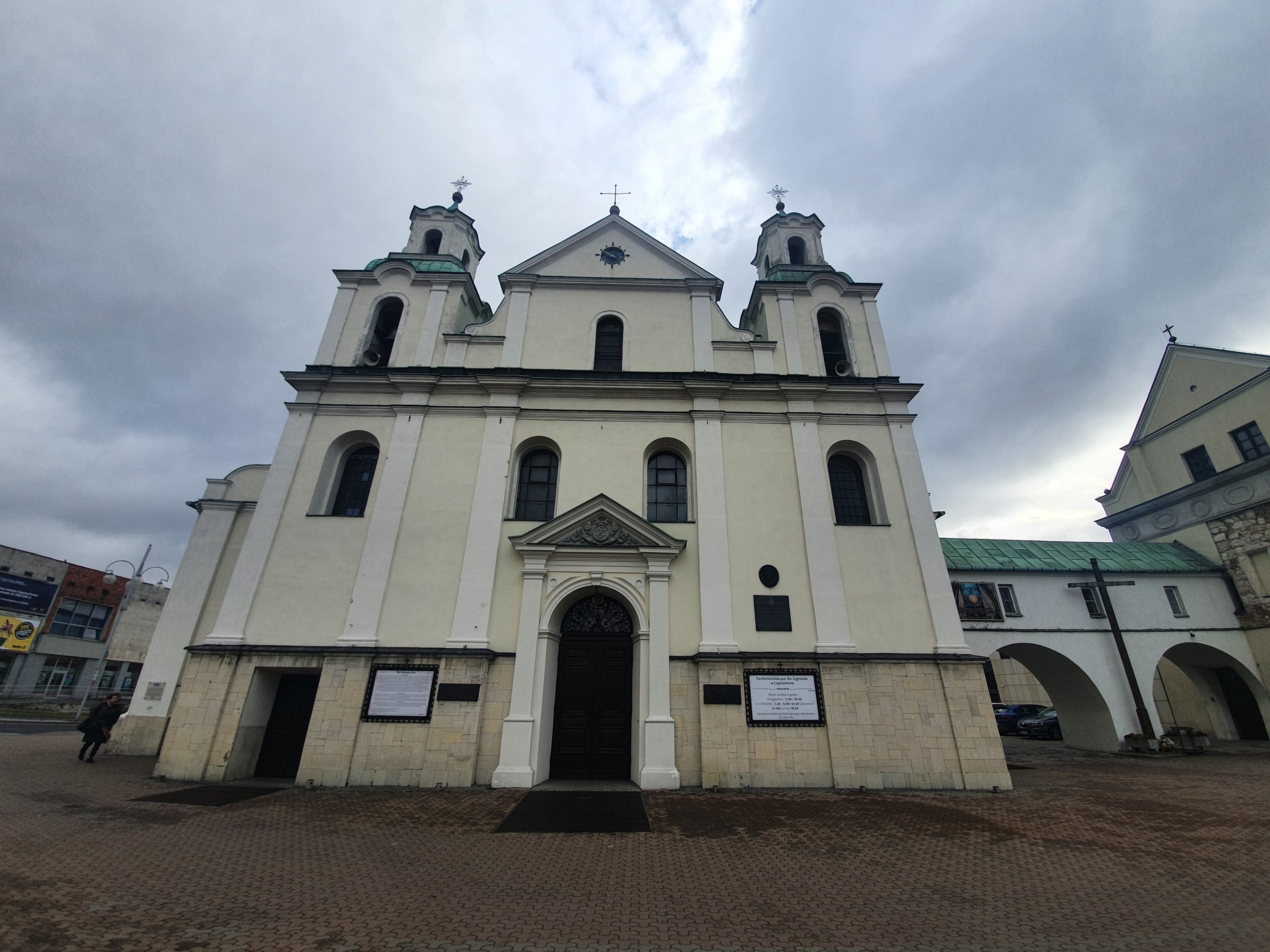
    St. Sigismund Church, the oldest in the city, first constructed in the middle of the fourteenth century. It was knocked about over the centuries during conflicts, before being used by the Germans as a military warehouse during the Second World War, after which it needed substantial repairs. Until 1825, there was a cemetery located at the front of the church, but it was knocked down to allow for the building of Aleja Najświętszej Maryi Panny w Częstochowie.

    The Cathedral Basilica, which dates from the early twentieth century when the city was growing in population size and needed a cathedral of this size. Located on the site of a cemetery, work wasn’t completed until just before the outbreak of the Second World War and the new towers were only added in 1997.

    It’s clear to see here how the railway dominates the heart of the city and also divides it in two.

    There’s a walk by the Warta River, the country’s second longest river, with only the Vistula being longer. The area to the left in this photo was the Jewish ghetto during the Second World War, but I’m not that very much of that survives.

    I liked the clock in the city’s main shopping centre.

    These photos are all a bit bleak, but there are many buildings in this state in the city centre. The city has been depopulating over recent decades and it’s not the industrial powerhouse that it once was. It’s often possible to judge a city’s fortunes by looking at how many cranes there are building and renovating properties, but it’s fair to say that there aren’t many in Częstochowa. The local council themselves admit that the city has significant economic challenges, but there have been a number of ongoing infrastructure improvements, some of which have been funded by the European Union. There are new roads being built in the area and there’s also a relatively modern tram system, with some areas being defined as Special Economic Zones to encourage investment.

    The city does have a large number of tourists, but these seem to nearly all be going to Jasna Góra which presents its own benefits and challenges. Museums in the city seem to be closed at the moment, or just badly advertised, and there’s not much else aimed at tourists which is a situation that isn’t helping the local economy.
  • Częstochowa – HASAG Forced Labour Factory

    Częstochowa – HASAG Forced Labour Factory

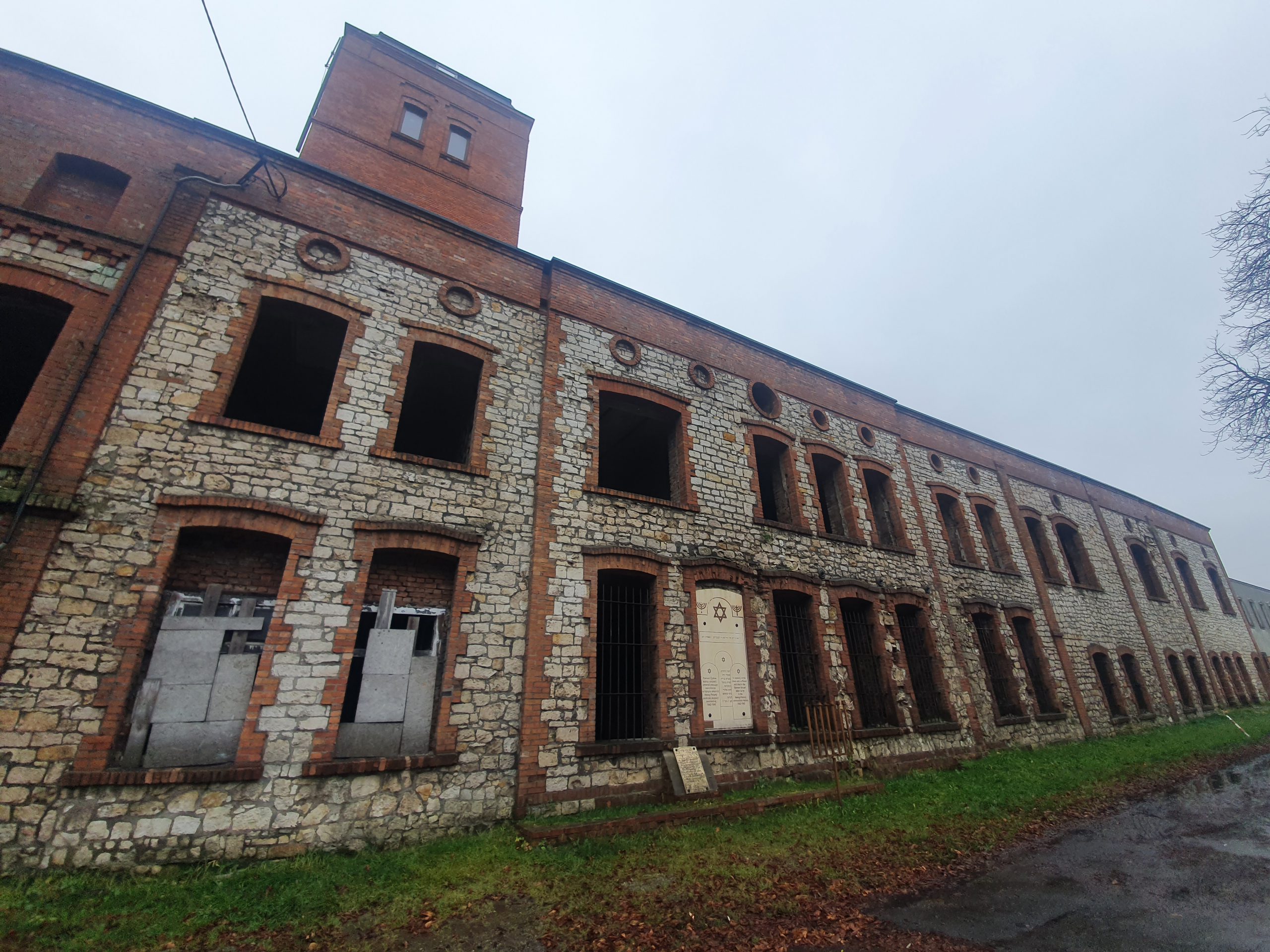
    I went meandering off this morning to look for the HASAG factory, known as Pelcery, which was formerly a forced labour camp during the Second World War, comprised nearly entirely of Jews. HASAG were a private company who grew to becomes the sole armaments manufacturer for the Nazis and they became reliant on slave labour, with labour camps set up at each of their operations in Germany and the occupied nations. The company tried to keep on trading in Leipzig after the end of the Second World War, but the Soviets raided their factory in 1947 and seized everything, saying that it was for war reparations.

    The building, of which there are a few nearby of a similar design, is now unused. This would make for a really quite interesting museum, although I imagine that the cost would be high and I’m not sure how many visitors they could get. The US Holocaust Museum notes that there were 4,735 inmates at the labour camp here and it was in operation between June 1943 and January 1945, when the Soviets took control of the area. The workers made to work here had been forcibly moved from the Częstochowa ghetto in June 1943, really from one hell to another hell.

    A memorial for those who died at the labour camp has been installed outside of the former factory. There were until recently a series of local business posters attached to some of the empty windows, but I’m pleased to see that these have been removed as they weren’t really appropriate. I’d like to see more information about this former labour camp become more readily available, it has been slightly challenging to find much and although it’s a part of the city’s history which isn’t perhaps one they want to dwell on too much, it remains important.

  • Częstochowa – Restauracja Indyjskie Curry

    Częstochowa – Restauracja Indyjskie Curry

    I was slightly surprised to see that this Indian restaurant in Częstochowa opens at 11.00 in the morning, which doesn’t seem a time when many customers might be coming in for a curry. Well, other than me, just before mid-day, and I was the only customer. However, the staff member was friendly and she spoke English, which was handy as I’ve felt I’ve already overdone my limited Polish today.

    The interior of the restaurant, all clean, comfortable and empty, with the environment feeling warm and welcoming. A couple of customers did come in shortly before I was leaving, but I suspect it’ll remain quiet until this evening. The restaurant is well reviewed though and it seems that there’s quite a demand for takeaways from here.

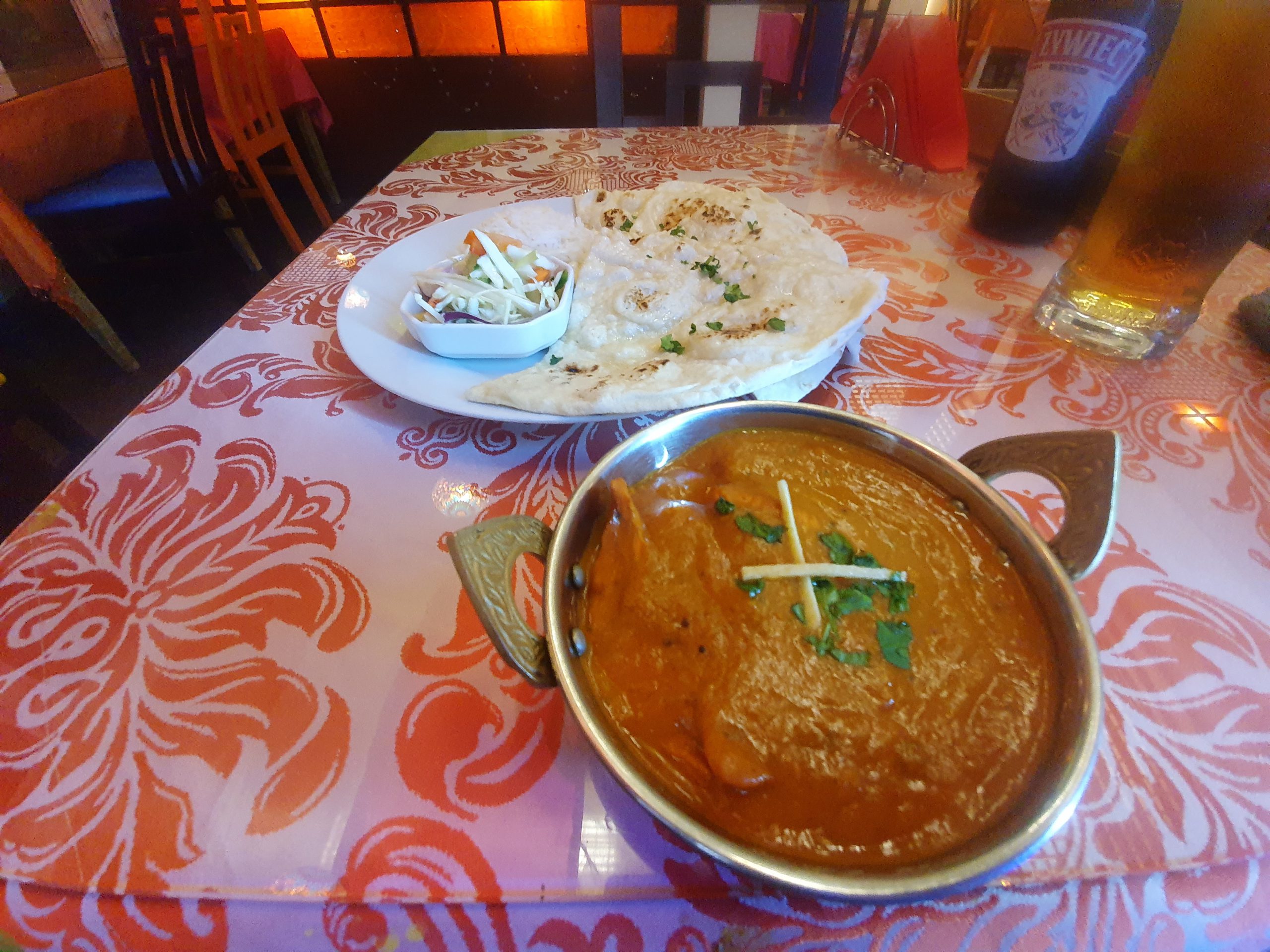
    Żywiec isn’t perhaps the greatest beer, but it’s perfectly adequate in these circumstances. There were a choice of beers available, although all lagers, with plenty of soft drink options.

    The jalfrezi chicken curry with rice, naan and salad. Although this was perhaps a little lacking in a depth of heat in terms of the spice, it tasted decent and the chicken was tender. There was lumps of broccoli in it, but fortunately the curry sauce disguised the taste nicely. The naan bread was generous in its portion size, since I received four pieces, and the rice was cooked well. I went for this as it was on the discounted lunch menu, with the curry option changing on a daily basis.

    And the cost of the curry, rice, naan, salad and beer came to £4.89….. It’s fair to say that I felt that I received value for money and all told really rather a lovely lunch in a welcoming environment.

  • Częstochowa – Consonni

    Częstochowa – Consonni

    It’s raining outside, so I thought I’d pop in to this outlet of Consonni, an Italian company which expanded into Poland in 1991. The snail above the counter is quite brave as it might signify slow service, but is actually meant to represent the Slow Food Movement.

    The lighting in this photo is a bit odd, but at the heart of the cafe is this 25-year old palm tree. It was empty when I came in, but all of the six of so tables are now full, so it’s a busy little unit.

    Some of the cakes on display, all looking suitably tempting. They sell coffees, cakes, ice cream and breads, so there’s quite a selection for such a small unit. Nearly everything is sold by weight, including the ice cream and cakes, so customers can choose how much they want.

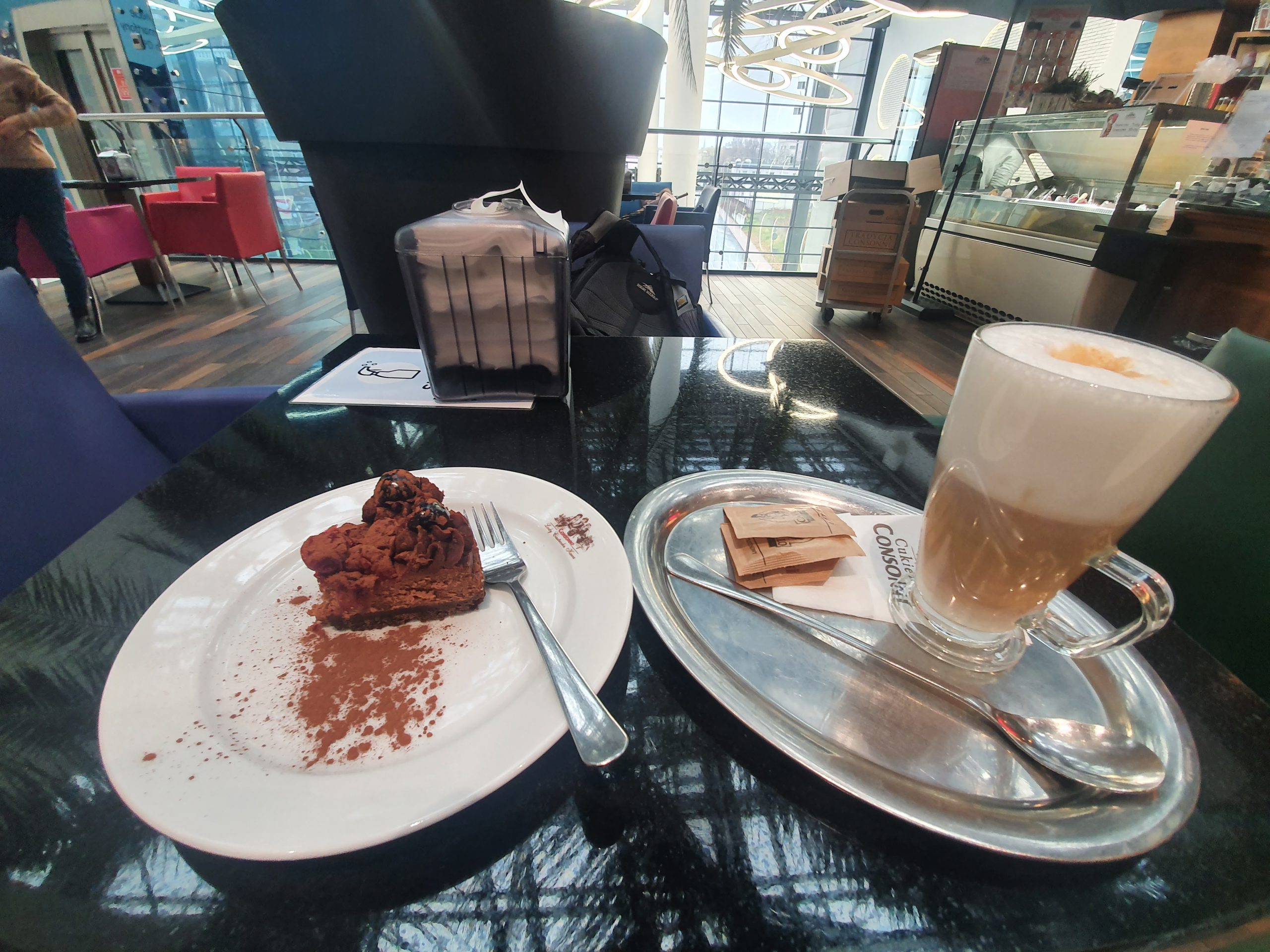
    The chocolate cherry cake and a latte, which came to under £4 which is really quite decadent for Poland, but it’s a premium location in an expensive part of the city. The staff member didn’t speak English, but fortunately my very limited Polish is sufficient enough to order chocolate cherry cake and a latte, which is handy. I’ve learned the essentials (or what I consider to be the essentials) at least, even though I can’t do much else in Polish.

    Anyway, a nice little cafe, the cake was rich and perhaps not freshly out, but it was still sufficiently moist to be a suitable lunch stop for me. Incidentally, the slice of cake is larger than the photo suggests, it’s on a wide angle and it distorts things somewhat. And looking outside, it’s still raining, which isn’t entirely ideal.

  • Częstochowa – Władysław Biegański Bench

    Częstochowa – Władysław Biegański Bench

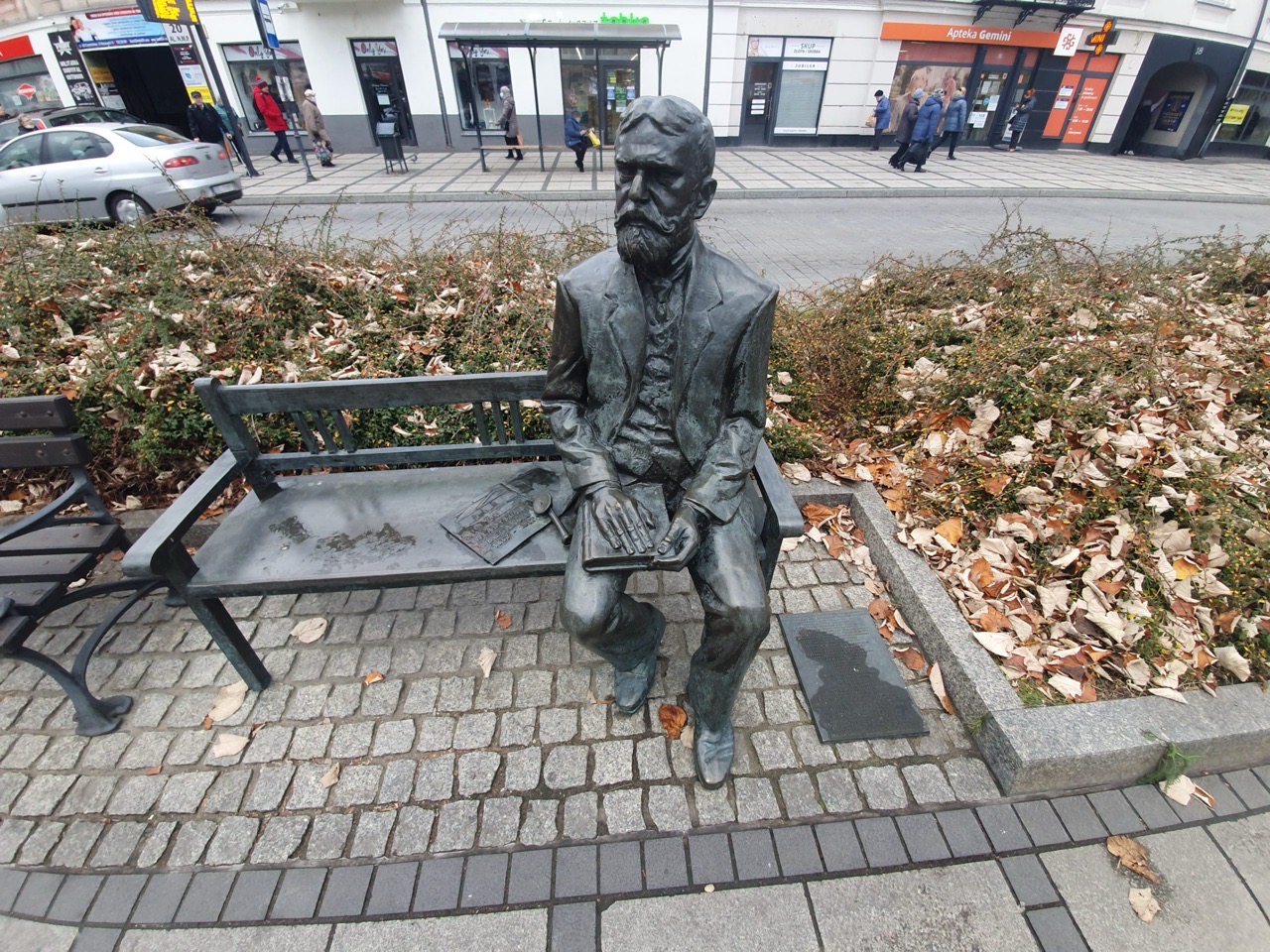
    Located along Aleja Najświętszej Maryi Panny w Częstochowie is this memorial to Władysław Biegański (1857-1917), a local doctor. He wasn’t born in the city, but he set up a private practice here in 1883, after studying medicine at the Imperial University in Warsaw.

    Biegański also has the honour of having the local library named after him in recognition of his social activism in the city. He seems to have been a busy figure generally in the local area and he was also responsible for the local branch of the Polish Touring Society, an organisation which promoted tourism. The Polish Parliament also annually declares a number of subjects as an annual distinction, whether that be an event or a person, with Biegański getting a whole year dedicated to him in 2017 (along with the Vistula River as another award winner) which marked 100 years since his death.

    Unfortunately there’s no English translation….. However, there are a few of these benches located along the street and I think they’re interesting as they give an indication as to who the authorities of Częstochowa feel are the most important people who have lived and worked in the city.

  • Częstochowa – Jasna Góra Monastery

    Częstochowa – Jasna Góra Monastery

    This is Jasna Góra, one of the holiest places in Poland, a Catholic monastery and shrine to which many pilgrims walk.

    This is certainly a secure site, I had to walk through four gates to get into the heart of the monastic complex. These gates are the Lubomirskis’ Gate, the Gate of Our Lady of Victory, the Gate of Our Lady of Sorrows and then finally the Jagiellonian Gate. There were a couple of men trying to extract donations for their personal needs standing outside of the first gate, no doubt hoping that pilgrims would be generous. They didn’t invest too much time in me as they didn’t speak English, which was handy on this occasion.

    The reason that this site is so secure is that it is has come under attack almost from when work on the monastery started in 1382, when the Paulines came to the country. The attacks continued for centuries as numerous wars and conflicts played out in the wider area. It’s also fair to say that the Germans didn’t really like this monastery during their occupation of Poland during the Second World War. They took the site over, controlled the monks and ended the pilgrimages, with Nazi leaders such as Hans Frank coming to interfere with arrangements on numerous occasions. They then tried to burn down the entire site in January 1945, but they ran out of time with the Soviets closing in on the Germans.

    The entrance to the basilica and this has been a much visited location by Popes in recent decades. Pope John Paul II, who was Polish, visited here on six occasions when he was the head of the Catholic Church, with Pope Benedict XVI visiting in 2006 and Pope Francis visiting in 2016.

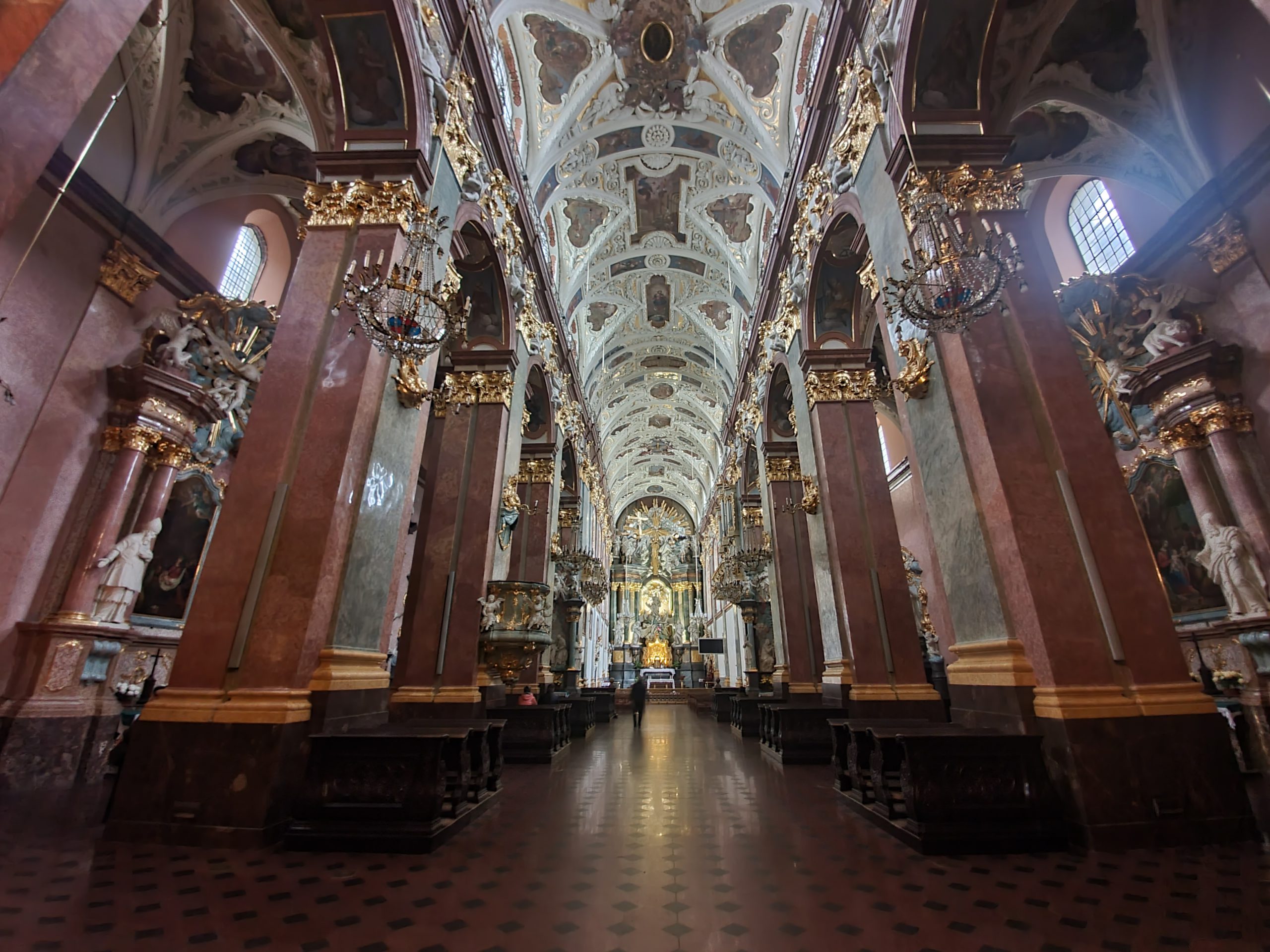
    The grand nave of the basilica. I didn’t take too many photos as this is a revered location and there were services going on in part of the building. There was a peaceful presence in the basilica, although I understand that it’s a little more lively when groups of pilgrims come in after their long walks.

    I didn’t take a photo, for reasons of a service taking place, but the monastery is known for the Black Madonna.

    There’s a whole complex of buildings on the site, with the arsenal building in the centre of the photo. A cold Thursday morning in mid-November isn’t going to be a time when the monastery is particularly busy, but in the summer it seems from photos as if this would be quite crowded.

    I left from a different gate, this one known as the John Paul II Gate, although this area was still heavily fortified.

    Beautiful and historic as the buildings are, the whole complex did feel a little commercialised to me, although perhaps that’s a necessity of running a major pilgrimage site. Certainly pilgrimage sites were commercialised in the medieval period, so there’s nothing new there. But there were numerous money making projects going on, not just the selling of religious imagery, but also offices to donate to the refurbishment project and a host of food outlets with some quite garish signage. However, the basilica is beautiful and the site felt calm and peaceful. The defensive arrangement around the monastery also really adds to the whole pilgrimage, especially walking down Aleja Najświętszej Maryi Panny w Częstochowie to get here.

  • Częstochowa – Aleja Najświętszej Maryi Panny w Częstochowie

    Częstochowa – Aleja Najświętszej Maryi Panny w Częstochowie

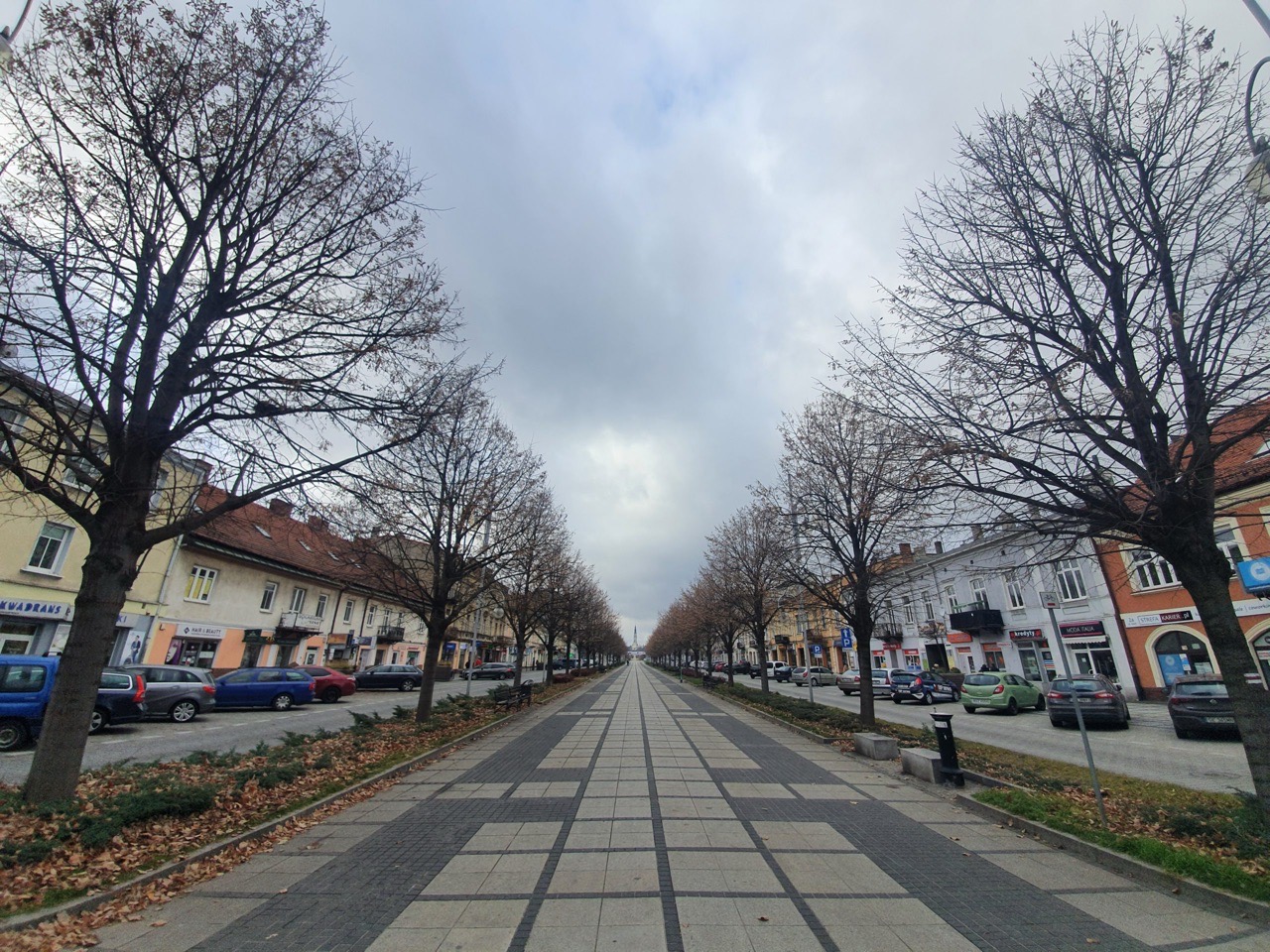
    Mainly just photos in this post, but I was impressed with this street in Częstochowa (the English version is Avenue of the Blessed Virgin Mary) which was constructed in the 1820s to connect the old and new parts of the city. It goes from Plac Ignacego Daszyńskiego in the east to the monastery of Jasna Góra in the west, with Plac Władysława Biegańskiego roughly in the centre. More on Jasna Góra in other posts, but this is now part of a pilgrimage route, something which has been important to the city for centuries.

    There are three avenues, two of which are used for cars and the central one which is primarily for walkers. During the German period of occupation it was renamed Adolf Hitler Allee, inevitable that he’d want the major street in the city named after him.

    It’s nicely done and although the weather was a bit overcast today, it makes this quite a spiritual final section of the walk for pilgrims, with the monastery above at the end of the road.

    More photos along the route and there are some sculptures along it, more of which in later posts.

  • Warsaw – Mercure Warszawa Airport

    Warsaw – Mercure Warszawa Airport

    I’m back again in Warsaw and at a hotel that I stayed in last year during my brief sojourn to the city in between lockdowns. It’s conveniently located near to the airport and easily accessible to the city centre, hence why I thought that I’d go for two nights here. There’s also an Aldi opposite the hotel which is handily located and which provided my snacks on the first evening. For anyone coming from the airport, the hotel usually has a shuttle in normal times, but at the moment it’s easy enough to jump on the train into the city centre and then just jump off after a couple of stops (not literally jump obviously) with about a 6-minute walk to the hotel.

    It took me a few seconds to remember where the hotel room numbers are located, which isn’t on the door. This is the one little problem I had at the hotel, which is that the key card was a bit unreliable and sometimes required me to make several attempts to get into the room. To be fair I didn’t bother going down to reception to change the card as it was a bit of a walk and no-one saw me patiently trying again and again to get it to work.

    The room which the hotel had upgraded for me, which was rather lovely. There was a sofa, chairs, a large desk and a fridge, with everything being spotlessly clean.

    The bathroom was the size of a small changing room.

    There was a espresso coffee machine, other hot drink making facilities and two bottles of water. I spent a good few minutes trying to turn the machine on, until I realised there’s a small switch at the back. And then there was espresso coffee….

    And a welcome gift of fruit (which I did eat) and cake, all much appreciated.

    And a welcome drink voucher, which mentioned that I could have any drink, a policy which seems to vary at different Accor hotels in Poland.

    The friendly member of bar staff said that I could have the Żywiec Porter, so I went with that quite happily. I commented in my post last year that the seating in the bar area is a little basic, although I could have gone into the restaurant with my drink and I can’t imagine that they would have minded.

    Back in the room, the windows opened as far as I wanted them to, and it would be possible to walk out on that bit of roofing if anyone was particularly adventurous (I’m not). It’d take an idiot, but I like that the windows weren’t sealed up as some hotels seem to feel is appropriate. Lots of fresh air was accessible to me, although the air conditioning was also very effective for those who don’t need street noise.

    The breakfast arrangement, hot food on the left, breads and fruit on that table in the middle with cold cuts, cereals, yoghurts, cheeses, fish and the like at the back.

    Behind me is the hot drinks and fruit juice area. Another friendly staff member was in the breakfast room and she was busily clearing tables with everything feeling clean and organised.

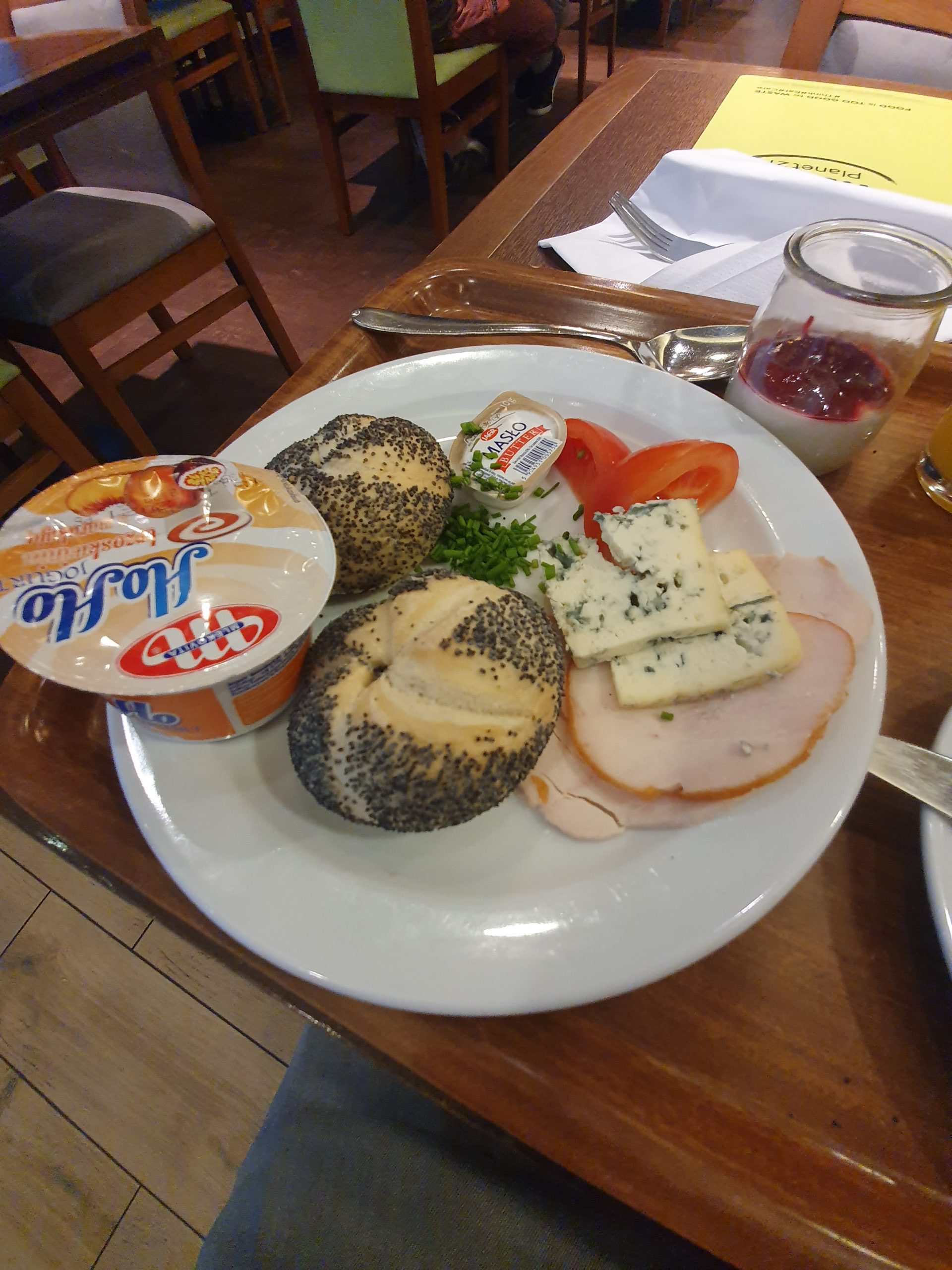
    And food photos from the two mornings that I was staying at the hotel (I mention that in case it looks like this was just one breakfast, which would have been a little greedy). This is just the sort of breakfast that I like, cold cuts, cheeses, bread rolls and everything tasted of a decent quality. And there’s a certain decadence to having blue cheese in the morning, that’s always a delight.

    The hotel was around £48 per night including breakfast, although I had Accor Rewards points to use up which halved that price. It’s not the cheapest rate that I could have got in Warsaw, but I very much like this hotel and it’s my favourite non-central Accor option in the city. The staff were friendly throughout, the hotel was clean, the restaurant area was organised and everything felt really well managed.

    For anyone who wants to book it or find out more, here’s the link.

  • PKP Intercity : Warsaw to Częstochowa

    PKP Intercity : Warsaw to Częstochowa

    Today’s little adventure began at Warszawa Centralna, the city’s main railway station. The station was built in the 1970s and is an impressive and open structure, replacing the remains of the Warszawa Główna railway station which was nearly entirely lost during the Second World War.

    There are plenty of screens indicating the platform numbers and there are escalators down to the tracks.

    I like these screens, they make it relatively easy to know where to stand on the platform to board the train. I fail to understand why the British railway network has never managed to implement this, I don’t really understand why this is so complex. I know that it has been done in a few railway stations, but generally it’s a stand and hope you’re in the right place policy for those catching a train.

    That meant I was departing from Platform 3, Track 4 and Sector 2. I had a reserved seat which was carriage 12 and seat number 36, so I felt that I had all the information that I needed.

    The platforms are long, this is only about half its length.

    I’m always pleased to see confirmation on the signage that I’m at the right platform and at the right railway station. My service was the train departing at 10:10 and arriving into Częstochowa at 12:55, a journey time of two hours and 45 minutes.

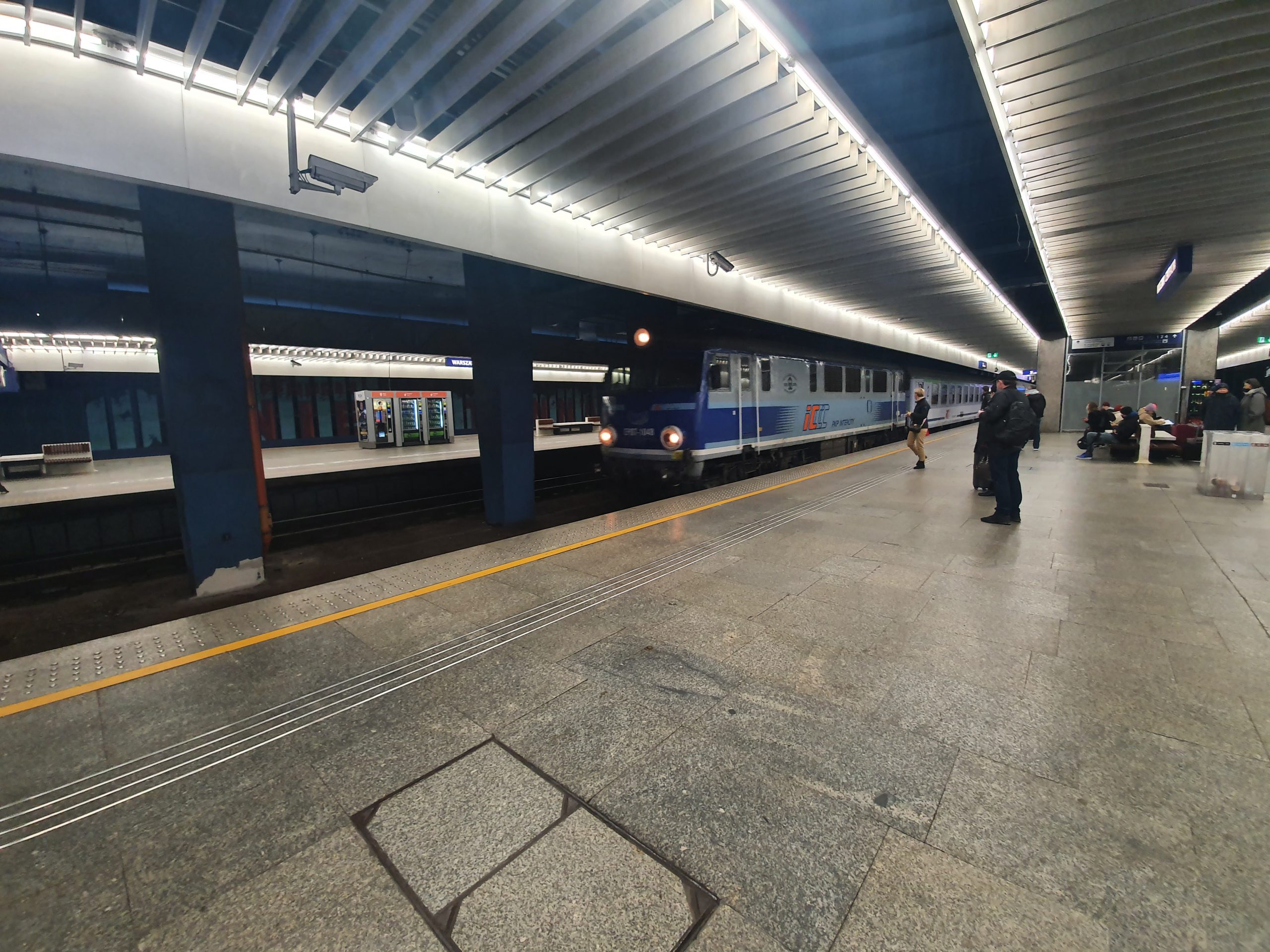
    The train isn’t one of the more modern set-ups, here it is arriving into the railway station. They’re also not the easiest to get on and off, there’s quite a step to get into it and so it isn’t ideal for those with limited mobility to access without assistance.

    This meant that it was a carriage train, something I’m not hugely keen on. There has been a move towards open carriages and I prefer that to these eight person compartments.

    There were three of us in this compartment for most of the journey, so plenty of space as it can seat up to eight people. There were eight or so stops along the route, with everything running to clockwork in terms of the timing. I’d add that I took this photo when one of the passengers left the compartment, we weren’t all sitting on the same side. I didn’t need power for electrical devices, but another one of the passengers did and was unable to find it in this area, although she disappeared with her phone charger for some time and so I imagine there’s a power point somewhere.

    Also, it looks from the photo that it’s possible to see across the tops of the compartment, but that’s just the mirror and it is sealed quite tightly other than for the door. There’s a handy metal bar running along the base of the seats which is useful for putting feet on, saving passengers doing that annoying thing of putting their feet on the seats. The seats were adequate and were cushioned, but I didn’t think that they were as comfortable as those on most modern British trains.

    The corridor down the side of the train and a refreshments trolley did work its way up and down. The conductor was friendly when checking my ticket, although I proffered my passport and he said that he didn’t need it, although I thought they were checking them. He didn’t speak any English, but my very limited Polish is enough to understand “ticket please” and “can you make the screen larger?”, but that was the limit of the verbal interchange.

    And safely into Częstochowa railway station, which isn’t entirely obvious as I think that it looks like a shopping centre, but the service was on time and everything was smooth and efficient. The journey cost £9.80 (and I booked that at https://mt.rozklad-pkp.pl/en which is the official web-site of the rail company), which I thought was entirely reasonable given the distance travelled.

  • Warsaw – Baszta Home Army Regiment Memorial

    Warsaw – Baszta Home Army Regiment Memorial

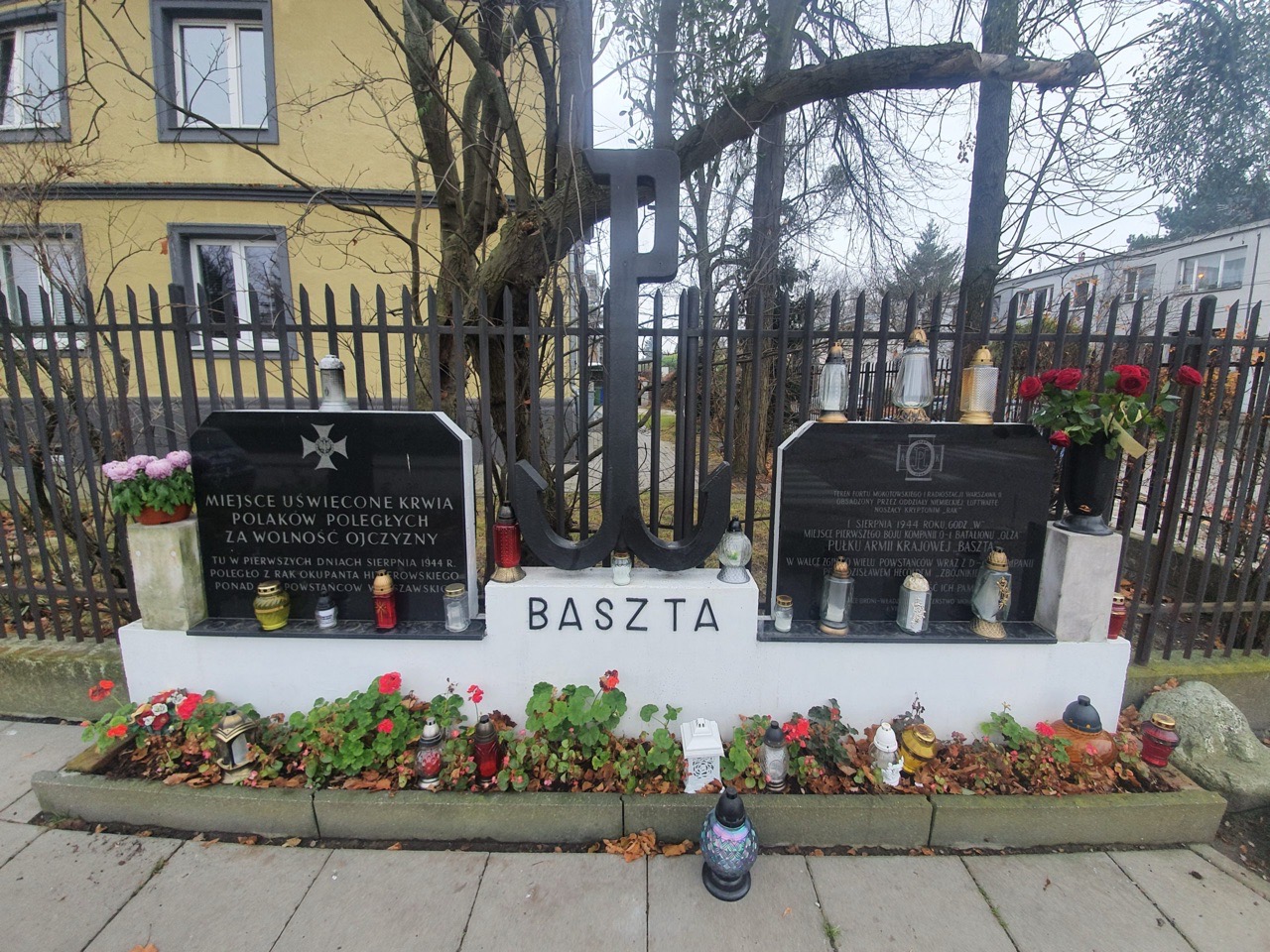
    Apologies to anyone reading that my understanding of this memorial is limited, but I think it represents where 150 Poles died on 1 August 1944 as part of the Warsaw Uprising, in this case fighting against the German Luftwaffe. The panel on the left notes that this is a place sanctified with the blood of Poles who died for the freedom of their homeland, with the panel on the right referring to the Home Army Regiment known as Baszta, fighting near to Fort Mokotów. This memorial was placed here in 1997, replacing a previous temporary plaque.

    There’s more information at http://www.sppw1944.org/index.html?/mapapowstania3/m_34.html.

    I posted this as every time I visit Warsaw I am reminded of the great bravery of the Polish troops and residents who defended themselves with such courage against a German onslaught.