Category: Poland

  • Tczew – Restauracja Vela

    Tczew – Restauracja Vela

    There were a fair number of closed places in Tczew, so I thought it’d just be easier to get an evening meal at the hotel that I was staying at. I would say that there were views over the river, which there technically are, but it was dark and so I couldn’t see them.

    There was a reasonably good choice of beers, about six different ones, which is a decent effort that I was pleased to see. This is the Komtur from the Browar Gościszewo brewery, a perfectly acceptable, if not exceptional, black lager. But it’s something different, and that’s always good to see. The venue isn’t hugely featured on Untappd, I was only the third person to tag a beer in at the restaurant, and the last time was over two years ago. I have noted it’s being used more even in remote Polish towns, hopefully that trend will continue.

    The service was polite and attentive, although the staff weren’t overly strained by the number of customers in the restaurant, which made that easier.

    I wondered in advance why a restaurant which has signs for pizza up everywhere, including a large banner outside, had no photos of pizzas on their on-line reviews. It transpires they’re not doing pizzas at the moment, which seems an odd arrangement given they seemed to have them as something of a priority in their marketing. But, perhaps their wood fired pizza oven they refer to is broken, or too expensive to operate in the winter.

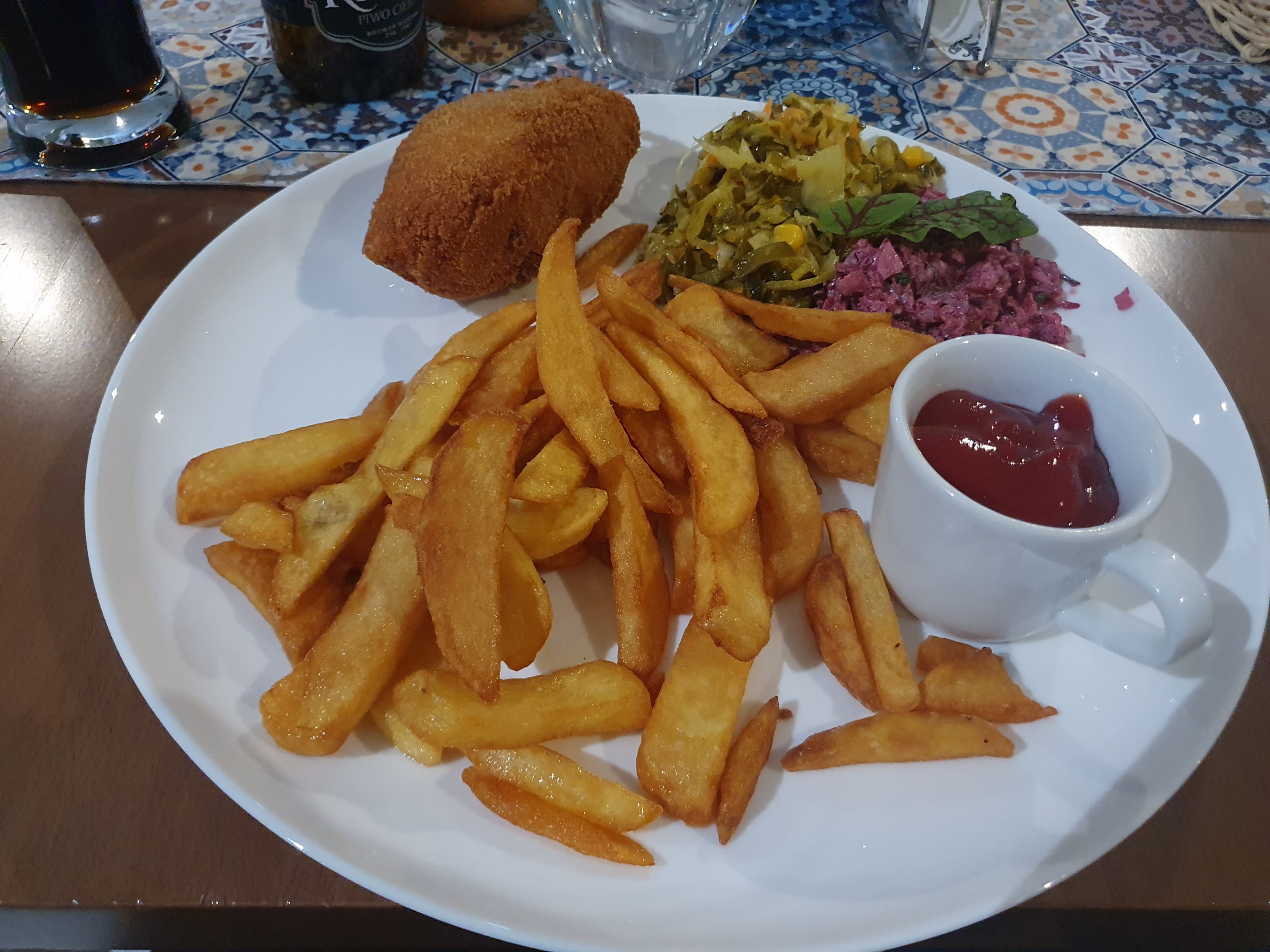
    Back to the food, the photo here is a bit distorted, the elements on the side look large and so this chicken kiev looks smaller than the tomato ketchup container. It was much large than this photo suggests, the chicken was tender and the chips were very moreish. That heap of pickled (or fermented, I get them muddled up) vegetables added some nice sourness to the arrangement, and the chips were suitably moreish.

    The prices were all reasonable here, although the atmosphere was a bit muted since for the most part I was the only customer. I accept that my asking at check-in if I needed to reserve a table was a bit aspirational, but it had been quite busy earlier on in the day so I thought best to check. I probably would have had a pizza if they were available, but the chicken kiev turned out to be a good choice, so I left happy. I’d say this is probably quite a safe bet for a meal, especially during the summer months when it’s possible to see the river and bridge and there’s some external seating as well for when it’s not snowing.

  • Tczew

    Tczew

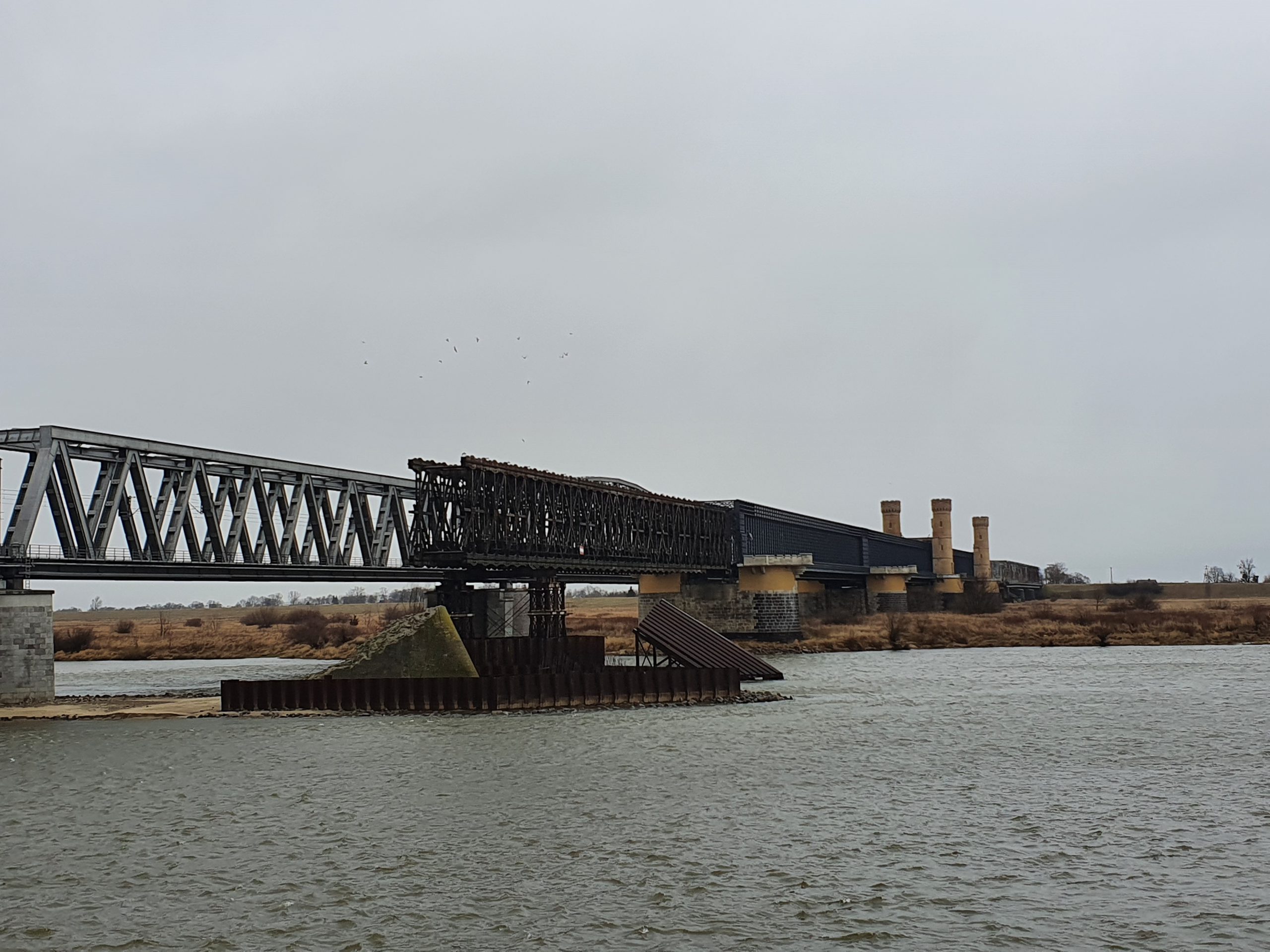
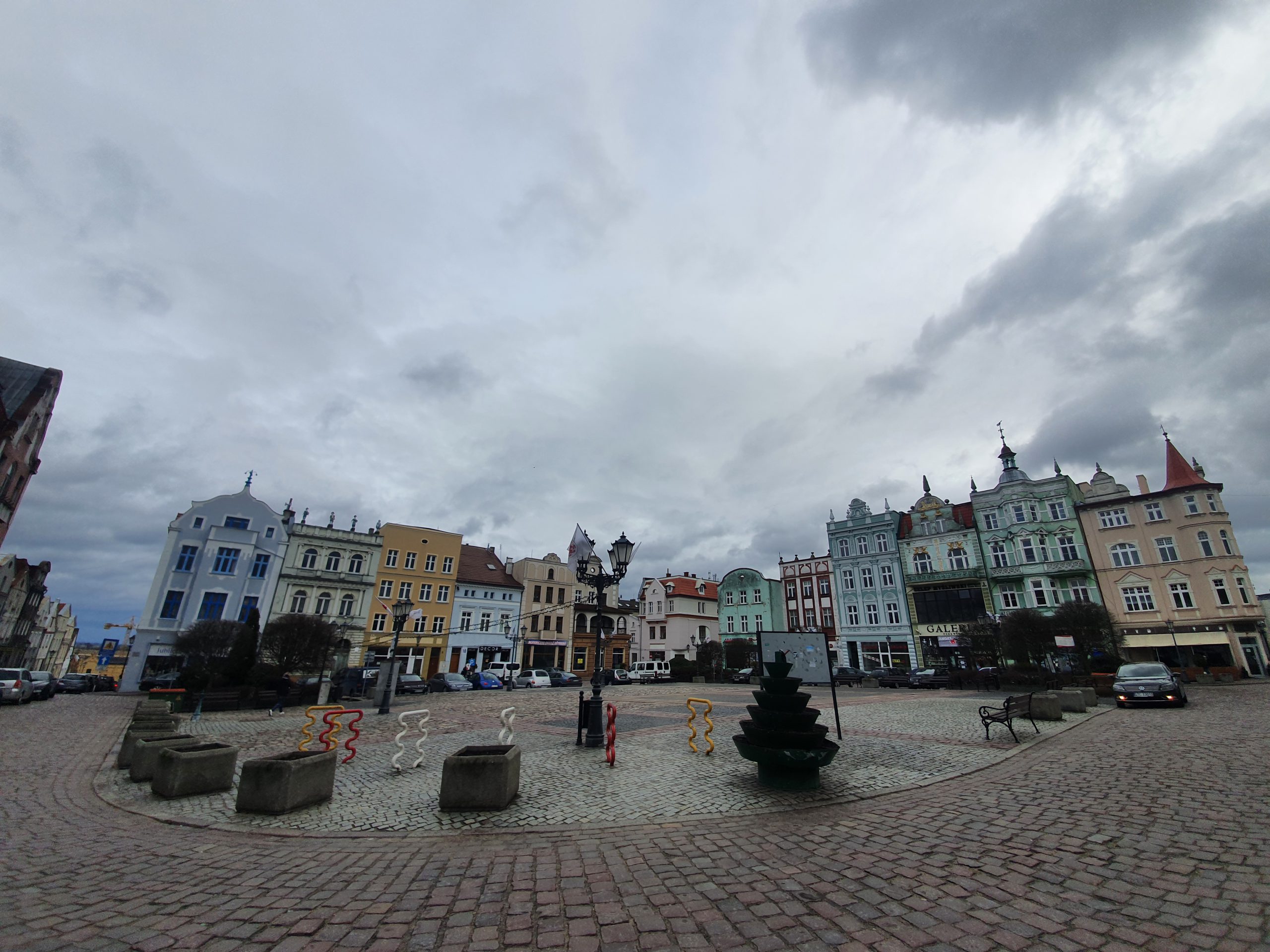
    Some photos from my visit to Tczew a couple of days ago. Unlike the other towns I visited this week, namely Elbląg and Malbork, this town was part of Poland after the First World War, not part of East Prussia. On a cold Sunday in January, there are a lot of locations that can feel a little drab, but there seemed to be a lot of buildings that needed restoration and repair in Tczew, some quite urgently. Not least the Post Office, which had to be cordoned off on the Monday morning as some of the roof tiles had fallen off and smashed onto the pavement.

    There are a few cafes and restaurants in the town, but they were generally closed and there didn’t seem to be many people about. I’m not sure that the town is ever that touristy, most visitors are perhaps like me, particularly interested in the bridge, but more of that in another post. There are some areas which are looking like they’re receiving investment, but the old town is in need of a lot of funding. Although that partly means that the old town area has retained some of its charm, there’s an authenticity about it which isn’t evident in those towns which have been over-developed commercially.

    It was also evident just how many monuments to war and death there are in Tczew, but this area has been fought over for centuries and it received a particularly bad time during the Second World War. In the communist influenced post-war period, the town wasn’t given the investment that it needed and it is fortunate that it is something of a rail hub to ensure that some money comes in. A small new shopping centre has been built, but the commercial development that is present in many Polish towns hasn’t reached Tczew yet. That importance of the rail network is evident in the modern railway station that they have, but there were hordes of Polish teenagers meandering around Tczew who were perfectly well behaved, but they looked bored. I get the impression that there isn’t much for them to do here, and if there is, they don’t want to do whatever it is that is in offer.

    There’s something about this town that makes me think that its best years are ahead of it, as I can imagine economic growth and increased prosperity will come. The town council has launched a regeneration campaign to improve housing, transport and facilities, and they’re keen to increase the population size and enhance the charm and resources of Tczew. As for tourists, unless they want to walk along the river bank or go cycling, there’s not a vast amount here to see, although there is a branch of the Maritime Museum. But if facilities do improve, I can see more people happily spending a night here as part of a wider trip to Gdansk, as the town has a quirky and interesting feel to it.

  • PKP – Tczew to Gdansk

    PKP – Tczew to Gdansk

    After a week of visiting a number of towns in Northern Poland, it was time to go back to Gdansk. As mentioned when I arrived in Tczew, this is a modern railway station but it’s a bit soulless and lacking in much character.

    The main foyer area isn’t as grand and historic as the one in Malbork. There’s a fair amount of seating dotted around the station, both in this area and in the corridor above the platforms, although it was warmer in this bit.

    The usual sheet of train times, mine was the 11.25 into Gdansk.

    It’s not easily visible from this photo, but the train was delayed by 15 minutes, which was far from ideal. The train going to Vienna is listed above the train to Gdynia and it was apparent to me that it was unlikely to come in on the same platform as listed here, as the trains were coming from different directions. My train knowledge is sufficient to know that two trains due within one minute of each other and coming from different directions is a problem for signallers.

    As an aside, this train on another platform belongs to http://shortlines.pl/ who were an open access operator with high hopes, but their services have been dramatically reduced over the last few years.

    I’m not sure what the police (I think these are the equivalent of the British Transport Police) were doing with their big dog, but it looked quite friendly and was safely muzzled. This is the Vienna train coming in and it’s by now apparent that the train I want is coming in shortly and they’re going to have to use another platform. And that’s what happened, in Polish only (I mention this as in Gdansk there would usually be an announcement in English as well) there was a last-minute announcement that they shifting the Gdynia service to platform 2. So we all rushed over there…..

    I have to add, this travel can be a bloody nuisance and public transport operators don’t make things as easy as they perhaps could as they must have known some time before there was a platform change needed. There was a fallback that I could see a train to Gdynia with the regional network was leaving soon if I missed my booked service, but it’s all quite challenging to work out where to go.

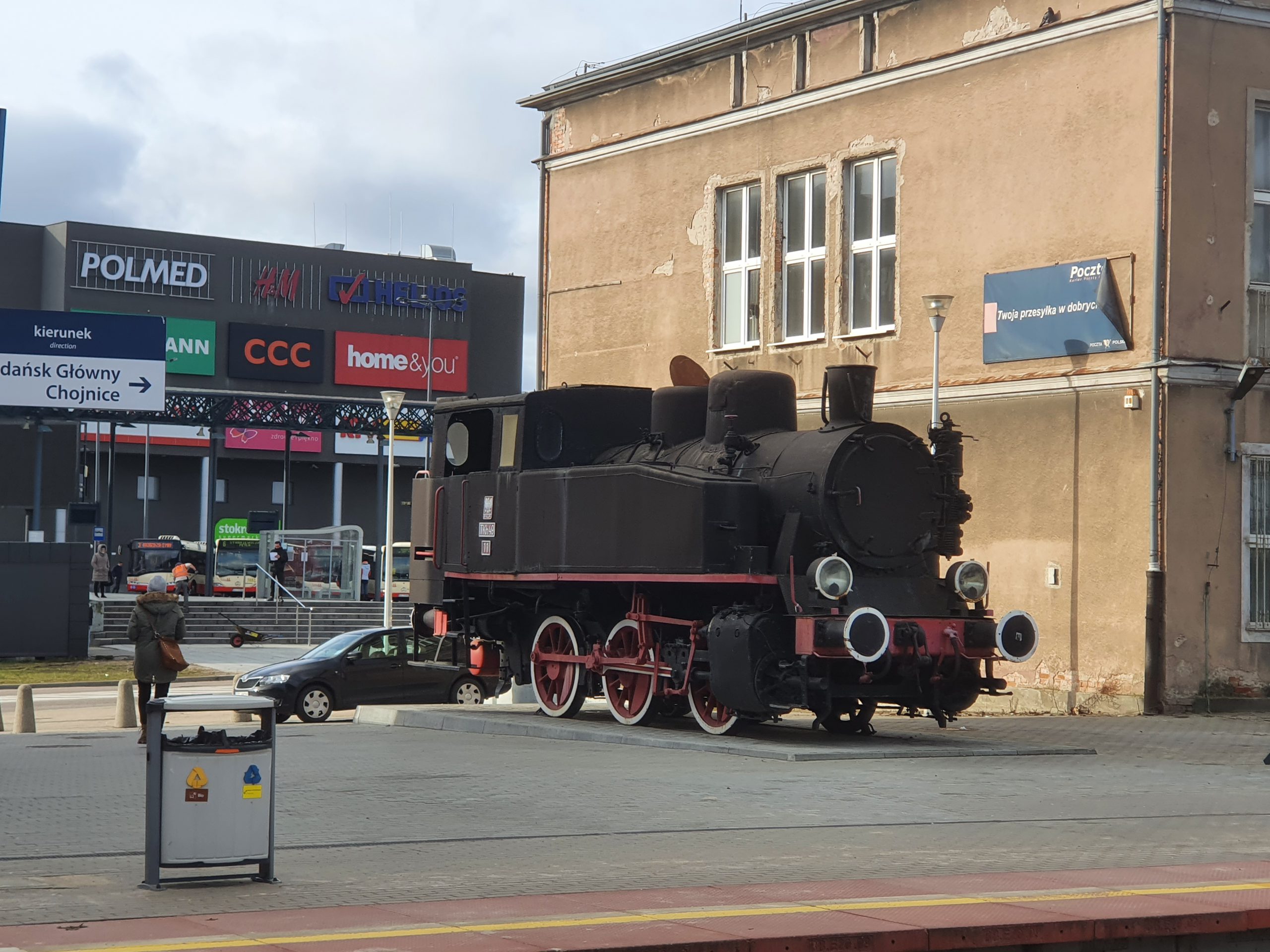
    Apparently this is steam engine TKh 5699, in use on the Polish rail network between 1961 and 2002, when it was brought here to sit on the concourse.

    On board the train, I frankly couldn’t be bothered to find my reserved seat as I was getting off at the next stop and this group of chairs was empty. The screen gives updates on the service and that it’s running 15 minutes late.

    They’re quite a comfortable arrangement, the table extends for those wanting to use a laptop of spread out their bakery purchases, with power available under the seat.

    My ticket wasn’t checked during the journey, and there’s the train to the right and Gdansk railway station (still under modernisation) on the left.

    And back into Gdansk….. The journey was a nuisance in terms of trying to board the appropriate train, but everything was comfortable enough after that. The cost of the journey was about £2 and I purchased my ticket on-line in advance, although there are ticket machines at the railway station.

  • Tczew – Tczew Pig Market Massacre of 1940

    Tczew – Tczew Pig Market Massacre of 1940

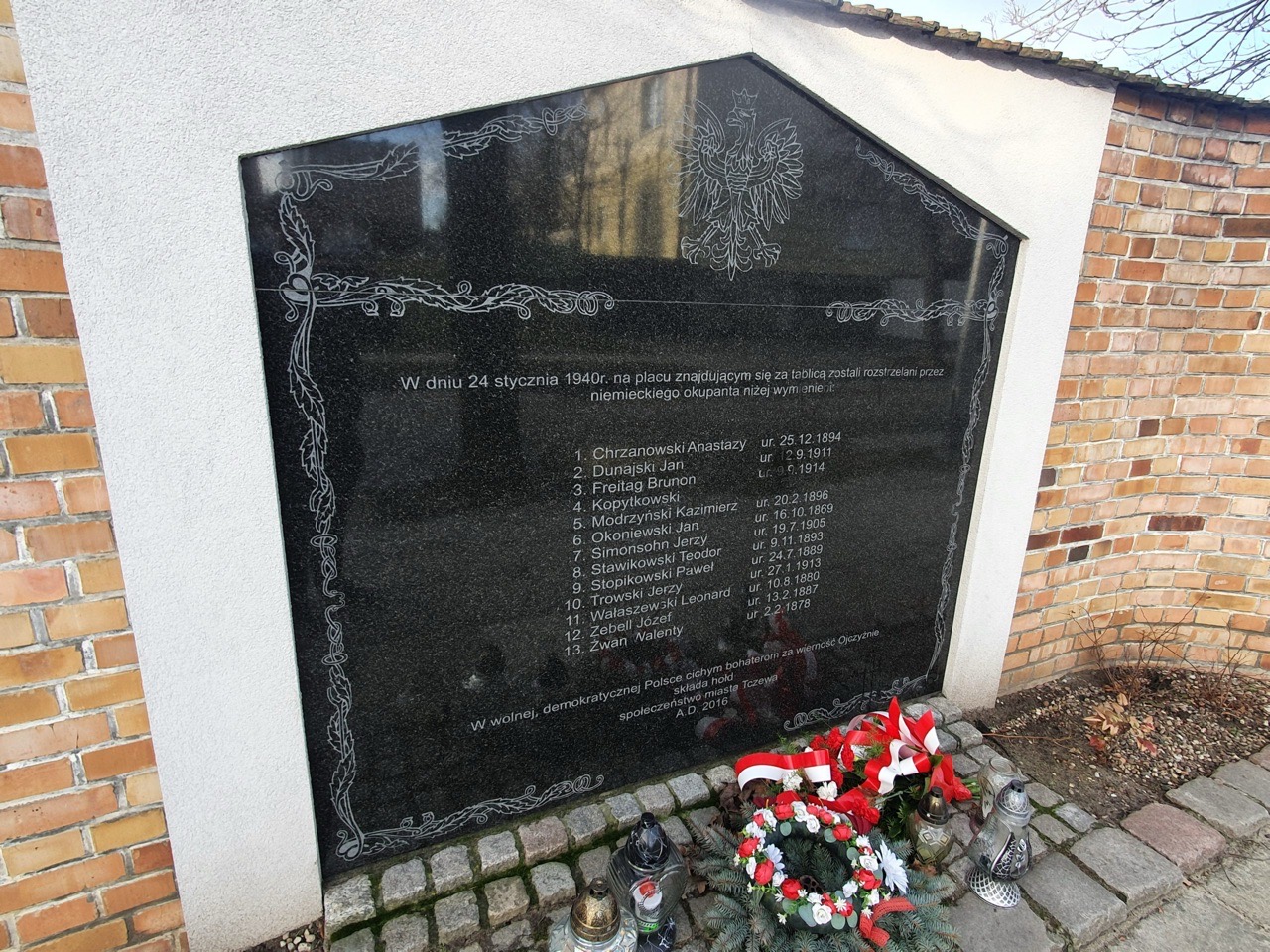
    For reasons that aren’t entirely surprising, there’s not a great deal mentioned about this side of Tczew’s history, but I went to look for this after reading about the atrocity that happened here on 24 January 1940. As an example, there’s a very brief mention on the UK Wikipedia site about the mass murder, but only on the Polish Wikipedia site is there a page with details of the event.

    On the night of 23 January into 24 January 1940 there was a fire in a metal products factory in the town, likely caused by incompetent German troops who put an open fire too near cars to keep them warm in the cold conditions. That fire destroyed eleven cars and the German officials decided that they’d blame Polish dissidents who didn’t like the new German regime that had been imposed on them a few months before. The local Nazi officials wanted individuals to pay for this, some said that one person must die for every car destroyed.

    A number of local Polish men were rounded up, partly by chance, but mostly as they were on lists of people that the Nazis didn’t entirely trust. They were arrested and their families told that they would be released after questioning. That was untrue, the thirteen men were taken to the pig market in the town and were executed. This was botched by the Nazis, it was said that some of their men were drunk and incapable of firing accurately, so the local Gestapo leader had to kill some at short range. This was Adolf Leister, who I understand was executed in 1944 by Soviet troops.

    The memorial has the names of the thirteen men who died, a range of ages, with the victims being born between 1869 and 1914, with their bodies being dumped in the Szpęgawski Forest. This forest was used frequently to get rid of the dead, with 39 mass graves having been found here. No-one was ever caught for their involvement in this massacre in the town, despite attempts to hold Walter Becker, one of the commanders of the unit, responsible.

    A plaque was placed by the site in 1945, although it has since been replaced with the current one and moved a few times because of nearby developments, not least the construction of the fire station that is now on the site. There seems to be a lot of confusion as well about the exact names of the dead and a lack of clarity about exactly what happened that night. What is certain though is that it was a war crime that took place so early on during the war, marked by one of many memorials around the town.

  • Malbork – Malbork Castle (Dansk Tower)

    Malbork – Malbork Castle (Dansk Tower)

    In the centre of this photo of Malbork Castle is Dansk Tower, which is the toilet block. It’s not known why it has taken the name of Gdansk, it was suggested that there are a number of reasons including:

    (i) The castle owners hated Gdansk and mocked it

    (ii) The men who constructed the tower were from Gdansk

    (iii) It’s on the Gdansk side of the castle

    Without any historical knowledge about the matter (although that won’t stop me from commenting) I’d guess that the truth is as mundane as it’s just on the Gdansk side of the castle. It was constructed in the late thirteenth and early fourteenth centuries and would have made matters much easier for the residents of the castle (or the staff employed to deal with such things).

    There’s a long tunnel to get to the toilet tower, it’s a bit like an arrangement that Wetherspoons would have.

    It’s been built like this so that the toilet tower can hang over the wet moat, and the corridors could easily be destroyed internally if the castle came under attack. The modern brick arrangement is more modern and dates to the nineteenth century, with twentieth century repairs, as this passageway was a more simple wooden construction during the medieval period.

    The main chamber of the Dansk Tower, with the caged off section on the right dropping down straight into the moat.

    This is a recreation of one of the toilets (although they’re guessing a little with what they looked like), with another one having cabbage leaves as this was the medieval toilet paper. There’s a tale that there was a lever that sent anyone the castle owners didn’t like down into the ditches, but that seems to be entering the realms of fantasy. If there was someone the owners didn’t want in the castle, they wouldn’t be getting in. Unless the Teutonic Knights liked pranks, but I can’t imagine they spent a lot of time constructing their castle for that purpose.

    The tower was also there to be used as the location of last resort if there was a siege at the castle, with provisions stocked in the attic of the structure. If the main castle had been lost then there wouldn’t have been much hope left, but it would have at least bought them a little time.

  • Malbork – Malbork Castle (Golden Gate)

    Malbork – Malbork Castle (Golden Gate)

    One positive element about walking around Malbork Castle with no other visitors nearby was that I could look at decorative features without getting in the way or being in the photos of around ten other people. Even the audio guide noted that you should look in depth at this gateway if you were fortunate enough to have the space and opportunity, as it’s a highlight of the castle. It’s the only surviving original gateway that is left within the castle and dates to the late thirteenth century (or early fourteenth century, depending on what source you prefer).

    The Gothic gateway is the entrance to St. Mary’s Church, which has recently been repaired following the rapid repairs that were undertaken following the destruction during the Second World War.

    The details of some of the figures, and this gateway into the chapel is impressive today, so it must have made for quite a site for the visitors to the castle in the thirteenth century. The church was within the original hub of the castle complex and so the monks would have regularly walked through this doorway for their prayers and devotions. The colours are vibrant as well, that’s one thing I’ve never understood about many modern day cathedrals and churches, they’ve become quite drab in their decoration, but they weren’t usually constructed to be like that in the medieval period.

    And when they walked through that door they entered this chapel, with its newly restored roof. All really quite beautiful.

  • PKP – Malbork to Tczew

    PKP – Malbork to Tczew

    Moving a bit closer to Gdansk again today by going to Tczew, this is the railway station in Malbork which dates from 1891, with a previous building serving the railway from 1852.

    This was a Prussian railway station until the end of the Second World War and the decoration is certainly quite Germanic. This was the railway station that the Poles managed to stop the Red Army from setting on fire in 1945 and they did well to protect it given its heritage.

    The grand entrance foyer, with a shop to the left, a waiting room straight ahead and a ticket machine to the right. It really is a beautiful building and money was deliberately spent on it so that it could be the pride of Malbork. It was also a border railway station between the two wars, so the Polish and German trains used this as a changing point.

    The inside of the large waiting room, with several rows of wooden seats and a television for some entertainment. It was rather cold today, but this waiting room had been heated to ensure passengers didn’t have to endure the Arctic outside conditions.

    The entrance foyer again, from the other side to the previous photo. The ticket desk is visible in the background and there is a change visible just above it, they changed the Prussian emblem to the Polish eagle after the war.

    There’s the train I was getting, the 11:15 to Tczew. I hadn’t realised that this is also the train that comes from Krakow and Warsaw, before going to Gdansk and Gydnia.

    The very wide platform at Malbork, the reasons for which I haven’t worked out.

    I’m not really sure those narrow chimney things at the railway station are entirely ideal, although most are now propped up with metal supports.

    This was another short journey, so safely into Tczew within twenty minutes or so. The train, which is on the left, was quite busy and there were numerous school parties on board. I had carefully reserved a window seat this time so that I could video Tczew Bridge when going over it, but more about that in another post. Unlike many stations, such as Malbork, there’s an overhead corridor between platforms at Tczew rather than an underground one.

    Tczew railway station, not as glamorous as the Malbork buildings and its interiors, but it was functional and organised. As it was on the same line then as well, this railway station first opened in 1852, just as in Malbork. Tczew is a railway junction town which means that the station is relatively important, being the 32nd busiest in the country, which is proportionally much more than the town’s population. The fare was just under £2, so again, another comfortable and efficient journey with PKP Intercity.

  • Malbork – Hotel Centrum

    Malbork – Hotel Centrum

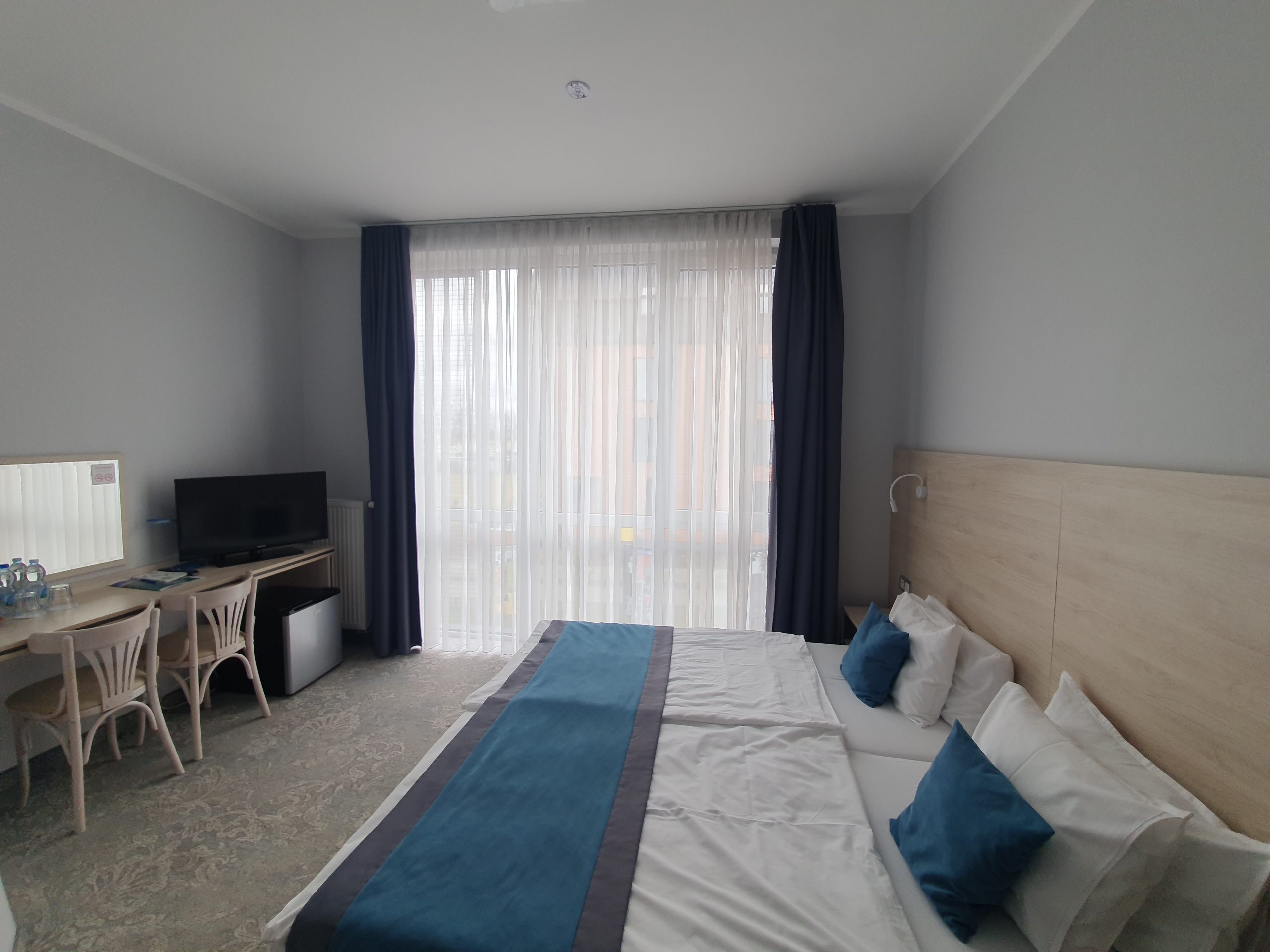
    I was at this hotel for a couple of nights whilst visiting Malbork and it has a slightly odd location on the top floor of a shopping centre. It’s quite a neat arrangement though, there is an external entrance and a private lift for the guests to the third floor. The breakfast room, and apparently sometimes restaurant in the evening, is in the centre of the third floor with the room located around it. The welcome was friendly and the environment felt comfortable. Incidentally, it’s also possible to get to the hotel area through the shopping centre’s cafe and I think it was likely accessible via a roped off internal staircase, but I didn’t go rummaging as I’m not a brave urban explorer.

    The slightly odd shaped room is because it’s on the corner of the building, with the very slightest views of Malbork Castle and a much wider view of the petrol station. The air conditioning worked perfectly well, although there were also plenty of windows to open if required. There were also no noise disturbances either internally or externally, although I was right at the far end of the hotel and wasn’t likely to hear much from inside.

    The en suite bathroom, with everything being clean and organised.

    I thought the wood effect sink was quite attractive.

    There was a free chocolate left on the towels, so I was won over straight over.

    The breakfast arrangement in the morning, with cakes, salads, rolls, cold meats and the like. The breakfast only starts at 08:00, which is unusually late for a Polish hotel, and I’m not sure how long it was served for.

    The cold meats display. I’m really not one for Polish hot breakfasts and I can’t say that the ones here looked at all appetising. The effectively raw bacon in one container looked horrendous to me, but I’m sure it’s delicious to many people.

    The rolls, pickled onions, pickled gherkins, cheese and salad and so on, all very appetising. Plenty of orange juice available and there’s a coffee machine and wide selection of teas. The breakfast room, and indeed the hotel, didn’t really feel very busy, but I’m not sure that Malbork’s prime tourist season is January.

    The on-line reviews for the hotel are all broadly positive, with most complaints being about the wi-fi arrangement. Those complaints were justified judging by my stay, as the wi-fi was hopeless, although I didn’t really need to connect to it so it wasn’t an inconvenience. All told, I liked this hotel and it’s only a five minute walk away from the castle, and I think they will help sort entrance tickets out judging from some posters I noticed in the lift. Everything was as expected, other than the wi-fi, with the prices being moderate.

    There’s further information about the hotel here.

  • Gdansk – Liberum Hotel

    Gdansk – Liberum Hotel

    This is from my stay in Gdansk last week, the Hotel Liberum which is centrally located on Ulica Długa (the Long Lane in English). The welcome from the staff member at reception was friendly, and the hotel was all a bit more decadent than I had been expecting.

    My room was just £20, which was a single room on the top floor. Compact, but clean and tidy, with the en-suite being a reasonable size.

    And the room came with a really quite lovely view of Wieża Więzienna (the Prison Tower), once a major entrance gate into the city. I have been fortunate with my views over Gdansk landmarks on this trip.

    This breakfast really did surprise and delight me, this section had cheeses, cold meats, sun-dried tomatoes, olives and salads, all of a good quality. There were also bread rolls, this was just as I like breakfasts to be. There might have been hot options available, but I was entirely content with this.

    Not a great photo, but there was another table with pastries, cakes and juices.

    There’s a photo of the food, all nicely presented for the few guests that I think the hotel had. This is actually a restaurant in the day, Cafe & Bar Rękawiczka, which I think I visited a few years ago. There’s a back door into the hotel so that guests don’t have to walk all the way around, and they gave me a 10% voucher off food for guests as well.

    Breakfast really was a lovely start to the day, although the coffee machine kept breaking down. That minor issue aside, this is a hotel that I’d stay at again, although the low prices that I was fortunate enough to enjoy are unlikely to be repeated very often.

    There were no noise issues either internally or externally and it was pleasant to hear the city noise from my fourth floor window. There have been complaints about external noise though, with the hotel putting earplugs into the room for guests. I’m never quite sure that’s a welcome treat for guests to find, but perhaps it’s best to offer them. There is a lift to the upper rooms, although I opted for the stairs in a keen attempt to burn off the calories from the beer that I’d been testing that week.

    And with that one-night stay finished, it was time to go to the railway station to go to Elbląg. There’s more information about the hotel here.

  • Malbork – Malbork Castle (Architectural Features)

    Malbork – Malbork Castle (Architectural Features)

    There aren’t a huge number of exhibits at Malbork Castle, not least because most had already been lost before the Second World War saw the end to most of what was left. However, towards the end of the tourist route (or the tourist route that I took, which I suspect differed from the route that everyone else took) is this collection of architectural features from the castle’s history.

    These are all elements from the early stages of the castle’s construction, when the Knights of the Teutonic Order were in charge. Clicking on the above photo makes it larger, and I particularly liked the item in the centre at the top, which is a figure of King David playing the harp dating from 1300.

    For completeness, the item at the top-right is a support which has the image of a monk (dating to before 1300), the two pillars at the bottom-left are vault supporters from Chapter House (dating to the thirteenth or fourteenth centuries) and the bottom-right is a vault supporter designed to look like a monster (dating to the fourteenth century).

    More sections of stone dating to the thirteenth and fourteenth centuries.

    Decorative pieces dating back to the fourteenth century.

    They carried on the theme over the centuries, the two on the left are from the nineteenth century. The third and fourth ones along are from the fourteenth century, although I think the one on the far right is from another castle.

    I was intrigued by these, as although I had nearly three hours walking around a castle looking at a lot of stone, it was hard to know what was old and what was more modern. Even before the reconstruction after the Second World War there had been much change over the centuries, but it’s known that these two stone and brick structures were from the second quarter of the fourteenth century. The sections are all from the ambulatory and would have been in this building in the first 75 years of its existence. Incidentally, these are also some of the earliest bricks (if we ignore the Romans), the practice of building in brick in this style reached this part of Northern Europe in the twelfth century.

    To see such early bits of stone still in the castle I find in many ways quite assuring. The castle has changed hands on numerous occasions and it’s been in different countries over the centuries. Even just 100 years ago this castle , then Ordensburg Marienburg, was actually on the border between Germany and Poland, the section of East Prussia next to the Polish corridor. Anyway, they might just be bits of stone, but I thought that they were quite interesting bits of stone.