Category: Gdansk

  • Gdansk – Three Best Craft Beer Bars

    Gdansk – Three Best Craft Beer Bars

    I write frequently about craft beer and its growth around the world (well, it stops me from posting frequently about Greggs or something….), not just in countries such as the United States and the UK, but also countries such as Poland where new breweries and bars are opening at some considerable pace. This is a marvellous trend and it’s noticeable at https://ontap.pl/ not just how many bars are opening, but also the breadth of the beers that they sell.

    In central Gdansk, I’ve found what I consider to be the best three craft beer bars, Pułapka, Under Beer and Labeerynt. Any visitor coming to the city who appreciates the delights of craft beer should absolutely visit all three as far as I’m concerned….

    PUŁAPKA

    I first visited here in January 2020, and it was one of my favourite pubs of that year, although of course a few weeks after I visited the world changed somewhat. A well balanced variety of beer options with friendly staff who were knowledgeable about what was available. The bar has been open for several years and seems to be popular with locals and visitors, with the atmosphere being laid-back and informal. It’s in the Old Town of Gdansk although visitors to the city probably wouldn’t just stumble across the bar, it’s something of a destination venue. The bar’s name meaning ‘trap’ in English, which is a good way to describe many craft beer bars, albeit welcome traps that I’m happy not to get released from too quickly. They offer basic food such as sandwiches and the like, along with a few bar snacks.


    LABEERYNT

    I visited here a couple of weeks ago, adding that it was the first time that I had been to this cellar bar. However, I noticed that an early post on my blog shows that I have been before a few years ago, which was actually half the reason that I started this blog, as I get muddled up with where I’ve been. Anyway, that confusion aside, there’s a very acceptable range of beers available across a wide variety of styles, all cleared marked up on the blackboard. The staff member was friendly and helpful, with the bar being clean, albeit it slightly dark because of its cellar arrangement.


    UNDER BEER

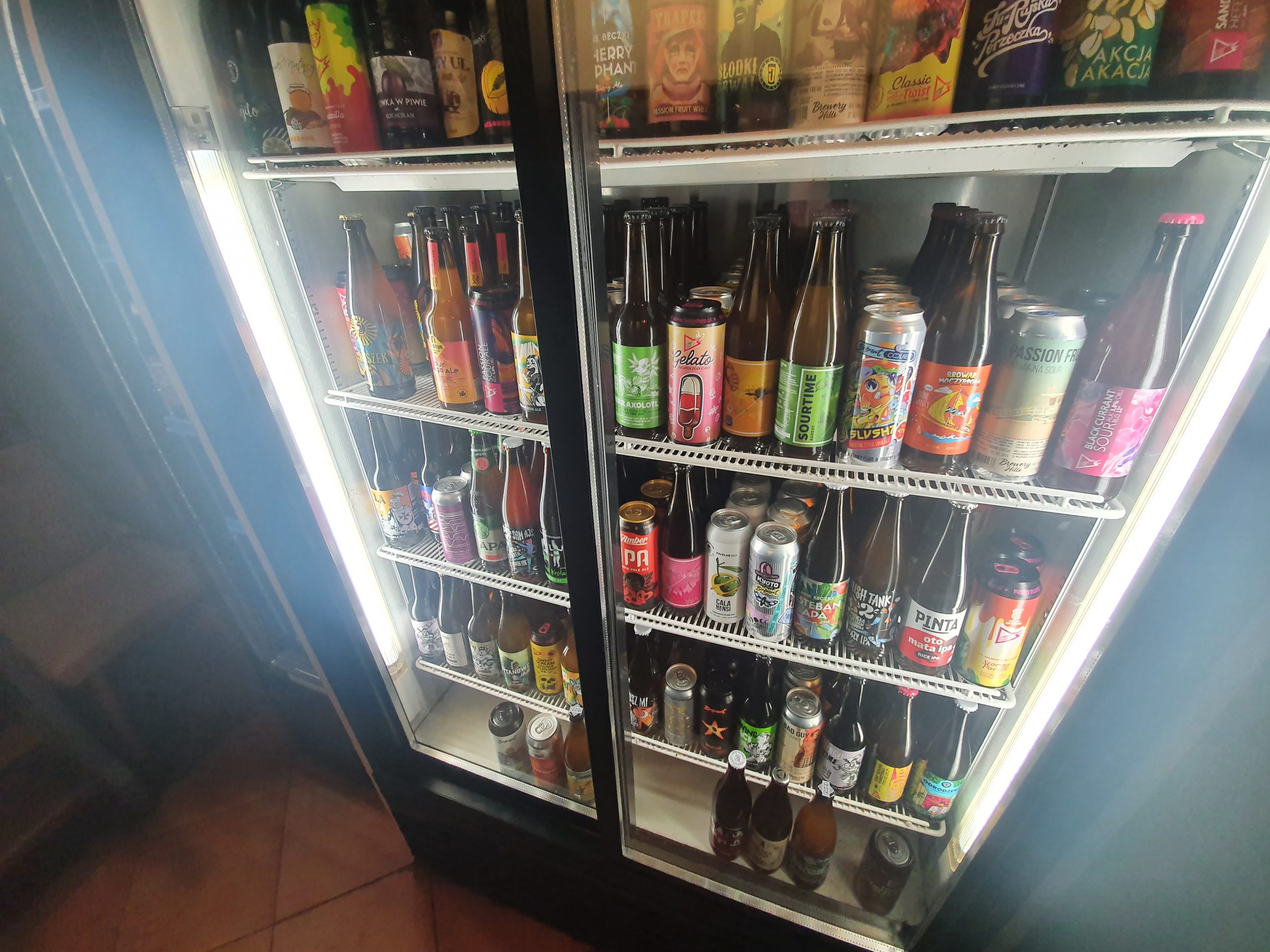
    And my favourite craft beer bar of them all is Under Beer, an understated and quite charming arrangement. They are relying on their cans and bottles which are in the fridges, but the selection is excellent and I like that the set-up almost requires them to engage with the customer. This adds to the whole warmth of the venue and so it feels more welcoming. I was so surprised and delighted with the range of beer options that I took some away with me as well, something that I can’t recall doing for some years, but I’ve discovered just how good Funky Fluid are now. The bagel I bought was also much better than I expected, it was served as a large portion and tasted quite delicious. A comfortable environment, excellent beer and welcoming staff, all really rather lovely.


    And thanks to Untappd’s app for helping me find these venues, I think an absolutely essential craft beer finding tool. My account is at https://untappd.com/user/julwhite.

  • Gdansk – Pikawa

    Gdansk – Pikawa

    After another busy morning (well, I thought so anyway), today’s lunch stop was Pikawa which is centrally located in Gdansk and is more sizeable than its frontage might suggest. This leads me off on another of my random general meanderings, but this venue is absolutely clear what it is, it’s a cafe which verges more into a bar in the evening. Venues in Poland seem to have a clarity I rarely experience in other countries, although Google helps enormously here by marking a venue as a cafe, a bar or a restaurant which makes matters much easier. There are some countries that I’m endlessly confused in, not least most of the southern European countries. Anyway, I digress.

    The surroundings are comfortable and modern, there’s a very laid-back atmosphere here. It was moderately busy at lunch-time, I just took the photo during a quiet period. Customers wait at the door to be seated and then table service is offered, which is slightly unusual for a cafe, but the process is made clear here.

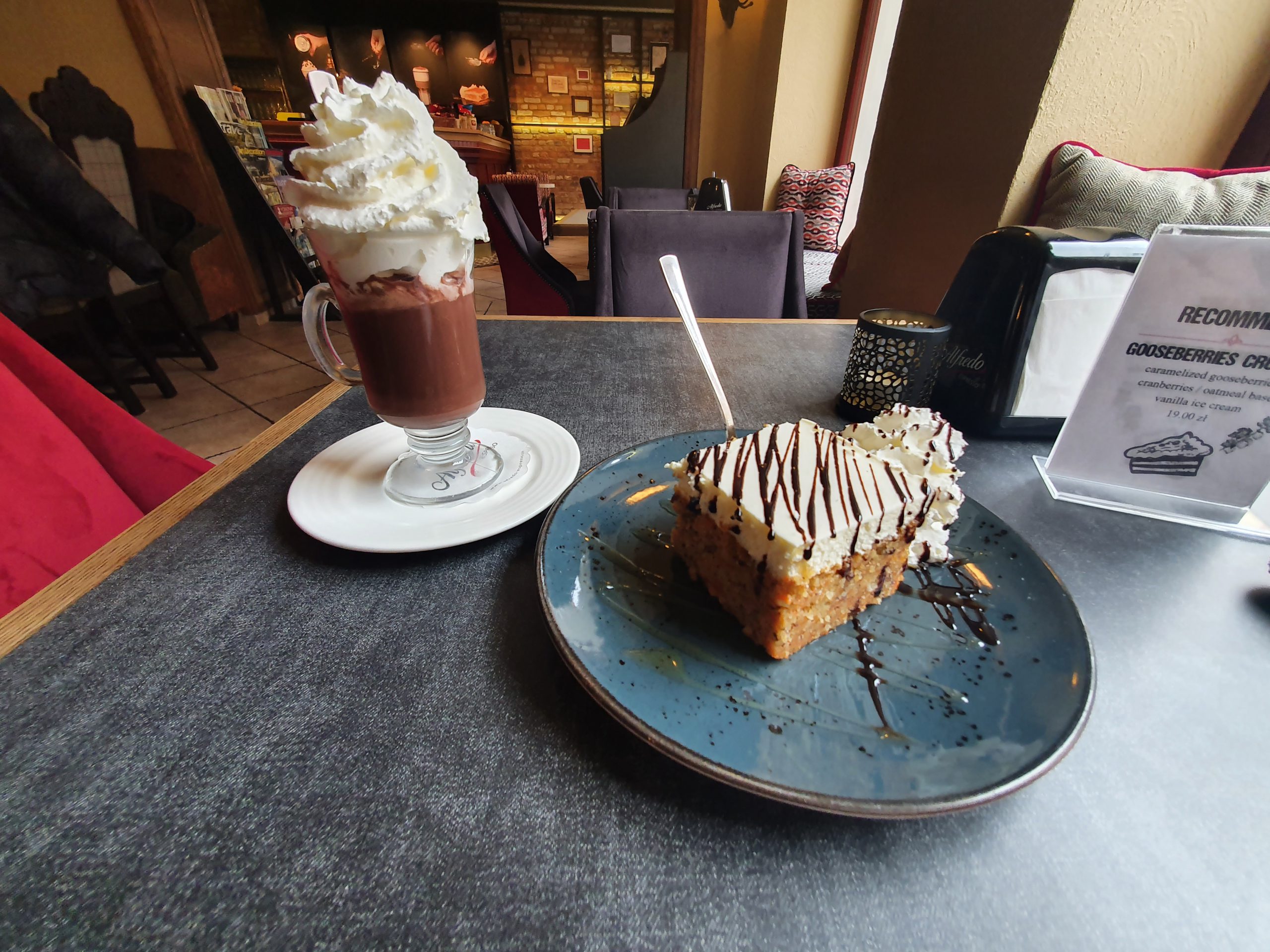
    I might have given myself a sugar overdose with this, but it was very enjoyable. I decided to opt for a carrot for lunch, which came in the form of a cake with cream, but I think that still counts. The hot chocolate with cream is a bit like a fruit smoothie, just served with chocolate instead of fruit. I think overall I’d claim this to be healthy. As for the food and drink, the hot chocolate was suitably rich and decadent. The carrot cake was moist and served as a bigger portion than I probably needed, but it seemed fresh and tasted of a very good quality. I probably didn’t need that much whipped cream, but life is all about learning from mistakes.

    The element I liked most here is that I was able to read a book on my phone with no disturbance or hurry from the staff to leave. Indeed, I had to ask for the bill in the end, which was easy enough to do, but I liked the slow pace of this cafe. Some locations seem hard-wired to get customers in and out as fast as they can, but here the service was slow although still orderly. The staff were friendly and helpful, knowledgeable about the menu and personable in the way they dealt with customers.

    I liked that they had a selection of different beers here as well, although I didn’t have one on this occasion, but I’m pleased that this is becoming ever more common on menus. The prices were moderate, and I entirely enjoyed the ninety minutes or so that I was in the cafe for. All professionally run, clean, organised and I’d remember just how laid-back and comfortable it all was. I’m liking the slow pace that Gdansk offers so readily, in what remains a modern and vibrant city.

  • Gdansk by Night

    Gdansk by Night

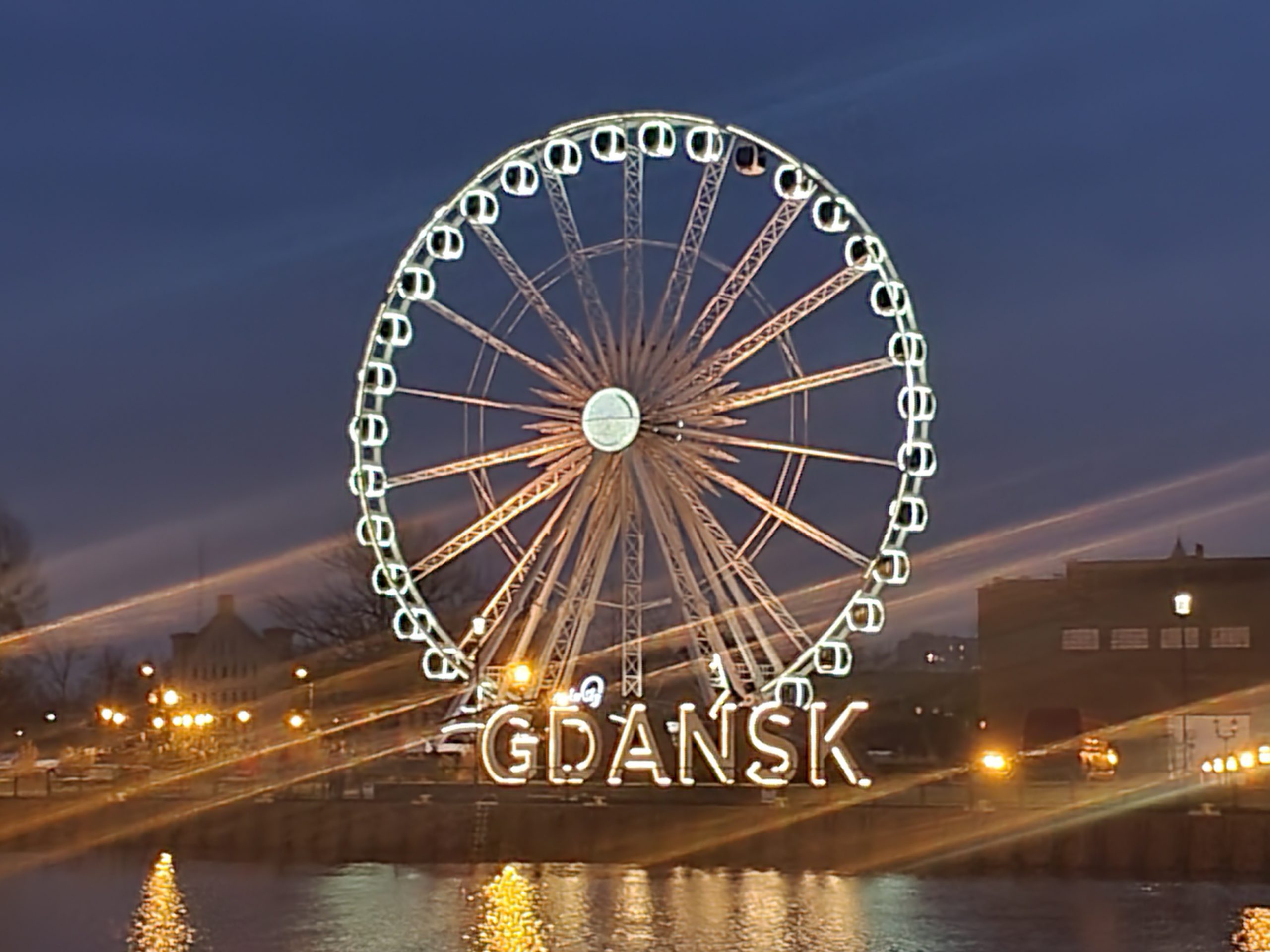
    Well, more late evening than night, but anyway. Just photos in this post, of varying quality, but this is a beautiful city and that’s just as evident in the evening.

  • Gdansk – Ostro

    Gdansk – Ostro

    Ostro is a well-reviewed relatively small pizza restaurant overlooking the river in Gdansk which prides itself on the authenticity of their Neapolitan pizzas.

    When I entered I was given the last available table downstairs and I think it was full upstairs as well. There is an external seating area for when the weather is more temperate, which it is most certainly not in early February. There’s a well stocked bar and then four tables downstairs, which are placed relatively close together. I was given a table for four and it would have been difficult if there actually were four of us as there wasn’t a lot of space.

    There was a few beer options, I hadn’t had this Bock beer, Kozlak, from Browar Amber before and it was entirely acceptable. I think it’s positive to see that restaurants seem to be routinely offering a selection of bottled beers now, this whole situation is definitely getting better. There was a wine menu as well though for those customers who prefer that option.

    There are a number of rules that have to be followed in sourcing ingredients to claim an authentic Neapolitan pizza, particularly with regards to the cheese and tomatoes used. This restaurant shows how they meet those rules and they also offer some guidance to customers on how to eat the pizza, although I noticed that most people in the restaurant seemed to ignore their suggestions. I liked this place-mat, it’s a reminder of how difficult it is to get right the requirements for an authentic pizza of this style.

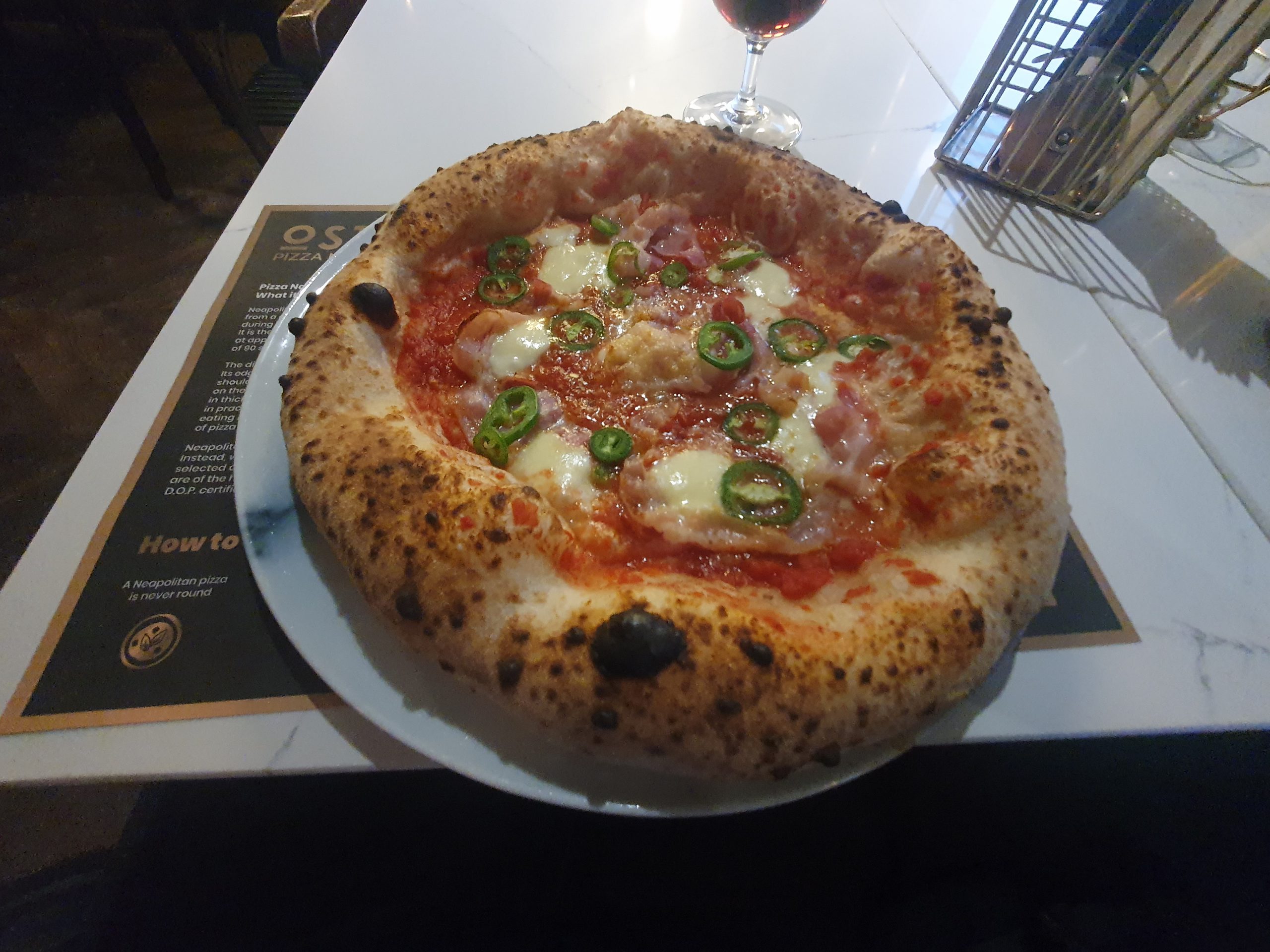
    And the pizza, yet again made smaller by the wide angle of my phone, but actually quite a generous size. The quality of this was well above average, the richness of the tomatoes was perhaps the strongest element, but the crust was light and fluffy as well. Some heat from the jalapenos and flavour from the bacon, a really quite delightful pizza that was at the appropriate hot temperature.

    The staff in the restaurant were friendly and engaging, with the service being pro-active and polite. Despite the clear need for this restaurant to turn over tables quickly given their relatively small size (the restaurant, not the tables), I was never rushed and I thought that the atmosphere was suitably comfortable. I read a chunk of a book on my phone during the meal and there are some pleasant views of the river, although my table wasn’t best placed for that.

    Anyway, I’d merrily recommend this restaurant, and I think that they offer takeaways and deliveries as well. I suspect this restaurant is difficult to get into during the summer months when tourists flock to the city, but it’s worth the effort to get a table.

  • Gdansk – Billy’s American Restaurant

    Gdansk – Billy’s American Restaurant

    I’ve been aware of this chain in Gdansk (they have three in the main part of the city and one in Sopot) for a while as they’re well reviewed and seemingly on-trend and reliable. This is the first time that I’ve visited though and I chose their branch on Wyspa Spichrzów, or Granary Island.

    I liked the welcome that was offered, a friendly staff member who gave me a choice between sitting in this outside area or inside in what looked a more American diner set-up. This outdoors bit looked more exciting as it seemed quiet inside, but I liked that I was given the option. The temperature in this area was warm, as is evident from the raging fire heaters, but I think those near the door got quite a chill every time a customer came in. It was nice to be able to see outside as well, as this is a riverside location.

    Putting the environmental cost of heating what is effectively outdoors in a cold Gdansk evening aside, this is a cosy and warm atmosphere. There were a selection of different groups, including what appeared to be a group of female friends, a family group and a couple who spent most of the evening ignoring each other.

    The beer range isn’t as decadent as I’d like, but I realised that I’ve never added Tyskie to Untappd and so I used this as an opportunity. They also give each table a little (well, reasonably large really) bucket of popcorn, and this is another advantage in dining alone. It took me a fair while to finish all this popcorn, it ended up being my starter and dessert.

    As an aside, there was a table with a couple of kids who I noted were taking popcorn from tables where the guests were leaving, as very few customers got through all their popcorn. They seemed disappointed when it was evident I had gone through all of mine and I noticed the parents looked horrified every time their children did it (the kids were very subtle).

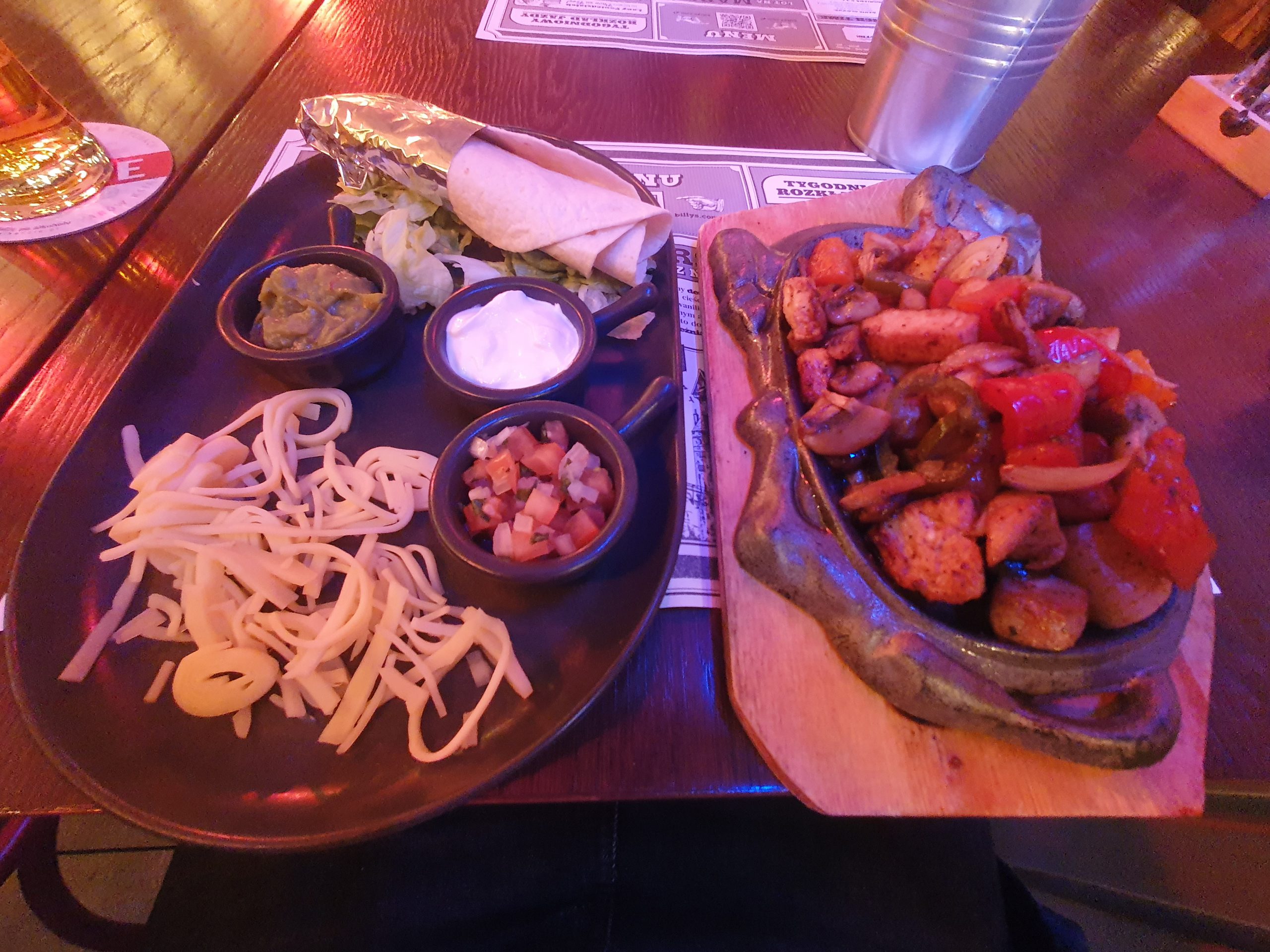
    I went for the chicken fajitas and these were as good as I’d expect in a restaurant in the United States. Restaurants always seem really tight on the number of wraps they offer, which is three in this case, and it’d be impossible to fit the food into them. But that permanent grumble aside, the competent parts all tasted of a good quality, with the chicken being moist and having a flavour on the coating that I couldn’t identify (OK, I’m no Jay Rayner) but I very much liked. Everything was at the appropriate temperature, it was neatly presented and the portion size was generous. Especially given I had a bucket of popcorn to go through.

    By Polish standards, the pricing here isn’t cheap, but it came to £11 for the meal and drink, with the bucket of popcorn being free, which I thought was reasonable given the location and the quality. The atmosphere is welcoming and the environment is comfortable, whether for a group or a solo diner. I can imagine this restaurant will be much busier in the summer months, but it seems spacious inside and they do have another outlet on the other side of the river.

    The on-line reviews are very positive and I’d say that they reflect my experience as well, all very lovely and the food exceeded my expectations. They’re franchising this concept out at the moment and I can imagine it’ll be successful in other Polish cities, there’s something of the Whiskey in the Jar sort of vibe going on here. Anyway, a little bit of work on the craft beer options and I’d say that they’re pretty much there.

  • PKP – Tczew to Gdansk

    PKP – Tczew to Gdansk

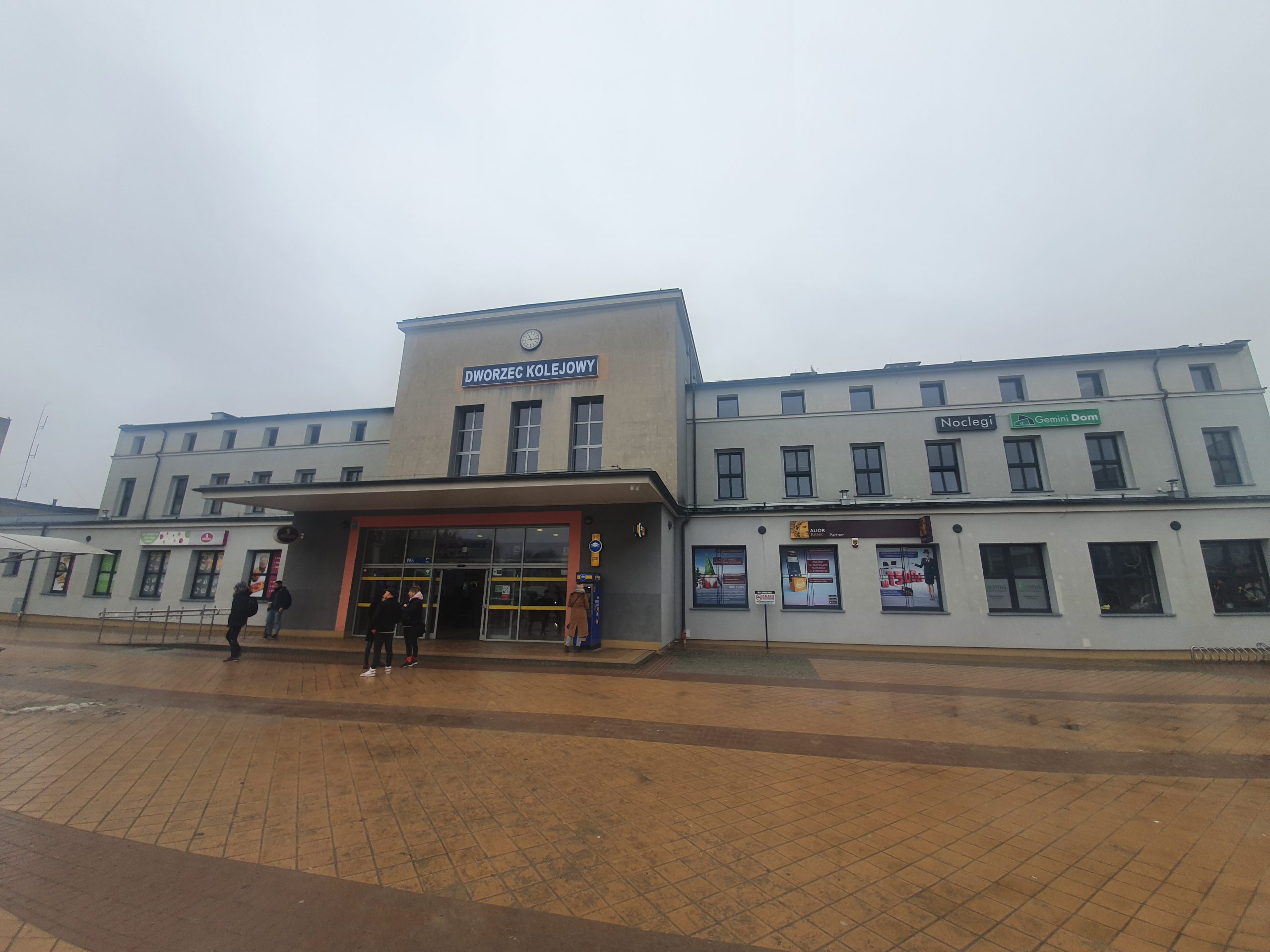
    After a week of visiting a number of towns in Northern Poland, it was time to go back to Gdansk. As mentioned when I arrived in Tczew, this is a modern railway station but it’s a bit soulless and lacking in much character.

    The main foyer area isn’t as grand and historic as the one in Malbork. There’s a fair amount of seating dotted around the station, both in this area and in the corridor above the platforms, although it was warmer in this bit.

    The usual sheet of train times, mine was the 11.25 into Gdansk.

    It’s not easily visible from this photo, but the train was delayed by 15 minutes, which was far from ideal. The train going to Vienna is listed above the train to Gdynia and it was apparent to me that it was unlikely to come in on the same platform as listed here, as the trains were coming from different directions. My train knowledge is sufficient to know that two trains due within one minute of each other and coming from different directions is a problem for signallers.

    As an aside, this train on another platform belongs to http://shortlines.pl/ who were an open access operator with high hopes, but their services have been dramatically reduced over the last few years.

    I’m not sure what the police (I think these are the equivalent of the British Transport Police) were doing with their big dog, but it looked quite friendly and was safely muzzled. This is the Vienna train coming in and it’s by now apparent that the train I want is coming in shortly and they’re going to have to use another platform. And that’s what happened, in Polish only (I mention this as in Gdansk there would usually be an announcement in English as well) there was a last-minute announcement that they shifting the Gdynia service to platform 2. So we all rushed over there…..

    I have to add, this travel can be a bloody nuisance and public transport operators don’t make things as easy as they perhaps could as they must have known some time before there was a platform change needed. There was a fallback that I could see a train to Gdynia with the regional network was leaving soon if I missed my booked service, but it’s all quite challenging to work out where to go.

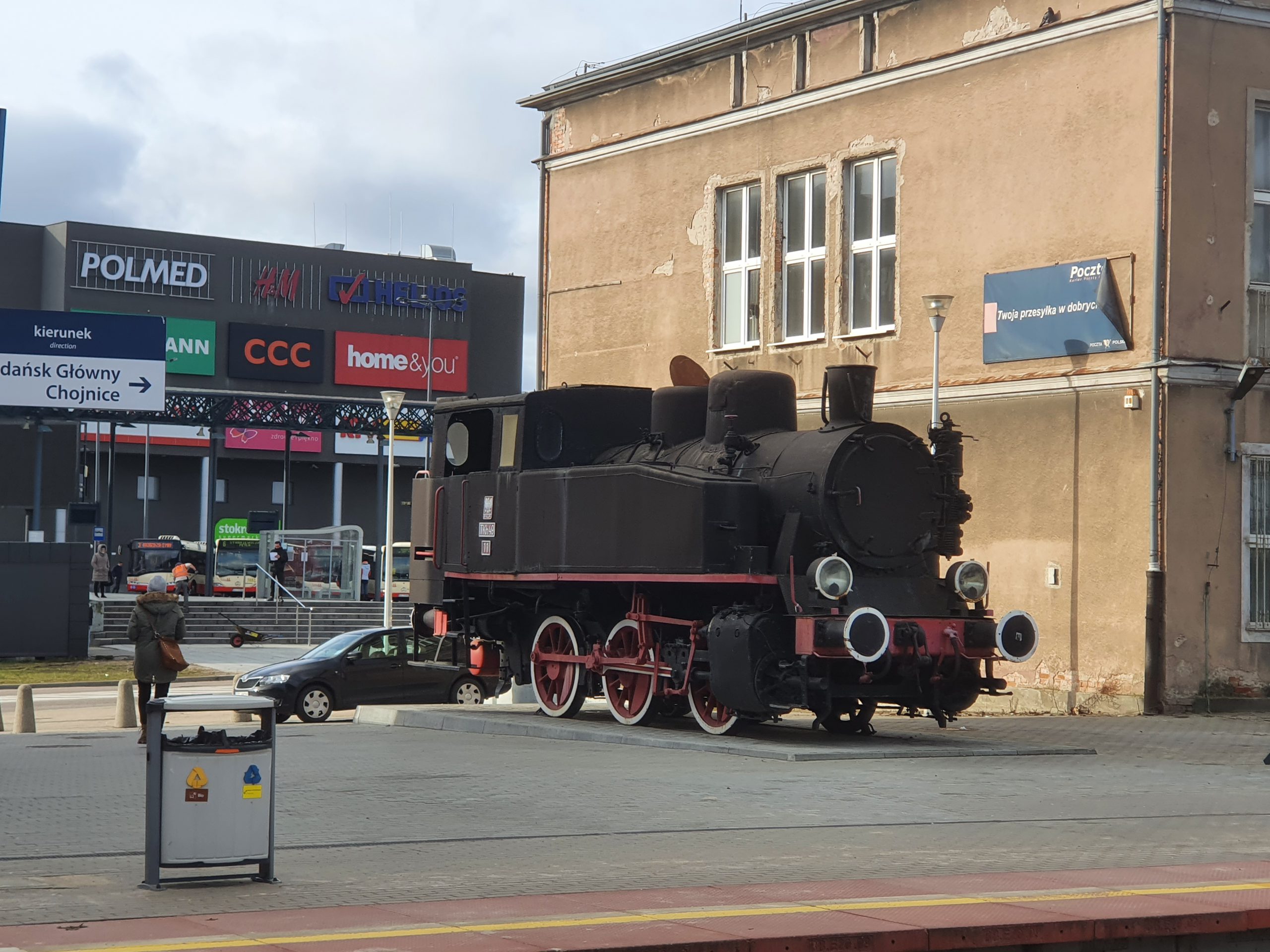
    Apparently this is steam engine TKh 5699, in use on the Polish rail network between 1961 and 2002, when it was brought here to sit on the concourse.

    On board the train, I frankly couldn’t be bothered to find my reserved seat as I was getting off at the next stop and this group of chairs was empty. The screen gives updates on the service and that it’s running 15 minutes late.

    They’re quite a comfortable arrangement, the table extends for those wanting to use a laptop of spread out their bakery purchases, with power available under the seat.

    My ticket wasn’t checked during the journey, and there’s the train to the right and Gdansk railway station (still under modernisation) on the left.

    And back into Gdansk….. The journey was a nuisance in terms of trying to board the appropriate train, but everything was comfortable enough after that. The cost of the journey was about £2 and I purchased my ticket on-line in advance, although there are ticket machines at the railway station.

  • Gdansk – Liberum Hotel

    Gdansk – Liberum Hotel

    This is from my stay in Gdansk last week, the Hotel Liberum which is centrally located on Ulica Długa (the Long Lane in English). The welcome from the staff member at reception was friendly, and the hotel was all a bit more decadent than I had been expecting.

    My room was just £20, which was a single room on the top floor. Compact, but clean and tidy, with the en-suite being a reasonable size.

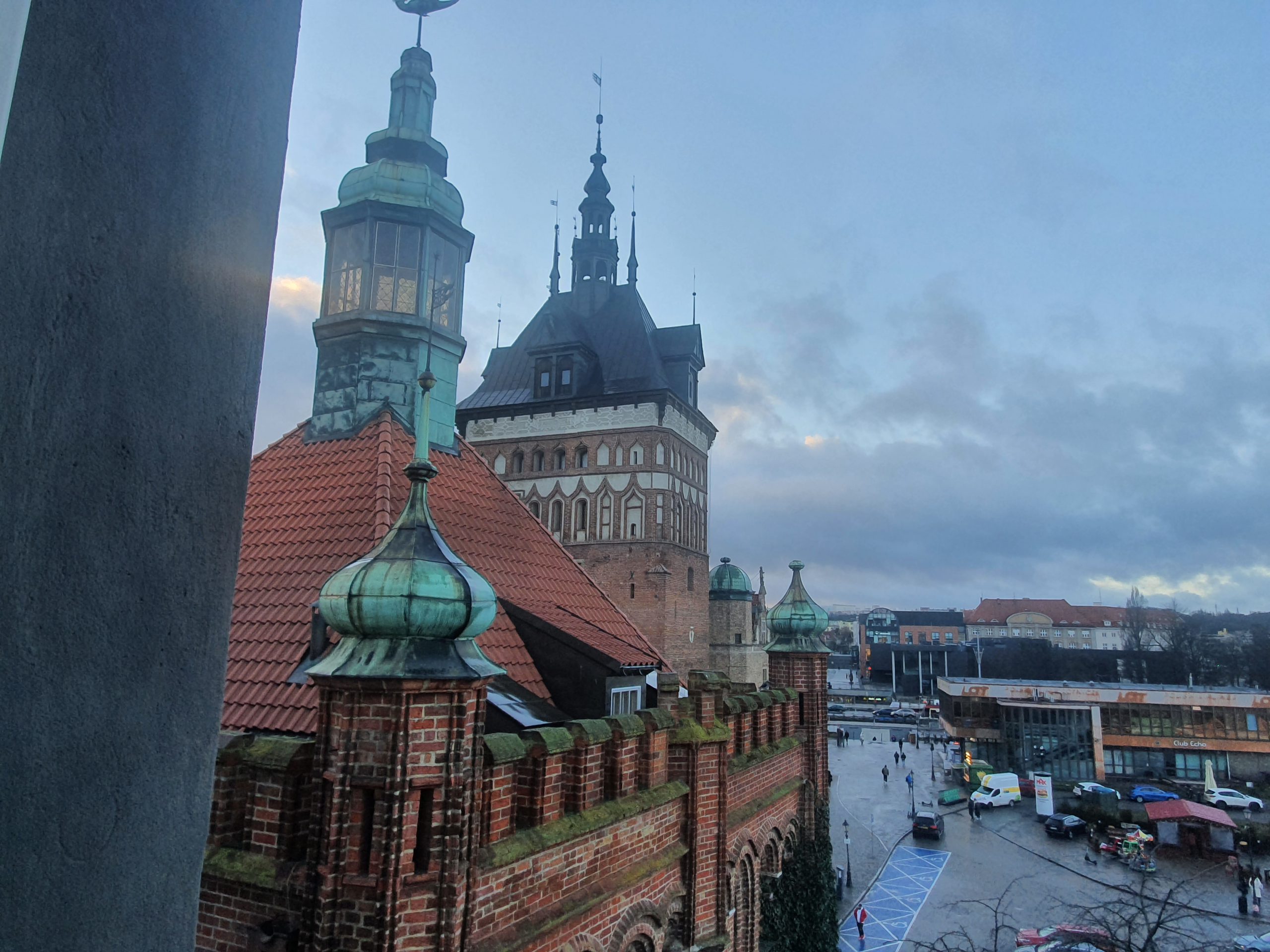
    And the room came with a really quite lovely view of Wieża Więzienna (the Prison Tower), once a major entrance gate into the city. I have been fortunate with my views over Gdansk landmarks on this trip.

    This breakfast really did surprise and delight me, this section had cheeses, cold meats, sun-dried tomatoes, olives and salads, all of a good quality. There were also bread rolls, this was just as I like breakfasts to be. There might have been hot options available, but I was entirely content with this.

    Not a great photo, but there was another table with pastries, cakes and juices.

    There’s a photo of the food, all nicely presented for the few guests that I think the hotel had. This is actually a restaurant in the day, Cafe & Bar Rękawiczka, which I think I visited a few years ago. There’s a back door into the hotel so that guests don’t have to walk all the way around, and they gave me a 10% voucher off food for guests as well.

    Breakfast really was a lovely start to the day, although the coffee machine kept breaking down. That minor issue aside, this is a hotel that I’d stay at again, although the low prices that I was fortunate enough to enjoy are unlikely to be repeated very often.

    There were no noise issues either internally or externally and it was pleasant to hear the city noise from my fourth floor window. There have been complaints about external noise though, with the hotel putting earplugs into the room for guests. I’m never quite sure that’s a welcome treat for guests to find, but perhaps it’s best to offer them. There is a lift to the upper rooms, although I opted for the stairs in a keen attempt to burn off the calories from the beer that I’d been testing that week.

    And with that one-night stay finished, it was time to go to the railway station to go to Elbląg. There’s more information about the hotel here.

  • PKP – Gdańsk Główny to Elbląg

    PKP – Gdańsk Główny to Elbląg

    This was meant to be a straightforward rail journey of just under one hour from Gdańsk Główny to Elbląg, using a PKP Intercity service.

    I’ve mentioned before that I find this to be the easiest way of seeing rail departures and arrivals, regularly updated yellow and white sheets. It’s far better than the UK system, with every stop listed so that it’s easy to understand where the trains are departing from and at what time. It’s surprisingly hard to get such clarity about the rail times and options when at a railway station in the UK.

    As an aside, this was the train to Berlin, which I had expected to be a little grander.

    And then to my slight disappointment, my 09:41 train started to show as delayed for nearly an hour. But just under it is a 09:44 train which is going to the same destination of Elbląg, it just takes a little longer. This gives me a dilemma as I don’t understand the Polish rail system well enough to know if I can transfer trains to that one, as I have a ticket for a specific train. It’s also a rural train (Przewozy Regionalne  or PR) which used to be part of PKP, but they’ve been given to the regional governments to operate, so it’s not the same company or set-up.

    As everyone got on the platform got on the train, I guessed that I could likely use this service. However, I’m not taking risks like that, so I went and asked the guard if I could get on his lovely train. He was friendly, grinned and pointed to get on. I was concerned whether he was grinning because he was excited that he could fine a passenger, but it transpired he was just keen to help. That friendliness seems to be path of the course in Poland, so it didn’t come as a complete surprise.

    What didn’t help was having my ticket checked a further two times by different guards, although they seemed satisfied with my ticket for the wrong train. The train itself was clean and modern, running to schedule and the signage on board was clear and timely.

    And safely into Elbląg, on time and without being fined or being told that I had the wrong ticket.

    It’s not the most glamorous of railway stations, but I was pleased to get there. There has been a railway station here since 1845, but it was rebuilt in 1937 and then repaired again following the end of the Second World War. On May 26, 1916, the German Emperor, Wilhelm II, arrived at the railway station on a visit to the city. Back then, the city was known as Elbing and was the second largest in East Prussia, the section of Germany which wasn’t connected to the rest of the country because of the Polish corridor.

    And the frontage of Elbląg railway station. Fortunately, everything went well, although I could have done without all of the confusion with the train delay. But I’m glad that I didn’t wait for my heavily delayed service, Gdansk railway station is undergoing modernisation and there’s not a great deal to do there at the moment.

  • Gdansk – Museum of the Second World War (Damaged Statue of Lenin)

    Gdansk – Museum of the Second World War (Damaged Statue of Lenin)

    This will be one of a series of posts of exhibits that particularly interested me in the Museum of the Second World War in Gdansk.

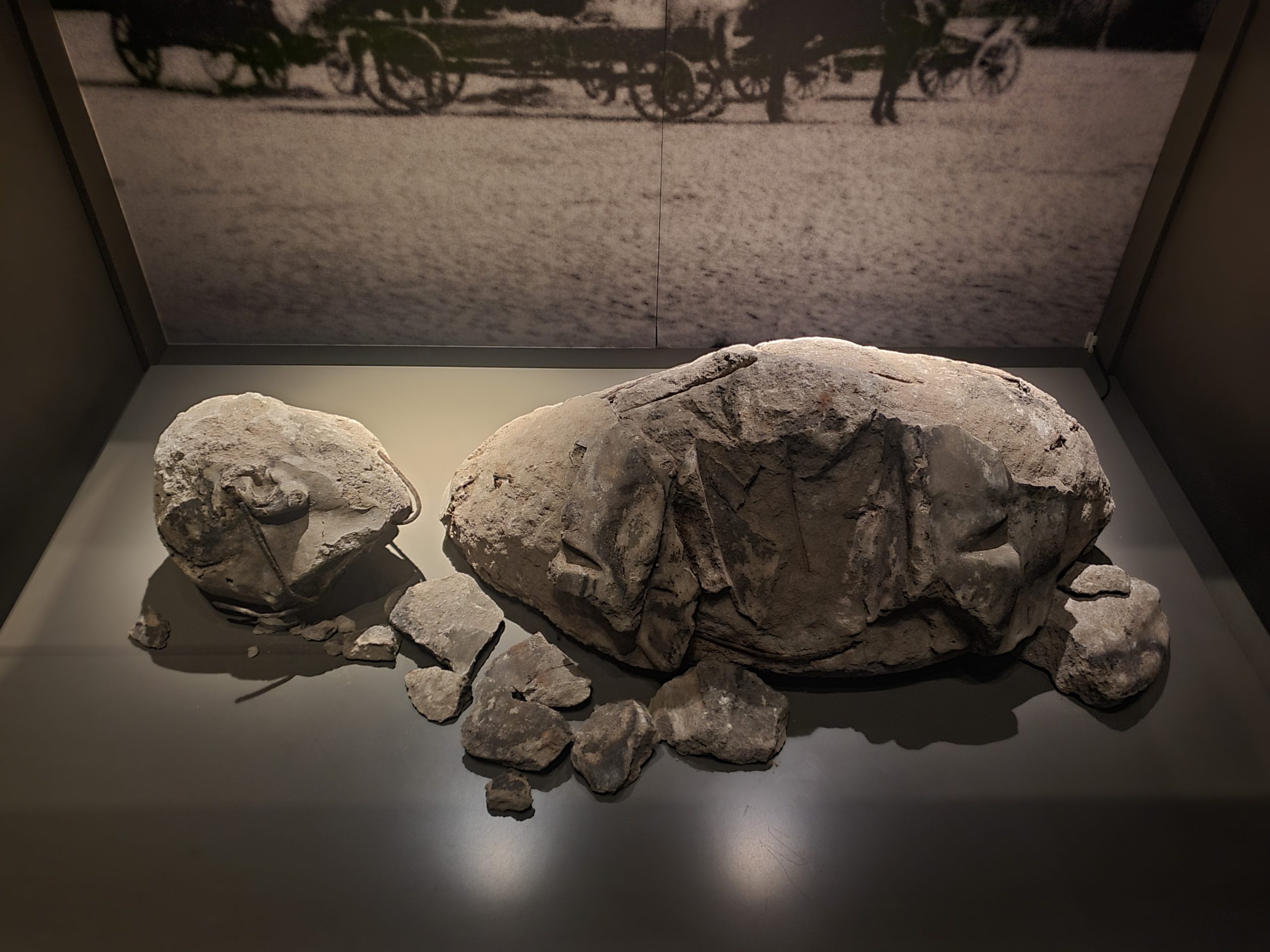
    I thought it was interesting that the smashed remains of a statue had survived, as usually they’d be destroyed quite quickly. The story behind this is though tragic and it took place in Jedwabne, a small town in a rural area of Poland which isn’t a huge distance away from Białystok. Before the Second World War, the Jewish community made up around 40% of the town’s population. A pogrom took place on 10 July 1941, when 340 men, women and children were murdered, 300 of whom lost their lives after being placed in a barn which was set on fire. During the day, a number of the Jews had been ordered to destroy the Lenin statue on Dworna Street, which is why it was wrecked.

    Much of this was left to history until 2001 when a exhumation of the bodies at the site was undertaken, when two mass graves were found, as well as the remains of the Lenin statue. There is all manner of controversy about whether the murderers were Polish or German and Aleksander Kwaśniewski, the then Polish President, apologised for any involvement by the Poles. Political arguments have ensued since saying that the Polish shouldn’t have apologised, it was nothing to do with them. There’s an interesting article at https://polin.pl/en/news/2016/07/09/78-anniversary-of-the-jedwabne-pogrom about the excavations and the timeline of events behind it.

    Either way, this makes this statue more remarkable, as it was brought down that was part of an act of mass murder and it was then buried. It has been excavated from a war grave and brought here to the museum, part of the story that led to the destruction of an entire Jewish community. The site is unlikely to be dug again so that the graves can remain intact, so this is the only piece of the story that is left visible, the statue which once stood in the market square.

  • Gdansk – Museum of the Second World War

    Gdansk – Museum of the Second World War

    This museum wasn’t quite completed when I was last in Gdansk and it was one of the main things that I wanted to visit on this trip. It’s the national Second World War museum and there was some controversy building it, but it’s completed and very well reviewed. The museum is operating on a reduced capacity at the moment to allow for social distancing and tickets can be purchased in advance on-line. I took a chance on going on free visiting day, which is a Tuesday, conscious that getting a ticket might be difficult given the demand as it’s not possible to get the free tickets in advance on-line.

    To cut a long story short, I arrived at the museum twenty minutes before they opened, and I expected a short queue at the ticket office. The set-up wasn’t quite as I imagined it, as the ticket office is down on the third floor underground, but I was surprised that they’d opened this already. I went down, collected my free ticket and then waited the 15 minutes or so for them to open the doors for the permanent collection. The design of the museum is really all quite odd and it isn’t particularly logical, but it is clearly signed. The main desk on entrance isn’t the ticket desk and it’s a moderately confusing set-up that seemed to be confusing a fair number of people.

    There are two elements here, firstly, absolutely everything is available in English, including the multimedia installations, whilst, secondly, the wording is quite strong. It’s not inaccurate, but there is something of an equivalence made between the Soviet Union and Germany, which runs through the whole museum.

    One of the scenes of what a peaceful Polish high street might have looked like during the inter-war period.

    In the centre are actual flags from the war period, and another reminder of how the Soviets and Germans are equated in the exhibits.

    A large-scale version of the Molotov–Ribbentrop Pact map which sought to carve up Polish lands between the Soviets and the Germans, with Gdansk coming under German control.

    One of the museum rooms which contained a variety of weaponry. This isn’t something I’m particularly engaged with, but there were plenty of guns for those who wanted to look at them.

    A display which serves as a reminder of the starvation that so many suffered from during the conflict.

    An example of one of the exhibition rooms and it was generally quiet throughout the museum, although there were quite a few people clumped together near the beginning. There were a range of Nazi recruiting posters on display on the left that were particularly interesting.

    This means terror in Polish (my language skills are really coming on).

    There’s no known history about this rail car other than it was made by the Germans during the First World War. It was though the type of transport that was later used by the Soviets to transport Poles and the Germans to transport Jews to concentration camps.

    This was quite a sobering room, some of the many individuals who died in the concentration camps.

    Opór, which in English means the resistance, with this section of the museum covering the efforts made in numerous countries to undermine German rule in their territories.

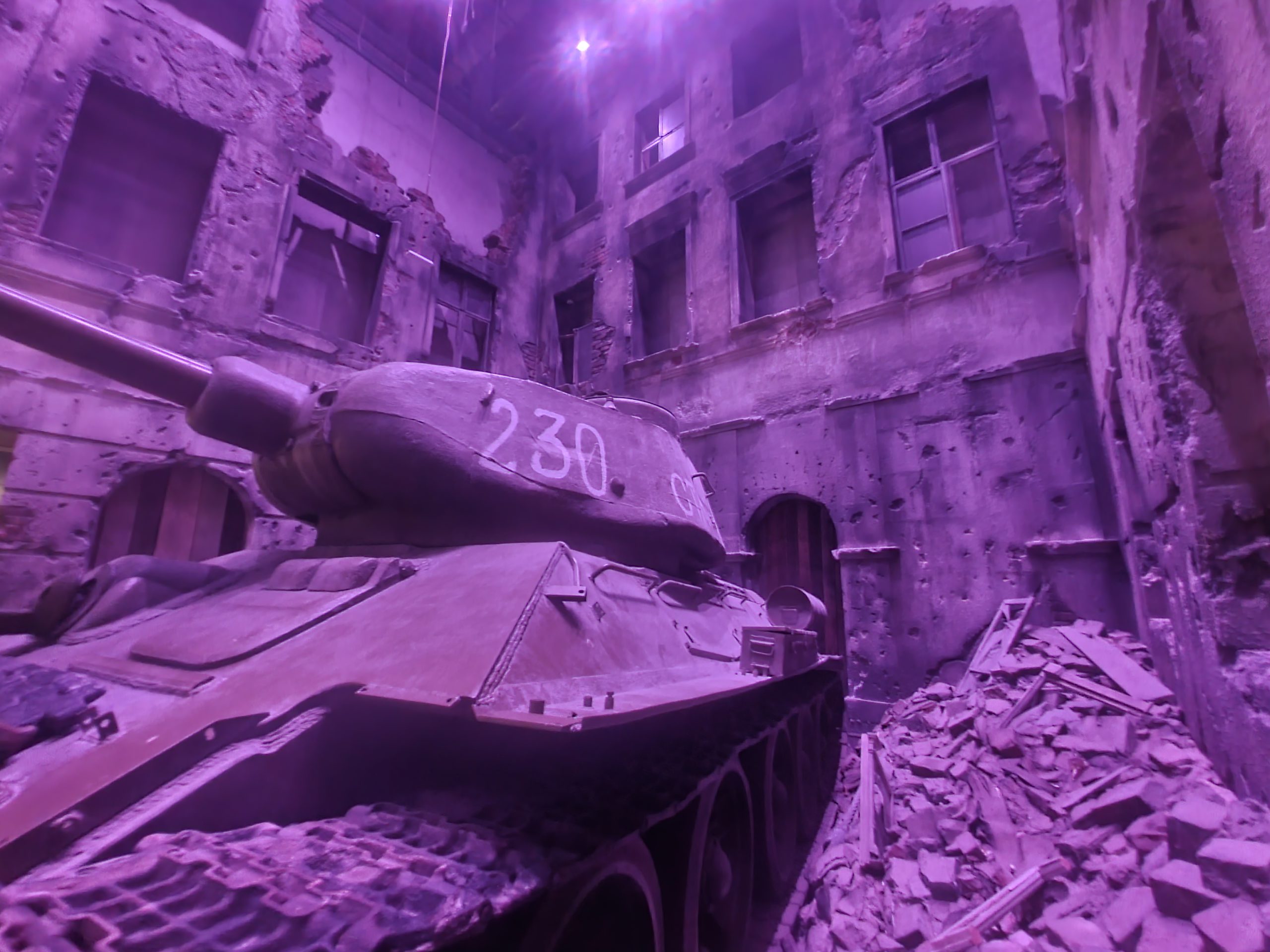
    This is quite a remarkable room, a recreation of some of the destruction to so many cities.

    I spent over three hours in this museum and although I didn’t skip anything, I did start to tire a little by the end and stopped watching every video and reading every piece of text. This wasn’t because the museum was dull or tiresome, but it was a little emotionally draining given the content and that’s also a long time to spend in the same museum. What was evident was how much times others were taking, I got the impression that a three hour visit was almost the average and the museum themselves say that’s the minimum needed.

    This is a very nicely put together museum and it flows in chronological order and keeps up the narrative in an engaging manner. The signage is generally excellent, although it was slightly unclear where to go in places, but it was hard to go too far wrong. I’m not sure why Gdansk was chosen for this museum, but it’s appropriate given that the war started here for the Polish at Westerplatte.

    I went to look at the reviews for the museum and they are exceptionally high, the same rating as the Louvre and just behind what is perhaps my favourite museum, the Metropolitan Museum of Art in New York. Indeed reading the reviews can be a bit dull, they’re just all full of praise, although I accept that’s all for the good. I wanted to see how anyone could not like this museum, and I noted that a few people tried hard.

    “Total waste of time. The exhibition is very static and boring. No visitor activities at all. It looked like an art museum, not a history one. Everyone walked around in total silence with no emotions and no discussions – even the small ones. Like in funeral services or something 🙂 It was like a walkthrough using Wikipedia articles, photos and videos. In some halls were no chairs for elderly. My little girl who is very intrested about military stuff said also it was so boring.”

    I’m unsure what visitor activities the museum could bring in (you too can smash some buildings up?), maybe they wanted some sort of theme park experience. Although there was a sombre feel to the museum I did notice, I felt that was hugely to their credit as the majority of visitors seemed to be engaged about the exhibits and the implications of the text and imagery. There were a couple of school groups as well, perhaps the best behaved I’ve seen, entirely attentive to their tour guides. I’m actually not sure that I’d bring a little child to the museum and the museum recommends that visitors should be at least twelve years old, although that’s not enforced and is just a guide.

    “Horrible experience, the staff barely speaks English so I cannot get support on my issue of not having a mask and being late to catch up to my group. She just spoke to me in polish.”

    It’s almost as if the museum is in Poland…..

    “Couple of tanks & motorcycle on display. Mainly video & pictures, I guess you could find all on internet.”

    The museum isn’t actually packed with exhibits, but it’s new and there’s a limit to what they’re going to be able to get in a relatively short space of time. I’d still say that they had 1,000 or so exhibits, and probably more. That’s actually an issue the museum authorities must have faced, as they wanted to cover the resistance, but the Warsaw Uprising Museum has much of that material, as well as items from concentration camps, but there’s a limited availability of such exhibits and most are already in museums. I’d struggle to find a lot of the material here on the Internet though, and museums are all about curation.

    “I only recommend this place if you’re a fan of WWII.”

    This was a 1/5 review mostly about how someone got locked in the toilet (it’s quite an involved tale which intrigued me for a while), but I’d be surprised if someone not interested in the Second World War went to the Second World War museum. Probably not that many visitors are what I would call fans, but there we go.

    “This place is more about the civilian cost to Europe and the world rather than a military museum”

    Good. That’s the reality of war.

    “Director of this museum is absolutely ruthless and hateful to Soviet Soldiers and the history!”

    I think this relates to a political storm a few years ago with this museum, but it’s fair to say that the Soviets don’t come out well here in the museum. It’s hard though for a museum in Gdansk to really develop this any other way, the Soviets tried to give the city to Germany in 1939 and then the Red Army caused mass destruction in the city after they have liberated it, with some morally reprehensible behaviour. There’s a rather excellent article about this at https://www.thefirstnews.com/article/incredible-forgotten-photos-reveal-true-horror-of-red-armys-destruction-of-gdansk-but-also-its-subsequent-rebirth-11681, with plenty of photos of the destruction.

    “After visiting the old part of the city, I decided to visit this museum. When I came to buy a ticket..they did not want to receive the euro, only the local Polish currency”

    Nice, someone giving a rating of 1/5 as the museum didn’t want to accept a different currency and couldn’t really come up with an alternative….

    Anyway, I’ve digressed again, but most of the negative reviews are about the difficultly in getting tickets, which has been a problem for the museum to deal with, although I was pleased with my experience. I thought that the entire visit was positive, not least because it was free today, but because it was an informative, decently curated and well put together museum. Very lovely.

    And to follow at some point in the future are some individual posts about items in the collection that I felt were particularly noteworthy.