
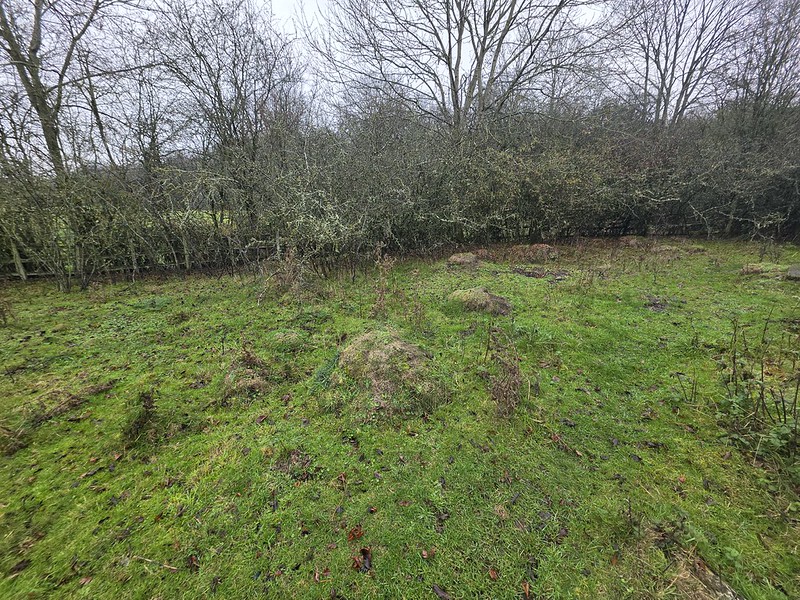
Whilst meandering around the churchyard at St Peter’s in Wolfhampcote, Richard and I were a little puzzled by these rather substantial grassy mounds. I asked AI what might have caused them and it suggested ant hills, at which point I thought it had gone slightly mad. Ants are tiny and these gave the appearance of being quite ambitious landscaping projects. However, some further investigation established that it was quite possibly right and I had apparently underestimated what ants could achieve when left to get on with things.
The likely builders are yellow meadow ants, whose workers are only around 3 to 5 millimetres long. Thousands of them can occupy a colony, excavating underground passages and then carrying tiny amounts of soil to the surface. Over many years, those small contributions accumulate into a substantial mound, with chambers and passages extending through it. The raised earth also gathers warmth from the sun, helping provide suitable conditions for their young. These aren’t the results of one particularly enthusiastic ant having a productive weekend, but the continued work of a colony over successive generations.
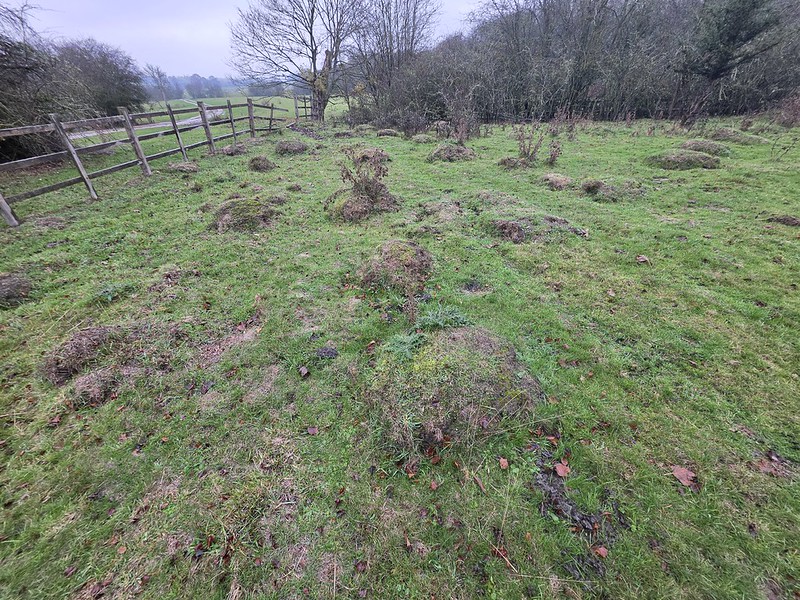
Old churchyards can provide suitable homes because their grassland may remain relatively undisturbed for long periods. Some yellow meadow ant mounds can survive for more than a century and this area is rarely disturbed given it’s next to an abandoned village and so there are likely relatively few burials. We had gone to Wolfhampcote to look at a medieval church, but I ended up learning about ants and their civil engineering skills. I am most impressed at their arrangements.