
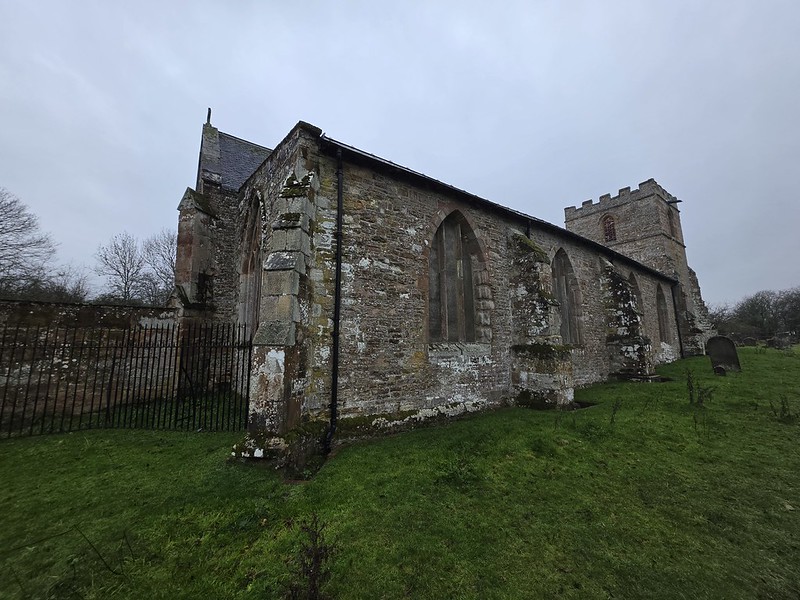
This is St Peter’s Church at Wolfhamcote in Warwickshire, which I heard about whilst on a nearby LDWA walk. A church surviving in a village that had largely disappeared sounded worth investigating, so Richard and I meandered over the following day at the end of the LDWA event. There was a church here by the time of the Domesday survey in 1086, but the oldest surviving parts of the present building date from the thirteenth century.
The medieval settlement stood nearby and there are multiple earthworks opposite that show the extent of that village, but more on that later. Some histories of the village note that the Black Death destroyed the village, but the church’s own website notes that there’s limited evidence for this and a gradual decline of people moving away was more likely. The church remained to serve the wider parish, having apparently decided that the departure of its immediate neighbours wasn’t sufficient reason to close.
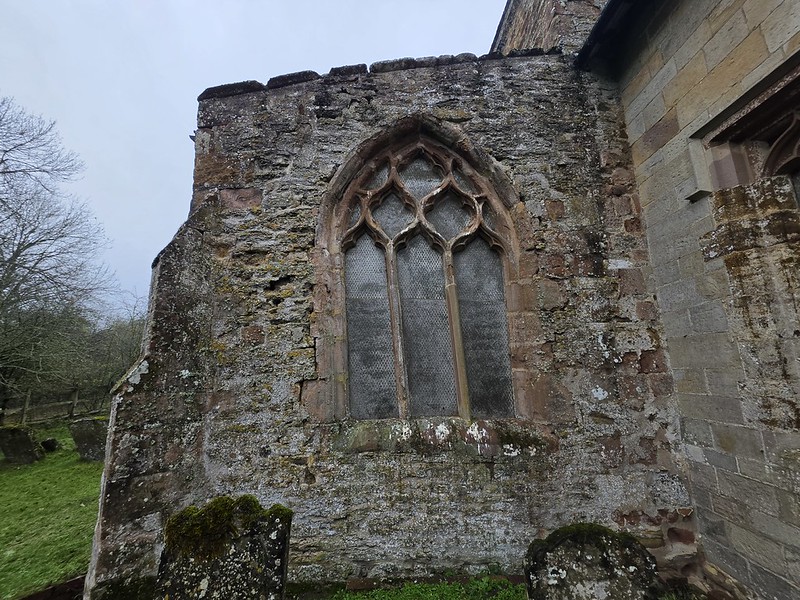
Much of the church’s development took place during the fourteenth century, when the south aisle, porch and chancel were built, although later generations have made their own repairs and alterations. I rather like churches where these different stages remain visible, rather than everything looking as though it arrived together on the back of an Ikea van or something. Often the Victorians faffed about with churches and made them look far too uniform and neat, so I like this slightly rickety arrangement.
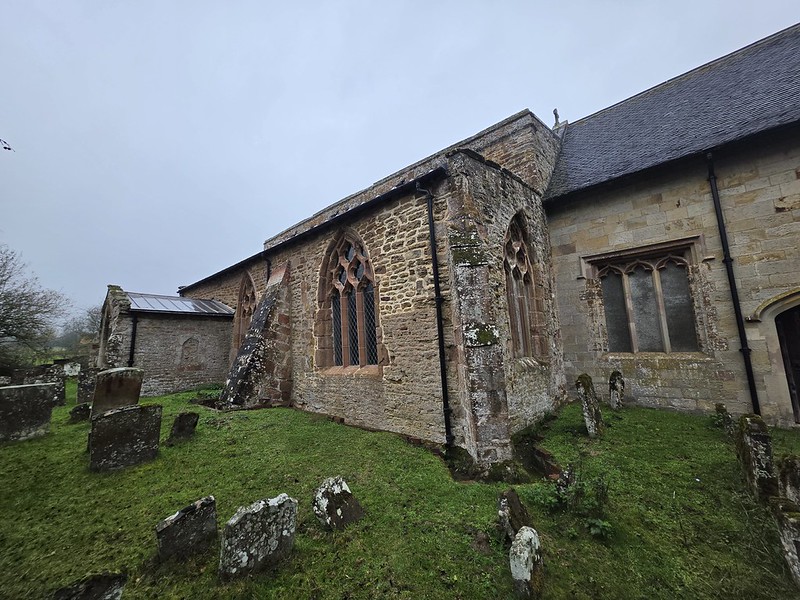
From this angle, the different sections of the church are a little easier to distinguish, including the contrasting stonework of the chancel on the right. Restoration took place in 1848, with the church’s history suggesting that the chancel was refaced externally rather than entirely rebuilt. The building also acquired a family mausoleum at its eastern end, associated with the Tibbits and Hood families who owned the estate during the nineteenth century, and this now looks entirely out of place, but again, more on this later.
It might have felt quite remote when we visited, but there were once two nearby railway lines, although both now abandoned, but the canal remains in use at least. I rather like the thought that this apparently isolated church has watched a village disappear, railways arrive and then the railways disappear as well. Even the road to get here is gated and I can’t imagine that it sees a lot of traffic.
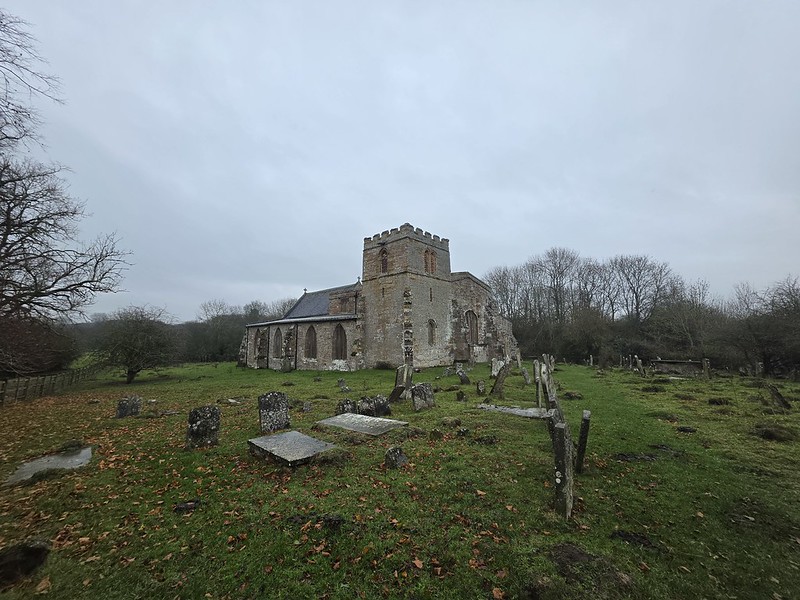
The wider view across the churchyard gives a better impression of just how isolated St Peter’s now feels, with the gravestones providing evidence of the generations who continued to use it after the medieval village had declined. The church itself suffered a difficult twentieth century, falling into disuse and eventually being abandoned in the 1950s after sustained vandalism. That included many of the windows being broken and polycarbonate replacements which have since deteriorated and look rather sub-optimal today.
There was talk of demolition, but efforts to save it led to its transfer to the Churches Conservation Trust in 1972, followed by extensive repairs. Its supporters included John Betjeman, who chaired the inaugural meeting of the Friends of Wolfhamcote Church at the House of Lords. Ivor Bulmer-Thomas, a leading figure in the Friends of Friendless Churches, was particularly important in saving it from demolition. There’s now a fund-raiser to allow for the installation of new windows so the future feels a little more positive for this rather beautiful church.