
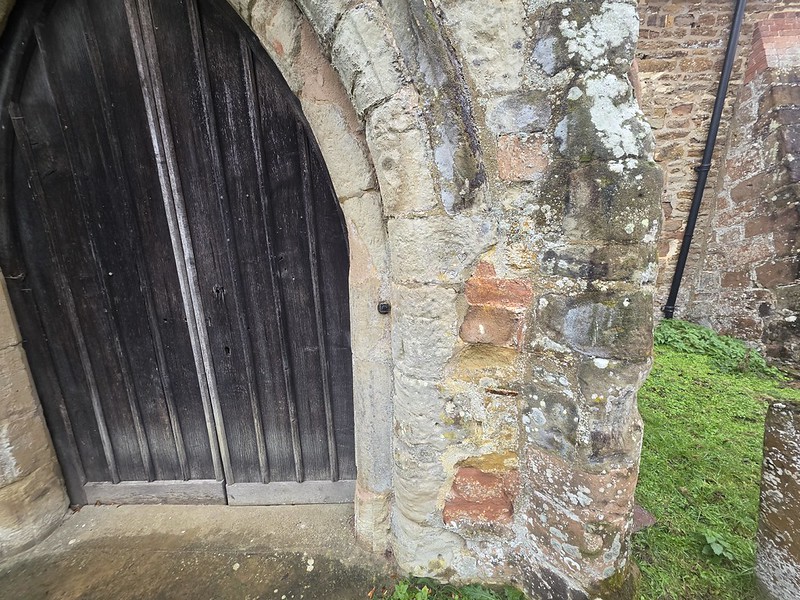
Having recently visited St Peter’s Church in Wolfhamcote, I’ve been reading about the extensive and highly sub-optimal damage that it received before its restoration. The architect Lyndon F. Cave’s account is rather depressing reading, especially alongside the recollections of Edward Reid-Smith, who helped campaign for its preservation. Reid-Smith recalled that Herbert Wilson had found the windows intact when visiting around 1941, but by their joint visit in 1949 there was rubbish on the floor, broken glass and damaged seating. In a bid to show the church some love they began to visit on a regular basis to clean the building and they purchased a visitors’ book and hoped that showing it wasn’t abandoned would help keep it secure. It didn’t, someone pinched the book.
Cave also describes how attempts to repair the building proved to be in vain. A replacement copper roof was stolen across three separate thefts, whilst a stolen bell was at least fortunately recovered before it could be melted down. The names of the two thieves who stole the bell, recovered in a ditch, were Frederick P Moore (aged 33 in 1952) and William Graham (aged 21 in 1952), both from Coventry and both sent to prison. Inside, the font was broken into two pieces and the pulpit was destroyed into scattered fragments, whilst windows were smashed and wooden fittings wrecked. Eventually the main doorway was just bricked up in a bid to protect it. It must have been hugely depressing for volunteers to arrange for these repairs and then for thieves to steal and destroy what they had done. Some items, such as a medieval screen, were taken away for safety, but other items such as Elizabethan panelling was stolen.
As if things weren’t bad enough, an even more disturbing incident was reported by the Daventry Weekly Express in 1952. Intruders had broken into the mausoleum and opened a coffin, scattering a woman’s remains across the vault. The newspaper suggested that they had been searching for jewellery and it’s unknown if anything was stolen. Reid-Smith and Wilson gathered the remains, and Reid-Smith later recalled that the church authorities arranged a private recommittal before they were sealed away again.
The diocese decided that the answer was to reduce the church to a picturesque ruin, which strikes me as a rather shameful lack of ambition for an organisation with some interest in churches. Fortunately, opposition led by Ivor Bulmer-Thomas helped prevent that and the building passed to the Redundant Churches Fund, now the Churches Conservation Trust, in 1972.
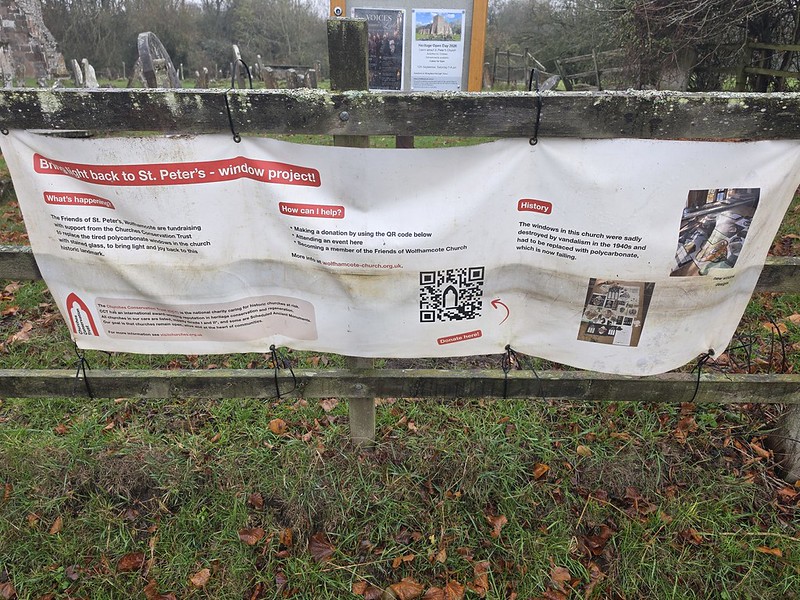
It’s hard to see in the church as there’s only one window that has normal glass in, the rest are polycarbonate window panels which were installed to replace broken glazing. Those panels have become cloudy, prompting the current appeal to replace them with glass once again.
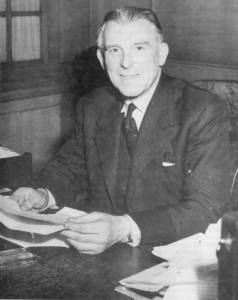
The church has survived because people repeatedly returned to repair damage that others had deliberately caused, and its survival is to those volunteers’ eternal credit. The photo is of Ivor Bulmer-Thomas, a former MP, who was one of the key figures in saving the church.