Category: Uncategorized

  • Hull – Furley and Co (Second Visit)

    Hull – Furley and Co (Second Visit)

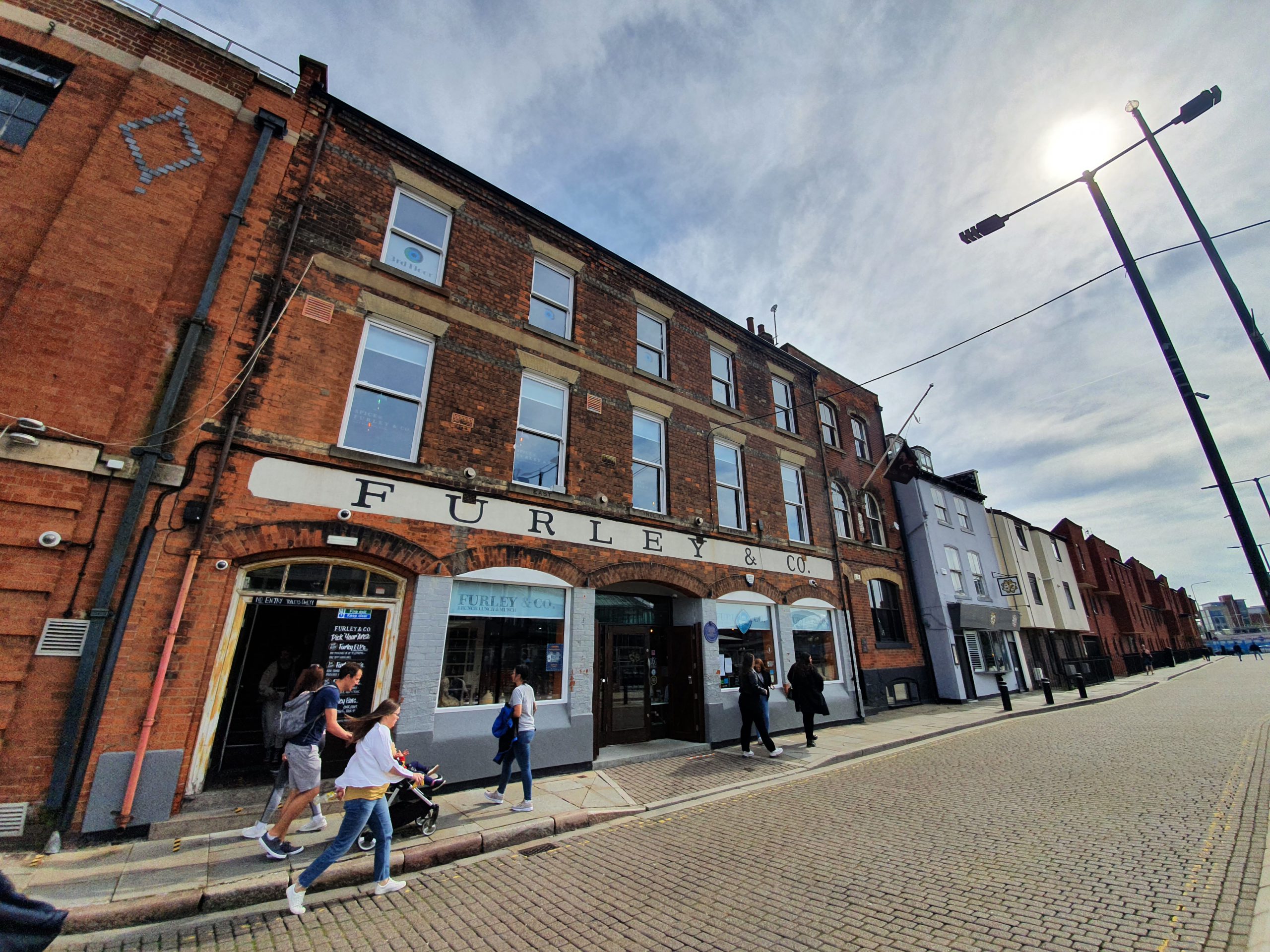
    This is my second visit to this Good Beer Guide listed pub in Hull, having already visited here in late 2019. I liked the laid-back atmosphere and felt that it was a suitable place to return to. The welcome given on entry was polite and helpful, with our pre-booked table being ready on the first floor.

    Two photos of the first-floor dining room, which remained empty until just as we were leaving. I think it was going to be a relatively busy lunch-time for them though, it was just that some customers had reserved tables for a little later on.

    How lovely. The ordering process works by ticking boxes on a piece of paper and then going back down to the bar to order. This was fine, although I wasn’t entirely thrilled at having to carry the tray of three drinks and a bottle up to the first floor, not out of laziness, but through being concerned that I might drop the bloody thing. I did hint that I wasn’t entirely delighted at this arrangement, but, fortunately, all went well.

    To be honest, this air conditioning unit looks like I’ve fitted it. But, that also means that I was entirely happy with how it looked jutting out as it does.

    And my meal, I went for a lighter snack of salt and pepper chicken wrap and this was sufficiently well presented. I’m not a big fan of smaller plates as there’s less room to cut things (and one of my fries fell off the plate onto the floor when the waitress placed it down), but the meal was more substantial than it looked when served. The chicken was tender and the fries were very moreish, although I find that they generally are. The others ordered the boar burger, which was apparently also entirely satisfactory which was very pleasing.

    The beer, which I didn’t photograph as I think I needed a rest after carrying the tray up the stairs, was Port Out from Half Moon Brewery. They’re a micro-brewery from Ellerton, which isn’t a huge distance from Hull, with the beer being rich and having a pleasant chocolatey finish to it. It seems that the pub are making a real effort to source beers locally, a plan which should be applauded.

    Everything was well managed in the pub and the range of beers was well measured with a variety of different styles available. I also like that their on-line booking system allows customers to choose their own seating in the pub, so that they can sit wherever they like without that being chosen for them by the staff. On that theme, the staff were friendly and this was a comfortable place to spend an hour. All very lovely.
  • Hull – Social

    Hull – Social

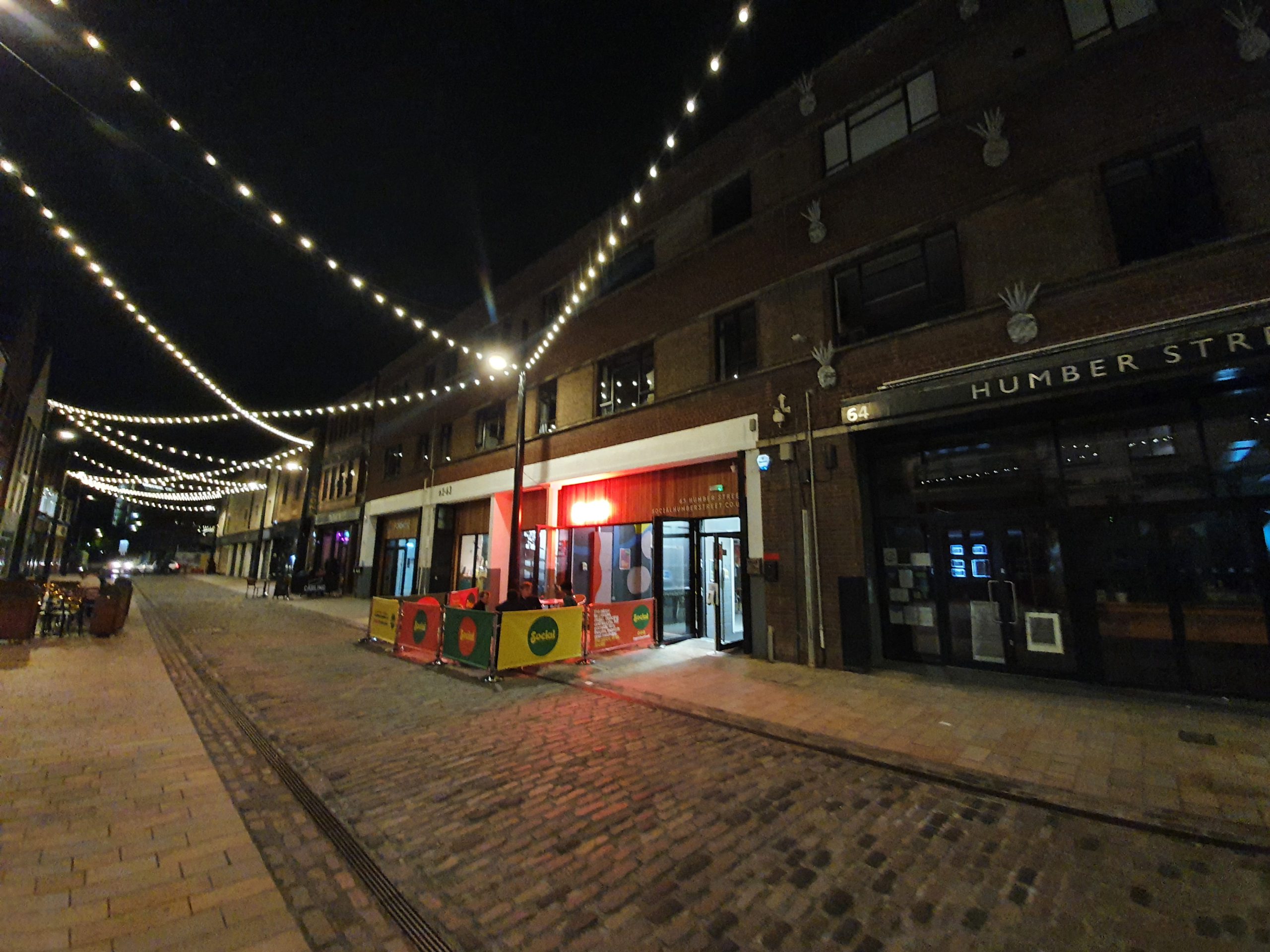
    Unfortunately, the nearby Taphouse was full (which is moderately disappointing, as I think I would have liked to write some things about Bone Machine Brewery now I’ve seen how innovative they are, but I’ll go next year instead) but the helpful staff member pointed us towards Social.

    The service was friendly and welcoming, although the only seats available were outside when we arrived. This transpired to be a good thing given the music inside (I can’t be doing with too much loud noise at my age…..) and the service was attentive given that three different staff tried to take our drinks order. But, best to be too attentive than not bothered enough, so it felt a sufficiently comfortable environment.

    I think it’s fair to say that the bar wasn’t entirely aimed at customers like me, but the drinks menu had a decent stab at trying to cater for everyone. Seeing Camden Hells was acceptable to me, and the appearance of Brewdog Punk IPA and Schofferhofer are to the bar’s credit. So, perhaps nothing inspirational, but it’ll do. The bar is located in what is becoming the on-trend area of Hull, the fruit market district, which seems very much on an upward curve with much to be positive about.

    Back to Social though, where the prices were slightly towards the higher end of the scale, but it felt safe and at least had some space for customers, which was useful. It’s probably a decent option for larger groups (well, under normal circumstances) although they don’t seem to do any food (although they do cashew nuts which didn’t surprise and delight Richard when he counted how many he got). I went for the Camden Hells and it was sufficiently adequate for me, but that’s about as far as I’d go there.

  • The Quiet London Underground (Again)

    The Quiet London Underground (Again)

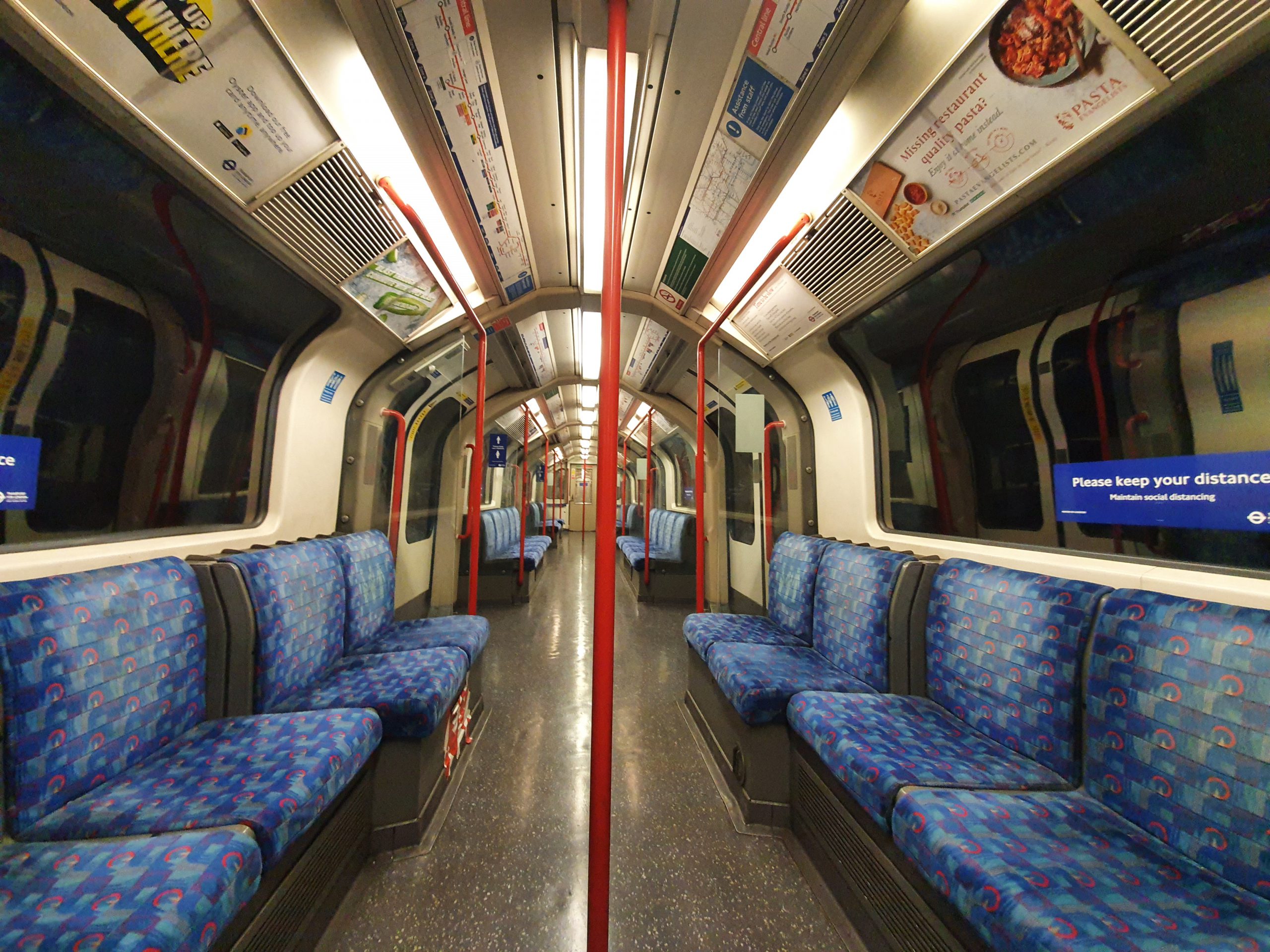
    As can be seen from the front page of the last four issues of the Evening Standard, the quietness of the Underground is causing great concern to many in London. Well, by many I mean those running the system, rather than the users of the network who are likely enjoying the opportunity to get a seat. It’s hard to see how TFL can continue to afford to operate the network in this way for much longer without subsidies.

    These photos are from my travels yesterday and today. There are times of course when the service is a bit busier, but empty carriages are still common-place. At Earl’s Court, I walked down the steps onto the platform just as the tube train doors were closing, but they then re-opened to let me on (I assume it was for me, since I was by the driver’s door and there was no-one else visible). I’m not sure that’s what would usually happen in September in London…..I can’t see things getting much busier over the next few weeks either, the tourist season is fading away and office workers aren’t flocking back.

  • London – Lambeth – Imperial War Museum

    London – Lambeth – Imperial War Museum

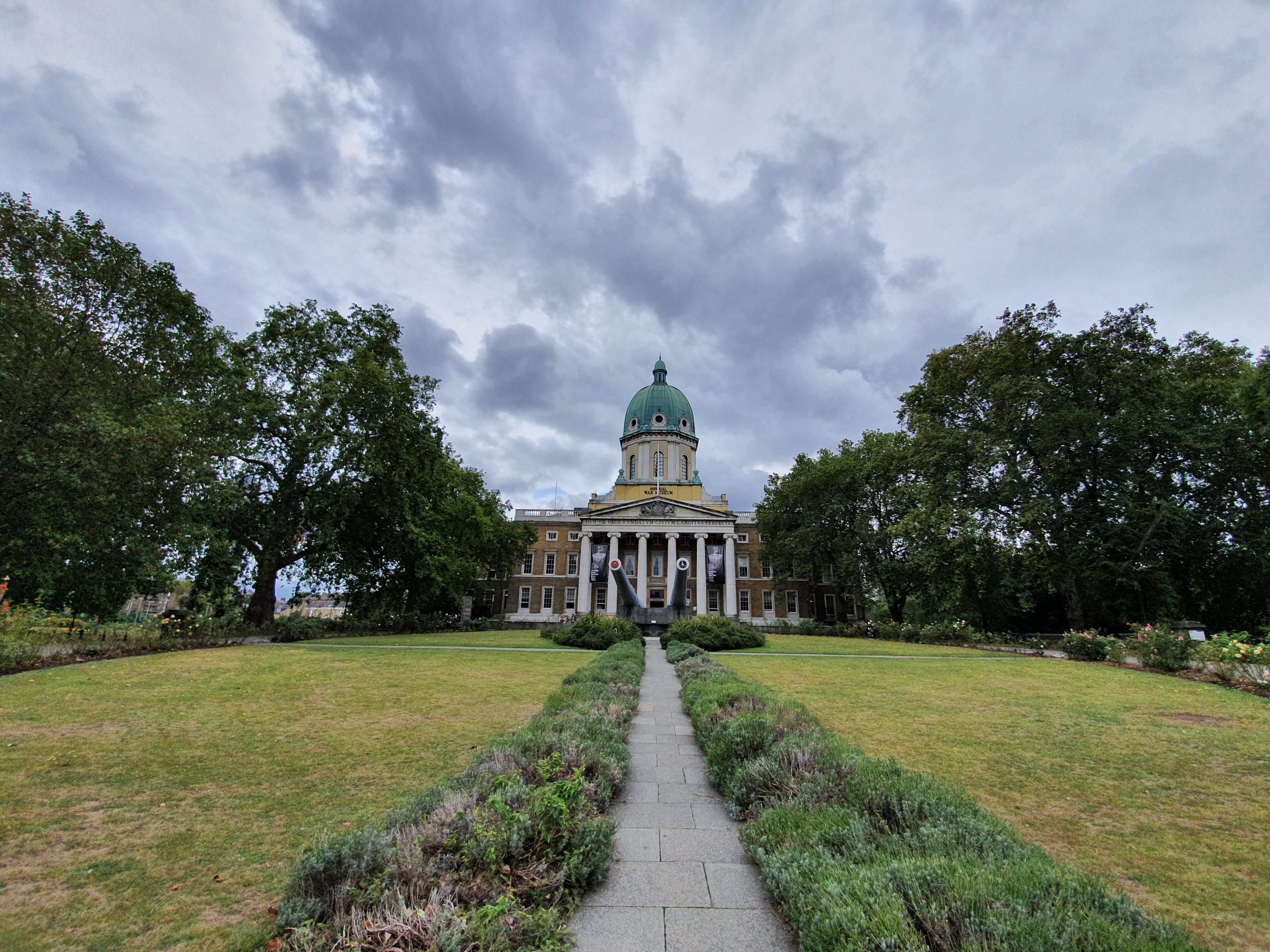
    I last went to the Imperial War Museum before it closed for a substantial refurbishment in early 2013 and the opportunity to visit now when it was quiet seemed quite appealing. It remains free of charge, provided with substantial funding from the Government, whilst it makes the rest from its commercial activities.

    The museum first opened in 1920 and it had become essential to tell the story of the First World War and other conflicts that the British had become involved with. This first museum was located at the Crystal Palace, before a new site being found in South Kensington in 1924 and then, finally, the museum moved to its current site in 1936, at what was previously the Bethlem Royal Hospital in Southwark.

    The entrance hall is impressive, with various military vehicles and planes visible. There are, broadly, four main exhibition halls which cover the First World War, the Second World War, the Holocaust and the Lord Ashcroft Gallery.

    The First World War gallery is perhaps the museum’s best, although I found it drifting all over the place and it didn’t present a clear narrative. The Second World War gallery was, in my limited view, hard to follow and again lacked any clear direction. There were lots of facts presented in a random manner and I’m not sure that I discovered anything new about the Second World War. It is a country mile behind the Museum of the Second World War in Gdansk, although it might be unfair to compare it to this Polish institution, which is I think one of the best museums in the world.

    I’m not entirely sure why the Holocaust exhibition has been shoved into the Imperial War Museum, although it has been given the size and status that it deserves within the building. The UK needs a Holocaust Museum that isn’t just part of another institution, but the Imperial War Museum is currently working on a new set of displays that are meant to complement the controversial Holocaust memorial being built by the Palace of Westminster. The Holocaust displays are excellent, although very powerful, perhaps too powerful. They have some graphic images of nudity and videos of people about to be hanged, I’m always uneasy that someone who suffered in the Second World War should be further humiliated in this way. But, this was a sizeable display and it was laid out clearly and with a central narrative. Ideally, I’d have liked the Imperial War Museum to operate a Holocaust Museum on another site (preferably nearby) where it could have more space and more funding.

    This is the top of the building, I’m not sure what it’s usually used for.

    The Lord Ashcroft Gallery was, I think, designed for children and it has the world’s largest collection of Victoria Crosses. I struggled to engage with this gallery, I wanted them to pull out interesting stories of some of the individuals who had been awarded military honours, but there were just a few words about many individuals and the most confusing mixed usage of fonts, media and display methods that I think I can recall. I think I’m getting old and grumpy, but I did see lots of children reading the displays and that’s perhaps the most important thing, that they engage with the history.

    All told, I think I preferred the more traditional nature of the old museum displays, rather than the pared back current building. I often come to that conclusion though, but the Imperial War Museum is well-reviewed and is clearly doing something which appeals to the majority of visitors. But, the staff were all helpful and engaging, with visitors seeming to be enjoying their experiences. I think I wanted something with more narrative and I would have liked more exhibits and more stories about individuals. It was a perfectly pleasant way to spend a couple of hours though and more people should come here.

    And, as an aside, I have discovered that the Imperial War Museum has placed part of their vast photographic archive on-line, which is very exciting as there are over 350,000 photos on their web-site. That’s an impressive effort, but they have 11 million photos so the size of this archive will be incredible when they’ve finished making it all available.

  • Walcott – All Saints Church

    Walcott – All Saints Church

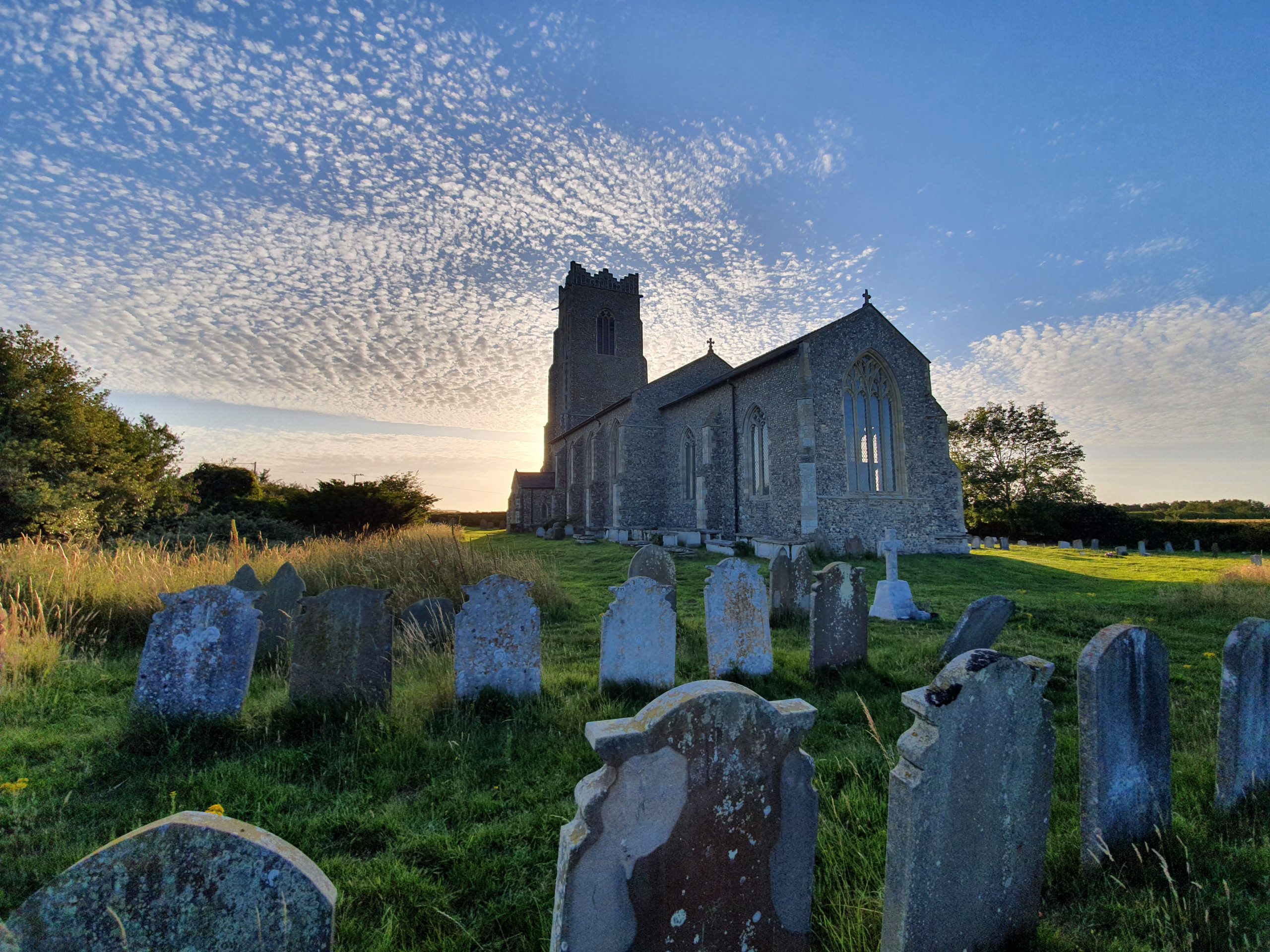
    Located near to the Norfolk coast, Walcott Church stands rather adrift in the landscape, although it’s visible for some distance. The construction dates for the building are known with some precision, the nave was constructed in 1427, the tower in 1453 and the porch in 1467. It’s a sizeable building for the size of the settlement, an optimistic construction for what transpired to be the last wave of new churches before the Reformation.

    This is another church that was updated and modernised by Richard Phipson in the nineteenth century, although internally it did need some re-ordering.

    The listed building record doesn’t give a date to this door in the tower, but it appears (to my very untrained eye) older than the fifteenth century. Given that the font inside is thirteenth-century, perhaps this came from an earlier church on the same site.

    The ironwork on the porch door dates to the mid-nineteenth century and was made and installed by Fitt and Parke of Stalham. Unfortunately, the church was closed to the public during my visit.

  • Tunstead – St. Mary’s Church

    Tunstead – St. Mary’s Church

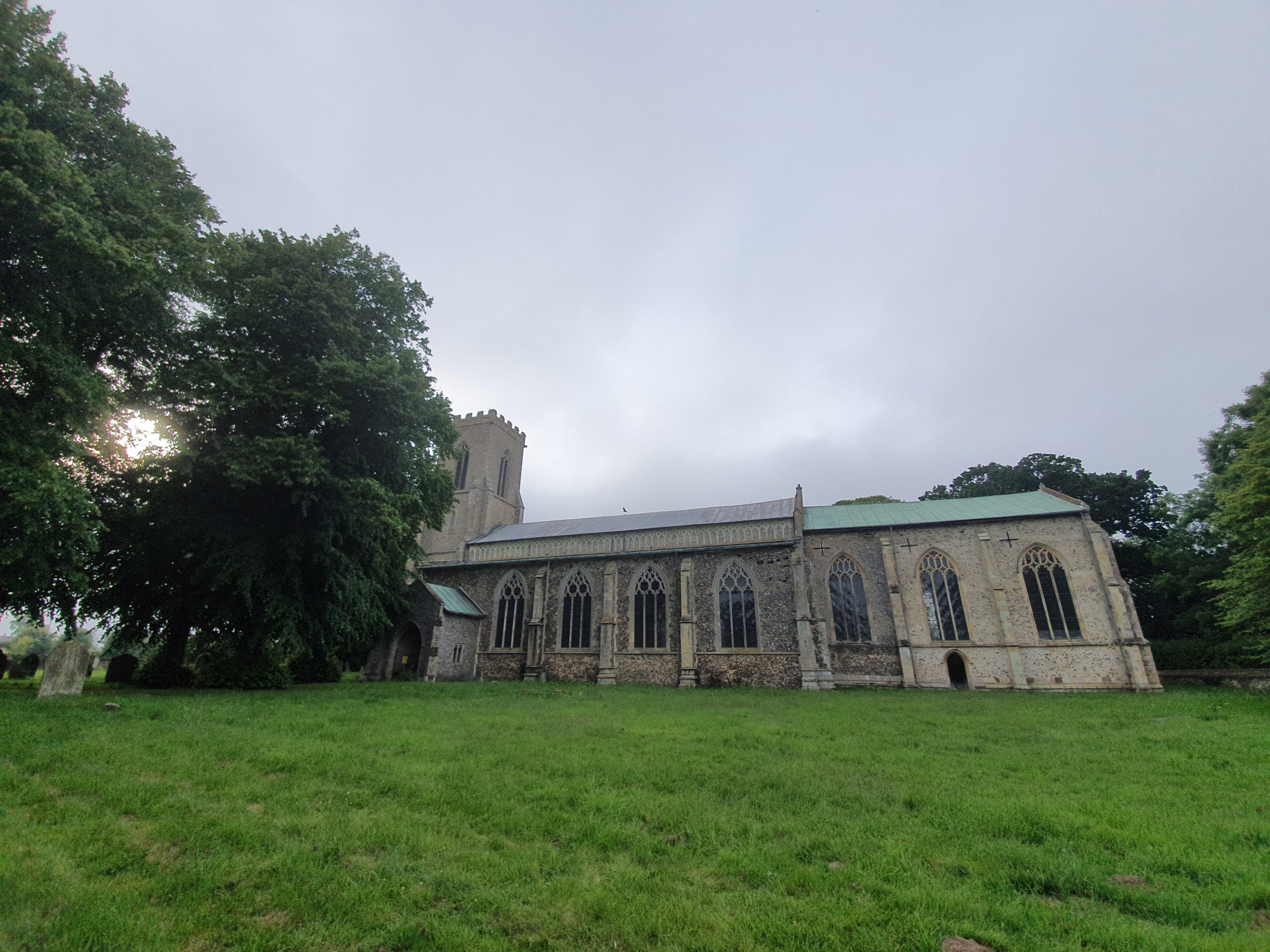
    I can’t remember visiting this church before, but it’s a substantial building and way out of proportion for the size of the settlement that exists today. All churches are currently closed at the moment, but the interior of this seems to have some mystery to it, so this is another building I’ve put on my list to visit again. I’m getting quite a long list…..

    Anyway, the bulk of this church dates to the fourteenth century and most of it was already completed before the Black Death caused so much death and suffering across the country. But the Black Death is probably the reason why there aren’t that many nearby homes and it seems possible that the church was funded by the woollen industry, in a similar manner to nearby Worstead Church.

    The base of the tower and it’s worrying to see that the building is on the Historic England Heritage at Risk register, so hopefully this will allow them to gain funding to fix some of the problems. The register mentions that plaster is flaking off the walls internally and the medieval rood screen is suffering from damp problems.

    The entirety of the east window is also blocked and I couldn’t work out why this was, but there’s an article dating back to the early nineteenth century that the glass was being smashed so often by local children that this was seen as the best solution by the church-wardens at the end of the eighteenth century. The author noted “our beautiful churches are continually being spoilt by the ignorance of peoples utterly unfit to be their guardians”. There’s sometimes a view that people always treated churches with great respect in the past, but stories like this show that this isn’t the case.

    As an aside, the same author notes that “the clearstory [clerestory] walls, instead of being pierced with windows, are beautifully panelled with flint and stone”, and they do look a little unusual in their arrangement.

    The north-east chancel window is also blocked, probably for the same reason as the east window.

    This iron working on the door is quite expansive and it’s original, dating back to the fourteenth century. Havelock Ellis wrote in 1920 that this ironwork was so well-formed that it seemed more modern than this, but its heritage seems beyond dispute and is of national importance.

    I’m assuming that this is the outside of the rood screen steps, since it’s located where the chancel and nave meet.

    Anyway, a rather beautiful church and I look forwards to being able to visit the interior.

  • 40 Course Tasting Menu

    I think I want to go here….

  • Index of Places Long Since Visited

    Locations visited in the past…..


    2018

    Peterborough, UK

    Poznan, Poland and Gniezno, Poland

    Hayes, London, Hounslow, London and Harlington, London

    Kiev, Ukraine

    Poltava, Ukraine

    Lviv, Ukraine

    Brighton, East Sussex

    Bristol

    Aldershot, Hampshire

    Oxford, Oxfordshire

    Vilnius, Lithuania

    Lewes and Newhaven, East Sussex

    Riga, Latvia

    Szczytno, Poland

    Mragowo, Poland

    Olsztyn, Poland

    Lake District

    Whitby

    Smuggler’s Trod Challenge Walk, UK

    Ely, UK

    Wisbech, UK

    Madrid, Spain

    Seville, Spain

    Luxembourg City, Luxembourg

    Heathrow T3 BA Lounge, UK

    London, UK (just briefly)

    Limoges, France

    Trier, Germany

    Gdansk, Poland

    Grudziądz, Poland

    Ridgeway, UK

    Canterbury, UK

    Luxembourg City and Thionville, Luxembourg and France

    Bremen, Germany

    Aarhus, Denmark

    Coast to Coast Two  [ Day 0Day 1Day 2Day 3Day 4Day 5Day 6 | Day 6+1 ]

    The below trips I’ve bored people with on Facebook over the years. I might go back at some stage and copy the photos over, with added commentary. I’ve gone back five years from the time I wrote this (June 2018). However, writing these up might take some time….

    April 2018 – Southampton, Bristol, Cardiff and Bournemouth (UK)

    February 2018 – Szczecin, Warsaw and Lodz (Poland)

    January 2018Los Angeles, Tucson, El Paso, San Antonio, New Orleans, Memphis, Nashville, Louisville and Las Vegas (United States)

    January 2018 – Dublin (Ireland)

    November 2017Bydgoszcz and Katowice (Poland)

    October 2017Oradea (Romania), Wroclaw (Poland) and Bedford (UK)

    September 2017 – Budapest and Visegrad (Hungary)

    August 2017 – Bath and Nottingham (UK)

    June 2017 – Hadrian’s Wall 2017

    May 2017 – Carcassonne and Narbonne (France)

    April 2017 – Southampton and Huntingdon (UK)

    March 2017 – Budapest (Hungary) and Lublin (Poland)

    January 2017 – Los Angeles, Las Vegas, Milwaukee, Chicago, St. Louis and Kansas City (US) and Dublin (Ireland)

    November 2016 – Bartoszyce, Gdansk, Sopot and Gydnia (Poland) and Sofia (Bulgaria)

    October 2016Porto (Portugal) and Zagreb (Croatia)

    June 2016Krakow (Poland)

    May 2016 – Coast to Coast 2016 (Morecambe to Scarborough)

    March 2016 – Geneva (Switzerland)

    February 2016 – Durham (UK)

    December 2015 – Milan (Italy) and Edinburgh (UK)

    October 2015 – Chennai and Bangalore (India) and Atlanta (United States)

    September 2015 – Amsterdam (Netherlands), Dubai (UAE) and Tampa (United States)

    August 2015Baltimore and New York (United States)

    July 2015 – Austin and Las Vegas (United States) and Frankfurt (Germany)

    June 2015 – Denver (United States) and Toronto (Canada)

    May 2015 – Prague (Czech Republic), Luxembourg City (Luxembourg) and Dusseldorf (Germany)

    April 2015 – Chicago (United States) and Zurich (Switzerland)

    March 2015 – San Francisco (United States) and Friedrichshafen (Germany)

    February 2015 – Houston and Las Vegas (United States) and Darmstadt (Germany)

    January 2015 – Toulouse (France), San Diego (United States) and Montreal (Canada)

    November 2014 – Belfast (UK) and Fort Lauderdale (United States)

    October 2014 – Seattle and Washington DC (United States)

    September 2014 – Lake District (UK), Singapore (Singapore), Boston (United States) and Beijing (China)

    August 2014 – Luxembourg City (Luxembourg) and Chengdu (China)

    July 2014 – Amsterdam (Netherlands), Bergen and Stavanger (Norway) and San Diego (United States)

    June 2014 – Phoenix, Dallas and Fort Worth (United States)

    May 2014 – Sydney (Australia) and Beijing (China)

    April 2014 – Dubrovnik (Croatia), Sydney (Australia) and Shanghai (China)

    March 2014 – Hong Kong (China), Brussels (Belgium) and Moscow (Russia)

    February 2014 – Los Angeles (United States) and St. Petersburg (Russia)

    January 2014 – New York (United States)

    December 2013 – London (UK)

    November 2013 – Copenhagen (Denmark), Chennai (India) and Berlin (Germany)

    October 2013 – Rome (Italy), Baltimore (United States), Doha (Qatar) and Barcelona (Spain)

    September 2013 – Hyderabad and Mumbai (India) and Kissimmee (United States)

    August 2013 – Bangalore and New Delhi (India)

    July 2013 – Manchester (UK), Mexico City (Mexico) and Canterbury (Kent)