Category: UK

  • Great Bealings – St. Mary’s Church (Memorial to Edward Charles Porter)

    Great Bealings – St. Mary’s Church (Memorial to Edward Charles Porter)

    20250504_174616

    This memorial to Private Edward Charles Porter is located in St. Mary’s Church in Great Bealings and he was the one villager to lose his life in the Second World War. Edward was born on 18 June 1924 and he was the son of Ernest Albert and Florrie Annie Porter from the village. At the 1939 Register, he’s listed as living at ‘Homeby’ on Boot Street and was working as a market gardener labourer.

    Edward served in the 1st Battalion of the Devonshire Regiment and his service number was 14371165. By October 1943, the 1st Battalion of the Devonshire Regiment was actively engaged in operations near Tamu, a strategically important area in Burma close to the Indian border. Their duties involved extensive patrolling in the Kabaw Valley and along the line of the River Chindwin. This period of patrolling and reconnaissance placed them directly in the path of the impending Japanese offensive.

    The anticipated Japanese offensive, codenamed “U-Go” was launched in March 1944 with the ambitious aim of invading India and capturing the key Allied bases of Imphal and Kohima. As this major offensive began to unfold, the 1st Devons found themselves playing a critical role in the defensive battles. They were heavily involved in defending the series of hills that ran along the vital Tamu Road as this road was a crucial artery for communication and supply, and its control was paramount for both the advancing Japanese and the defending Allied forces.

    The War Diary of the 1st Battalion, Devonshire Regiment, provides specific details about the action in which Private Porter lost his life. On 21 March 1944, the battalion launched an attack against a small, enemy-held hill. This assault was initiated from a feature known as “Devon Hill”. The designation of this starting point as “Devon Hill” suggests it may have been a position recently captured by, or significantly associated with, the Devonshire Regiment, a common practice for naming features in a rapidly evolving battlefield. The attack involved A and B Companies of the 1st Devons and during the assault, B Company, along with the Battalion Headquarters element, came under heavy machine gun fire from well-sited Japanese positions. Two men from the battalion were killed in this specific attack and one of these was Private Edward Charles Porter, dead aged just 19.

    His body wasn’t recovered and he is commemorated on the Rangoon Memorial in Myanmar, a very long way from home. Edward, whose nickname was Jack, gave his life for his country, as the memorial states. His father, Ernest Albert Porter died at the age of 1983 at the age of 95, that’s a long time where he was likely grieving for his lost son, and his mother Florrie Annie Porter died in 1967.

  • Bar Billiards – Out of Retirement

    Bar Billiards – Out of Retirement

    20250507_190626

    I had decided this year not to play in the Norwich bar billiards league, but just to loiter around a couple of games and go to the international events in Sudbury. I’ve decided international games are really the future for my natural bar billiards talents where I continue to aspire just not to come last. However, sometimes, a hero is needed and as the Serengeti team captain Roy couldn’t find one, I agreed to play for the team once again. I got to the White Lion a little early to calm my nerves and I went with the landlord Oscar recommended Racing Pigeons from Electric Bear Brewing Company of Bath. As an aside, many things from Bath are a bit exceptional and this was a decent hazy, light, stone fruit packed little number. Anyway, pint in hand, nerves only partially frayed, I was ready.

    20250507_194626

    The draw was completed and I always hope to not be drawn third or fourth as that means the food might be brought out and my game play is heavily impacted. First is handy, it gets the game out of the way although last isn’t great as it might be the deciding game and I might crack with the pressure of it all.

    20250507_194636

    Right, we’re off. We were playing the team from the Artichoke and my opponent was playing her first league match, which is something that’s usually a curse as beginner’s luck and all that.

    20250507_201603

    I’ll take that, but I must admit to feeling the pressure a little and had a fair few rather sub-optimal shots for a while. I always think that playing first is a bit like doing karaoke sober, although to be fair, I’ve never done karaoke but I’ve listened to other people screeching. There’s a choice between grinding in the 10 and 20 shots to try and build up a steady score, or going for some of the bigger shots. I went for a few bigger shots, but only a couple came off, so I reverted to my more normal boring play. But, there’s a job to do, it’s not meant to be pretty.

    20250507_202459

    Then watching the next few games and I’d note that this is a sub-optimal shot to have to play. The Serengeti lost the second and third singles games, but there was then a flurry of excitement as the team won the next five matches.

    20250507_204157

    And the main event is now here. This year things have changed so players pay £2 each for the food which is provided, but that seemed more than agreeable to me as Oscar does provide a generous spread. Fortunately it was sufficiently generous for me to get two plate fulls (and I would add that I didn’t take these two plates at once) so I was suitably surprised and delighted.

    20250507_204649

    Incidentally, I did ask John, the Artichoke’s captain, if his team wanted to have a go at the food first. However, I think he knew that I hoped he would say no, which meant I was the ready volunteer to test matters.

    20250507_210342

    The two team captains, John and Roy. Both really wonderful welcoming people and a credit to the league.

    20250507_222425

    The pressure was off at this point so I got a Black Stag from Peak Ales, a coffee and chocolate stout with some liquorice evident in the taste.

    20250507_224629

    After the five wins in a row, it was time for Guy and I to see what we could do in the final game, although the pressure was now off us. The father and son team of John and Jack were just too strong for Guy and I, but their win was well deserved. The end result was 6-3 to the Serengeti, but there were several close games and it could have gone either way. We did miss Emma shouting about “it’s a timed game” which normally pierces the air like a bar billiards air-raid siren but we did miss her! I’m intending to go back into retirement now, just turning up to a few games to watch and to see if there’s any food going spare….

    And, as another aside, I’ve really enjoyed this whole league thing and there are a record number of teams in the league this year. It’s a way that people can be brought together and hopefully there will be more people engaged and interested with the process, with maybe even more teams next year. Pete has a Youtube bar billiards channel going at https://www.youtube.com/@NorwichBarBilliards and there’s a chance, if he isn’t scared off by editing several hours of me missing 50 shots in a row, then Zak (my official bar billiards trainer and spiritual tormentor when he’s in good form which is nearly always) and I might just embark on a tour of every table in the league. The goal? For me to finally beat him somewhere, anywhere even if I have to tilt the table slightly in my favour. But that’s a saga for another post. Watch this space.

  • Great Bealings – St. Mary’s Church (John Julian Ganzoni, 2nd Baron Belstead)

    Great Bealings – St. Mary’s Church (John Julian Ganzoni, 2nd Baron Belstead)

    20250504_175315

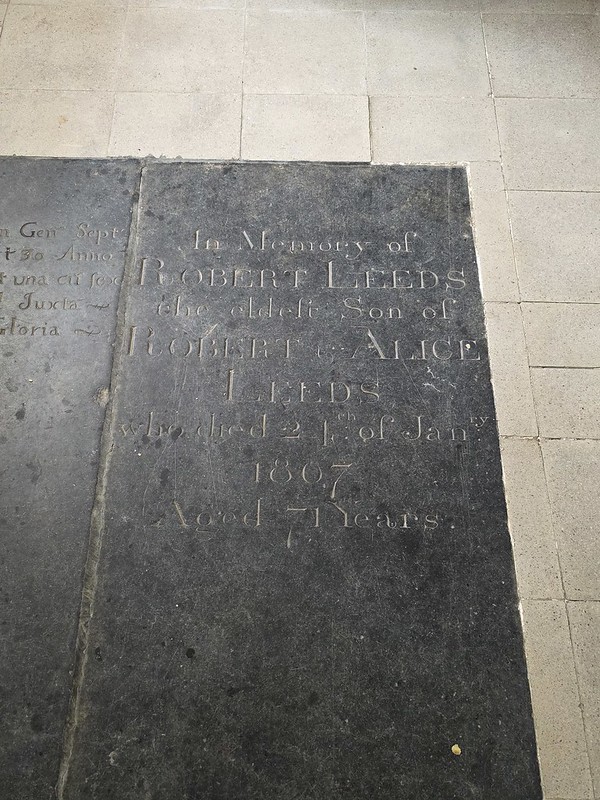
    Whilst meandering around St. Mary’s Church in Great Bealings, this grave caught my eye, commemorating the life of John Julian Ganzoni, 2nd Baron Belstead (1932-2005). John Julian Ganzoni was born on 30 September 1932, the only son of Sir (Francis) John Childs Ganzoni and Gwendolen Gertrude Turner. His father was a distinguished figure in his own right who was a barrister by profession and a long-serving Conservative Member of Parliament for Ipswich, who was elevated to the peerage as the 1st Baron Belstead in 1938. The first Lord Belstead had also served his country during the First World War as an officer in the Suffolk Regiment and his mother, Gwendolen, was the daughter of Arthur Turner, also of Ipswich.

    John Julian grew up with an elder sister, The Honourable Jill Ganzoni, who would later become known for her philanthropic endeavours, notably her significant contributions to the Belstead Centre at Woodbridge School, a lasting tribute to the family name in Suffolk. An early, perhaps formative, brush with the world of high politics occurred in his childhood when he and his sister Jill were presented to the then Prime Minister, Stanley Baldwin, at their parents’ Ipswich home which must have been really rather exciting. Such an environment, where political discourse and public service were familiar concepts, likely instilled in the young Ganzoni a nascent understanding of duty, even if his own political ambitions were not to surface for some years.

    When his father died in 1958, it meant that he joined the House of Lords, but it took him several years to make his maiden speech. Matters changed somewhat though over the next few decades as he was given appointments by numerous Prime Ministers. I think we need a table here….

    Role Department/Body Dates Prime Minister(s) Served Under
    Parliamentary Under-Secretary of State Department of Education and Science 1970–1973 Edward Heath
    Parliamentary Under-Secretary of State Northern Ireland Office 1973–1974 Edward Heath
    Chairman Association of Governing Bodies of Public Schools 1974–1979 N/A
    Parliamentary Under-Secretary of State Home Office 1979–1982 Margaret Thatcher
    Minister of State Foreign and Commonwealth Office 1982–1983 Margaret Thatcher
    Minister of State Ministry of Agriculture, Fisheries and Food 1983–1987 Margaret Thatcher
    Deputy Leader of the House of Lords House of Lords 1983–1987 Margaret Thatcher
    Minister of State Department of the Environment 1987–1988 Margaret Thatcher
    Leader of the House of Lords and Lord Privy Seal House of Lords / Privy Council Office 1988–1990 Margaret Thatcher
    Paymaster General HM Treasury 1990–1992 John Major
    Minister of State Northern Ireland Office 1990–1992 John Major

    After retiring from Government, in 1992 he took over as Chairman of the Parole Board for five years and was known throughout his career as a compassionate Conservative. He died in 2005 without children and when his sister, Honourable Jill Ganzoni, died in 2022 her ashes were scattered next to his which all seems really rather lovely.

  • Great Bealings – St. Mary’s Church (Font)

    Great Bealings – St. Mary’s Church (Font)

    20250504_175018

    As I don’t get out much, I’m always intrigued to see an old font in a church, just because of the considerable heritage that they so often have. This one is likely to date from the thirteenth century, a relatively simple octagonal bowl with recessed arches on the sides and made from Purbeck marble.

    20250504_174849

    The circular shaft, with its eight supporting columns, is likely to have been added later. I accept that getting excited about a bit of old stone in a church might seem excessive, but it’s where children were being baptised 800 years ago and that continuity of history does seem remarkable. I like things that are enduring and this has survived through centuries of societal change, conflict and renewal. And that’s not to mention that this font was initially designed for a Catholic Church, but here we are generations later with the font being used for Protestant services. It’s also likely the font where John Carver was baptised.

  • Crowfield – All Saints Church

    Crowfield – All Saints Church

    20250503_141322

    Richard and I couldn’t visit the interior of this church as a Christening was taking place, but it’s a quite stunning building and the churchyard also contains the grave of Roy Hudd.

    20250503_141125

    The church is located in the village of Crowfield which developed in proximity to Stone Street, an ancient Roman road that connected Coddenham to Peasenhall. The church was central to the original heart of the village, but later development along Stone Street has left the church as a little isolated. The church here was redeveloped to become a chapel of ease in the fourteenth century, acting as a subsidiary church under the jurisdiction of the nearby St. Mary’s Church in Coddenham.

    20250503_141300

    It’s the chancel today that is perhaps the most noteworthy, dating back to the early fifteenth century and it’s the only wooden timber framed church in Suffolk. There was a major remodelling of the church in 1862 and the nave was substantially altered, with the chancel being reworked and partly reconstructed. This Victorian rebuilding, which has arguably partly ruined the church but also likely saved it, was funded by Lady Middleton as a memorial to her late husband, Sir William Fowle Middleton.

    20250503_141610

    The church has never had a tower, but it does have a rather beautiful bell turret and this was added as part of the 1860s reconstruction of the church. Richard and I are hoping to return to the church to see the architectural treasures that might be located within and to have a closer look at the exterior of the building.

  • Food from Every Stall on Norwich Market (2025 Edition) – Week 10 and Deb’s

    Food from Every Stall on Norwich Market (2025 Edition) – Week 10 and Deb’s

    20250506_130955

    This week’s visit on the plan that James and I have to eat at every food stall at Norwich Market was Deb’s, which we visited when we did this market tour in 2023.

    20250506_131001

    The hot food options. We were welcomed promptly by a friendly team member who took the order and checked if we were eating at the stall or taking away. I went for a sausage & bacon large bap which was £5.50, an increase of £1.10 since we last visited which is in keeping with the general price inflation of the market. I also asked for the bacon to be crispy and the team member was happy to accept that request, as I sometimes think that some people find my bacon demands as a little sub-optimal.

    20250506_131436

    Wise advice, although the bloody things circulate freely around the market now.

    20250506_131444

    My bacon and sausage cooking away. James went for a double cheese burger, encouraged by myself to be fair as he was intending to have a single one, and that’s starting to cook on there as well. It was agreed by myself that I wouldn’t wait for his food to arrive before I started mine, as I wanted to ensure I started my meal at the temperature that the stall intended.

    20250506_131439

    It’s all a bit cluttered, but I like an authentic feel to a cafe rather than polished steel all over the place. Craft beer bars I like to be on-trend and shiny though of course, I don’t compromise on my standards there. I make this point as this felt like a traditional market stall, the kind of set-up that one might hope to find for a traditional lunch-time snack.

    20250506_131837

    The sauce is sweet chilli that I’ve put on. And as a food review, this is as good a bacon and sausage roll as I could desire from a market stall. But let’s take this opportunity to talk bacon, shall we? This wasn’t the anaemic, apologetic stuff you sometimes encounter. This was bacon as it’s meant to be, each rasher a crispy, bronzed warrior having bravely faced the heat and emerged victorious, with absolutely no sign of that dreaded, flabby surrender. I reject the out-dated concept that the fat is somehow the tasty bit, it isn’t, the meat is the tasty bit. I want crunch to this arrangement and that’s what I received. The portion size of the bacon was generous, perhaps overpowering the sausage slightly, but the food all tasted fresh and of a decent quality. I was left surprised and delighted by this roll, it felt like value for money to me.

    IMG-20250506-WA0004

    IMG-20250506-WA0005

    James and his artistic photos. I have to move out of the way of these as he doesn’t want me cluttering them up. He mentioned afterwards that he saw two frozen burgers being cooked and that he wasn’t expecting a gourmet experience. But, he thought they were excellent in terms of their depth of flavour, so that’s another win. He also said:

    “When asked, I must recount a recent gastronomic encounter with a seemingly unassuming double cheeseburger, procured from a purveyor of street-side sustenance – a quintessential market stall, if you will. The bovine patties themselves presented a quite remarkable profundity of flavour, a veritable symphony of umami notes that danced upon the palate with unexpected sophistication. Encasing this delight was a bun of demonstrable freshness, its delicate crumb yielding with pleasing softness. The accompanying verdant assemblage, colloquially termed ‘salad’, provided a most welcome textural counterpoint, its crispness juxtaposing splendidly with the tender succulence of the meat and the molten embrace of the fromage. Furthermore, the entire construction was served at a most agreeable temperature, ensuring optimal sensory engagement. Indeed, this offering transcended its humble origins, representing a paradigm of market stall culinary artistry, a truly delightful and surprisingly nuanced gustatory experience.”

    I was very pleased with this food, the service was friendly, the surroundings were clean and it’s a welcoming stall. I liked that there was quite an array of different sauces and condiments, all which the customer could access themselves so they could have as much as they wanted. The bacon was cooked perfectly, I felt that the pricing was reasonable and this is one of my favourite market stalls so far this year. I also noticed that there seemed to be a higher proportion of regulars than at other stalls, so they’d soon recognise me and my bacon requirements if I went on a regular basis.

  • Crowfield – All Saints Church (James Wright – Commonwealth War Grave)

    Crowfield – All Saints Church (James Wright – Commonwealth War Grave)

    20250503_141651

    This is the sole Commonwealth War Grave at the beautiful church of All Saints in Crowfield and it commemorates the life of James Wright.

    James was born on 29 March 1923, the son of Jarvis Wright and Lillian Wright. The family were listed in the 1939 register, something that seems quite poignant when there’s a death, with Jarvis, Lillian and James living together, along with Mabel Buckles (nee Wright). Jarvis ran the Bell Inn at Crowfield and he was also a farmer, with James helping out on the farm.

    On the matter of the Bell Inn, this unfortunately closed in the 1960s and is now used for residential purposes, retaining the name ‘The Old Bell’.

    20250503_141646

    James was a Aircraftman 2nd Class in Royal Air Force Volunteer Reserve, service number 1724940. He died on 5 May 1943 at the age of 20 following an air crash near Milton in Hampshire. He was in an Boulton Paul Defiant aircraft (DR940, RAF 1622 Anti Air Co-operation Flight) which crashed and also killed the pilot Norman Reilly. There’s a strong likelihood that James’s parents were told about his death when standing behind that door at the pub, with only the limited consolation that his body was able to be recovered home to Crowfield as unlike many aircraft it didn’t crash over enemy territory.

  • Crowfield – All Saints Church (Roy Hudd)

    Crowfield – All Saints Church (Roy Hudd)

    20250503_141415

    Whilst waiting for a checkpoint to open on the LDWA 100, Richard and I visited All Saints Church in Crowfield to have a little look around. We weren’t able to go inside the church as there was a Christening taking place, but we took the opportunity to have a look around the churchyard.

    Roy Hudd OBE (1936–2020) was a British entertainer who was known for his work as a comedian, actor, author and historian of music hall traditions. Born in Croydon, he began his career as a stand-up comedian and Butlin’s Redcoat in the late 1950s, going on to become a leading authority on variety entertainment and serving as president of the British Music Hall Society. He rose to national prominence through his long-running BBC Radio 2 comedy series The News Huddlines (1975–2001), he was widely recognised on television for his role as Archie Shuttleworth in Coronation Street, as well as appearances in One Foot in the Grave and Common as Muck. On stage, he earned acclaim for performances in musicals such as Underneath the Arches, winning a Laurence Olivier Award, and he was also an accomplished author.

    Roy Hudd and his wife had lived in Crowfield for some time and in February 2014 he unveiled the village’s commemorative sign which is a wooden carving which includes the church. He attended numerous local events, fetes and following his death on 15 March 2020 he was buried at the church. This rather impressive and distinctive headstone was erected at the grave just a few weeks ago and it is certainly eye-catching and its presentation is designed to look like a theatrical poster.

  • Norwich – Ship (Two Julians)

    Norwich – Ship (Two Julians)

    20210309_125522

    This is a slightly different visit to those I usually write up, it’s a pub on King Street that unfortunately closed all the way back in 1969. It was known as the Ship, or the Ship Inn, and it is the building in the photo which is painted red. This means that I haven’t visited it, although Julian probably has in his younger days. Firstly, it’s useful to have a look at the photo that George Plunkett took of the pub in 1939 from a very similar position to mine. The main door of the pub is in the centre of the photo and the former cellar hatch is underneath the window just to the left of the door.

    The building was a licensed premises from at least 1760 and it was acquired by Youngs, Crawshay & Youngs in the nineteenth century and their branded pub sign is visible in George’s photo. The company was then bought by Bullards and then that was in turn acquired by Watney Mann. After closing its doors on 26 May 1969, it was then purchased by Norwich City Council who in the following years turned it into two residential properties. The ownership by Youngs, Crawshay & Youngs was rather handy as their brewery, the Crown Brewery, was located nearby on the other side of the road, so the beer didn’t have far to go.

    The brewery advertised in the Eastern Daily Press in September 1889 that a boozer was available (fortunately, the newspaper didn’t actually keep calling every pub that in the nineteenth century) opposite the Crown Brewery and this was taken on by James Catchpole and he ran it until he died in 1898 and his wife then carrying on operating it for another five years. There was a large auction in the pub in October 1889 which included 150 lots of “useful furniture” and if that wasn’t a sale on behalf of someone else, the recently deceased landlord Walter Blyth must have liked his chairs, tables and headboards.

    20210309_125545

    Ship Yard is located behind the pub and I won’t give any prizes for those who work out how it got its name. This is the entrance to Big Ship Yard and there’s an entrance to what was Little Ship Yard on the right hand side of the pub.

    Here’s a map from the 1880s which might make things a little clearer.

    20210309_125549

    The rear of Ship Yard and the buildings down here were demolished around 1970 and rebuilt to provide more modern accommodation. George Plunkett took a photo down here in 1938 and I suspect it might be the only one surviving of this courtyard.

    20210309_125534

    Quoting the great George Plunkett, he noted that “The yard to its south has at some time been partly built over, so that while formerly wide enough for the passage of carts it will now accommodate only pedestrians. The finely carved lintel above bears a design of foliage together with the rather contradictory inscription “Princes In”; it is believed that this was brought here at some time from the famous inn of that name, first mentioned in 1391, which once stood in St George Tombland parish on the north side of Princes St.” This feels a logical argument to me, meaning that this lintel could date back to the late medieval period or Tudor period with a bit of imagination.

    20210309_125701

    That’s the former main door to the pub and I rather like that those timber surrounds to the door are original. The building dates back to around the seventeenth century and was constructed from flint rubble and topped with a pantile roof. The casement windows, the ones either side of the door, are thought to date to when the building was constructed, although the sash windows are later.

    20210309_124856

    During the period after lockdown, Jonathan and I went on an expedition to look for all the parish boundary markers in Norwich. I need to return to the posts I’ve made about these and fix the broken images, but then Jonathan and I can start completing our project.

    The loss of this pub is a huge shame and I don’t say that about absolutely everywhere, although Julian often has a crack at that line of argument. There are no pubs remaining on the stretch of King Street and imagine the heritage of this building if it was still a licensed premises, I suspect that it would be something of destination real ale venue given the history. The building was listed in 1954 and it was that which perhaps meant that the city council decided against demolishing it and instead repurposed it, so at least it has survived in some form.

  • Charlecote House – Billiards Room (Painting of George Lucy)

    Charlecote House – Billiards Room (Painting of George Lucy)

    20250426_124032

    This painting is located in the billiards room of Charlecote House and it’s of George Lucy (1714-1786) who was also known as the Bachelor Squire. The painting is by Pompeo Girolamo Batoni (1708 – 1787) and it’s that which I’m most interested in here as George had a long and complex life that is far beyond any short blog post. Batoni became famous for painting members of the British aristocracy, and indeed many others, who were visiting Italy as part of the Grand Tour. George Lucy himself noted:

    “I have shown my face and person to the celebrated Pompeo Battoni, to take the likeness thereof. These painters are great men, and must be flattered for ‘tis the custom here, not to think themselves obliged to you for employing them, but that they oblige you by being employed.”

    George Lucy arrived in Naples in 1756 and soon realised that he didn’t quite look the part and he promptly asked for his clothes to be shipped from Charlecote to Italy. I’m not sure how you would go about doing that, as UPS weren’t quite fully formed at that point, but it didn’t do much good as the vessel they were on was promptly intercepted by Moorish pirates and his fineries ended up in Algiers. It was in 1758 that he moved onto Rome, with what I assume was a new wardrobe he had acquired out there, as he was clearly in no rush on this Grand Tour, and it was then that he commissioned Batoni to paint him. This was a considerable honour, the artist didn’t speed paint and he was careful what work he took on.

    Lucy paid 40 guineas for this artwork which was completed after he had left Rome and so it was shipped back, fortunately not being intercepted by pirates on this occasion. He looks very on-trend in the painting, he’s wearing fancy and fine clothes, he looks elegant and he looks very travelled. Batoni was often said to have inspired Thomas Gainsborough and on Lucy’s return he also had a painting commissioned by the British artist. The phrase Bachelor Squire was polite, he was known by others as the “wild bachelor”, obsessed with travel, society and food. I make no comment. Lucy found the process a bit of a faff, he had to sit on three occasions for Batoni and he wrote to his housekeeper at Charlecote that “he would not undertake to do me in less time”.

    Batoni’s paintings are scattered everywhere today, but this one of George Lucy hasn’t gone anywhere far since it was installed in Charlecote in the late 1750s. Along with the entire house, it was given to the National Trust in 1946.