[I originally posted this in August 2018, but have reposted it to fix the broken image links]
The last stop of my visits to pubs in Whitby mentioned in the Good Beer Guide was to the Station Inn. It’s an interesting pub with a main bar area and two smaller rooms located off of it. There was a vibrant feel to the pub, but it remained friendly and welcoming.
I was a little confused as to why the pub seemed relatively modern and didn’t seem to be of a contemporary date to the railway station opposite, but it appears that it was reconstructed in the 1930s. It was also known as the Cutty Sark until the 1980s, although the current name seems more appropriate.
Is this real? I’m veering on the side of thinking that it’s not.
There are numerous historic signs relating to the railway industry on the walls of the pub.
The real ales are listed on a blackboard and there were around seven available during my visit. I went for the Whitby Jet Black which is from the local Whitby Brewery and it had a pleasant taste with a chocolate flavour.
This was another Whitby pub where locals burst into song, all adding positively to the friendly ambience. The staff in the pub were personable and welcoming despite how busy they were, with no seats available during my visit.
The pub is located opposite the railway station and is also in an area that would attract tourists, but it still had the feel of an authentic locals’ pub which was welcoming to all. The Station Inn has also won numerous CAMRA awards, with a few real ciders to choose from in addition to all of the real ales.
[I originally posted this in August 2018, but have reposted it to fix the broken image links]
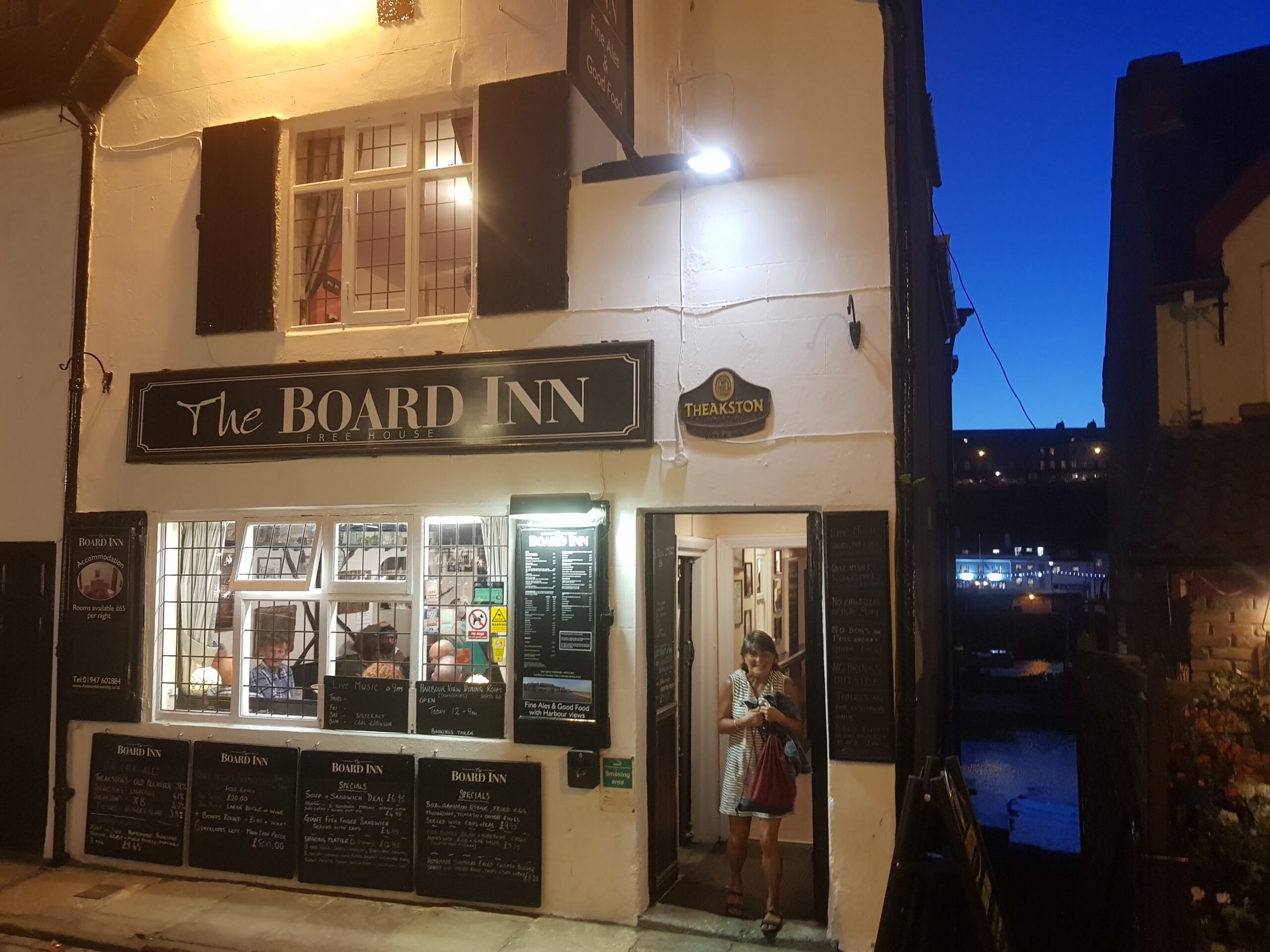
Located at the base of the steps up to Whitby Abbey this is an interesting and quirky pub. I was though unable to find out anything about its history either in the pub or on its web-site, although the Good Beer Guide mentions it’s been trading since at least the nineteenth century.
I tried both the Theakston XB and the Theakston Old Peculier and they were both excellent and tasted well-kept.
Seems reasonable….
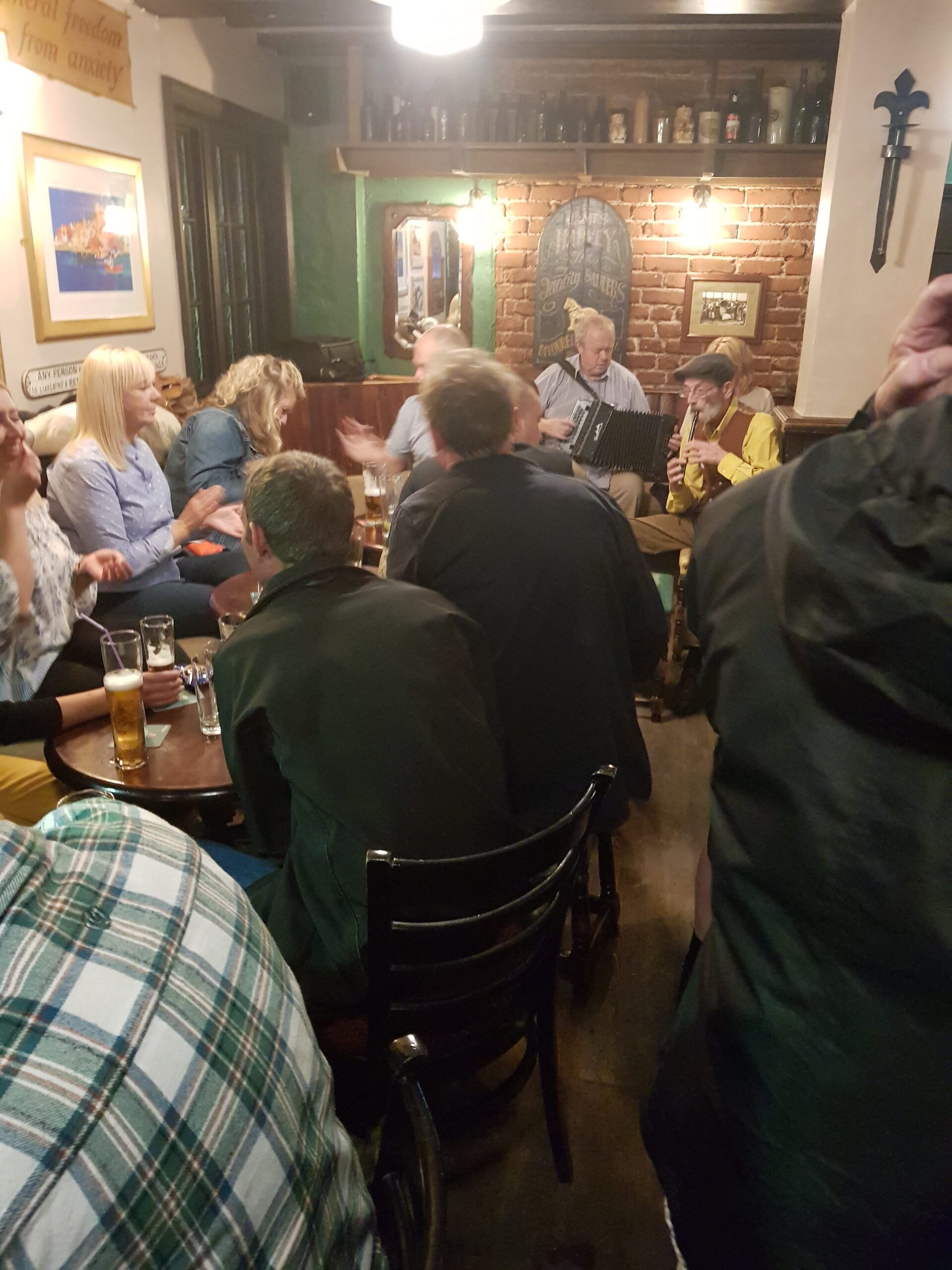
If a pub has to have live music, then some singing (without microphones) or folk type music is my preferred style of performance… The locals in the pub were having a rather lovely time playing, and I thought they were doing an excellent job. As live music goes, this is good!
I didn’t eat at the pub, but the selection seemed fairly priced and interesting. There is a restaurant in the pub, which appears to be located downstairs and also at the rear of the main part of the pub, although there’s also plenty of space for those just wanting a drink.
The service in the pub was efficient, timely and friendly, with the bar staff being happy and willing to talk about the real ales. I particularly liked that despite being in a touristy location, the pub still felt that it was a pub for locals and visitors alike, with the prices being reasonable.
[I originally posted this in August 2018, but have reposted it to fix the broken image links]
The Little Angel is another pub which is mentioned in the Good Beer Guide and it is also thought that a castle might have been situated on this site at some point. I’m rather doubtful on that point for various reasons, but it has been trading since at least the eighteenth century and the building is older.
The name “Little Angel” initially feels modern, but it’s the original name of the pub and it’s to distinguish it from the “Big Angel” located nearer to the harbour, which is now the JD Wetherspoon Angel Hotel.
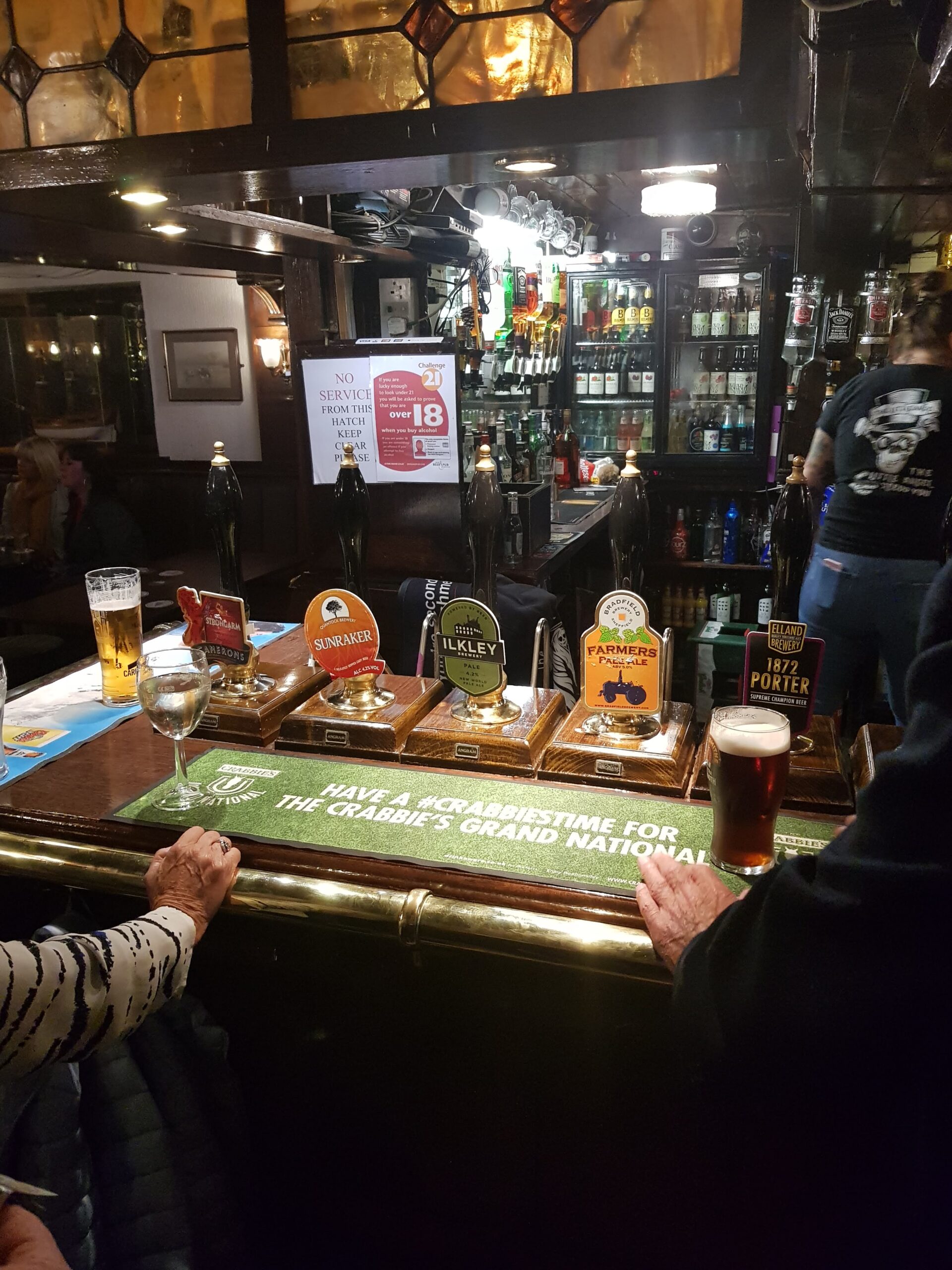
I liked the beer selection here, it was well balanced and the 1872 Porter from Elland Brewery was well-kept and at the appropriate temperature. It’s a slightly sweet porter and it has some strength, coming in with an ABV of 6.5%.
I’d already started on the beer selection, but the cider options were tempting and it’s nice to see a little display like this on the front bar.
Live music isn’t for me, but the pub has an excellent reputation for it. For me, and based only on that, this was the negative that meant I didn’t like this pub quite as much as the others I visited on the same evening. The music meant that customers weren’t engaging in the same way as in other pubs, but bearing in mind this is a self-described Goth pub which focuses on music, it’d be a little surprising if it was any other way.
As for the pub itself, it’s three rooms and has a fair amount of seating. It doesn’t serve food at the moment, but it’s spacious and the building itself is interesting because of its history. I liked the friendliness of the welcome and the bar staff seemed to be helpful and polite and the pub is doing well at winning local and national awards.
[I originally posted this in August 2018, but have reposted it to fix the broken image links]
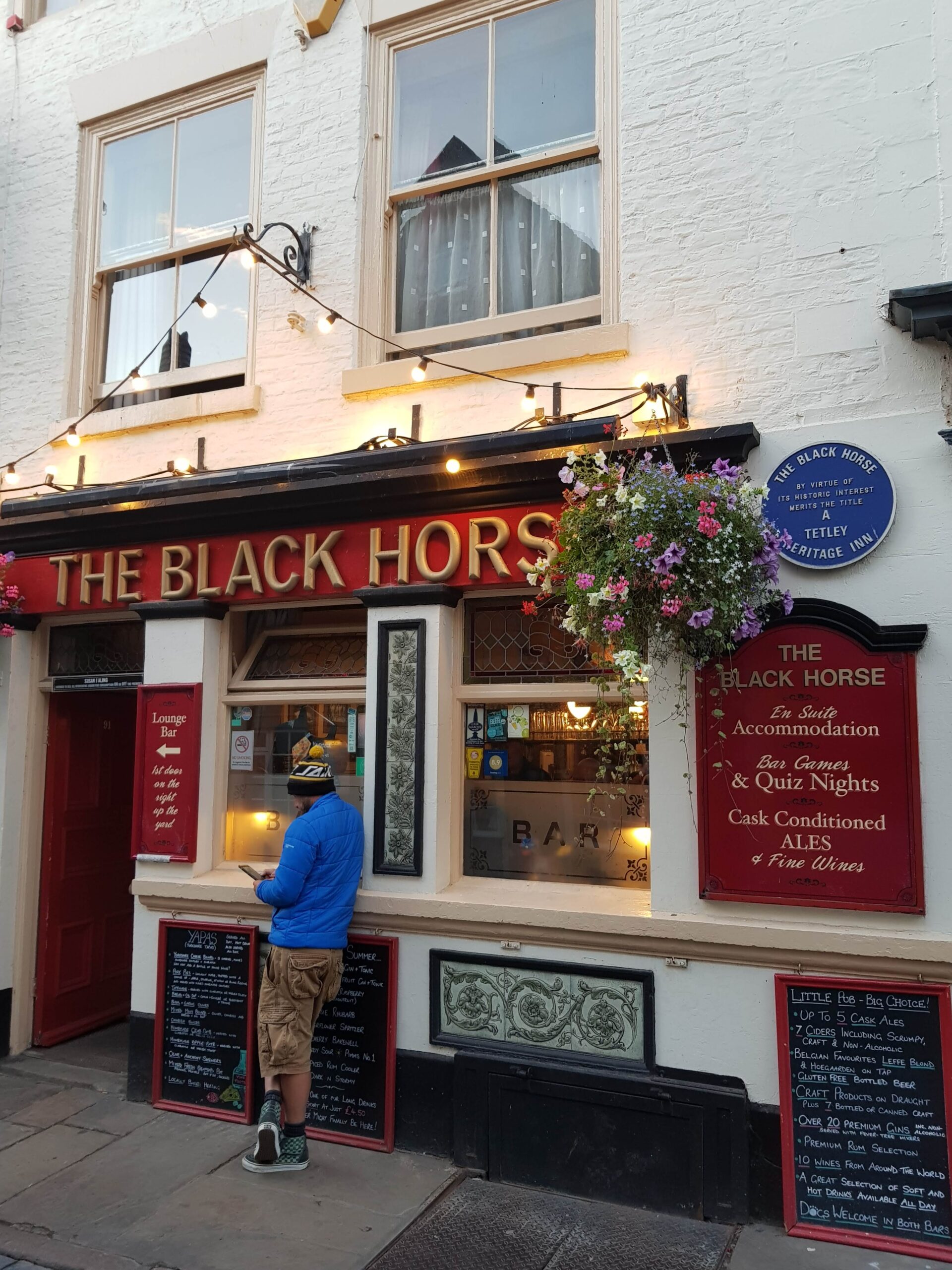
This pub is thought to be one of the oldest in Whitby and it is has been trading, perhaps, for as long as seven hundred years. These claims are nearly always fanciful, such as the debate over the oldest pub in Nottingham, but they’re interesting and add character.
The pub’s web-site also tells the interesting story that until 1828 the pub was called The White Horse and there was a scam going on with another pub of the same name which meant that advance payments were taken by the wrong pub, so the traveller turned up and had to pay again. A magistrate decided in 1828 that enough was enough, with this pub’s name being changed to the Black Horse.
The pub was nearly full when I entered, both the front and the back bar having no seats available. There were people signing shanty type songs in the front bar and the atmosphere was warm, welcoming and charming. The photo above is the nearest that I could get to the real ale pumps…..
The bar staff were attentive and helpful, being able to explain the real ales which were available. Unfortunately, the busy nature of the pub meant that I never quite worked out how many real ales they had, but it was at least four and probably more. There’s also a tapas menu available with local breads and cheeses, and it looked inventive and rather appealing.
The Good Beer Guide mentioned that the pub sold snuff in tins, an interesting item to sell in today’s smoke-free pub environments. There was a selection of different flavours, apparently with slightly cryptic names deliberately so that they didn’t look tempting to youngsters.
The pub’s web-site also mentions that the building has been used as a funeral directors, a spirit warehouse and a brothel. I also note from old newspapers that the pub was owned by John Collinson in the late nineteenth century, who operated a forge from the site and who also worked as a veterinary surgeon. The front bar itself is also relatively unchanged from when it was put in during the late nineteenth century.
A plaque outside of the front of the pub, indicating that Tetley consider it to be one of their more historic locations. The prices in the pub were very reasonable, the welcome was friendly and the beer was well-kept. Definitely a recommended first port of call for anyone visiting Whitby for the first time, although space is likely often at a premium.
[I originally posted this in August 2018, but have reposted it to fix the broken image links]
Fakenham’s parish church is centrally located in the town and there has been a religious building here since Saxon times. The main structure of the church dates to the fourteenth century, with the tower having been added in the fifteenth century.
The doorway.
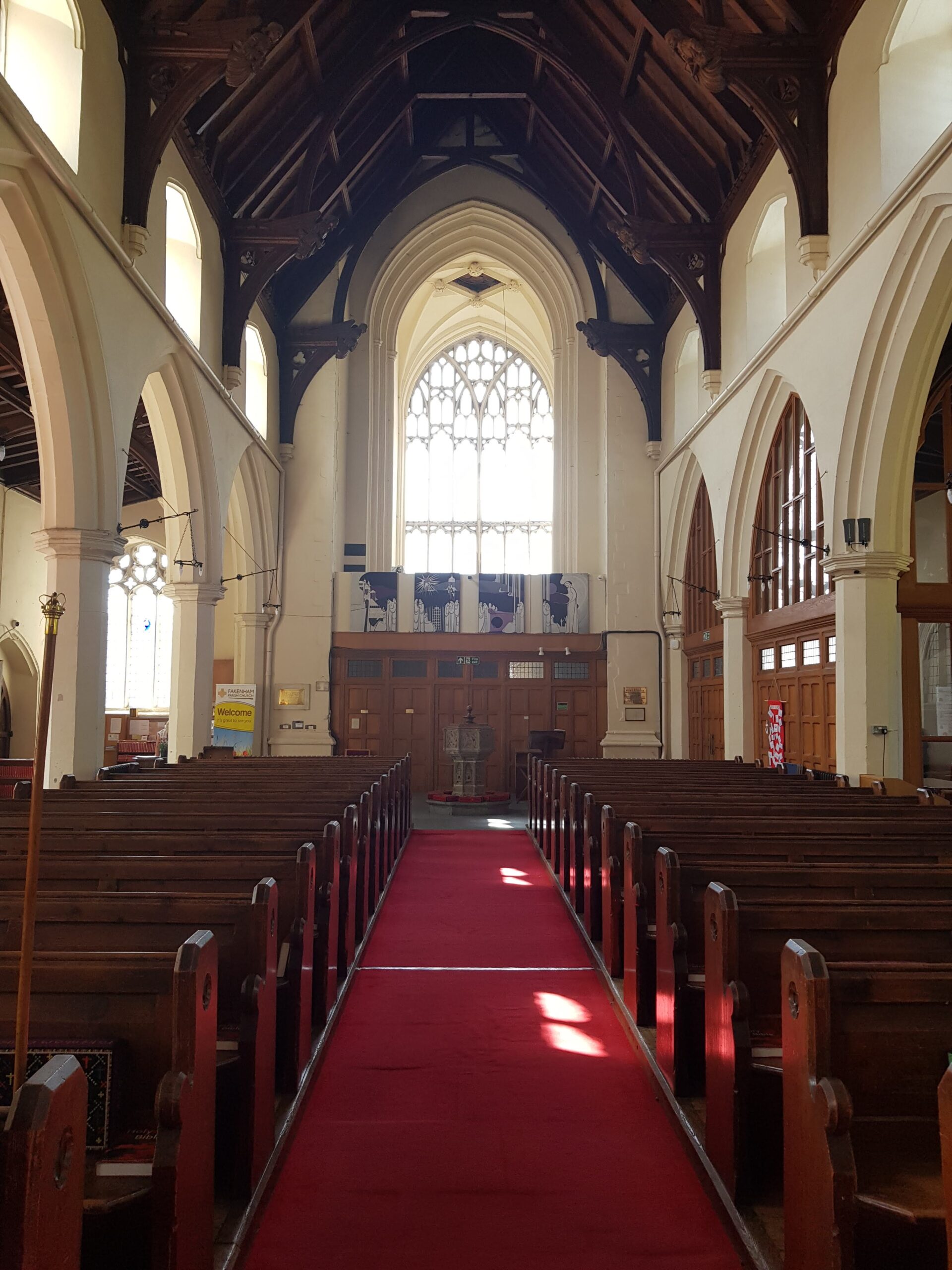
The bright and open nave. The local newspaper in November 1863 wrote about the church’s extensive restoration and commented that the two aisles were formerly two chapels, the one on the south was dedicated to St. Mary and the one on the north was dedicated to St. Thomas.
The paper added that “the church has a noble appearance externally and it is to be deeply regretted that such a fine edifice well situated on high ground should be hidden by high buildings which stand between it and the public market place, from which it would be so noble a spectacle.
The grand wooden roof which dates from the Victorian restoration.
One of the sculptures within the wooden roof.
The fourteenth century chancel.
The font dates to the fifteenth century, although one of its panels has been removed and it’s thought that this happened at the time of the Reformation.
Some rather colourful kneelers on the Victorian pews.
A memorial to Private William Daniel Blomfield, a local resident who died on active service. He died of illness at Bloemfontein in South Africa during the Boer Wars.
Richard does some very sensible things sometimes, like going to a charity auction, having too much to drink and then bidding on a five course tasting menu with champagne at a two star Michelin restaurant. So that’s why I was here. I haven’t yet won the lottery.
The restaurant is located on the first floor of the Hotel Café Royal, one of Oscar Wilde’s favourite restaurants.
Overlooking the hotel reception where rooms start from £700 per night. I had booked the £38 Travelodge at ExCel though, I know my place. Richard compromised and was at the Novotel ExCel at nearly £100 a night, but he has aspirations of grandeur.
It’s all quite decadent. I think that would go without saying though.
We were seated at a table overlooking Regent Street, it was like sitting in a calm and suitably chilled observatory looking out onto a hectic street.
The champagne, which was Bollinger and which tasted like every other champagne to me, but I don’t claim expertise here. I didn’t expect otherwise, but I wasn’t surprised and delighted at the beer list, so I stuck to the free sparkling water, but Richard splashed out £120 on the wine pairing and spent the evening beaming like he had purchased a stake in a vineyard. I would have gone for a craft beer pairing, but although this is becoming more common, it’s still not treated in the way that wine is.
The menu for the evening which was swept away soon after, but not before I took this photo of it.
I think that they expected diners to have one roll each, but Richard had three, so I did the same. And then asked for another one later on, so that was four delicious rolls. The chorizo one, which is the fluffy puff pastry roll on the left, was really quite glorious and bakery certainly isn’t just a side show here.
The amuse bouche.
This is the aged Kaluga caviar. I’m not sure I understand the mystique of caviar, this was clearly a rather decent one with a creamy and buttery flavour, but I don’t understand why it has the luxury tag attached to it other than its rarity. But, hippo is quite rare, and they wouldn’t serve that. Anyway hippo matters aside, the sweetcorn retained some bite and the prawns added some texture to the arrangement.
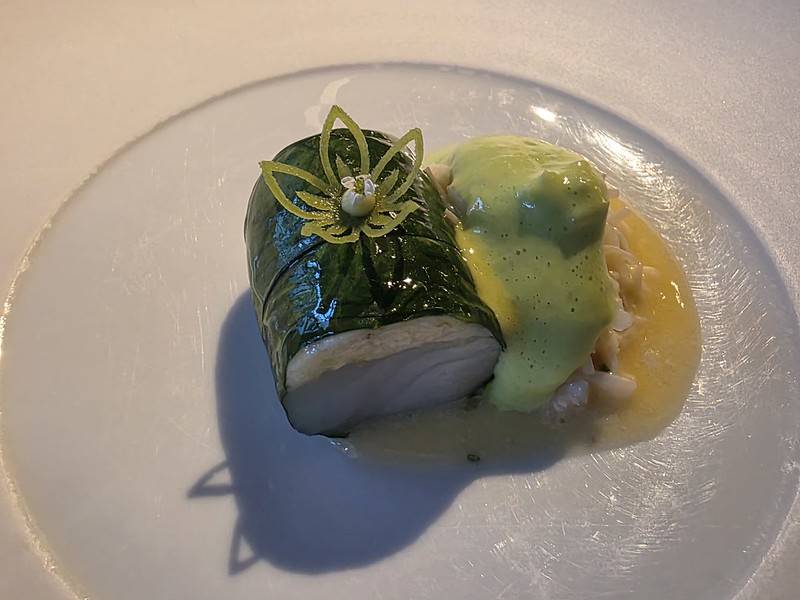
This is the John Dory with brown crab and lovage, which proved to be my favourite dish of the evening. I like John Dory, it’s light but flavoursome, delicate and easy to bully, but it was the crab on the side that I thought was the decadent and rich tasting element to this dish. The presentation was rather fine as well, with a range of tastes and textures running through it.
A little mango based palate cleanser. Richard was struggling to keep up with his wines, as he had one per course. I was busy keeping up with my rolls.
This is the quail with courgette, anchovy and Parmesan, also being Richard’s favourite dish of the evening. I don’t get to eat quail very often, it’s not something Greggs pop in their selection of bakes very often, but it was gamey in flavour and also tender. The anchovy packed a salt punch through the dish, with the ingredients all complementing each other to give a real depth of flavour, with the Parmesan giving it that suitable umami feel.
The presentation here is quite special, with the meringue at the base being punchy and the sorbet being smooth and sweet.
A final trio closed proceedings, my favourite being a little praline number with a whisper of gold and a pleasing roasted-nut finish.
The atmosphere in the restaurant was inviting and comfortable, with a quite modern selection of music playing which I hadn’t anticipated. But, the aim appears to be to have a welcoming and informal dining experience, rather than a stuffy and unnecessarily upmarket one. There’s not much point in having a beautiful restaurant if no-one is comfortable in it though, so I felt that the design elements were all appropriate and in keeping with their aspirations. There was always a touch of theatre in the presentation of the food and plating elements at the table, but that never became intrusive. The restaurant was quieter earlier on, but got steadily busier so it was nearly full by the time that we left.
Overall, this was a rather lovely decadent experience, with the service being impeccable throughout. We were never rushed, but the pace of the dine was constant and appropriate, although it of course felt that it was over too soon. The quality of the food was as expected high and Richard was beyond excited about his wines, with the servers busily clearing crumbs off the table from my excessive consumption of rolls. I thought a lot of the dishes were quite understated and I reference that in a positive way, there was a competence rather than a desire to surprise by being quirky. The only problem Richard has now is that he’s decided this is the way he needs to live, so I expect to see him at all manner of Michelin restaurants over the coming few months….
[I originally posted this in August 2018, but have reposted it to fix the broken image links]
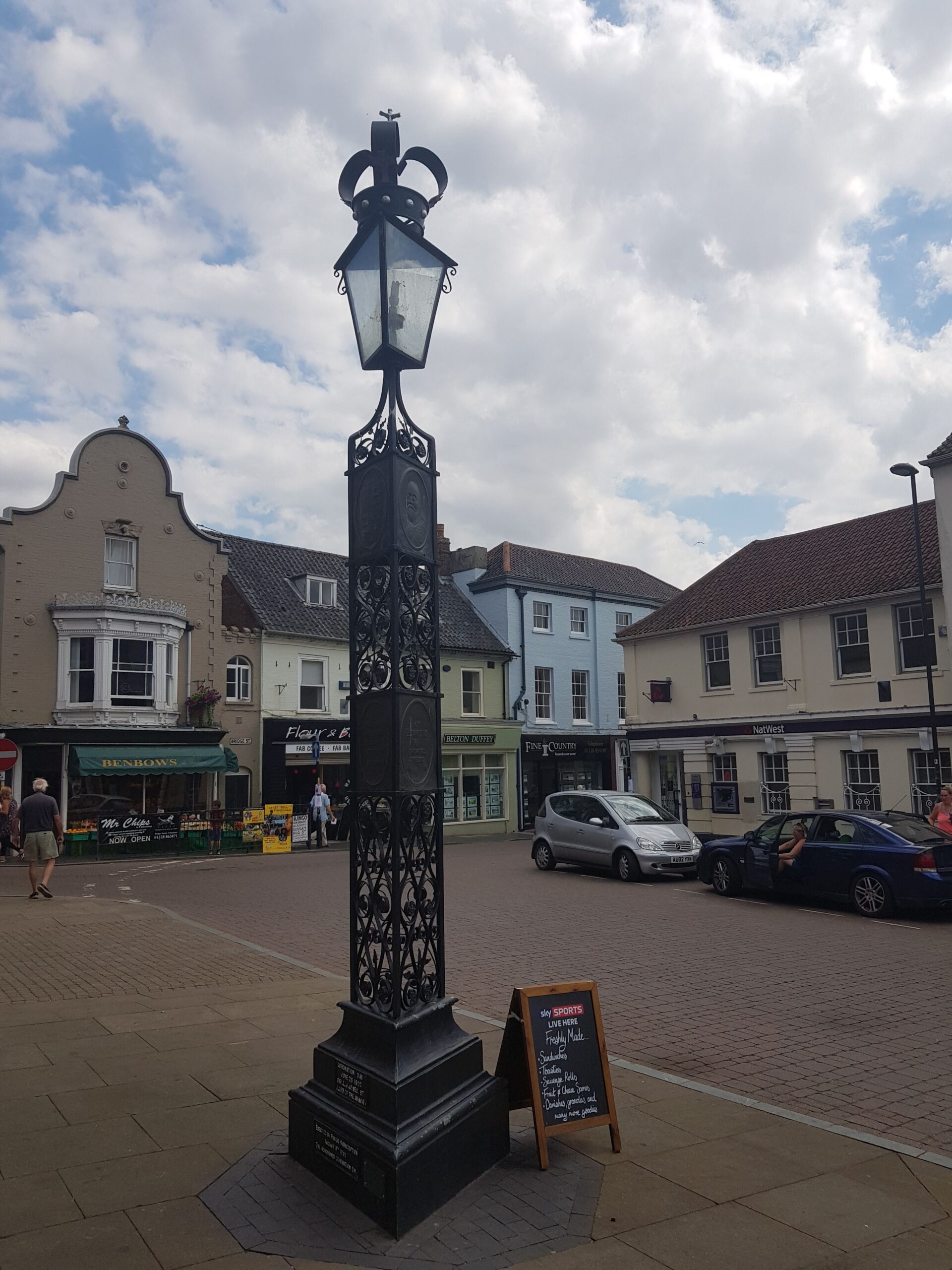
This lamp-post, which was funded by public subscription, was erected in 1902 to mark the coronation of King Edward VII as the country’s new Monarch.
The coronation date for the King was originally set to be held on 26 June 1902, but King Edward got an abscess and it had to be delayed. I can imagine the irritation that this caused to the people of Fakenham, who then had to go and buy a second plaque. All was well though for the second date, and the Coronation went ahead on 9 August 1902.
This panel notes the creation of the Royal Manor of Fakenham, linking the town to the Royal Family.
Another day, another train from Norwich to Luton Airport. I went via Cambridge and St. Pancras, but everything ran like clockwork so no delay repay today….
Lunch at Big Smoke.
A snack at Nolito.
And the evening meal at My Lounge.
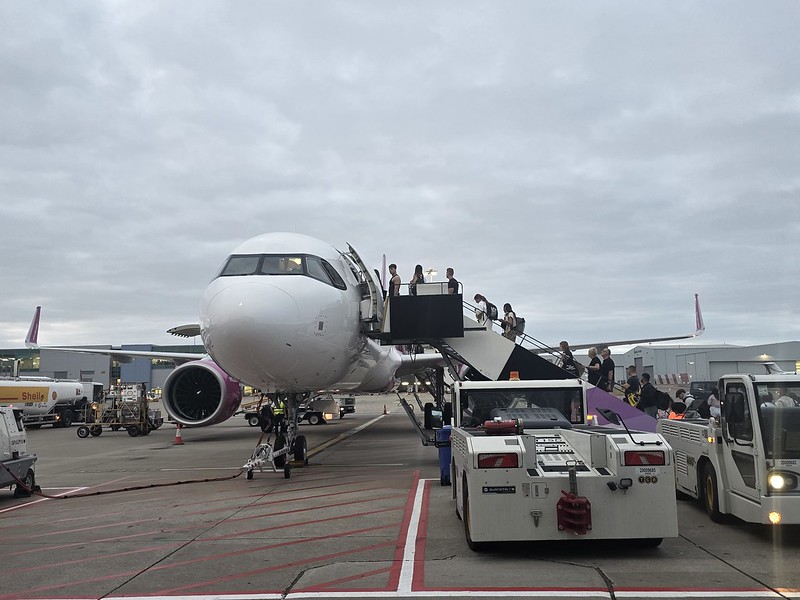
At the boarding gate.
The boarding process was efficient and well managed. The aircraft hadn’t even arrived when they started checking boarding passes, but the aircraft seemed to be turned around quickly. The aircraft is HA-LGW and I haven’t been on this one before, although that’s not entirely surprising as it’s only been in service for just under eight weeks.
Happy passengers during the flight. The announcements during the flight were helpful and informative, the crew were friendly and everything was beautifully uneventful. The seating Gods had given me an aisle seat near to the front, which was handy for border control as well as being decadent as it wasn’t a middle seat.
And safely in Wrocław on time. There wasn’t much of a wait at border control as most of the passengers had EU passports, although there was quite a lot of checking and counting my passport stamps. As I used Multipass, the flight was just £8.99, a whole arrangement that I thought was marvellous value for money. As we arrived on time and the border control checks were efficient, it meant that I was able to catch the 00:06 bus and had a 40 minute journey to the city centre, a trip which costs under £1.
[I originally published this in August 2018 and have reposted it to fix the broken image links. A lot has happened since then, I was one of the people who complained heavily when Greater Anglia tried to demolish the station and it’s now in one hell of a state since a bit of it fell off]
It was too hot in Cambridge, so I felt a visit to Brandon was in order.
This rather attractive little railway station was opened in 1845 and was part of the Norwich & Brandon Railway. The railway station services the town of Brandon and there is an interesting quirk that the station is in Norfolk whilst the main part of the town is in Suffolk.
Brandon railway station in 1845.
Brandon railway station in 2018. Sadly entirely boarded up, it has been staffless since the 1970s.
A view towards Cambridge.
It’s sad to see the buildings all boarded up, but at least they’ve tried to brighten it up a little.
The frontage of the railway station, just used as a car park now.
The railway station has been adopted, so at least there are some people taking care of it. The Brandon Heritage Centre mentions on their web-site that the group who adopted the station tried to take over and protect the buildings, but the landowners refused. Perhaps one day it’ll be able to re-open in some form….