Category: UK

  • Charlecote House – Painting of Davenport Lucy

    Charlecote House – Painting of Davenport Lucy

    20250426_123234

    This painting is displayed in the Great Hall of Charlecote House and was given to the National Trust by Sir Montgomerie Fairfax-Lucy (1896 – 1965) in 1946 when the property and most of its contents were transferred to them. This is probably Davenport Lucy (1659/1660-1690) although it was previously thought to have been Elizabeth Lucy. This habit from the time of dressing children up as girls has certainly caused some issues in identifying centuries later on who is who. It’s not known who painted it and the National Trust’s estimated painting date of 1660 is a little aspirational given when Davenport was born and so it likely dates to around 1665.

    Anyway, it’s time for a table.

    Date Event
    c. 1659/60 Birth
    1677 Death of father, Sir Fulke Lucy
    24 May 1680 Commissioned Cornet, Royal Horse Guards
    1681 Jointly sells land at Bank Top (Henbury estate) with mother Isabella
    1 May 1681 Promoted Lieutenant, Royal Horse Guards
    1684 Inherits Charlecote Park upon death of cousin, Capt. Thomas Lucy
    By Oct 1684 Promoted Captain, Royal Horse Guards
    Post 1684 Sells the Henbury estate
    1689 Death of mother, Isabella Lucy
    20 Aug 1690 Killed by cannonball at the first Siege of Limerick, Ireland

    Davenport Lucy was the eldest son of Sir Fulke Lucy (c. 1623–1677) and Isabella Davenport (d. 1689) and Sir Fulke was the sixth son of Sir Thomas Lucy and Alice Spencer (with Richard Lucy being the third of six sons). As a younger son in a large gentry family, he did not inherit the primary family estate of Charlecote. Instead, he was the designated heir to his parents’ property, primarily the Henbury estate which he inherited from his mother.His path to establishing his own standing instead involved political service and a strategic marriage, although he did inherit Charlecote in 1684. He served as Member of Parliament for Warwick in 1659 and later for Cheshire from 1664 until his death in 1677. He was knighted sometime after the Restoration of the monarchy in 1660, evidently sharing the political skill of Richard Lucy.

    But, moving straight on to Davenport’s death. The Siege of Limerick (1690) was a key event in the Williamite War in Ireland (1689–1691), a conflict between the Catholic supporters of the deposed King James II (known as Jacobites) and the Protestant forces of King William III (Williamites). It took place in August and September 1690, following William’s victory at the Battle of the Boyne in July of that year. Serving as a Captain in the Royal Horse Guards within William III’s besieging army, Davenport Lucy was directly involved in the military operations. On 20 August 1690, during the intense fighting and bombardment characteristic of seventeenth-century siege warfare, he was struck and killed by a cannonball which I imagine he considered to be somewhat sub-optimal. It’s not known if he was buried in Ireland or whether his body was returned to Charlecote. Adding to the complexity, his lack of successors meant that they were left faffing around with the family tree to see who would take it on next.

  • Charlecote House – Painting of Richard Lucy

    Charlecote House – Painting of Richard Lucy

    20250426_123241

    This painting displayed in the Great Hall of Charlecote House is of Richard Lucy (1619-1677) who was the third son of Sir Thomas Lucy III and Alice Spencer. It’s not known who painted it, but it dates from between 1650 and 1658, showing Richard thinking he’s something of an intellectual with his book and globe. The artwork (and indeed the entire house) was presented to the National Trust in 1946 by Sir Montgomerie Fairfax-Lucy (1896 – 1965), two years after the death of his father, Sir Henry Ramsay-Fairfax, 3rd Bt (1870 – 1944).

    Richard Lucy interests me because of the period in which he lived, which was right in the middle of the English Civil War. Richard was the third of six sons of Sir Thomas Lucy (c. 1585–1640) who was himself a Member of Parliament, and his wife Alice Spencer (c. 1590–1648) of Claverden, Warwickshire. The Lucys of Charlecote were significant landowners, known not only for their administrative roles but also as patrons of the arts and scholars, fostering a notable library at Charlecote Richard’s grandfather, another Sir Thomas Lucy (d. 1600), was also an MP and magistrate, famously (though perhaps apocryphally) linked with prosecuting a young William Shakespeare for pinching some deer.

    Richard was well educated and he matriculated at Queen’s College at Oxford University on 17 September 1634, recorded as being aged 14. A young learner and all that, he must have been impressively studious for a teenager. Well, and wealthy, that helps. Following university, he undertook a period of foreign travel between 1637 and 1640, a common practice for broadening horizons and completing a gentleman’s education. Later, in 1652, he was admitted as a student to Gray’s Inn, one of the prestigious Inns of Court in London, suggesting an interest in law, even if he didn’t fancy the full wig and gown commitment. Richard wasn’t the most important though as he was third in line, behind his elder brothers Spencer and Robert. Consequently, he did not initially stand to inherit the principal family estate and it was only upon the deaths of both Spencer and Robert that Richard succeeded to Charlecote in 1658.

    Richard had done politics, he had been the Sheriff of Warwickshire from 1646 to 1647 and he was appointed to the Barebones Parliament of 1653. This was a small Parliament, tasted primarily with trying to sort out the complete mess that they’d killed the King and they now had a country that was falling apart. His appointment is intriguing as there were no elections in that year to this institution, the members were appointed by Oliver Cromwell’s Army Council. They wouldn’t have selected someone opposed to their aims, so Richard must have been tolerating their work or seen as someone competent enough to have on board to help resolve the mess that had been created.

    However, matters soon changed and Richard hit a little snag. He was mentioned as being one of approximately 40 members who were refused admittance to the House of Commons (likely during the Second Protectorate Parliament, around 1656) because they declined to take an oath recognising Cromwell’s government or pledging loyalty to the Protector. This act of refusal places Lucy within a significant group of MPs who resisted the increasing consolidation of power under Cromwell or objected to the specific terms of engagement demanded by the regime.

    Despite this little debacle, Lucy’s political standing remained sufficient for him to be elected again and in 1659, for the Third Protectorate Parliament (convened by Richard Cromwell), he achieved the notable distinction of being elected for two constituencies simultaneously: his established seat of Warwickshire and the borough of Yarmouth on the Isle of Wight. The rules then are the same as today, he had to pick one and he went with Warwickshire which made sense as he lived there and faffing about getting to the Isle of Wight would have been inconvenient. Although, perhaps he hankered over the island life, as he was elected to Yarmouth the following year and he remained the representative until his death in 1677. Although he remained relatively quiet in this Parliament, he did well to navigate the period when the Monarchy was restored, although as a major landowner it wouldn’t likely have been difficult.

    So, all told, he was something of a political survivor and he must have shown some skill in being able to navigate the Commonwealth and the Monarchy, a period of general chaos in England. So, perhaps it was only right that he did appear like an intellectual in this painting…..
  • Food from Every Stall on Norwich Market (2025 Edition) – Week 8 and Henry’s Hog Roast

    Food from Every Stall on Norwich Market (2025 Edition) – Week 8 and Henry’s Hog Roast

    20250430_131438

    Next on our project of visiting every food stall at Norwich Market for the second time was Henry’s Hog Roast. Last time I did this, it was Nathan and I who visited this stall back in 2023 and it did surprise and delight me at the time. I’m not the normal consumer here, I don’t like crackling, I don’t often eat pork and I had the expectations before of a fatty roll that wasn’t inspiring. On our 2023 visit, my fears weren’t realised and I rather enjoyed the food.

    On this occasion, I wasn’t overly excited when we randomly drew out this stall, but James was much keener on the whole arrangement as he sometimes tries to overturn the random stall that we’ve selected (but I’m tough, I never cave in). This time, there was a short queue to be served but the team member was efficient and we didn’t have much of a wait. As an aside, I understand that when we visited before we were served by the then owner, Neil Bowman, and he was enthusiastic and keen. Since that visit, he has left the stall and it has been taken over by new operators.

    20250430_131434

    The menu has expanded a little since we last visited in 2023, although when James tried to order the hog roasted tatties they didn’t have them. The price of the roll has gone up only 50p in over two years, with the addition of a new larger option.

    20250430_131632

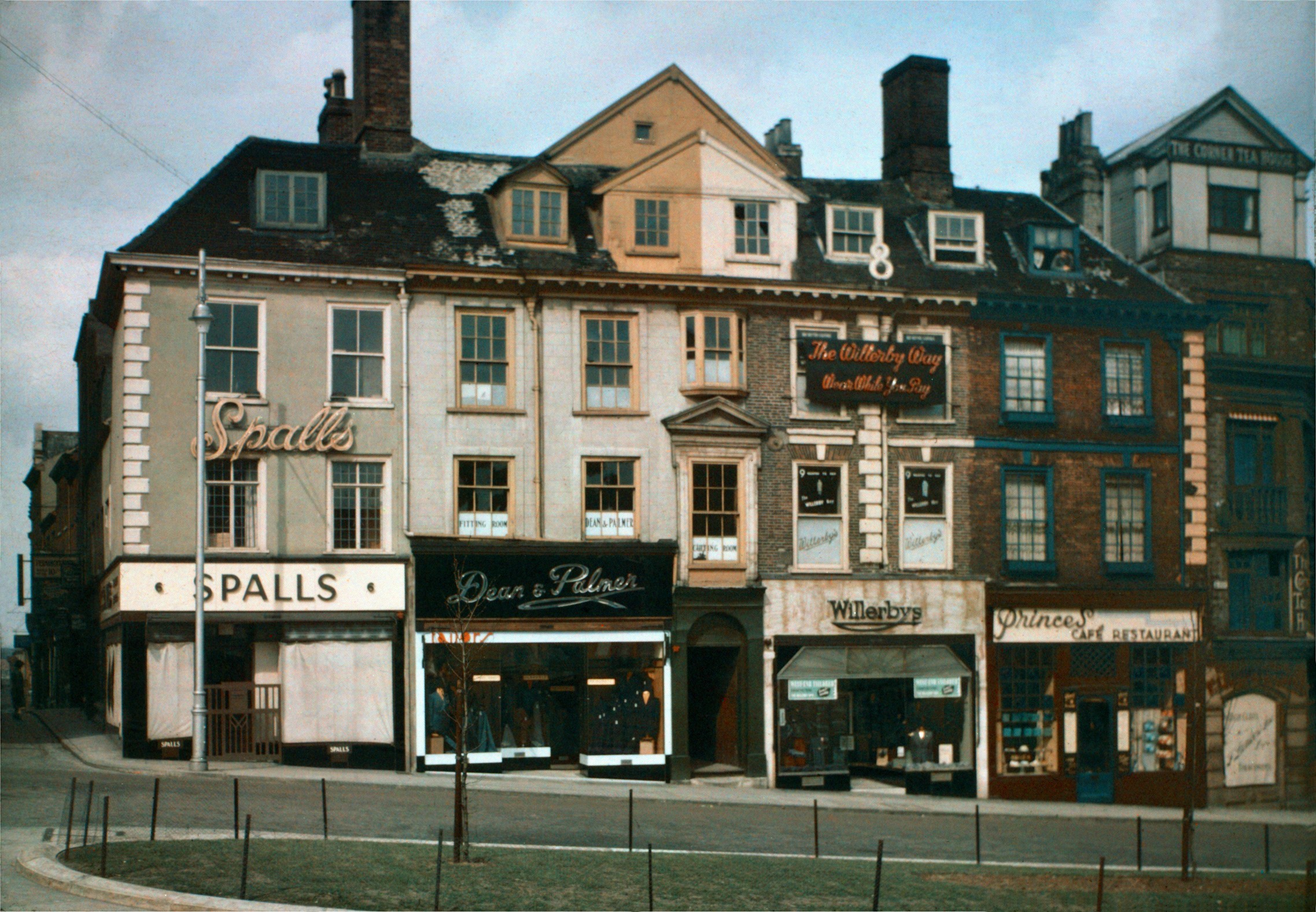
    The pork ready to be sliced. I went for a white roll which included apple sauce and stuffing with the pork. I refused the crackling and asked if James could have it, but they rejected that which feels a little sub-optimal, but there we go. Next time, I’ll do what I did before with Nathan and just accept it and take it off myself. The service was otherwise friendly and they accept cards and cash, although they state that they prefer the latter. The team member was efficient and they’ve got the service down to a fine art here.

    20250430_131800

    OK, I’m not going to hide around this opinion, this didn’t really meet my expectations although I suppose every winning streak has to come to an end. The pork was fattier than I’d like it, but I set the bar hopelessly low there and so it would be unfair to be critical that there was some fattiness to the arrangement. But, more hard to hide was that the taste was bland and the stuffing was served as such a small portion that it wasn’t discernible. The apple sauce could have been more generous, but the pork desperately needed something more and stuffing would have likely done that. The team member did put pepper and salt on the food (although very little, I would have rather done this myself), but I was struggling to taste this as the pork over-powered it. That meant that the roll was a little dry and lacking in flavour for my liking, although credit is due and I’ll note that they didn’t skimp on the portion size of the pork.

    IMG-20250430-WA0006

    James went for a tiger roll which he said wasn’t just as firm as you might expect, but that it was also a little stale. That made his roll more challenging as it had the same problems of being dry. I won’t give his comments in full (some lunch-related sorrows are private) as I might usually, but he was disappointed as he remembered the stall from years ago when the portions of stuffing and apple sauce were as he recalls rather more generous.

    I don’t intend to be negative, but this blog is full of tens and tens of positive visits and so it’d be wrong to mention when I wasn’t surprised and delighted as the roll verged on being, well, a bit arid. On an unrelated note, the local pigeons seemed particularly enthusiastic about sharing our meal, but we were very brave in fending the bloody things off. Ending on a positive, there seemed to be a regular trade here, so they’ve obviously getting a lot right, I think I was just a little disappointed that this wasn’t as good as when I visited before.

  • Charlecote House – Painting of Margaret Spencer

    Charlecote House – Painting of Margaret Spencer

    20250426_123040

    The artist isn’t known, but this painting is located in the Great Hall of Charlecote House and depicts Margaret Spencer (1627-1704). She has a direct connection to the property as she first married Robert Lucy of Charlecote (1622–1658 and son of Sir Thomas Lucy III and Alice Spencer) in 1654. After Robert’s death, she married Thomas, 4th Lord Arundell of Wardour, hence her later title. I did read Charlecote and the Lucys by Alice Fairfax-Lucy to see why Robert died, but it doesn’t give a reason and I imagine that no-one knows. Margaret and Robert had one child, Bridget Lucy who married William Molyneux, but the Lucy line seems to have died there and the title went back up the line (for anyone interested, the full tree is here).

    The artwork was presented by to the National Trust in the 1940s by Sir Montgomerie Fairfax-Lucy two years after the death of his father, Sir Henry Ramsay-Fairfax, 3rd Baronet.

  • Charlecote House – A Bird’s-eye View of Charlecote Park (1696)

    Charlecote House – A Bird’s-eye View of Charlecote Park (1696)

    20250426_122923

    This is a rather interesting bird’s-eye view of Charlecote Park from a perspective which is commonplace now, but which was a little less usual at the time, although some landowners liked being able to see the extent of their land and the grandeur of their properties. The painting is located in the Grand Hall of the building and it’s thought to have been painted in around 1696. The gardens have changed somewhat as this formal style, which I rather like, was removed by Capability Brown in the 1760s and then changed again in the 1820s. The artwork has been credited to the Dutch artist Jan Stevens (?-1722) as he painted numerous other artworks in this style, but there’s no evidence that he actually painted this one. But, in the absence of any other information, it might as well be attributed to him. I’m not sure that’s how an art historian would think, but I’m not an art historian so that solves that one.

    Here’s a better image of the house as it once looked. It shows the core Elizabethan house built by Sir Thomas Lucy I in the 1550s, before the significant Victorian alterations undertaken by George Hammond Lucy and his wife Mary Elizabeth from the 1820s onwards.

  • Charlecote House – Dining Room

    Charlecote House – Dining Room

    20250426_123409

    I think it’s quite intriguing to see a room in a National Trust property looking like this. This is the dining room at Charlecote House and it’s a key room in the property, reached from the Great Hall. This section of the property isn’t part of the Elizabethan core, it’s part of the west wing extension that was added in the 1830s by George Hammond and Mary Elizabeth Lucy.

    20250426_123349

    And here’s the problem, they’ve had a leak. As the signage notes, there was a small leak from a gutter which led to a leak that went unnoticed until the wallpaper started to peel off the wall and mushrooms started to appear. I was visiting the property with Richard, who is on his big diet, and reading that managed to make him hungry. He’s distracted by anything even vaguely food related at the moment….

    20250426_123532

    That’s their issue. Although it’s worth noting the rather impressive ornate plaster ceiling in the room.

    20250426_123404

    They’re on the second stage of fixing the rather sub-optimal arrangement.

    20250426_123357

    I rather like that they’ve decided to keep the room open so that visitors can see the work that is ongoing. The wallpaper is by Thomas Willement, it’s all a bit opulent for me, but I think that was likely the intention at the time.

    It’s a huge undertaking to fix a relatively small problem, although such is the challenge in historic buildings. If this building was in private hands, the cost of the repairs would perhaps be too onerous, but it certainly looks like the National Trust are doing a thorough repair job.

  • Norwich – Hop Rocket (Two Julians)

    Norwich – Hop Rocket (Two Julians)

    20250212_220924

    Starting with an apology that Julian and I visited the Hop Rocket in February, so it’s both taken me time to write about this visit and it also means that the photos were taken in the dying days of my last phone so the quality is sub-optimal. Anyway, the Hop Rocket is relatively new in this building on Unthank Road which was previously briefly Oliver’s Cocktails, before that it was the Amnesty Bookshop and going back further it was a bakery and cafe so it’s been a little of a chameleon of a venue. I’ve also got nothing against trendy and expensive food venues, although I’m unlikely to visit them, but it’s a delight to see this becoming a pub and indeed something of a decent one.

    20250212_220040

    When we were in the York, Tom had mentioned that the venue was holding its first birthday party, so it seemed an opportune time to visit as I know what Julian is like when there’s free cake.

    20250212_215556

    The beer choice was solid, a pretty even mix of cask and keg, with a number of local breweries and some national delights. It was a well curated beer list with numerous tempting options, all feeling rather on-trend, but there is also plenty of additional choice in the beer fridges.

    20250212_220922

    Behind the bar and there was an upbeat vibe to the venue, although it likely helped that they were celebrating their birthday. It was busy, but the service was efficient and polite, with the team member being knowledgeable about the beer range. The interior is cosy and there’s also a small outside drinking area.

    20250212_220128

    I went for the 11th Birthday Cake Celebration (Mango, Pineapple, Coconut & Lime Ice Cream Cake with Vanilla Pastry Sour) from Amundsen Brewery, which was a beautiful little number. Lime and coconut elements, this was smooth, decadent and juicy, although Amundsen does frequently surprise and delight me.

    20250212_221110

    And we did leave clutching our birthday goodie bags.

    I’m not sure that the venue refers to itself as a micropub, not least as it’s not a small venue, but it does have that sort of ambience. It’s well reviewed on-line (although there’s a bizarre review from a customer who let their dog urinate in the pub twice and seems perplexed that this wasn’t considered ideal, but my two loyal blog readers can read the full version on Google Reviews) and attracts a varied crowd, but it has a strong contingent of younger drinkers (as in early 20s, not a load of 12 year olds). They don’t do food beyond basic bar snacks, but they do let customers bring their own in and they’re pet friendly. I very much liked this venue, it’s a bit of a hike for me to get there, but I’m sure that I’ll meander again there soon. All really rather lovely and this feels like the independent pub, which I think is owned by the same people as run the Brewery Tap, that I hope lots of people support.

  • Coventry – Hops D’Amour Micropub

    Coventry – Hops D’Amour Micropub

    20250426_222037

    Richard and I had time for one more Coventry pub and so it seemed sensible to visit another venue, a micro-pub no less, listed in the Good Beer Guide, in my never ending quest to try and visit every pub in the book. Hops D’Amour was the first micro-pub in Coventry having been opened in May 2021 by a local couple, Gregg and Vyx Spencer.

    20250426_211509

    The beer list at Hops D’Amour and this had a range of beer styles and types, with a mix of cask and keg alongside a fair number of ciders. I was eyeing up the Birthday Cake from Vocation, but that had just run out when they were serving the previous customer. The pub has won numerous CAMRA awards over the last couple of years, including being the local cider pub of the year.

    20250426_211519

    The back bar and they were very apologetic when my replacement choice of Banoffee Pie from Yonder Brewing ran out. Not that they needed to apologise, especially when it was clear there was enough left of the beer for me to at least try. The team members were polite and helpful, having an excellent beer knowledge and I felt that the recommendations were appropriate.

    20250426_212028

    And there’s what they had left, with the beer being punchy in its banoffee flavours. There was a taste of caramel, banana and a fair chunk of biscuit as well, decent.

    20250426_213754

    I told Richard that he kept looking miserable in the photos, so he looked more cheerful in this one. His diet seems to have given him a resting angry face, but I didn’t tell him that as I only want to encourage people. The beer from Yonder was the Peanut Butter and Jelly and it had a jam tasting finish, being sweet with plenty of chocolate and jelly flavours, although not much peanut butter.

    20250426_220519

    The interior of the venue which remained busy throughout our visit. The Singer (of sewing machine fame) sign on the wall is a throwback to the previous occupant of this shop, with Singer having had a long presence here over the last couple of decades. There’s also an external area, which seemed to be primarily used by smokers, which was also busy during the time that we were there. There was no music playing and no television screens, which is exactly the ambience that I would have expected from a micro-pub.

    20250426_214202

    Some of the previous pump clips were being used as decoration and there are some decent brewers there, not least Castle Rock, DEYA, Thornbridge and Yonder.

    The pub is open every day of the week, but they don’t go for late closing hours and that seems a very sensible decision, there’s inevitably always a challenge from late night drinkers and this isn’t the sort of venue that needs that trade. I very much liked it here, the atmosphere was welcoming, there was an excellent beer choice, the service was friendly, the prices were reasonable and so another excellent recommendation from the Good Beer Guide.

  • Food from Every Stall on Norwich Market (2025 Edition) – Week 7 and China Wok

    Food from Every Stall on Norwich Market (2025 Edition) – Week 7 and China Wok

    20250428_131407

    And the next in our series of James and I visiting every food stall at Norwich market (again) was China Wok. Last time I did this in 2023, this was the period when Nathan and I did them and it was the first one that we went to. That was over two years ago and the prices here have remained moderate, with a price increase of just £1 since then so at least some things haven’t been ravaged by inflation.

    20250428_131404

    The concept is to pay for a base of either rice or noodles and then select a choice of three different toppings. We started off well as we queued at the wrong end, which was some navigational brilliance of ours that felt slightly sub-optimal. I recall this being the only food stall at the market which doesn’t accept cards, but fortunately we had just enough cash on us.

    20250428_132824

    It’s a solid food rating which is reassuring enough.

    20250428_131642

    The food offerings aren’t huge in number, but they had a suitable number of chicken permutations for me. There was a choice of chilli beef, chicken curry, chicken black bean, sesame chicken, sweet & sour chicken, salt & pepper chicken and fried vegetables. There is also the option of adding on chicken balls or spring rolls. The service was polite and efficient with a relatively brief wait in the queue. The nature of the service means that there’s no wait for the food as it’s served up immediately when ordering.

    20250428_131835

    From left to right, this is the chicken black bean, the sesame chicken and the salt & pepper chicken, with the meal costing £7.50 as we went large. On reflection, I would have asked for the chicken black bean sauce to be poured along the top as the rice down one end was quite dry, but the sauce added some depth to the arrangement. The chicken was all tender, a little firm with the sesame chicken, but the tastes and flavours were all there. There’s a handy and civilised area to eat our food at the end of the stall, so we didn’t have to go and face the wild pigeons, seagulls and other aerial rodents of Norwich.

    IMG-20250428-WA0001

    James and his artistic efforts. He had to edit me out and I rejected his later offer to draw me back in, as I would have likely been highly offended and annoyed at the results. I asked him to sum up his thoughts about the food and he replied:

    “Ah, the anticipation of discovering the culinary treasures held within the unpretentious confines of a simple metallic vessel is a pleasure in itself. Upon parting the folded edges, one was immediately greeted by a generous and inviting panorama: a substantial foundation of perfectly prepared farinaceous strands, serving as a delightful canvas upon which a triptych of savoury delights was artfully arranged. It was clear from the outset that this was a collation designed for substantial enjoyment, promising a diverse exploration of textures and flavour profiles within its humble, yet effective, packaging.

    Exploring the varied landscape of toppings proved to be a most gratifying endeavour. The purported sesame-infused avian constituent offered a delightful chewiness, a robust texture that provided a gratifying counterpoint to the yielding nature of the noodles, while its glaze contributed a pleasant, sweet depth. Beside it lay the bovine offering, exhibiting an exquisite tenderness that truly impressed, each morsel dissolving with minimal persuasion, complemented by a subtle, beguiling warmth that stimulated the palate without overwhelming it. The third element, the alternative gallinaceous preparation, proved equally commendable, presenting succulent pieces of poultry enveloped in a perfectly balanced seasoning of crystalline sodium and pungent piper nigrum, showcasing a simple yet profoundly satisfying flavour harmony.

    Collectively, this assemblage within its unassuming conveyance proved to be a truly gratifying collation. The interplay of the silken substratum with the distinct characteristics of the three proteinaceous components – the delightful chewiness of the sesame chicken, the melting tenderness of the chilli beef with its gentle thermal caress, and the succulent, well-seasoned salt & pepper chicken – created a harmonious and deeply satisfying gastronomic experience. It was an exemplary execution of comfort cuisine, demonstrating that even within modest presentation, genuine culinary pleasure can be found in abundance.”

    Anyway, enough of James. Overall, I thought that the food was of a decent quality and represented value for money. Not accepting cards is a reason I might not rush back, not out of any annoyance about their decision, just that I don’t tend to carry much cash so it is a slight logistical challenge. However, it was a filling lunch, the service was friendly and we didn’t have long to wait. Given all of that, I’d recommend this stall to others, there appears to be some consistency to the arrangement and I like that reliability in this unpredictable world.

  • Coventry – Gatehouse Tavern

    Coventry – Gatehouse Tavern

    20250426_210915

    After an NEC evening meal, my friend Richard demanded that we go to a pub in Coventry city centre and so I decided I would be helpful in accompanying them. The Gatehouse Tavern is a Good Beer Guide listed pub and has appeared regularly in the book. The building was formerly the gate house to the Leigh Mills, a worsted and cotton manufacturer (or whatever the right word is there) and it was turned into a pub in the 1980s, although with some significant modifications.

    A map from the 1870s, the pub is just about the second ‘T’ on Hill Street.

    20250426_203729

    The beer selection with around seven real ales available. The service was friendly and warm, it felt a welcoming pub to visit.

    20250426_203855

    The interior is atmospheric and comfortable. I didn’t investigate, but there’s also a large beer garden and judging by the on-line reviews they seem to do keenly priced food at lunchtimes.

    20250426_204548

    Stuff that’s on in the next few weeks, there’s regular live music here.

    20250426_203902

    The first beer, the Waves from Twisted Barrel which was a lemony and sessionable pale ale, pleasant but a little thin. Incidentally, Richard was happier than the photo suggests.

    20250426_204615

    The second beer, the Mild from Silhill Brewery which had roasted flavours and a slight creaminess to it. Both beers were well-kept, at the appropriate temperature and the glasses were clean.

    This is a rather lovely pub and it’s another one of those venues that I might have walked by if it wasn’t listed in the Good Beer Guide, but I’m glad to have visited.