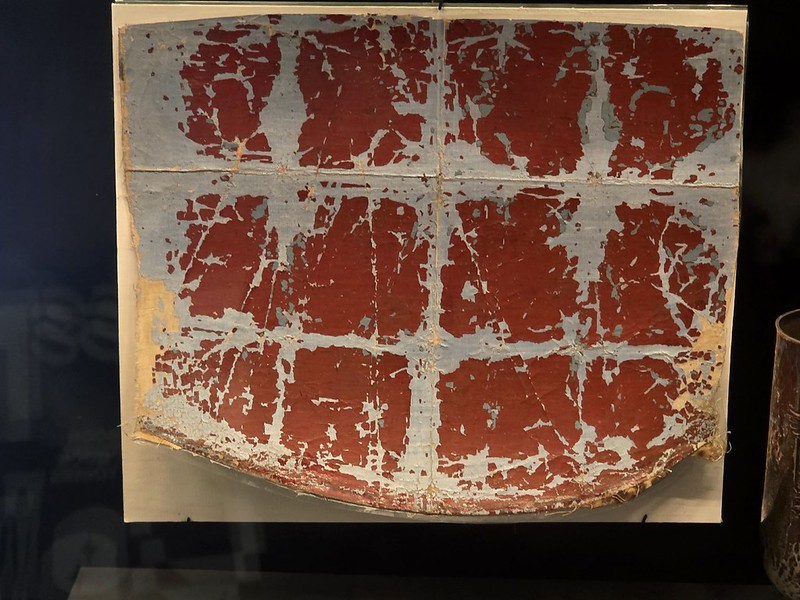
This fragment of fabric skin from Manfred von Richthofen’s (1892-1918) Fokker Dr.I does look rather modest, but it underpins something of a dramatic story. It was removed from the wreck of the triplane following the crash on 21 April 1918 by Corporal Harry Potter, part of the salvage team although souvenir hunters ended up with various bits of the aircraft.
The importance is Richthofen himself and the making of the Red Baron myth. He was not merely a successful German fighter ace, but one who understood, whether instinctively or otherwise, the value of visual identity. By having his aircraft painted red, he turned himself into something more than a pilot and more into a symbol of bravery and leadership. As the war progressed, the idea that one aircraft was painted red was seen as a little sub-optimal as it made Richthofen a target, so more planes were painted the same colour.
I like little survivals like this and because there were souvenir hunters, bits of the aircraft’s fabric skin are in museums around the world, not just here at the Air Force Museum, but at locations such as the Australian War Memorial museum. And, as another minor point that intrigued me, Richthofen was born in what is now Wrocław in a part of the city which is where I stay when visiting. I wonder what he would have thought about his birth place now being part of Poland.
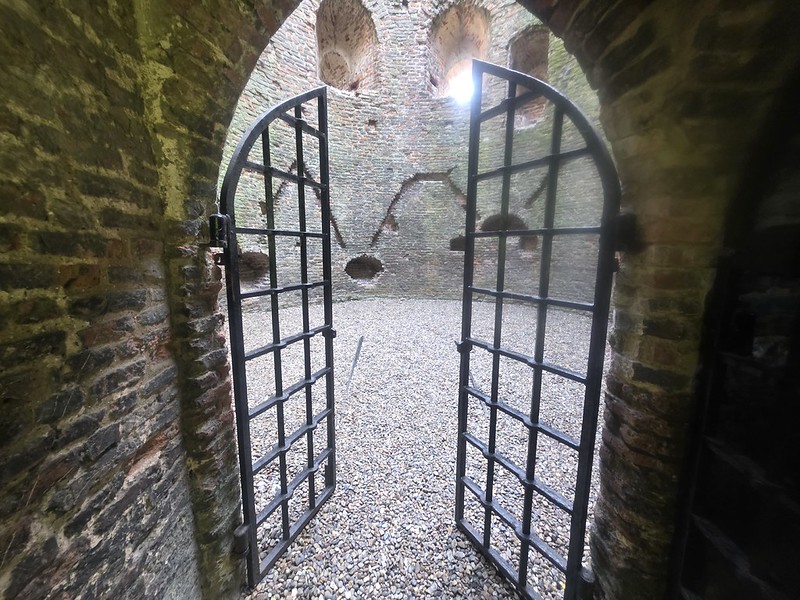
I’ve written about Cow Tower before when I was wittering on about the parish of St. Helen’s. However, I’d heard that the gate that has for years prevented people entering the site has been removed, so I thought I’d check on that arrangement.
And the gate has indeed been opened, whether by vandalism or design, I don’t know.
This means for the first time, I’ve been able to see inside the whole structure. To repeat what I wrote before:
“The tower was built between 1398 and 1399, used to defend against foreign invasion and local troublemakers. The latter caused the city some problems during Kett’s Rebellion in 1549, and the structure was damaged during that time.
The stairs that go up to the higher parts of the tower, which is all inaccessible now since the floors have collapsed. Much was demolished during the late eighteenth century, including many city walls and towers, but this survived. This was perhaps as it came under the care of the Great Hospital, who had no real need to demolish it. The building was patched up in the nineteenth century, but this was done by sloppy civil engineers and they caused large cracks to appear by their use of modern cement.”
A former fireplace that I haven’t seen before.
And the interior arrangement. Annoyingly, my camera lens was obviously not impeccably clean as there’s a blur on some of the photos which is sub-optimal.
As a slight confession, I like JD Wetherspoon venues and they also drive traffic to this ‘riveting’ blog so there will be more posts about them. If that’s what the public want, then that’s what they get.
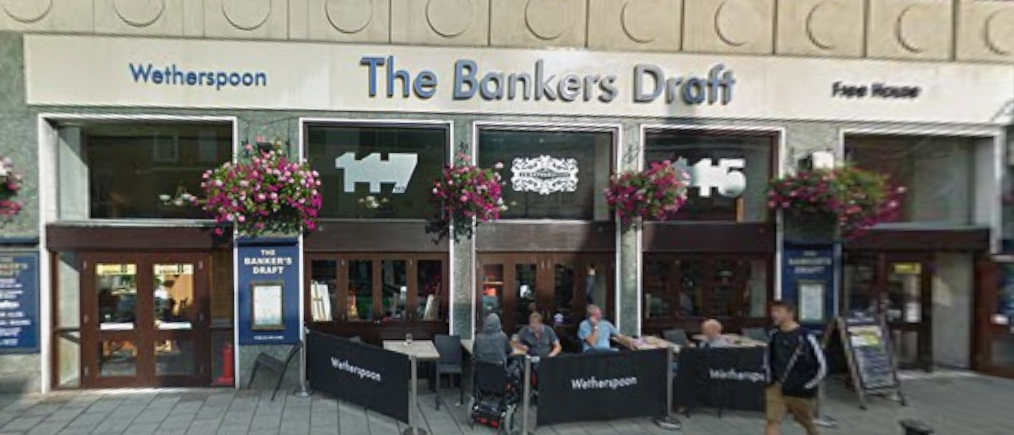
I never visited the Banker’s Draft in Bedford as it closed in 2016 and was taken over by the Brewhouse & Kitchen chain, although this in turn has now closed. The image above isn’t one of my photos, it’s from Google Streetview.
Regarding the pub name, the chain noted when it opened that:
“This pub’s name recalls its former use as a bank. This site used to be a branch of Midland Bank. Established in Birmingham during 1836, the bank opened a branch in High Street, Bedford, in the 1890s. Around the time of World War I, it transferred to 115 High Street, remaining at that address until the mid 1990s.”
The later renovation from Brewhouse & Kitchen has made it look less like a bank, but it still very much appeared like one back when JD Wetherspoon had it. Amber Taverns have since purchased the building since the Brewhouse & Kitchen set-up closed in 2024 and it’s now open again as the High Street Social Tap.
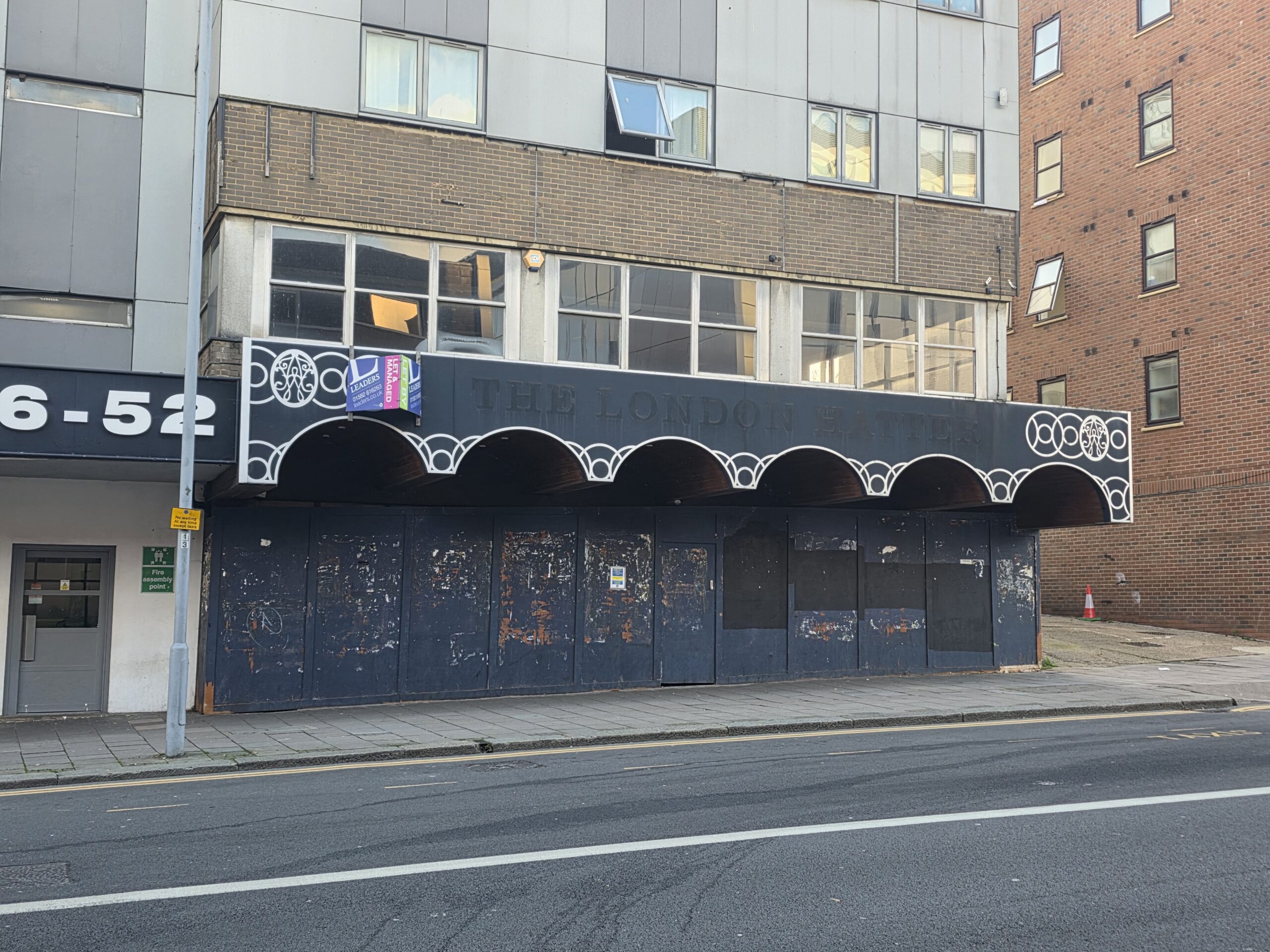
I never went into the JD Wetherspoon operated London Hatter in Luton, long since closed but the pub name is still visible on the building.
The building was formerly used by Legends nightclub until 2011 and then JD Wetherspoon spent just under £1 million converting it into a pub. It’s in a location just out of the city centre, so I assume that they were looking for the student trade or similar. It didn’t last long as the closure decision was made in February 2016, which suggests that a fair sum of money was lost here.
The pub took its name from the Londoner who was involved in building the first hat factory in Luton in the early nineteenth century. There were soon over 500 companies making hats in the town and it was an important part of the local economy in the nineteenth century.
As for the pub, it seems from photos inside that there was a professional job with the conversion, despite the rather glum external look of the place.
Continuing my theme of working out which JD Wetherspoon pubs I’ve been to over the years, this is the Swan Hotel in Leighton Buzzard. I visited here with Liam in November 2018, so this is another one that I’ve had been to recently.
Explaining the pub’s history, the chain notes:
“The former Swan Hotel is situated at the Market Place end of High Street. The landmark building, with its statue of a swan atop the façade, was given a grade II listing in May 1975 and dated as ‘early to mid C19’. However, there has been a Swan drinking house on this site for much longer. The earliest reference to it is in the year 1600. The Swan soon developed into the town’s leading coaching inn and ‘posting house’, words which may still be seen on the front of the building.”
It’s not actually evident when it was rebuilt, but it looks to have been around the 1840s. This was a proper coaching inn though, lots of space and it was noted by an author in the twentieth century that “the yard once had stabling for forty horses; garden, piggery, henhouse, garages and stabling for six horses remain”.
The pub caught fire in 1967 but was rebuilt with some improvements, such as a new conservatory area. The former ballroom was converted into bedrooms in the 1990s, but by 2009 and the financial crash it was no longer viable for the operator and they put it up for sale. In came JD Wetherspoon who have done a really rather decent job here at keeping the venue alive.
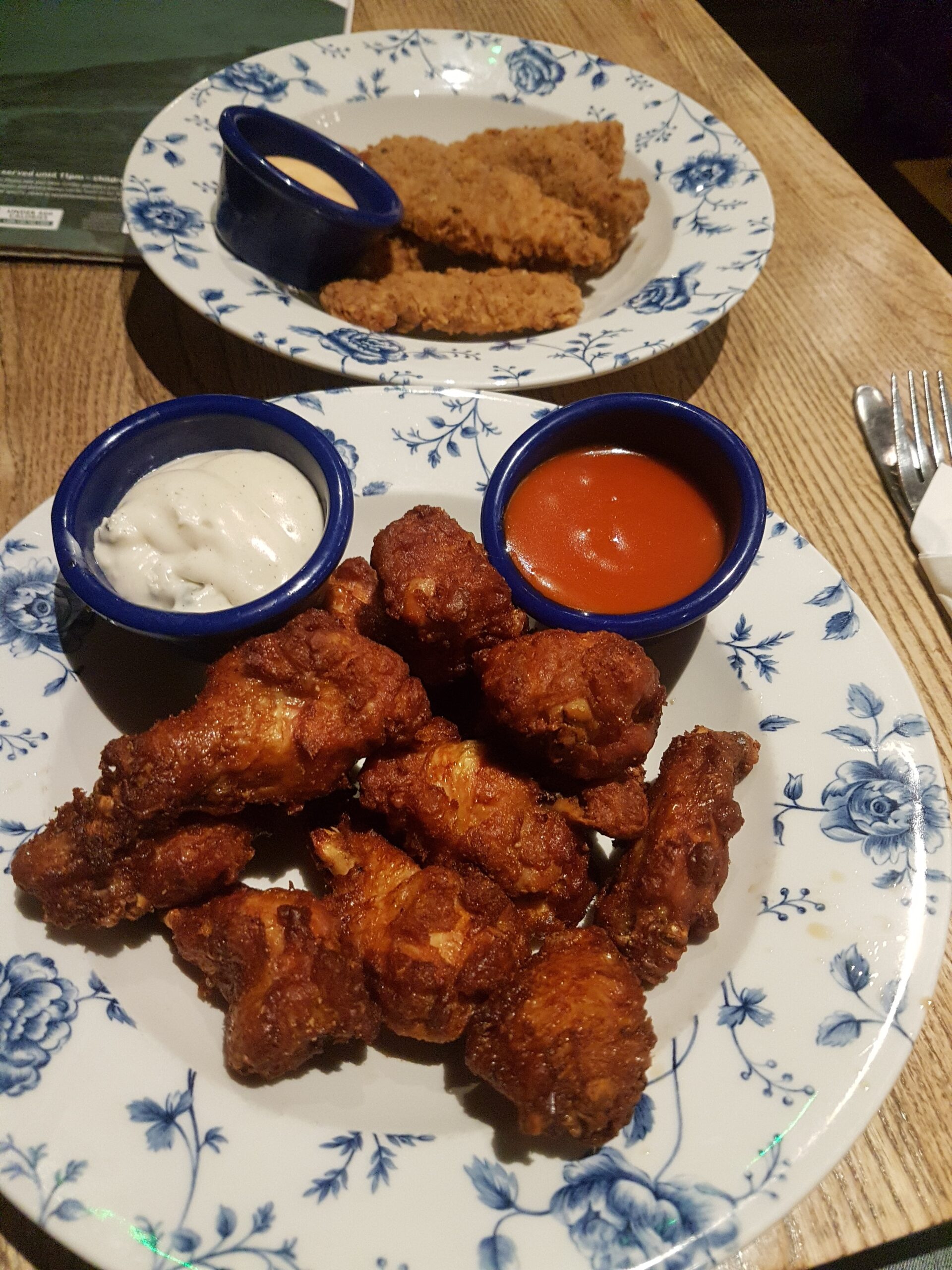
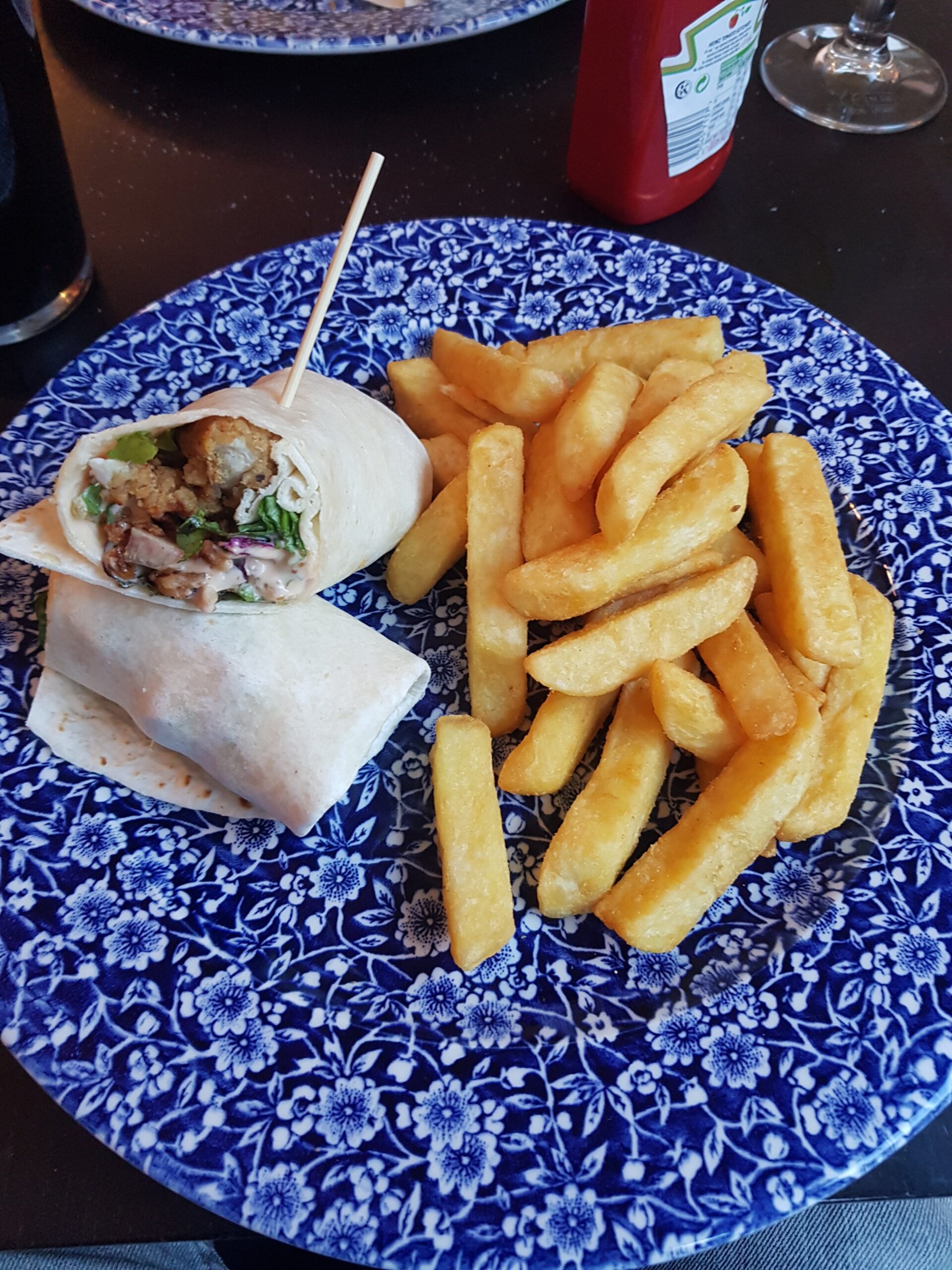
This is my old staple of chicken wrap and chips, when it cost about £3 or something ridiculous. I do miss this rather simple meal, it’s £9 now including a drink.
And these were delicious until they took all the sugar out.
And a beer. Annoyingly, I had started my Untappd account just one week before this visit, but I evidently wasn’t then in the habit of carefully checking in every beer. So, I can only describe this as some porter I obviously liked the look of at the time.
Obviously I feel the need to look at the reviews and the venue is towards the lower end of the JD Wetherspoon typical scoring. And, yes, I know that I need to get out more to have time to think about this.
“The first major thing thats a issue with this particular Wetherspoons is that they don’t serve real genuine cocoa powder thats dispensed through the hot drinks machine. they give you 1 instant hot chocolate galaxy sachet each time if you need to refill for another hot chocolate which might i add is extremely far less superior than the rest of the other Wetherspoons across the country that actually pour real genuine cocoa powder into an actual machine that dispenses it with milk simultaneously to give you that thick frothy chocolatey genuine warm and lovely Wetherspoons experience. imo it feels like they want to monitor how much hot chocolate you can have and don’t even provide genuine cocoa when you actually want hot chocolate anyway this is a huge disappointment. I also noticed alot of plates are being left with loads of food left still on the plate sometimes food looking nearly untouched. also the plates are left for a very long time until somebody even realizes they have to be picked up for the tables to be cleared and cleaned. also each time you want a refill you have to literally ask the bartender first for another galaxy sachet which feels completely infantilizing. when i asked for more than one sachet they refused to do so stating they will not do this because i could take them home basically implying customers would steal this trash hot chocolate. which wouldn’t even be a concern if they actually had the machine that dispenses hot chocolate in the first place. if you’re a fan of Wetherspoons being a reliable and consistent pub you can bring your family to be fed and drink i would say to skip this one as this one is doing a disservice to the Wetherspoon name.”
This is the challenge JD Wetherspoon venues had when the Government stopped them serving unlimited hot chocolate, a rule which has annoyed me but I try not to let it dominate my life. This pub changed its rules at the same time as all of the other ones. It’s a long review though about not having hot chocolate, I admire the depth of the annoyance.
“Tried to eat in the restaurant to be told , contrary to the licencing law , that the children were not allowed to eat . 8 people including 2 children were now left without anything to eat because weatherspoons rules are different from UK licencing laws. Would not use this or any other weather’s weatherspoons.”
Or it could be that the venue is following their premises licence.
“Okay the food is alright but honestly being sanitary is all they need to sort out, we have just been given cutlery that clearly hasn’t been washed properly as in the photo below. It doesn’t look like it has been in the dish washer at all nor even rinsed off with water.”
The customer has a photo of the cutlery in the review and it is grim. The pub has numerous poor reviews for this, I’m with the customer….
Anyway, back to today once again, I get easily distracted. Checking on the beer situation, they have seven real ales available from a range of breweries, including Greene King Abbot Reserve which is about as good as the brewery gets….
It’s too long ago for me to remember much else about the pub, but it’s certainly a positive thing that the chain has kept it alive and operating.
As part of a little project that will become apparent (as I obviously don’t already have enough) I’m working through a list of JD Wetherspoon outlets that I’ve visited throughout the years. I’ve got to go back to 2017 for the last time I came here, I focused on other pubs when I was in Bedford last year.
The pub’s explanation for the pub name is:
“This pub is named after one of the most widely read books in the English language, written by John Bunyan, who lived most of his life in and around Bedford during the 17th century. Born in 1628, at Elstow near Bedford, his career as a writer and preacher was enriched by deep religious experiences throughout his life.”
The building, which is relatively really quite large, was formerly used as a furniture shop before it was turned into a pub and hotel.
It is so long ago that I came here that I appear to have ordered wine. I’ve matured a lot since then. I can use my wine knowledge here to be able to narrow this down to being a white wine.
For reasons I won’t go into here, this was a free meal so I had more than I usually would. I note my food habits don’t change much though.
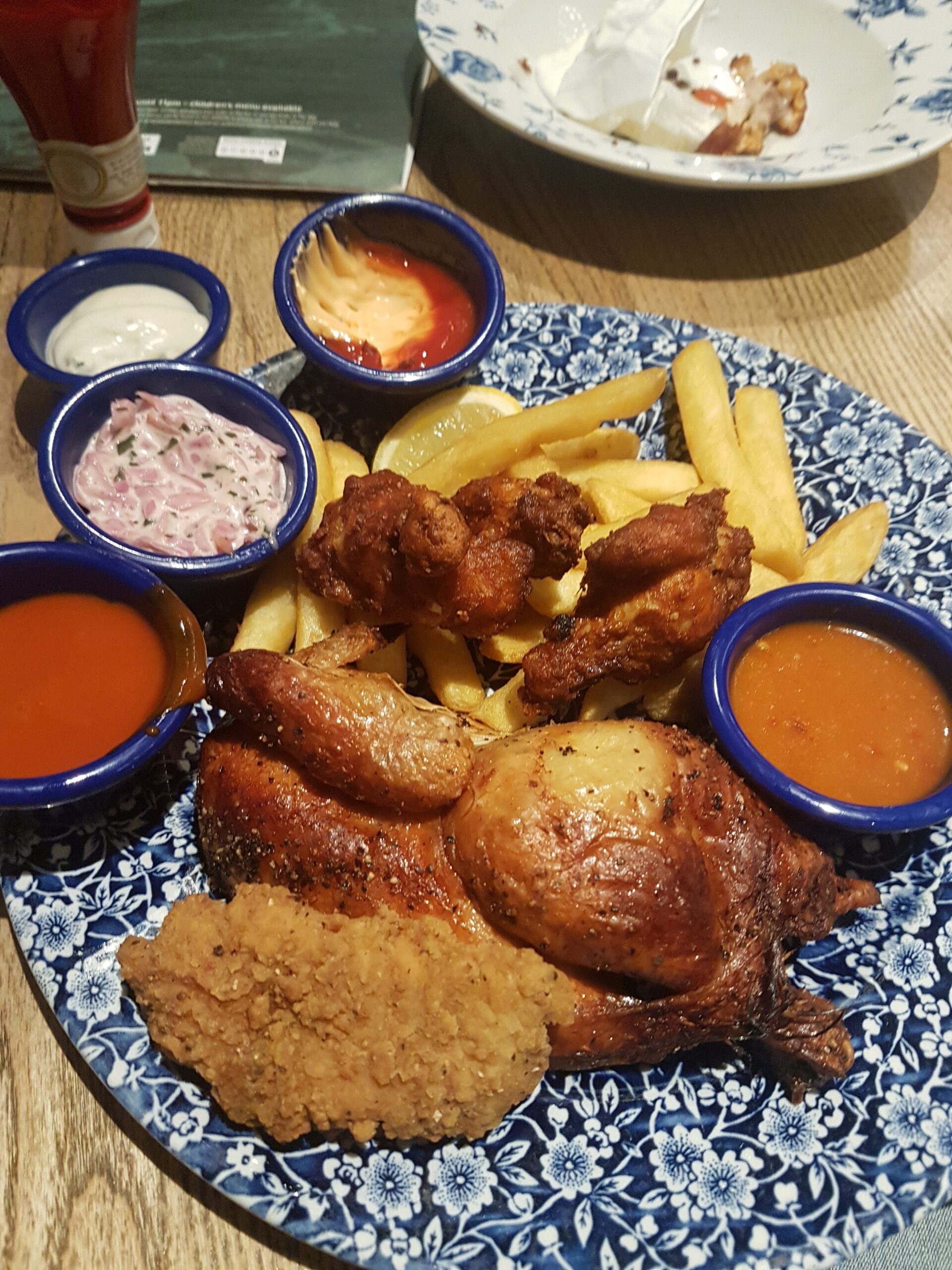
This is I think one of the platters that they used to do before the chain shifted to small plates, I assume that’s some sort of chicken in the middle.
A dessert, I can see that someone else was paying….
And an Eggs Benedict for breakfast, very agreeable. I’d add that I stayed at the venue as well as they have rooms here.
Anyway, back to today and I feel the need to look at some of the reviews and this is one of the better rated JD Wetherspoon venues.
“Disgusting. Was in there for my friend’s birthday and she is a very shy person, playing the Wetherspoons game. We were thrilled to see lots of drinks at our table. However, this was interrupted by a foul mouth female manager, raising her voice at us. My friend was starstruck. This lady was telling us that due to a staff error, the drinks we had already started drinking were delivered wrongly to our table. Despite us explaining the situation, this was met with a ‘Shouldnt have drank those drinks’ and a lack of apology. She then further said that the security will throw us out if we didn’t pay the for the entire bill, which we obviously did not order. Not only verbally threatened, but now with a physical fear, my friend, who is 18, was abused and forced to pay for these drinks. Absolutely horrific experience, 0/10 and I should hope the manager is fired. This was on Saturday 20th September at around 10:45-11pm.”
Hope someone is fired because a customer drank a lot of drinks that they hadn’t paid for? Hmmmm.
“Great if you like to stand in a que. This venue has not adapted to present life after the lockdown but requires customers to que so that staff don’t have to question who’s next.”
This standing in a queue thing is becoming more common at pubs, but it’s hard to not join a queue if there already is one. This is why I use the app to avoid these confusing situations….
“Always so very pleased with the service and beer. Breakfast is a delightful treat, but the extended range off eggs Benedict options has disappeared. I loved those with smoked salmon or black pudding. Please reinstate them. Staff are polite and helpful; toilets are immaculate. However, today my regular Brewdog Punk IPA was out of stock and staff unable or unwilling to tell me when it will be back on. I left earlier than usual. Not happy.”
Always so very pleased with the service and beer, but gives one star….
“I came into the restaurant to use the toilet and when I came out I took a seat for a few minutes and began eating a snack I had with me, I was planning to get a drink but was approached by 2 staff members, one told me I had to leave because I was eating my snack, not even offering me a menu or asked if I would like to order anything, the other female staff member under her breath said I’ll confiscate your food if you don’t leave. As a result of this awful customer service and lack of professionalism I won’t ever be returning to this restaurant. Staff need to consider their behaviour.”
So a customer didn’t order a drink and sat down at a table to eat food from somewhere else. And then seems confused when this is questioned?
“Here on the 9/8/21 19.00pm for my lads 19th bithday meal .totally ruin by the staff who ask for ID. Unable able to give paper ID. But got proof on phone of driving licence. Still not good enough. Totally ruined birthday atmosphere. So left after main meal. Didn’t bother with pudding.Gutted. His dad. Not visiting again .”
In short, customer asks venue to break their licensing rules, the staff refuse and the venue gets one star.
“It’s what you expect to be honest. Reason for 1 star is you cant add comments for food.on the app or add any allergen information. We decided.to eat elsewhere due to not having any confidence with their allergens with only a big screen thing to check.”
The big screen has all the allergen information so customers know what they can order, but the customer hoped they could type their allergen requirements in as a note to the kitchen and thought that would be a better way?
“Under 18s after 9 pm on a Sunday evening not allowed. Even though we are eating…..hmmmmm loads of other people under the age of 18 in there hmm it is their local license policy to keep their license with the council apparently……. Although the law states it is not the case.”
The law very much states that venues to have to meet local licensing law….
“Visited with my 18 year old son after we both finished work at 8pm, had a meal each and he had a cider, ordered on the APP and when it arrived the girl politely asked if he had ID , which he didnt, but he was obviously well over 16, then I asked the manager Nash or Tash, why he couldnt be drinking Cider as it was allowed by LAW, she then told me that it was a pub and NOT a restaurant. I went on the Gov.uk website out of interest more than anything else, and found that by law he was allowed to drink if he is over 16, if he had a meal with an adult from over 18. She then got the 2 doormen (these 2 were very professional unlike their manager) to throw us out. When I left I asked her name which she refused to give me as I want to esculate it. Are Wetherspoons above the law, Im not sure. She told me they have different rules, but surely they must stick to licensing laws and not make tgem up as they go along. I will contact their head office next week to get clarification on their licence laws being as they are different to the Government ones.”
And a customer who when told JD Wetherspoon doesn’t allow under 18s to drink alcohol in their venues, he declares that they must be acting above the law and leaves them one star. I think the Inbetweeners have a lot to answer here for when Will states the law….
Anyway, I digress once again. It’s been a while since I’ve been here, but the reviews are broadly positive. As I can check the real ales online, I can see that today they’ve got seven real ales on, including some options from Oakham and Elgoods. I should also add that it’s in the Good Beer Guide, but I won’t add it to my list of places visited as I didn’t have been there….
The Babington Arms in Derby closed last week as a JD Wetherspoon venue and has reopened nearly immediately under the same name but operated by a private company. So, rather belatedly, I thought I’d better note my experiences of visiting this pub in the past and how it was really rather one of my favourites.
The chain explained why they had given the pub the name that they did in 1997:
“This pub’s site was once part of the gardens immediately behind the long-demolished Babington House. This 17th-century mansion was the home of the Babington family, whose coat of arms depicted two baboons on a large beer or wine cask.”
I’ve been here a few times over the last couple of years and it’s a comfortable pub, but it did feel in need of a renovation. The price point was the lowest in the chain, despite them having another pub around a ten minute walk away which has higher prices.
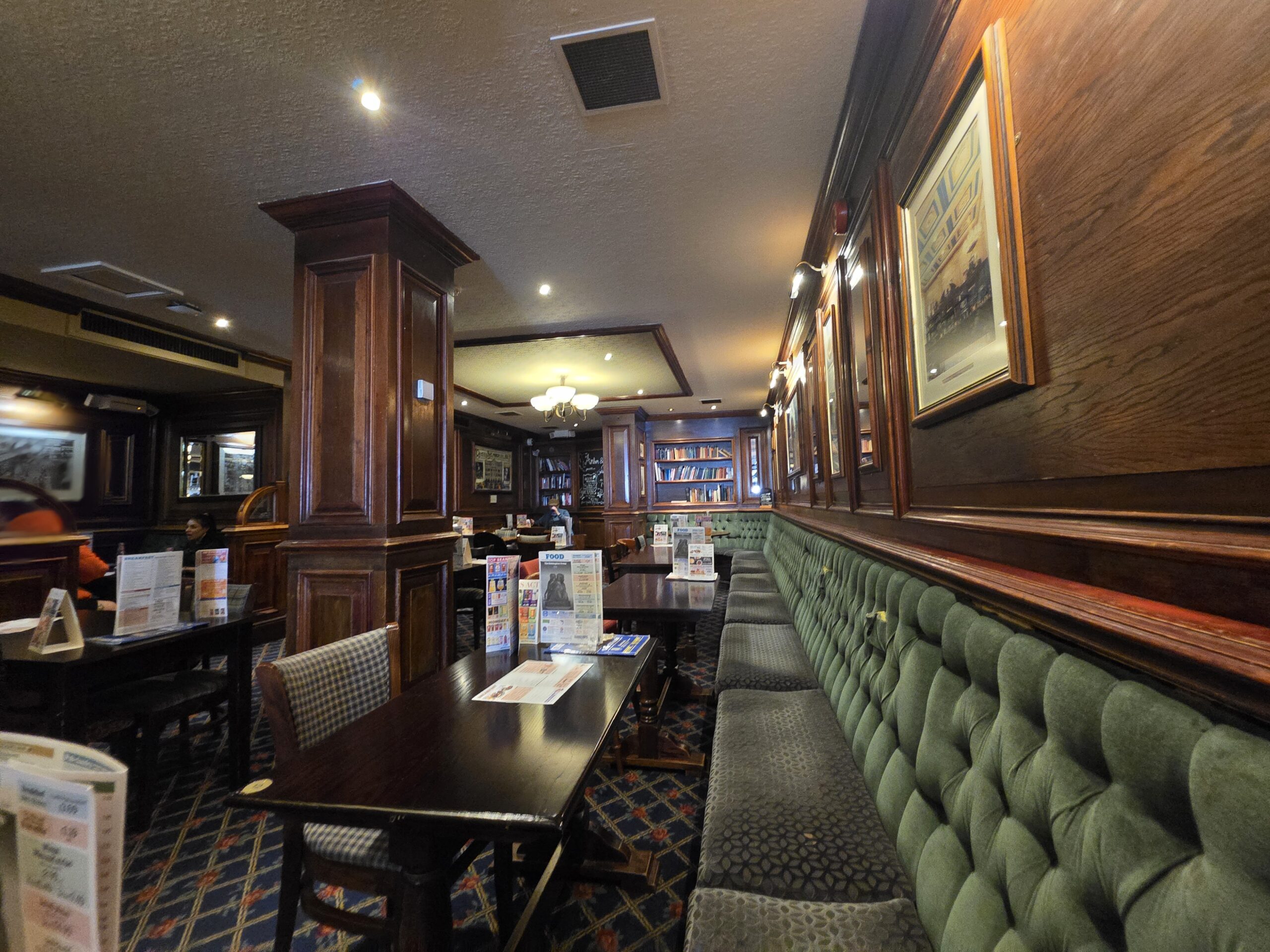
This does feel like those JD Wetherspoon pubs that opened in the 1990s, lots of wood and a traditional feel. This venue felt more like a pub than some of their other locations, it evidently had a community and loyal set of locals. It was also quite a small pub for the chain, which is perhaps the reason that they no longer wanted it.
The real ale selection in June 2025, which was all keenly priced and a perfectly decent selection.
And a small breakfast which I recall was entirely as I would want it to be
I mentioned the refurbishment that was needed earlier and this little waterfall arrangement last year was perhaps testament to that.
Having a look at previous reviews, there’s the near obligatory one that someone has gone to a chain that doesn’t allow dogs and is annoyed that their dog isn’t allowed in.
“Cannot go inside or outside with my dog. Obviously they do not want regular customers that are sensible. I feel discriminated against, when I am willing to sit outside with the smokers, in the rain. Most pubs in Derby are pub friendly. DOWN MARKET WETHERSPOON WHAT A LOAD OF CRAP.”
Anyway…
“Only one checkout working all week, large queues on self-service and checkout. Customers moaning about the service. What a way to lose a lot of customers.”
How on earth can someone get a pub confused with a supermarket?
“This place starts selling alcohol at 8am. I don’t drink at that time but often take a morning walk. For years I’ve ordered a pint of soda and lime with just a single measure of lime. Soda water is free so I’ve just paid for the lime, which has recently increased from 20p to 55p. Still I don’t mind this as the company has rent and other costs to cater for.
Last time I was there they said I had to pay for 2 measures of lime because I wanted a pint drink. The manager confirmed to me that I had to pay for something I wasn’t buying!!! This company has two other pubs in Derby who don’t do this. This pub is blatantly biased against none alcoholics.
After contacting their head office, I confirmed that soda water is free. My tip to help change this rip off is to order a small soda and lime and then as many free pints of soda water as you like. More work for the staff, more washing up and a chance of changing policy.”
The last paragraph tells me what I need to know about the customer, but this was back in the day when venues were allowed to reply, and the manager at the time responded with “you are entitled to your opinion” and I like this sort of passive aggressive response.
Anyway, the reviews from the first new days of the new operator aren’t great, but I don’t envy them. Taking over a new pub is hard enough, but it’s especially difficult when you’re following a JD Wetherspoon with its cheap prices, generally efficient service and the wide selection of food and drink. Fair play to anyone for trying though as they’ve at least kept the pub open.
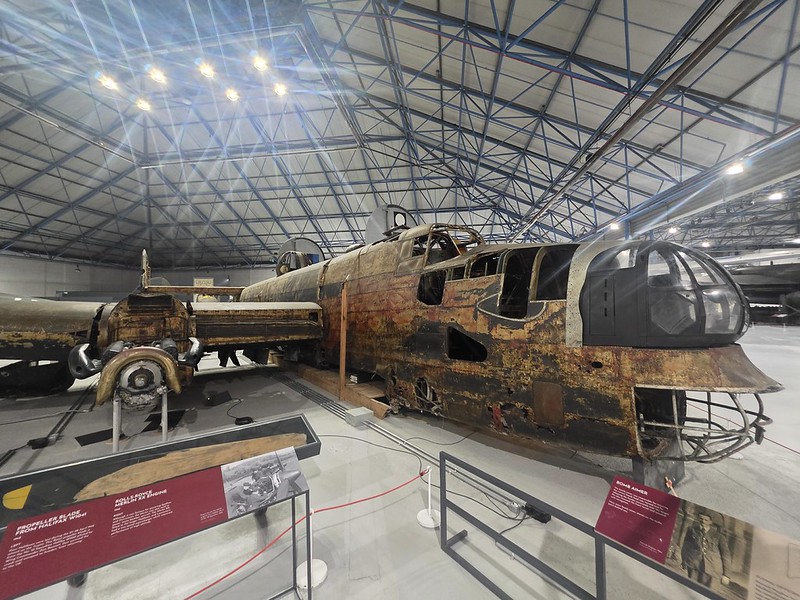
This is a Halifax Mk II Series 1, serial W1048, built in 1942 and flown by No. 102 Squadron and No. 35 Squadron. On 27 April 1942, during its first operational mission, it took part in an attack on the German battleship Tirpitz in a Norwegian fjord. Damaged by anti-aircraft fire, it came down on a frozen lake where it eventually sank, which does rather explain its current look.
Seen from the front, what survives feels less like a machine and more like evidence. Sensibly, no attempt has been made to flatter the thing back into glamour. The aircraft was recovered from the lake in 1973 and it eventually made its way to this museum. In what must have been a slightly odd reunion, members of the flight crew came here in 1983 to be reunited with the aircraft when it was installed here in this exhibition.
It must have been rather sub-optimal for the RAF to lose W1048 on her first mission, but at least there was a controlled landing and no-one was killed, although there were injuries. The crew members were:
Pilot Plt Off Don P MacIntyre (a 24 year old Canadian)
Observer Plt Off Ian Hewitt (Also operated as bomb aimer and Navigator, had been commissioned 23 Mar 42; posted to No.35 Squadron 31 Mar 42; later received the DFC and became a Squadron Leader navigator with the Pathfinder Force; a chartered accountant in later life, he died in June 2015, aged 94)
1st WOP/AG 908781 Sgt Dave Perry
2nd WOP/AG R56057 Sgt Pierre Blanchet (Mid upper gunner. A Canadian)
Tail Gunner 633143 Sgt Ron Wilson (A London cabby in later life)
Flight Engineer 524209 Sgt Vic Stevens
It was thanks to the Norwegian resistance that these crew were able to make their way to neutral Sweden and then safely back to the UK. I won’t recount the entire story, but it’s at http://www.archieraf.co.uk/archie/1048tls.html and it shows just how challenging it was for the airmen to get back home. It’s still hard to comprehend how difficult it must have been for them to try and get back to some sort of a normal life after the Second World War ended.
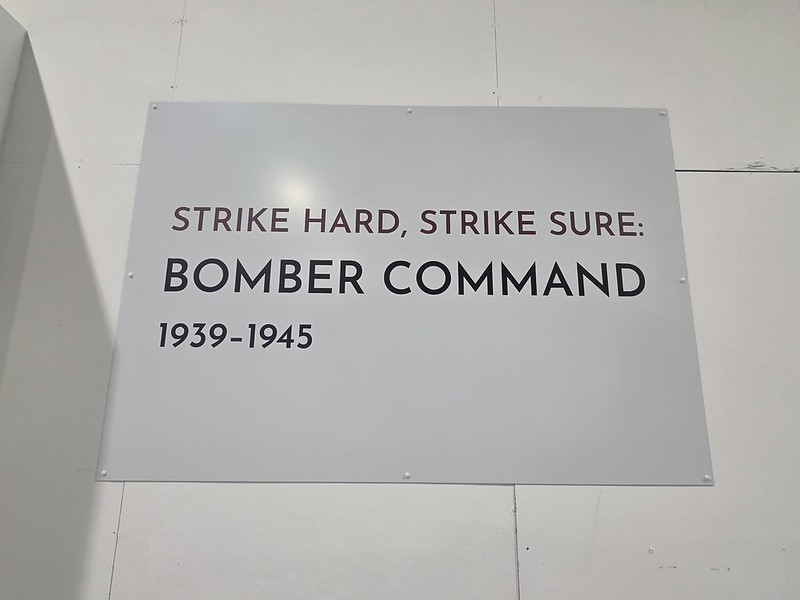
“Strike Sure, Strike Hard” is one of those wartime mottoes that sounds blunt, confident and entirely uninterested in moral hesitation. Indeed, this is something that the museum does confront, the sheer damage caused by the British bombers. The promise that violence, properly directed, could produce victory and scare the German population into surrender.
I think it’s fair to say that being a member of aircrew during the Second World War was not going to be a quiet back office job. Of those on a tour of 30 operations, over half were killed and a quarter became prisoners of war, with just 16% surviving unhurt.
Although it is now controversial, the bombings of German cities was seen as essential at the time in regaining the upper hand. Arthur Harris (1892-1984), later known as Bomber Harris, became the most famous advocate of that thinking, and Cologne was central to it. The city was the target of the first thousand bomber raid in May 1942, a deliberate and highly symbolic demonstration of overwhelming force. And this was particularly relevant to me as I had spent three days in Cologne a few days before visiting this museum.
The “Strike Sure, Strike Hard” was also the name of this whole exhibition about the Second World War. I thought it was all quite balanced, not focusing entirely on military might and destruction, but also on the more complex and nuanced matters of war in general. But the museum was very sure to mention the bravery of those involved and quite rightly so.