Category: UK

  • London – Central London – Postman’s Park

    London – Central London – Postman’s Park

    This park is a short walk from St. Paul’s Cathedral and was once three separate churchyards before being merged together in 1880 as a space that the public could use to exercise and relax. It’s a relatively sizeable space for such a central area of London, but it had long since struggled to deal with the number of burials that were needed at the site. With London’s central churchyards being not only full by the 1840s but also a dangerous health hazard where diseases spread, the idea was to open up cemeteries around the city (the Magnificent Seven) and turn sites such as this into public spaces.

    This map from the end of the nineteenth century also gives a clue to the reason for the park’s (named as the recreation ground) name, simply that it was commonly used by staff from the General Post Office.

    The park is made up of three different churchyards, those belonging to St Botolph’s Aldersgate church, Christ Church Greyfriars and St Leonard Foster Lane. Only the former is still standing, with Christ Church now being in ruins due to bomb damage during the Second World War and the third was lost in the Great Fire of 1666. Some of the ruins of the latter church remained until the nineteenth century, but they were destroyed during the construction of the General Post Office in the nineteenth century.

    The former Christ Church churchyard entrance.

    Looking across the park to St Botolph’s Aldersgate church.

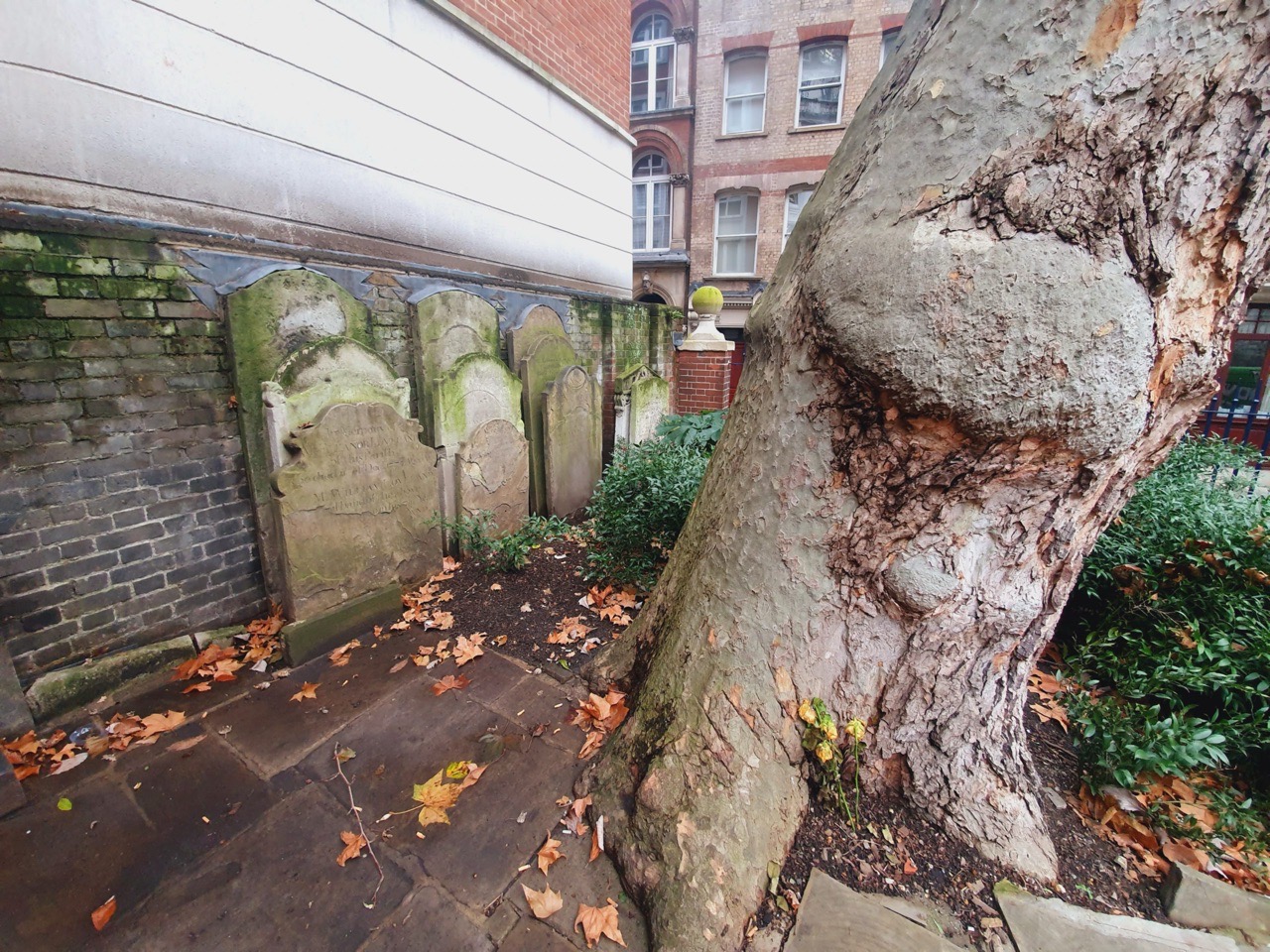
    A rather large tree that has been here for some considerable time, with some graves which were once in the churchyard of St Botolph’s Aldersgate, but which were shoved against the wall in the late nineteenth century when the park opened.

    A rather lovely little water feature.

    The St Botolph’s Aldersgate church entrance to the park.

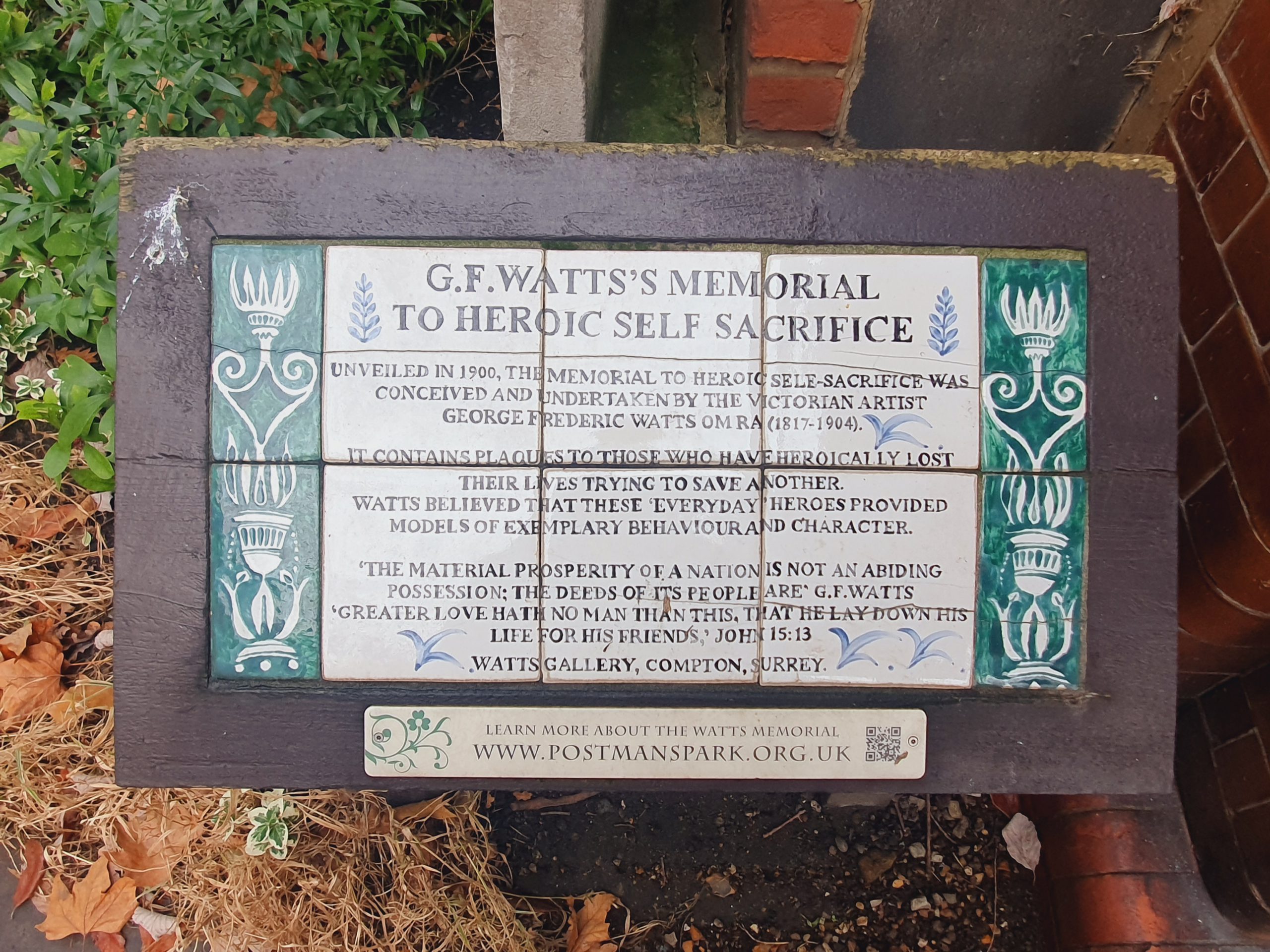
    Also in the park is the Memorial to Heroic Self-Sacrifice.

  • London – Central London – Memorial to Heroic Self-Sacrifice

    London – Central London – Memorial to Heroic Self-Sacrifice

    Located in Postman’s Park and on the site of the former graveyard of St Botolph’s Aldersgate church is this memorial to those brave individuals who have died through acts of great self-sacrifice. This is the idea of George Frederic Watts, a painter and sculptor, who wanted the bravery of ordinary men, women and children to be remembered for generations to come. The memorial opened in 1900 and most of the tiles were produced by William De Morgan (later on Royal Doulton produced the tiles), but the project slowly ground to a halt and by 1931 only 53 of the planned 120 tiles were in use. The church has recently started adding more tiles again, bringing the original concept back to life.

    There was a memorial held in the church in December 1905, a year after Watts had died, which was attended by the Bishop of London. A statue of Watts was unveiled and the Bishop referred to the “humility of character and simplicity of life” of the former painter.

    Some of the names on the memorial, with some tragic stories amongst them.

  • Cambridge – Reality Checkpoint

    Cambridge – Reality Checkpoint

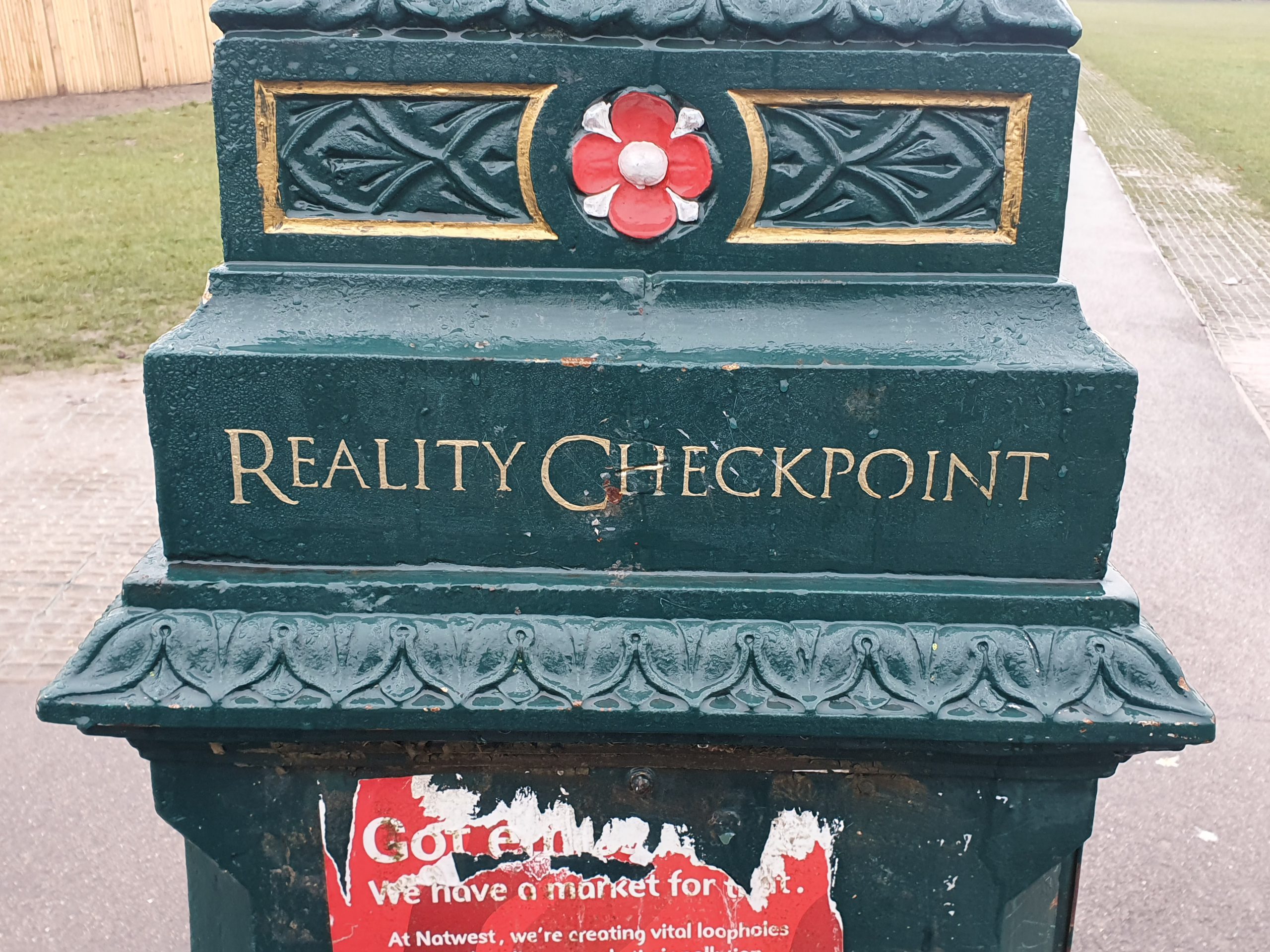
    This is from my visit to Cambridge with Nathan a couple of weekends ago and it’s a lamp post. But not just any lamp post, this is Reality Checkpoint which has managed to acquire its own Wikipedia page. And not many lamp posts have managed to gain that sort of accolade, so I felt the need to take a photo of it. It’s located at Parker’s Piece, which has its own heritage as being one of the places which can claim to be the home of the rules of football. But that didn’t happen when the lamp post was hanging around, as this iron centrepiece of the park dates from the last few years of the nineteenth century.

    The reason for the name is unclear, with Wikipedia quoting three different options:

    (i) It may mark the boundary between the central university area of Cambridge (referred to as the “reality bubble”) and the “real world” of townspeople living beyond. One is warned to check one’s notions of reality before passing. For students at Cambridge, who walk out to Mill Road across Parker’s piece for an evening in the “real world”, usually including a visit to one of Mill Road’s selection of pubs, the lamppost marks the end of the “reality holiday” as they walk back to central Cambridge – back into “the bubble”.

    (ii) The name arose because the lamppost forms a useful landmark for people crossing the park at night – perhaps inebriated or in the fog – since it is the only light for over a hundred metres.

    (iii) When drunk, students and the general public are reminded to check they are able to walk like a sober person before passing the police station at the edge of Parker’s Piece, hence a “reality check”.

    I have no idea which it is, but the middle one rings true to me and alcohol or drugs was likely involved in the whole arrangement. The reality (if we can excuse my use of that word here) is that one student wrote it on the post in the 1960s and future generations of students kept up that tradition.

    The lamp post was listed in August 1996 to further cement its reputation in the history of Cambridge and here’s the official text:

    Lamp standard erected in 1894, renovated in 1946, and refurbished in 1999.

    “Cast iron. Square-section plinth and base with inscription panels to each side. South west side with access hatch. Top edges with waterleaf decoration. Base of shaft with four intertwined dolphins. Plain shaft of circular section carries four candelabra lamp holders by means of scrolled wrought-iron stays. Glazed cages of inverted conical section.”

    At the bottom of the lamp post is one of the little artworks from Dinky Doors that are in numerous places around Cambridge.

  • Greater Anglia : Norwich to London Liverpool Street

    Greater Anglia : Norwich to London Liverpool Street

    I’m used to the journey from Norwich to London Liverpool Street, but it’s rare for me to be getting the 07:00 train as that’s normally an expensive commuter service. Today though, it was £12.50 which I thought was reasonable all things considered (namely how expensive some other Greater Anglia services are which are of a much shorter destination).

    Norwich railway station wasn’t packed with people, but there were a few services about to leave, including the service to Liverpool Lime Street, so it wasn’t entirely quiet.

    Here’s the London thunderbolt that would hopefully get me into the city at 08:51. I boarded and had a carriage to myself, which was rather lovely. I then had a woman come up to me and she said that I looked strong (can’t fault her logic there) and could I open her bottle of water for her. This sort of scenario isn’t ideal, as if I can’t open it then I look ridiculous. Fortunately, I gave the impression of huge strength since I opened the bottle immediately. That’s a decent start to a journey.

    What wasn’t a decent start was seeing that the train was marked as delayed, with no announcements made about it. I’m not sure what caused this, as the signs soon lost their delayed status and the train was ready to rock and roll at 07:00 as expected. The announcements made by the staff were all friendly and informative, with a guard checking tickets. This process didn’t exactly take him long and to my slight disappointment (as I like watching drama unfold) everyone seemed to have a valid ticket.

    Here’s the packed carriage. I also managed to sit at the only block of seats on the train that didn’t have working power, so had to move to the seats opposite. This wasn’t the only technical problem on board, as the shutter at the cafe had broken and jammed, so the staff had to walk up and down the train with the trolley. The service though arrived into London on time, so no complaints there. It didn’t get much busier either, just a handful of people on the entire train.

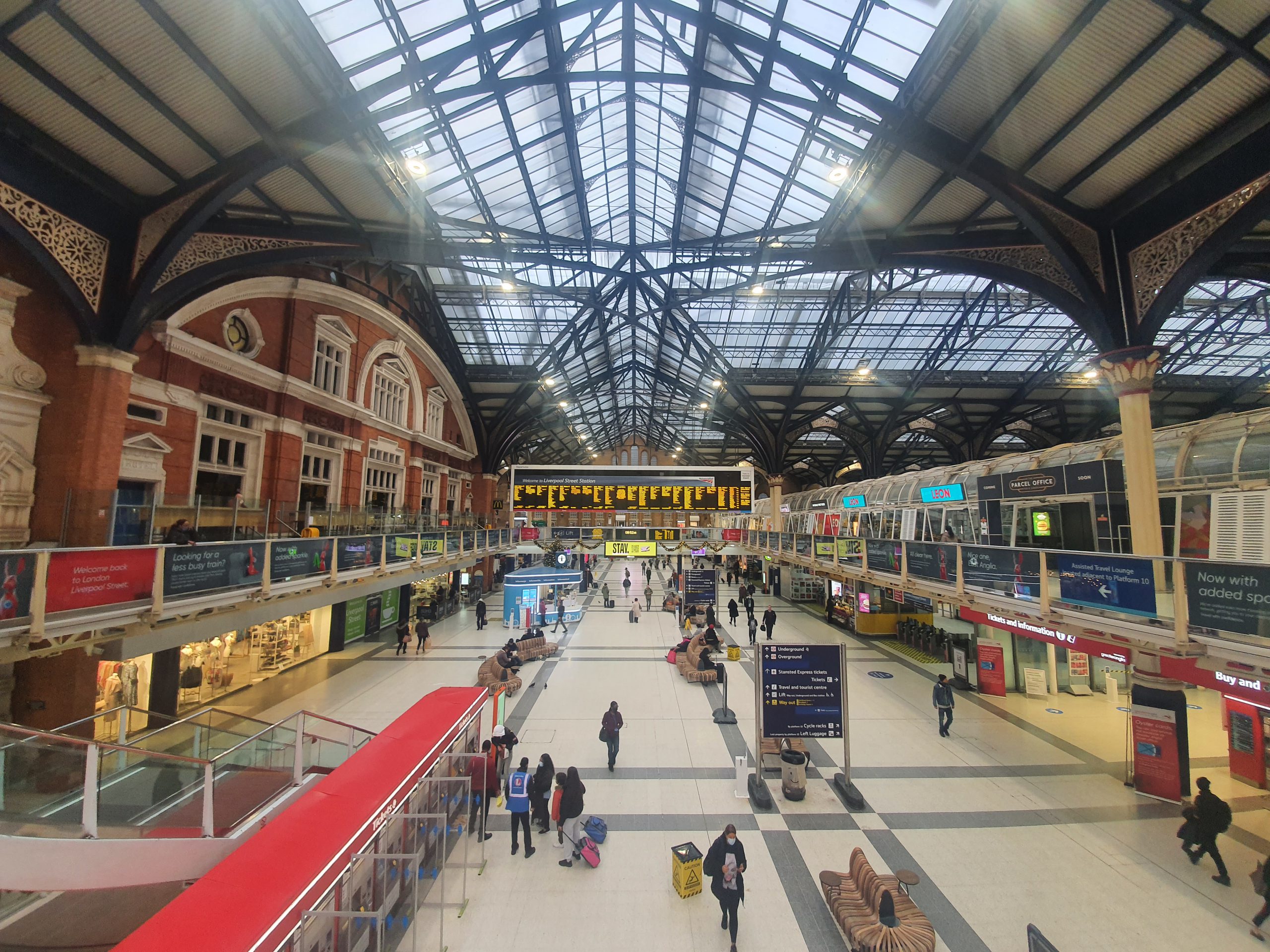
    This is London Liverpool Street at commuter time, but on a morning between Christmas and New Year’s Day, which is perhaps never going to be packed with hordes of travellers. Nonetheless, it was still quieter than I expected.

    And outside London Liverpool Street station, with a calmness in the air.

  • Bunwell – St. Michael and All Angels Church (Grave of Jacob Hinchley)

    Bunwell – St. Michael and All Angels Church (Grave of Jacob Hinchley)

    When my friend Richard and I went to visit some churches last week, we visited St Michael and All Angels in Bunwell. We spent some time looking for the war graves that are located here, and found two of the three that are located at the church.

    Anyway, for absolutely no reason at all that I can explain, I was interested in this grave and it’s the only non war related one that I took a photo of. Given that, I thought I should investigate a little why the grave of Jacob Hinchley who died at the age of 59 on 10 March 1897 seemed so intriguing to me.

    Jacob was born in Bunwell in 1837, the son of John and Rebecca Hinchley. At the 1841 census, he had three older brothers, Charles, Henry and Robert, as well as a younger sister, Rebecca, and they all lived at Burnt House in the village. This quite substantial house still stands, today worth half a million pounds and having six bedrooms. Despite residing at a large property, I can’t imagine that the family were particularly wealthy as John worked as a road labourer and the male children worked as farm labourers and the daughter as a worsted weaver.

    Jacob is listed on the 1871 census as living with his wife Sophia and his father John, who was now aged 73, with their address listed as “by the turnpike in Bunwell”. Jacob had married Sophia Parish at Bunwell church in 1866, but something clearly goes wrong after this and there is a burial record for Sophia Hinchley at the church in 1875. There wasn’t a great delay before Jacob married Ellen Blake in 1876, when he was 39 years old, although his wife was aged just 21 years old. Jacob appears in the local press a few times as a bell ringer at the church and he travelled the county performing his hobby.

    The last census that took place during Jacob’s lifetime was in 1891, when he lived in North Bunwell and was still working as a farm labourer. He lived with his wife Ellen, their daughter Alice and their sons Oliver and Percy, which is the same arrangement as the 1881 census, other than he had a new child. Percy was just two years old, which meant that Jacob became a father at the age of 52, which is relatively old for the period, but a reality given that he married twice and I’m not sure whether he had any children with his first wife.

    Jacob died in 1897, with Ellen living until 1916. I’m not sure that I uncovered much about Jacob, other than he married twice, he liked bell ringing and he lived in Bunwell all of his life. It is though a case of just how important the church likely was to Jacob, as he was baptised there, married there twice, buried there and was a bell ringer. And maybe one day I’ll find out something else about Jacob to add to this little story….

  • Norwich – Orford Plaice

    Norwich – Orford Plaice

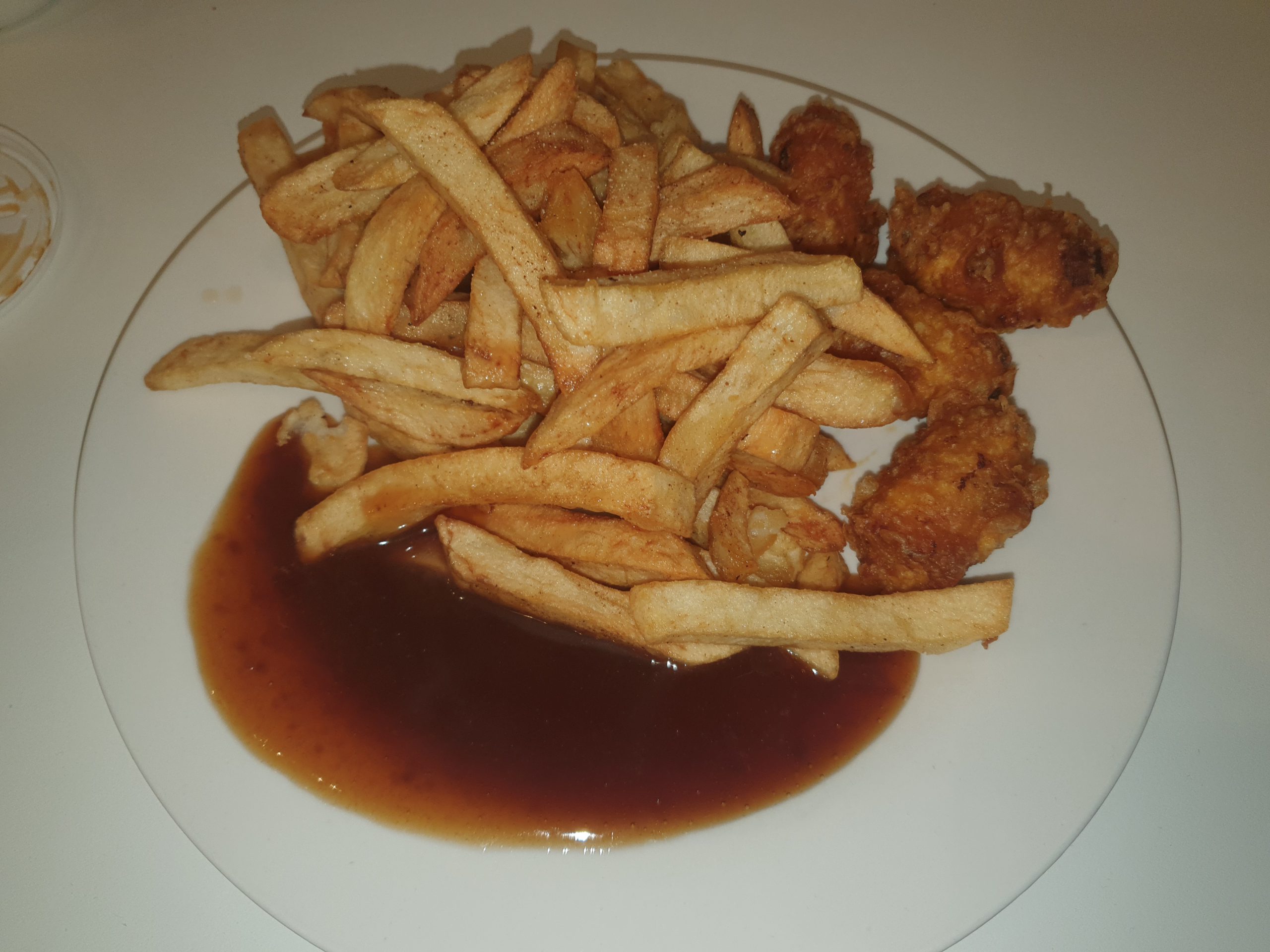
    This was the final Christmas lunch of 2021 for James and I, at Orford Plaice which is a chip shop we’ve managed to walk by several hundred times and never quite gone in.

    It’s larger inside than I expected, there’s a downstairs eating area and there are a number of tables on the ground floor. The service was friendly and helpful, although we got their last pot of gravy (not something that we really ever buy, although it’s a personal favourite of mine with chips).

    Having chips on a proper plate is a bit decadent for us, or “it’s like being in a Wimpy” as James put it. The food was brought over after a few minutes, at which point they remembered they hadn’t prepared the gravy, but that didn’t take much longer. Our meal was chips alongside battered pigs in blankets. The chips were fine, complemented nicely by the gravy, although I thought that the pigs in blankets were a little generic and not really very interesting. Having written that though, I did like the battering of them, primarily as I like nearly anything that has been battered, it just adds taste and texture. The portion size was also reasonable, with everything at the appropriate hot temperature, although the plate itself was cold.

    Price-wise, this is somewhere between Grosvenor and Lucy’s, with the surroundings being reasonably comfortable. There’s meant to be a masks-on inside policy, but it was ignored by some and not questioned, but I’m not going to burden myself with getting concerned about that. I think I still prefer Lucy’s, their butchers sausages are a nice little treat. This venue has won some awards, which I’m slightly surprised about, but we’ve decided to revisit in the new year to test some more of their menu out. No point coming to any snap verdicts about the food quality….

  • Cambridge – Regal Pub

    Cambridge – Regal Pub

    I wasn’t going to write about the first pub that my friend Nathan and I visited in Cambridge last weekend, primarily as I thought that I already droned on about it before in another post. But I hadn’t so will now instead. It’s one of the largest pubs in the JD Wetherspoon estate, although it has since been surpassed with some even more substantial venues, not least the Royal Victoria Pavilion in Ramsgate. It’s also the only outlet that the chain have in the city since their other one, the Tivoli, burnt down in 2015 and they decided not to re-open it.

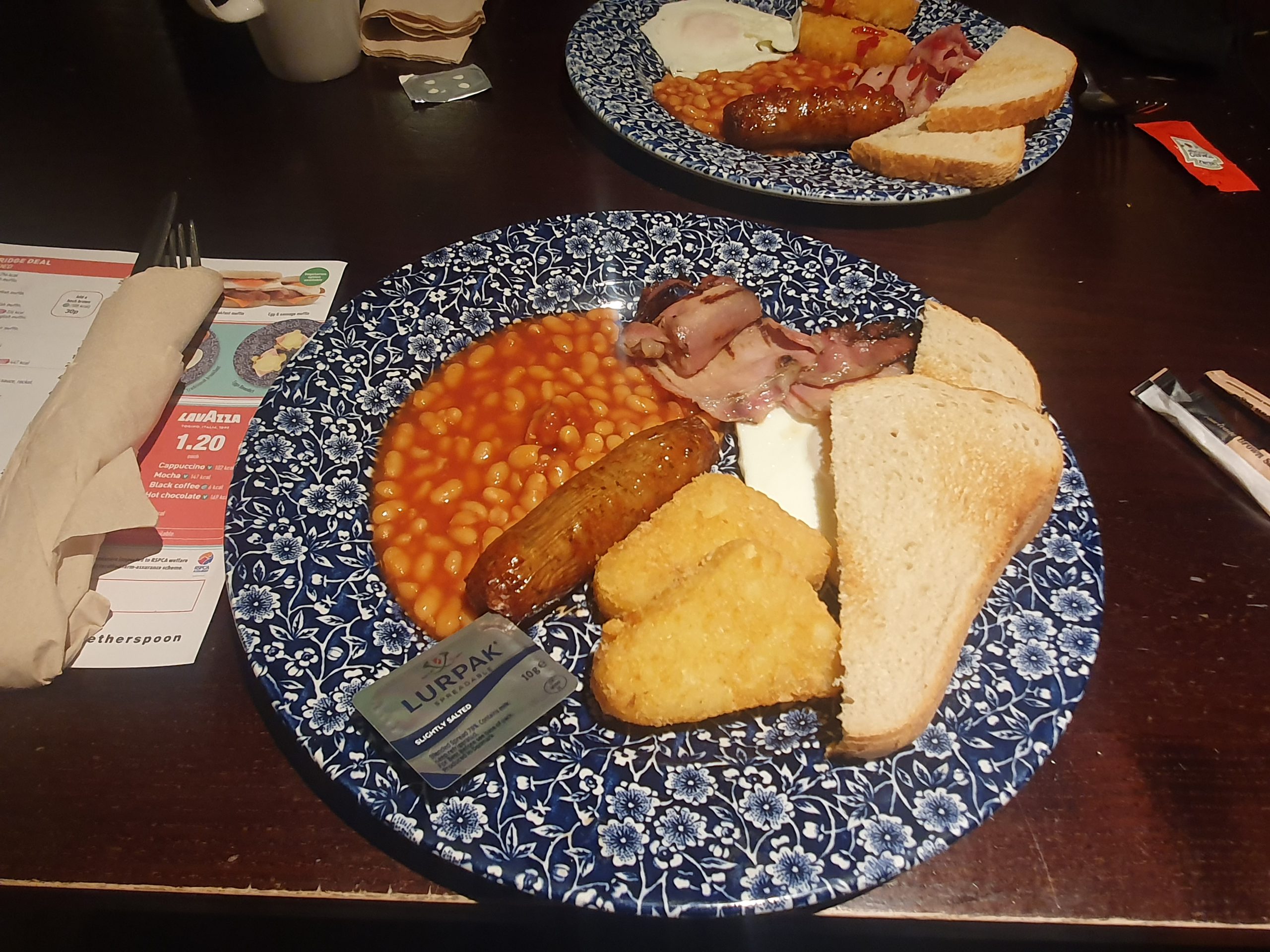
    We popped in for a quick bargain breakfast and I can’t really complain about the value. All to brand standard and to my expectations, as well as being brought out quickly. I’d quite like them to bring the half a tomato back, but I won’t lose any sleep over its disappearance.

    We had a couple of half pints as lunch-time approached, perfectly well kept and very keenly priced. They were the Fat Turkey from J Buckley Brewing in Wales and Citramas IPA from Hanlons Brewery in Devon, nothing exceptional, but something different as I don’t think I’ve had anything from those breweries before.


    These are photos I took a few years ago which show the size of the venue, which has the one big area that was once the main screen of the Regal Cinema from which the pub takes its name. There’s another area down a few steps, an outdoor terrace and there are also some quieter areas upstairs. The pub doesn’t take up the entirety of the building, as they share it with Picturehouse Cinemas who have some screens upstairs.

    The pub closed for four days in September 2021 for a refurbishment, but I’m not sure what they did during that relatively short time, but perhaps it was a replacement of the carpet or similar. A refurbishment a few years ago did put in a number of extra power points which was quite useful.

    Like most JD Wetherspoon outlets, the reviews are broadly positive with a heap of angry people complaining that their bacon was cold or similar. Usual small number of people who think it’s fine to insult bar staff, namely this:

    “Ordered our meal via the app. It turned up with no drinks. The waiter told us that drinks hadn’t been on the order and he was too busy to deal with it. He advised us to go to the bar and speak to them and they can add it to the the order. Spoke to bar person who was as thick as a brick who advised me that I hadn’t used the app correctly for the alcoholic drink and was told me that I entitled to a soft drink to which she didn’t even offer to get it. I know it is a Wetherspoons and not the savoy but it has Really poor service. Won’t be back”

    In short, a customer has just not selected a drink on the app and they go to the bar and call the staff member “as thick as a brick”. Nice….

    The environment in the pub is perhaps a little sterile and anonymous, but it’s a huge venue and it’s not going to be particularly easy to offer an attentive and engaging service to everyone. Anyway, for a quick and reliable breakfast, I’m entirely happy with the Regal as it was clean, the staff were friendly and the prices were very agreeable.

  • Cambridge – Calverley’s Brewery (2nd Visit)

    Cambridge – Calverley’s Brewery (2nd Visit)

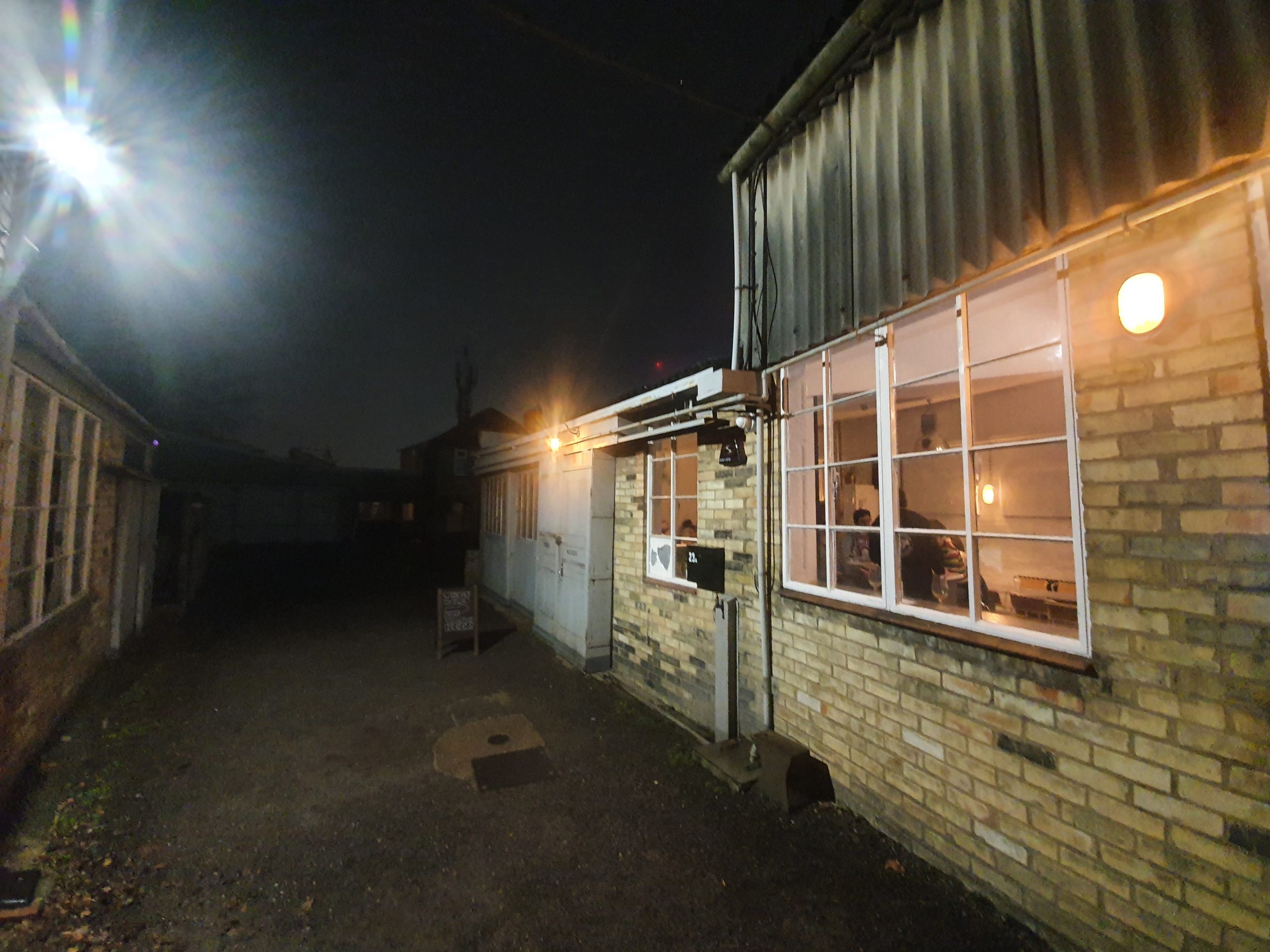
    This was the final pub of the day when my friend Nathan and I had our little pub crawl around nine venues in Cambridge last weekend. It’s the slightly hard to find Calverley’s Brewery taproom, a location that I’ve visited before in 2019.

    Things have changed substantially since when I last visited, with the opening of this much larger taproom on site, all of which was stables until Calverley’s took over here in 2013. When I visited before, the arrangement was a little more parochial, with a much smaller space available for customers. There was something really rather lovely about feeling part of the brewing process back then as it’s a bit more detached in this larger room, but it’s great to see what progress has been made. There’s also a larger open-air section as well for the warmer months when sitting outside is a bit more viable.

    The beer menu. We did debate also ordering in one (well, more likely two) of the pizzas from Scott’s All Day who are located nearby, but we opted for a slightly cheaper option of a Sainsburys Meal Deal for the train journey home. The reviews on-line of the taproom are very positive and there are some ciders and soft drinks for the non-beer drinkers.

    I went for the Big Dawg, a very decent Double New England IPA, as well as the Big Porter, which was a little less decadent and rich tasting as I’d hoped. I liked the surroundings of this set-up though, with the service being friendly and attentive. The location was clean and organised, with a relaxed ambience. It’s not necessarily the easiest of venues to find, but the signage is improved from my last visit and I’m pleased that they’re doing well. For anyone needing a drink before catching a train from Cambridge railway station, this isn’t too far of a walk to make. Pleasingly, this is also still listed in the Good Beer Guide.

  • Bunwell – St. Michael and All Angels Church (Grave of Jack Montague Smith)

    Bunwell – St. Michael and All Angels Church (Grave of Jack Montague Smith)

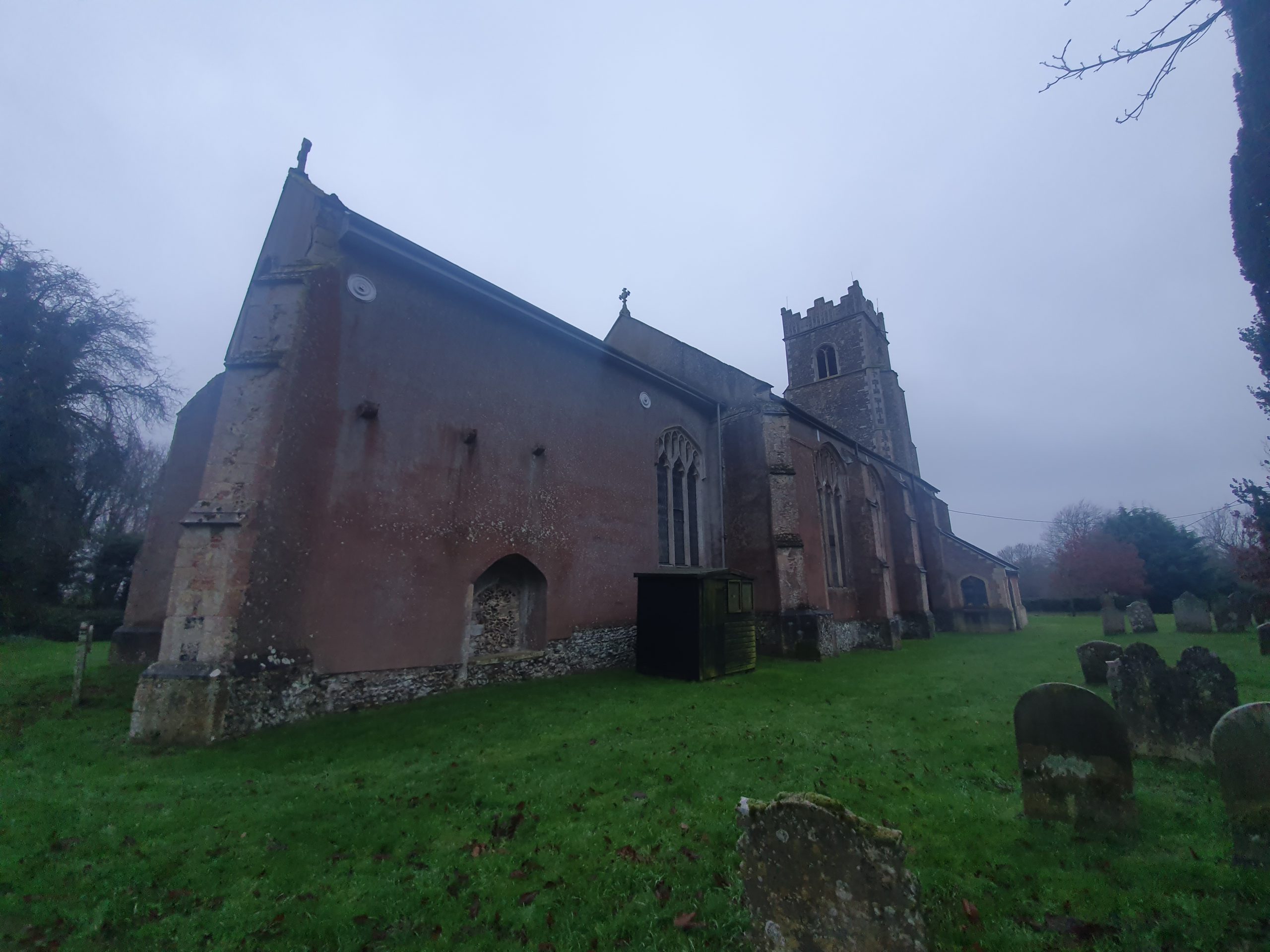
    This is the churchyard of St. Michael and All Angels Church in Bunwell.

    Just before my friend Richard and I meandered out to look at some historic churches, I was watching a documentary on tunnelling under the German lines during the First World War. This was a successful tactic deployed primarily by the British military and the Royal Engineers, although they were helped by numerous other companies which included those from Canada, Australia and New Zealand amongst others.

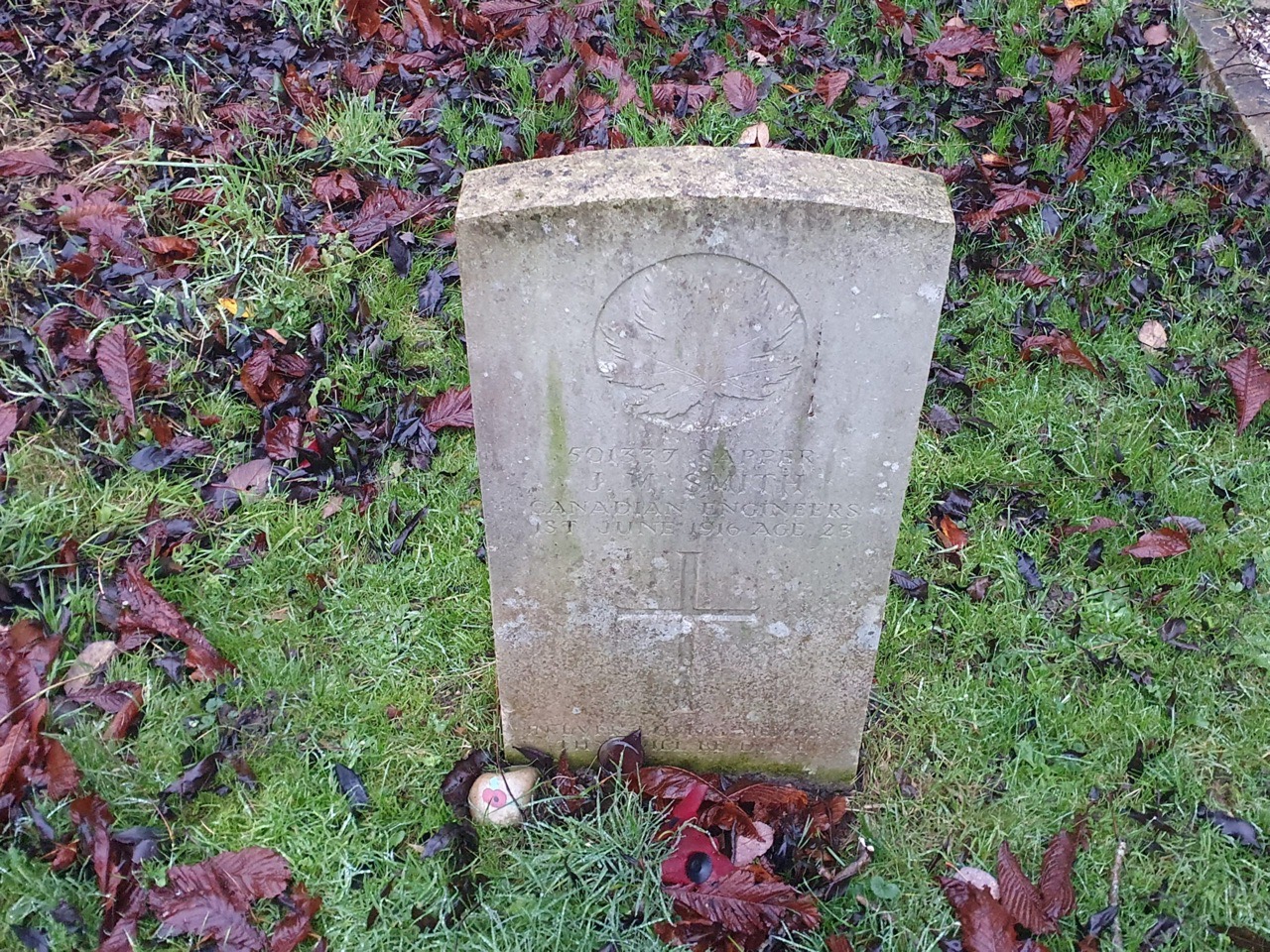
    Which is why I thought that the grave of Jack Montague Smith looked interesting, he’s one of the three war dead who is buried in the churchyard. He was born in Bunwell on 2 November 1892 and was the son of George William Gates Smith and Mary Alice Smith, of The Laburnums, Bunwell. His father was a watchmaker and Jack had three brothers and two sisters at the time of the 1901 census.

    Jack was a member of the 1st Canadian Tunnelling Company, part of the Canadian Engineers. They were sent to France in early 1916 and worked on the Bluff area, in Flanders, until early 1917 when the Australians took over. Their role was primarily in tunnelling under enemy lines, a dangerous and difficult occupation.

    Jack was a sapper with service number 501337 and he signed up in Ontario in December 1915. There’s an obvious question of what Jack was doing in Canada, but it wasn’t uncommon for younger men to go and find employment there, so that’s my best guess. Unfortunately, as Jack’s surname is Smith, I can’t identify which of the many Jack Smiths it might have been on the passenger lists.

    After being sent to fight on the front line he was injured on 26 April 1916. He was admitted to the 51st Field Ambulance, which was a front line medical unit which treated those with injuries. He was evacuated back to the United Kingdom, being sent to the Yarrow Hospital in Broadstairs where Canadian troops were cared for. Sadly, Jack died of his injuries at the hospital on 1 June 1916 at the age of 23 years old. His body was then returned to Norfolk for burial at Bunwell on 2 June 1916.

  • Bunwell – St. Michael and All Angels Church

    Bunwell – St. Michael and All Angels Church

    Richard and I were on one of our meanders around churches in Norfolk, rather more challenging with it getting dark quite so early on in the day. This Grade I listed grand church is located a little outside of the rather spread out village of Bunwell and it was primarily built in the mid to late fifteenth century on the site of an earlier structure. It’s thought that the location of the church was chosen as it was the highest land in the area which was once home to an early stone cross.

    The tower dates from the early sixteenth century and there are six bells inside. The helpful history guide in the church notes that these are from 1699, 1699, 1732, 1732, 1832 and 1884 (the most recent, but a recast of a bell from 1612).

    The porch.

    Quite a small priest’s door.

    The end of the chancel, looking a little plain because of the rendering.

    I’ll stop my little tour of the exterior here to add in a news report from Easter Sunday in 1894, which doesn’t appear in the church’s history inside the building. What happened caused quite a sensation in the area, as there was an attempt to blow the church up (or at least badly damage it) with explosives. Fuses had been placed in the ground with gunpowder, but they had failed to ignite and so no damage was done. The police were bemused and said they weren’t sure that they would find the culprit.

    The story continues though, as the police arrested someone on some rather loose evidence, a Lambert Johnson who was aged 41 and who had done work on the church that he claimed that the previous rector hadn’t paid for. The trial ended in chaos, with the local newspaper reporting:

    “His Lordship said to the jury: You will find a verdict of not guilty. There is not a particle of evidence against the prisoner. I don’t hesitate to say that this is a most improper prosecution – one brought without the slightest conceivable grounds. It is too bad that this man should be five or six weeks in gaol awaiting trial”.

    Although if I’m being honest, Johnson does seem like a prime candidate here.

    Only one side of the chancel has the large perpendicular windows, this side is rather more barren. My knowledge of churches isn’t sufficient to say what has gone on here, nor what those three bits of stone on the left are supporting. The rendering has also made it difficult to see what is underneath.

    This former window or door has been uncovered, perhaps leading to another structure at some stage in the building’s history. If anyone knows, please do contact me….

    The porch way and I wasn’t expecting that we’d be able to get into the church. It was though open, which was something of a surprise. It was dark inside and we decided against finding the lights, but fortunately my phone in night mode actually made it look quite bright internally.

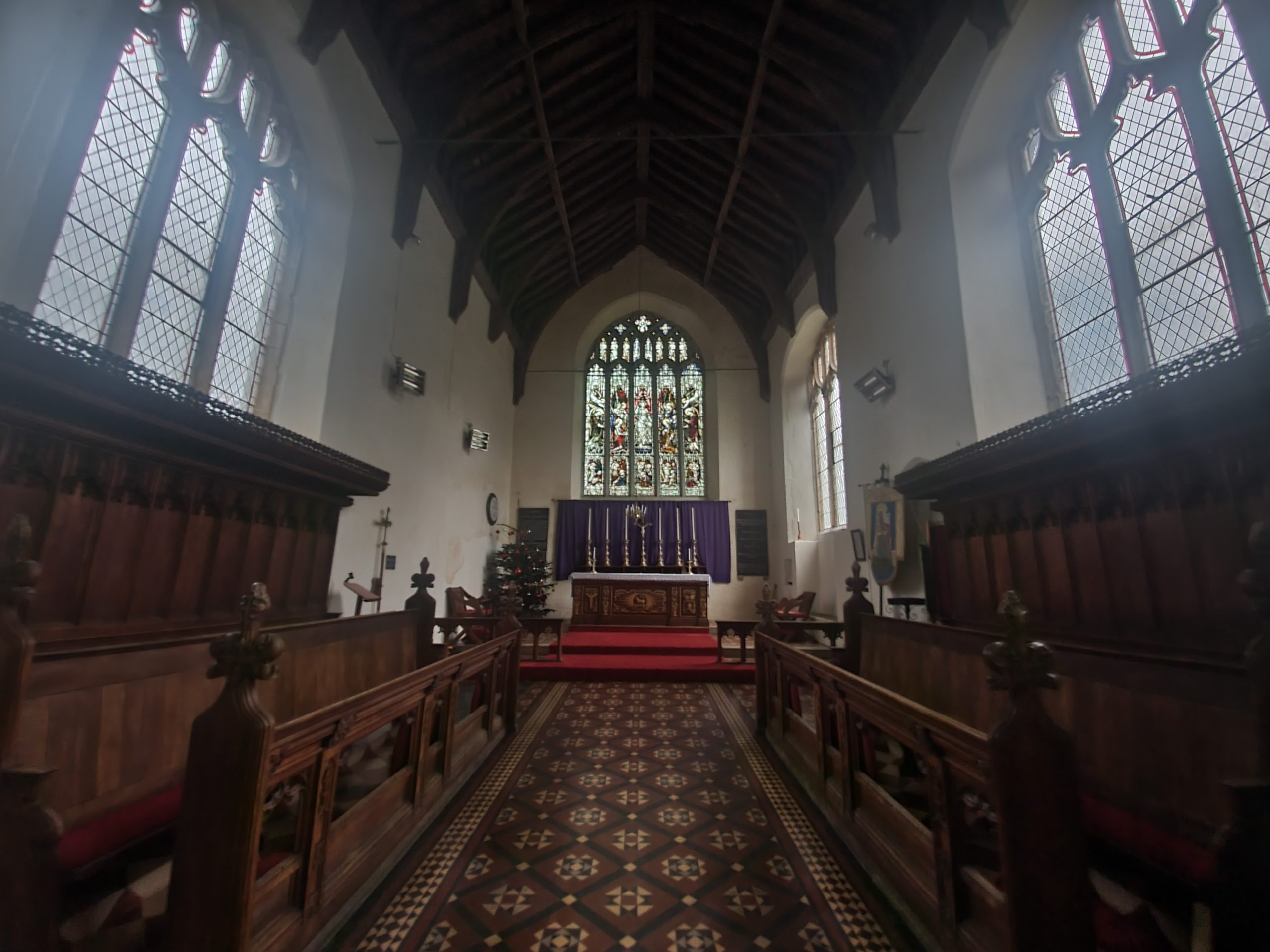
    This is a spacious church, but it was constructed without any aisles, which seems a little unusual for such a grand project.

    The choir seating, with these stalls first used at the memorial service for King Edward VII which was held on 29 May 1910.

    The pulpit, which is just over 100 years old, dating from a similar period to the choir stalls following a period of a very leaky roof damaging some of the interior.

    The chancel end.

    Looking back towards the church tower.

    That’s quite an impressive roof, stripped back and partly replaced in 1908 as it was leaking badly. The church then had to turn its attention to the tower, which was in “a very dangerous condition”.

    Above the North Door are the Royal Arms of Queen Anne.

    The font is from the fifteenth century.

    One of the old oak panelled chests which would have once stored important church documents.

    A really rather lovely church and it does the parish great credit that they’ve made an effort to open the building up. I also liked that they had produced a history of the church for visitors, it all felt really quite welcoming even though we didn’t see anyone during the visit. The churchyard, of which more in another post, is relatively large and has had at least two separate extensions added to it.