Category: UK

  • London – Waltham Forest (Borough of) – Chingford Mount Cemetery (Grave of Charles James Kray)

    London – Waltham Forest (Borough of) – Chingford Mount Cemetery (Grave of Charles James Kray)

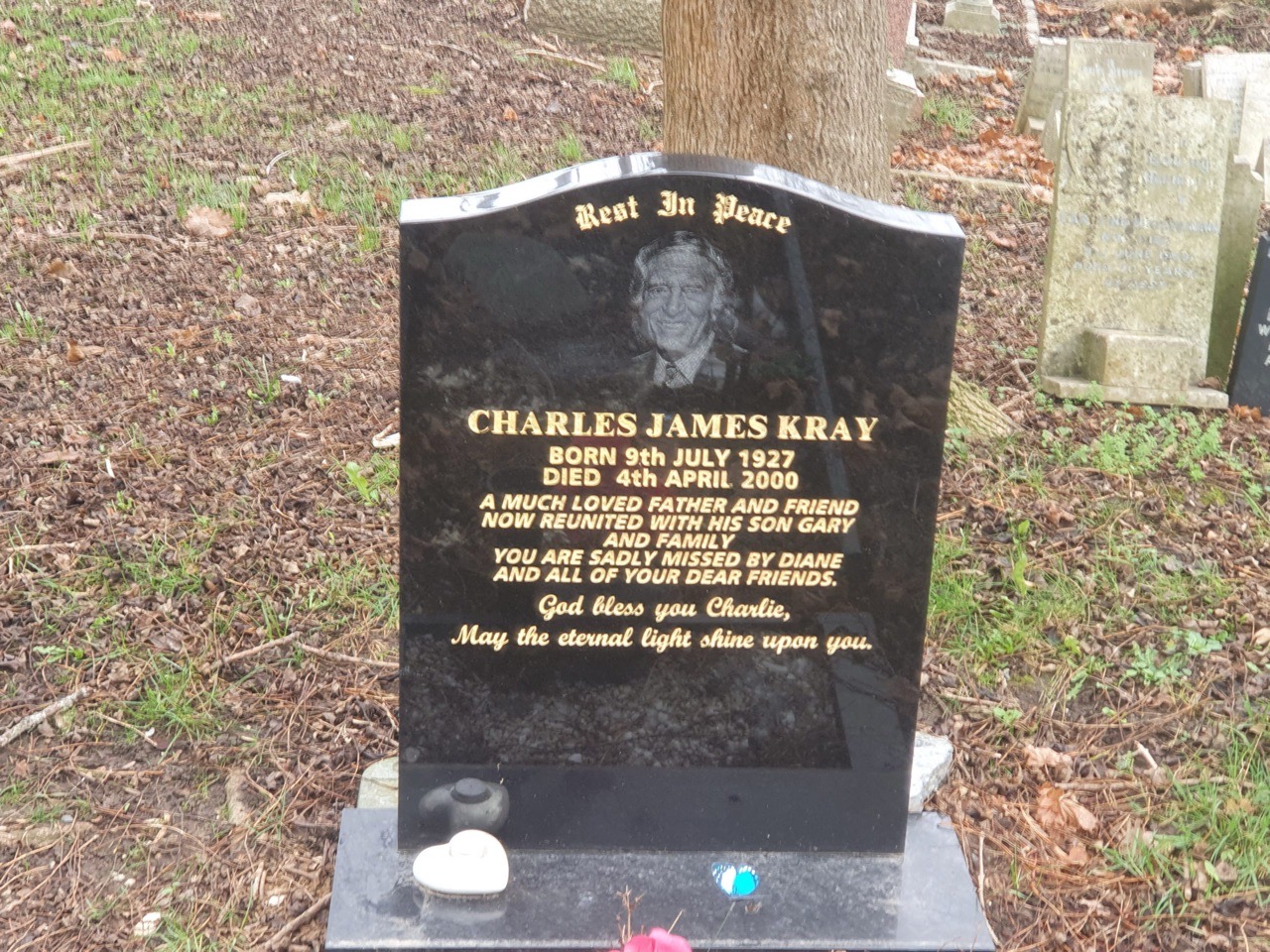
    Charles James Kray (1927-2000) was the older brother of Ronnie and Reggie Kray and he’s buried at Chingford Mount Cemetery next to his infamous brothers. The actress Barbara Windsor is known for her one-night stand with Reggie Kray, but she had a full-blown affair with Charles. He was sentenced to ten years in prison in 1968 and was released in 1975, saying that his name was a major problem for him after this time given the reputation that his brothers had. Kray returned to crime in the 1990s and he was sent back to prison, which is where he died.

    The grave mentions his son Gary, who died in 1996 and was the only child of any of the three Krays. Gary is buried with Reggie’s wife Frances Shea, but more about that in another post….

    The grave’s location in Chingford Mount Cemetery.

  • London – Waltham Forest (Borough of) – Chingford Mount Cemetery (Grave of Ronnie and Reggie Kray)

    London – Waltham Forest (Borough of) – Chingford Mount Cemetery (Grave of Ronnie and Reggie Kray)

    This large cemetery in Chingford Mount was opened in May 1884 and covers an enormous site, still being actively used.

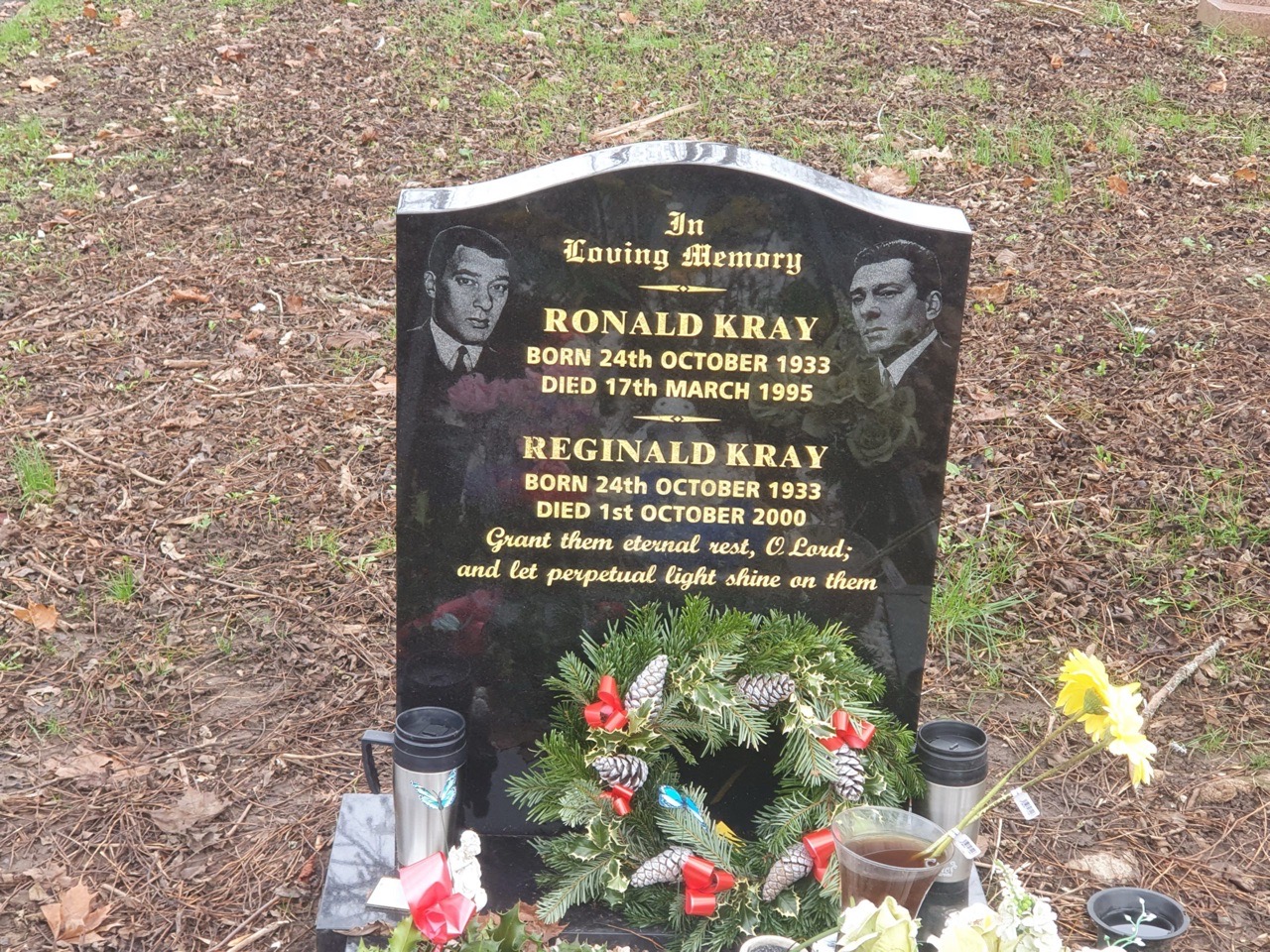
    I can’t claim to be a particularly huge fan of Ronnie Kray (1933-1995) and Reggie Kray (1933-2000), but they are a major part of London’s history, so I was interested in finding their grave. They have a family plot, but they were refused permission by the Home Office to come here in 1982 following the death of their mother Violet. I’m not sure that the family had any particular connection with Chingford, but this is one of the largest cemeteries where people living in the East End were buried. Incidentally, I don’t know what is in the flasks….

    For anyone who wants to watch the funeral and burial of Ronnie Kray.

    For anyone wanting to visit themselves, go in the main gate and head to the back left of the cemetery. I’ve created this professional image (I accept graphic design isn’t a strong point of mine) with a reddish circle to help find it.

  • Chiltern Railways : Wembley Stadium to London Marylebone

    Chiltern Railways : Wembley Stadium to London Marylebone

    And another in my niche series of rail journeys around the UK, which are primarily for me to remember what rail companies I’ve travelled with, primarily with an interest in how they do things differently.

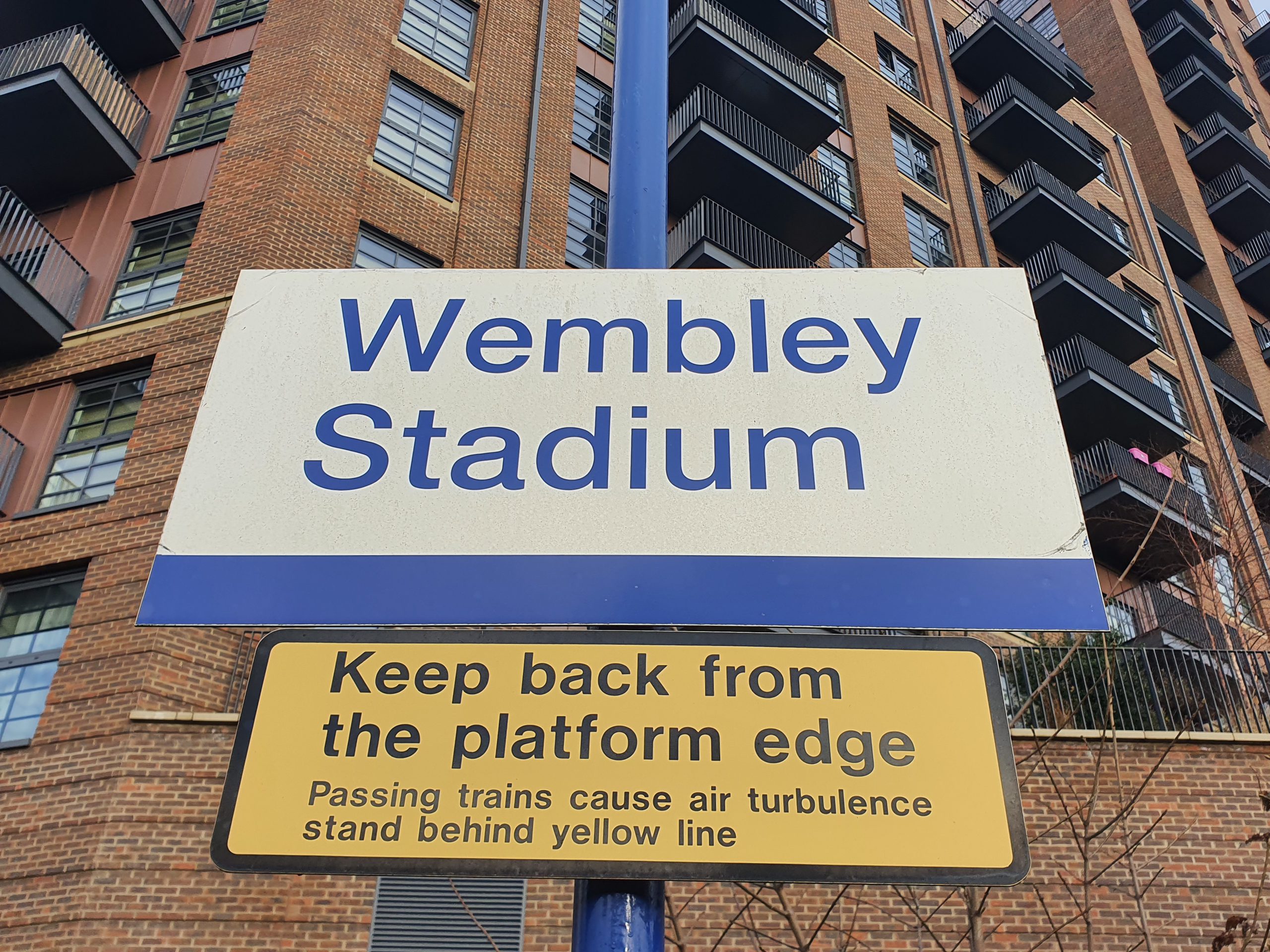
    Wembley Stadium isn’t the most exciting of railway stations and the history of railways around here is confused, as there was a different station with the same name at one point. This station opened in 1906 as Wembley Hill, was renamed Wembley Complex in 1978 and took its current name of Wembley Stadium in 1987. Incidentally, the Wembley Complex isn’t what I would consider to be a traditional way of naming British railway stations (and sounds more like a psychological conjecture) so I’m pleased that it was changed. The railway station is around a five minute walk away from Wembley Stadium, so the naming is appropriate.

    In the above photo, at the back is the White Horse Bridge, opened in 2008 and replacing the old concrete footbridge which was built for the British Empire Exhibition in 1925.

    The railway station is solely used by Chiltern Railways on their mainline to Birmingham and it’s a fast connection into the city centre as it gets into London Marylebone in only around ten minutes. I stood here and then realised that the train stops a little back way, with the platform being longer than it needs to be as occasionally they bring in longer trains when there are matches or events taking place at Wembley Stadium.

    The train was about a third full, not overly busy. I don’t know if there was a guard on board the train, but if there was, I didn’t see him or her at any stage of the journey. Legroom isn’t ideal and the interior of these trains probably need a more modern refit soon with a return to 2+2 seating rather than 3+2 which doesn’t really fit.

    And here we are ten minutes later in London Marylebone. There are usually two services which operate between Wembley Stadium and London Marylebone every hour, so the service is relatively frequent.

    As I’ve written about before, Marylebone is the smallest London mainline railway station, and also the last one to be completed.

    And the station’s frontage. Everything ran to time, the train was clean and the service was easy to get a ticket for as it just uses contactless at each end. Looping back to the start, there’s not a lot that Chiltern Railways seem to do differently of particular note, especially for a short journey such as this, but they’ve invested considerably in the infra-structure of this route over the last couple of decades. Only a few weeks ago a new franchise was given to the company to operate this route and this lasts until the end of 2027, but with the proviso that the contract might change with the introduction of Great British Railways in 2025ish.

  • London – Brent (Borough of) – Wembley – Remains of Old Wembley Stadium

    London – Brent (Borough of) – Wembley – Remains of Old Wembley Stadium

    My random excursion of the day was to see this, in Brent River Park in Wembley.

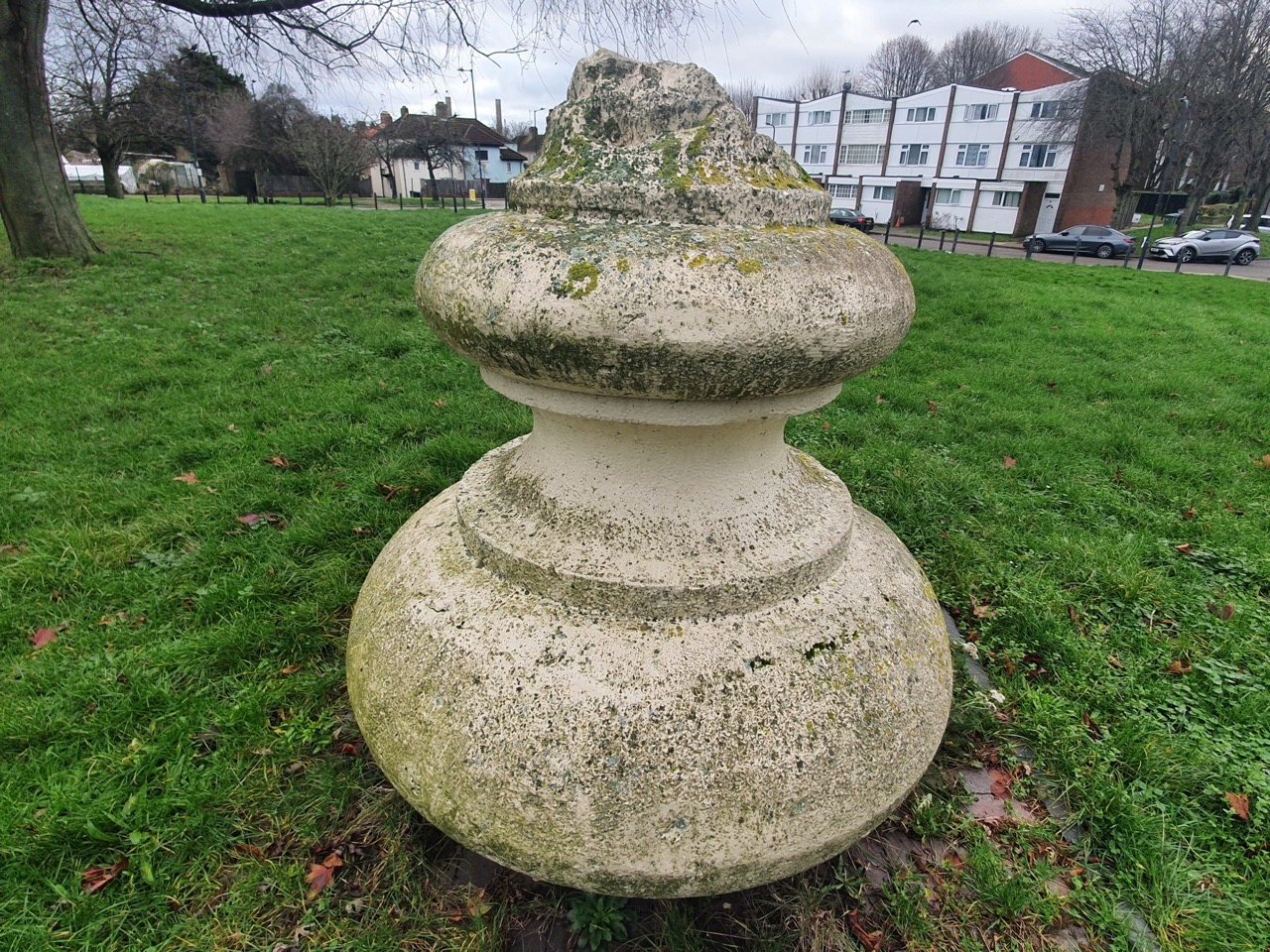
    And OK, it looks a little random in its current landscape. Without any clues, no-one I showed this photo to was able to tell me what it was, although I would have been surprised if anyone did know as it’s quite out of context here.

    But, as this sign suggests, it’s one of the few things that remains from the Old Wembley Stadium and its the base of one of the flagpoles from the Twin Towers. Work on that stadium started 100 years ago, in 1922, and it was completed in 1923. There was a major renovation to the structure in 1963 before the World Cup in 1966, but the stadium was demolished between 2002 and 2003 to be replaced with the current arrangement. There was vague efforts made to save the famous twin towers which had been Grade II listed in 1976, but as they were made of ferro-concrete and had only ever been designed to be temporary, the developers claimed they couldn’t possibly be saved. Lots of planning arguments were made about this, but in the end the developers got their way and they were destroyed.

    This remaining section at least seems quite robust and it has been here since June 2003, a reminder of the Wembley Twin Towers.

    This is what the site looks like today with the modern stadium.

  • London – Central London – Salters’ Hall Gates

    London – Central London – Salters’ Hall Gates

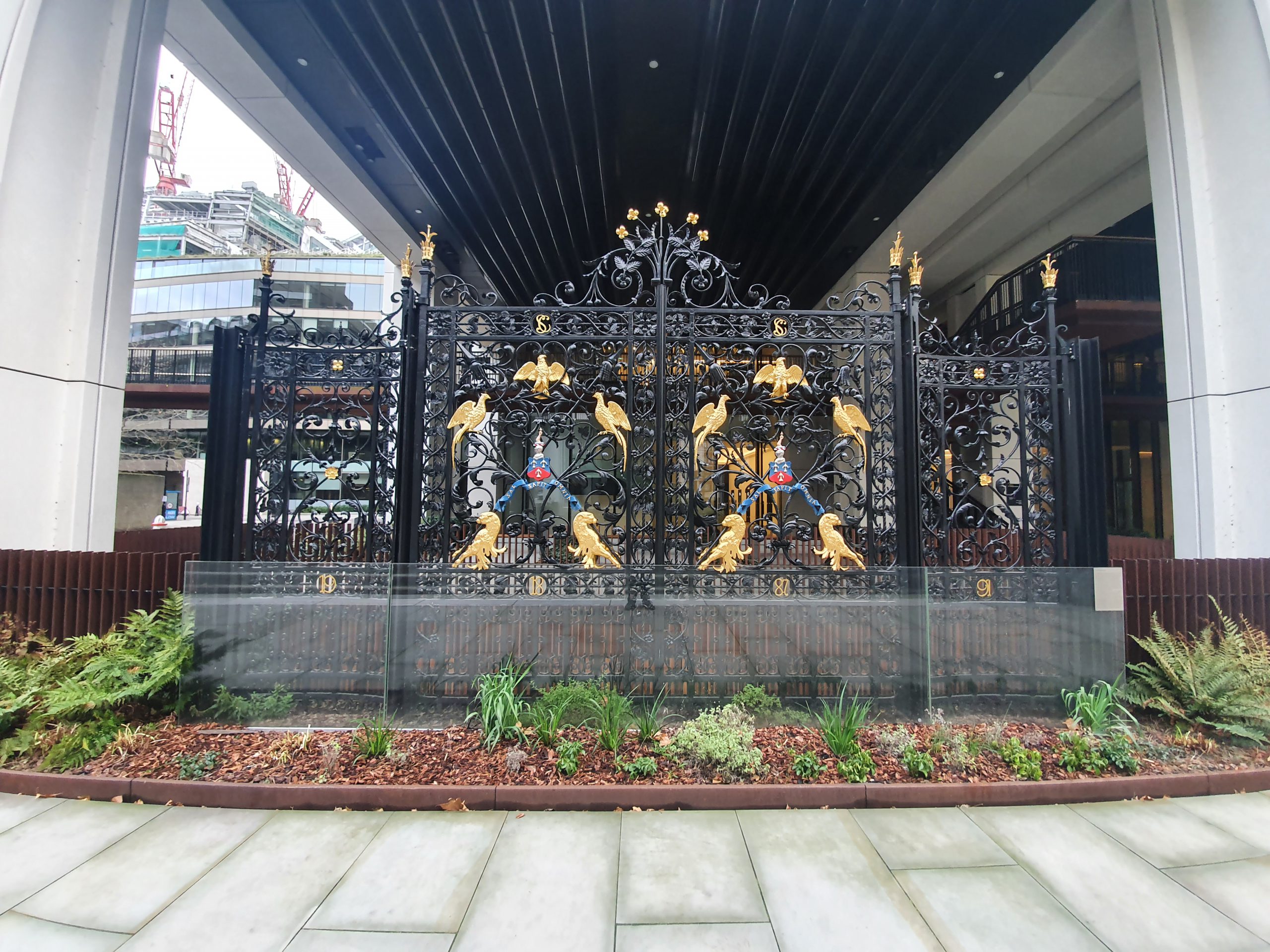
    These gates are near to Fore Street, situated a few metres away from the Minotaur sculpture, but these have just a little more relevance to their surroundings. They are the gates purchased in 1887 by Salters’ Hall for their building then located off St. Swithin’s Lane. The gates weren’t specifically created for them, they had been displayed at the International Exhibition and were commissioned by Prince Albert (1819-1861) and designed by John Thomas (1813-1862) at the beginning of the 1860s, but they then both died and so it’s fair to say the project lost its shine a little. There were a few little amendments for the new owners, such as the addition of the Salters’ crest, but then they were good to go. And I’m sure that everyone was pleased with the gates until the 1941 Blitz saw Salters’ Hall destroyed. On the bright side, they still had the gates. In 1949, they were moved to Salters’ Almhouses in Watford and in 2017 they were moved to their current location, near to the new Salters’ Hall.

    The original location of the gates at the old Salters’ Hall (clicking on the map makes it larger).

  • London – Central London – The Minotaur Statue

    London – Central London – The Minotaur Statue

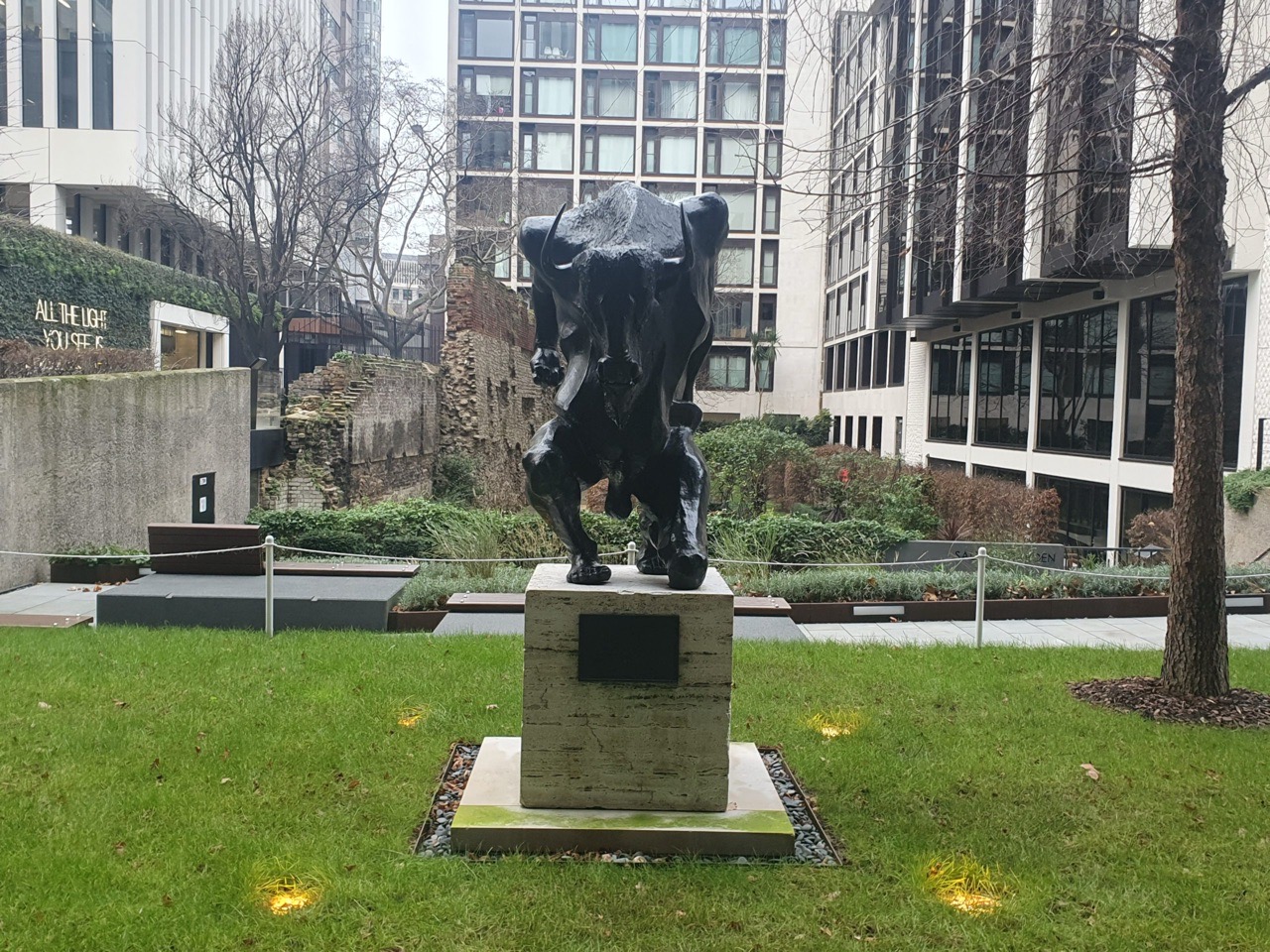
    With a stretch of Roman Wall in the background, this is the public space in front of Salters’ Hall.

    Part human and part bull, the sculpture of the Minotaur was designed by Michael Ayrton (1921-1975) in the early 1970s. I was interested to understand the significance of why the monument was placed here and the link, but it transpires that there’s absolutely none. It was originally designed for a private estate, with this cast going to a number of locations before the Corporation of London purchased it in 1973. They then placed it in Postman’s Park, but after just over twenty years it was thought that the sculpture needed a change of scenery and it was moved to a high walkway near to the Roman wall. When that was all redesigned, he was brought down to ground level on the terrace outside the Guildhall School of Music and Drama.

    The sculpture does feel a little incongruous to its surroundings, as if it’s trying to make an artistic statement, but no-one is quite sure what it’s saying. It’ll perhaps be moved about again at some point in the future, maybe it’s more suited to somewhere like Canary Wharf where an aggressive sculpture might be more fitting.

  • London – Westminster (Borough of) – Plaque to Pret

    London – Westminster (Borough of) – Plaque to Pret

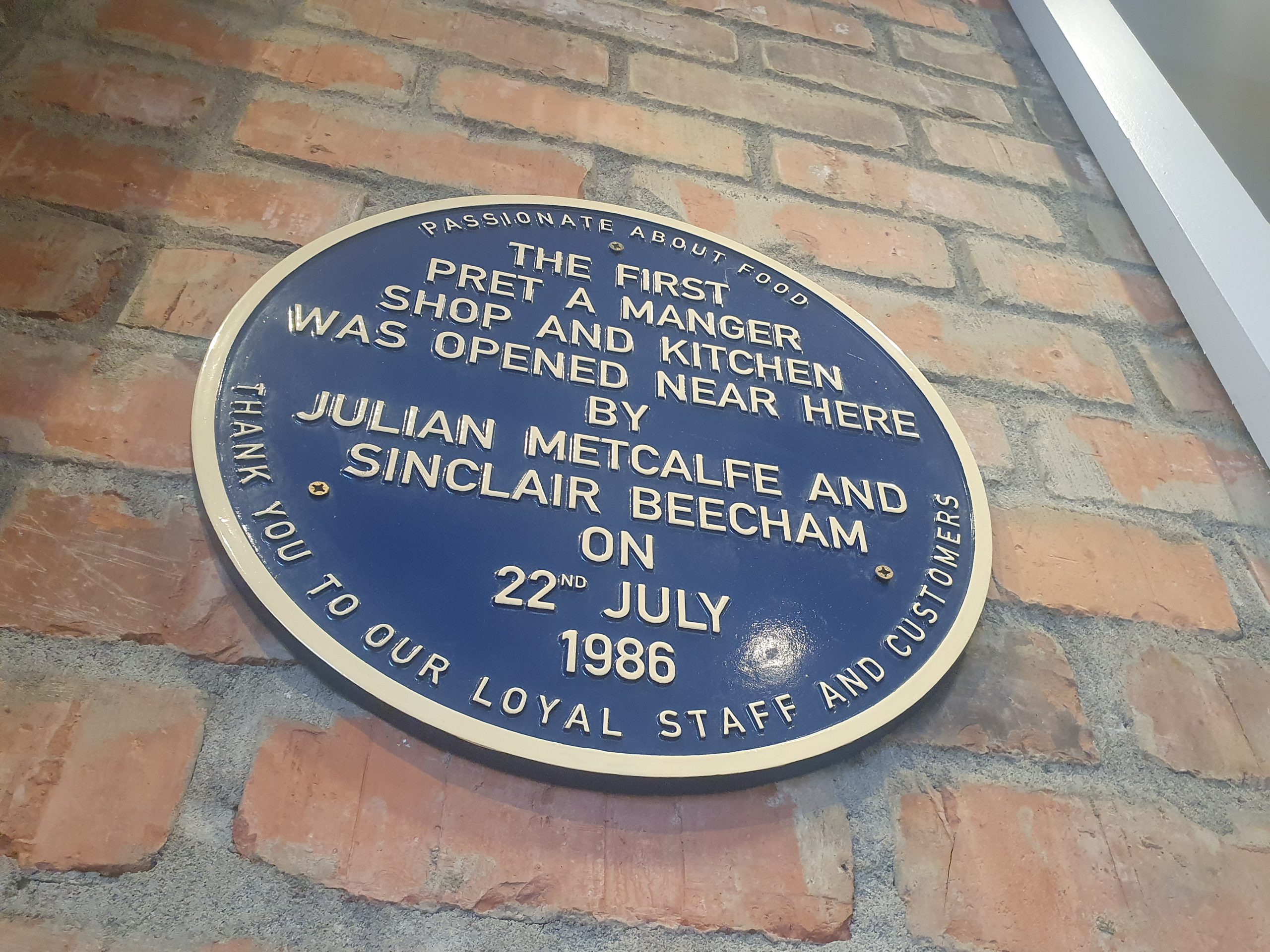
    I learn something every day (well, most days and a lot of what I learn is broadly irrelevant), and I’ve discovered that the existing Pret shop at 93-95 Victoria Street is just a stone’s throw from where it all began for the company in 1986, at 75B Victoria Street. There was actually a shop in Hampstead but that went bust and Sinclair Beecham and Julian Metcalfe purchased the name and imagery, and they opened at 75B. There are now 500 Prets around the world, with plans to open many more.

    Pret renamed their Head Office, which is nearby above Platform 1 at Victoria railway station, 75B in honour of their first shop. Incidentally, their designers have put up photos of the interior of their head office, very decadent….. I wonder if Greggs has a plaque anywhere.

  • London – Central London – Roman Wall at St Alphage Garden

    London – Central London – Roman Wall at St Alphage Garden

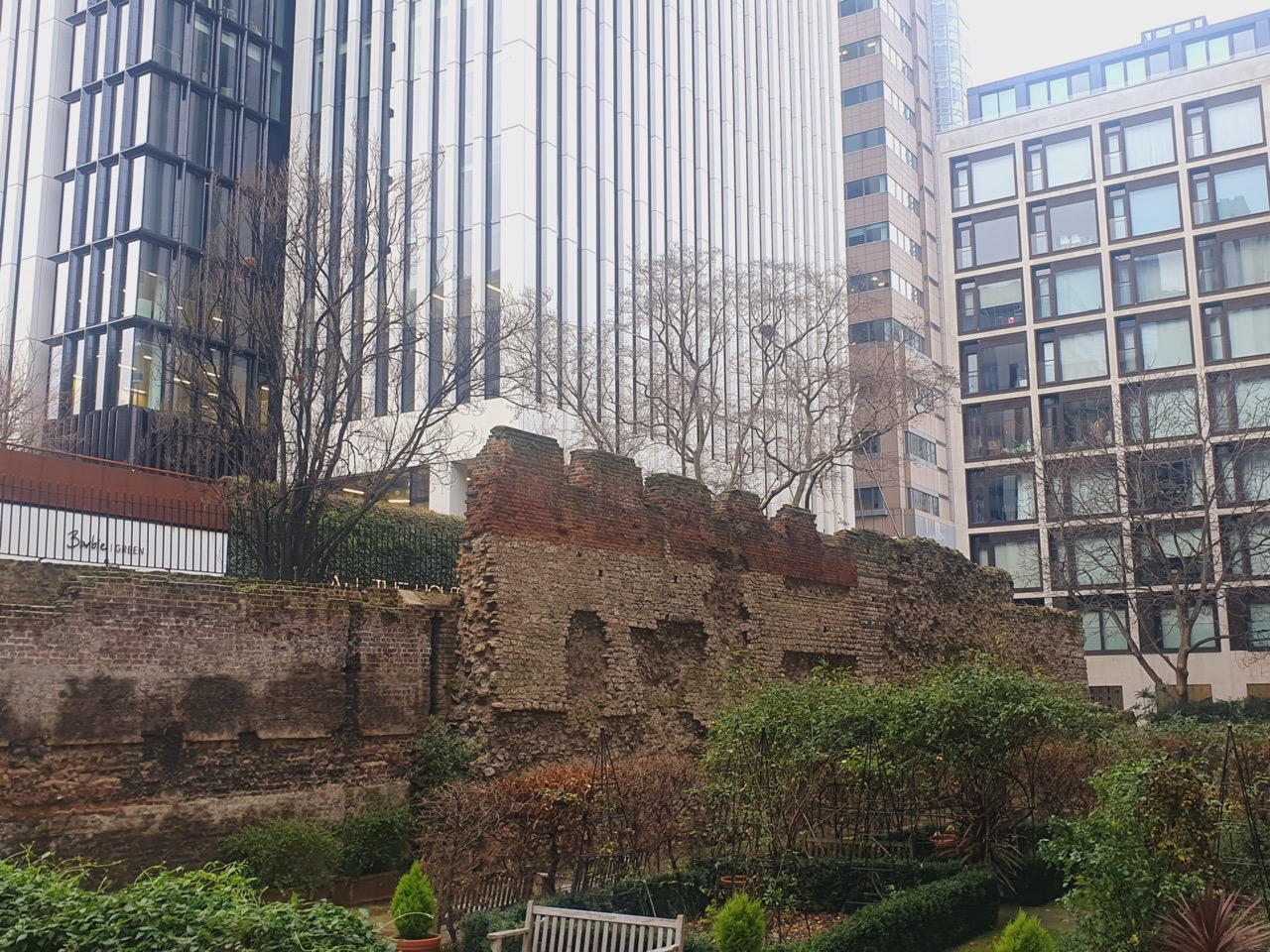
    This stretch of Roman Wall is located next to the Tower of Elsing Spital, by what is now the road named London Wall.

    This is the listed building map of historic buildings in London, with the red line being the scheduling of the remains of Roman Wall that still stand (or where foundations are known to survive), a series of large and small fragments which show the size of early Londinium. This section of Roman Wall is near to the top of the image, a little closer to the Blackfriars end rather than the Tower of London end.

    Looking down from the aerial walkway, this would be a much busier scene in summer months with people eating their lunches or just taking some time to get outside in the relative peace and quiet of the surroundings.

    That’s Salter’s Hall in the background, now a large charitable institution, but previously one of the Livery Companies of the city. It’s a modernist style building which is in keeping with the nearby Barbican development in its post-war contemporary architecture, although it doesn’t fit quite as easily with the Roman wall.

    The plaque is now harder to read, but notes when this area was laid out as a public garden in 1872.

    Much of what is visible isn’t part of the Roman wall, although the foundations of the original structure are still there, but they were built on during the medieval period when it was being strengthened. The brick section on the far right of this photo is from 1477 when Ralph Jocelyn ordered substantial repairs to the wall, at that stage in a bad state in some sections, during the War of the Roses. He bravely raised taxes to fund this endeavour, as well as purchasing large quantities of bricks and lime.

    There was also a church, St Alphage, which backed onto this site and the former wall lines are marked on the ground. This church was constructed in the eleventh century, but was knocked down during the Dissolution of the Monasteries.

    Another Victorian stone, but it’s now nearly entirely unreadable, damaged by the decades of London smog, pollution and not helped by the bombing of the area during the Second World War.

    The medieval putlog holes are still visible where the wooden scaffolding was once placed against the structure.

    The rear of the wall is visible from the gardens of Salter’s Hall which are sometimes open to the public, but which were closed when I visited. The medieval brick additions, and the only stretch of crenellations along the wall which survive, are much more easily seen from this side. The reason that so much of this wall survived was due to it being incorporated into later buildings, although it was only after the bombing of the Second World War that it became quite so visible.

  • London – Kensington and Chelsea (Borough of) – Gordon Ramsay Burger at Harrods

    London – Kensington and Chelsea (Borough of) – Gordon Ramsay Burger at Harrods

    As someone who considers my occasional £20 per month Pret subscription as an arguably unnecessarily decadence, it’s not like me to pop to Harrods for lunch. Indeed, I don’t pop to Harrods for anything.

    After getting lost in the store (as a spoiler for someone who hasn’t been, the store is ridiculously big and maze-like), I found Gordon Ramsay’s burger restaurant on the fourth floor. To be fair, I did know it was on the fourth floor, but I still had to hunt around for it when I got to the right level. I had pre-booked as part of The Fork’s promotional offer which is really ridiculously generous, but which in short gave me £50 to spend here.

    Back to the restaurant, I really don’t like those tables by the rope in the above photo, that’s in the middle of the women’s clothing department, which doesn’t feel a great fit (excuse the pun). Fortunately, I wasn’t seated here, but was shown to a table in the main part of the restaurant and I suspect that these external seats are used only as a last resort. They should be better sheltered from the corridor in my view, but there we go.

    Service here was friendly, efficient and engaging from the start. There was an immediate welcome, my booking was found and I was shown to my table. The timing was well measured throughout and I was never left waiting for service. The training here is clearly professional and the staff were always engaging.

    This isn’t a cheap place to visit, although it’s also not off the scale in terms of the cost. There are burgers, hot dogs and salads, but although the hot dogs sounded tempting, I thought it appropriate to go for a burger. The restaurant only cooks them medium well or well done, so I went for the former but I would have preferred something more medium. There is an £80 Wagyu burger on the menu for those who want to lift their experience even more, or just if they want to spend a lot of money. I didn’t.

    That’s a very poor beer list and it transpired that they didn’t even have the Curious Brew, with a manager coming over to apologise that I had been able to order it. Although I accept that people don’t necessarily come here for beer, there’s no excuse to not have a couple of decent craft beer cans available on hand.

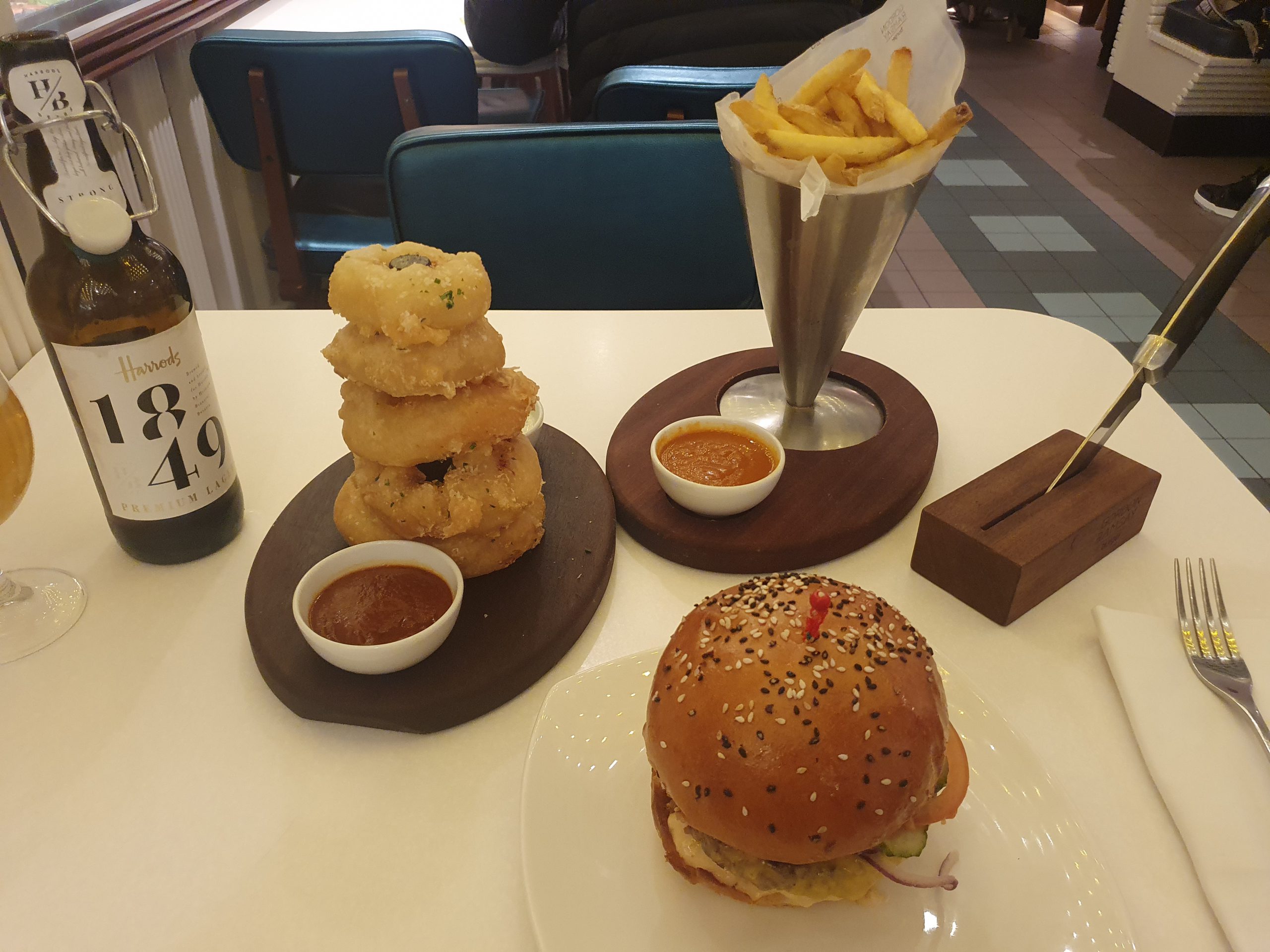
    The 1849 Premium Lager, which is made by the Bavarian brewer Hofmark Brauerei KG. It was perfectly acceptable and had clean flavours, a suitable middle of the road lager. Despite the fancy branding, this isn’t that exciting a drink though, although it was served at the appropriate chilled temperature.

    The meal was brought out promptly, after around 12 minutes. The portion sizes all veered towards the generous side and everything was at the appropriate hot temperature.

    The burger itself was nicely presented and the tomato was of a good quality, the pickles and onion added texture with the relish adding some extra flavour. There was some lettuce which never does much to anything. This was a nice burger which had a meaty flavour and was suitably seasoned, but it didn’t stand out as being anything beyond the sort of food I’ve had at decent pubs. I can’t fault the restaurant for serving a burger that I enjoyed, but it wasn’t quite as marvellous as I expected, but maybe my expectations were a bit high.

    The fries came with a lovely homemade ketchup and they were evenly salted, firm on the exterior and nicely seasoned. The onion rings weren’t that good at all though, they were the weak part of the meal. They were too doughy, the batter lacked flavour (they were beer battered, but I suspect they’ve used something like Greene King IPA) and the bottom onion ring was burnt. Personally I wouldn’t have had the Parmesan coating on them, but each to their own. They came with a pleasant chipotle ketchup, although the ranch dressing was a little strong in flavour for me and wasn’t like the ones I’ve had in the United States.

    My bill totalled £1.69 and it’s fair to say that I was pleased by that arrangement. I’m not sure I’d ever come here and pay full price as it’s all a bit too expensive, but for an experience at a Gordon Ramsay restaurant in Harrods the menu pricing felt reasonable. The food would be better served with a beer that complemented it better, and a rich stout here would have lifted things somewhat. Perhaps I shouldn’t view things from the prism of craft beer, but if a restaurant is going to do something, it should do it properly. The onion rings also weren’t really that good, which would be a disappointment if I had paid £9.50 for them.

    This was a rather pleasant way to spend New Year’s Eve lunchtime though and the dining environment was clean, comfortable and relaxed. The turnover of customers was quite swift, but I didn’t notice any customer being hurried and I was never rushed anywhere. I would though recommend against being seating in the aisle of the department store, that isn’t ideal and takes away somewhat from the experience, so I was glad they didn’t try and put me there. The staff engagement was high which made for a nicer visit and there were no issues with my £50 The Fork payment credit.

  • London – Central London – Tower of St Elsyng Spital

    London – Central London – Tower of St Elsyng Spital

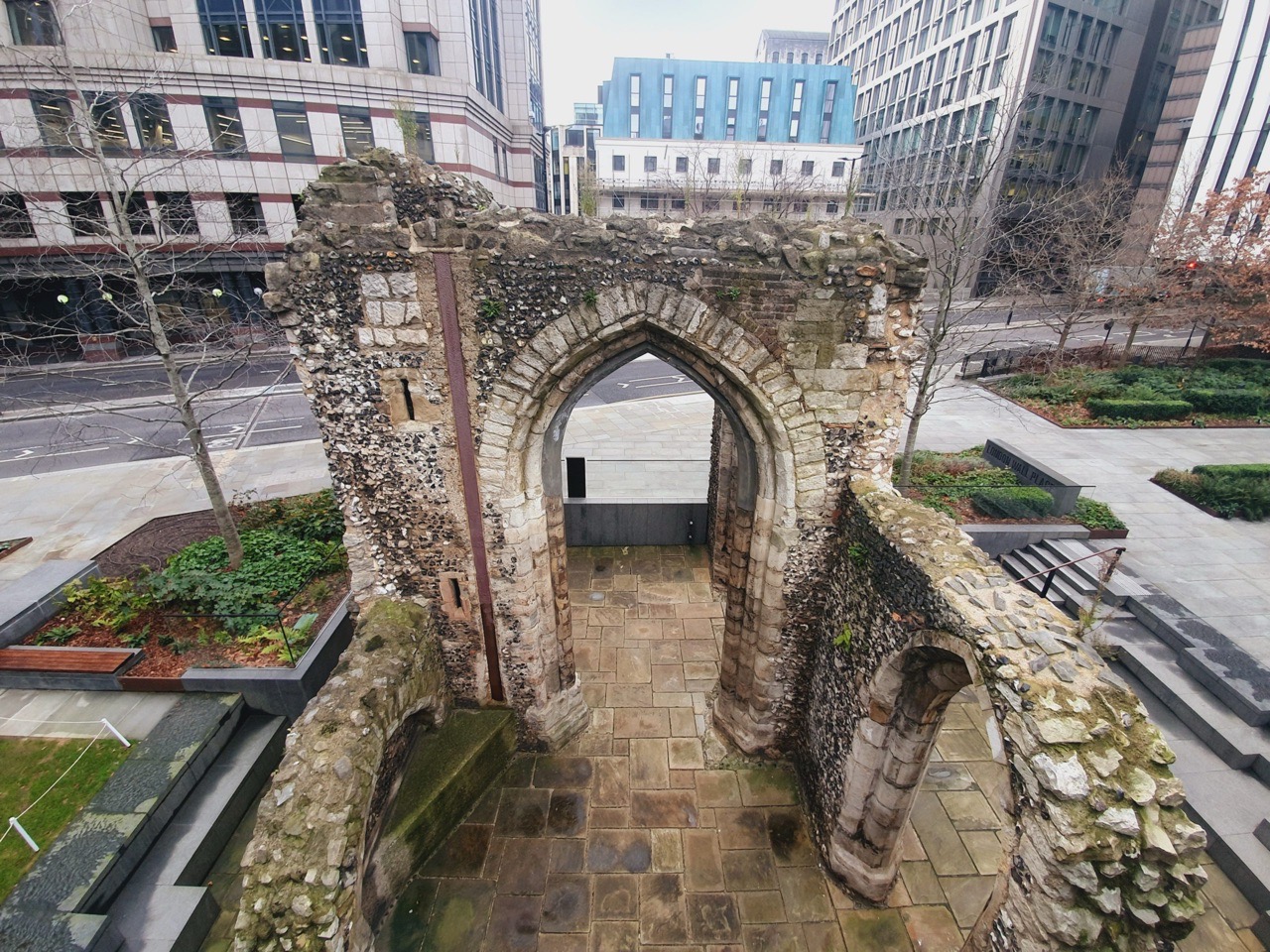
    Located on London Wall, the road named after the Roman defensive wall, this is all that remains of St Elsyng Spital church. It was part of the structures built by William Elsyng, a wealthy London merchant, as a hospital in 1330 to help the poorest members of society in medieval London.

    Clicking on this image will make it larger and it’s the site in around 1900 and next to it, what there is today. Reconstruction following the Second World War saw much of this area swept away, but the remains of the church were kept. The landscape has changed substantially though, London Wall now ploughs through this part of London and the area has been opened up to the public. The little cursor on the map on the left is where the remains of the tower stand today.

    Through the central arch would have been the main part of the church, the choir and then the nave.

    The hospital section of the site was the first to be constructed, with the priory church being completed in 1340. This was later turned into a parish church in 1536, following the Dissolution of the Monasteries. Much of the rest of the site was damaged in 1541 and some of the buildings were turned into a private house, which all became part of Sion College in 1630. There was substantial damage caused by the Great Fire in 1666, but the College remained here until 1886 when they moved to a new site in Victoria.

    The cloisters and cemetery would have been off to the right, under what is now London Wall road. The church was damaged in a First World War air raid and part of it was reconstructed in 1919, but the nave was removed in 1923. This wasn’t an entirely destructive process in terms of the history, as the nave of the building only dated to between 1774 and 1777 when it was rebuilt as the old church was falling down, but they did keep the original tower. Following the demolition, the tower and porch were turned into a small church of its own, but this was in turn damaged during an air raid during the Second World War, with the area being comprehensively redesigned.

    The stone steps into the tower remain, although are gated off. The steps aren’t easily visible due to the assorted litter that has collected up here.

    There’s now a walkway to get a better view of the church and in the centre is where the stone steps come out.

    The remains of the church in their new post-war surroundings in what is a decent public space, with numerous interpretation boards explaining the history of the site. Although the medieval street plan has been lost here, the tower is now more visible than it would have been in previous centuries since all of the buildings around it have been removed. I’m sure that there have been many times in the past when planners thought that it would just be easier to remove this section, but it’s now an important part of the local landscape.