Category: Norfolk

  • Yaxham – Yaxham Railway Station

    Yaxham – Yaxham Railway Station

    Yaxham railway station opened on 15 February 1847 and was located on the Wymondham to Dereham branch line and remained in use for passengers until 6 October 1969. It’s now in use by the Mid-Norfolk Railway as a heritage line, although there is the possibility that this could at some stage in the future be brought back into usage by the rail network. This is a marvellous thought, although I’m a little sceptical about whether funding will ever be raised for such a project. For a while, the centre of the heritage’s lines efforts were run from Yaxham, although the re-opening of Dereham railway station has meant they’ve moved back.

    The whole complex was quite extensive and some of the station buildings still stand, including the signal box, although they’re in private ownership. The inn marked on the map was the Bush, which was closed in the 1960s and is now a residential property. Nearby Dereham railway station once had a staff of ninety people and Yaxham had several full-time staff of its own, with the line being a busy one for freight. Its demise was far from ideal….

  • Yaxham – St. Peter’s Church

    Yaxham – St. Peter’s Church

    The entrance to St. Peter’s church in Yaxham is up a quiet little road and it doesn’t take much imagination to think of generations gone by meandering up here to attend a service.

    Norfolk Heritage Explorer tells me that the banding on the church tower shows that it’s constructed of carstone and this helps date that part of the building to the late Saxon period. I’m still always impressed when reading dates like that, it means that the bottom of the tower was standing when William the Conqueror invaded England. The upper part of the tower is from the fourteenth century, with the bulk of the rest of the church being from the fourteenth and fifteenth centuries. Later that might be, but the vast majority of this church was standing when King Henry VIII decided that the Dissolution of the Monasteries was a good idea.

    The church viewed from the south east and it looks like the rood stairs have been added to the exterior where the nave and chancel meet. George Plunkett took a photo from near enough the same spot in 1937 and little has changed, with all the gravestones appearing to still be there. One change is that a small tree in the 1937 photo has now gone and it’s a reminder to myself that, although in a small way, the landscape can change over time even within a graveyard.

    Robert Ladbrooke’s illustration of the church from the mid-nineteenth century.

    The church viewed from the north east.

    The chancel end of the church, with this section, amongst others, being subject to Victorian restoration.

    Unfortunately, the church wasn’t open on the Saturday morning that I visited, although I had rather hoped it would be. There’s sometimes the misapprehension that damage to religious buildings is a recent thing, but in 1908 a number of local churches were smashed into and their collections stolen. The culprits were found, but Yaxham lost its money and its door was forced open.

    The graveyard is relatively large and it’s all well-kept, with a little woodland path through the trees. Although Yaxham is just a short distance from Dereham, it felt remote and peaceful and I suspect that little will change here in the next couple of hundred years.

  • Blickling – Blickling Hall Gardens

    Blickling – Blickling Hall Gardens

    This post is mainly photos of the gardens of Blickling Hall. I booked via the National Trust’s on-line reservation system a few days ago and although there was plenty of availability, it was busy when we arrived. The car park system was easy to navigate and there were no shortage of volunteers helping visitors find where to go. The volunteers also seemed to be knowledgeable and genuinely keen to help, which is all rather lovely.

    As a quick background, this property is often known as the birthplace of Anne Boleyn, and the location for her headless ghost. The property today isn’t contemporary to that period, it’s from the late sixteenth century and was extensively remodelled in the late eighteenth century. It came into the hands of the National Trust in 1940 following the death of the owner Philip Kerr, 11th Marquess of Lothian, who served as the British Ambassador to the United States until his death.

    There’s a basic map provided free of charge and some useful signage throughout the gardens. It’s possible to walk around the wider estate free of charge and the house is currently closed, but I understand that it will open again in a few weeks.

  • Norwich – The Garden House

    Norwich – The Garden House

    Before going in, we had decided that we would pre-judge the Garden House, which had been a marvellous pub and then Craft Union took it over. I haven’t been since that takeover, but Craft Union have in my experience been reliably terrible with clunky makeovers and a poor range of drinks. I’ve never been quite sure what the word Craft is doing in their name, trying to cash in on craft beer when that’s not something they have any focus on. So, my expectations really weren’t very high and I’m used to Craft Union not even offering real ale, so we were wondering whether we’d have to fall back on something like Guinness.

    The welcome offered at the entrance was excellent and verging on exceptional and I understand it was the landlord standing there taking charge of that. That was a positive first sign, as being made to feel welcome really is a skill that some pubs struggle to get right and it shouldn’t be that much of a challenge. The second positive sign was that list of real ales, as Theakston’s Old Peculier is what I consider to be a very good option to have, as is Timothy Taylor Landlord. It’s also really useful when pubs write down the beers that they have, as staff trying to remember what they have is not an ideal situation as it’s often poorly communicated. But here, there was clarity, friendliness and a self-assured service style all as part of the initial greeting, which is rather lovely.

    There’s a large beer garden and that is apparently the reason the pub was named the Garden House because of that rather useful feature, although for reasons unknown, the pub name was changed for a short period in the 1980s to ‘Fridays’. Today, the garden area is all organised and there’s an area with an external television and seating area. That the pub can show live sports is not much interest to me, but I can see that it’s a very useful thing to have to help them serve the community. The pub is using a clunky app provided by Craft Union, which reminds me of the Greene King app which really isn’t very focused on proper beer, as neither can cope very well with real ales. This wasn’t a problem here, a staff member was able to take our order as she confirmed real ale can’t be ordered using the app. As another little bonus, the prices charged for the ales, and indeed most drinks that I saw, was towards the lower end of the scale.

    This is my problem with the Craft Union name, it implies to new customers that they focus on craft beer. Their advertising is actually more focused on drinks such as this, which is entirely fine (and, a bit secretly, I wouldn’t turn any of those down…..) but not keep in fitting with their name. Craft Union is now part of Stonegate, who are probably going to do a better job than the complete disaster that Enterprise Inns made of most things when they operated it.

    Anyway, my issues with the national brand aside, this pub was very well run and the customer service was faultless. The beer was well kept, the choice was better than my expectations and the environment was comfortable. It’ll take me a while yet to be convinced about Craft Union, but this was a rather positive experience. It does show though that when they find an excellent operator that the concept they use (where the operator is self-employed but gets 18% of the take for themselves and to pay their staff) is one that can work.

    It’s a reminder also to us that we shouldn’t really pre-judge pubs as often they can surprise and delight.

  • Norwich – The York Pub

    Norwich – The York Pub

    This whole drinking outside only thing does rather reduce the quality of the photographs (it is a bit easier to take photos inside where there’s actually some light), but this is The York pub on Leicester Street in Norwich. I’m not sure why the owners have lost the Tavern bit from the name, but this was until recently known as the York Tavern. Customers enter via the front door (that sounds obvious, but often at the moment customers can get into pubs through some random side gates) and the process was all well managed for us. We had to provide details for the NHS app and then separately to the pub, which was slightly convoluted, but best for the pub to be careful.

    This is the pub’s sizeable beer garden, which used to be a bowling green. I wouldn’t have noticed that if I hadn’t been told, although the defined shape is a slight giveaway. An article in the Norfolk Chronicle in 1902 mentioned that the bowling club had been open for 27 years and that it was one of the oldest in the city. Today, there’s a large marquee on part of the lawn and then some picnic benches dotted about. And all credit to the pub owners over the years for not trying to sell this land off for housing, as it’d be possible to cram a new house in there.

    The clues to it being a former bowling green are though more evident with the structures at the side (I mean the club house thing, not Nathan). Norfolk Pubs notes that the pub opened in 1878 (which suggests that the bowling club was already there if the dates in the Norfolk Chronicle are to believed) and also that the landlord Albert Plane had been found dead at the bottom of the stairs in 1922 having gone to get his family all a cup of tea, which isn’t an ideal situation. This was the same landlord who refused to admit the police into his pub in 1916, a rather brave thing to do. The reasons for the police visit aren’t known to me, but Plane was involved in black market activities, so perhaps it was in relation to that.

    There wasn’t a particularly exciting range of real ales or craft beers, but there was Gamma Ray from Beavertown which was satisfactory. I wouldn’t go further than satisfactory, but it’s a reliable pale ale. I’m still vaguely on the lookout for Spresso, which is Beavertown’s imperial stout, although they might not even make it any more. The ordering is done on-line, and Nathan managed this without too many issues on his Nokia 3310 (or whatever it is that he has).

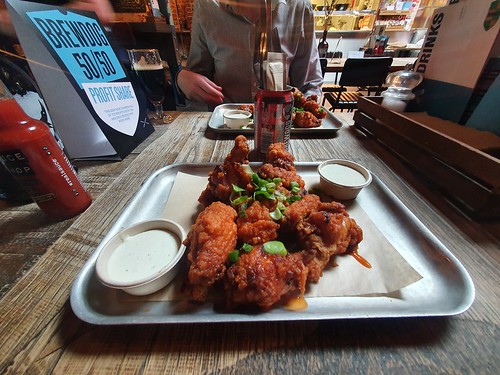
    Anyway, the pub’s garden is spacious and so the tables were suitably far apart from each other, and there was a one-way system in place inside to get to the toilets. That went via the pub’s internal stairs, which wasn’t entirely ideal now that I knew a previous landlord had died there. Although we arrived too late for it, the pub is doing food and the reviews for that seem positive and their chicken wings sound quite delicious.

  • Hemsby – St Mary the Virgin Church

    Hemsby – St Mary the Virgin Church

    There was a sign outside the church saying that St Mary the Virgin in Hemsby was open. Although that wasn’t entirely true. Indeed, it wasn’t true at all, it was shut. The church was built in the early fourteenth century by the monks of Norwich Cathedral (and apparently some of the tracery is the same as in the north cloister of the cathedral) although it’s all a little utilitarian for my taste. I couldn’t see inside, but George Plunkett has a photo of the interior from 1932. Other than the changed roofline, which was likely just a switch from the former thatched roofing, there are no blocked doors, moved windows or the like.

    I liked the porch, this had some more decorative elements and was executed to a relatively grand standard.

    The church has remained relatively untouched over the centuries, although the Victorians did restore it in 1867, and there was also some work on the tower in 1974. There was a tour of St. Mary’s in 1867 by those interested in church history, and it was pointed out there was an hourglass on display which had once been attached to the pulpit. This had been introduced in accordance with the wishes of Queen Elizabeth, who wanted to discourage the rather more prolix of preachers. I’m not sure that the church still has this, but I have to say that it’s a good idea.

    The chancel window and there are apparently two thirteenth century coffin slabs in the churchyard, which I managed to entirely miss. There likely wasn’t a Saxon church at this site as is common in many areas, and it’s not entirely clear if there was anything here before the current early fourteenth century building. This was though an area that was visited frequently by the Vikings and they kept raiding the coastline on a regular basis, which I’m sure considerably annoyed the locals.

  • Reepham – Three Churches in One Churchyard (Grave to Unknown Local Friends)

    Reepham – Three Churches in One Churchyard (Grave to Unknown Local Friends)

    This really is quite lovely, a beautiful gravestone located in a prominent part of the churchyard shared by the three churches in Reepham.

    The “unknown local friends” is a poignant phrase and it notes the site where 63 bodies were found when urgent storm drain repair work took place in 2007. The gravestone, which was funded by local donations, was designed by local stone carver Teucer Wilson and it reads:

    ‘Here lie unknown local friends from the 14th century, laid to rest by the people of Reepham in June 2010. Their souls are known by God.”

    I understand that the bodies were found near to where I’ve placed the cursor on the above map. The burials were in the St. Mary’s Church section of the churchyard and they were placed there in the fourteenth century. Analysis was done on the skeletons and it was discovered that many of the individuals had suffered from osteoarthritis issues.

  • Reepham – Three Churches in One Churchyard

    Reepham – Three Churches in One Churchyard

    This is the delightful churchyard in Reepham, home of St. Michael’s church of Whitwell parish, St. Mary’s church of Reepham parish and All Saints of Hackford parish. The first two are still standing and in the first photo there’s St. Michael’s on the left and St. Mary’s on the right, and in the second photo, there’s the remains of All Saints on the right and St. Michael’s is in the centre of the photo.

    It’s not entirely clear why three parish churches were all built in the same churchyard, but this all likely revolves around the very different way in which these buildings were once used. An information panel at the church notes that pews were introduced in the Tudor period as there was a fashion for longer services. I’m not entirely sure about that, I’d go for that it was less fashion and more a requirement of the new regime following the Restoration to ensure people actually went to church.

    But all of this is why these churches could be built next to each other, something that actually makes sense, as it’s a prominent location and land was available to build them on. There was probably some form of religious element to the location as well, perhaps some miracle had taken place on the site and it had a reputation for being a holy site. The churches are all on the very edge of their parishes, but they wouldn’t have necessarily competed as they would have been used more for private prayer, for meeting up or just for wealthier individuals to buy indulgences or have a private family chapel. Individuals weren’t required to go to the church, although there was more of a expectation to do something at Easter, and they would have been more of a community centre.

    All Saints was likely the first church to be built on this site as it’s the only one mentioned in the Domesday Book, probably in the late Saxon period, but it was destroyed by fire in 1543. The village of Hackford was already abandoned by then, so there was no great necessity for that parish to have a church given the small size of the congregation. The church stood in ruins until 1796, when it was decided to demolish nearly all that was remaining. The other two churches were likely constructed in the early Norman period and at some stage the two were touching for a distance of around of one metre. It wasn’t until 1935 when a door was finally knocked through the walls to connect the two churches together, which was also at the same time when the three parishes were combined. The Reverend Luscombe, who was taking over the combined parish, said in 1935 that:

    “Feuds between these various churches made it rather difficult for people to live together in the peace of Christian brotherhood we would like. They are going to be united. Think of me in the coming winter trying to run two churches and trying to settle a few feuds”.

    He wasn’t lying, there were huge arguments in May 1905 when one parish wanted to erect an organ in their church, but Reepham Church was furious that it might disturb their services. It was pointed out that Reepham Church had installed an organ and they didn’t seem to have thought about the impact on their neighbour, and this was one of a series of squabbles that the churches had over the decades.

    There’s a lot of church on this site, with the two remaining structures being quite large and it’s not entirely clear what they did with all that space. St. Mary’s was though a pilgrimage church in the medieval period, which would have brought in some considerable wealth to the entire town, but the three churches would have remained fiercely independent of each other. Back to the Reverend Luscombe, who said “feuds have occurred since Cromwellian days, almost to the present time. A troop of Cromwell’s cavalry came to be billeted at Hackford, but on their map, Hackford was Reepham, so the troopers went to Reepham church. That did not soothe injured feelings”.

    There is a long-standing rumour, that is mentioned in the Victorian period (although denied then as well) that the churches were built by three arguing sisters who couldn’t agree on anything. Unfortunately, the reality is rather more that the Lord of the Manors would have made those decisions for reasons that likely suited themselves. It could have been that the site was convenient for accessing Reepham, that the land was readily and cheaply available or that it was on holy ground, no-one is quite sure. I’m amused though that the Bishop of Norwich had to intervene in 1240 to stop the churchyard from being used as the town’s marketplace.

  • Reepham – The Crown Pub

    Reepham – The Crown Pub

    This was a bit of a random visit, it was a pub that was open and had a beer garden, so we went for it. I normally have more exacting requirements for a pub, but we were just pleased to find somewhere that we could visit. It’s the Crown in Reepham and the owners saved it from being turned into a residential property a few years ago, and congratulations to the council for refusing that application. The plans are on the council’s web-site and it would have a been a huge loss for the community for the owners to have gotten away with turning a viable pub into a residential property.

    The beer garden was open and the pub had taken what I’m becoming sure is the right decision and that’s not to take reservations. Pubs offering those seem to have a lot of dead table time waiting for their customers, even assuming that they turned up. Anyway, we didn’t have a wait here. The pub has also at some stage turned two store rooms into clean external toilets, which makes this an ideal venue given the current lockdown situation.

    Nicely done, a list of the real ales is chalked up on the board outside. As I’m a bit inept, I missed this and the staff member had to tell me what the pub had, but it’s clearly visible for customers paying attention. The beer selection was fine, nothing exceptional maybe, but there was a choice and an effort to buy locally.

    The service was attentive throughout, it was timely and we were never left waiting. The servers were conversational, engaging and welcoming, so this felt a relaxed and comfortable environment. This pub feels like a venue for the local community and I know I use similar terminology to politely say that the pub looks like its locals are on the edge of starting a riot by the pool table, but here I mean that it is a location designed to be used by pub teams, diners, drinkers and indeed anyone. It had a laid-back atmosphere and I suspect that if someone was new to an area, they’d be able to find friends in a pub like this.

    The beer was well-kept, at the appropriate temperature and tasted crisp. All good. The glasses were plastic, hence the branding, with the pub looking to use disposable items for the moment to keep things clean and safe.

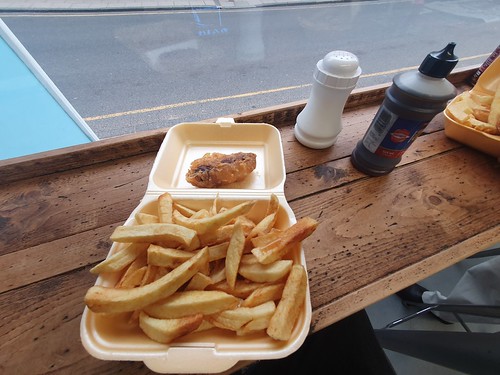
    As everything else was going well, we ordered food. Richard went for a lasagne and I went for fish and chips as I haven’t had them in nearly 48 hours. Again, all absolutely fine, the portion size is larger than in looks in the box and it was all cooked well. The batter had a pleasant taste, the chips were firm on the exterior and fluffy inside and the mushy peas had some texture to them. Individual sauce sachets were available and Covid-19 compliance was all excellent. The pub accepts cards, and I think encourages them, and we received a check back during the meal.

    This little series of pictures tells its own story. The poor dog kept getting called back by its owners and by the time she had actually reached our table the food had all gone.

    All told, I think this is a brilliant pub, it’s just got that vibe I like from a venue that serves its community. It’s rather delightful that this pub stayed opened a few years ago and wasn’t lost, and it’s the sort of pub I’d happily visit again. Although, when more normal times return, I’d say that a darker real ale choice such as a stout, mild or the like would be really lovely.
  • North Barsham – All Saints Church

    North Barsham – All Saints Church

    This peaceful country church, not far from Walsingham, looks a bit odd with its lack of tower and porch. Unfortunately, the tower fell down and it took the end part of the nave and the porch with it. Certainly not ideal.

    The church dates to the thirteenth century and it’s known that there was a chapel here in 1531, although the records don’t show whether it was inside or outside of the church. There was more to the village of North Barsham in the medieval period, but parts became deserted and the population decreased. There are remaining earthworks and ditches relating to this very close to the church, on the Walsingham Road as it goes towards the former railway bridge. This makes the survival of the church all the more meaningful, it must have survived on a relatively small congregation for some centuries. More recently, there has been a boost in visitor numbers due to the nearby Catholic shrine arrangement in Walsingham.

    Following the collapse of the tower, this is now the main door into the church, although unfortunately it was locked. Apparently it is usually open, so its closure seems to just be a temporary situation during these hopefully final few weeks of partial lockdown. The stone used in constructing this wall came from the old collapsed tower and an interesting decorative pattern has been made which looks quite unusual.

    These weren’t immediately obvious to me, but there are two stone gargoyles in the stonework. This is a nice reuse of the stone that was salvaged and they’re located just about the doorway.

    Window in the chancel end of the church, which didn’t seem to quite fit in, not least as it’s from a later period. The pretty graveyard had several burials from the late eighteenth century and also some iron grave markers.