Category: London

  • Heathrow – Free Travel Zone

    Heathrow – Free Travel Zone

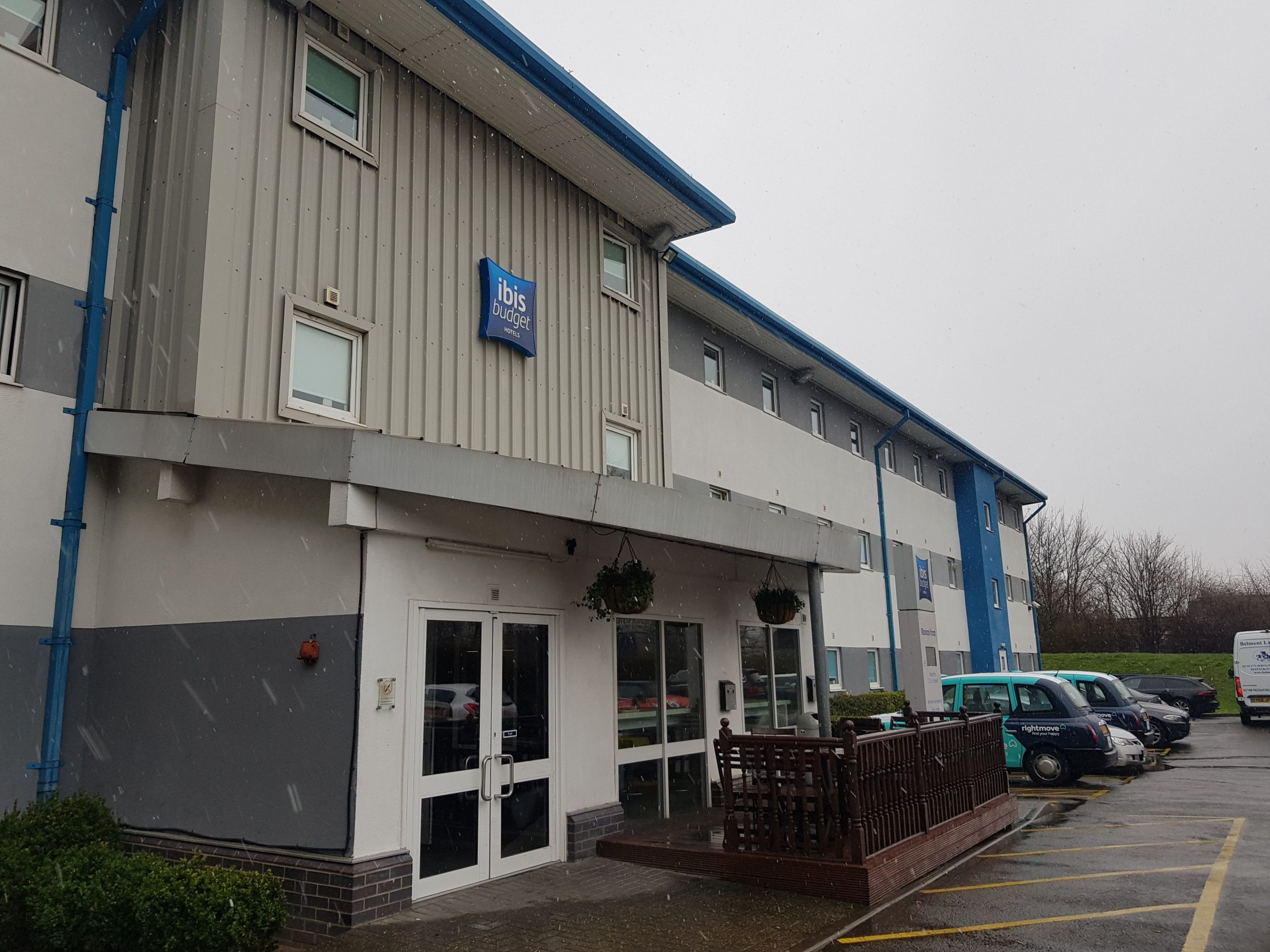
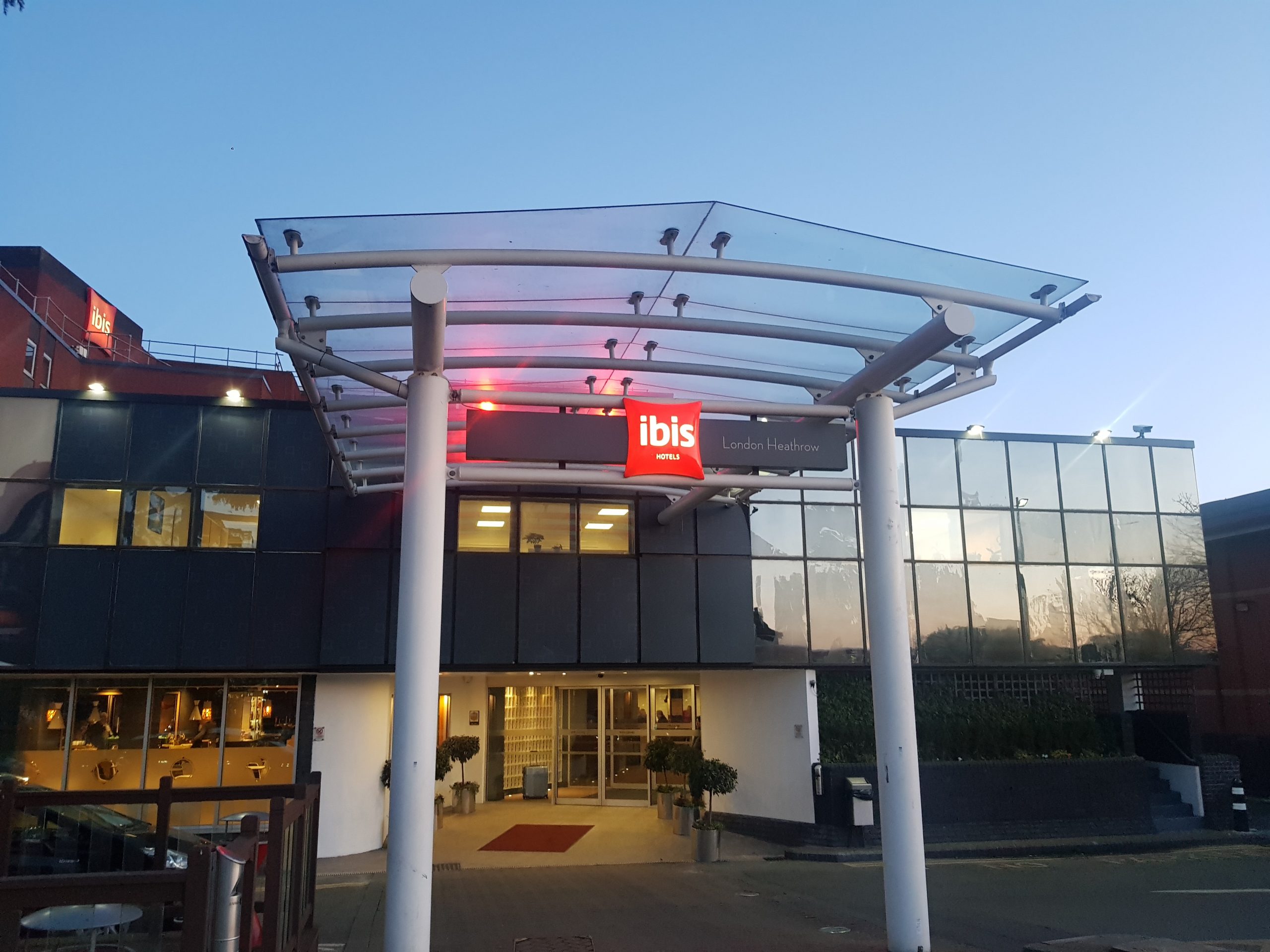
    I’ve been aware of the free travel zone at Heathrow for some time and it’s a useful way of getting to the airport from Bath Road without having to pay for the Hoppa Bus. I stay relatively frequently at the Ibis Heathrow which is marginally outside of the zone, but it’s only a three-minute walk to the next bus stop that’s within it.

    For some reason (probably because I don’t think as much as I should….) I’ve always got the buses to the central bus terminal and then got the underground or Hex to T5 (both free for changing between terminals) from there. But, I realised today that there’s the 423 bus which goes straight to the delights of T5, so there was no need for me to go to the central bus terminal.

    It wasn’t the busiest bus that I’ve ever seen, although it picked up a few more passengers en route to T5.

    Image result for hal free travel zone

    And here’s the free travel zone in its entirety…. For anyone staying on the Bath Road, unless they’re at a strange place along it, getting the TFL bus is a handy saving on the otherwise quite expensive charges of the Hoppa bus.

  • Stoke Newington – Rectory Road Railway Station

    Stoke Newington – Rectory Road Railway Station

    This railway station doesn’t look particularly exciting, perhaps primarily as it’s a modern building. The station was originally constructed by Great Eastern Railway in 1872 as part of a new branch line which went down to London Liverpool Street. It took its name from, well, the street called Rectory Road, which is now known as the A10.

    In 1878, the owners of Manor Tavern, which was on the corner of Church Road and Rectory Road, advertised their property by writing “no neighbourhood in London is developing more rapidly than this. Since the opening of the station, building has been pushed on most extensively, and it is quite certain that within but a short time this house will be doing an immense trade. With these prospects it has also the solid present advantage of a large and lucrative business, everything being sold at the fullest prices”. The rent was £100 per year, which is only around £8,000 per year today, so quite a bargain in modern terms. The pub is still standing, but it’s now flats as it closed as a public house in the early part of this century.

    The footbridge over the top of the line, which has the road behind it, isn’t likely to win many awards for architecture. All of this was built in 1975, replacing the previous more basic structure with a more solid brick construction.

    Looking down the track, away from London.

    This line was operated by Greater Anglia, but it’s now run by TFL.

  • London – Fourex Machine

    London – Fourex Machine

    I’ve never seen one of these machines, but it appears that the company operates around 75 of them, primarily in London, but also at some transport hubs. They’re a way for customers to place in foreign coins and notes and get back out UK pounds, or another currency. They even accept pre-Euro currency, so an opportunity to get rid of some old French francs.

    The rates aren’t though the best. 1,000 Polish zloty are currently worth just over £200 (which is good, as they were lower a few weeks ago and I’m off there next), but this machine would pay £175 (or just £120 if coins were paid in). Looking at companies who provide buy-back, they give back from £195 at best (currency on-line group to £181 at worst (RBS). However, for convenience, the rates aren’t too bad in the scale of things and the banks don’t generally accept coins at all.

    It’s a marvellous idea though and I might look at my little currency reserves, which are very small, as there doesn’t seem to be a minimum transaction size. A very good idea and the transparency of having the rates on their web-site is also useful.

  • London – DLR

    London – DLR

    Despite living by a DLR station for nearly two years, I never got bored of sitting at the front and pretending to drive the train….. One day I’ll manage not to find such ridiculous things so interesting….

    Anyway, here are the photos from a December journey pretending to be a train driver, part of a journey from Canary Wharf to Bank.

  • London – Tower of London (1961 Guide Book)

    London – Tower of London (1961 Guide Book)

    Tower Of London Guide Book

    This (it’s in .pdf format) is apparently out of copyright and it’s the guide book published by the Ministry of Works in 1961. Quite a lot has changed over the last sixty years and I hadn’t realised that the Crown Jewels at the time were in Wakefield Tower, which must have been quite a challenge in crowd management, although not so much in centuries gone by when they were in the Martin Tower.

    Also, the Tower of London used to be free of charge on Saturdays and Bank Holidays (although there was a small charge to see the Crown Jewels), it’s now much more expensive and I’m not sure that they ever have any free admission days. The description of the rooms in the various buildings is now so different that I’ve been unable to even ascertain which room is which.

  • London – Tower of London (Then and Now)

    London – Tower of London (Then and Now)

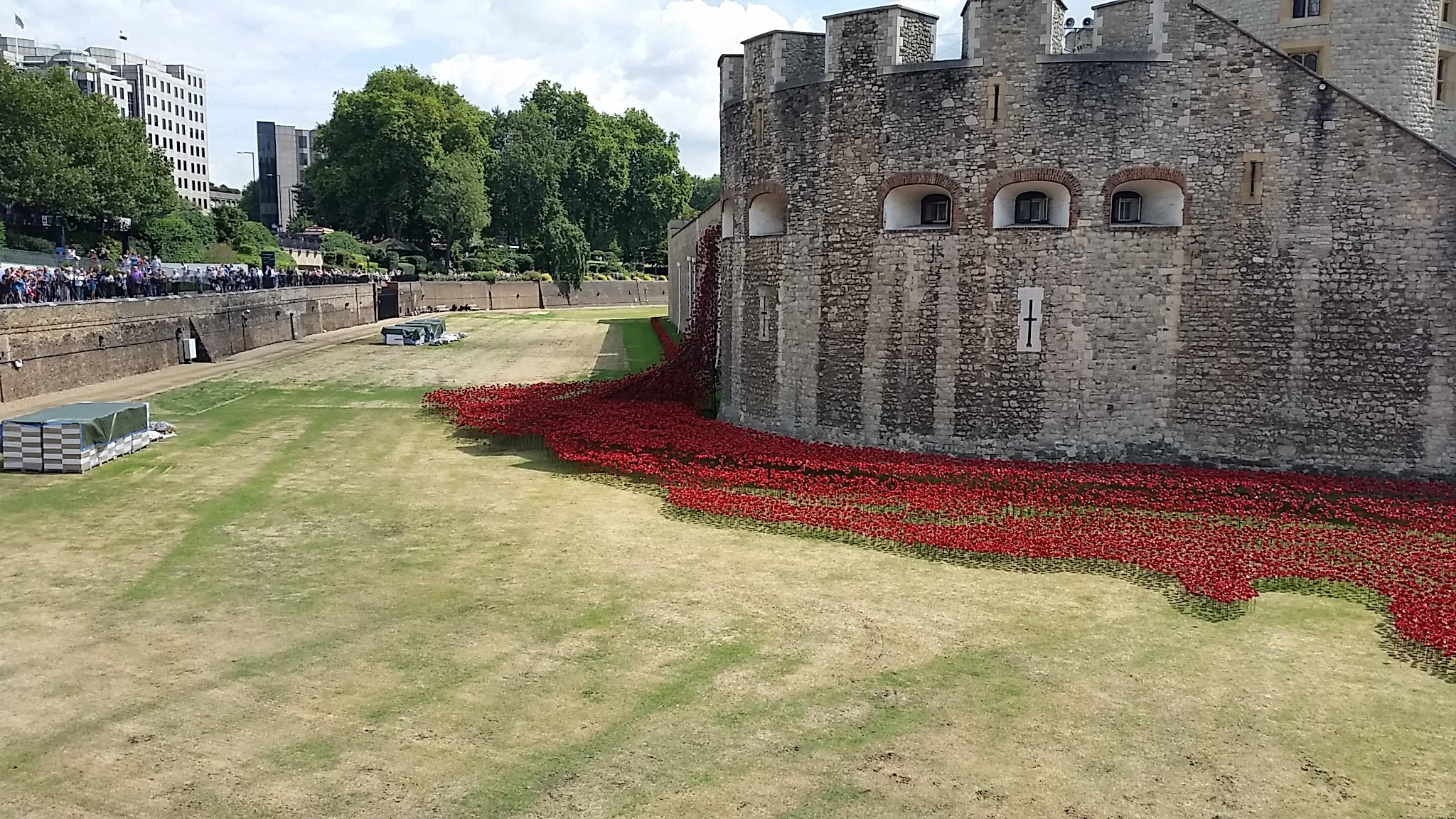
    The Tower of London has an interesting concept to mark the contribution of those who had fought in the First World War, which was to merge photos from the time with a recent and symbolic image. The above image is the original and the idea is to take a modern photo at the same place, but with a different person, although someone connected with the original image.

    This is the modified image, with a boy scout taking the place of the boy in the original photo, but he’s standing in the same location.

    I was sufficiently intrigued to go and take my own photo at the same site. This really brings to life the past when museums do this, a reminder that the very ground that visitors are standing on has so much history from across so many generations. Not least, because of the contribution that these men and boys gave, there’s a feeling of ‘standing on the shoulders of giants’.

  • London – Science Museum (MONIAC)

    London – Science Museum (MONIAC)

    If there was any doubt that I really need to get out more, it’s my excitement at this, one of the MONIAC (Monetary National Income Analogue Computer) machines. I’ve seen photos of this numerous times before back when studying economics, and it’s a pre-computer method of measuring how the UK national economy functioned by changing various inputs. It was designed by William Phillips, the same man for which the Phillips curve is named (a link I hadn’t realised until I was enlightened by Wikipedia).

    Wikipedia also tells me that there were around twelve to fourteen machines built, most of which appear to have survived and are dotted around the world. The one at the Science Museum is located in the mathematics sections and was donated to them by the LSE in 1995.

    Water would flow through the machine and it was possible to work out how to try to get an equilibrium in the economy, with these models apparently being surprisingly successful.

  • London – Science Museum (Door Case from 56 Lincoln’s Inn Fields)

    London – Science Museum (Door Case from 56 Lincoln’s Inn Fields)

    There seemed to be a fair few exhibits at the Science Museum which had a rather tenuous link to, well, science. This door case seems to be something better suited to the Museum of London, but it’s here as the museum say that it’s a mathematical shape following the rules of proportion.

    The door case dates from the eighteenth century and it was saved before the building was demolished in 1912, to be replaced with a larger and more substantial property. The London County Council, who were the ground landlord, noted in the early twentieth century:

    “In the case of No. 56, no part of the original building is in existence. The only external feature of interest is an 18th-century door case, constructed in wood (illustrated in Plate 72). The designer has effectively used Roman Ionic columns with entablatures, to support a bold pediment, below which has been placed a semi-circular fanlight to give light to the passage. The interior is uninteresting.”
    They also published a partial list of residents of the building:

    In 1700 and 1703 Sir Thos. Millington.
    In 1708 and 1723 John Richardson.
    Before 1730 to 1731. Geo. Baker.
    1732–1739. Dr. Thos. Rundle.
    1740–1755. “W. Murray.”
    1756–1758. “Chas. Pratt.”
    1759–1761. John Rayner.
    1762–1769. Thos. Kinnaston.
    1770–1784. Sir Walter Rawlinson.
    1785–1788. S. Ewer.
    1789–1793. — Heyman.
    1794–1802. Mrs. Lee.
    1803– Jas. White.

    I’m assuming that the Thomas Millington was the physician, notable for being one of those who dissected the body of King William III in 1702. Millington died in 1703, but I have no idea whether he was responsible for the addition of the door case to the property, which I suspect he might have rented (the property, not the door case). Anyway, science or not, it’s an interesting reminder of the London which is no longer there.

  • London – Science Museum (Merman)

    London – Science Museum (Merman)

    This gorgeous little number at the Science Museum is a Merman, which is a cross between a fish, a bird and a monkey. It dates from around the nineteenth century, although its origins are unclear, it might be Dutch or Japanese. A merman is a male mermaid, so the variety of items that come into this definition are quite broad.

    It’s not an uninteresting exercise to look back on old newspapers, where stories were still circulating from supposedly credible sources that mermans did exist. Reported throughout the national media in May 1739 was this story:

    “In Vigo, in Spain, some fishermen lately took on that coast a sort of monster, or merman, five foot and a half from its foot to its head, which is like that of a goat. It has a long beard and mustachoes, a black skin, somewhat hairy, a very long neck, short arms and hands longer and bigger than they ought to be in proportion to the rest of the body, long fingers like those of a man, with nails likes claws, very long toes joined like the feet of a duck and the heel furnished with fins.”

    Sounds a lovely thing to find….

  • London – Science Museum (Lotus 1-2-3)

    London – Science Museum (Lotus 1-2-3)

    Lotus 1-2-3 dates back to the early 1980s and was early spreadsheet software which was important in the development of IBM computers. Anyway, that’s a story for elsewhere to be told by people who know much more about it than me. The only reason I’ve posted this is that I remember using this software at school, and remember the packaging of the box. I really do need to get out more. And, I’m realising that I’m definitely ageing slightly if I’m seeing software that I once used in a museum.