Category: Poland

  • Warsaw – Whiskey in the Jar

    Warsaw – Whiskey in the Jar

    I visited the Łódź location of this small Polish chain a few years ago, and noticed that there is now one in Warsaw which is very well reviewed. Since it was near the hotel where we were staying it seemed a suitable place to visit for my birthday and the menu looked sufficiently interesting. There was a friendly welcome from the English speaking staff member and we were shown to a table which was located in an area which was lively, but without the music being too loud.

    Photos of the interior decor in this large venue, which was busy during our visit and there were few tables free by the time that we left. Reservations are clearly recommended here, particularly at weekends. It seems to be an on-trend location, with most of the customer base being younger, although I’m fairly sure that the welcome would be authentic for all diners.

    There’s a wide range of drinks, but the jars seemed the most intriguing so I firstly went for the My Thai Jar which had Bols Amaretto, Jim Beam Bourbon, mango puree, lemon, chilli, ginger and sugar syrup, with the presentation of this being suitably decadent. I moved the chillies onto my food, although I discovered there were some in the drink which gave it some extra spice.

    The Major Jar, which had Campari, Jim Beam Bourbon, orange, mango puree, Sweet & Sour mix and sugar syrup. I preferred my first jar to this one, but it was still very drinkable, although perhaps just a bit too sweet.

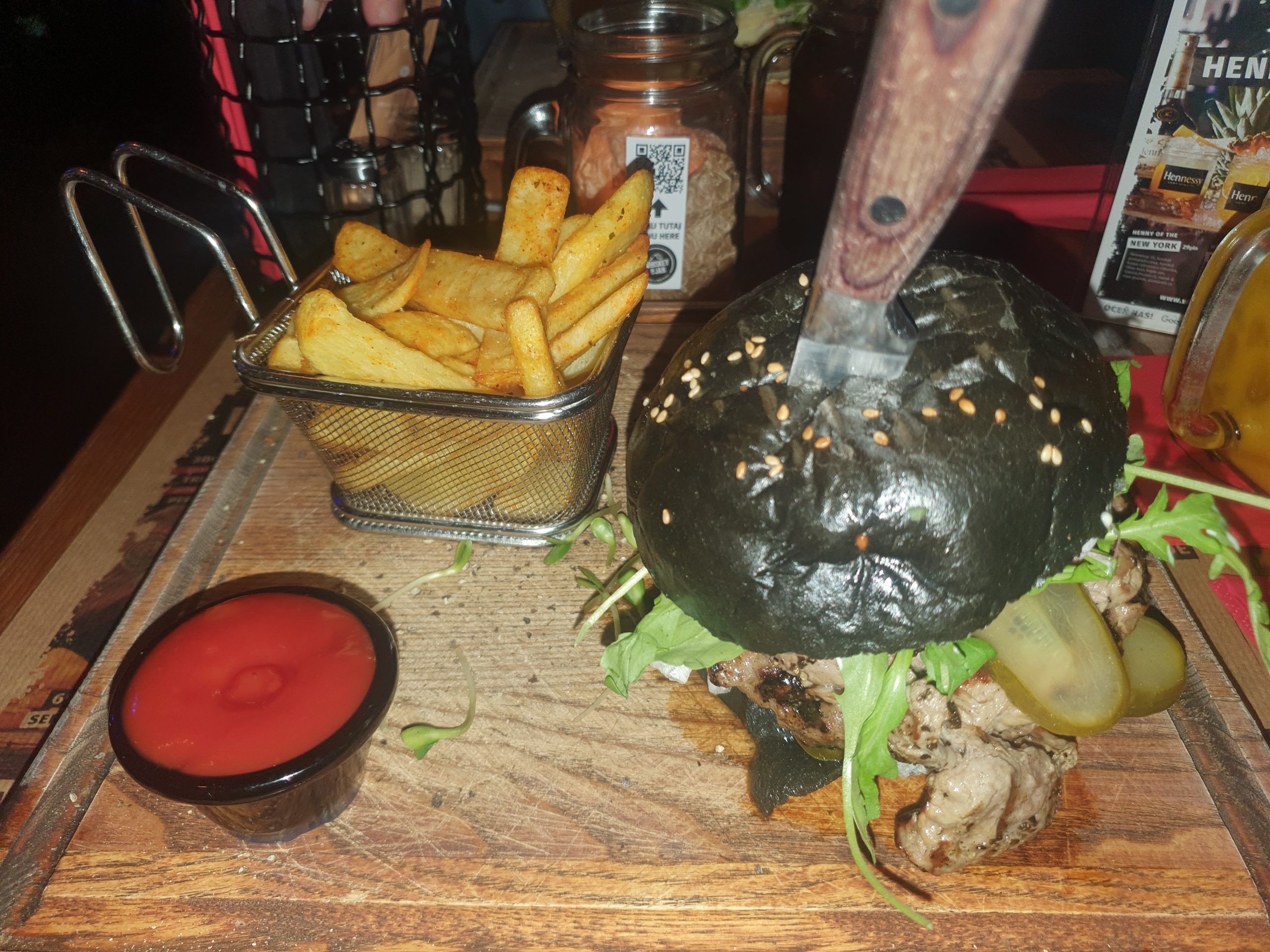
    The Beef Master Burger which is in a sepia dyed bun with 180g of burger, sliced beef sirloin, lettuce, pickle, marinated onion, rocket and a mayonnaise sauce, along with a portion of chips and pot of ketchup. The burger was really quite decadent, rich and meaty in flavour with a depth of taste. The key items on the menu are steaks, burgers and ribs, although there are some vegetarian and other options, but judging by the reviews, most diners are going there for the steaks and burgers. The meat that the restaurant used is cured for 60 days to add flavour, and I can believe that given the depth of the taste.

    The service was always polite and efficient, although the staff didn’t really push any sales and it took a little longer than expected to get the bill, although nothing excessive. The prices are towards the higher end of the scale for Poland, but very reasonable by British standards, with the two drinks and meal costing £20. It’s all on-trend, friendly, clean and organised, with some care taken with the presentation of the food and drink. I can imagine that further restaurants, beyond the six that they already have, will be opened by this chain over the next few years given the popularity they’re currently experiencing.

  • Warsaw – Pasieka

    Warsaw – Pasieka

    My friend Richard had meandered over to Warsaw to this week and this was the final day that he’s in the city, so that means that I can catch up with this blog now he’s gone back to the airport. His presence really slowed updates down, which I think he feels very guilty about, but I didn’t say anything  🙂

    Anyway, as a final meal for Richard in Warsaw (other than his decadent lounge visit at the airport), I thought we’d have a Polish experience lunch in the Old Town part of the city, choosing Pasieka (located at ul. Freta 7/9) which I’ve never visited before.

    I think that it’s fair to say that the restaurant wasn’t entirely packed. We were the only diners when we entered, although a couple of other people came in a bit later on. The atmosphere felt quite rustic, although the music was more Heart FM than traditional Polish classics. Warsaw’s Old Town has felt really quiet compared to my previous visits, so I suspect that a number of the restaurants in the area are finding it economically tough at the moment.

    Despite some average Untappd scores, I opted for the Staropolskie Koźlak which I haven’t had before. It transpired to be fine, a decent bock with a bit of a roasted flavour going on.

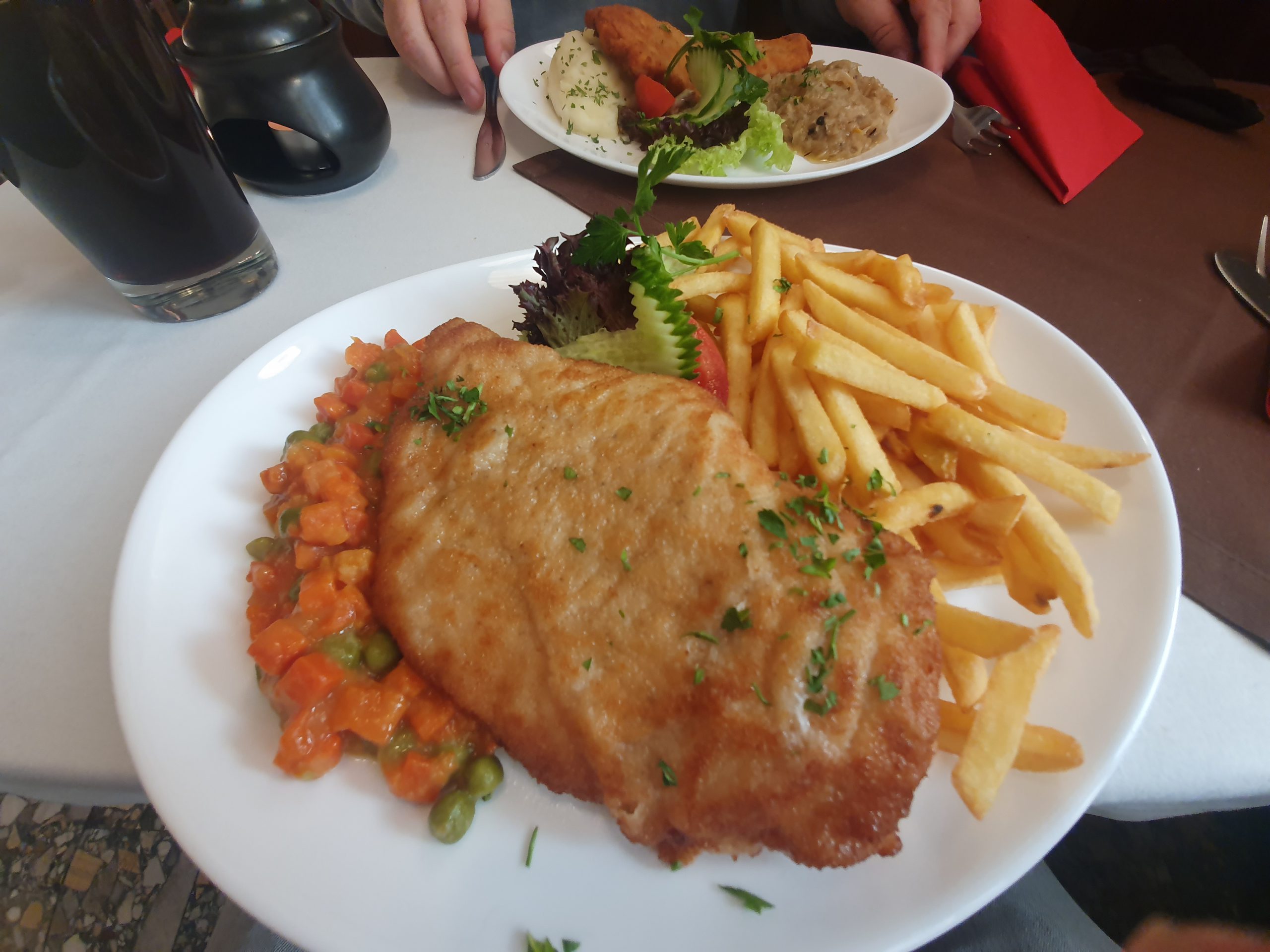
    I went for the chicken in batter with chips, salad and some sort of carrot and pea part puree. When the food was served I thought that the batter looked a bit soggy, but it was fine with a rich taste and the chicken was tender. Richard had pork and mashed potato which didn’t look as good as my meal, but I didn’t say anything. There was some effort made with cutting the cucumber, with Polish cuisine not always being the easiest to make look well presented.

    The prices were a bit decadent here as there were no lunchtime offers and so it cost us £10 each for the food and a drink, which I thought was reasonable given the location. The service was friendly and engaging, so the environment felt relaxing enough. I’m not sure that we went for particularly Polish options with the food, but Richard had some heated up mead and my Polish beer added some localism to the arrangements. All really quite nice and a perfectly decent way to experience some Polish options.

  • Częstochowa – Ibis Częstochowa

    Częstochowa – Ibis Częstochowa

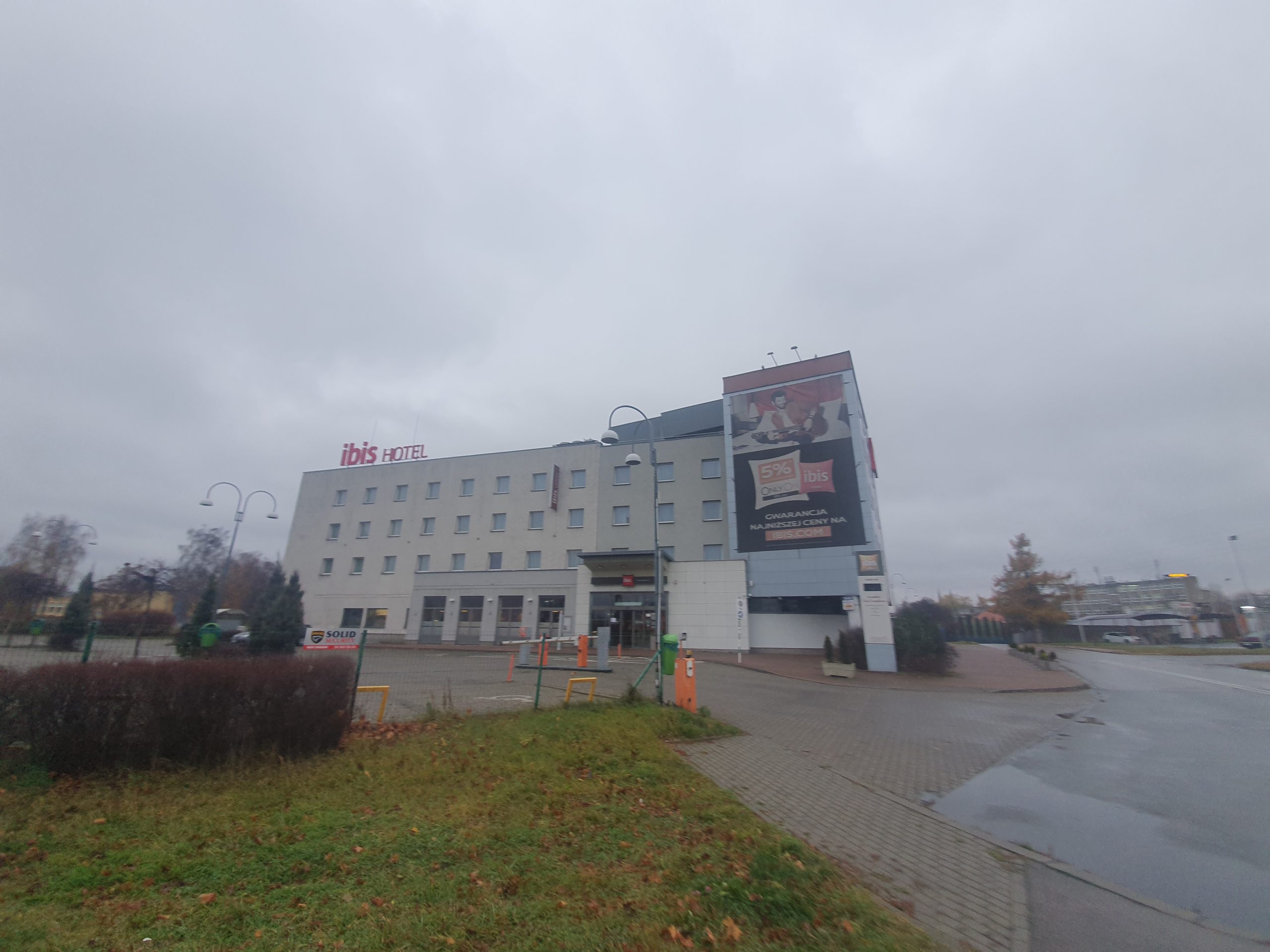
    I stayed at the Accor operated Ibis hotel during my few days in Częstochowa, with the price being about £25 per night including breakfast. There’s a Mercure in the city as well, but that was a bit decadent in terms of the pricing, with the cheaper option inevitably being the one I went for. My first impressions were primarily of concern as the hotel looked quite shut and there were signs on the front door, usually signifying a problem. It transpired it was just a sign in Polish saying that the doors were broken and to enter via a side door, so I was considerably relieved that I didn’t have to hunt for another hotel. The staff member at check-in was friendly and helpful, so my early impressions transpired to be positive.

    The room, all to brand standard, although this hotel doesn’t have hot drink facilities in the room which seems unusual for an Ibis. The room was on the top floor away from the lift, which is always my preference. It’s the older style Ibis room design, but I assume it’ll be updated when there’s refurbishment at the hotel.

    The welcome gift of meringue things, all very lovely as Ibis hotels don’t need to give anything.

    The view from my room, primarily of two petrol stations. The hotel has a policy of not cleaning the rooms because of the current health crisis, but it can be requested at reception if required. I checked the wi-fi (my Vodafone data gives me 25GB per month to use outside the UK which should be enough, but I use the hotel wi-fi when trying to back-up photos and the like) and it seemed to be reliable and at a sufficiently fast speed.

    The food menu for anyone interested who is reading this (goodness knows who though). Hotel prices are inevitably towards the higher end of the scale, but they’re not unreasonable (divide by 5 for an approximate UK amount).

    The welcome drink of Żywiec, which isn’t the most exciting, but it was free and so therefore clearly acceptable to me. I’m easily pleased.

    The breakfast options, lots of cold choices along with a few hot options that I didn’t bother with. The meat wasn’t the most exciting in terms of the quality, but there were plenty of options. The coffee in the hotel is all branded from Costa, I can’t recall seeing that set-up in an Accor property before.

    It all transpired to be a comfortable stay with no internal or external noise issues. I’m pleased to note that the windows opened, this wasn’t one of those sterile hotels where everything is sealed up, and the air conditioning also worked. It’s about a ten-minute walk into the city centre and there are KFC and McDonald’s outlets within a couple of minutes walk. The hotel inevitably isn’t the most luxurious, but anyone wanting that can find other options in the city, not least the Mercure.

    And, a handy booking link for the hotel…..

  • Flixbus – Częstochowa to Warsaw

    Flixbus – Częstochowa to Warsaw

    Let’s just start this was the succinct phrase ‘bloody Flixbus’. I’ve been on many Flixbus trips and in recent years my experiences were getting better after many annoying journeys. That meant I was hopeful that the service might be comfortable and easy.

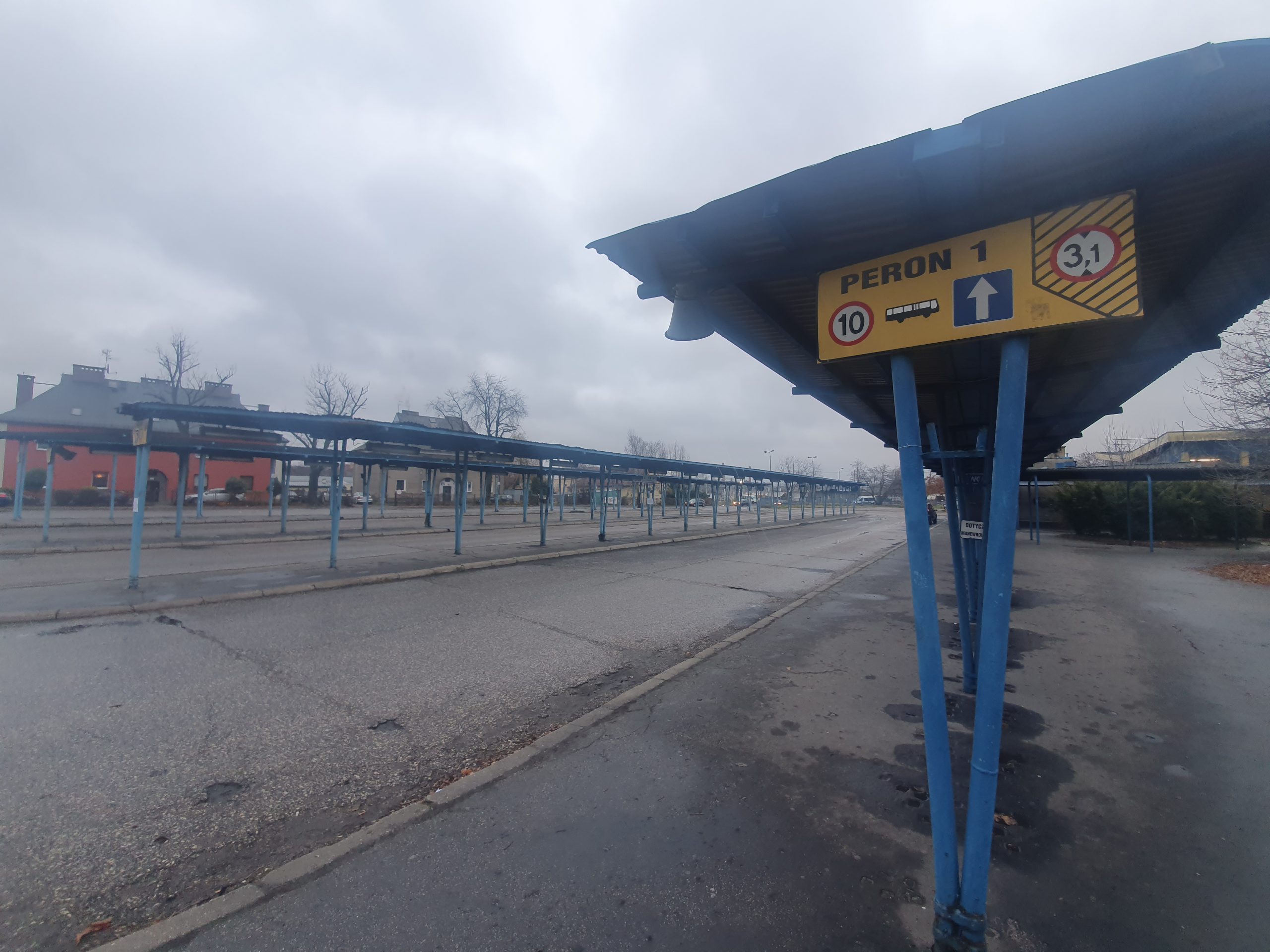
    I arrived at the bus station 45 minutes early (I feel the need to always be early to recce the situation), pleased that it clearly stated that I should board at gate 13. I thought that this was marvellous, until I realised that there were only five platforms. Brilliant, just the confusion that I didn’t need. I roped in a young Polish guy who I guessed correctly might speak English and he had missed his bus, but he said that Flixbus could depart from one of the three places due to changes at the bus station. It could be from either end of the bus station, or it would be from outside the front.

    I will say that Flixbus support is very good and they responded to my Facebook message quickly and we soon discovered that they didn’t know where their coach went from either. I have to credit them with replying so promptly and politely though.

    This is the dilemma. Flixbus say to wait outside the bus station, which is the bit just above ‘parking’ in the above map. However, I was aware that was a stupid place to stand as coaches weren’t using the bus station, they were either going off near to the Jamaican Shop (very decadent), outside the front, or right down the bottom of the map on that little turning circle.

    Flixbus do have coach tracking, which saved the day here. If I had waited where Flixbus customer support said to wait then I would have missed it, the coach parked up right at the bottom of the above map. That’s actually quite a distance away and it isn’t visible from the bus station, so very easy to miss. To me, this is completely hopeless, it’s like a railway station not having any platform numbers and expecting customers to just work it out.

    The driver was friendly enough, although there were no checks of my documents. For unknown reasons Flixbus give a reserved seat, but it’s visible only on the app and not on the ticket they send. I didn’t much care where I sat, but there was someone in the seat that I had been allocated. I have no idea why Flixbus need to give out seat numbers to those who don’t want them, they’re pretty much entirely ignored by customers and it creates confusion when none was needed. The bus departed seven minutes early, so I assume that I was the only customer being picked up in Częstochowa.

    I don’t know the safety rules in Poland, but there no announcements, no customers wearing seatbelts and the like. Without being rude, the interior of the coach was also quite Hogatharian. We had some customers passed out drunk over seats, some just drunk and some who were standing whilst the coach was in motion and they promptly fell over. It wasn’t a problem for me, but it wasn’t really an ideal set-up and it was clear that the sole driver, who wasn’t wearing anything that might suggest he was the driver, wasn’t going to burden himself by dealing with anything.

    The coach was generally clean, but it was a slightly rickety thing and the seats reclined so far as to be a complete nuisance for the customer behind. That didn’t impact me as the coach was very quiet and I had no-one in front, but it seemed a cheap vehicle and not at all decadent.

    The coach arrived on time and in one piece into Warsaw West. The fare was £10, similar to the train, and I decided to go by coach to see how it compared. The whole Flixbus outfit worries me though, there are what I consider to be customer safety issues that the company isn’t worrying about, let alone the problems that customers have getting any joy after complaining. One customer on a review said that the driver on their service hid an illegal immigrant on the coach into the UK and got caught, with Flixbus doing nothing to get customers to their final destination. The detail provided suggests that it might be true, but if not, there are hundreds of other complaints logged on-line.

    So, that’s it for me, I’m not going to risk another Flixbus service, I don’t think they’re safe enough or have a robust enough procedure to know what is going on. They have now launched in the UK, but I think I’ll stick to National Express and Megabus. It’s probably a better experience for those departing from major termini, as it’ll be clearer where they’re going from and it’d be possible to get a seat. But, I think I’ll stick to th Polish railway network in future.

  • Częstochowa – Various Photos of the City

    Częstochowa – Various Photos of the City

    Just some random photos of Częstochowa…….

    St. Sigismund Church, the oldest in the city, first constructed in the middle of the fourteenth century. It was knocked about over the centuries during conflicts, before being used by the Germans as a military warehouse during the Second World War, after which it needed substantial repairs. Until 1825, there was a cemetery located at the front of the church, but it was knocked down to allow for the building of Aleja Najświętszej Maryi Panny w Częstochowie.

    The Cathedral Basilica, which dates from the early twentieth century when the city was growing in population size and needed a cathedral of this size. Located on the site of a cemetery, work wasn’t completed until just before the outbreak of the Second World War and the new towers were only added in 1997.

    It’s clear to see here how the railway dominates the heart of the city and also divides it in two.

    There’s a walk by the Warta River, the country’s second longest river, with only the Vistula being longer. The area to the left in this photo was the Jewish ghetto during the Second World War, but I’m not that very much of that survives.

    I liked the clock in the city’s main shopping centre.

    These photos are all a bit bleak, but there are many buildings in this state in the city centre. The city has been depopulating over recent decades and it’s not the industrial powerhouse that it once was. It’s often possible to judge a city’s fortunes by looking at how many cranes there are building and renovating properties, but it’s fair to say that there aren’t many in Częstochowa. The local council themselves admit that the city has significant economic challenges, but there have been a number of ongoing infrastructure improvements, some of which have been funded by the European Union. There are new roads being built in the area and there’s also a relatively modern tram system, with some areas being defined as Special Economic Zones to encourage investment.

    The city does have a large number of tourists, but these seem to nearly all be going to Jasna Góra which presents its own benefits and challenges. Museums in the city seem to be closed at the moment, or just badly advertised, and there’s not much else aimed at tourists which is a situation that isn’t helping the local economy.

  • Częstochowa – HASAG Forced Labour Factory

    Częstochowa – HASAG Forced Labour Factory

    I went meandering off this morning to look for the HASAG factory, known as Pelcery, which was formerly a forced labour camp during the Second World War, comprised nearly entirely of Jews. HASAG were a private company who grew to becomes the sole armaments manufacturer for the Nazis and they became reliant on slave labour, with labour camps set up at each of their operations in Germany and the occupied nations. The company tried to keep on trading in Leipzig after the end of the Second World War, but the Soviets raided their factory in 1947 and seized everything, saying that it was for war reparations.

    The building, of which there are a few nearby of a similar design, is now unused. This would make for a really quite interesting museum, although I imagine that the cost would be high and I’m not sure how many visitors they could get. The US Holocaust Museum notes that there were 4,735 inmates at the labour camp here and it was in operation between June 1943 and January 1945, when the Soviets took control of the area. The workers made to work here had been forcibly moved from the Częstochowa ghetto in June 1943, really from one hell to another hell.

    A memorial for those who died at the labour camp has been installed outside of the former factory. There were until recently a series of local business posters attached to some of the empty windows, but I’m pleased to see that these have been removed as they weren’t really appropriate. I’d like to see more information about this former labour camp become more readily available, it has been slightly challenging to find much and although it’s a part of the city’s history which isn’t perhaps one they want to dwell on too much, it remains important.

  • Częstochowa – Restauracja Indyjskie Curry

    Częstochowa – Restauracja Indyjskie Curry

    I was slightly surprised to see that this Indian restaurant in Częstochowa opens at 11.00 in the morning, which doesn’t seem a time when many customers might be coming in for a curry. Well, other than me, just before mid-day, and I was the only customer. However, the staff member was friendly and she spoke English, which was handy as I’ve felt I’ve already overdone my limited Polish today.

    The interior of the restaurant, all clean, comfortable and empty, with the environment feeling warm and welcoming. A couple of customers did come in shortly before I was leaving, but I suspect it’ll remain quiet until this evening. The restaurant is well reviewed though and it seems that there’s quite a demand for takeaways from here.

    Żywiec isn’t perhaps the greatest beer, but it’s perfectly adequate in these circumstances. There were a choice of beers available, although all lagers, with plenty of soft drink options.

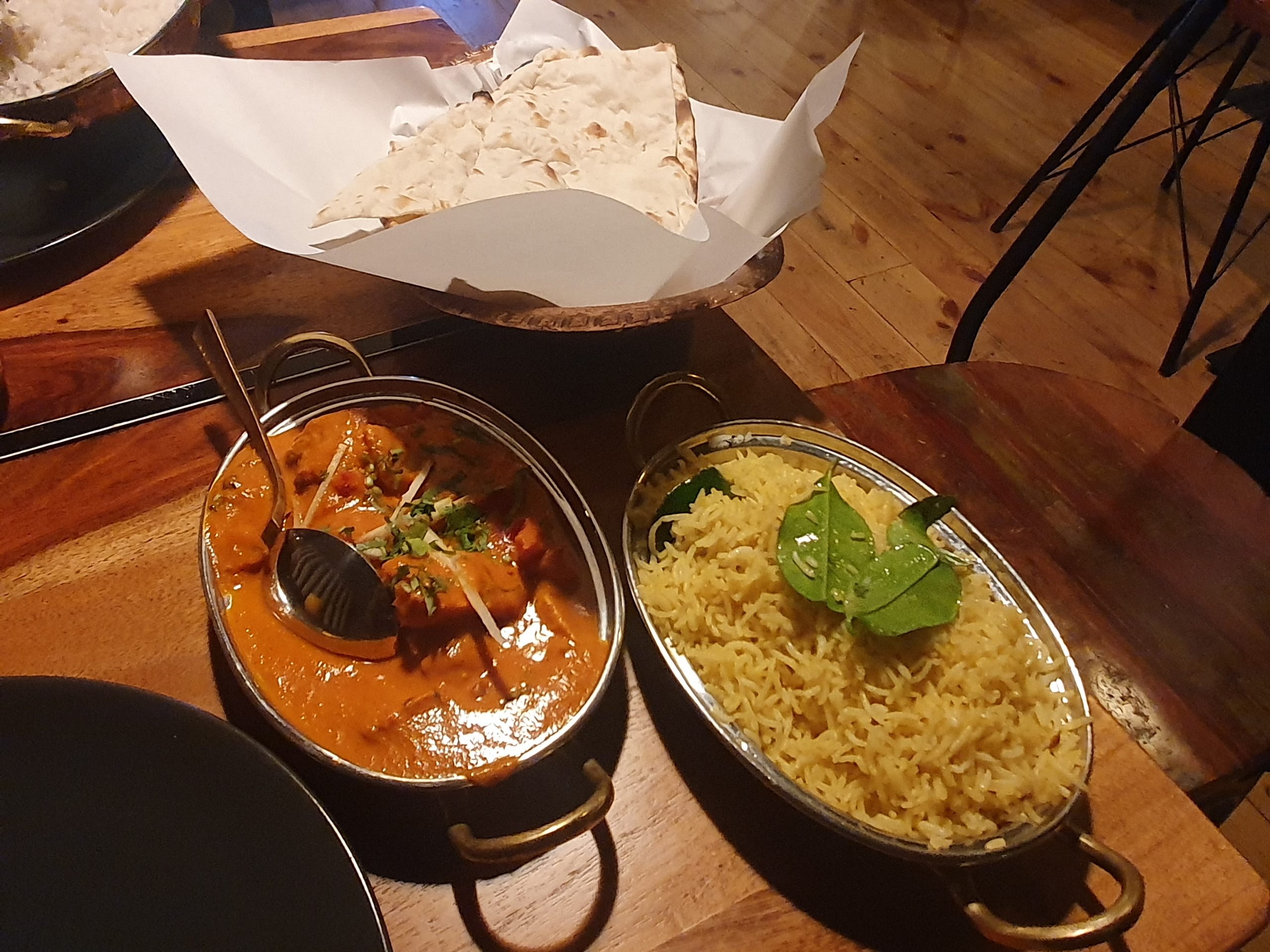
    The jalfrezi chicken curry with rice, naan and salad. Although this was perhaps a little lacking in a depth of heat in terms of the spice, it tasted decent and the chicken was tender. There was lumps of broccoli in it, but fortunately the curry sauce disguised the taste nicely. The naan bread was generous in its portion size, since I received four pieces, and the rice was cooked well. I went for this as it was on the discounted lunch menu, with the curry option changing on a daily basis.

    And the cost of the curry, rice, naan, salad and beer came to £4.89….. It’s fair to say that I felt that I received value for money and all told really rather a lovely lunch in a welcoming environment.

  • Częstochowa – Consonni

    Częstochowa – Consonni

    It’s raining outside, so I thought I’d pop in to this outlet of Consonni, an Italian company which expanded into Poland in 1991. The snail above the counter is quite brave as it might signify slow service, but is actually meant to represent the Slow Food Movement.

    The lighting in this photo is a bit odd, but at the heart of the cafe is this 25-year old palm tree. It was empty when I came in, but all of the six of so tables are now full, so it’s a busy little unit.

    Some of the cakes on display, all looking suitably tempting. They sell coffees, cakes, ice cream and breads, so there’s quite a selection for such a small unit. Nearly everything is sold by weight, including the ice cream and cakes, so customers can choose how much they want.

    The chocolate cherry cake and a latte, which came to under £4 which is really quite decadent for Poland, but it’s a premium location in an expensive part of the city. The staff member didn’t speak English, but fortunately my very limited Polish is sufficient enough to order chocolate cherry cake and a latte, which is handy. I’ve learned the essentials (or what I consider to be the essentials) at least, even though I can’t do much else in Polish.

    Anyway, a nice little cafe, the cake was rich and perhaps not freshly out, but it was still sufficiently moist to be a suitable lunch stop for me. Incidentally, the slice of cake is larger than the photo suggests, it’s on a wide angle and it distorts things somewhat. And looking outside, it’s still raining, which isn’t entirely ideal.

  • Częstochowa – Władysław Biegański Bench

    Częstochowa – Władysław Biegański Bench

    Located along Aleja Najświętszej Maryi Panny w Częstochowie is this memorial to Władysław Biegański (1857-1917), a local doctor. He wasn’t born in the city, but he set up a private practice here in 1883, after studying medicine at the Imperial University in Warsaw.

    Biegański also has the honour of having the local library named after him in recognition of his social activism in the city. He seems to have been a busy figure generally in the local area and he was also responsible for the local branch of the Polish Touring Society, an organisation which promoted tourism. The Polish Parliament also annually declares a number of subjects as an annual distinction, whether that be an event or a person, with Biegański getting a whole year dedicated to him in 2017 (along with the Vistula River as another award winner) which marked 100 years since his death.

    Unfortunately there’s no English translation….. However, there are a few of these benches located along the street and I think they’re interesting as they give an indication as to who the authorities of Częstochowa feel are the most important people who have lived and worked in the city.

  • Częstochowa – Jasna Góra Monastery

    Częstochowa – Jasna Góra Monastery

    This is Jasna Góra, one of the holiest places in Poland, a Catholic monastery and shrine to which many pilgrims walk.

    This is certainly a secure site, I had to walk through four gates to get into the heart of the monastic complex. These gates are the Lubomirskis’ Gate, the Gate of Our Lady of Victory, the Gate of Our Lady of Sorrows and then finally the Jagiellonian Gate. There were a couple of men trying to extract donations for their personal needs standing outside of the first gate, no doubt hoping that pilgrims would be generous. They didn’t invest too much time in me as they didn’t speak English, which was handy on this occasion.

    The reason that this site is so secure is that it is has come under attack almost from when work on the monastery started in 1382, when the Paulines came to the country. The attacks continued for centuries as numerous wars and conflicts played out in the wider area. It’s also fair to say that the Germans didn’t really like this monastery during their occupation of Poland during the Second World War. They took the site over, controlled the monks and ended the pilgrimages, with Nazi leaders such as Hans Frank coming to interfere with arrangements on numerous occasions. They then tried to burn down the entire site in January 1945, but they ran out of time with the Soviets closing in on the Germans.

    The entrance to the basilica and this has been a much visited location by Popes in recent decades. Pope John Paul II, who was Polish, visited here on six occasions when he was the head of the Catholic Church, with Pope Benedict XVI visiting in 2006 and Pope Francis visiting in 2016.

    The grand nave of the basilica. I didn’t take too many photos as this is a revered location and there were services going on in part of the building. There was a peaceful presence in the basilica, although I understand that it’s a little more lively when groups of pilgrims come in after their long walks.

    I didn’t take a photo, for reasons of a service taking place, but the monastery is known for the Black Madonna.

    There’s a whole complex of buildings on the site, with the arsenal building in the centre of the photo. A cold Thursday morning in mid-November isn’t going to be a time when the monastery is particularly busy, but in the summer it seems from photos as if this would be quite crowded.

    I left from a different gate, this one known as the John Paul II Gate, although this area was still heavily fortified.

    Beautiful and historic as the buildings are, the whole complex did feel a little commercialised to me, although perhaps that’s a necessity of running a major pilgrimage site. Certainly pilgrimage sites were commercialised in the medieval period, so there’s nothing new there. But there were numerous money making projects going on, not just the selling of religious imagery, but also offices to donate to the refurbishment project and a host of food outlets with some quite garish signage. However, the basilica is beautiful and the site felt calm and peaceful. The defensive arrangement around the monastery also really adds to the whole pilgrimage, especially walking down Aleja Najświętszej Maryi Panny w Częstochowie to get here.