Category: France

  • Carcassonne Day Two : Basilica of Saints Nazarius and Celsus

    Carcassonne Day Two : Basilica of Saints Nazarius and Celsus

    20240428_144255

    Next on our little saunter around Carcassonne was a visit to the Basilica of Saints Nazarius and Celsus and there’s been a religious building on this site since the sixth century. Mostly built between the twelfth and fourteenth centuries, it was the town’s main cathedral until 1803 and it’s an impressive building. For a period in the eighth century, this area of France was under Muslim occupation although no-one is quite sure what happened to the cathedral at that stage and there’s nothing left of the original building. It was all a little sub-optimal in 1209 during the Siege of Carcassonne as the authorities needed to pinch some of the cathedral’s stone to repair some of the damaged ramparts. But it was repaired and there were numerous expansions over the following centuries. The walled city had started to depopulate and fall apart a bit by the end of the eighteenth century, with the dormitory, refectory and kitchens for the monks being demolished in 1792. The move to make the Saint-Michel church the new cathedral took place in 1803, but the resurgence in tourism to the area recently has ensured that this former cathedral is still well visited.

    20240428_144417

    With its origins going back to the seventeenth century, the organ was enlarged between 1772 and 1775, being made an historic monument in its own right in 1970. By that time it was in poor condition and it was restored between 1982 and 1985.

    20240428_144425

    The pulpit.

    20240428_144449

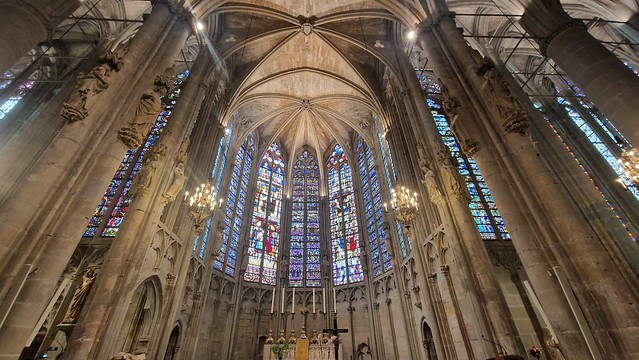
    The choir and apse is the oldest part of the building with its impressive stained glass.

    20240428_144453

    More stained glass. I obviously haven’t got a clue what is what here, but some of this stained glass is from the fourteenth century, which seems to be a remarkable survival to me. I’m not a student of architecture (or indeed arguably anything), but it all feels well balanced and proportioned, the medieval architects have inserted a lot of glass here with some degree of expertise.

    20240428_144517

    One of the rosettes on the arm of the transept. This basilica does have the challenge that it’s such a visited tourist attraction that its use as a religious building is compromised to a degree, it’d be hard to take part in a confession with the 36 tourists walking by and it’s hard to find any quiet areas. Although, on the flip side, there’s the opportunity to get money from excited and delighted visitors to the building. I had a little look at the reviews and that challenge is evident:

    “Very beautiful place of worship but a shame that it has fallen into the hands of mass tourism which does not respect the silence within a sacred place.”

    And when it’s used as a religious building, there’s feedback about that in the form of 1 star reviews….

    “We would have loved to visit it, but unfortunately there was a wedding.”

    And:

    “Thrown out of the church because rich people decide to get married at the beginning of August in the church.”

    Anyway, that’s probably enough about the basilica as it was then time for us to focus on our dining requirements for the evening.
  • Carcassonne Day Two : Le Chaudron Cathare

    Carcassonne Day Two : Le Chaudron Cathare

    Right, I’m ready to start catching up on this trip now, avoiding it being one of those projects that I never quite get around to finishing…..

    20240428_142438

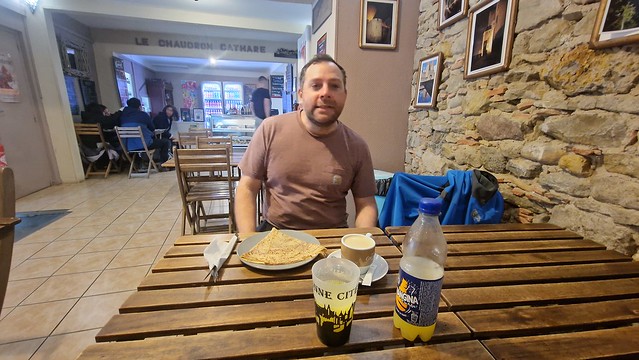
    After crossing back over the River Aude we thought we’d pop and scout out some evening food options. Whilst in the planning stage for that, Liam discovered this rather pleasant little cafe which is located in the Citadel and I was bemused to see how badly a few of the food options were reviewed, some tourists traps that give the appearance of taking advantage of visitors. This location wasn’t one of those, it was laid-back and informal, with Liam working out that customers needed to order at the counter. He went with his crepes, whilst I went with my healthy Orangina, which is what I consider to be the national drink of France as opposed to wine. The prices were towards the lower end of the scale and it’s just a little away from the busier areas, so all rather lovely.

  • Carcassonne Day Two : Crossing the River Aude

    Carcassonne Day Two : Crossing the River Aude

    20240428_134205

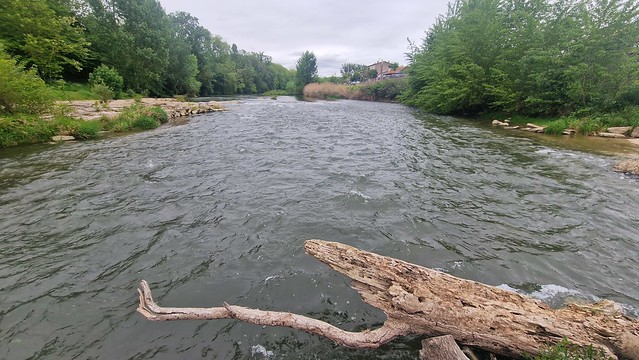
    The rather beautiful River Aude. The bridge is Le Pont Vieux which is one of the few medieval bridges remaining in France, although it was restored during the nineteenth century. It’s a pedestrian only bridge now as a newer road bridge has been constructed a little further down the river.

    20240428_134824

    Liam on the river crossing. The blog title of crossing the River Aude perhaps sounds more exotic than the reality….
    20240428_134938

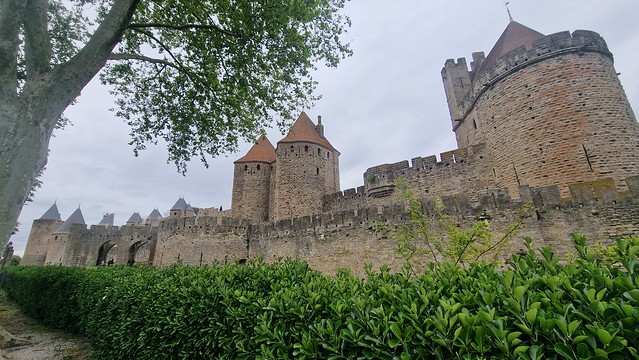
    The fast flowing river.

    20240428_134944

    The Romans called the river Atax, it later became the Aude and it’s 225 kilometres long flowing from the Pyrenees to the Mediterranean Sea near to Narbonne.

  • Carcassonne Day Two : Chapelle Notre Dame de la Santé

    Carcassonne Day Two : Chapelle Notre Dame de la Santé

    20240428_133925

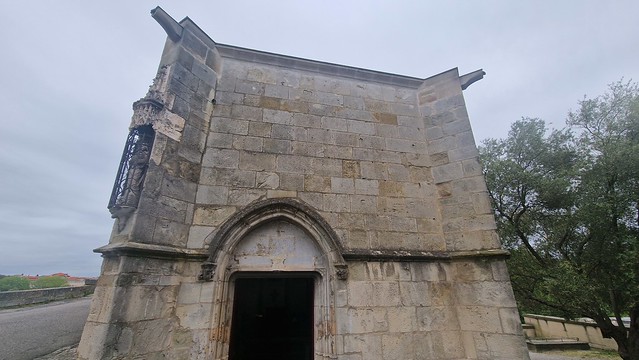
    Located by the River Aude is this small chapel which was first constructed in 1497, near to the city’s hospital. It was extended in the sixteenth century but during the French Revolution it was sold off and became a residential property. The church was able to buy it back in the middle of the nineteenth century and restore it back to being a church.

    20240428_133833

    My photo of the interior is rather blurry unfortunately, but it gives the general impression. Nothing survives of the pre French Revolution interior, but the Madonna with Child statue at the altar is from the period just after it became a church again in the nineteenth century.

    20240428_133941

    The church is also one of the starting points for the Camino de Santiago.

  • Carcassonne Day Two : Bastide St. Louis

    Carcassonne Day Two : Bastide St. Louis

    20240428_125135

    Bastide St. Louis is the planned settlement which is separate from the castle and is located on the other side of the River Aude. We had thought that it might be a good place to get lunch, but on the Sunday that we visited, most things were closed and some of the cafes that were open had appalling reviews. It was also surprising just how quiet the whole area was, the streets were mostly empty.

    20240428_125305

    The main square was not a beating heart of excitement. It was laid out in the thirteenth century and it is in approximately the centre of the town, with the information board saying that it’s a “lively place”, although that felt a little aspirational. It was originally known as the Place Royale, but that was seen as sub-optimal after the French Revolution and it was renamed Place Liberte. Napoleon changed it to Place Imperiale and with the restoration it went back to Place Royale. The sign-writers were likely excited by this constant updating of the branding, especially when in 1852 it became the Place aux Herbes and then in 1894 it took its current name, Place Carnot. This was to honour the President Sadi Carnot, who was assassinated in the same year.

    20240428_132605

    Only around a third of the restaurants and cafes were open, with nothing looking overly inviting.

    20240428_130040

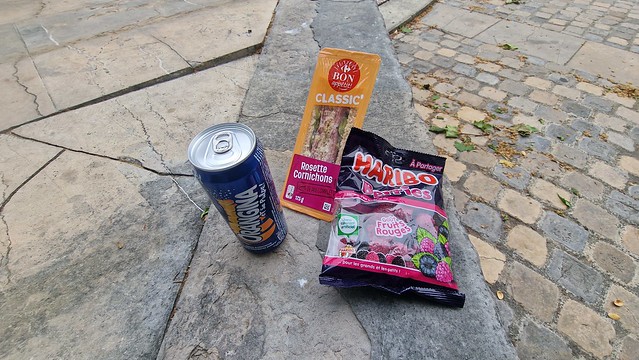
    We noticed that a Carrefour was open and we were fortunate as it closed a few minutes after we had left. Here are my authentic French delights, a rather healthy lunch I thought. Well, sort of. We did though agree that we’d better go back to the castle to get our evening meal.

  • Carcassonne Day Two : Carcassonne Citadel (16th Century Font)

    Carcassonne Day Two : Carcassonne Citadel (16th Century Font)

    20240428_114049

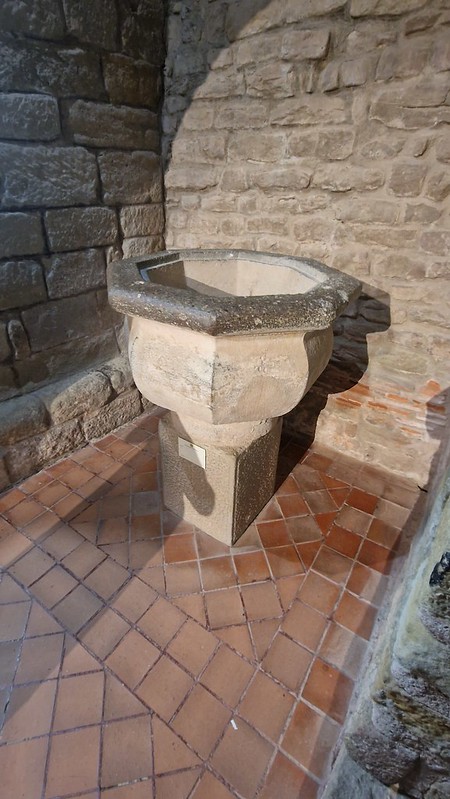
    Another one of the interesting exhibits in the museum, this is a sixteenth century baptismal font from the Grés region of France, which is to the north east of Carcassonne. I don’t have much to write about this (not least as there’s not much information on the display panel), but I’m intrigued at how much damage was done to churches in the country during the French Revolution and how so many church treasures were displaced from their former home. It was a brutal destruction, nearly every one of the 30,000 churches in France had been forced to close by 1794. Which makes items such as these so interesting (well, to me, and I’m setting the bar low here) as they were so important to people when in churches, found themselves fortunate to survive into the nineteenth century and in the case of this one, is now likely seen by more people in this museum than when it was in a church. Anyway, I digress, I just liked this survival….. I must get back into blogging about food, but more on that shortly.

  • Carcassonne Day Two : Carcassonne Citadel (Virgin Mary)

    Carcassonne Day Two : Carcassonne Citadel (Virgin Mary)

    20240428_114330

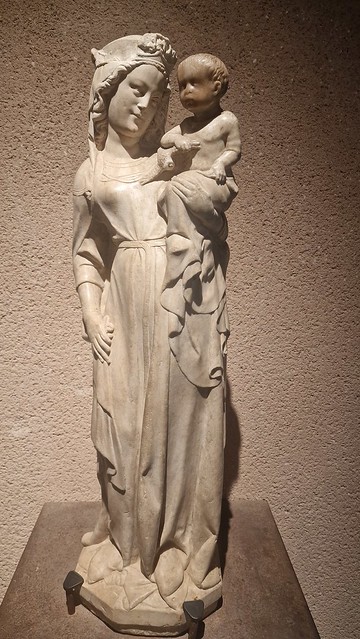
    This statue is in the museum at Carcassonne and dates to the fourteenth century, likely from Sienna in Italy. I’m intrigued by items such as this as they would have had enormous emotional and religious relevance to people several hundred years ago and it’s also a particularly attractively designed statue. I don’t have much else of great note to write about this, it just intrigued me and so it deserves a place on this blog to excite and delight my two loyal readers. I didn’t know this until I read it on the information panel for the statue, but the dove in the infant’s hand represents the Holy Spirit.

  • Carcassonne Day Two : Carcassonne Citadel

    Carcassonne Day Two : Carcassonne Citadel

    20240428_111143

    The fortress itself in Carcassonne is free of charge to enter, but it costs around £9 or so to enter the citadel. We had a wait of around eight minutes to buy tickets, but I was impressed at the organisation and clarity of the operation. Here’s Liam excitedly waiting to go across the bridge.

    20240428_111203

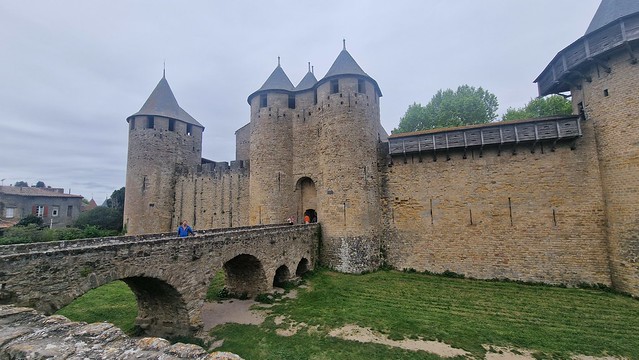
    Much of what is visible here in terms of the roofing was recreated in the nineteenth century, but it’s still imposing.

    20240428_112203

    There are extensive views over the surrounding area and the entrance ticket allows visitors to walk a near complete circuit around these ramparts.

    20240428_112252

    An old window.

    20240428_112500

    Liam keenly looking at something old.

    20240428_112701

    More of the rampart walk. It wasn’t particularly busy when we visited, although during the summer months it’s recommended to buy an advance ticket to ensure access.

    20240428_113008

    And Liam walking along it.

    20240428_112844

    A worn away step.

    20240428_112911

    I think that this is entirely recreated, but it’s where the defenders would pour things over anyone below trying to gain entry. There was a museum element to visit next on this tour, but that sufficiently interested me to get its own blog post.

    20240428_115655

    Liam, inspired by the imposing buildings. Well, or something like that.

    20240428_115951

    This somewhat concerned me for a brief moment, but I’m pleased to say that it wasn’t anywhere near as bad as this sign suggested that it might be.

    20240428_120248

    Carcassonne is divided into two parts, one is the castle side and the other is the Saint Louis District on the other side of the River Aude. This latter settlement was constructed in the fourteenth century and is laid out in a grid pattern and there were once medieval fortifications around it, although these have been taken down. There were lots of arguments between the two settlements until they were united as a single commune in the nineteenth century. In the above photo the two settlements are visible, separated by the river which is where the bridge is.

    20240428_121257

    The remnants of the Roman fortifications. I was suitably fascinated by this survival and went to have a look at them, more of which later on. The anticipation of it all!

    20240428_121803

    A model of the castle at the end of the tour. It takes around ninety minutes to look around the site and it was all well laid out with sufficient signage to explain what was going on. For anyone who is wondering whether to pay to enter, I’d suggest that it’s worthwhile as it’s the heart of the entire castle.

  • Carcassonne Day Two : Walking Around the Perimeter of Carcassonne Castle

    Carcassonne Day Two : Walking Around the Perimeter of Carcassonne Castle

    20240428_102440

    Sunday was the only full day that we had in Carcassonne and so it seemed sensible to spend that time exploring the castle itself. We walked to the outside and it wasn’t overly busy, but there were inevitably a fair few people milling around.

    20240428_102532

    It’s an undeniably large structure and it’s now a UNESCO World Heritage site. There has been a defensive structure here since Roman times, with some of that still visible, but it was during the Middle Ages that it was significantly extended in size and scope.

    20240428_102712

    We started our visit by walking around the exterior of the castle to help get our bearings.

    20240428_103401

    I took plenty of photos of our meanderings, although I’m not sure why I took quite so many. For anyone who has time to waste, the entirety of the photos from this trip are at https://www.flickr.com/photos/julianwhite-uk/albums/72177720316520462.

    20240428_103947

    There were plenty of steps and slopes. The castle had started to be neglected from the middle of the seventeenth century and, in 1849, the Government of France decided that they’d demolish it. That was seen as entirely sub-optimal by numerous people and efforts were made to repair and restore it, a decision which seems to have been for the long-term benefit of the local area. Following the intervention of the President of France, restoration work began in 1853 and although some of it was not really ideal and not quite appropriate, at least it meant that the building was saved and it has given some elements rather a quirky feel.

    20240428_104114

    There are sweeping views of the local area from all directions.

    20240428_104646

    Stone. There’s a lot of stone.

    20240428_104818

    There’s a horse drawn carriage that goes around the perimeter for those who don’t want to, or can’t, walk it.

    20240428_104904

    Not everything is accessible, but it’s all in a reasonably good state of repair. It took around 20 minutes to walk around the castle, although we spent some time faffing and taking photos. It’s certainly a useful way of getting an understanding of the scale and size of the whole complex and there’s no charge for walking around.

  • Carcassonne Day One : Ibis Budget Carcassonne La Cité

    Carcassonne Day One : Ibis Budget Carcassonne La Cité

    20240427_192429

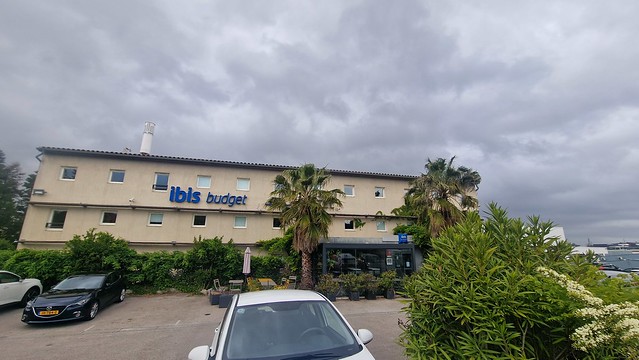
    I’m not sure that I took any photos inside of this hotel, so this external shot will just have to do. There was a dead cat outside, which seemed something of a bad omen and especially as it was still there two days later. I wasn’t obviously expecting it to move itself, but I wondered if someone else would. But, it’s probably not fair to judge the hotel but what animals have been killed on the road outside of it. I’ve digressed though. The welcome at reception was immediate, warm and engaging with the hotel feeling comfortable and clean.

    The room was cheap and Liam agreed willingly he could have the mezzanine level, also known as the top bunk bed thing. These rooms have one double bed and a single bed on top at a different angle, but it was the £30 per night per room price range which made this appealing. The room was clean, the temperature was appropriate and there were no real noise issues either internally or externally. We didn’t have breakfast, but it’s quite basic at Ibis Budget hotels so there seemed better options in the town itself. The hotel has a small bar area as well at the seating area at reception.

    The hotel isn’t brilliantly reviewed on-line, but I wonder whether there are some unreasonable aspirations from some customers about what level of luxury is provided here. I’d happily stay here again, especially at this price point.