Category: France

  • Le Mans – Cathedral of Saint-Julien (Introduction)

    Le Mans – Cathedral of Saint-Julien (Introduction)

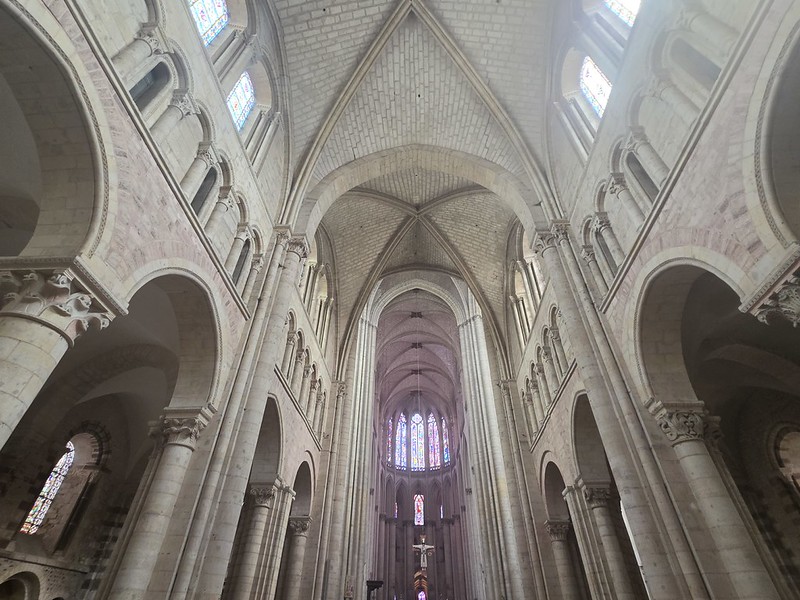
    The beautifully named Cathedral of Saint-Julien is like me, very delicate and subtle. This building very much towers above the medieval streets and is part of the Cité Plantagenêt. It’s one of the finest cathedrals in France and it is dedicated to Saint Julian of Le Mans, traditionally regarded as the city’s first bishop during the third or fourth century. When building the cathedral in the early thirteenth century, the church got the permission of the King to move the city walls to ensure that their new structure surprised and delighted with its size. There are also strong links with the Plantagenets, as Geoffrey and Matilda were married here in 1128 and the baptism of Henry II (the English King between 1154 and 1189) took place in 1133.

    I spent quite some time meandering around the cathedral, partly because there is a great deal to see and partly because it offered some welcome respite from the rather enthusiastic French summer temperatures outside. There will therefore follow, much to the delight of my two loyal blog readers, rather more posts about the cathedral than anyone strictly requested. Fortunately, it turns out that when a building has been evolving for the best part of a millennium, it generally manages to provide enough material to justify that level of enthusiasm. And, I might not have mentioned the heat, but it was so hot that I spent at least fifteen minutes fanning myself with the cathedral’s guidebook.
  • Le Mans – Musée de Tessé (Saint Agatha)

    Le Mans – Musée de Tessé (Saint Agatha)

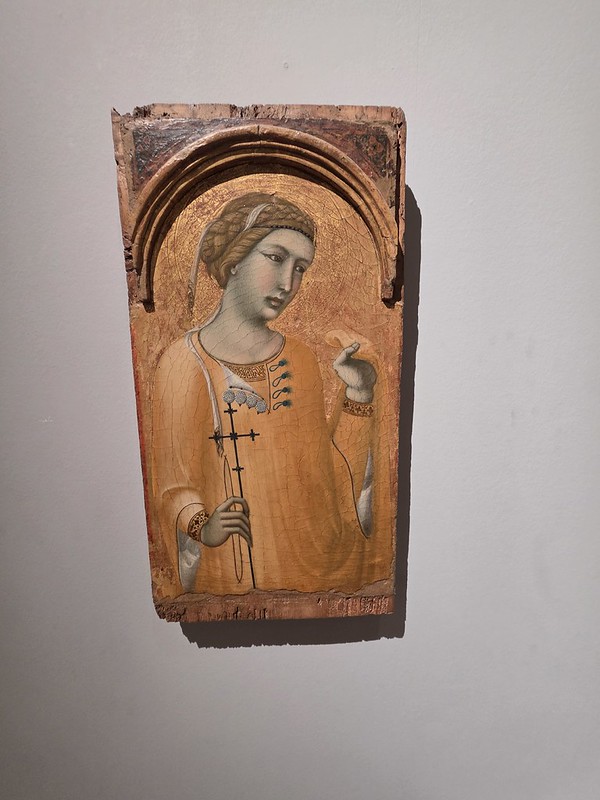
    I rather like medieval religious art and I accept that I should probably get out more. There is often such an intensity of devotion behind these works that even a relatively small panel can carry considerable weight. This painting of Saint Agatha, attributed to the Sienese master Pietro Lorenzetti and dated to around 1315, is considered a work of national importance and has even acquired its own Wikipedia page, which is perhaps the modern equivalent of canonisation. Lorenzetti was one of the great painters of medieval Italy, although the history of this particular panel becomes uncertain after it left Siena. It eventually entered the collection of the Musée de Tessé in 1863, having travelled rather further than most fourteenth-century wooden panels could reasonably have expected.

    Saint Agatha was one of the most widely venerated saints of the Middle Ages. According to tradition, she was martyred in Sicily during the third century after rejecting the advances of a Roman official and refusing to abandon her Christian faith. Here she holds the palm of martyrdom, while her composed expression contrasts with the deeply unpleasant fate described in her legend. Medieval artists often preferred to emphasise a saint’s spiritual victory rather than dwell on the physical details of their suffering, although it is fair to say that restraint was not always a universal feature of medieval religious imagery. Some artists were perfectly willing to ensure that nobody left the church uncertain about what martyrdom involved and there are some rather, er, bloody versions of the beheading of John the Baptist.

    Anyway, I’m not sure if it has been restored, but it’s in decent condition and I thought it rather glistened in the heat of Le Mans.

  • Le Mans – Ibis budget Le Mans Université

    Le Mans – Ibis budget Le Mans Université

    This is the Ibis Budget located near to the city’s university and it was very keenly priced, just a little above £30 including breakfast. It’s opposite a Carrefour supermarket which pleased me, until I got there and discovered that it was a national holiday. France had once again arranged its calendar without consulting me which is entirely sub-optimal. Anyway, it’s a functional and budget Accor hotel with a shaded and seemingly functional pizza machine at the front. I’m waiting for my friend Richard to get one of those (as in get a pizza, not get an entire pizza vending machine), we nearly did in Germany, as he likes investing in side quests like seeing what pizza from a random kiosk is like.

    The staff member at check-in only spoke a little English but with my little French we muddled through. She was keen to tell me that the hotel didn’t have air conditioning and I’d better note that it was exceptionally hot when I was there in mid-July. Anyway, I was very brave and I did mention that, but I think that that was lost in translation. The room was as cold as they could have made it with the shades drawn, but it was still hot.

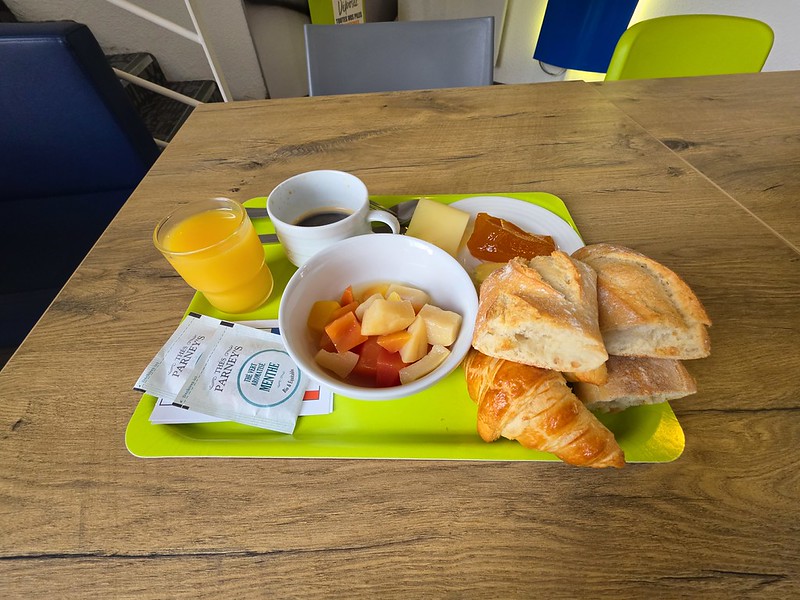
    The breakfast arrangement was basic, but my priority was the option of chilled drinks. They were clearly struggling with the heat to try and keep the food items cold, but they did as good a job as I think they could have done.

    Fruit, bread, jam, some pretty inedible cheese, bread, croissant, orange juice and coffee. I wouldn’t note that it was exceptional, but this was a very cheap stay so I can’t say that I was disappointed.

    Online feedback for the hotel is relatively high, although it’s evident some guests weren’t surprised and delighted by the lack of air conditioning. The team members were friendly, the room was clean and the breakfast was entirely adequate for the price, but I don’t think Richard would have been very impressed. It’s easy to get to the hotel as it’s right by the end of a tram line and I’d stay here again, although perhaps I might wait for the winter months so that the temperature is a little more optimal.

  • Le Mans – Musée de Tessé (Portrait de Famille)

    Le Mans – Musée de Tessé (Portrait de Famille)

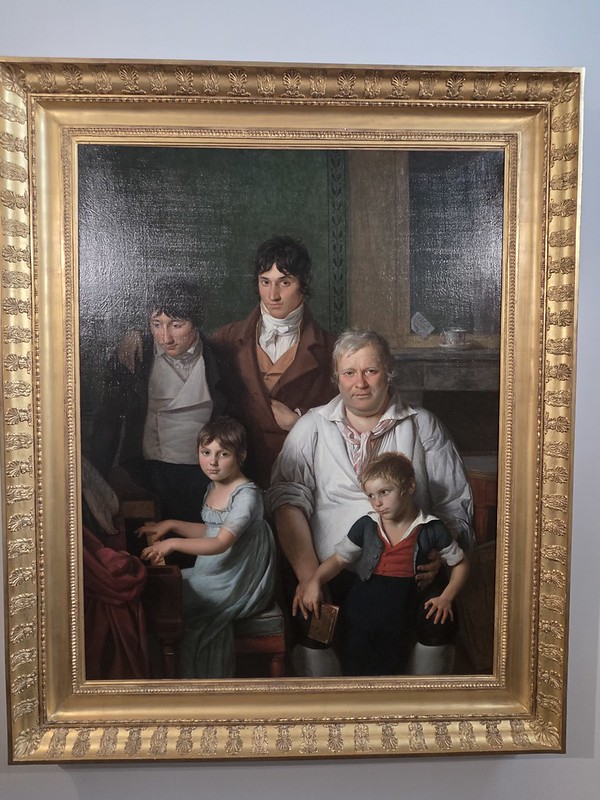
    Although this Portrait de famille, painted around 1805, is attributed to an artist from the circle of Jacques-Louis David rather than to David himself, it reflects the influence of a painter whose political journey was almost as remarkable as his artistic career. A committed revolutionary who was excited and delighted by the French Revolution, he voted for the execution of Louis XVI, became closely associated with Robespierre and produced some of the Revolution’s most iconic images. Following the fall of Robespierre, David himself was imprisoned, yet somehow managed to reinvent his career once again after his release. He’s like Robert Jenrick, but with artistic talent.

    His greatest political transformation (I mean David and not Jenrick) came under Napoleon Bonaparte. Rather than painting revolutionary martyrs, David became the official artist of the new Emperor, producing vast works celebrating Napoleon’s rule, including the famous Coronation of Napoleon. This portrait belongs to that period, when David’s influence dominated French painting. Although depicting an apparently ordinary family, its restrained composition, clarity and quiet dignity reflect the ideals that David had done so much to establish. A country that had gone through turmoil needed some form of normality I suppose.

    David’s political fortunes changed once more after Napoleon’s defeat in 1815. Regarded as too closely associated with both the Revolution and the Empire, he chose exile in Brussels rather than remain in restored Bourbon France, where he spent the rest of his life. The painting itself is rather lovely as well, it’s a warm and convincing family scene produced in the artistic orbit of a man who had painted revolutionaries, emperors and nearly every political settlement in between.

  • Le Mans – Musée de Tessé (John Constable – Malvern Hall)

    Le Mans – Musée de Tessé (John Constable – Malvern Hall)

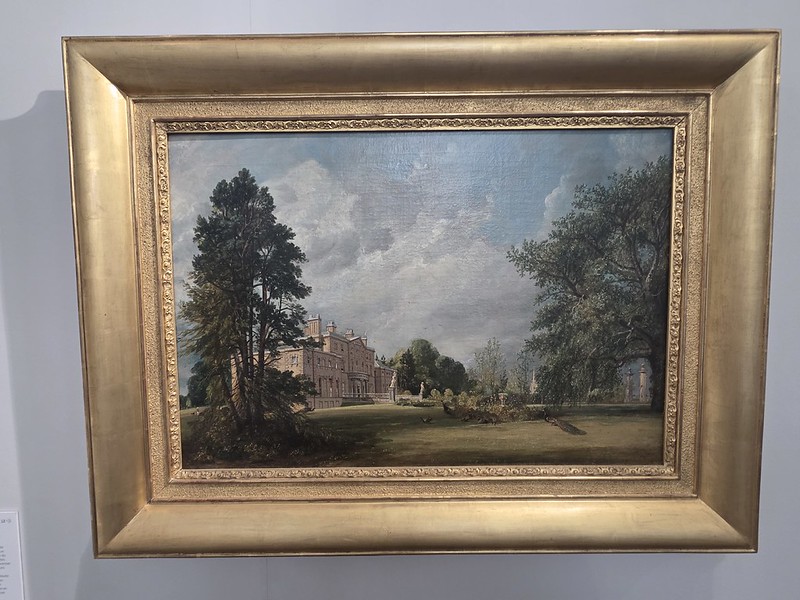
    Whilst walking around this art gallery visibly overheating in the extreme French climate, I had some slight national pride seeing an artwork by John Constable (1776-1837). Painted in 1821, this is Malvern Hall in Solihull, which is now Solihull Prep School, and there are three versions of this artwork. There’s this one, a similar one in the collections of the Clark Art Institute in Williamstown, Massachusetts and a preliminary sketch which is at the Yale Center for British Art in New Haven, Connecticut.

    France appreciated Constable far sooner than Britain did and he sold more here in two years than he did in his entire lifetime in the UK. His work was exhibited at the Paris Salon and proved highly influential on a generation of French artists, who admired the freshness of his brushwork and his willingness to paint the landscape as he observed it rather than as convention dictated. The museum label points out that this was the first Constable painting to enter a French public collection, having been acquired in 1864.

    Friends tried to get Constable to travel to France and other countries to promote his work, but he noted:

    “I would rather be a poor man [in England] than a rich man abroad”.

    To be fair, he largely managed to achieve that ambition. As an interesting aside, The Hay Wain spent its early years in France after being exhibited at the Paris Salon, where it caused quite a stir and helped transform Constable’s reputation on the Continent, even if his fellow countrymen were rather slower to appreciate him.

  • Le Mans – Musée de Tessé (Jacques Hurault de Vibraye)

    Le Mans – Musée de Tessé (Jacques Hurault de Vibraye)

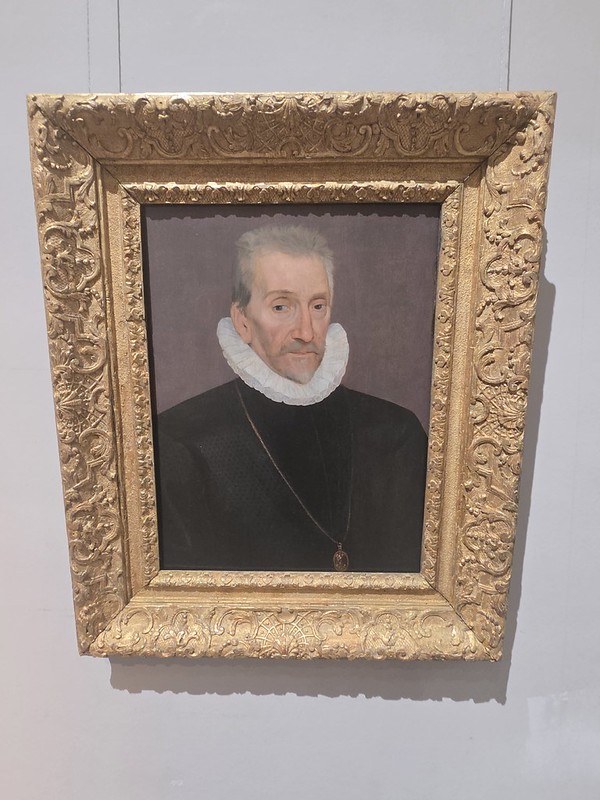
    Portraits such as this are a reminder that history was not shaped only by royalty and the very wealthy. This is Jacques Hurault de Vibraye (1514–1588), one of the countless senior officials whose names have largely disappeared from popular history, despite spending a lifetime helping to run a kingdom during one of its most turbulent periods. Painted by an unknown French artist in the late sixteenth century, the portrait preserves the face of a man who was effectively a senior civil servant and, judging by the fact that he remained in royal service, was presumably rather good at it.

    Hurault served the French Crown as a diplomat, councillor and senior administrator during the French Wars of Religion, when the country was repeatedly threatened by political instability and religious conflict. I imagine that most visitors to the gallery will never have heard of him, yet this painting has outlasted the political disputes, the court intrigue and probably almost every building in which he worked.

    That is one of the pleasures of provincial art galleries. They can display a portrait of someone nearly nobody has heard of, painted by an artist whose identity has been lost, accompanied by a label that tells us very little about either of them. So this is effectively a blog post noting my satisfaction that an artwork has survived for more than four centuries without revealing very much at all. I rather like that it is there.

  • Le Mans – Plantagenet City

    Le Mans – Plantagenet City

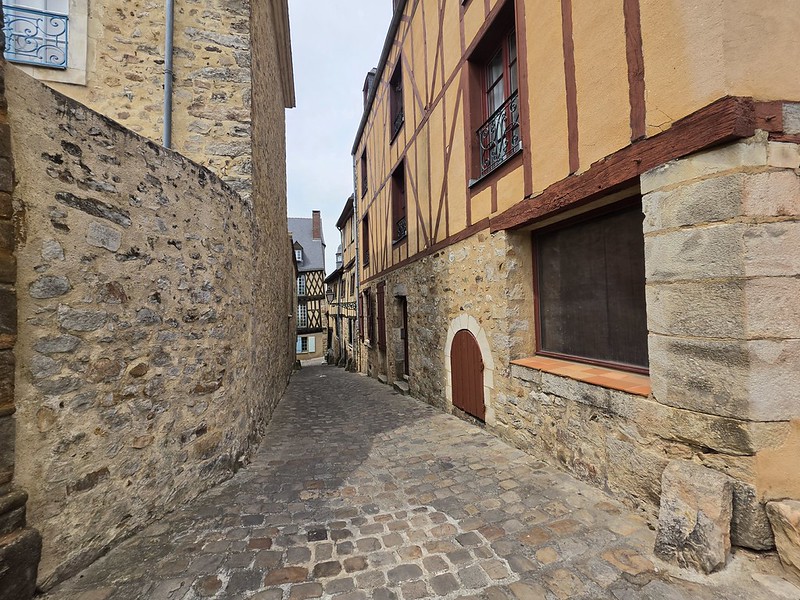
    I arrived in Le Mans with very little knowledge about what was there, just knowing that there was a motor race that went on nearby at some stage during the year. It transpired that the real highlight for me was wandering through the remarkable Plantagenet City which is something of a survivor. This beautifully preserved medieval quarter is a maze of cobbled streets, half timbered houses, grand stone buildings and quiet squares, all enclosed by one of the finest collections of historic architecture in France. It’s of a decadence that I hadn’t anticipated and it was surprisingly quiet when I walked around, although it was very hot.

    The district takes its name from the Plantagenet dynasty, which has strong links with Le Mans through Geoffrey Plantagenet, Count of Anjou, who married Matilda, daughter of King Henry I of England. Their son became Henry II of England, founding the Plantagenet royal house that ruled England for more than three centuries. Although the medieval streets predate the dynasty itself, the name reflects the city’s important place in the family’s history and its close historical connections with England.

    Today, the Plantagenet City is one of the best preserved medieval centres in France, so this was something of a treat to meander around shortly after I arrived in Le Mans. Although I did have to sit in the cathedral, although more on which in another post, for nearly an hour to cool down. Medieval architecture is all very well, but when the temperature starts climbing into the mid-thirties, even my enthusiasm for wandering has its limits.

    Anyway, just lots of photos below.

  • Le Mans – Royal Abbey of l’Épau (Calefactory or Warming Room)

    Le Mans – Royal Abbey of l’Épau (Calefactory or Warming Room)

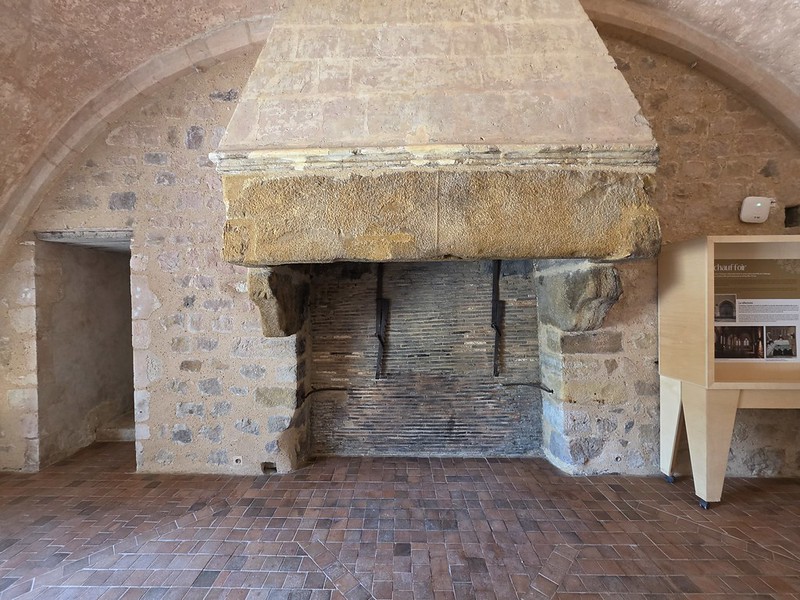
    The calefactory, or warming room, was one of the more immediately appealing rooms at the Royal Abbey of l’Épau, largely because it contained something that would have been in relatively short supply elsewhere in the monastery, namely heat. This would normally have made it especially welcome, although when I visited Le Mans it was oppressively hot outside and the prospect of gathering around a large medieval fire had lost some of its charm. I think I have mentioned the heat already, so I shall resist documenting it further.

    The room opens directly from the cloister and would have provided a practical refuge during the colder months. Its enormous fireplace dominates the space, with a broad hearth and a monumental stone hood projecting from the wall. The blackened interior shows that it once did rather more than merely provide an attractive architectural feature, although the fire was presumably managed with greater competence than I demonstrate whenever given responsibility for one.

    The rest of the abbey was deliberately austere and largely unheated, in keeping with Cistercian ideals of simplicity and discipline. I suspect I would have coped reasonably well with that, as I am generally better with the cold than the heat. I might even have regarded the calefactory as unnecessarily decadent to be honest.

    As an aside, the word ‘calefactory’ comes from the Late Latin ‘calefactorius’, meaning something with the power to warm or heat, itself derived from calefacere, ‘to make warm’. This combines calēre, meaning ‘to be warm’, with facere, ‘to make or do’, which is all rather neat.

  • Le Mans – Royal Abbey of l’Épau (The Cellar)

    Le Mans – Royal Abbey of l’Épau (The Cellar)

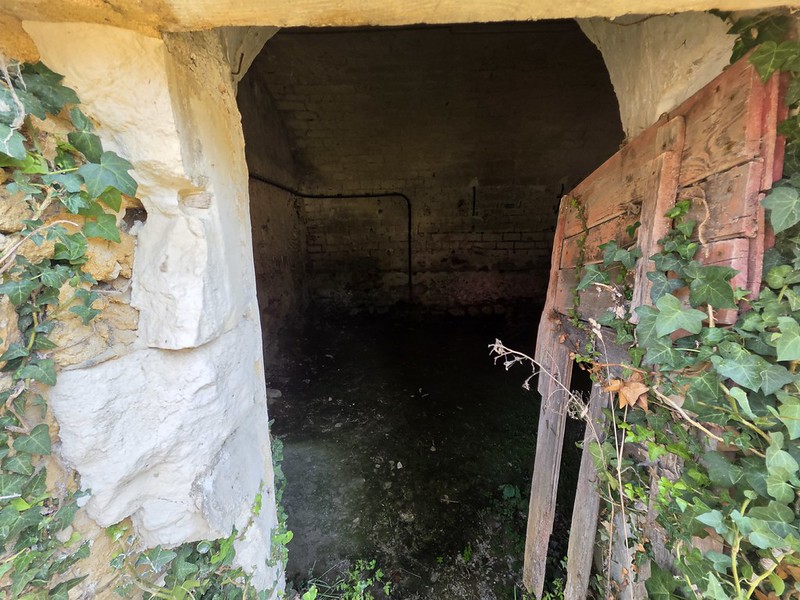
    Not every building at the Royal Abbey of l’Épau was devoted to prayer, contemplation or the careful storage of books. The monks also required somewhere to keep the agricultural produce generated by the abbey’s estates, including cereals and wine, and this fifteenth-century building served as the cellar. It stands slightly apart from the main monastic complex, to the south of the former refectory range and close to what was once a fishpond. The ground floor provided a cool and secure space for produce, while an upper level increased the available storage. Its position away from the main abbey buildings would also have made it easier to bring in goods without carts, barrels and agricultural workers having to traipse through the cloisters.

    As an aside, the French name for the building is ‘le cellier’, although this did not necessarily mean an underground cellar. The word comes from the Late Latin ‘cellarium’, meaning a store room for food and other provisions, and a French ‘cellier’ could be at ground level or stand separately from the main building. The English word “cellar” has the same origin, but later became more firmly associated with somewhere underground.

    I was able to peer through the doorway into the lower room, although the darkness prevented a particularly comprehensive inspection. It nevertheless looked exactly as an old monastic cellar ought to look which was cool, gloomy and slightly damp. I rather like these administrative buildings, they are a reminder of how large the whole abbey operation would have been. I did think about trying to get in, but it was evident that this was positively discouraged and I was worried that there might be snakes inside. Historical curiosity has its limits.

  • Le Mans – Royal Abbey of l’Épau (Abbey Church)

    Le Mans – Royal Abbey of l’Épau (Abbey Church)

    This is the main church of Royal Abbey of l’Épau and it’s an impressive space and relatively complete example of Cistercian architecture. The abbey was partly destroyed in 1365 during the Hundred Years’ War, reportedly by the inhabitants of Le Mans to prevent it being used as a base by English forces, and reconstruction continued from the late fourteenth century into the fifteenth century. Modern study of the surviving roof timbers has dated work above the choir to 1427–28, the crossing to 1428–29, the north transept to 1429–30 and the nave to 1431–32.

    There weren’t many visitors, so I had this space to myself for most of my visit. Cistercian churches were intended to avoid excessive decoration and visual distraction, but they did allow themselves a little decadence with wall paintings.

    I was initially puzzled by the plan of the church, although it doesn’t take a great deal to confuse me. The large open space in the first photographs is labelled on some plans as the transept, while the nave above appears unexpectedly short. The church has the usual cross-shaped Cistercian plan, with an east-to-west length of around 70 metres and a transept measuring approximately 47 metres across, but descriptions of the building note that the nave was never fully completed. That would explain why the transept seems to dominate the interior and why the nave looks as though somebody reached the western end of the building programme and thought “that’ll probably do” or similar. Or perhaps someone fell out with the construction engineers, or, more likely, they ran out of money.

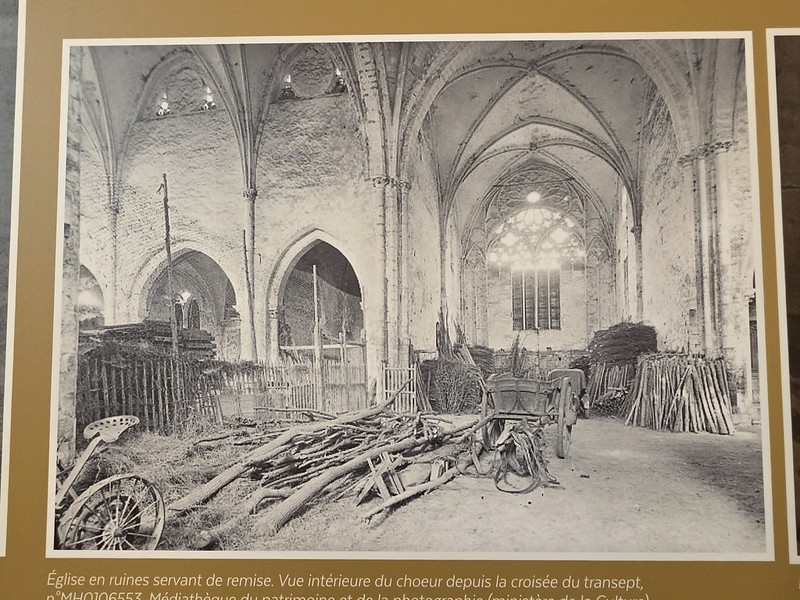
    This was what the church looked like in 1940, taken from a similar angle from where I took the previous photo. The building had been used by troops in the First and Second World Wars, but it had been on the decline since the late eighteenth century when the monks were thrown out.

    And further usage of the church when it was used as a large shed, I suppose it meant that the farmer’s cart remained nice and dry. Fortunately for the farmer, this was a well-built church with no danger of falling down.