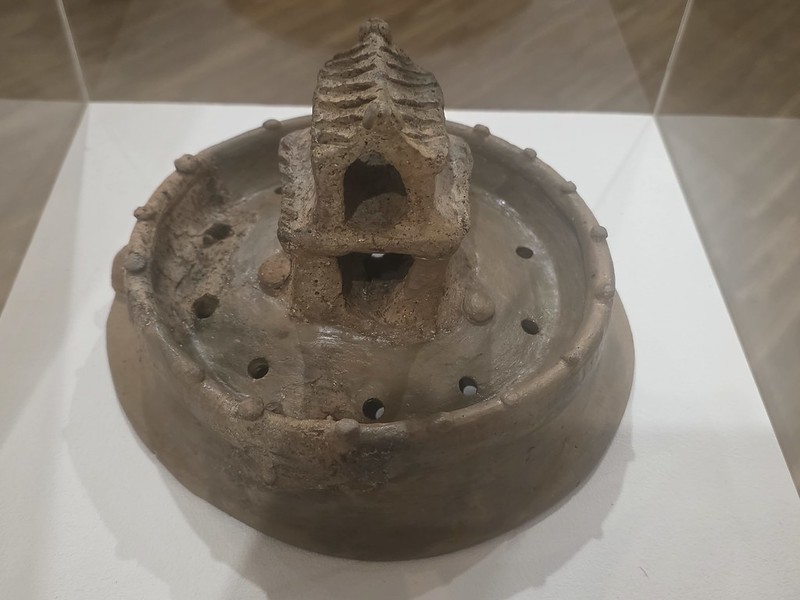
I’m aware that some of these posts are a little niche, but back to Yerevan and Armenia, with this little model of a bronze temple which dates to around the fifth or sixth century BC. This reminds me of a much more professional clay model that I made at school of a castle that I’m convinced will be worth at least £25 in twenty years (although it probably cost more than £25 in clay to make). It was also slightly more substantial than this little temple, but there’s something quite alluring about this exhibit which is about 3,000 years old and that’s also rather a long time for it to remain unbroken.
The museum notes that it was found at Astghi Blur, which was an ancient fortress located on a strategic hilltop near the village of Yenokavan in Armenia, featuring impressive double and triple stone walls that date back to the sixth and fifth centuries BC.
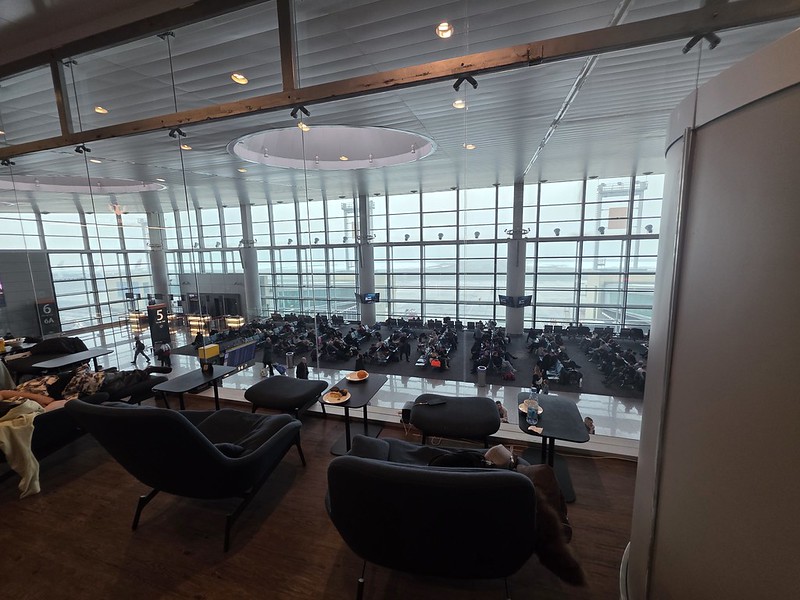
I had plenty of time at Yerevan Airport, giving me time to visit the lounge that they had here before I boarded my flight to Prague.
There were a variety of sandwiches, with the whole food selection being quite broad.
Snacks and salad. Those red wafer things were very moreish.
A selection of empanadas.
The usual generic lager. There was a self-service bar which had a range of spirits, a brandy and a choice of two different beers. It’s a large lounge and I liked that they had some higher tables rather than just low tables. There were also power points liberally dotted around, as well as as wi-fi.
Some healthy Greek salad, although that’s not entirely evident from the photo, which was my favourite thing from the food options. It’s unusual for lounges to have bottles of coke and the like available, as they must lose a lot to customers taking them away with them.
The lounge has a view over the boarding gates, which is particularly handy to see when flights are actually boarding. My flight started to board earlier than previously announced, so I decided after a couple of hours to meander down.
The online reviews for this lounge aren’t great, but I thought that it was all fine. There was plenty of space, a wide selection of food and drinks, with team members keeping the whole lounge clean and organised.
After Jonathan had left Yerevan for Milan after our two week trip, I had a wait at the airport before flying to Prague. Here’s a rather lovely artwork that was recovered from the Spitak earthquake in 1988.
There was a large seating area at arrivals which had comfortable seats, tables and power points. It wasn’t clear whether this was part of the seating area for the restaurant, but I thought that if it was they’d come over and I’d buy a coffee. One hour and twenty minutes later, a staff member came over asking what I’d like, so I requested a menu. Twenty minutes later the menu was delivered to the table, and as no-one had returned for another forty minutes, I left for my flight.
It’s not possible to use a digital boarding card as in most airports, so I had to wait for the bag drop desk to open to collect my boarding card. This is a free process and it was all suitably efficient.
After a lounge visit, which I will return to in another post, it was time to board.
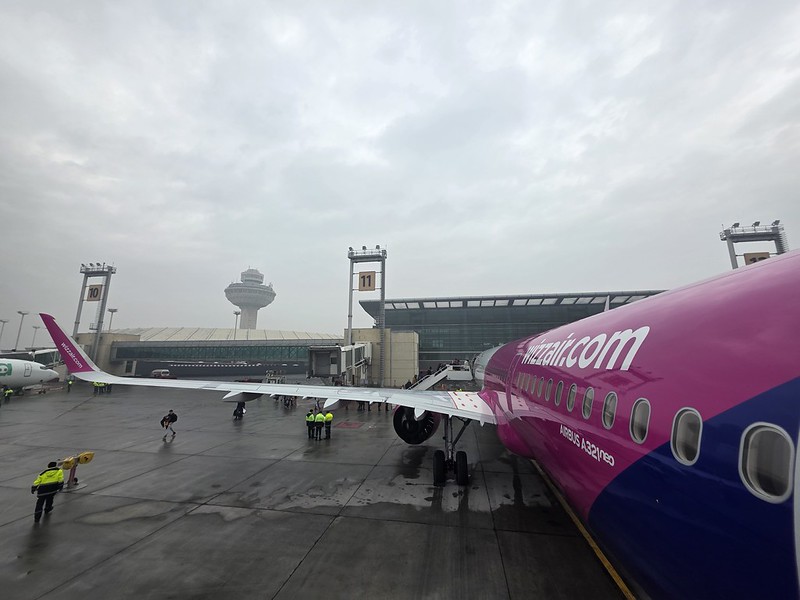
Boarding the aircraft, which was registration HA-LDH, an aircraft that I don’t think that I’ve been on before.
Waving goodbye to Armenia, after a really fascinating trip to the country.
In the background is the Government’s aircraft, an Airbus A319-100 which the Republic of Armenia has used since 2007.
I had been a little disappointed that the seating Gods had given me a middle seat, but with some rearrangement, I was able to move to an aisle seat.
The airline’s planned new routes and I hope to go on some of these.
The flight was, yet again, without any incident. It was over three hours, which is about as much as I can cope for in a Wizz Air aircraft, but the crew members were professional and it was all clean and comfortable. I have very little to comment on here as Wizz Air really have everything done to a fine art and nothing was of note. The pilots gave useful updates in their announcements, including an update en route and also details of the weather and other such things.
After having arrived in Prague, the introduction of the EES system was causing delays at the border for, mostly, UK residents from other flights. I’m already registered on the system and I was at the desk for just twenty seconds, but there was a wait whilst others were processed.
And safely through border control and ready for a couple of days in Prague.
Although I’ve completed my write-up of my trip to Turkey, Georgia and Armenia, there was quite a lot that I missed out and have meant to come back to. This is one of those posts, but the summary of the trip is at https://www.julianwhite.uk/turkey-georgia-and-armenia-final-thoughts/, with a link to all the blog posts that I wrote up telling the story of that little adventure.
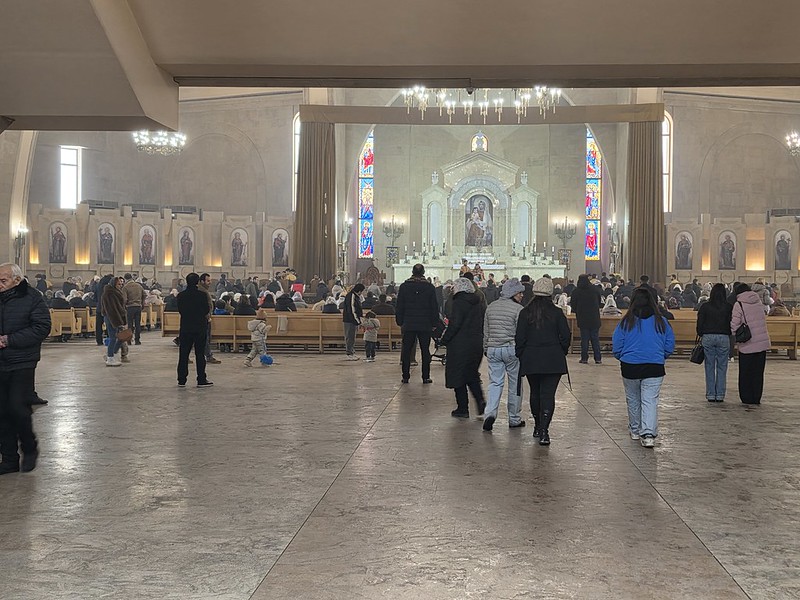
This rather modern and interesting looking building is Saint Gregory the Illuminator Cathedral in Yerevan is a major Armenian Apostolic church complex built to commemorate the 1700th anniversary of Armenia’s adoption of Christianity as the state religion (which is traditionally dated to 301).
Construction of the cathedral started in 1997 ready for the opening in 2001, with the architect being Stepan Kurkchyan. The cathedral is dedicated to Gregory the Illuminator, who converted Armenia to Christianity from Zoroastrianism in the fourth century. There are some relics from St. Gregory, but as is common with these things, there are numerous right arms from St. Gregory around the world.
Although the cathedral is large, it didn’t feel ostentatious or excessive, I quite liked how it felt functional. The building can fit 2,500 worshippers in and there’s a basement with numerous extra rooms, offices, worship space and a library.
We entered when there was a large service on, so I didn’t want to take more than this photo as it felt a little intrusive. Shortly after this, the large curtains were swept across, it was quite a sight, although I’d better add that this wasn’t a response to my taking a photo. It all felt quite welcoming, I liked how it was a little understated but yet still grand.
Although I’ve completed my write-up of my trip to Turkey, Georgia and Armenia, there was quite a lot that I missed out and have meant to come back to. This is one of those posts, but the summary of the trip is at https://www.julianwhite.uk/turkey-georgia-and-armenia-final-thoughts/, with a link to all the blog posts that I wrote up telling the story of that little adventure.
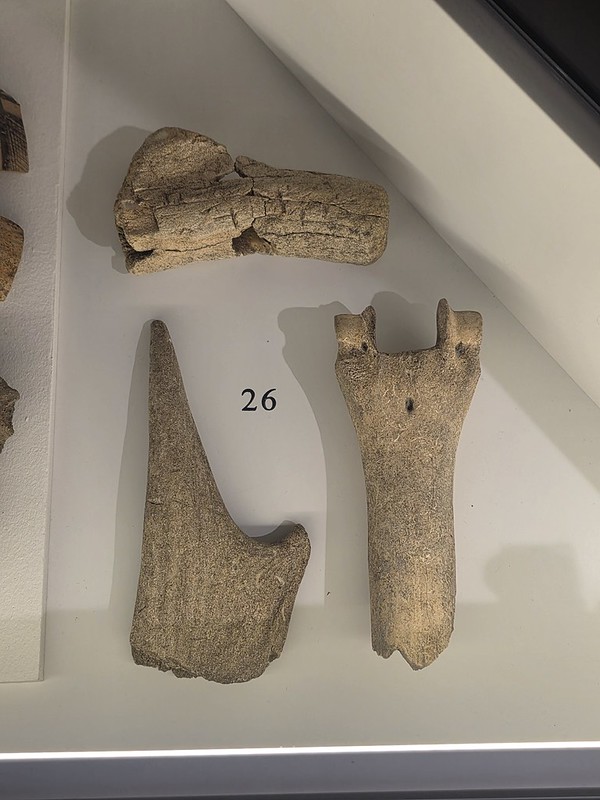
It was the age of these items that intrigued me the most, they all date to the fourth century BC. Made from bone, they are a variety of tools, namely a hoe, a knocker and a handle. These items aren’t particularly unusual or just from this region, but I like the everyday items from this period which provide some tangible connection to the past. These are the quiet echoes of a Tuesday afternoon in 389 BC….
Although I’ve completed my write-up of my trip to Turkey, Georgia and Armenia, there was quite a lot that I missed out and have meant to come back to. This is one of those posts, but the summary of the trip is at https://www.julianwhite.uk/turkey-georgia-and-armenia-final-thoughts/, with a link to all the blog posts that I wrote up telling the story of that little adventure.
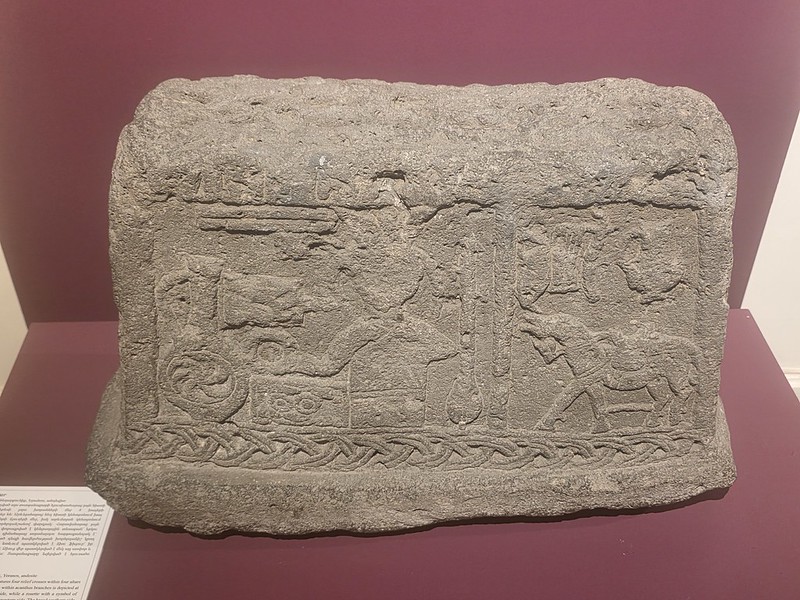
This is a tombstone from the fifteenth or sixteenth century, apparently made of andesite and that appears to have held up well. The museum notes that “there is a relief of a man facing forwards and holding a bowl towards a pitcher bearing an eternity symbol” although that feels like it’s missing out some explanation of what is being shown here. I thought that it was a hunting scene, but then again, I have no idea. And is that a horse looking down or an elephant looking up?
But, what interested me, and this stone has multiple faces and mysteries, is that it’s a tombstone that tells a story. We might not know the name of who this tombstone is for, but there’s a whole cartoon worth of action going on here. And there’s some confusion on what the message is (well, there is with me anyway), and this seems to be a handy way of getting attention at a modern day graveyard. Create a cartoon strip full of imagery and some people will engage with the whole arrangement and try and work out what it means.
Anyway, I feel that I might now be on one of my flights of fancy…..
Although I’ve completed my write-up of my trip to Turkey, Georgia and Armenia, there was quite a lot that I missed out and have meant to come back to. This is one of those posts, but the summary of the trip is at https://www.julianwhite.uk/turkey-georgia-and-armenia-final-thoughts/, with a link to all the blog posts that I wrote up telling the story of that little adventure.
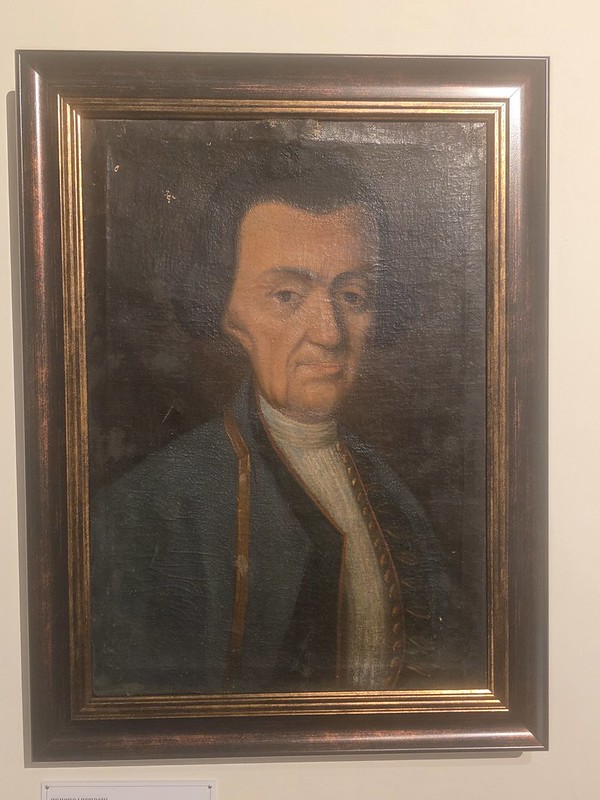
This is a painting of Aghazar Lazaryan (1735-1801), dating to 1774, although the artist is unknown but that perhaps feels somehow appropriate for an era that produced a lot of ‘important’ men and rather fewer signed canvases. He was something of a prominent figure within the Russian Empire, known for his roles as a state adviser, industrialist and someone that started to push for political projects in Armenia. Born in the New Julfa province of Isfahan (now in Iran), his wealth and presence meant that he exerted significant influence at the Russian court. For his loyal service, he later held noble titles associated with both the Austrian and Russian imperial systems, which does rather sound like a conveniently international arrangement.
I don’t know why the museum specifically wanted to display this portrait, but I imagine that it was because it wanted to show the history of the liberation movement. The first Armenian Republic didn’t come about until 1918, so Lazaryan was ahead of his time here although it was perhaps more political projects in Armenia under Russian patronage rather him being an early supporter of independence.
Although I’ve completed my write-up of my trip to Turkey, Georgia and Armenia, there was quite a lot that I missed out and have meant to come back to. This is one of those posts, but the summary of the trip is at https://www.julianwhite.uk/turkey-georgia-and-armenia-final-thoughts/, with a link to all the blog posts that I wrote up telling the story of that little adventure.
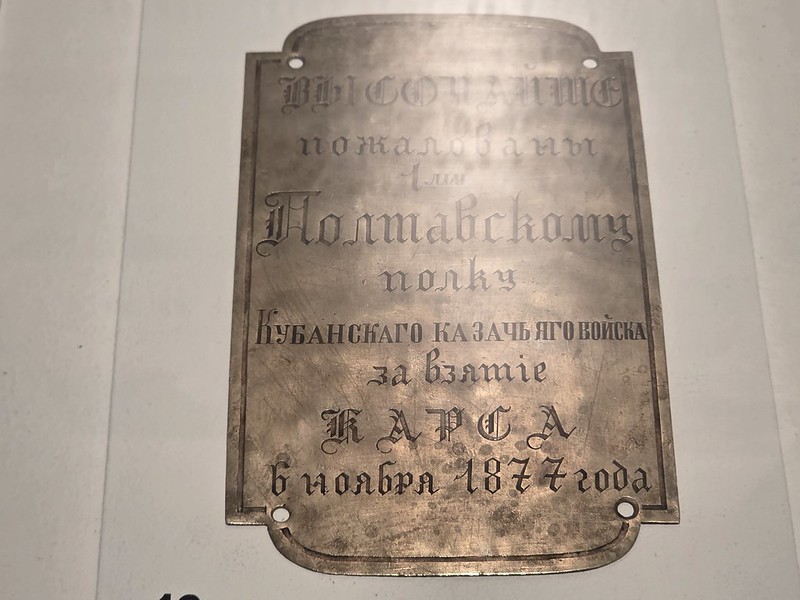
This is a memorial plaque from a very proud Russian Government which was given to the Poltava Regiment. Translated, it reads:
“By the Highest (Imperial) will, [it was] granted to the 1st Poltava Regiment of the Kuban Cossack Host for the taking of Kars, 6 November 1877.”
[Host in this case means a regional Cossack army]
We didn’t go to Kars on this trip, but it was the final destination of our long train journey where we got off at Erzerum. I intend to visit Kars as it has no shortage of history, although I might not sit on a train for the best part of two days to get there. Well, not in one go.
Anyway, the city of Kars had been a Russian target for some time, they’d tried in 1807, in 1821, in 1828 and in 1855. They started again in 1877 and suddenly decided to attack on 17 November 1877 (or 6 November 1877 in the old style calendar) and to everyone’s surprise, not least the Russian Government, it was captured. The city was given to Russia, they liked it and they held onto it until 3 March 1918.
The situation then gets complex, the Ottomans lost it to the First Republic of Armenia in October 1918, but to everyone’s surprise once again, Armenia lost it in October 1920 after a botched military defence. In 1945, the Soviet Union told Turkey that they wanted it back, something which worried many, including Winston Churchill. After discussions, in 1948, the Soviets decided that they’d withdraw their claim to the region. The border between Armenia and Turkey has been formally closed since April 1993, but it has been effectively closed for a century. It is something of a remnant of the Iron Curtain.
But, back to the plaque in the museum. This would have been seen as a great military victory for Tsar Alexander II and he would have been very pleased with his Cossack soldiers. The Tsar was a more pacifist leader than some in Russia, but he was very keen for military expansion in this region, something that the population of Kars could have probably done without at the time. Indeed, Kars is one of those locations that, if history had gone differently, could have been in Turkey, Russia or Armenia.
Firstly, this was a quite amazing trip and many thanks to Jonathan for his company and leading me through Turkey, Georgia and Armenia. It was an adventure that I won’t forget and I have very many fond memories of it.
At the base of this page is a list of everything that I’ve posted about this trip, I think I made 89 blog posts about it. And, there are more coming, as I’ve rather rushed through this so that I’ve completed it to at least some degree.
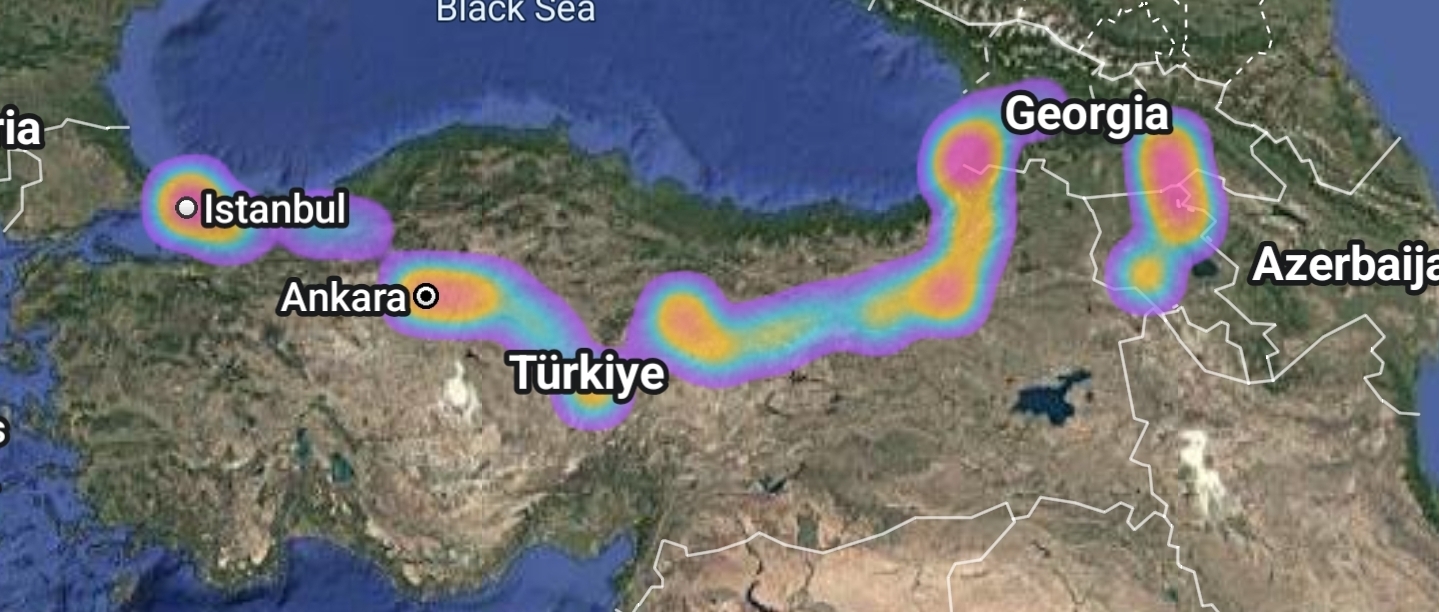
This is my heat map of where I took photos and it also shows quite nicely our journey from Istanbul to Yerevan. There were a lot of trains and buses on this trip.
TURKEY
I’ve wanted to come to Turkey for some time and to be able to see so much of it has been something of a treat. The food here was one of the most notable elements, certainly some of the best kebabs that I’ve had. The lack of Internet was a problem for me, something resolvable by taking an eSim in future, but it tells a wider story. This was a country where access to the Internet was locked in a way that I haven’t experienced in some time, indeed, it was actually Russia that I last recall this happening for me.
Istanbul, as no-one will be surprised by, had a lot of history and I only scratched the surface of it on this trip. Ankara had more life to it in many ways and their railway station is really quite shiny. Erzurum was historic, the pace of life felt slowest here of any city we went to on the trip.
The welcome was always friendly, although the pace often felt slow, and not just when our train pulled into Erzurum 12 hours late. But, a train journey of 32 hours was in very many ways really quite fun, it’s beaten my longest rail journey record from when I travelled from Birmingham (Alabama) to Newark (New Jersey).
This officially secular country was much more religious as we travelled to the east, although it’s politically in an odd place where it has the very European country of Georgia to the east of it and the very European countries of Greece and Bulgaria to the west of it. It, however, is fiercely independent and has a proud history from when it was the Ottoman Empire.
And, let’s not forget the cats. The very many cats.
GEORGIA
Georgia was dynamic, forward-thinking and clearly going places. I hadn’t been prepared for the number of EU flags and the Museum of Soviet Occupation told its own story about the twentieth century. In terms of the food, it had cuisines from all over the world, something that we didn’t experience in the same way in Turkey.
Batumi was the city that surprised me the most, it certainly was the Las Vegas of the wider region as Jonathan had told me about in advance. A city that has undergone a transformation that doesn’t show any signs of stopping. Tbilisi was vibrant, charming, growing and the tourists are likely to keep on coming here.
It’s hard to see the economic resurgence of Georgia coming to an end unless there are wider political issues. With more flights coming in from Europe, this feels like it will attract more tourists, more business and even more growth. And, they felt more open and there was much less regulation of the Internet, something which it shared with Armenia.
Modernity was the element that struck me the most, it might look like it’s living in the past, but this has a future.
ARMENIA
When we were being driven through the Armenian countryside, it did feel like a country that needed a lot of economic growth. But, Yerevan was a modern looking city and it’s clear that’s where the economic drivers are in terms of where the future for Armenia is going to come from.
The Soviet legacy is strong here, it’s a country that finds itself with a smaller amount of territory than it might like and its political future is more uncertain than perhaps somewhere like Georgia. But, it really felt like an independent country with its own destiny, there was a confidence that seemed to be there.
My comments, as ever, are a little random, but they’re the thoughts that come to mind. And, I very much look forward to visiting all three of the countries again. There will now be lots more posts, but below are the ones I’ve posted so far, more than enough to surprise and delight my two loyal blog readers.
We’ve completed a lot of transport on this trip and this was the final one, the bus that took us to the airport. The 201 service leaves every thirty minutes and is the main link between the airport and the city centre for those who don’t want to get a taxi.
It’s all happening now!
We had a five minute stop here as the driver needed to get himself a snack. This reminds me of a bus journey I took in the United States, I think it was Denver but I forget, where the bus driver asked me if he could get off to buy some snacks. As the only passenger, I didn’t have much choice. This friendly US driver got back on a few minutes later and gave me some snacks as “I don’t want my passengers being hungry” and he refused any financial donation at the end. I liked him.
The driver didn’t do that here.
And that is the end of that….. Jonathan went off to Naples and I went off a little later in the day to Prague as I couldn’t go through security as I was too early.
But, more of my thoughts of this whole trip in my next post. And I’ll return to my journey from the airport in a while.