Blog

  • Vienna – Beaver Brewing

    Vienna – Beaver Brewing

    20250629_151932

    I wouldn’t say that it’s easy to get craft beer in Vienna, but it is out there and hopefully it will grow in availability in future years. This is Beaver Brewing’s taproom, which was highly reviewed on-line, and it’s not too far from the city centre.

    20250629_135128

    It was hot outside and that’s where most people were sitting whilst embracing the sun, but I wanted to sit inside in the cold and near a fan with all of its rotating excitement. There was a friendly welcome from the team member behind the bar and this felt like my sort of venue. I had just eaten at another bar, but the American food options looked tempting and interesting.

    20250629_135123

    They had nine beers available and I asked if they did flights. I was surprised and delighted that they not only did flights, but I could have one with all nine beers. This saves me choosing (I don’t need all that sort of stress in my life), I thought that this was a good idea and it cost around £10 for the flight which I thought was very reasonable.

    20250629_135244

    And here we are, all of these are from Beaver Brewing Company. The numbering is 1 to 9 with 1 to 4 on the back row, 5 to 8 on the front row and then number 9 on the far right.

    (i) Happy Trails – this didn’t taste its ABV, it was light, hoppy with a touch of citrus and maybe some tree sap.

    (ii) Sunny Day – a rounded hop flavour, light, clean and smooth.

    (iii) Globetrottin’ – I’m not sure that I’ve actually had a proper Vienna lager before, I try and avoid anything lager related, but this is an innovative spin on this beer style using some global hops. Slight toffee, malt and sweetness to it, but my lager friends such as Ross would probably hate it.

    (iv) Bharbara – for just 3.2% this is very good, with a suitable level of sourness and tartness, lots of rhubarb and refreshing.

    (v) Forbidden Pils – the forbidden here refers to the use of rice, it’s sweet and I’d rather more pils used this as an ingredient.

    (vi) Pomona NEIPA – there’s strawberry punching through here with the beer being creamy, fluffy, fruity and very smooth. A rather lovely NEIPA.

    (vii) Fireside – malty, roasty, liquorice. Delightful even though it was a very hot day (I might have mentioned that it was too hot in Vienna).

    (viii) Witches Brew – I was surprised that this had a low Untappd score, it’s herbal, floral and admittedly tastes of pot pourri, but innovation is of the key… This harks back to the historic of brewing before hops and I rather liked the innovation going on here.

    (ix) Big Lake Lager – clean, crisp and inoffensive.

    I very much liked this bar, I had a rather lovely 90 minutes or so here. The welcome was friendly, the surroundings were clean and informal, with an excellent beer selection. The standard of their craft beers was towards the higher end of the scale, with some real innovation and experimentation going on here.

  • Bratislava – Bratislava Transport Museum (Mercedes-Benz 170 – W15)

    Bratislava – Bratislava Transport Museum (Mercedes-Benz 170 – W15)

    20250626_100918

    Tucked away in a corner of the quite marvellous Transport Museum in Bratislava is this rather proud-looking Mercedes-Benz 170 (W15), a model first introduced to the world in 1931, although this one is from 1933. Unveiled at the Paris Motor Show in October 1931, it’s the sort of car that looks like it should be waiting outside a respectable interwar law firm, engine ticking gently, while its owner discusses tax efficiency and the virtues of punctuality or something similar (not that I want to fall into lazy stereotypes). Wikipedia mentions that nearly all of the production run was sold within Germany and they made a total of 13,775 of them.

    This was Mercedes-Benz’s first real stab at mass production with a modern design, aimed more at the professional driver than the boy racer of the time. There isn’t much subtlety to the colour as it’s bright blue, but it does look suitably dignified and it was deliberately smaller and slightly less decadent than previous models as the 1920s depression had cut disposable incomes somewhat.

  • Limoges – La Mie Câline

    Limoges – La Mie Câline

    [I originally posted this in July 2018, but have reposted it to fix the broken image links]

    20180701_131622

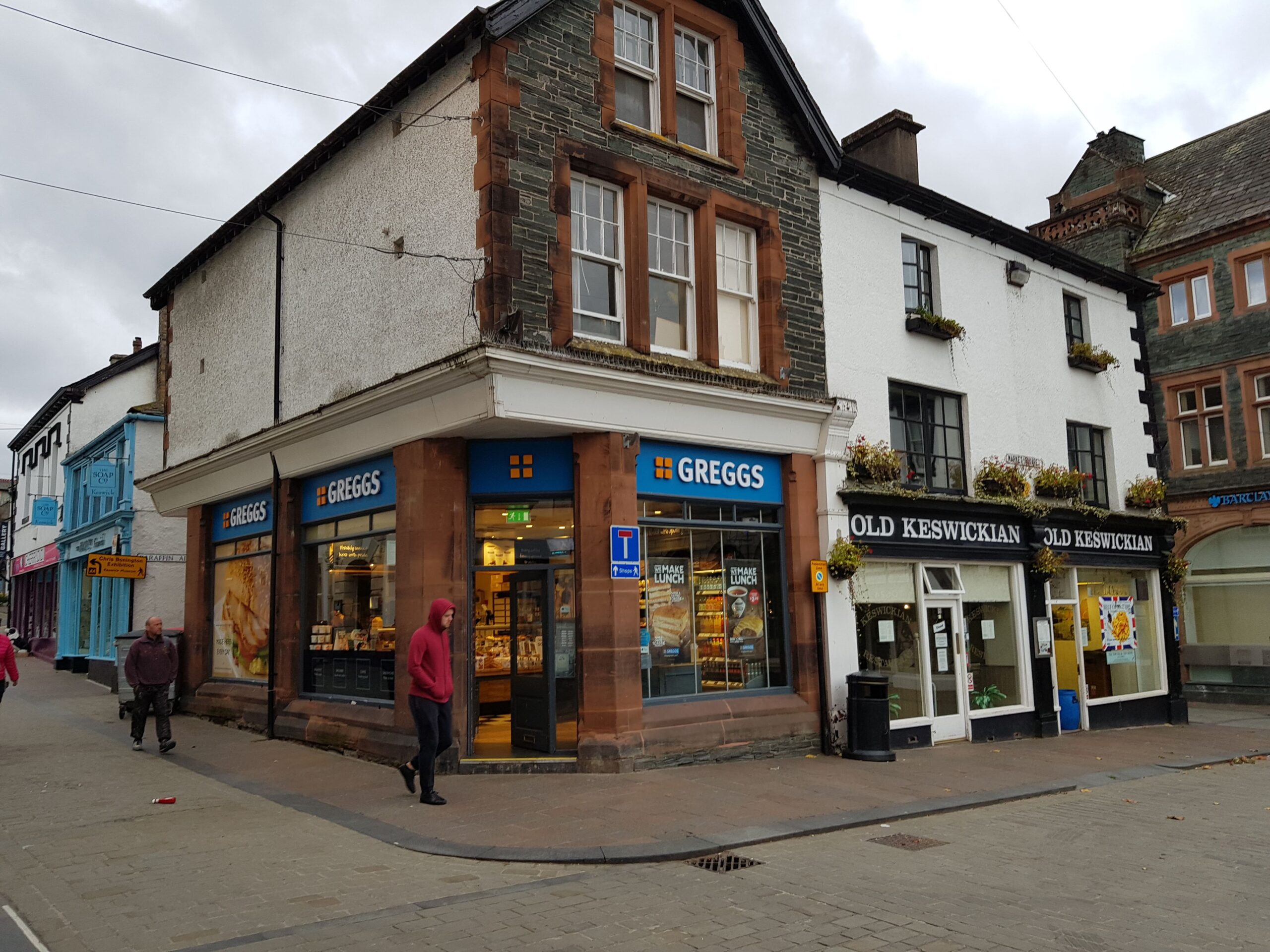
    There’s one problem with mainland Europe. There’s no Greggs. However, France does have the La Mie Câline chain, which is broadly similar in principle. It also today had the substantial advantage of being nearly the only place open in the centre of Limoges on a Sunday.
    20180701_124012

    The cakes were beautifully presented and looked appetising. It was also possible to buy the entire cake, which I must admit I was quite tempted to do. But, that seemed just a little greedy. The shop also sold ice creams, filled baguettes and fresh bread. The team member in the shop was also particularly friendly, so the purchasing process was made much easier.

    20180701_124253

    A latte, an orange juice and a meringue lemon tart came to the grand total of around £3.50, which seemed very reasonable to me. There was also a small outside seating area which was rather pleasant, especially as it was in the shade and away from the city’s blazing heat.

    Was it all as good as Greggs? Well, that would be unfair on the French to expect any location to reach the excellence that is Greggs. However, it was perfectly sufficient, and I’d go again.

  • Limoges – Limoges City Pass

    Limoges – Limoges City Pass

    [I originally posted this in July 2018, but have reposted it to fix the broken image link]

    I thought that this would be an excellent opportunity to comment on Limoges’s city pass, which gives entrance to 20 different locations, as well free access to public transport and discounts on other services.

    It’s offered in three forms, (i) a 24-hour card, (ii) a 48-hour card and (iii) a 72-hour card which cost €15, €20 and €30 respectively. The 48-hour card seems to offer the best value for those wanting to visit the sites in Limoges itself, as it will take a couple of days to get around all of them.

    Some of the locations which are offered, such as the city zoo, are beyond the easy reach of public transport. Those with access to a car will get much better benefit from the pass, as there are numerous different attractions which can then be accessed.

    Some of the attractions, such as the Reynou Zoo, are relatively expensive and a standard admission costs €16. This is more expensive than the 24-hour card, so it does offer value for money for those wanting to visit these attractions. Also included are the majority of the city museums, which are relatively affordable to enter anyway, but this adds to the value.

    In addition, it’s possible to use the local buses for free, as well as a ride on the city’s mini-train. Bikes and scooters can also be hired for free on one occasion when using the city pass, and there are discounts for numerous hotels and restaurants in Limoges.

    Anyway, this is all of a bit irrelevant in my case. I went to the tourist information to purchase the card and they got the 48-hour card ready for me. The procedure to buy the card was easy and the staff member at the tourist information was helpful and engaging. It was at this moment the staff member mentioned something rather important, it was the first Sunday of the month…..

    I had forgotten that it was the first Sunday of the month, as July has come round rather quicker than I anticipated. And that meant one thing, all of the museums in the city were free today anyway. Which then negated the entire value for the card, so I didn’t buy it. I did though appreciate the honesty of the staff member, as I’d have felt hard done by if I’d bought it and then the museums told me it was free entrance anyway.

    But, for anyone visiting Limoges, the pass is very worthwhile. There’s more information at http://www.limoges-tourisme.com/.

  • Limoges – Quiet Streets

    Limoges – Quiet Streets

    [I originally posted this in July 2018, but have reposted it to fix some broken image links]

    It’s Sunday morning and it’s too hot. Again. The excitement for the locals of seeing their national football team win yesterday evening in the World Cup thing must have also caused a few headaches this morning.

    Like most parts of France, it’s very quiet on Sunday mornings, primarily because nearly everything is shut. It does though have the advantage of meaning the streets aren’t busy and there are few cars on the road.

    20180701_121635

    20180630_102936_001

    20180701_121343

    20180701_121823

    20180630_113343

    20180630_113423

    20180701_120347

  • Limoges – Limoges Cathedral

    Limoges – Limoges Cathedral

    [I originally posted this in June 2018, but have reposted it to fix some broken image links]

    The city’s Cathedral is Saint-Etienne (or St. Stephens in English) which was constructed between the thirteenth and nineteenth centuries. The building is Gothic in design and the only other section of the Cathedral built outside this period is the Romanesque crypt, although this isn’t accessible to visitors.

    20180630_112014

    The bell tower of the cathedral was separated from the main part of the building until the late nineteenth century.

    20180630_112332

    There was an event taking place, so the external view was partly blocked by seating. The part of the building is from the late thirteenth century, the section in the middle is from the sixteenth century and the section on the right (excluding the bell tower which is late fourteenth century) is from the nineteenth century. It’s a complex building, but at least, and unlike Narbonne Cathedral, they completed it.

    20180630_103833

    The glorious nave of the cathedral.

    20180630_103930

    The choir section of the cathedral dates from the late thirteenth and early fourteenth century, although this is where the earlier eleventh century construction started.

    20180630_104953

    The Chapel of Sainte-Germaine, which also has some original wall paintings from the thirteenth century.

    20180630_103913

    The cathedral’s main organ and the impressive sculpted rood screen, which has been moved from its usual place in the building.

    20180630_111252

    Statues missing from the rood screen.

    20180630_111331

    Both the detailed stonework and the missing sculptures and general damage can be seen on the rood screen.

    20180630_104817

    20180630_104745

    20180630_104104

    So colourful….

    20180630_104026

    The east transept, which is a little narrower than the west.

    20180630_104846

    The Chapel of Sainte Philomene.

    20180630_104828

    The Chapel of Saint Martial.

    20180630_104552

    20180630_104018

    20180630_104143

    20180630_104752

    20180630_111222

    20180630_104210

    More stained glass.

    20180630_110927

    There’s evidence above this arch, visible by the change in the stonework, of how initially it was going to have a squarer design.

    20180630_104913

    The tomb of Jean de Langeac, an important sixteenth century diplomat and church official. He was the individual who commissioned the rood screen and he also spent a little time in England in the court of King Henry VIII.

    20180630_104941

    The tomb of Bernard Brun, a former bishop of Limoges.

    20180630_111525

    After an interesting hour in the cathedral, which was nearly empty, I ventured back out into the hot, bright sun. It was a particularly non-touristy cathedral with no shop, no parts were chargeable and that made it feel just that bit more authentic. There was plenty of signage around the building, although it was all in French, with the exception of a useful and information leaflet in English.

  • Denton – St. Mary’s Church

    Denton – St. Mary’s Church

    20250706_180052

    St Mary’s parish church in Denton, Norfolk sits rather quietly off the beaten track and it doesn’t even front onto a public road, it requires a walk (or drive in Richard’s car) past the rectory and then up some steps. There has though been some disabled access added to the church which avoids those steps. Denton is a village on the Norfolk and Suffolk border, with the name meaning ‘village in the valley’ in old English. The original Denton was located around the church, but it shifted after the plague in 1665 and the heart of the village is now a little to the north.

    20250706_174655

    The first sight of the church is really rather memorable because of one of the more quirky tower arrangements that I’ve seen in Norfolk.

    20250706_174837

    There was likely a religious building here during the Saxon period, but the Normans constructed a round tower, although this was rebuilt in something like the thirteenth century.

    20250706_172353

    Then in the sixteenth century, there was the sub-optimal situation that most of the church tower fell down. This wasn’t a time when the church was the most wealthy or loved, so it took some time to fix the arrangement. In 1714, the locals finally built a square brick tower against what remained of the collapsed tower, leaving what would have been a slightly untidy arrangement, but at least one which let them have a complete tower and bells to put in it.

    20250706_174940

    The entirely rebuilt section of tower.

    20250706_172535

    In 1843, not wanting to be outdone by previous generations, the Victorians decided that they wanted to raise the height of the tower by around ten feet and later in the nineteenth century, they decided to shove a clock on it as well. As the church puts it, “a square tower in a round hole”, with the Round Tower Churches Society including it in their list.

    20250706_172948

    The bulk of the rest of the church’s structure dates to the fourteenth and fifteenth centuries. George Plunkett has a photo of the church from 1976. Recently, the lead roof has been replaced with something that is terne coated steel that looks like lead but is rather less useful to any thieves who might be passing.

    20250706_173236(0)

    And there’s a rather glorious ceiling that I think is nineteenth century.

    20250706_173200

    The chancel dates to the late thirteenth century, albeit that was also faffed around with in the nineteenth century.

    20250706_172457

    The Perpendicular north porch is from the fifteenth century and rather grand with a room above, accessed from within the church, which was in the Victorian period used as a schoolroom for the local children, but was likely used to store church treasures when it was constructed. There’s a niche at the front of the porch that would have housed a statue of the Virgin Mary, but that has long gone.

    20250706_172509

    Inside the impressive porch with its roof bosses.

    20250706_172829

    The church has a sizeable chest, there would be no moving that in a hurry.

    20250706_174452

    This is rather outdone by the Denton Chest, located in the chancel, which has medieval painted panels on it which likely date from the early sixteenth century. It’s not entirely known where these are from, but they are likely from the church’s rood screen, or potentially the rood loft. The paintwork has faded somewhat, the photograph makes these panels look much brighter than they actually are.

    20250706_172709

    The fourteenth century chancel was ‘improved’ by the Victorians, under the influence of the rector, William Bouverie, with the floor being lifted up. The Victorians made lots of changes around the nave as well and, as ever, I’m not entirely sure they’ve really improved matters as there’s some heritage that feels like it has been knocked out.

    20250706_173207

    This East Window in the chancel is an interesting arrangement and it comprises pieces of stained glass that were collected by Archdeacon Postlethwaite and they were then arranged by Joshua Price between 1716 to 1719, using a financial legacy left by the Archdeacon. It’s an impressive sight now, lots of bits of glass treasure and a fair amount of heraldic glass, with the whole arrangement thought to be the first of its type in the country. There’s more about the stained glass in the church at https://norfolkstainedglass.org/Denton/Denton.pdf.

    The design which was completed for the church by John Brown of Norwich in 1839.

    This is one of the most impressive churches that I’ve visited so far in Norfolk, there’s plenty of history here, but it’s also nice to come to a church which is left permanently open and that’s something they’ve done for over a decade. It feels a welcoming place, there’s an effort that has been made to explain the building’s history and everything feels in good order. It also feels like a loved church and that has been essential as a lot of repair work has been needed in recent years to protect the interior and exterior.

  • Bratislava – Bratislava Transport Museum (1902 Austrian Locomotive)

    Bratislava – Bratislava Transport Museum (1902 Austrian Locomotive)

    20250626_103017

    This feels like what a noble steam locomotive should look like, and this rather lovely Krauss 310 was built in Linz in 1903. It’s now sitting in the courtyard of Bratislava’s Transport Museum, looking rather photogenic in the baking Slovakian sun. I might have mentioned it was very hot and sunny when I was there. The locomotive is older than most modern democracies and arguably more reliable than some and it served for decades on narrow-gauge lines in the Austro-Hungarian Empire. There’s no option to climb aboard the locomotive, but it was too hot anyway for such escapades.

    The attached little red wooden wagon adds a rustic contrast, though perhaps a bit less decadent. It’s charming in that functional and splintery kind of way, and I dare say it wouldn’t have passed modern health and safety inspections, unless those inspections were done by candlelight and accompanied by schnapps.

    20250626_103000

    From the front and the relatively small size of the locomotive is a little more obvious now and it looks somewhat less of a thundering beast.

  • Bratislava – Bratislava Transport Museum (1989 MNA 1000)

    Bratislava – Bratislava Transport Museum (1989 MNA 1000)

    20250626_104242

    Obviously, I didn’t have a bloody clue what this was before looking at the information board, but for my riveted two loyal blog readers, I can confirm that it’s a MNA 1000 produced by the Bratislava Automobile Company, a rather bold and ultimately doomed attempt to drag Czechoslovak van production into the modern age. It was rather a modern design, especially with the wraparound windscreen and the single windshield wiper valiantly attempting to clear a vast surface and the headlights that seem to be playing peek-a-boo from behind slightly sulky eyelids. The design process kicked off in 1983, with the aim of replacing the ageing and increasingly sub-optimal Škoda 1203 van, a workhorse that was apparently not considered as particularly glamorous.

    What’s rather touching, and is what intrigued me, about the whole story is how much hope was poured into this little van. Engineers had ambitions, there was talk of a front-wheel drive layout, sleek design and even collaboration with Moscow-based AZLK to push things forward. But then the Iron Curtain came crashing down, the market economy swept in, and the idea of building something locally that looked like a squashed spaceship became less appealing and it never made it to full production. A few prototypes were made and this is one of them, parked up in a museum but at least it survives.

  • Bratislava – Museum of History at Bratislava Castle (Restored Painting of the Coronation of the Virgin Mary)

    Bratislava – Museum of History at Bratislava Castle (Restored Painting of the Coronation of the Virgin Mary)

    20250627_115418

    The artist of this painting is unknown, but it dates from the middle of the eighteenth century and it depicts the Coronation of the Virgin Mary. This sort of painting was likely once the centrepiece of a church altar, part of the visual storytelling for congregations, many of whom might have been illiterate, but could still spot a divine coronation when they saw one. The artwork has that unmistakably decadent Baroque flair of dramatic skies, dynamic poses, and a generally high angel-to-square-foot ratio. But, despite all that excitement, I didn’t like it.

    20250627_115428

    The reason for my general disapproval, and I witter on a lot about this theme, but for me, and I know views vary (and mostly disagree with me), I would have rather that they had left this instead of restoring it. I felt what I was looking at now was something too perfect, removing all evidence of its history and heritage. I understand that there was evidence of previous restorations, bits of paint were missing and some of it had faded, but I like the authenticity of what they had. What they’re ultimately doing is creating something fake, they’re changing things to try and make the imperfect somehow perfect, but history can’t be turned back. I do like that the museum has put this information board up to explain the restoration process and there’s obvious huge skill involved with this whole endeavour which I respect. But, I don’t really see why they don’t just leave the artwork and then paint an entirely new one for visitors who would like to see what it was intended to look like.