Blog

  • Bristol – M Shed (Book Bound With Human Skin)

    Bristol – M Shed (Book Bound With Human Skin)

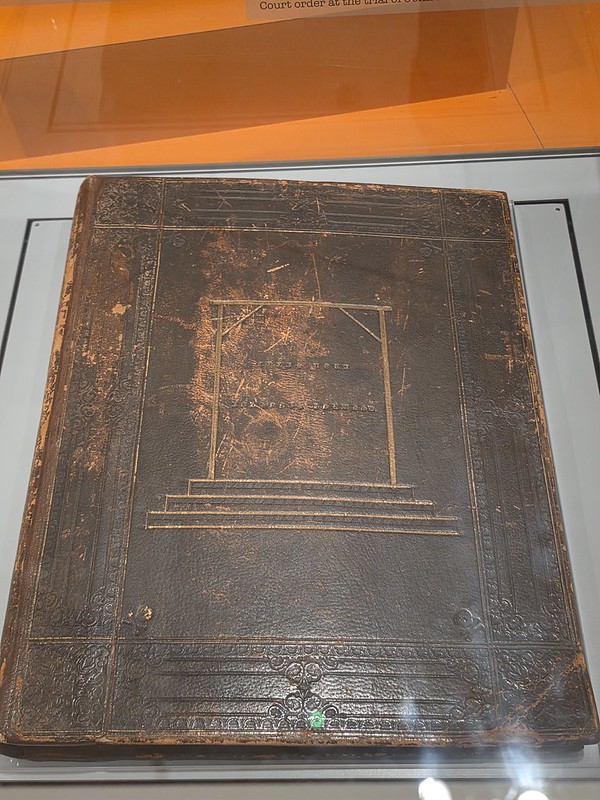
    There are some museum exhibits which might make visitors stop because they are beautiful, and some because they are historically important. Then there are others which have an exhibition label next to them noting that “This book was bound in human skin” and it’s a little hard to not do a double take at that. This book relating to John Horwood (1803–1821), displayed at M Shed, is certainly a surprising exhibit to discover.

    Horwood was an eighteen year old from Hanham, near Bristol, who became the first person publicly executed at Bristol New Gaol. He had been convicted of the murder of Eliza Balsum, who died after being struck on the head by a stone he had thrown. After his execution, his body was dissected by the surgeon Richard Smith (1772–1843), and part of Horwood’s skin was tanned and used to bind a collection of papers relating to the case, trial, execution and dissection. I like archiving and all that, but less so when there are bits of human anatomy involved with the whole process, it’s not something that I’d want to handle.

    What makes the story even more unsettling is also the afterlife of Horwood’s body. His skeleton was retained long after his death and, for a long time was kept in a cupboard, with the noose still around its neck. Eventually, that part of the story was corrected as in 2011, Horwood’s remains were buried beside his father in Hanham, exactly 190 years after his execution. That burial really matters in many ways as it gave him, belatedly, something that the legal, medical and civic systems of his own time had rather comprehensively failed to provide which is a measure of human dignity. And his guilt has been questioned by historians, so it’s not entirely clear that his punishment was just or fair.

    The difficult question is whether the book should be on display at all, although the museum doesn’t seem to address that at all, although others have. Although it might not be possible to bury the book in the way that Horwood’s skeleton was, I wonder whether human remains need to be almost a centrepiece in a museum like this. The museum is very much on the side of social history, inclusion and diversity, so I’m a little surprised that they haven’t addressed the subject of human remains on display, even if just by changing how they’re exhibited.
  • Bristol – M Shed (Elizabeth Shaw Chocolates)

    Bristol – M Shed (Elizabeth Shaw Chocolates)

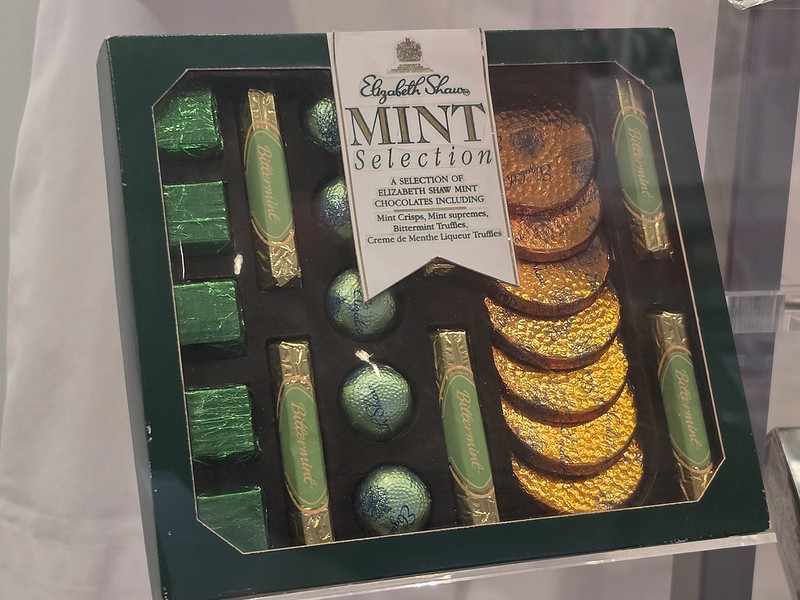
    There is something wonderfully reassuring about seeing an Elizabeth Shaw Mint Selection in a museum, because it occupies that exact little space between industrial history and chocolate. With chocolate and youth, it’s easy to remember the boxes, the wrappers, the slightly formal act of offering one round after dinner and the delicate social calculation of whether taking a second mint would look greedy. Naturally, I would never have this problem, as I conduct all such matters with dignity, restraint and only occasional disgrace.

    The Bristol connection is not quite as simple as imagining Elizabeth Shaw herself standing in a Bristol factory inventing mint chocolates. The brand began with Elizabeth and Patrick Joice, who started making honeycomb mint-flavoured chocolate crisps in the 1930s. The name “Elizabeth Shaw” combined Elizabeth’s own name with that of Page & Shaw, the confectionery firm where she had previously worked, so it’s not really as authentic as people might think which does feel a little sub-optimal.

    The Bristol part of the story comes through the Greenbank chocolate factory, which became associated with Elizabeth Shaw after a series of mergers and moves within the confectionery industry. Bristol already had a long chocolate-making tradition, most famously through Fry’s, and the Greenbank site had its own industrial life before Elizabeth Shaw became the name most attached to it. The city of Norwich also had a chocolate tradition with Caley’s and Mackintosh.

    There is also something very Bristol about the way this story sits between production, identity and reinvention. The Greenbank factory closed in 2006, and the old chocolate-making site has since become part of the city’s wider story of redevelopment. The Elizabeth Shaw lives on and I rather like that it’s currently owned by the Polish company, Colian Holding. And looking at this exhibit made me hungry, part of the reason that I went to Za Za Bazaar…..

  • Bristol – Za Za Bazaar and All You Can Eats

    Bristol – Za Za Bazaar and All You Can Eats

    This cavernous restaurant at Bristol Docks is the all you can eat Za Za Bazaar and I thought it might be a sensible location for lunch before going to the craft beer festival that was located around 100 metres away from it. As ever, sensible might be doing some heavy lifting there, but it was at least a plan that eating enough provided a stable foundation for an afternoon of beer. This sort of practical thinking is what has held civilisation together for centuries…..

    There’s a team member downstairs who books customers in and she asked me if ninety minutes was long enough. I debated this with myself and decided that it probably was, although it later transpired that they weren’t enforcing the arrangement anyway. I didn’t want to be rushed, particularly when there were spring rolls involved, so I thought I’d be efficient in my food collection.

    There’s no denying that this restaurant is large and it can apparently seat up to 1,000 people which is a little ridiculous. The pricing wasn’t too onerous, £22 for all you can eat and all the soft drinks you could possibly want.

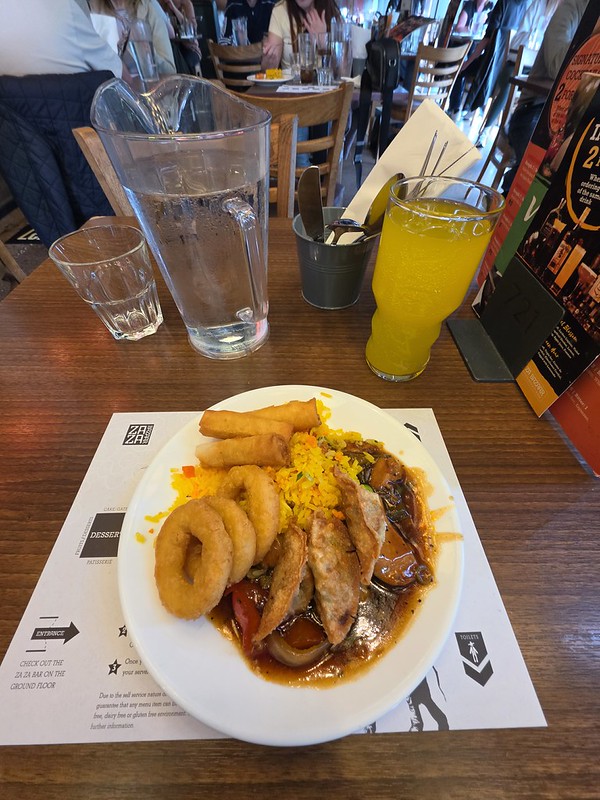
    Being the food expert that I obviously am, I got muddled up and thought these were onion rings when they were calamari, but both work for me. There’s a heap of randomness there and a fair amount of beige with spring rolls on top of the chicken in black bean sauce.

    Some of the food, such as pasta and fish &chips, is made to order but there is plenty of choice available for those who didn’t want to wait. I didn’t much want to wait as I felt that there was enough to choose from.

    The kitchens were all open and a fair number of the options were being made from scratch.

    The design vibe is meant to be Asian street food and I liked the whole set-up.

    OK, I like beige. My friend Ross would have very much liked this whole arrangement. I did wonder if there was an optimum sequence of plates, but I quickly got distracted when I saw a food that I liked.

    Curry with onion rings, keeping it classy as ever….. The scale inevitably means this isn’t a delicate and calm location, but all the food was hot and it seemed to have a decent turnover.

    This is one of the largest restaurants that I can recall visiting and I remember taking photos at this point as I realised that I’d had enough food. It did all seem to be a bit of a relic from the late 2000s and early 2010s when there was more dining confidence than there is perhaps now.

    And a quick dessert.

    Or two.

    Overall, I rather liked this set-up and some of the food really was quite decent, the curries had a depth of flavour, the meat was tender, the food retained some texture and it was certainly all acceptable. This was meant to be something of a chain, but they opened a second in Newcastle and never made it any further and that one has now closed. They had hoped to open an outlet in Norwich, but that never came to pass.

    I do wonder why all you can eat restaurants are falling away in the United Kingdom and the US. Although food prices and staffing prices are going up, the turnover at places such as this is high and it looks from the outside as if it’s profitable, but appearances might be deceptive. However, they’ve been trading here for over a decade, so it’s certainly working at this quite premium location in Bristol. But back to my decision as to whether this was a good choice for a craft beer festival, absolutely it was even though I thought I might have overdone the chicken curry and Vimto…. I might come here again I’ve already decided….

  • Bristol – M Shed (Kids Pinching Lead in 1796)

    Bristol – M Shed (Kids Pinching Lead in 1796)

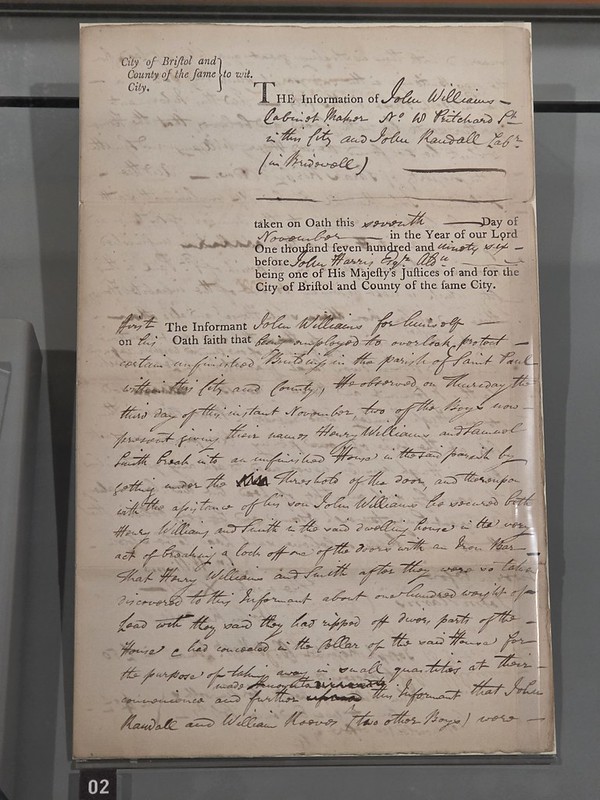
    This is a witness statement from 1796 and the text was as described by John Williams who had been employed to look after some unfinished houses in the parish of St. Paul’s in Bristol.

    The text reads:

    “The Information of John Williams No. 10 Portland Street in this City and John Randall No. 6 in Stokes Croft taken on Oath this seventh Day of November in the Year of our Lord One thousand seven hundred and ninety six before John Harris Esq. Mayor being one of His Majesty’s Justices of and for the City of Bristol and County of the same City.

    The Informant John Williams for himself on his Oath saith that being employed to overhaul, protect certain unfinished Buildings in the parish of Saint Paul within this City and County, situate on Tuesday the third day of this instant November, two of this deponent’s men proceeded fixing their names Henry Williams and Thomas Smith back into an unfinished House in the said parish by getting under the floor thereof of the room and through into the adjoining one by one John Williams, the second Oath Henry Williams and Smith in the said dwelling house in the room at breaking a lock off one of the doors with an Iron Bar.

    That then Williams and Smith after they were so taken discovered to this Informant about one hundred weight of Lead which they said they had ripped off the roof, part of the House and had concealed in the cellar of the said House for the purpose of stealing and carrying the same away whenever convenience could be had and saith that the Informant that John Randall and William Morris of his other Boys were…..”

    It’s a reminder that pinching lead from buildings is nothing new…. There also used to be a slang term for this crime which was “flying the blue pigeon”, but it was a risky business as there was a risk of this being treated as a capital crime. Youngsters would have likely ‘got away’ with transportation for seven years, but stealing a lot of lead was no minor matter. Some things never change…..

  • Bristol – 2026 Craft Beer Festival (Left Handed Giant)

    Bristol – 2026 Craft Beer Festival (Left Handed Giant)

    The next brewery I meandered to was Left Handed Giant who are a local Bristol brewery who have been operating since 2014. I’ve had several of their beers before, usually sours such as the rather lovely Early to the Party and the Corporate Conference that was available at the 2025 Norwich Beer Festival (and indeed was my favourite beer on the first day).

    I’ve also had some of their beers at their Bristol brewpub, although I haven’t yet made it to their taproom in the city and I hadn’t realised that they also operate Small Bar and Renato’s in Bristol. That all combines to more places to add to my ever growing list of places to go.

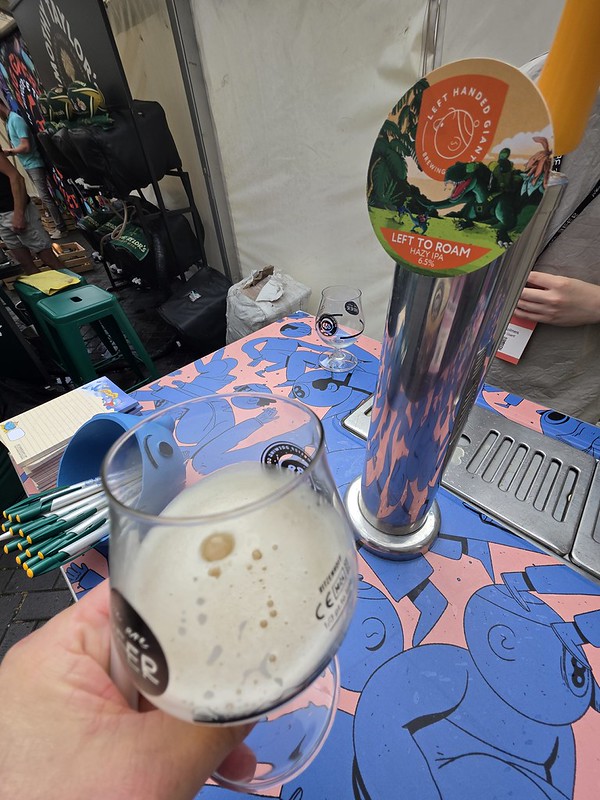
    Anyway, this beer was the 6.5% ABV Left to Roam which is relatively new out and is suitably hoppy, hazy and with some stonefruit to add to the mix.

  • Bristol – M Shed (Painting of Nicholas Pocock by Isaac Pocock)

    Bristol – M Shed (Painting of Nicholas Pocock by Isaac Pocock)

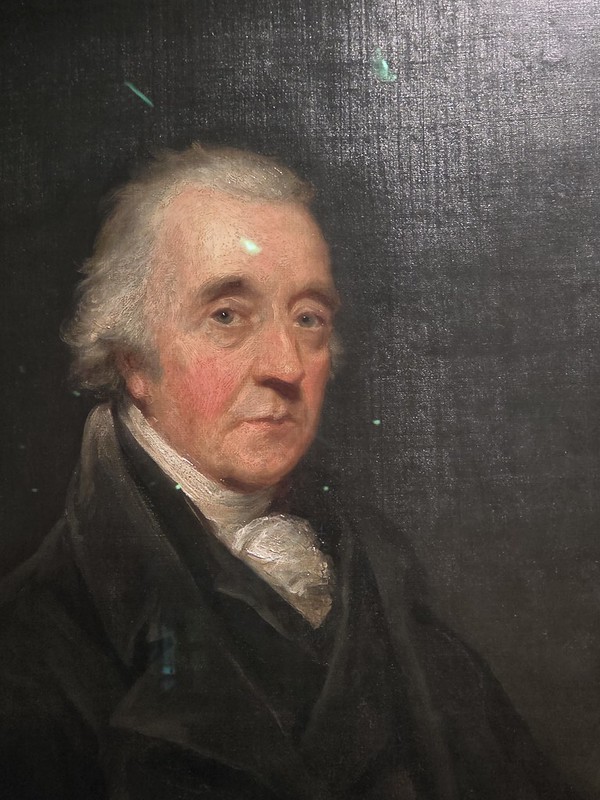
    Nicholas Pocock (1740–1821) perhaps has exactly the expression one might expect from a man who had spent part of his life at sea and the rest of it painting naval battles. This portrait was painted around 1810 by Isaac Pocock (1782–1835) which is all rather lovely. As an aside, I’m often impressed by artists from this period who painted naval battles, there’s an awful lot of rigging that must have been a bloody nuisance to paint.

    At least here Isaac hasn’t had to deal with ships, storms, cannon smoke and the other elements that are usually involved in naval paintings. As evidence of that, here’s one of his father’s paintings.

    I thought that he looked more disapproving close-up, but he was probably exhausted by his naval life and perhaps it’s just a look of being rather weary. Isaac Pocock went on to become a dramatist and author as well as a painter, but he died when not especially old.

  • Bristol – 2026 Craft Beer Festival (Good Chemistry)

    Bristol – 2026 Craft Beer Festival (Good Chemistry)

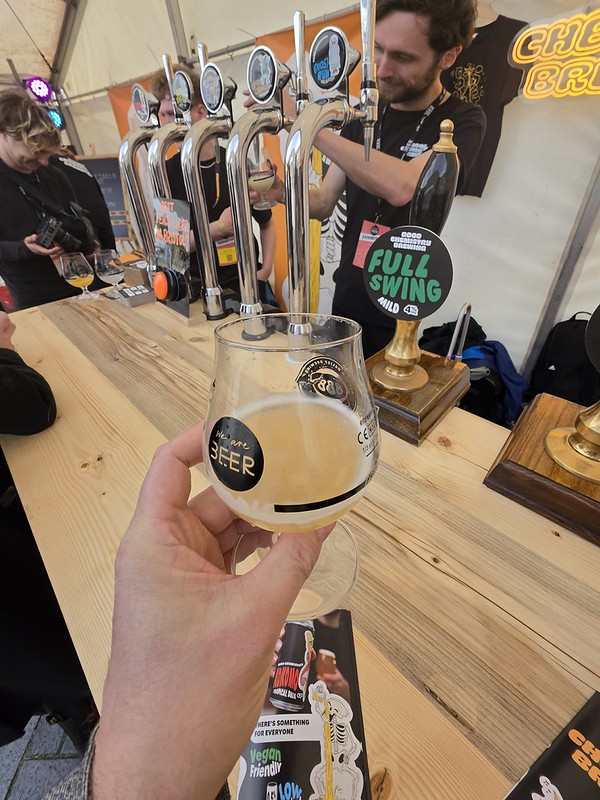
    I’ll work through the breweries that I had beers from at the festival and I’ll note now that the beer was free and it was me that chose how much to have, they weren’t short measuring or being tight with pours. Good Chemistry were one of the most engaging of the breweries and they had an interesting selection of keg beers available.

    The first beer I went for was the Peach and Love which is their fruited lager that is inevitably going to be compared to Jubel. I’m not really much one for lager, although I prefer it when cut with fruit, but this one was gentle, soft and had a suitable peach flavour to it.

    The second was Loose Change, a 3.4% ABV sessionable IPA which had tastes of stonefruit and was suitably light. These lower ABV IPAs seem a very sensible idea for the summer months.

    It reminded me to have a look on Untappd about what I’ve had before from the brewery and I’ve had their beers at the Rose, the Artichoke and the Leopard in Norwich, as well as at Norwich Beer Festival. My favoured beer so far from them has been the Smooth Operator, a 6% ABV porter collab that they did with Abbeydale Brewery.

    Anyway, they seemed like really nice people and although I didn’t have time on this trip, I note that they have a reopened taproom in Bristol that I’ll have to get around to visiting in the future. They brew cask and keg beers, but, as so often happens, I only tried the keg ones here.

  • Bristol – 2026 Craft Beer Festival (Setting Up)

    Bristol – 2026 Craft Beer Festival (Setting Up)

    I had a free ticket for Bristol Craft Beer Festival, of which much more soon, and this is the view from M Shed of them setting up. There’s something quite pleasing about watching a beer festival take shape, it adds to the anticipation.

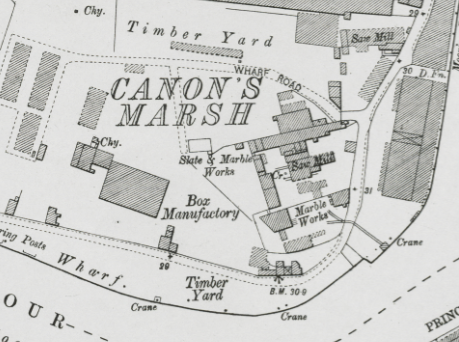
    It was being held at the Ampitheatre which is now something of a performance venue used in the space that was once Canon’s Marsh. The map above is what that looked like in the 1880s, it wasn’t the most used part of the docks and certainly not as polish as today. As an aside, Canon’s House today, behind the Ampitheatre in my photo was built as a regional headquarters for Lloyds Bank between 1988 and 1991, with the building now seen as an excellent example of post-modernist construction. They built the Ampitheatre at this time for the people of Bristol to use it and what better use than a beer festival? Some cities build monuments to kings, generals and statesmen. Bristol, quite sensibly, created a space where people can stand by the harbour with a third of something hazy and wonder whether they are detecting mango.

  • Bristol – M Shed (Campaign to Allow Boys to Climb Chimneys)

    Bristol – M Shed (Campaign to Allow Boys to Climb Chimneys)

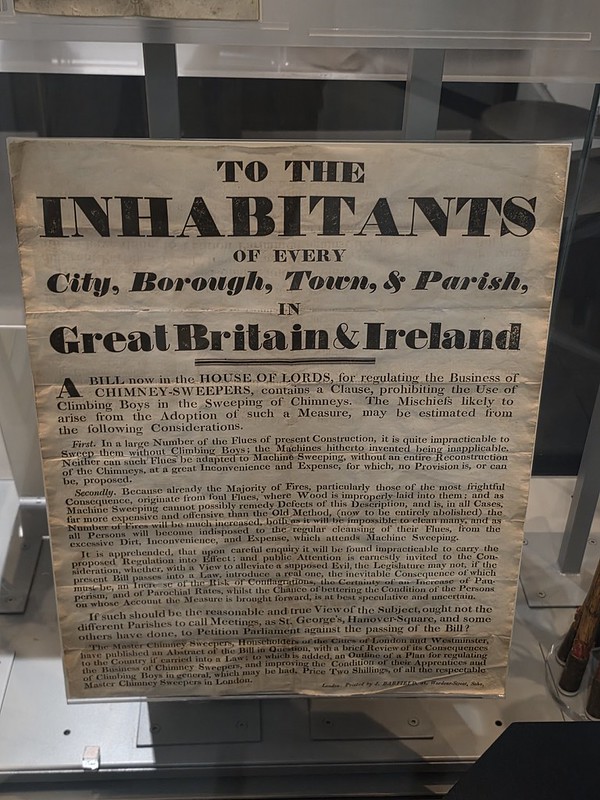
    This is a poster in the museum which sought to oppose plans to stop children being sent up chimneys, which the Master Chimney Sweepers were most annoyed by. The poster reads:

    “A BILL now in the HOUSE of LORDS, for regulating the Business of CHIMNEY-SWEEPERS, contains a Clause, prohibiting the Use of Climbing Boys in the Sweeping of Chimneys. The Mischiefs likely to arise from the Adoption of such a Measure, may be estimated from the following Considerations.

    First. In a large Number of the Flues of present Construction, it is quite impracticable to Sweep them without Climbing Boys; the Machines hitherto invented being inapplicable. Neither can such Flues be adapted to Machine Sweeping, without an entire Reconstruction of the Chimneys, at a great Inconvenience and Expense, for which no Provision is, or can be, proposed.

    Secondly. Because already the Majority of Fires, particularly those of the most frightful Consequence, originate from foul Flues, where Wood is improperly laid into them; and as Machine Sweeping cannot possibly remedy Defects of this Description, and is, in all Cases, far more expensive and offensive than the Old Method, (now to be entirely abolished) the Number of Fires will be much increased, both as it will be impossible to clean many, and as all Persons will become indisposed to the regular cleansing of their Flues, from the excessive Dirt, Inconvenience, and Expense, which attends Machine Sweeping.

    It is apprehended, that upon careful enquiry it will be found impracticable to carry the proposed Regulation into Effect; and public Attention is earnestly invited to the Consideration, whether, with a View to alleviate a supposed Evil, the Legislature may not, if the present Bill passes into a Law, introduce a real one, the inevitable Consequence of which must be, an Increase of the Risk of Conflagrations, the Certainty of an Increase of Pauperism, and of Parochial Rates, whilst the Chance of bettering the Condition of the Persons on whose Account the Measure is brought forward, is at best speculative and uncertain.

    If such should be the reasonable and true View of the Subject, ought not the different Parishes to call Meetings, as St. George’s, Hanover-Square, and some others have done, to Petition Parliament against the passing of the Bill?

    The Master Chimney Sweepers, Householders of the Cities of London and Westminster, have published an Abstract of the Bill in Question, with a brief Review of its Consequences to the Country if carried into a Law; to which is added, an Outline of a Plan for regulating the Business of Chimney Sweepers, and improving the Condition of their Apprentices and of Climbing Boys in general, which may be had, Price Two Shillings, of all the respectable Master Chimney Sweepers in London.

    London: Printed by J. Barfield, 91, Wardour-Street, Soho.”

    The museum notes that this campaign started in 1829 and it did get a fair amount of sympathy, all leading to an Act of Parliament in 1834 which limited itself to increasing the minimum age from which kids were sent up chimneys to be fourteen. During the debates, there was furious debate and insurance companies came out on different sides of the argument about what they wanted.

    There were numerous pieces of legislation over the next few decades, most of which were ignored, and it wasn’t until 1875 that the police were able to enforce anyone under the age of 16 being sent up a chimney. There are many jobs in Victorian times that I wouldn’t have liked, but climbing up a chimney covered with soot does sound particularly unpleasant. The 1834 legislation reinforced that children shouldn’t be sent up a chimney that was on fire, as if that needed to be made clear. But different times and all that…..

    One thing that I hadn’t realised is that the 1662 Hearth Tax led to a lot of this, as builders started to create more complex and joined up flues to minimise the tax that they had to pay. This, over time, meant that adults couldn’t easily clean the chimneys, but children aged about six were perfect. Orphaned children were often apprenticed off to chimney sweeps which saved the local overseers of the poor happy as they didn’t have support them.

  • Bristol – M Shed (Edward Colston Statue Plaque)

    Bristol – M Shed (Edward Colston Statue Plaque)

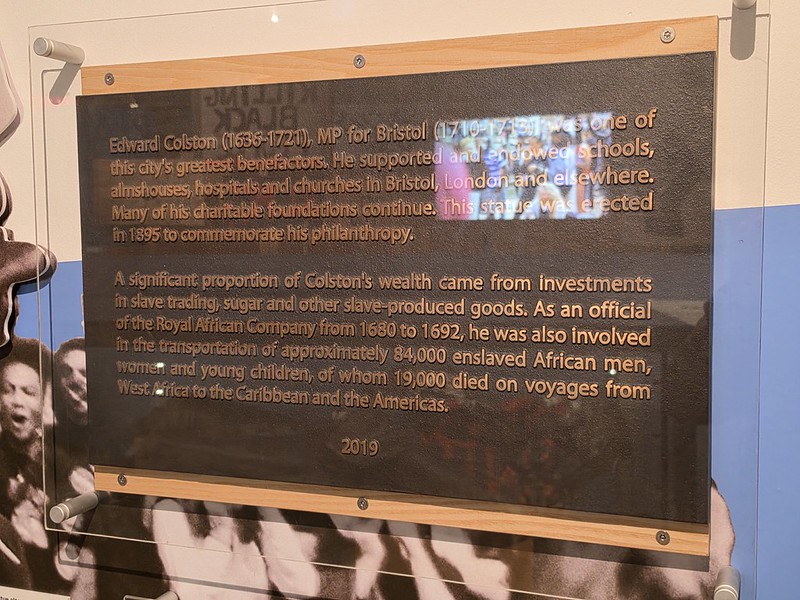
    I’ve already written about the statue of Colston on display in the museum, but in many ways this felt more interesting. It’s the plaque that was placed by the statue a few months before it was torn down, attempting a compromise between the great deal of good that Colston did for Bristol whilst also highlighting his links to slavery and how many people suffered because of his actions.

    I have no view on whether statues stay up or not, it’s not for me to choose. I like statues as they tell a story, but it would be odd for a city like Warsaw to have a statue of a Nazi or similar, some things are just beyond the pale. Either way, it would have perhaps been a travesty for the statue to have been destroyed, so its positioning in a museum tells a story in the way that it should. The story really isn’t just about Colston, it’s about how later generations used his legacy and didn’t take all of it into account.

    The element that I think is intriguing is what would Colston himself think of this? He was one of the greatest philanthropists of his age, but he declared that he didn’t want any pomp with regards to his burial. That was ignored and I’m not convinced, not that I’m an expert, that he would have even wanted a statue erected to him anyway. I rather like that the idea that Colston would be comfortable both with his contribution to charity being remembered alongside the horrors of slavery. Perhaps the defining message here is that the whole thing was a correction to how later generations used Colston and how the Victorians didn’t take the slavery links into account when putting the statue up in 1895, even though they lived in a time when slavery had, in theory, been abolished.