
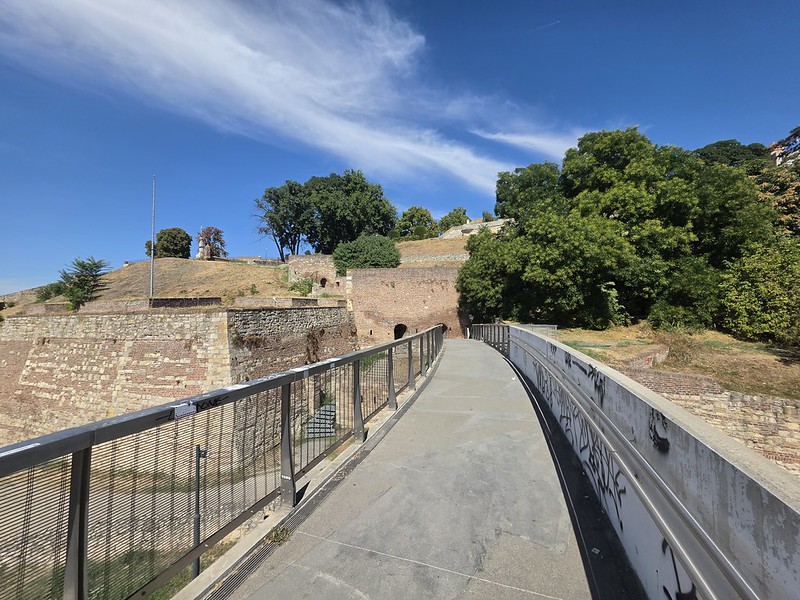
Having walked beside the River Sava in the extreme heat, I began the climb from the river towards Belgrade Fortress using the modern pedestrian bridge near Beton Hala. This new bridge was completed in 2020, it crosses the busy road and former railway corridor which had rather effectively separated the historic fortress from its own waterfront. The bridge was conceived relatively recently as something of a cultural entry, but I was mostly using it to avoid being run over. As for the fortress, I wrote about that when I visited here in September 2024 and here’s a post full of photos in the rain from that day. I think I prefer it in the rain as opposed to extreme heat, but there we go.
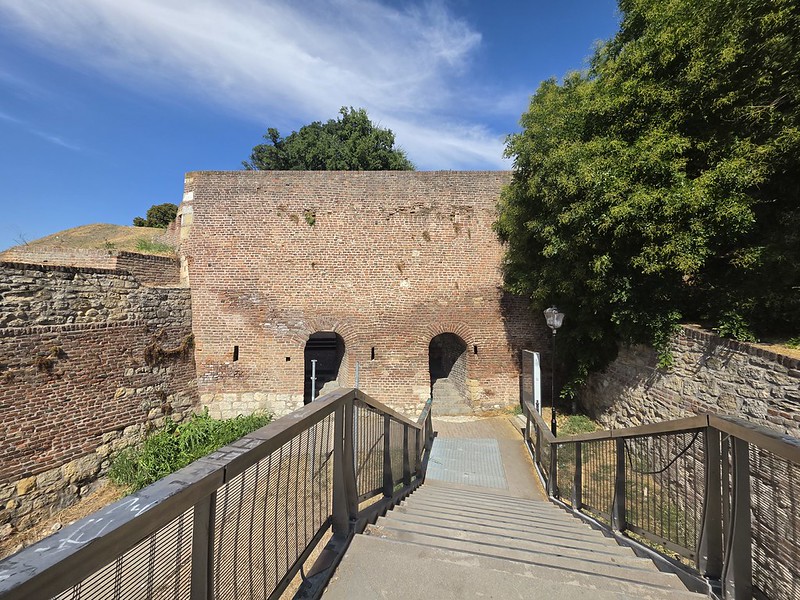
The modern walkway leads into the trench beneath the fortress’s south-western defences and towards the Big Staircase Descent. Despite its name, this is not the grand ornamental staircase in nearby Kalemegdan Park but an eighteenth-century military route constructed during the Ottoman rebuilding of the fortress. It provided the shortest connection between the port on the Sava and the upper fortifications, allowing soldiers, supplies and presumably numerous other people carrying something heavy to avoid taking the scenic and much longer route.
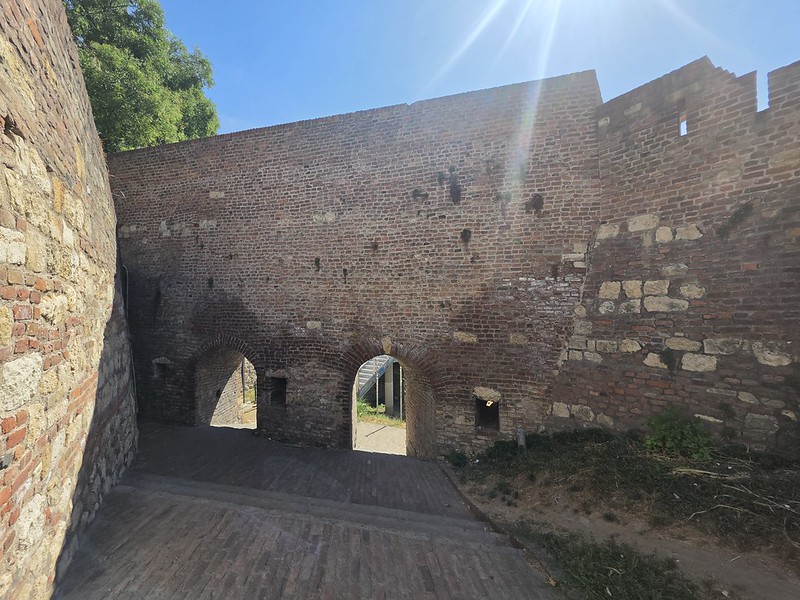
The descent was restored in 2005 and its surviving brickwork reveals how many different periods of construction have been incorporated into the fortress. For centuries, the fortress and the settlement beside and within its defences effectively formed the heart of Belgrade, so there are multiple stages of construction here over the centuries by whichever empire had recently taken over control of the city.
Today the passages instead accommodate tourists climbing up from the river, providing considerably less military excitement but a useful quantity of shade. Given the heat, this was the feature of Ottoman defensive architecture that I appreciated most immediately to be honest. The Ottoman Empire recovered Belgrade from Habsburg control in 1739 and retained a garrison in the fortress until 1867, when the keys were ceremonially handed to Prince Mihailo and the troops withdrew. The defences had therefore helped to secure another 128 years of Ottoman occupation, which by the exceptionally turbulent standards of Belgrade Fortress represented a relatively peaceful interval.