Category: Belgrade

  • Balkans Trip Day 6 – Belgrade to Podgorica Rail Journey (Part 1 to Bijelo Polje)

    Balkans Trip Day 6 – Belgrade to Podgorica Rail Journey (Part 1 to Bijelo Polje)

    I’ve already written about the railway station that is now known as Belgrade Center and here’s our train arriving at the platform only ten minutes later than scheduled. The train had three carriages and Jonathan had warned me that there was no buffet car or food option on board, so I was carefully carrying my snacks. The rail service goes all the way to Bar on the coast, but we decided only to go as far as Podgorica as we didn’t want to arrive late at night.

    There were seat reservations on the tickets but websites said that they were widely ignored, so we ignored them and so did numerous other passengers. Some passengers demanded their seats from other passengers, a guard appeared and there was some movement around the train, but Jonathan and I found seats that we liked and stayed in them as no-one laid claim to them.

    It transpired that the train got quieter and so we moved down to a quieter carriage where I could eat my snacks and Jonathan could throw bread all over the floor or whatever he was doing.

    This is Valjevo, which was struck during NATO’s 1999 bombing campaign against the Federal Republic of Yugoslavia.

    This is Kosjerić and it’s an active railway station, although the building looked abandoned and appeared to have been extensively vandalised.

    The train crossed through the town of Užice. This was the centre of the short lived Republic of Užice, a large area liberated and administered by the Yugoslav Partisans during the autumn of 1941.

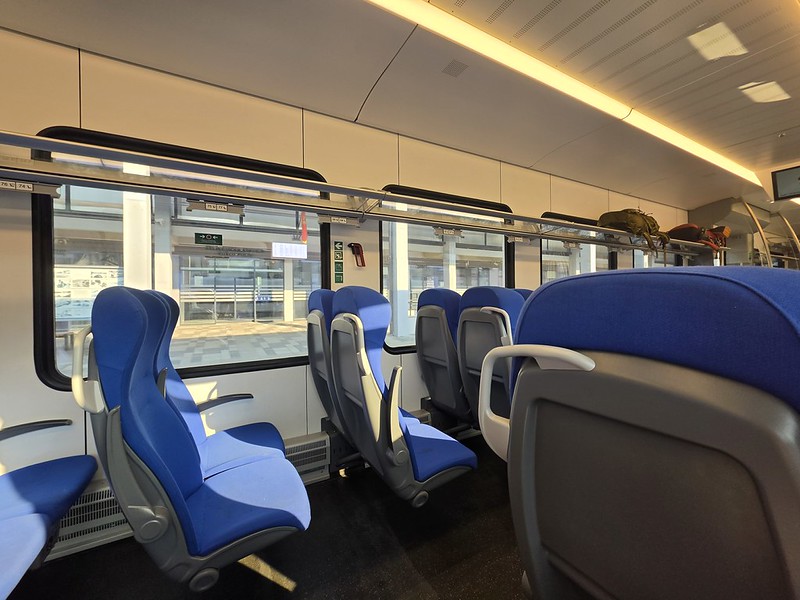
    The seats were broadly comfortable, there was power available and the train was air conditioned so that delighted me. Our tickets were checked a couple of times, but that was efficient as they just scanned the QR code and all was well. There was a vending machine on board, similar to what we had experienced on Georgian trains earlier in the year.

    Passing through the railway station at Branešci.

    This reminded me of some of my journeys across the United States on Amtrak trains in terms of the scenery and slightly slow pace.

    The scenery was already beautiful and became increasingly dramatic as the journey continued. The railway briefly passes through Bosnia and Herzegovina near Štrpci which was quite exciting as it was technically the first time that I had visited this country. However, since I was visiting the country properly later on in the trip, I decided not to count it.

    The train was nearly empty towards the end of the journey, so there was plenty of space. There was Wi-Fi during the journey, although as we crossed into Montenegro I could use roaming so matters improved somewhat.

    We arrived at Bijelo Polje railway station in Montenegro which was the end of the line for this particular train and we were greeted by a man selling cans of drink from his bag. We weren’t tempted, but another passenger was until he realised that this guy wanted €6 for a beer. He didn’t sell much.

    After that we had a passport check from Serbian border control and then their colleagues from Montenegro, with the doors of the train then being opened after the formalities were complete. I realised Jonathan’s passport is a bit dilapidated and I was excited to see if he would be arrested, but he wasn’t, although that would have made for a suitably exciting blog post. Despite another two walks through the train by the drinks seller, the €6 beer remained in the bag, suggesting that even a captive railway audience has its limits.

    It was then time to switch trains for the second part of the journey, but more of that in the next riveting instalment. I also have numerous videos of sections of these journeys, but that’s something to delight my two loyal readers with later on.
  • Balkans Trip Day 6 – Belgrade – Belgrade Center Railway Station

    Balkans Trip Day 6 – Belgrade – Belgrade Center Railway Station

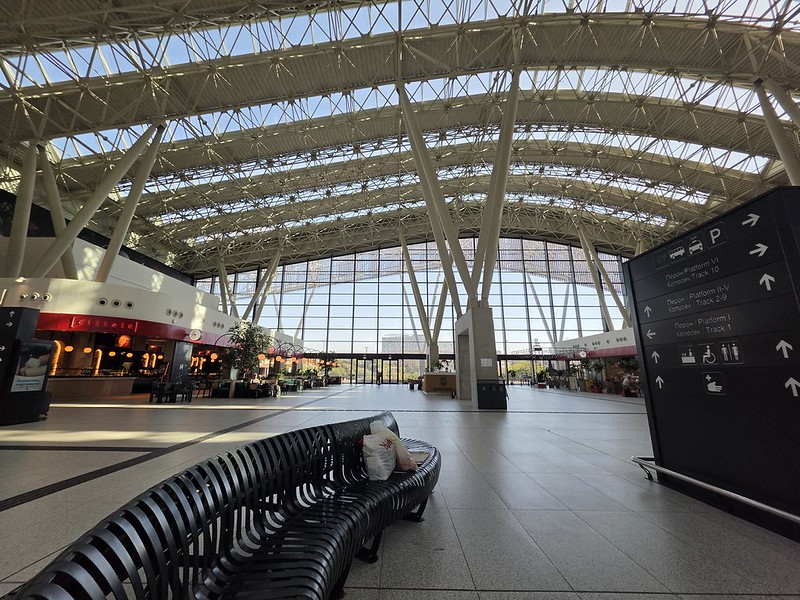
    Belgrade Centre railway station, usually known as Prokop, is now the Serbian capital’s principal rail station, although its name is slightly aspirational about how central it actually is. The station lies south of the historic centre in the Savski Venac district, partly beneath a large concrete deck. Construction began during the 1970s, but progress was intermittent enough to make it one of those infrastructure projects that appeared determined to outlive everyone responsible for building it. It was all a bit sub-optimal and rather like HS2 in the end, although they did get there.

    I arrived at the station from the non decadent side and thought that it was all a bit basic. It transpired that this was the old section of the building which hadn’t really been modernised.

    This is the decadent entrance that has been constructed. Passenger services were introduced gradually, with the station taking on a larger role from 2016 before officially replacing the old Belgrade Main station on 1 July 2018. That elegant station had stood beside the River Sava since 1884 and was once used by the Orient Express, but its platforms and railway land were cleared as part of the Belgrade Waterfront development. I went to see that station on my last trip to Belgrade and it’s something of a ghost building now, a former transportation hub just sitting empty. This meant that the city’s main station moved away from the traditional centre and into Prokop, leaving arriving passengers to discover that Belgrade Centre is more of an institutional aspiration than a useful central location.

    For several years Prokop operated without a proper station building, leaving a rather unfinished first impression for the capital’s principal railway gateway. A modern glass and steel terminal finally opened above the platforms in October 2023, providing ticket offices, waiting areas, shops and improved access. It is now certainly decadent.

    I purchased snacks for the journey from a nearby shop in a housing estate, before I realised that there was a shop at the station building itself. On the bright side, I likely paid a little less for my bag of healthy snacks. This is where Jonathan joined me as he had gone on something of a journey to get to the station, a story that I’ll tell later on.
    And here are the platforms and our service was the 09:45 service to Bar.

    Ready on the platform for our journey to Podgorica, but more of that two-part journey in the next post.

  • Balkans Trip Day 5 – Belgrade – Belgrade Fortress Medieval Reenactments

    Balkans Trip Day 5 – Belgrade – Belgrade Fortress Medieval Reenactments

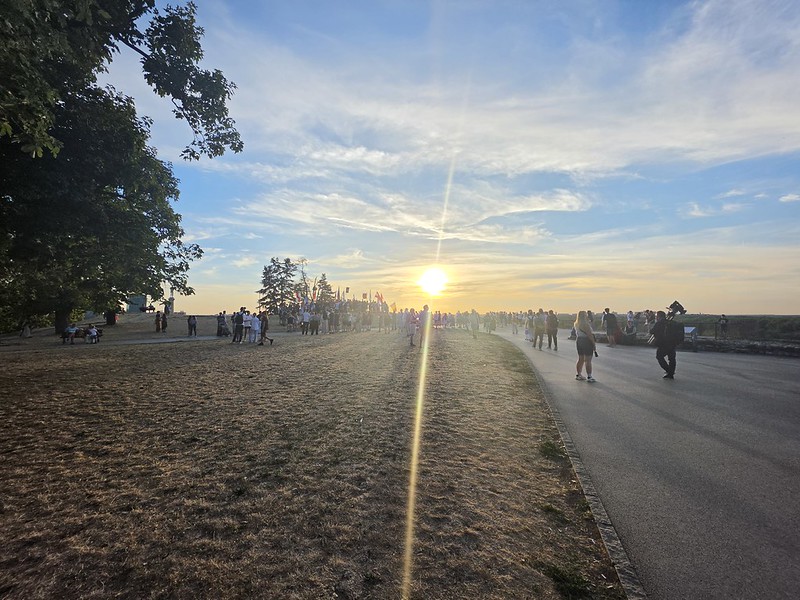
    My visit to Belgrade Fortress coincided with the fifth Beli Orlovi, or White Eagles, Medieval Festival, held in the Upper Town from 4 to 6 September 2026. Organised by the White Eagles association in cooperation with the Belgrade Fortress authorities and the City of Belgrade, it brought together historical re-enactors in armour for displays of medieval combat, archery, crafts, music and dancing. Jonathan was very excited about the whole arrangement, but it sounded as though it might contain far too much organised frivolity for my liking.

    Belgrade Fortress was an especially suitable setting, having been fought over repeatedly by Byzantine, Hungarian, Serbian, Ottoman and Habsburg forces during its long history. It was an entertaining addition to the visit and entirely free, although I resisted joining the combat on the reasonable grounds that my historical contribution is better limited to taking photographs and remaining alive. Some of the flags also seemed historically eclectic, although I lacked both the heraldic knowledge and the courage to challenge an armed man about his choice of banner.

    Anyway, here are some photographs of the proceedings, taken from the relative safety of the unarmed section.

  • Balkans Trip Day 5 – Belgrade – SASA Gallery of Visual Arts & Music and Miloš Bajić’s Hidden Drawings

    Balkans Trip Day 5 – Belgrade – SASA Gallery of Visual Arts & Music and Miloš Bajić’s Hidden Drawings

    The SASA Gallery of Visual Arts and Music occupies part of the Serbian Academy of Sciences and Arts building on Knez Mihailova. Jonathan pointed it out, but otherwise I would probably have walked straight past it. It is not a conventional museum or gallery with a permanent chronological collection, but a gallery presenting substantial temporary exhibitions, which explains why it had felt slightly like a pop up museum to me. During my visit it was hosting Even in Captivity – Freedom! Serbian Art During the Second World War, an exhibition of nearly 300 works examining how artistic creation continued between the German invasion of Yugoslavia in April 1941 and the end of the war in May 1945. It was an extensive and often sombre exhibition, but it was well curated and interesting, especially as there is no admission charge to enter. The exhibition was relatively busy during our visit, although the spacious gallery never felt crowded.

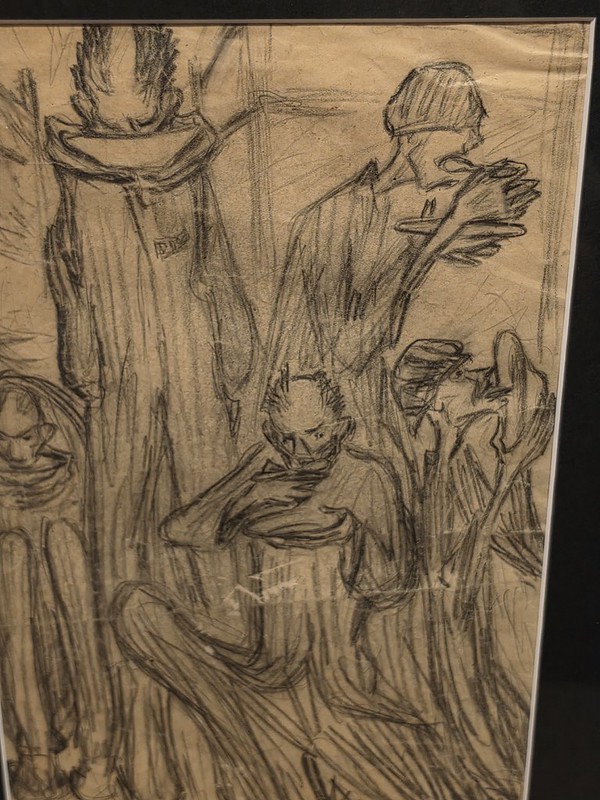
    There is a set of works by Miloš Bajić who began his formal artistic education in 1936, but the war interrupted his studies. He joined the Valjevo Partisan Detachment in 1941 and was reportedly sentenced to death on three occasions, escaping on the final occasion before reaching Belgrade. It was already clear that Bajić was not someone prepared to submit quietly to authority. He was arrested in October 1942, imprisoned at the Banjica concentration camp and transferred to Mauthausen in December 1944.

    Drawing was strictly forbidden at the camp, but Bajić continued to record what he witnessed using whatever scraps of paper he could obtain. The act of drawing was therefore both artistic creation and dangerous testimony, completed in circumstances where possession of the work could itself have brought punishment or death. This was evidently a brave man.
    This pencil drawing, entitled Death on the March, was produced in 1945. Its thin and slightly hurried lines show exhausted prisoners supporting or carrying collapsing bodies, with almost no background detail to distract from their suffering. Knowing what we know now, this is a powerful piece of art because it shows with some strength the tragedy that was unfolding.

    The second drawing, Mauthausen–Ebensee, Receiving Soup, dates from 1944 and records an apparently routine moment which was nevertheless essential to survival. Emaciated prisoners gather around their meagre food rations, with bowls and hands held close to their bodies. This must have been horrendous, the prisoners were ill, weak and in general fear for their lives, so survival must have been their central objective.

    One figure appears to consume his portion immediately while others wait or stand nearby, their faces and bodies reduced to sharp lines and hollow shapes. Bajić did not need to exaggerate the scene, as the physical condition of the prisoners and the concentration with which they attend to the food communicate the deprivation.

    Bajić concealed the drawings beneath his bunk, inside his clothing and buried in the ground. After Mauthausen was liberated in May 1945, he emptied a fire extinguisher, placed the surviving pictures inside it and returned to Belgrade. That extraordinary effort ensured that his private acts of resistance survived as a historical record. They later became evidence of what had occurred in the camp as well as the foundation for his subsequent Mauthausen series of paintings. These two works record different aspects of the same system, one showing death overtaking prisoners and the other the daily effort to postpone it. I hadn’t seen this sort of artwork before and it was one of the more striking series of images that I’ve seen from the Second World War, all sensitively displayed by the gallery.

  • Balkans Trip Day 5 – Belgrade – Samo Pivo

    Balkans Trip Day 5 – Belgrade – Samo Pivo

    Jonathan mentioned a craft beer bar and it looked like rather a decent choice, so we headed off in that direction. When we arrived, I realised that this was the on-trend area of Cetinjska where I visited Zendwich a couple of years ago. Cetinjska occupies part of Belgrade’s former brewery complex and has developed into a collection of bars, clubs and creative spaces, making it an entirely logical home for a craft beer establishment.

    The interior of the bar and Jonathan mentioned sitting outside, but there were a lot of smokers and I can’t have my craft beer impacted by that. It was actually allowed to smoke inside, but fortunately no-one actually was.

    The beer board behind the bar and there was a decent selection of different styles, with the prices being reasonable. There were beers from their own brewery, beers from the Balkans and also a selection of Thornbridge beers from the UK to add some international flavour to the arrangement.

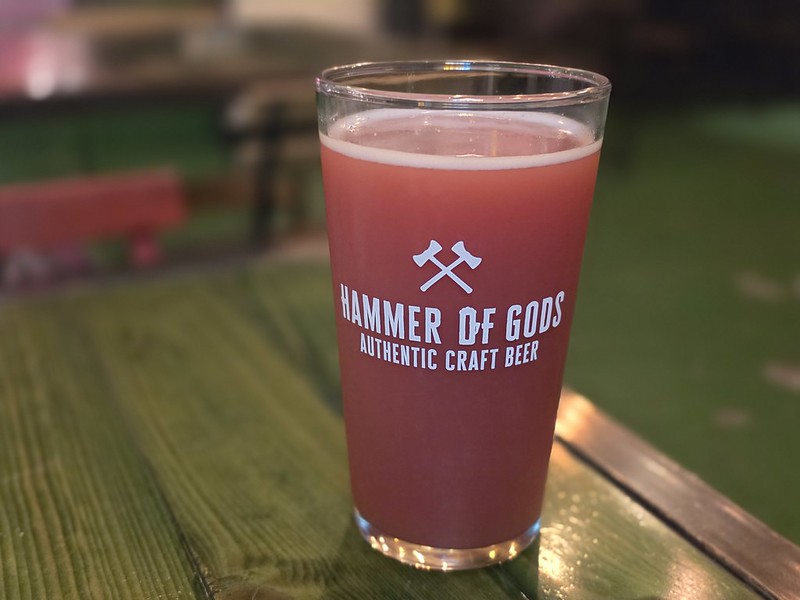
    My first beer was the Gargojl from Samo Pivo themselves and this was lightly tart with a strong raspberry taste and a slightly rustic feel to the arrangement.

    And my second beer was the Salto Pale Ale which was herbal with a slight lemon flavour, also being hoppy, clean and punchy, so all rather decent.

    They have a selection of cans and bottles at the fridges at the end of the bar, with a range of different seating styles available. The service was always efficient and prompt, with the environment being comfortable and clean. They don’t do food other than for some basic bar snacks, but that’s rather advertised in their name, which means ‘only beer’ in English.

    It appears that the bar moved to this current site a few months ago from their Balkanska location, so that would explain why I didn’t see it last time I was in Belgrade. Anyway, this was a very good recommendation that Jonathan had picked up and the general vibe was relaxed and welcoming, although the general smoking culture here does give it something of a different feel.

  • Balkans Trip Day 5 – Belgrade – National Museum of Serbia (Monet’s Persistence)

    Balkans Trip Day 5 – Belgrade – National Museum of Serbia (Monet’s Persistence)

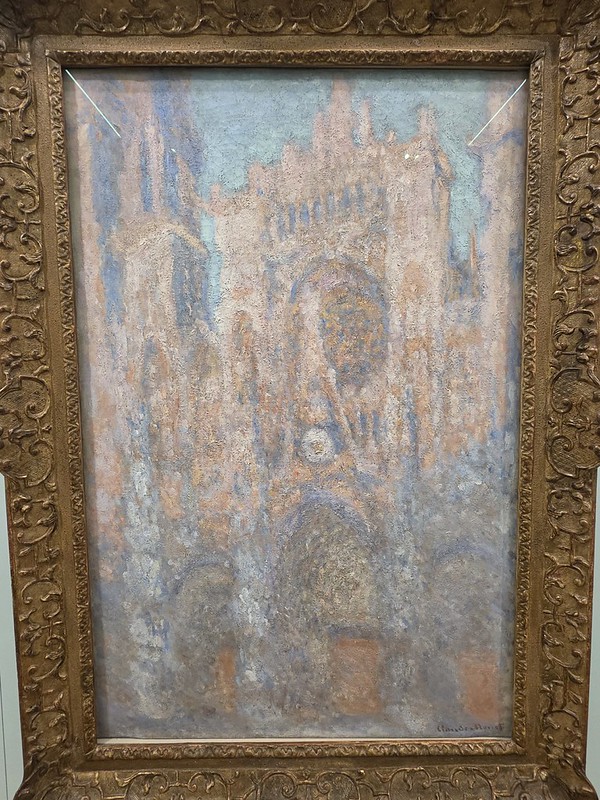
    This painting of Rouen Cathedral was produced by Claude Monet in 1892 and is now displayed at the National Museum of Serbia. It forms part of a series of more than thirty paintings in which Monet repeatedly depicted the cathedral’s western façade under different light and weather conditions. Having already produced an increasingly comprehensive collection of posts about individual objects in this museum, I was reassured to discover that one of the world’s most celebrated artists had essentially done the same building more than thirty times. Compared with Monet, I have shown admirable editorial restraint.

    Monet rented rooms opposite the cathedral and moved between several canvases as the light changed during the day. The architecture remained in place, which was considerate of it, but its appearance continually shifted as sunlight, mist and shadow moved across the stone. The cathedral is therefore less the true subject than the light falling upon it, explaining why parts of the building appear hazy or almost dissolved. In all honesty, I’m not sure that I would have paid much attention to this painting if Monet’s name had not appeared beside it.

    This particular version was acquired in 1939 for the Prince Paul Museum, one of the institutions from which the present National Museum of Serbia developed. Its presence in Belgrade is an indication of the ambition with which European art was collected in the Kingdom of Yugoslavia, and it was a rather unexpected painting to encounter here. Rather annoyingly, it demonstrated that producing dozens of variations on one subject can amount to a distinguished artistic project, so I now feel entirely justified in the museum posts but this is the last one for the moment….

  • Balkans Trip Day 5 – Belgrade – The Pyramid in Knez Mihailova

    Balkans Trip Day 5 – Belgrade – The Pyramid in Knez Mihailova

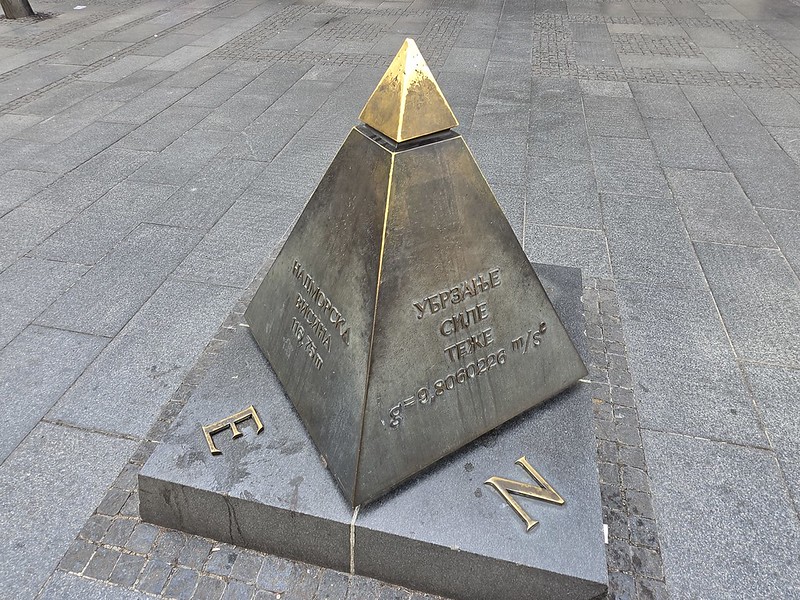
    Standing outside the Serbian Academy of Sciences and Arts on Knez Mihailova, Belgrade’s principal pedestrian street, is this small bronze pyramid which marks the centre of the city. It was installed in 1995 to accompany an Academy exhibition called The World of Measurement and functions as a monument to science rather than marking the entrance to an unexpectedly elaborate tomb. Its inscriptions record the geographical position of Belgrade, including its latitude and longitude, altitude and local gravitational acceleration. The letters around the base indicate the four points of the compass, which was helpful for anyone who had reached the centre of Belgrade but then got muddled up about which direction that they were pointing in.

    The pyramid’s location and measurements are straightforward enough, but its shape has inevitably encouraged some gossip. It has frequently been described as a Masonic symbol, particularly because it resembles the unfinished pyramid depicted on the reverse of the American one dollar bill. Serbian Freemasonry organisations have themselves included it among purported Masonic landmarks in Belgrade, although there is no firm evidence that the monument was actually commissioned or designed by Freemasons. The official explanation remains that it was erected in connection with the scientific exhibition, which is precisely the sort of sensible explanation that conspiracy theorists would expect the Freemasons to provide.

    I stopped to take several photographs, meaning that if it is part of a Masonic conspiracy, I have now documented it thoroughly enough to ensure that I shall never be invited to join. Despite all the speculation, it is sufficiently small that most people walk past without giving it much attention, which is perhaps exactly how a secret society would want things arranged. I’m not sure that I’d like the Freemasons anyway as they sound rather too decadent for me, unless they perhaps organise craft beer evenings.

  • Balkans Trip Day 5 – Belgrade – National Museum of Serbia (Heap of Junk)

    Balkans Trip Day 5 – Belgrade – National Museum of Serbia (Heap of Junk)

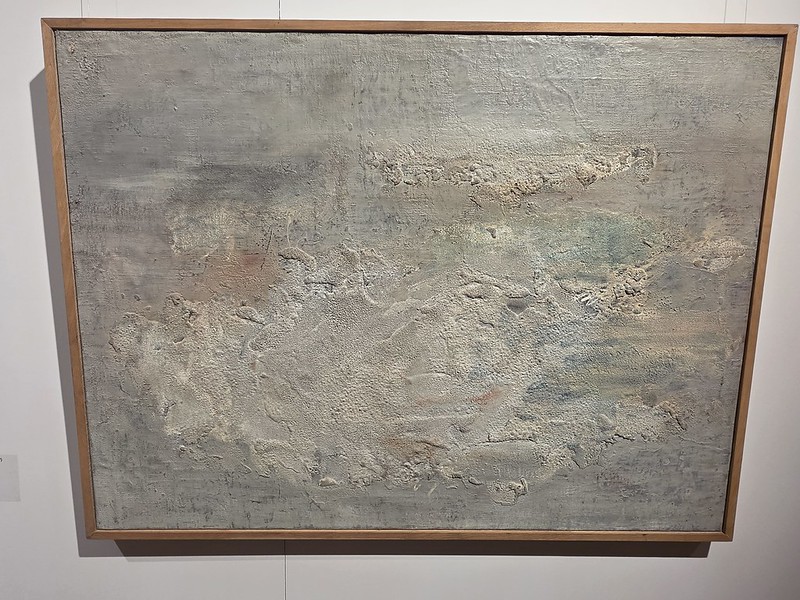
    Back to the National Museum of Serbia in Belgrade and Heap of Junk is not the official name for this artwork, but one that I think feels more appropriate. This 1960 oil painting on canvas is entitled While Listening and is the work of Branko Filipović Filo (1924–1997). My immediate response was that it looked like a heap of junk, or perhaps a section of damaged plaster which had been carefully framed before someone could repair it. There is no obvious person, landscape or object to locate, leaving the visitor to stare thoughtfully at a large grey surface while hoping that everyone else is equally uncertain.

    I’m not entirely sure that this close-up of the painting does a great deal to improve the arrangement. Filo was a Montenegrin and Yugoslav painter associated with the Informel movement, whose artists rejected tidy compositions and recognisable subjects in favour of rough textures, irregular surfaces and the physical qualities of their materials. He experimented with mixing sand and pigment, drawing partly upon the techniques of fresco painting and the rocky landscape of Montenegro. The cracks, ridges and faint traces of colour were therefore deliberate, meaning that Filo had worked rather hard to produce something which looked as though the gallery wall had suffered a serious damp problem.

    Modern art can sometimes become a test of whether visitors possess the confidence to admit that they do not understand it, particularly when everyone nearby is examining the canvas with expressions of profound intellectual engagement. I now understand more about what Filo was attempting, but this has not altered my original conclusion that it looks like a heap of junk and I would not want it hanging above my sofa. The international art establishment will somehow have to continue without my professional involvement, although I’m conscious that I was enthusiastic about unlimited KFC drink refills, so perhaps I should be more measured about my opinions of a celebrated Yugoslav modernist.

  • Balkans Trip Day 5 – Belgrade – Elephant’s Food House

    Balkans Trip Day 5 – Belgrade – Elephant’s Food House

    In a little break from my increasingly comprehensive series of riveting museum posts, here is some food to lighten proceedings. Elephant’s Food House is very much a breakfast and lunch option and it doesn’t stay open into the evening.

    This was a well-reviewed cafe, the prices were cheap, the surroundings were clean and there were some pasta, pizza, sandwich and salad options along with a smash burger section.

    There’s Jonathan busy ordering and this shows that it’s quite limited in space internally, although there is some outside seating as well. Helpfully the team member spoke English, which ensured that the ordering arrangements weren’t overly complex.

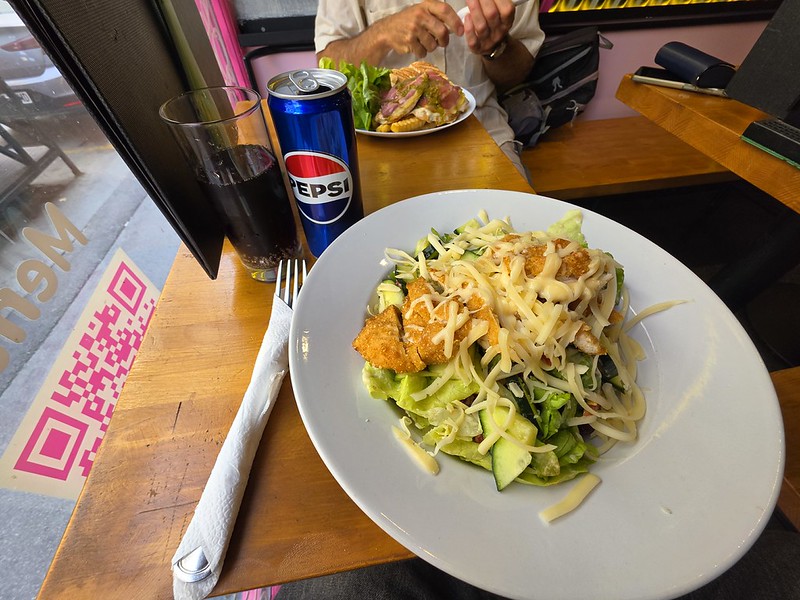
    I opted for the Caesar salad with chicken as I like to eat healthily. Well, sometimes. The chicken was crispy, the salad was fresh and it all represented decent value for money given the generous portion size. It wasn’t a complicated meal, but it didn’t need to be for a lunchtime meal.

    The service was polite and efficient, the food was brought over within ten minutes and the Pepsi was suitably chilled unlike the warm glass that was served with my craft coke in another cafe, but I have moved on from that. It was all really rather lovely, represented good value and was conveniently located in central Belgrade.

  • Balkans Trip Day 5 – Belgrade – National Museum of Serbia (The Person Missing from the Painting)

    Balkans Trip Day 5 – Belgrade – National Museum of Serbia (The Person Missing from the Painting)

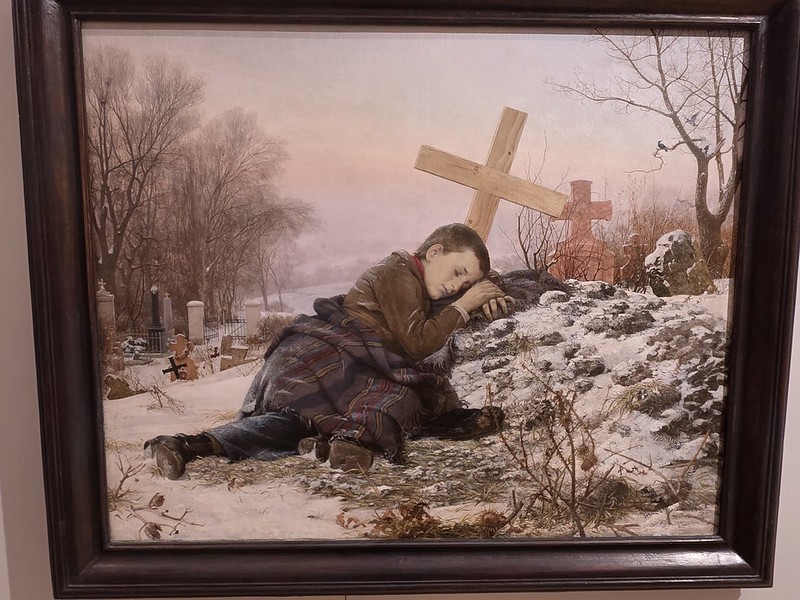
    This 1888 painting by the Serbian realist artist Uroš Predić (1857-1953) is entitled An Orphan at His Mother’s Grave. It depicts a child lying alone in a cemetery, resting his head and arms against the earth beneath a simple wooden cross. The title tells us whose grave it is, but the mother’s name isn’t indicated. Despite her physical absence, everything within the painting is organised around her and the space she once occupied in the child’s life. This was the saddest painting that I saw in the gallery.

    Predić makes the grief feel almost physically cold. Snow covers the cemetery, the trees are bare and the pale sky offers little suggestion of warmth. Dark earth remains visible around the grave and beneath the child, while his patterned covering provides one of the few strong areas of colour. He appears to have fallen asleep while holding himself as close to his mother as he now can, an ordinary physical gesture made devastating by the barrier between them.

    The painting does not explain who the child is, how his mother died or what will happen when he wakes. The mother is missing from the canvas, but her absence fills it completely, making her the most important person in a painting in which she never appears. It’s emotive and it’s not clear to me who would have purchased this, it’s not a painting that I’d want on my wall. Incidentally, Predić was prolific, he painted over 1,600 artworks in his lifetime.