Tag: Belgrade Fortress

  • Balkans Trip Day 5 – Belgrade – Belgrade Fortress Medieval Reenactments

    Balkans Trip Day 5 – Belgrade – Belgrade Fortress Medieval Reenactments

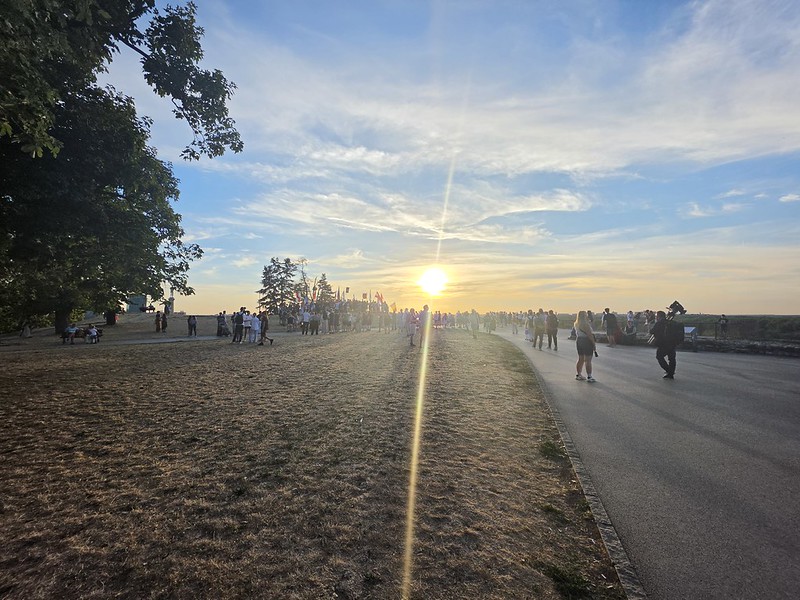
    My visit to Belgrade Fortress coincided with the fifth Beli Orlovi, or White Eagles, Medieval Festival, held in the Upper Town from 4 to 6 September 2026. Organised by the White Eagles association in cooperation with the Belgrade Fortress authorities and the City of Belgrade, it brought together historical re-enactors in armour for displays of medieval combat, archery, crafts, music and dancing. Jonathan was very excited about the whole arrangement, but it sounded as though it might contain far too much organised frivolity for my liking.

    Belgrade Fortress was an especially suitable setting, having been fought over repeatedly by Byzantine, Hungarian, Serbian, Ottoman and Habsburg forces during its long history. It was an entertaining addition to the visit and entirely free, although I resisted joining the combat on the reasonable grounds that my historical contribution is better limited to taking photographs and remaining alive. Some of the flags also seemed historically eclectic, although I lacked both the heraldic knowledge and the courage to challenge an armed man about his choice of banner.

    Anyway, here are some photographs of the proceedings, taken from the relative safety of the unarmed section.

  • Balkans Trip Day 3 – Belgrade – The Big Staircase Descent to Belgrade Fortress

    Balkans Trip Day 3 – Belgrade – The Big Staircase Descent to Belgrade Fortress

    Having walked beside the River Sava in the extreme heat, I began the climb from the river towards Belgrade Fortress using the modern pedestrian bridge near Beton Hala. This new bridge was completed in 2020, it crosses the busy road and former railway corridor which had rather effectively separated the historic fortress from its own waterfront. The bridge was conceived relatively recently as something of a cultural entry, but I was mostly using it to avoid being run over. As for the fortress, I wrote about that when I visited here in September 2024 and here’s a post full of photos in the rain from that day. I think I prefer it in the rain as opposed to extreme heat, but there we go.

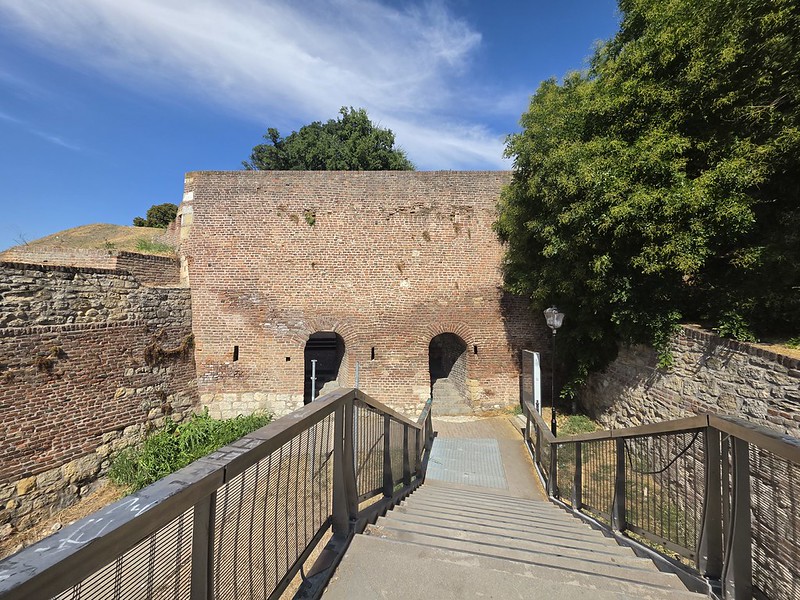
    The modern walkway leads into the trench beneath the fortress’s south-western defences and towards the Big Staircase Descent. Despite its name, this is not the grand ornamental staircase in nearby Kalemegdan Park but an eighteenth-century military route constructed during the Ottoman rebuilding of the fortress. It provided the shortest connection between the port on the Sava and the upper fortifications, allowing soldiers, supplies and presumably numerous other people carrying something heavy to avoid taking the scenic and much longer route.

    The descent was restored in 2005 and its surviving brickwork reveals how many different periods of construction have been incorporated into the fortress. For centuries, the fortress and the settlement beside and within its defences effectively formed the heart of Belgrade, so there are multiple stages of construction here over the centuries by whichever empire had recently taken over control of the city.

    Today the passages instead accommodate tourists climbing up from the river, providing considerably less military excitement but a useful quantity of shade. Given the heat, this was the feature of Ottoman defensive architecture that I appreciated most immediately to be honest. The Ottoman Empire recovered Belgrade from Habsburg control in 1739 and retained a garrison in the fortress until 1867, when the keys were ceremonially handed to Prince Mihailo and the troops withdrew. The defences had therefore helped to secure another 128 years of Ottoman occupation, which by the exceptionally turbulent standards of Belgrade Fortress represented a relatively peaceful interval.

  • Belgrade Trip – Belgrade Fortress (Institute for the Protection of Cultural Monuments)

    Belgrade Trip – Belgrade Fortress (Institute for the Protection of Cultural Monuments)

    20240910_104404

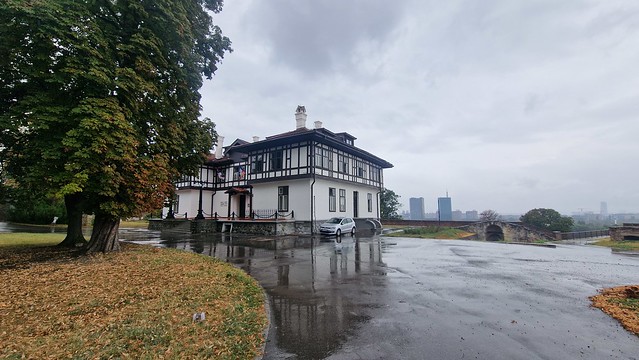
    I liked a repurposed building, this was initially built between 1902 and 1904 for the General Staff of the Serbian Army. It was heavily damaged during the First World War bombings, but was repaired and used as the History Department of the General Staff until 1928. As an aside, if I joined the military, that’s where I’d quite like to work. Brave as I am, I feel my archiving skills would be better than my fighting skills. Anyway, I digress. The building then became used as a home for the military museum in 1937, but they were moved out in 1961 and it was given to the Institute for the Protection of Cultural Monuments. I do wonder why such a lovely building that would make a fine museum has been given over to the organisation that likely hands out buildings that would make fine museums, but there we go.

  • Belgrade Trip – Belgrade Fortress (Views)

    Belgrade Trip – Belgrade Fortress (Views)

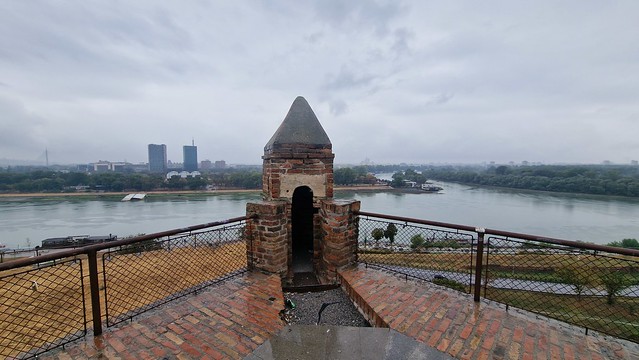
    Just photos of the view from the Belgrade Fortress. It’s evident why they built the fortress on a high point where two rivers meet, but this always proved to be a defensive challenge for the occupiers. As an aside that I hadn’t realised, this is effectively where the First World War began on 28 July 1914 when the Austro-Hungarians attacked Serbia at this point.

    20240910_103458

    20240910_103500

    20240910_103601

    20240910_103604

    20240910_103907

    20240910_103909

    20240910_103913

    20240910_103955

    20240910_103958

    20240910_104139

    20240910_104155

  • Belgrade Trip – Stefan Lazarevic the Despot Statue

    Belgrade Trip – Stefan Lazarevic the Despot Statue

    20240910_104939

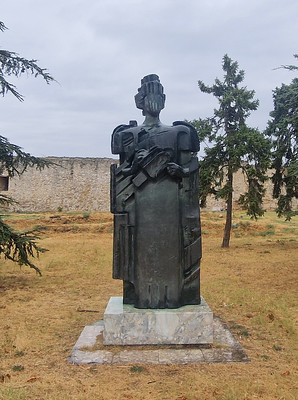
    Many things in this world puzzle me, and one of these conundrums is why a man known as a despot is revered within the Serbian Orthodox Church and has a rather nice little statue of him within Belgrade Fortress. This mystery was solved when I discovered that in many parts of the Balkans, the word ‘despot’ used to be bestowed on the sons of reigning emperors. The word meaning has changed somewhat since the eighteenth century, but this has also happened with the words ‘dictator’ and ‘tyrant’ which now have negative connotations.

    Back to Stefan (1377-1427), who we (well, I) now discover is something of a hero to many Serbians. To them, he used the periods of peace to help build Belgrade up militarily, economically, politically and socially, so he’s seen as something of a reformer. He was also something of a supporter of the arts and a writer himself, he sounds quite the modern man. Interestingly, on the Serbian Wikipedia, he’s known as Stefan the Despot, but on the English version he’s known as Stefan the Tall. I can see why I might have got the wrong first impression here.

    Anyway, if either of my two loyal blog readers are interested, there’s lots more about him on Wikipedia.

  • Belgrade Trip – Belgrade Fortress (Zindan Gate)

    Belgrade Trip – Belgrade Fortress (Zindan Gate)

    20240910_102734

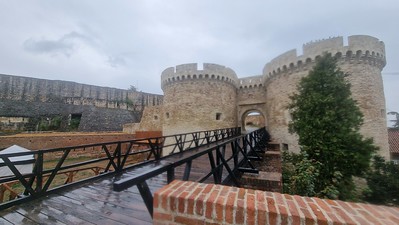
    Once again, I won’t be winning any awards for photography with the blurry photos, but it was raining for the entire time that I was at the Belgrade Fortress which has led to some (well, quite a lot) sub-optimal imagery. Belgrade Fortress has one of the most challenging histories to unpick given how many times it has been raided, besieged, stormed, attacked and so on, but this is the Zindan Gate or the ‘dungeon gate’.

    The gate was originally built by the Hungarians between 1440 and 1456 and was the first part of the fortress to be constructed with cannons in mind. It worked for a while, but then the Ottomans took the fortress in 1521, but they didn’t do much more with the gate because the frontline had moved on from Belgrade and they didn’t need to defend it. The Austrians decided to get a bit aggressive for a while, indeed hundreds of years, and it bounced between their occupation and the Ottomans who would take it back.

    20240910_102909

    The rear of the gate. Reminding me of the rather aspirational modernisation of Carcassonne Castle, the current design of the gate is modern and dates back to the 1938 restoration which gave it an appearance which it had never had. It’s possible to walk all around the gate and it has a more elevated position than might be evident from these photos.

    20240910_103039

    Views from the top of the gate over the River Danube. There’s a wooden bridge now in front of the gate, this is recent, but there was once a drawbridge designed to keep the ruffians out. Today, it’s one of the main entrances into the Belgrade Fortress, a large complex which is free of charge to enter and there are plenty of interpretation boards to help explain the history of the site.