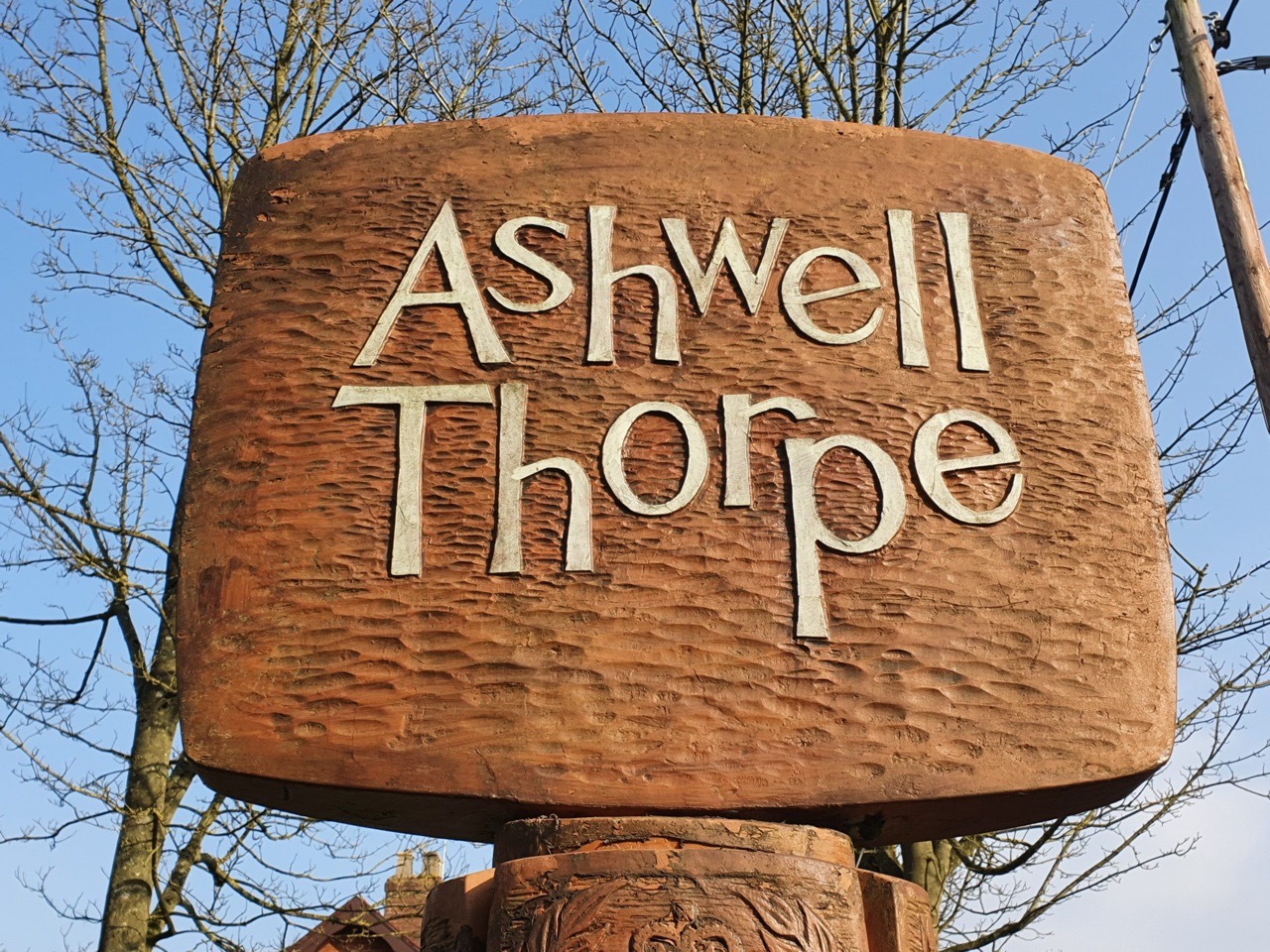
As another one of my random asides, I thought that this was one of the more interesting and creative village signs that I’ve seen. Village signs became popular in the early twentieth century when King Edward VII saw a sign in Norfolk that he liked and he thought that they were a marvellous idea, so the numbers spread quickly.
I thought that this was all rather modern in how it looked.
However, the sign was created back in 1977 to mark the Queen’s Silver Jubilee, and it appears to be well ahead of its time. The current sign is some sort of more plastic replacement for the original which seems to have somehow fallen apart in the 1990s, but the design was kept exactly the same (I think).
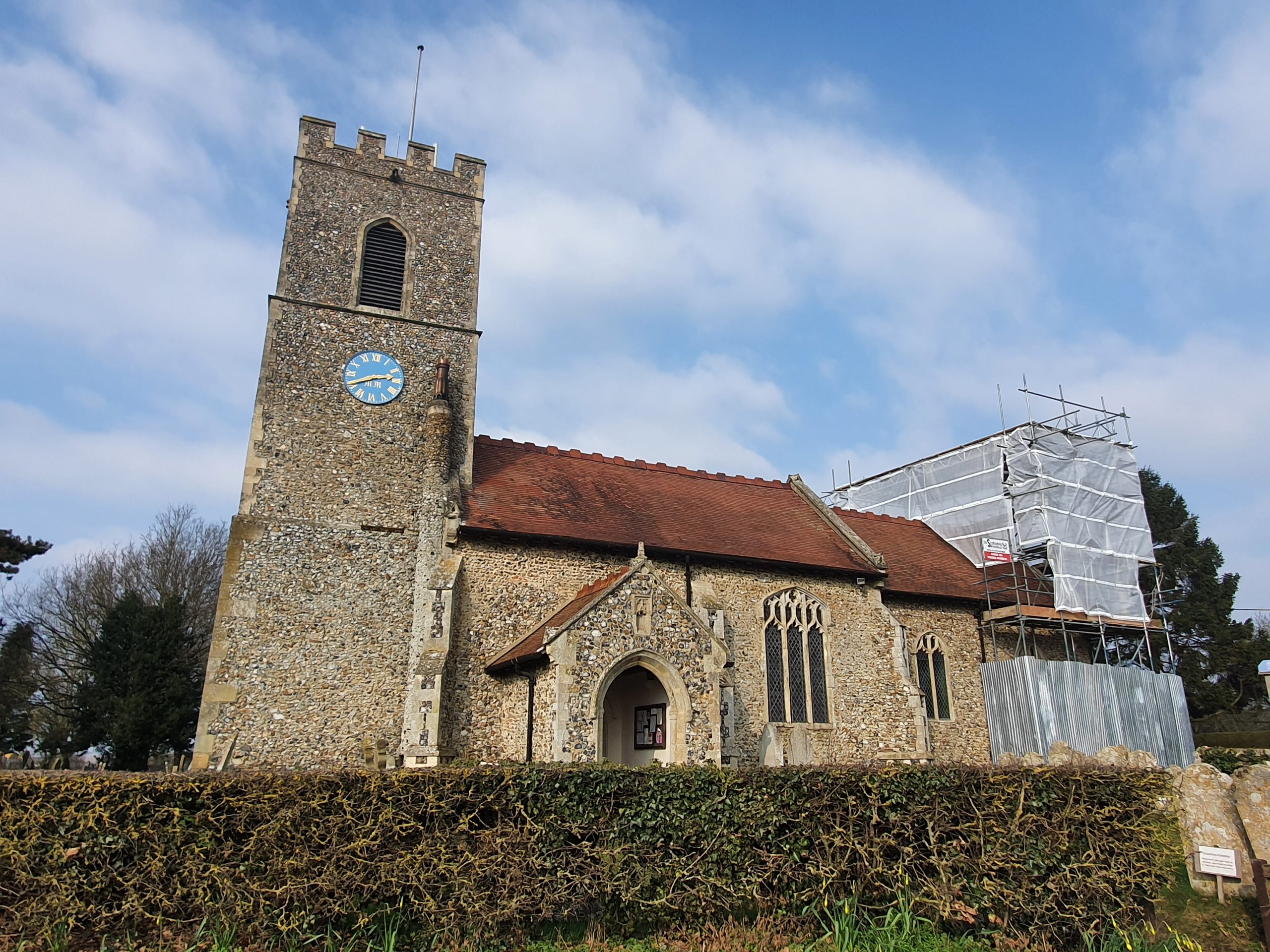
All Saints Church stands behind the village sign.
This depicts the tombs of Sir Edmund de Thorpe and Lady Joan de Thorpe (and dogs at their feet), located in the church.
And perhaps my favourite, the dragon door knocker thing (that’ll have to do as my technical explanation) from inside the church.
And here’s the real one. Unfortunately, the church was locked so I couldn’t get photos of the tombs.
Definitely a very creative village sign, with the style of font (I mean in terms of printing, not the font in the church) still feeling modern.
Also, whilst trying to search for more information about this sign, I found an article from the Sunday Mirror in 1978 which noted:
“Farmer Cyril Muskett has dropped plans for a US trip by Concorde and is giving the money to his local parish church at Ashwellthorpe in Norwich for their church repairs”.
On the 29 to 31 May 2021, the LDWA’s 100 mile event will be taking place. Unfortunately, national restrictions mean that the Y 100 Sir Fynwy won’t be taking place as hoped, when in more normal times the South Wales group would have welcomed hundreds of walkers. Instead, there is the chance for entrants to walk a 100-mile route of their choice anywhere in the country, so the event has more of a national feel this year. And it’s fine to enter to do a shorter distance, with anyone walking 50 miles in 24 hours qualifying for the 2022 Trans-Pennine 100.
I’m taking part in the 100 and I’ve been compiling some resources relating to that. When the new LDWA web-site is launched, this and lots more other material relating to the event will be copied there. Over the next few weeks, I’m speaking (well, writing) to entrants on the 100 and following their efforts up to, and after, the big day. We’ll be using the text from these interviews and updates on social media and also perhaps in Strider, the LDWA’s rather excellent magazine which is sent to our 10,000 members. Hopefully it’ll help inform, educate and inspire others to take part or become involved with the LDWA in other ways.
For anyone who wants to take part in the event, have a look at the SI Entries page, or further information at the LDWA’s web-site.
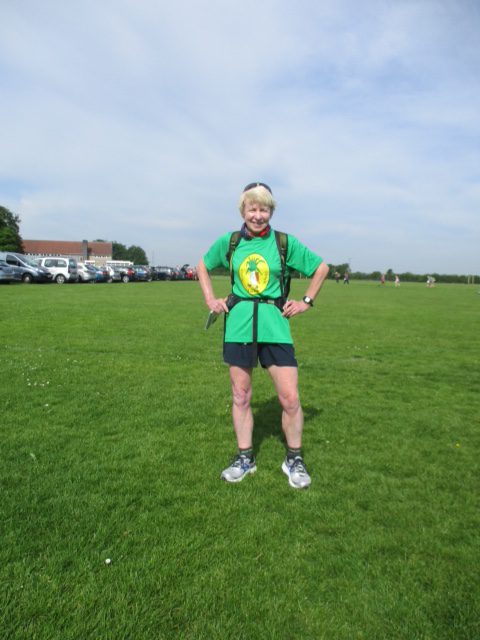
And this interview is with Kathy Tytler and the Percy Pigs is a great idea, I don’t think that I had them on my extensive food list. Not sure I want to experience a chasm in my mind during the latter part of the walk, but it’ll be some excitement I suppose….
You’ve completed numerous 100s in the past, what makes you keep coming back for more?
I love the event. It is great to see everyone and we get to visit so many interesting parts of the country. There is nothing like the feeling of completing the 100, a mixture of pain and ecstasy.
What route are you planning to take?
I have modified the route of the Centurion Running 100 mile trail race, which is based at Goring – the crossroads of 2 National Trails, The Ridgeway and The Thames Path. It uses 4 different out and back 25 mile routes. My modification is that I start and finish at my house, joining The Thames Path at the appropriate point in Reading.
Are you following a GPX route, a map, or do you already know your route well?
I know most of the route very well. The Thames Path from Reading to Goring is home territory, and I have completed The Ridgeway Challenge Trail Race several times. Being National Trails they are well-signed, but of course I will be carrying my maps and compass.
What training are you undertaking at the moment?
I am increasing the time I am spending on my long walks, currently exploring Reading and beyond from my front door – and have discovered some very interesting places. Often I walk with my neighbour, Jocelyne.
Do you think this will be easier or harder than the actual 100 that is traditionally held?
Being on familiar territory should make it easier, and there are fewer hills than on recent 100s. Mentally it may be more difficult, not having the lovely people at the checkpoints to look forward to and the lure of the railway station with its regular trains to Reading, each time we return to Goring
What support will you have during your walk?
Pat Seabrook and I plan to walk together, as we have done on many 100s. I have invited friends to walk sections with us, or to come to Goring to meet us. A couple of people are interested so far. We plan to start at dawn on the Saturday and my neighbour has said to call for her and she will walk to Goring with us and get the train back.
What food treats are you taking with you?
Percy Pigs! and other sweets.… A balance of sweet and salty – pretzels are easier to carry than crisps. A load of flapjack for sustenance. Maybe I can find someone who will let us set up a treats box in Goring?
You took part in the Hadrian 100 that was very tough at night with the weather conditions. Would you say that was your toughest 100?
The part after Greg’s Hut was very hard, not helped when we missed the flags and veered off track. Despite wearing 2 layers of waterproofs I was still soaked to the skin. We got to Dufton and retired. Luckily I wasn’t aware of the devils and demons that are said to haunt Cross Fell (aka Fiend’s Fell).
All 100s are challenging, but the ones I have retired on must be the hardest!
What tactics do you think you’ll use if you feel like giving up on the walk?
As I will be quite near home and I will have told a lot of friends what I am doing, there is the threat or promise that they may pop up at any time along the route.
Are there any wildlife that you’re concerned about meeting on the walk? Sheep, cows, snakes, pigs, or anything else?!
Ghosts on The Ridgeway! It is such an ancient track that there must be some, but I have been there at night many times on The Ridgeway Challenge and it’s been OK
Do you have any foot care tips?
I wish! Every time I think I have got the right shoe/ sock/ foot cream combination, I have problems on my next long event.
Would you say you’re looking forward to it?
Yes I am. After so many cancellations and am hoping that this is something that will go ahead
Have you had hallucinations during a 100 walk?
Yes, one of the things to look forward to. Often entertaining, only occasionally scary – when we reached a black tarmac road after crossing the rough moorland in the Elan Valley on Cant Canalberth, it looked like a chasm and I had to test it before I stepped onto it
Do you have a time in mind of how long it’ll take you to finish?
By starting at dawn we will be maximising the use of daylight and hope to finish before dark on Sunday – for the first time ever!
Do you have any advice for others, one top tip about long distance walking?
Once you get started don’t think of the whole distance, break it down into manageable chunks. Promise yourself something really good when you have finished.
What would you say to anyone thinking about entering the 100, or thinking about doing a 50 mile challenge event, who might be a bit nervous?
If you are worried about the night sections, recce it before in daylight if you can. Night walking is great – enjoy it, try not to worry too much about who or what is out there.
Excuse my veering back to airlines, but I haven’t mentioned them in ages. The press release contains positive news though, it means I can continue to pop into BA lounges until the end of 2022 to enjoy Brewdog Jet Stream….. That’s the follow-up to Brewdog Speedbird, a really quite lovely beer that was produced for BA. I note back in 2019 that I commented that I wasn’t an enormous fan of Brewdog, but that’s changed somewhat now, I’m much more pro-Brewdog 🙂
Anyway, and for anyone who hadn’t seen it, the press release read:
“Members whose Tier Point collection end date falls between 1 July and 31 December 2021, will have their Tier status protected for an additional 12 months, irrespective of how many Tier Points they earn.
It means that no British Airways Executive Club member, including Bronze, Silver and Gold card holders will lose their Tier status in 2021.
This follows members receiving a one-year extension last June
Tuesday 9 March 2021 – To thank customers for their loyalty during an extremely difficult period in its history, British Airways has today announced it will be protecting the Tier status of Executive Club members for a further year. This means that any member renewing in 2021 will enjoy their status for another year, irrespective of how many Tier Points they earn.
Eligible members will receive an additional 12 months on their Tier status expiry date which will be updated in their Executive Club accounts this week.
Niall Rooney, Head of the British Airways Executive Club, said: “As we await the Government’s decision in April and plan for the safe restart of travel as soon as possible, we want to thank our Executive Club members for their loyalty during the most difficult time in the airline’s history.
“We know many of our members haven’t been able to travel, but today’s news means they can keep their benefits for longer and use them when they’re able to fly again. We hope this complements a number of measures we’ve already introduced, including our book with confidence commitment, which provides flexibility and reassurance for our customers.”
Today’s announcement means that qualifying members will have received two years of protection. It also means that no British Airways Executive Club member will lose their Tier status in 2021.
On top of this Tier extension, in February, British Airways announced a six-month extension to all Executive Club vouchers, due to expire before 31 December 2021. This was the third extension that was applied, following similar extensions in March 2020 and October 2020 and included Gold Upgrade Vouchers and American Express Companion Vouchers. British Airways is also adding an additional six-months validity to all new Companion Voucher or Travel Together tickets earned between June 2020 and the end of December 2021.
And finally, British Airways continues to reduce the amount of Tier Points needed to reach each Tier by 25 per cent for those whose Tier Point collection year ends before July 2022.
There are two Commonwealth war graves listed in the churchyard of All Saints Church in Wreningham, and neither of them have the traditional shape and style of stone as the families must have opted for something unique. This made identifying them a little more difficult, although fortunately the CWGC provide details of their approximate location in the churchyard. For anyone wanting to find this grave, it’s in the north-east part, behind the church and just a short walk from the chancel.
This grave commemorates the life of John Henry Ireland, the son of William and Sarah Alice Ireland. It also lists the death of his younger brother, Robert, who died on 12 October 1916 and is commemorated at the Thiepval Memorial in France. There was also another brother who went to fight in the war, but he survived the conflict.
This makes the 1911 census relevant, and indeed poignant, as it is a snapshot of time for this family when there was perhaps lots of hope for the future. The family lived in Wreningham, with William (aged 56) working as a farmer, Sarah Alice (aged 51) looking after the house, William John (aged 26) working as a groom and cowman, Robert Ireland (aged 21) working as labourer, Martha (aged 14), John Henry (aged 11) who was at school and Florence (aged 7). In total, William and Sarah Alice had ten children, of whom one had died by the time of the 1911 census.
When the First World War broke out, John Henry would have been 15 and it must have all felt very distant for him, although his brothers were already off to war and so he would have been aware of what was going on. Perhaps early on he was quite excited about going to fight alongside them, but his brother’s death in 1916 must have been very tough to deal with. And John reacted to that by still going to serve his country, a decision of some bravery.
During his time in the military, he served as a private in the 7th battalion of the Royal West Surrey Regiment, with service number 70053. I don’t know what he was doing in that regiment (I have little knowledge of the make-up of regiments during this conflict), but this had been formed as one of the new armies (or the Kitchener Army). Unfortunately, his war records haven’t survived, another loss during the Second World War air raids over London.
The grave gives more information than usual about the events that led to the death of John. It notes that he was injured at Albert in France on 2 August 1918, which is part of the Somme region. He was unfortunate, the Hundred Days Offensive started in early August 1918 and was the last major conflict on the western front that took place during the First World War. John was returned home to the UK from France, but he then died of his wounds in Newport, Wales on 26 November 1918. John died at the age of just 19. His body was then returned to the village where he grew up, and probably had rarely left before he went off to war.
The 1921 census will be published in early 2022 and for this family, the ten years were certainly ones that they could never have been imagined when they completed their previous forms a decade before. The two young men were injured very close together, although a couple of years apart, as Thiepval is only about five miles from Albert.
On the 29 to 31 May 2021, the LDWA’s 100 mile event will be taking place. Unfortunately, national restrictions mean that the Y 100 Sir Fynwy won’t be taking place as hoped, when in more normal times the South Wales group would have welcomed hundreds of walkers. Instead, there is the chance for entrants to walk a 100-mile route of their choice anywhere in the country, so the event has more of a national feel this year. And it’s fine to enter to do a shorter distance, with anyone walking 50 miles in 24 hours qualifying for the 2022 Trans-Pennine 100.
I’m taking part in the 100 and I’ve been compiling some resources relating to that. When the new LDWA web-site is launched, this and lots more other material relating to the event will be copied there. Over the next few weeks, I’m speaking (well, writing) to entrants on the 100 and following their efforts up to, and after, the big day. We’ll be using the text from these interviews and updates on social media and also perhaps in Strider, the LDWA’s rather excellent magazine which is sent to our 10,000 members. Hopefully it’ll help inform, educate and inspire others to take part or become involved with the LDWA in other ways.
For anyone who wants to take part in the event, have a look at the SI Entries page, or further information at the LDWA’s web-site.
And this interview is with Shirley Hume, who is one of the organising committee for the event which should have taken place in 2020 (and then in 2021), but it wasn’t to be….. And it’s very hard not to be impressed at the sheer number of 100s that Shirley has taken part in, and just to think of all the fuss that I’ve made about just planning to take part in one…..
Is this your first 100?
Number 38 in the official list , but 39 if you count the two in 1990. 2021 would have been my 40th if it wasn’t for Foot and Mouth and, of course, Covid 19. My first 100 was The Pilgrims 100 in 1982, about a year after I joined the LDWA and before 50 mile qualifiers were introduced. I turned up in Guildford wearing a cotton polo shirt, a pair of denim shorts and with Clarks Nature Trek shoes on [older members may remember these]. I had no idea what I was taking on but got to the end in under 36 hours.
The following year I went to Snowdon for the 100 wearing the old style walking breeches, leather boots and woollen socks, number 3 was Dartmoor and by now I had changed to Brasher Boots and finished in 32 hours. 2 years later it was trainers, running gear and sub 24 hours. I have entered and completed every 100 since 1982 with my times steadily going back up as the years advance. If I keep going much longer I will get to experience the joys of a second night.
What route are you planning to take?
After much deliberation, and not being sure what the travel arrangements might be by end of May, I have decided against doing the actual Sir Fynwy route – given I will have no support I would prefer a route with a base I can visit several times to pick up water and food. As a result I have booked a cottage in Winchcombe and plan to do the Winchcombe Way [42.9 miles] twice. It is a figure of 8 route round Winchcombe so I can have a CP every 20 miles or so. I still need to measure how far it is from the cottage on to the route and then plan a shorter loop to get me up to 100 miles [plus a bit for luck and validation].
Are you following a GPX route, a map, or do you already know your route well?
Map, although if it turns out to be possible I might try and fit in a recce of the night section. Hopefully it will be way marked, at least in places
What training are you undertaking at the moment?
Not enough! I haven’t walked over 30 miles in one go since the Roundhay 50 in February 2020. Although I have walked a lot of miles this year [680 to date] I need to get some longer distances in. Sadly I have discovered how boring my own company is!! I also do a lot of cycling and am concentrating on hills as the training does seem to translate to hill walking [although this may be wishful thinking].
Do you think this will be easier or harder than the actual 100 that is traditionally held?
A bit of both to be honest. Fewer checkpoints will suit me well and it will certainly be good to have my own choice of food. I have done quite a few Marshals Walks in recent years, so walking on my own at night doesn’t bother me, but i will miss the regular meeting up with LDWA friends at checkpoints.
You were on the committee planning the actual event, so you knew the actual route well. What were the highlights of the route for anyone thinking of walking the route in the future, whether in one go or over several days?
I would recommend taking 4-5 days to enjoy the route, especially if you are looking for accommodation on the way round. The highlights for me are the section from Abergavenny to Pandy, an easy day walk with a bus service between the two locations, and the Wye valley section from Monmouth to the finish [again a regular bus service between the two locations most days].
What food treats are you taking with you?
With 20 mile gaps between checkpoints I don’t anticipate needing much between them and I find it hard to transport apple crumble and custard, but you will never find me without a supply of emergency chocolate!
What tactics do you think you’ll use if you feel like giving up on the walk?
I have done a lot of 100s and haven’t given up yet, or even seriously thought about it – even with trashed feet, stomach problems etc. Chris, who will be manning the checkpoints in Winchcombe, has strict instructions to check me out after 15 minutes and he seems to be relishing the prospect [a bit too much if I’m being honest!]
Are there any wildlife that you’re concerned about meeting on the walk? Sheep, cows, snakes, pigs, or anything else?!
Out of control dogs off-lead.
Do you have any foot care tips?
Stop worrying about how your feet look – if you can still wear open-toed sandals without people fainting in the street after completing a 100 you are doing OK. Although in fairness, after 37 hundreds I never wear open-toed sandals. Always remember that nobody actually needs 10 toenails. I’m really not the person to ask about feet – a physio in Bristol on learning that I was Chris’ wife said to him ‘Lovely lady, horrible feet’, to which Chris allegedly replied that at least he was right about the feet.
Will you have anyone cheering you on and giving encouragement during the walk?
Sadly not, but hoping to have someone at ‘HQ’ to boil the kettle and chuck me back out after 15 minutes.
Would you say you’re looking forward to it?
Only if you want me to lie!
Do you have a time in mind of how long it’ll take you to finish?
Since I don’t really know the route it would be a guess, but somewhere between 30 and 36 hours [depends how rigorous the CP staff are].
Do you have any advice for others, one top tip about long distance walking?
Don’t overthink it and don’t try to incorporate advice from numerous people as it will probably all be contradictory [e.g. best foods, best footwear, how to look after your feet etc.]. Just walk from one stop to the next [assuming you have planned your fuelling stops] and NEVER think about how far you still have to go until it is below 20 miles.
What would you say to anyone thinking about entering the 100, or thinking about doing a 50 mile challenge event, who might be a bit nervous?
Just do it and don’t beat yourself up if you fail to finish the first time. If you are worried about night walking on your own try to find someone to walk the night section with you [if not the whole thing]. And enjoy it, the result doesn’t matter, the journey is what counts – so take time to enjoy the scenery, smile and greet people you pass on the trail and remember that sore feet are rarely the primary cause of death.
150 years ago this week, there was a case heard in the Shirehall in Norwich with a Mr. J. Longs in the chair and it’s quite an early case that combines speeding, road rage and hit & run. I’m not sure that I’ve read about an earlier case involving these breaches of road etiquette, but I’m sure that Colonel Custance wasn’t entirely pleased to hear about this incident.
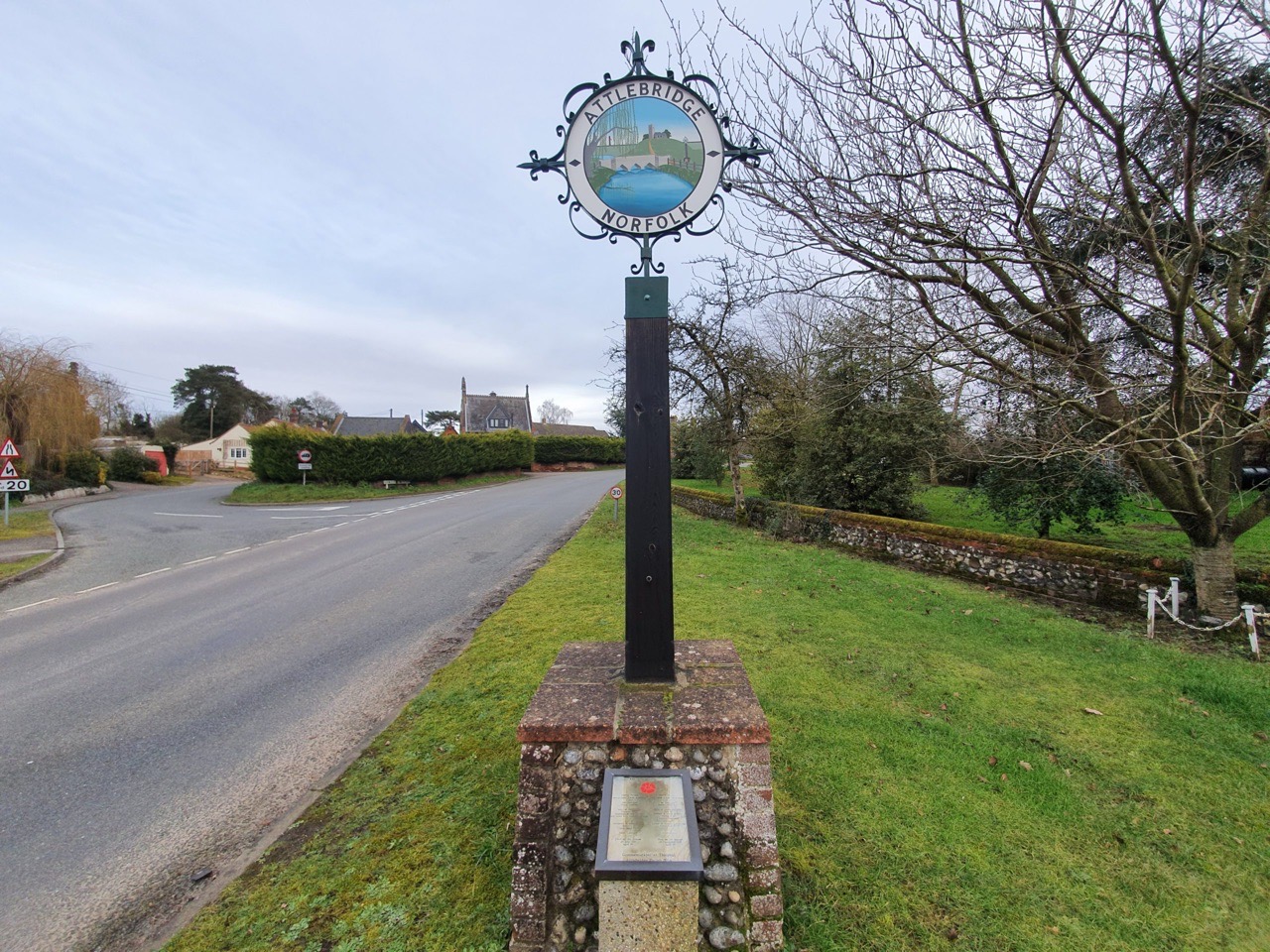
Incidentally, the above image is from Attlebridge, on the old Norwich and Fakenham turnpike road, although I don’t know where exactly the accident took place.
I shall quote the case from the Norwich Mercury:
“William Dann, teamman, in the employ of Colonel Custance, was charged with driving furiously on the Norwich and Fakenham turnpike road on Tuesday last, and causing wilful damage to a cart driven by Mary Ann Fisher, of Reepham. It appeared that the complainant was driving home from Norwich when she overtook the defendant, who was at that time driving quietly. After passing him, however, defendant whipped his horses and dashed along, apparently with the view of getting before the complainant, who drew close to the edge of the road, but could not avoid a collision.
The result was that defendant’s wagon caught the wheel of complainant’s cart, smashing it to pieces. The woman was thrown out of her cart, and became unconscious, but notwithstanding this, the defendant drove on without rendering any assistance. The amount of damage the defendant had already agreed to pay, and pleading guilty to the charge, he was now fined 5s and £1. 9s. 6d costs”.
And a new little project that Jonathan and I are undertaking because this lockdown is clearly here for at least a few more weeks. It’s a bit niche (our project I mean, not the lockdown), I’ll accept that, but there we go. Effectively, it’s walking around Norwich, ancient parish by ancient parish and seeing what is there now compared to a map from the 1880s (the map above is from 1789, but the one from the 1880s is more detailed, which is why we used that). There’s a PDF of these boundaries to provide some extra background to this whole project.
St. Etheldreda is the seventh parish we’ve visited and is one of the smallest in terms of its physical size. When we started this parish I had wondered whether there would be much of interest, as great swathes of it have been destroyed and replaced with modern housing. However, some elements remain and it was a suitably intriguing challenge to work out where the roads once were in relation to where we were standing.
As for the destruction of much of this parish, which was partly pre-war slum clearance, partly air raid damage but mostly post-war clearances. It’s easy to be critical of the council that they destroyed so much history, but that should be tempered with the situation that they had residents needing decent housing, they had war-damaged properties and also poor quality housing. It’s too simplistic perhaps to just condemn the council for bull-dozing history given the limitations that they had.
However, even after noting that, I personally think that the council made substantial mistakes with this huge rezoning. They retained little, with most streetlines being lost and the heritage they could have saved was just bulldozed away. There was all manner of local opposition and numerous historic buildings were lost, despite the hopes of locals that they could be saved. The council by all accounts disregarded these attempts to save elements of the area, which is perhaps a great shame.
So it all means that there is no anchor to the past, they created a new community that feels a little separate from Norwich city centre, despite it being a very short walk away. The council demolished Mariners Lane which connected King Street to Ber Street and broke the direct link between the two areas. Instead, they ploughed a new street, Rouen Road, through the middle of what was once housing which now has several car parks and under-used sites along it.
It appears from the media that the reason that the council did this was because they initially expected the site to be entirely reused, even as a university site, although the University of East Anglia were attracted by more spacious surroundings outside the city centre. This would therefore make more sense in terms of demolishing the area, although perhaps the council might have got clarity on that before tearing everything down.
And here is that same location today, Mariners Lane, which is now a cul-de-sac leading off from Ber Street. This is in St. John De Sepulchre parish though, so we mostly ignored this today.
This photo is taken at the base of the hill, looking at Normandie Tower, which is I think the only tower block in Norwich City Centre. I initially thought that this piece of hill was original, but it isn’t, this is where Mariners Lane came down.
This photo is taken in the same place as the previous one, but facing the other way and looking at Rouen Road.
Clicking on the above map makes it bigger. I was standing on the final T of “William Street” on the map when taking the photos, with Normandie Tower being pretty much on top of Compass Street.
Now standing on Rouen Road at what appears to be some sort of temporary bus station that First have created for themselves, with Normandie Tower in the background.
This is the route of Mariners Lane, now demolished here.
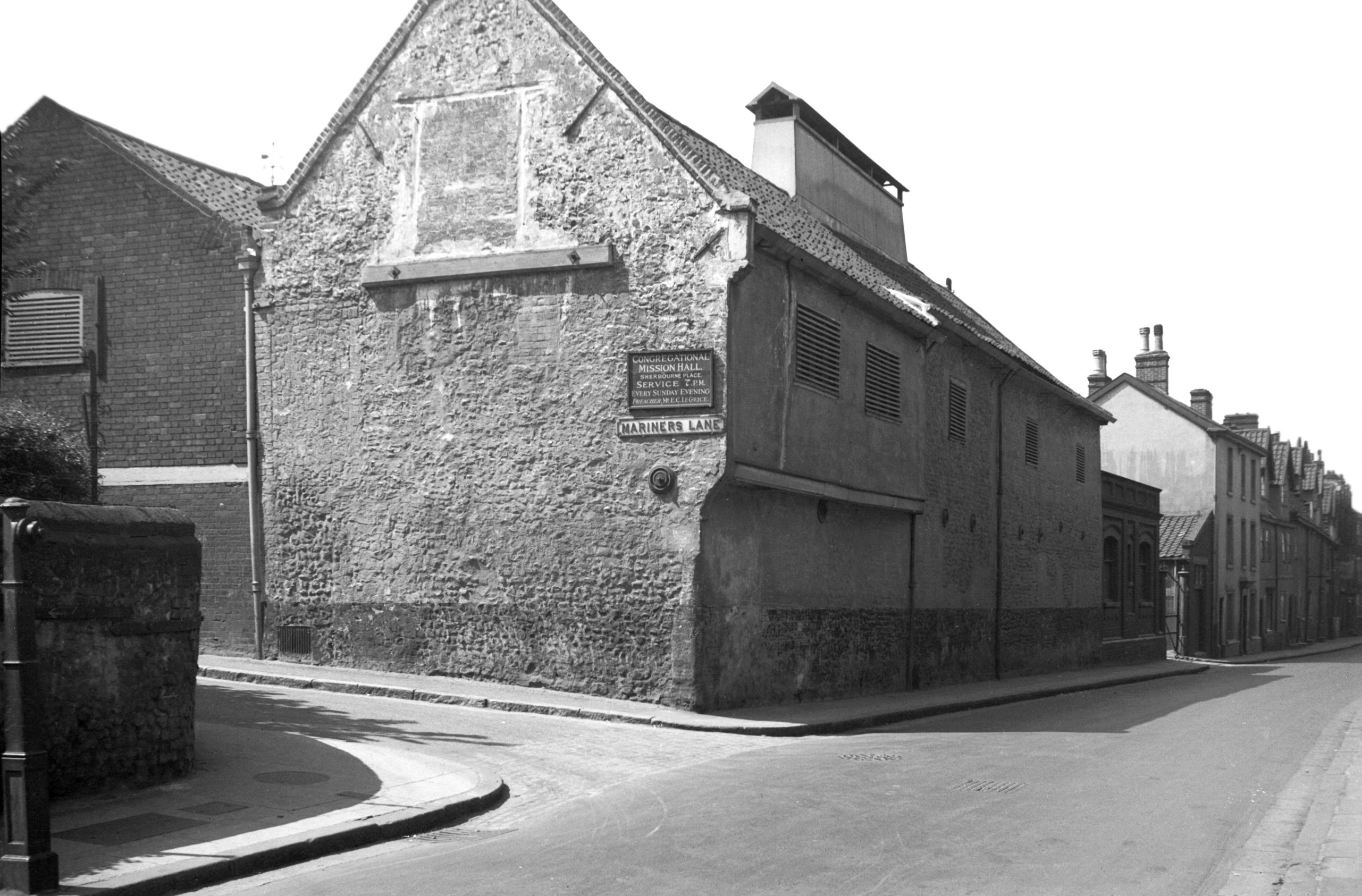
This photo is taken in (nearly) the same place as that taken by George Plunkett in 1935. On his photo, it’s possible to see the sign for the Congregational Mission Hall at Sherbourne Place where services took place on Sunday evenings at 19:00. This has now been demolished, as have all of the malthouses which stood along here.
This is where the malthouses once stood. The buildings on the right are the rear of the properties fronting onto King Street. The council tore down many buildings along King Street, but on numerous occasions there was local opposition which ensured that the properties were maintained. Although King Street might have lost some of its history, it hasn’t been decimated.
This is the church from which the parish takes its name, a now redundant (in religious terms) Grade I listed building which dates from the twelfth century, with additions made in the fourteenth century and a substantial Victorian restoration. It’s now in use by an arts organisation and I’ve been inside on a heritage day weekend, I’ll retrieve my photos from that weekend at some point.
The churchyard is in quite a state in numerous different ways, not least because some of these littered about the place.
The Norman style doorway, which is actually probably Norman……
A photo taken from the grounds of Normandie Tower, looking back into the churchyard.
The church, looking quite pretty here. The roof was thatched until the Victorian restoration.
Something doesn’t feel right about this being here, I’m wondering whether this has been moved from inside the church. It might have been on top of a box tomb, but I’m not convinced this was its original placement.
A broken stone in the churchyard.
The north side of the church.
I am still yet to be convinced that using gravestones as some sort of garden feature is appropriate or respectful. Others may have different views.
This is the end of the parish, and the Ferry Boat Inn is at the rear, across the parish border. And an explanation of that, the parish of St. Julian’s is located both to the north and south of the St. Etheldreda parish, it’s a strange split. Anyway, somewhere on the left the Rainbow pub stood until 1959, which backed onto the parish boundary.
This car park is on the former site of the Crown Brewery, which occupied a large site along the river from the early nineteenth century. The National Archives note that “the Crown Brewery was gradually acquired by the firm of brewers known variously as Baseley, Youngs and Roe, Youngs and Burt, Crawshay and Youngs, and Crawshay, Youngs and Youngs, in the years” and it closed in the middle of the twentieth century. A few of the buildings from that period survive and the brewery also owned the Music House building, more of which later on in this post.
Photos from the Crown Brewery site, with the River Wensum visible.
Some decoration in the foliage.
A mural on the wall, with some not ideally placed bins. I understand that this was designed by Walter Kershaw in 1984 and it features numerous elements of Norwich’s history. The mural is on the reverse of the building, so it’s not visible from King Street itself.
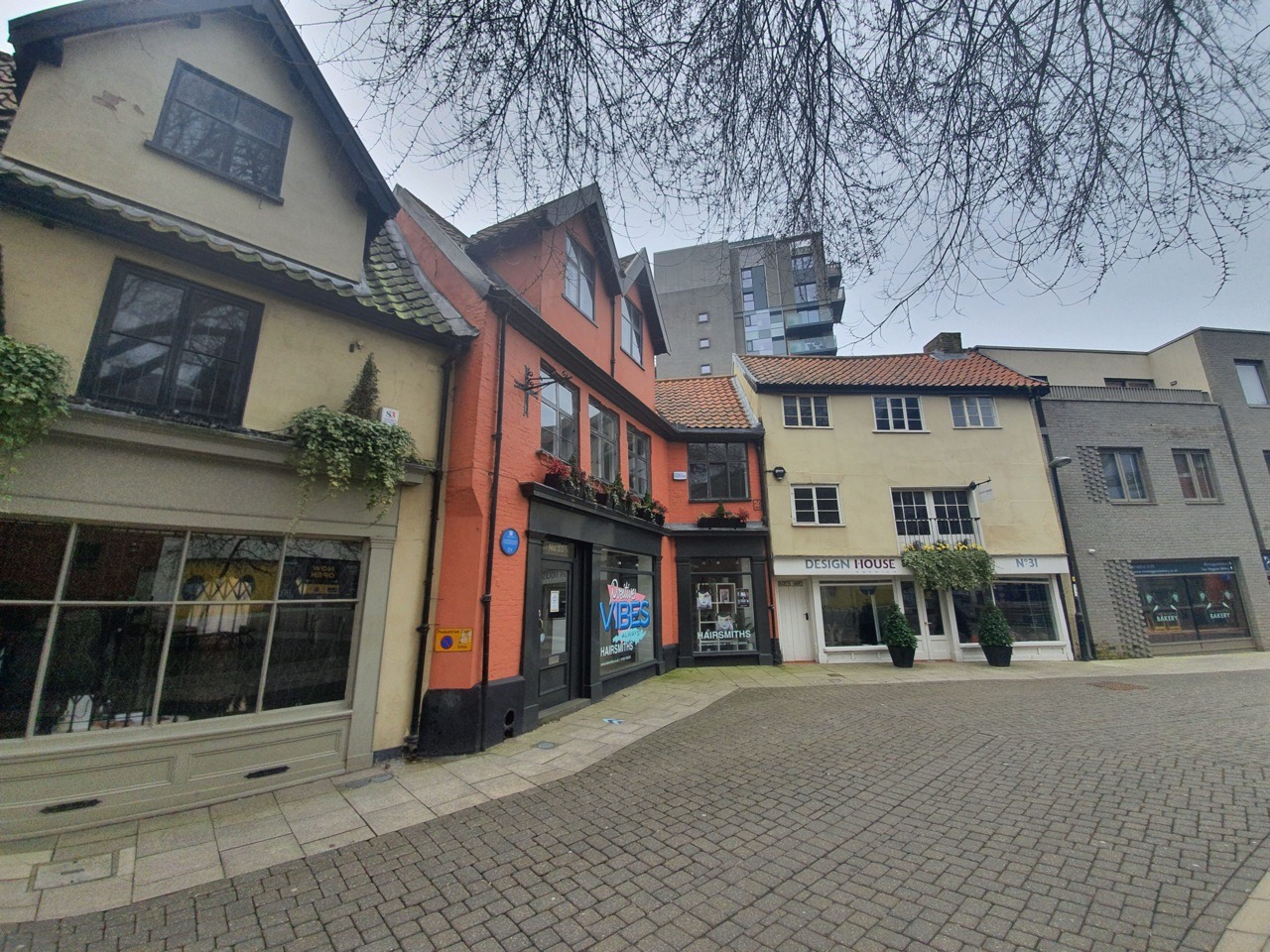
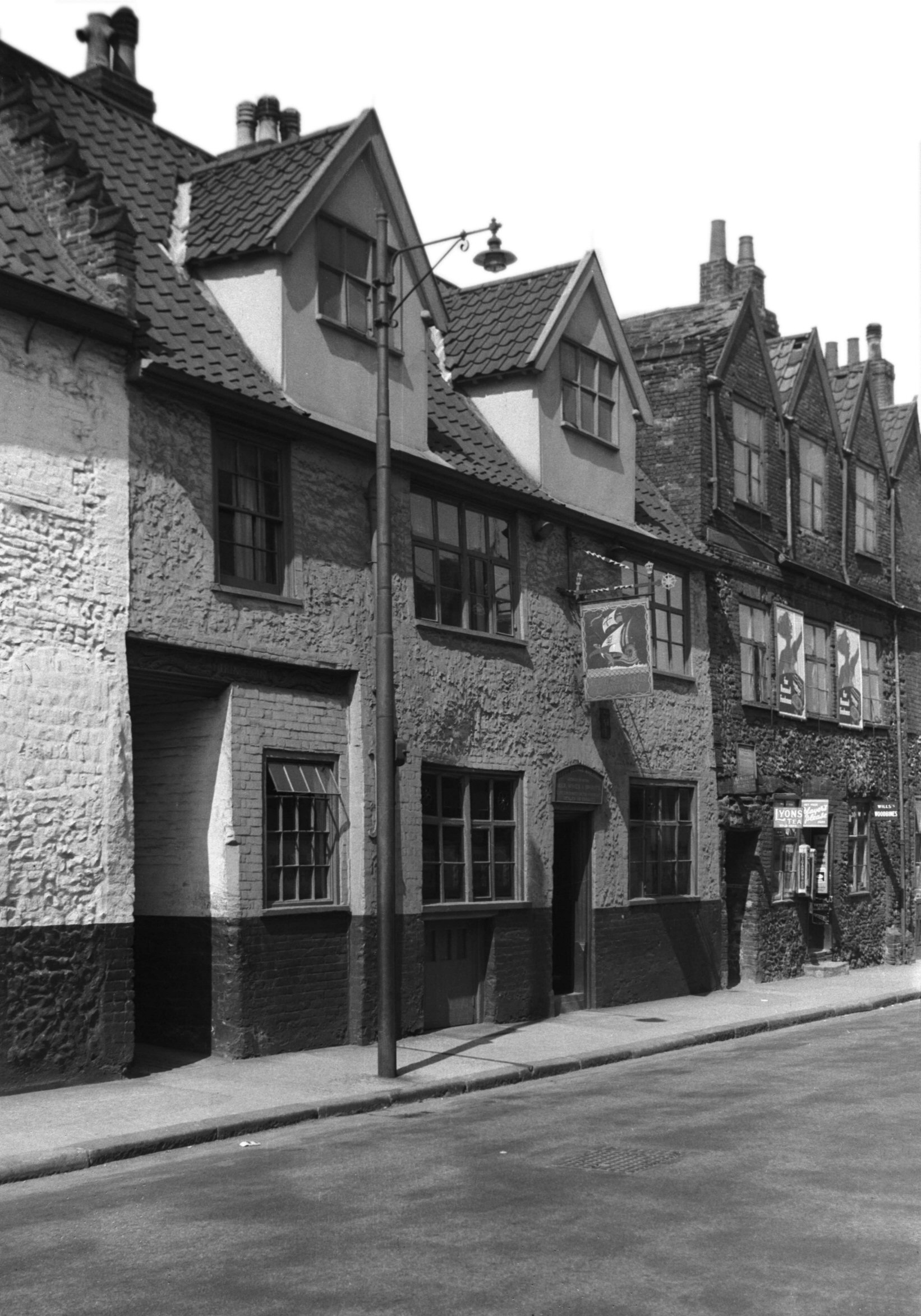
This is the former Ship pub and another loss, in my opinion, to King Street as this would have made for a quite marvellous licensed premises. George Plunkett yet again helps me here, this is the pub in 1939 and the EDP have one from a not dissimilar period.
Not only will I link to George Plunkett’s marvellous photos, I shall also quote his text about this:
“The yard to its south has at some time been partly built over, so that while formerly wide enough for the passage of carts it will now accommodate only pedestrians. The finely carved lintel above bears a design of foliage together with the rather contradictory inscription “Princes In”; it is believed that this was brought here at some time from the famous inn of that name, first mentioned in 1391, which once stood in St George Tombland parish on the north side of Princes Street”
It’s also quite visible in this photo just how the width has been narrowed.
The old name of the yard.
Inside the yard, which is blocked at the end and there’s nothing older behind these buildings, it’s all been demolished.
The old entrance to the Ship Inn, which ceased being a licensed premises in 1969.
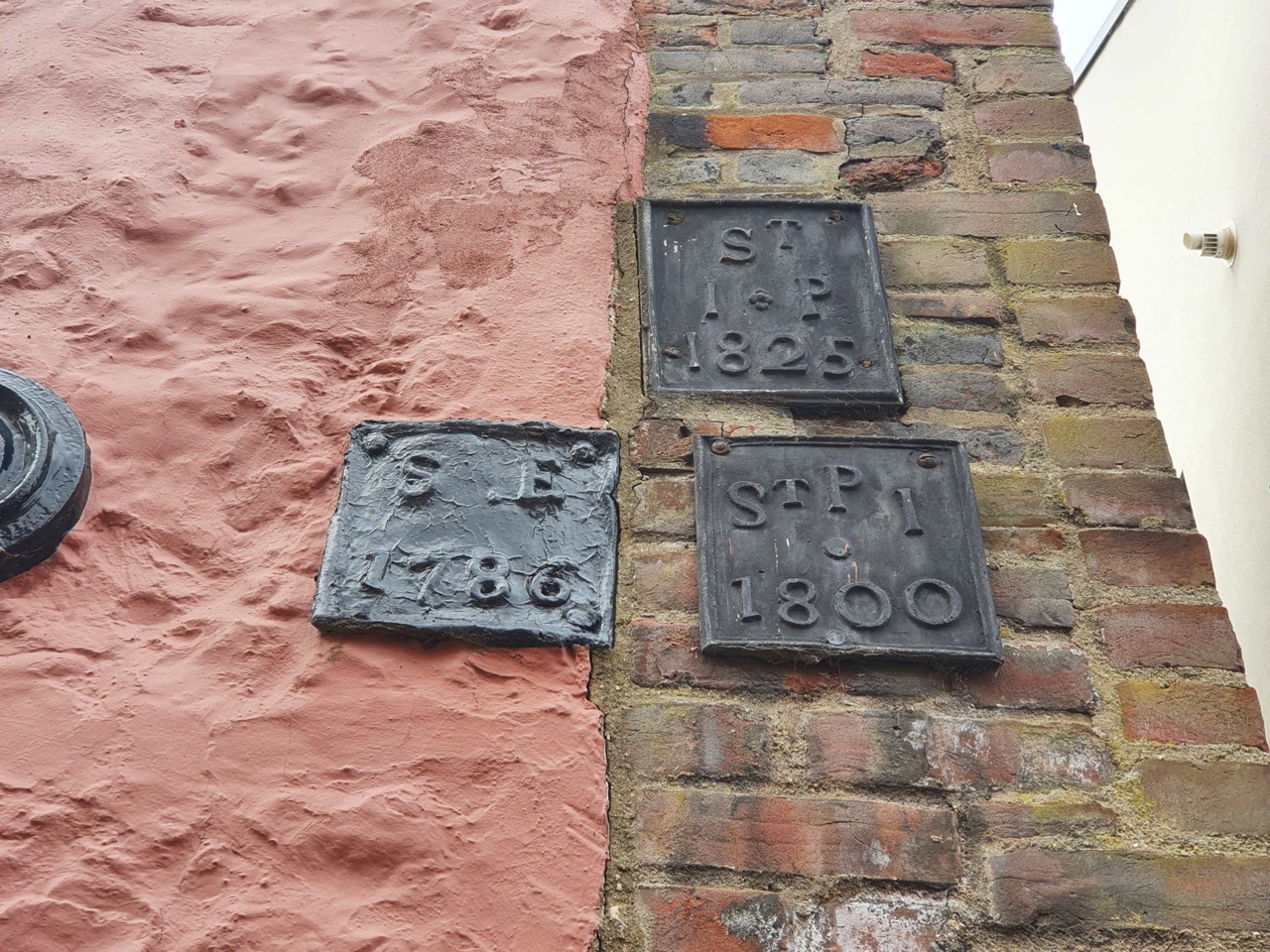
Wooo!!! Some survivors on the outside of the pub, with our parish of St Etheldreda on the left hand one from 1786. The two on the right both relate to the parish of St. Julian (the J was once used more interchangeably with the I) but in two different formats, one from 1800 and the other from 1825.
On the other side of the road from the Ship Inn is 167 King Street, or the Music House. This is also on the edge of the parish boundary and some of this structure dates to the twelfth century. The undercroft is now Jurnet’s Bar and is full of character and history, taking its name from a man known as Jurnet the Jew, who purchased the building from John Curry in 1225. Once a house for the wealthy, this area became a little less glamorous over time, so the building was split up into tenements in the eighteenth century. It is the only non secular building from the twelfth century to survive in Norwich and it’s used today by Norfolk County Council. Behind here was the Crown Brewery, who owned the building for much of the nineteenth and early twentieth centuries.
These parish boundary markers are on the Music House, with the parish of St. Julian off towards the left of this photo and this has markers from 1789 and 1825, with the marker for St. Etheldreda dating to 1786. I like that one of these iron parish boundary markers was placed here in the year of the French Revolution, that’s a quite remarkable survival really given everything else that has changed in this area.
And a look back down towards the parish of St. Etheldreda, a really quite fascinating section of street.
And a new little project that Jonathan and I are undertaking because this lockdown is clearly here for at least a few more weeks. It’s a bit niche (our project I mean, not the lockdown), I’ll accept that, but there we go. Effectively, it’s walking around Norwich, ancient parish by ancient parish and seeing what is there now compared to a map from the 1880s (the map above is from 1789, but the one from the 1880s is more detailed, which is why we used that). There’s a PDF of these boundaries to provide some extra background to this whole project.
St. John Baptist Timberhill is the sixth parish we’ve done this for and, again, there’s substantially more history than I can mention in this post, a reminder of just how much heritage remains in Norwich. As can be seen in the above PDF, these boundaries are not that neat and they follow the lines of buildings that have long since gone. I’m generally spelling Timber Hill as two words, but views on this seem to differ, but I won’t let it overly worry me…..
This is the area of Norwich that we were meandering around. And, this parish was difficult to follow, not least because the entire cattle market area to the north of the former parish has disappeared and has been replaced by the Norwich Castle Quarter shopping centre, but also because the Rouen Road area has been entirely changed in post-war developments.
Starting off at St. John the Baptist Church, which was open and offering a friendly welcome. I took numerous photos in the church, but I’ve written about this building before and shall just refer back to that. Nearly no graves remain in the churchyard, but they appear to have been removed long ago, and little of the exterior remains. The church’s tower collapsed in 1784, during a period when many Church of England buildings were neglected as the number of people attending services started to fall, and it was never replaced.
We first went to the southern end of the parish, which is now the beginning of Ber Street, but this section was once considered to be part of Timber Hill. Also visible in the above photo is the entrance to White Hart Yard, which was named after the pub which once stood at its entrance. The pub closed in 1940 for the duration of the war, but it was then bomb damaged and became derelict, so that re-opening never happened.
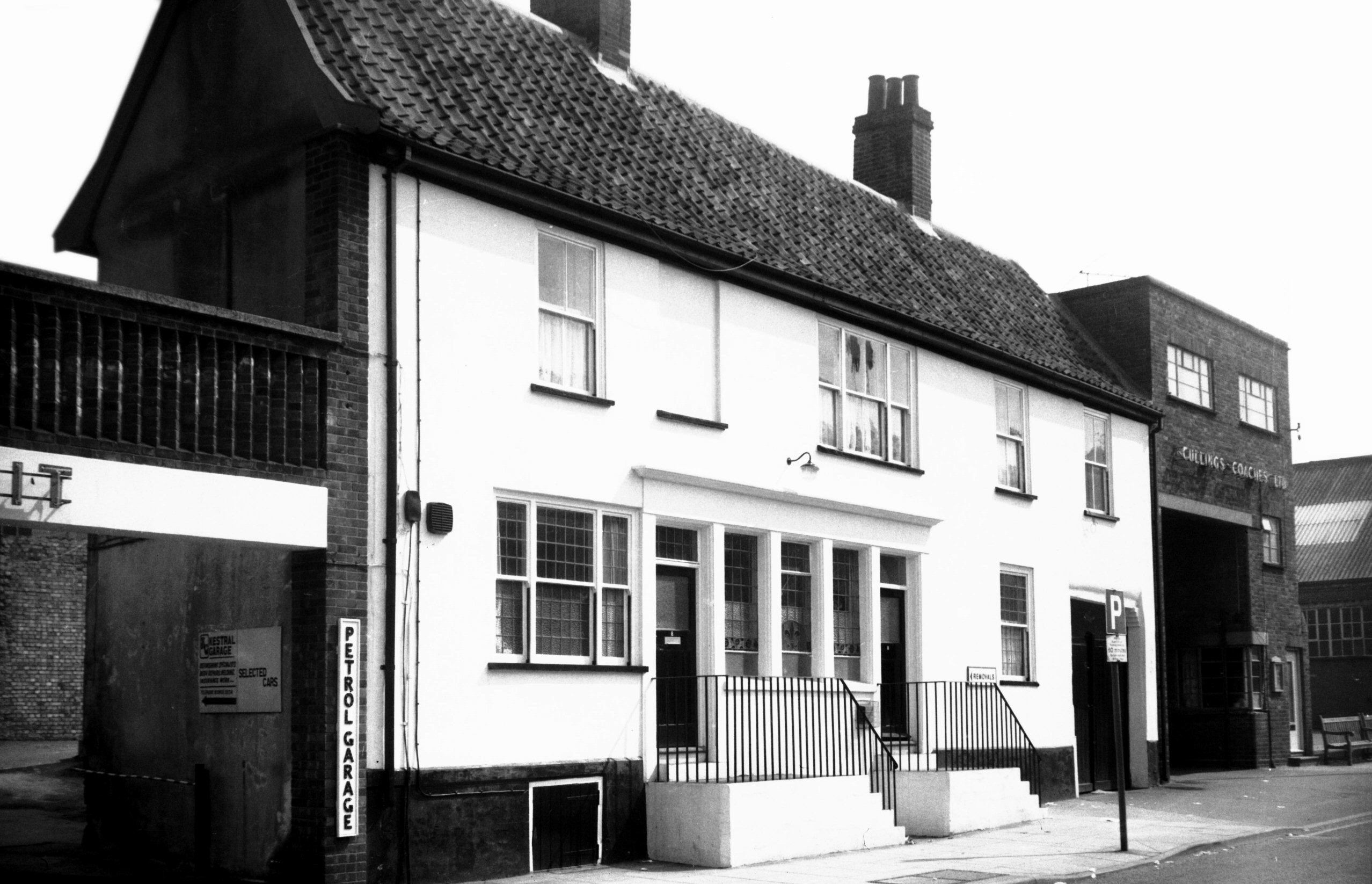
This is perhaps something of a loss, this was the Kings Arms and George Plunkett took a photo of it in 1979. It had traded as a pub since the first few years of the nineteenth century, was damaged during the Second World War, but then repaired and it remained open until 1968.
The former Cullings Coaches building, a independent bus company which operated from Norwich.
The parish boundary stops about here somewhere where it meets St. Michael at Thorn parish. The back of these buildings on Ber Street would have once been yards which stretched back some distance, but this has all gone now, and that’s the back of the Archant building at the rear.
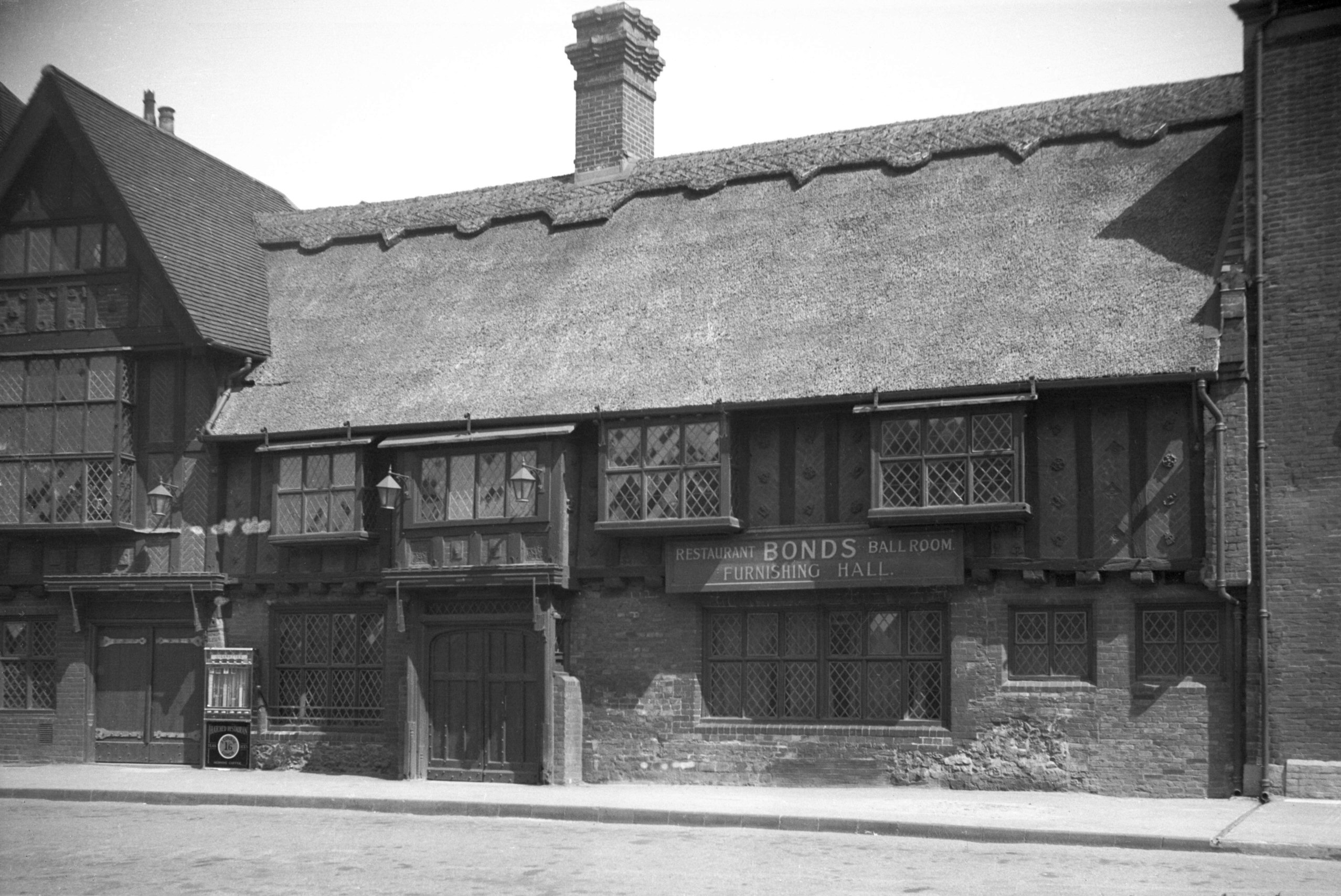
This is on the other side of Ber Street and is the Bonds building (operated by John Lewis) and this is a post-war building as their rather lovely previous shop got destroyed during the Second World War. George Plunkett has a photo of the Bonds building from 1935, which would have perhaps been one of the iconic images of the city if it had survived the war.
Bonds (or John Lewis) today, although the area on the right is in a different parish, but there was no evidence of any old parish markers here to show where that line was exactly.
We then went back to St. John the Baptist Church and walked back towards the city centre along Timber Hill. This is a vastly improved road and the city council have done a decent job here, with pedestrianisation making it a much more walkable area and there are numerous cafes and restaurants along here. Older photos show a busy road and pedestrians shoved to one side, so this is a more pleasant area to be now.
The entrance to Scotts Court, not to be confused with Scotts Yard on nearby Ber Street. On the other side of the road here is the Castle Quarter shopping centre (formerly the Castle Mall) which means little original from this area remains.
And a parish marker at last and many of them have gone missing from this area, with PAS meaning the Parish of All Saints.
The entrance to Lion and Castle Yard, which leads off Timberhill and is in the parish. It takes its name from the Lion and Castle pub which was located here between 1822 and 1925, with a sign also noting that the lion and castle are on the city’s coat of arms.
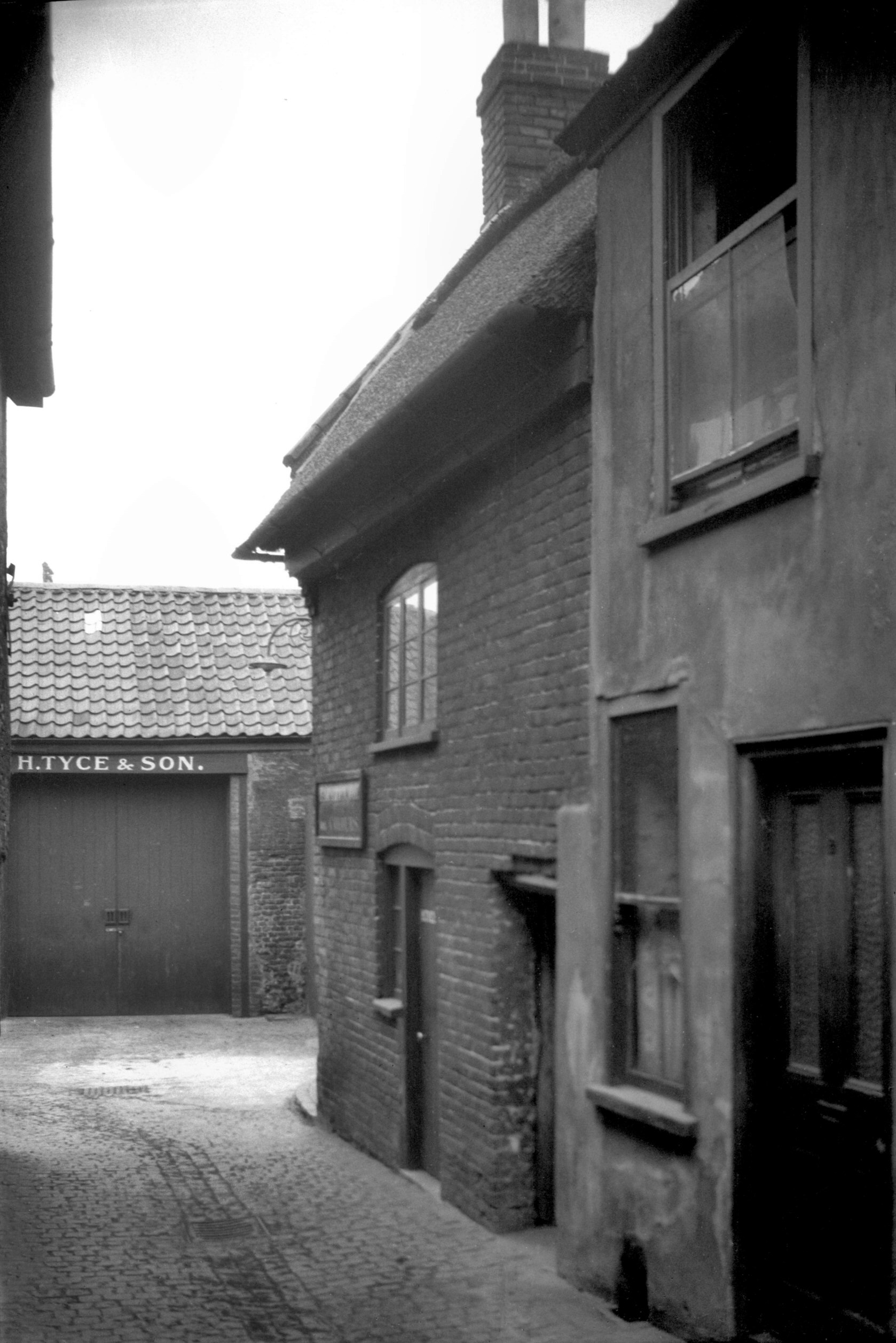
This building in the yard is one of the few thatched structures that still remain in Norwich and it is now one single property that was combined from two seventeenth century cottages. The building was restored by the Norwich Preservation Trust in 1996 and it’s likely that weavers would have once lived in the properties. George Plunkett took a photo of this location in 1935 and the area has a rather different feel today to back then.
Back on Timber Hill, this is the former Baptist Particular Chapel, which was originally built as a warehouse in the eighteenth century. It was purchased by the Particular Baptists in 1832 for £1,150 and then converted into a chapel, a usage that it retained until 1975. More recently it has been converted into a restaurant and bar.
Looking back up Timber Hill, with the Murderers Pub on the left.
This is the birthplace of Sir Arthur Michael Samuel (1872-1942), who was the first Jewish Lord Mayor of Norwich. He later became the Conservative MP for Farnham, the Secretary of Overseas Trade between 1924 and 1927 and then the Financial Secretary to the Treasury until 1929.
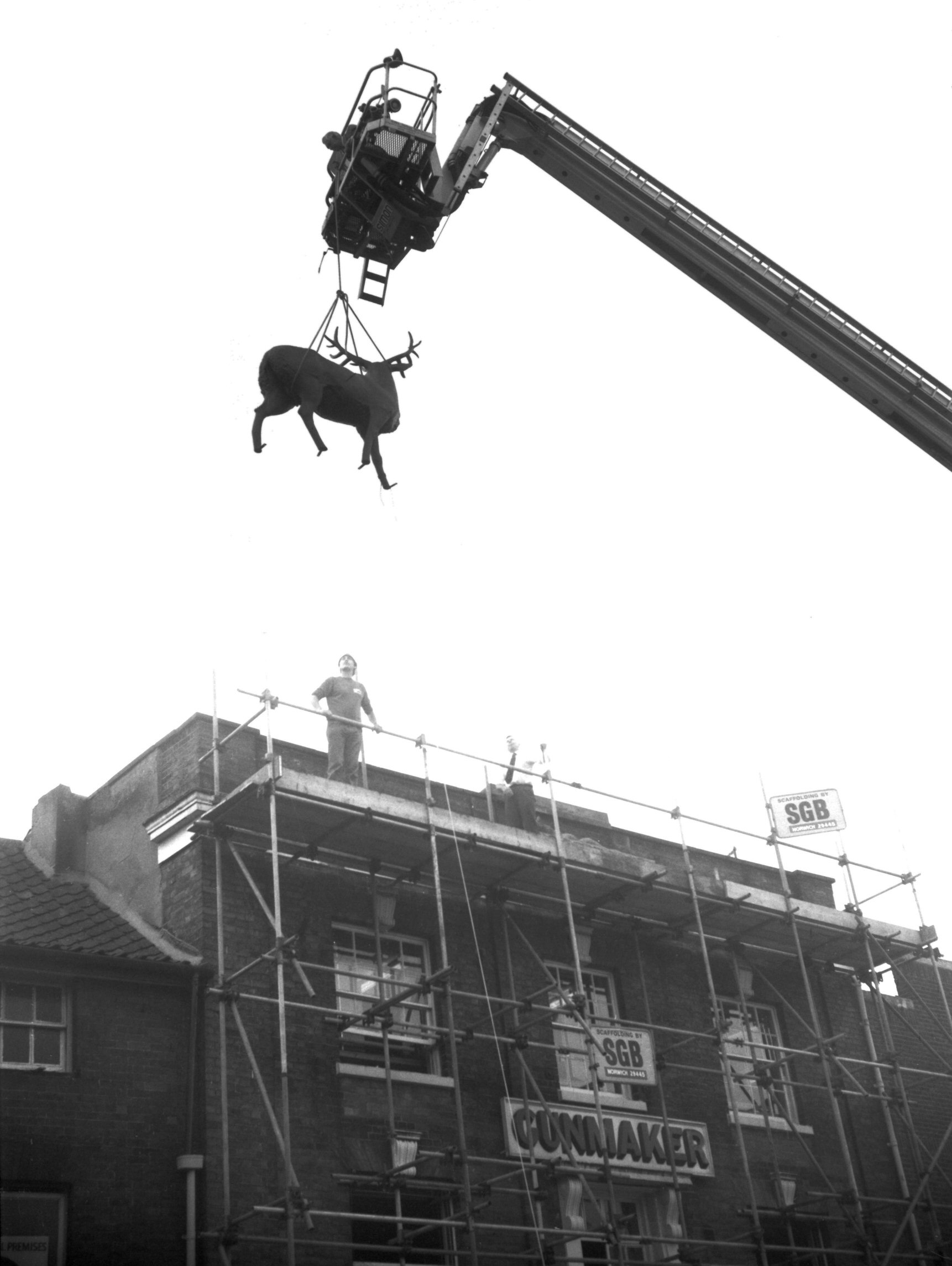
This is where Timber Hill meets Orford Hill and George Plunkett took a photo in 1984 of that stag being lifted onto the roof. There’s a blue plaque on that building which noted that George Walpole, the Earl of Orford (1730-1791) was seen as a bit of an eccentric at the time, but he gave generously to public subscriptions to fund planning improvements. This section of the street, which is also where three parishes meet, was renamed from Hog Hill to Orford Hill in his honour.
Orford Street, looking down towards Farmers Avenue.
The Bell Hotel from the Orford Street side. This large building is no longer a hotel and is operated as a JD Wetherspoon pub and is one of their first in the country to have opened outside of London. Sections of the structure remain from the fifteenth century and it has been known as the Bell (or the Blue Bell) since at least 1696. Revolutionary groups met here in the eighteenth and nineteenth centuries (and frankly, I can think of a few that have met here over the last few years, but that’s a different matter) and it was also used by the American Women’s Army Air Corps during the Second World War.
The front of the pub, from Castle Meadow.
The rather grand entrance, which was formerly the way into the stables of what was then a coaching inn.
This area has all changed now, with Norwich Castle in the background, Farmers Avenue now has the Castle Quarter structures on it.
The entrance to Orford Hill on the right, but once again, everything behind that has changed with the shopping centre development.
The entrance to the cinema.
This is the only remaining older section of this road, with what was Number 12 at the rear, a now permanently closed restaurant that was located in a building with parts remaining from the seventeenth century.
The rear of Number 12.
This building, 18 Golden Ball Street, was saved and now sits a little awkwardly within the Castle Quarter shopping centre structure. George Plunkett took a photo of this property in 1936, but everything else around here has gone. To the left of these structures is St. John the Baptist Church, where we started our little meander.
There’s also a parish boundary marker located on the front of the building and I wondered whether it was put there as part of the renovation and heritage of the building. However, it’s also visible in the old photo from George Plunkett and it stands for St. John Timber Hill.
The Archant building, which is perhaps not the most liked structure in terms of its design, but is something a little different and I’m sure it’ll become an important part of the architectural history of the city. Long since the home of the EDP, the building was sold by their owners Archant in 2019 to Alan Boswell Insurance, but they retain a floor in it. New ways of working and changes to regional newspapers (primarily they don’t sell many now) meant that Archant didn’t need as much office space, hence the downsizing arrangement.
Paid for by Archant, or Eastern Counties Newspapers as they were, this sculpture is by local man Bernard Meadows (1915-2005).
The car park of the Archant building, where once there was housing.
This is Paradise Place which is an old name for the streets here, but they were changed in the post-war period when a new housing development was placed here. Personally, I think this area has been botched in terms of its atmosphere (given there’s a busy road and big car park by it), as it doesn’t feel like part of the city and the old streetlines were lost. However, I’m sure that the quality of housing is better than what was here before, so the residents were perhaps rather quite pleased. And, I do like old streetlines to be maintained, so perhaps I’m just being biased.
And that concludes another parish, one which isn’t necessarily geographically huge, but which again contains a fair chunk of history. As usual, I’ve had to omit many stories from this account as there are far too many to tell, but it’s a reminder of just how much there is remaining in Norwich from the past.
The tablet usefully explains the significance of Gerard’s contribution towards the church, namely that:
“As a layman, in the absence of a resident minister, he was a father to the people, restored this church and for fourteen years was a bright example of truth, uprightness and charity to all around”.
Gerard was born on 19 September 1834 in Stoughton, Sussex, the son of John Barton and Frances Barton. He married Elizabeth Hazard in 1856 and they had twelve children between the years of 1858 and 1879. The youngest, Conrad Barton, was born at Freiburg in Baden where Gerard was serving as a Chaplain. He returned back to Fundenhall where he continued to live in The Grange (a building which is still standing today) and the family clearly retained some wealth given that they had six servants at the property at the 1881 census.
The church was in the 1850s crumbling and in risk of collapse if nothing was done about it. Barton was the main funder of the entire project and it was he who commissioned Richard Phipson to undertake the repair and restoration work. It was only in the last fifteen years that another restoration project was necessary, thanks to the funding that he provided back in the 1860s.
Gerard died at his house at 10A Kirkley Cliff in Lowestoft on 6 October 1889, at the age of 55. As an aside, one of his daughters, Madeline Barton, married William Horace Lascelles (1868-1949) and his half-brother was Henry Lascelles, whose son married Princess Mary, who was the daughter of King George V.
It’s fair to say that this church in the Norfolk countryside isn’t typical of the area in terms of its design and its central tower. There’s something quite magnificent about it though, that tower makes quite a statement. And another statement that this church made was that it was open to the public and seemingly proudly so. Other nearby churches weren’t open and we met someone who commented that the building’s keyholder wasn’t letting them in even though they were only a few doors down. The current Covid-19 situation is inevitably going to cause issues, but these stories of churches remaining firmly closed to other than the select few are perhaps far too common. However, there were no access issues at Fundenhall, it seemed to be a place that the Church of England was proud of.
The glorious central tower is original, dating to the twelfth century, although the top section may be later.
Potential tragedy hit this church in 2004 when it was forced to close due to falling masonry. This Norman period church is not in an area which is surrounded by residential properties and there are multiple other churches within easy walking distance. That put a pressure on the congregation beyond what they might reasonably have been expected to cope with. But, with some ingenuity and support of the Lottery Heritage Fund, individuals and businesses, they were able to get the repairs completed and re-open the building in May 2010. It was no quick fix either, the repair and restoration work cost £250,000. The church was fortunate, if the falling masonry had been twenty or thirty years earlier, then this building might not have been repaired.
The north side of the church, although since Heritage Lottery funding has allowed the construction of a rear car park, entrance is mostly through the south side of the building. The porch is now closed off to the public, but is architecturally of little interest since it was added in the nineteenth century. The bulk of the building, excluding the tower, dates from the fourteenth century.
A now blocked window on the church’s north side.
Since a visit I made to a church last week which pointed out medieval graffiti, I’ve been on the lookout for it. The cross appears to be pretty old to me (I’m not sure that this is a phrase used by professionals, but there we go) and was perhaps once covered in limewash.
I was pleased to see a Norman style doorway, but this according to the listed building record is an actual Norman doorway that is unmoved from its current position.
The inside of that same doorway and that wooden door is of some considerable age.
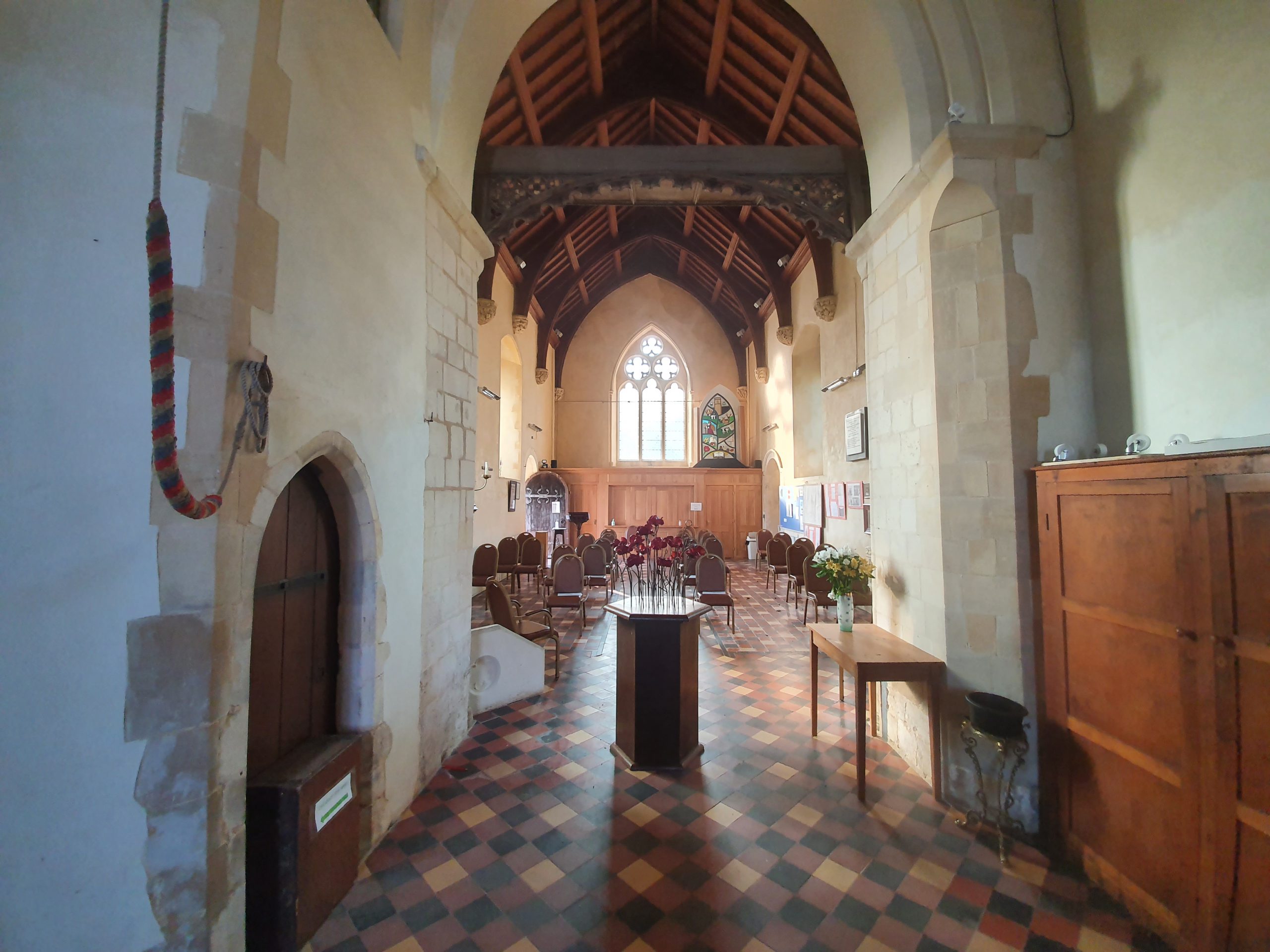
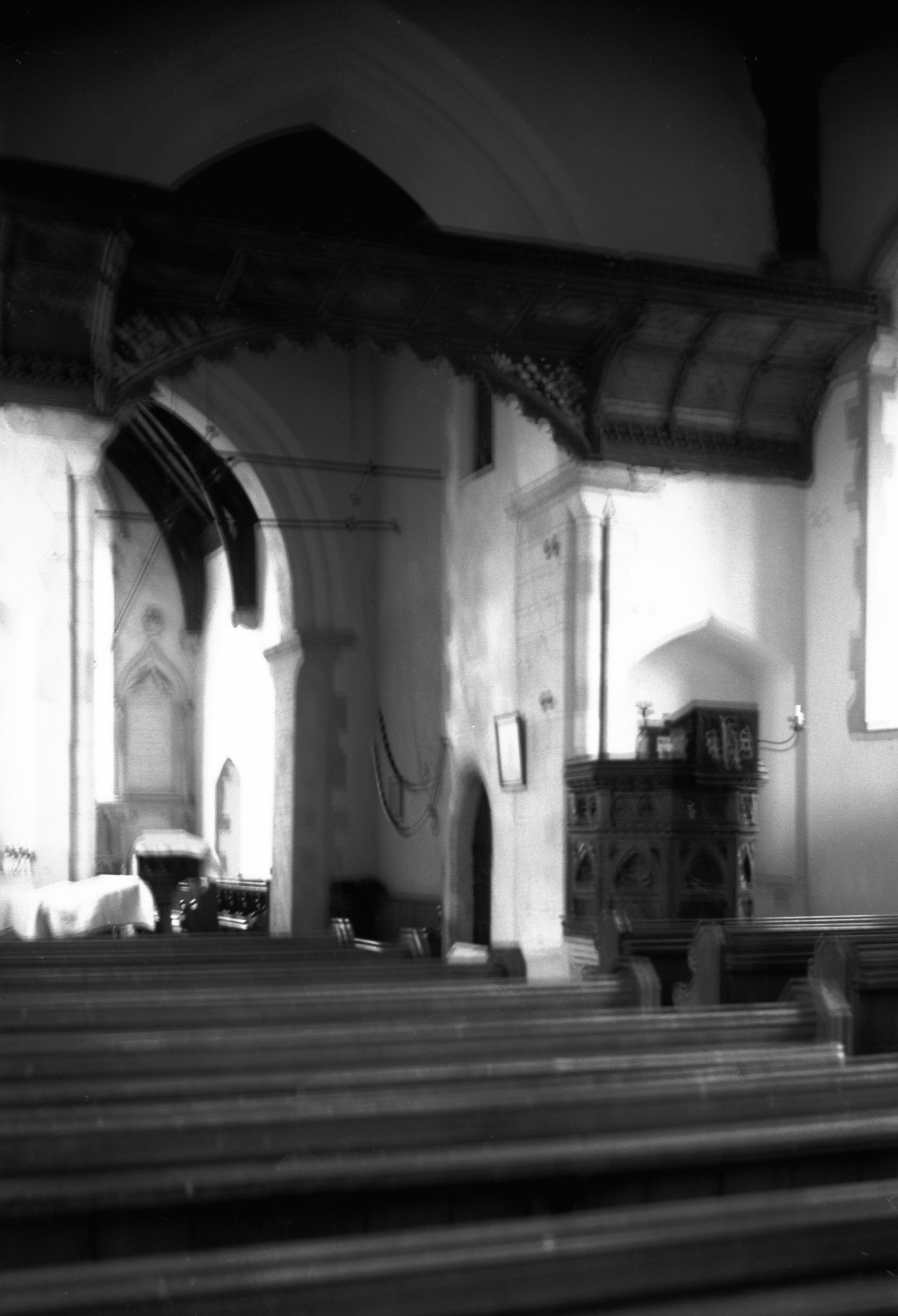
The beauty of this church wasn’t limited to the exterior as the interior was bright and open. The rood screen might have gone, but the surround (or coving I think it’s called) has survived, so that must be from before the Reformation. Older books, not least Blomefield, suggest that this rood loft was more complete in the eighteenth century and painted work was still visible. There was an extensive nine-month long repair project which took place in 1869, where there was also some re-ordering and so it seems likely that the damage was done then.
A newspaper report from the Norfolk News in 1870 is more generous, talking of the Portland cement used in the chancel and the retiling of the nave with Minton tiles. It’s added that the rood loft was protected by taking it down and moving it to the west end of the church, but there’s an awful lot of “new” things being mentioned in the report, a logical indication of how much has been lost.
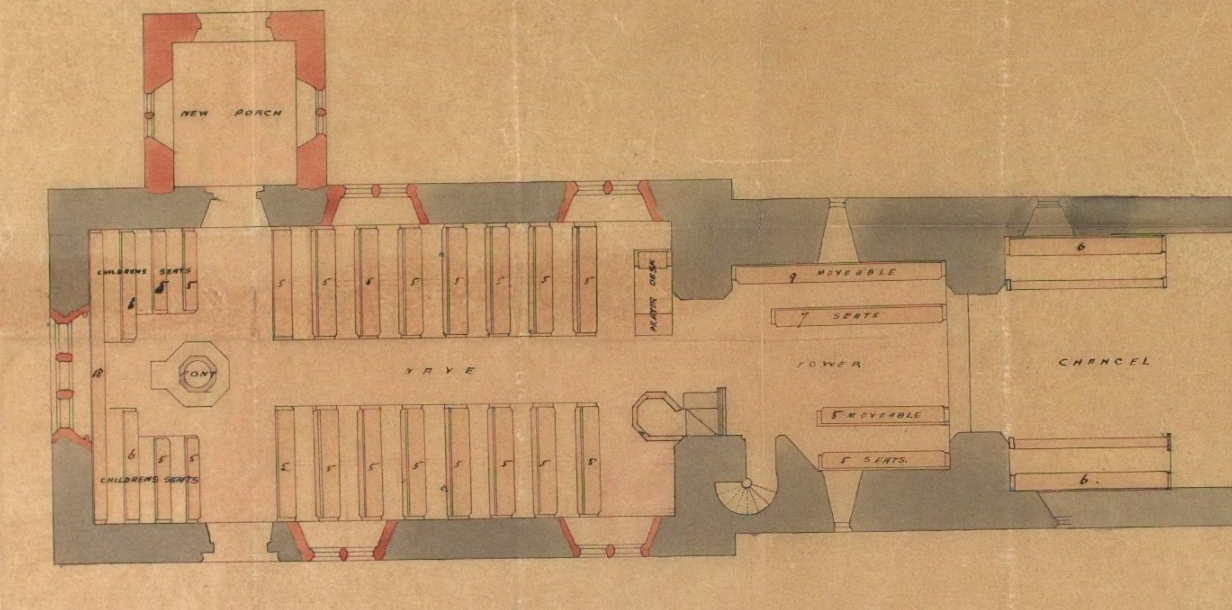
The original drawing made by the architect Richard Phipson from that 1870 renovation, with the big new oak benches visible. I wonder where they are today, as they appear to have only been removed in the recent repair work to the church as they’re in George Plunkett’s photo from 1996. There’s an old photo of the interior of the church here.
This is rather lovely, it was funded by the Heritage Lottery Fund and local families, entitled “Reconnecting with Fundenhall’s Fallen” and was created by Kate Munro.
That’s much friendly than a “do not touch” sign, I like it.
Looking back down the nave.
This was the entrance to the rood stairs and also to the tower, a handy advantage in having a central tower. The bells are still in the tower and can be rung, although there was a little incident in 1 August 1885 when John Atkins “let go of the bell rope, fell backwards and expired”.
The font is from the fifteenth century, so that was here whilst the Reformation was taking place and parts of the building were being torn down around it. The location of the font has been moved from its previous place at the rear of the nave.
Some of the old flooring is visible through this panel, although it was a bit misted up and so not entirely clear.
The chancel.
The priest’s door leading off of the chancel.
There were numerous eighteenth century graves in the churchyard, but more of these in later posts. For anyone engaged in the detail of the church’s architectural history, there’s a comprehensive document which was produced in 2007 during the restoration work.