Author: admin

  • Gdansk – Liberum Hotel

    Gdansk – Liberum Hotel

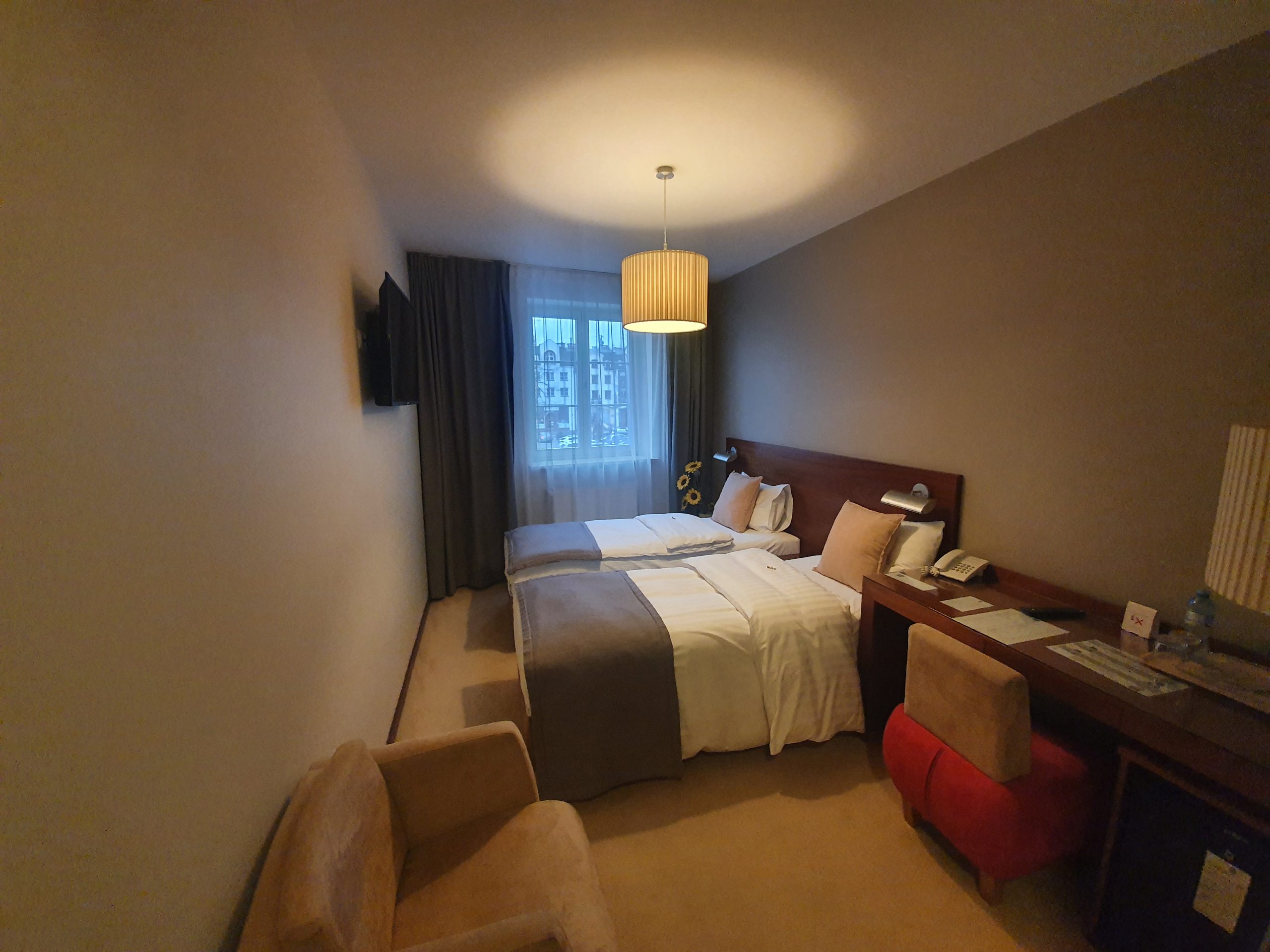
    This is from my stay in Gdansk last week, the Hotel Liberum which is centrally located on Ulica Długa (the Long Lane in English). The welcome from the staff member at reception was friendly, and the hotel was all a bit more decadent than I had been expecting.

    My room was just £20, which was a single room on the top floor. Compact, but clean and tidy, with the en-suite being a reasonable size.

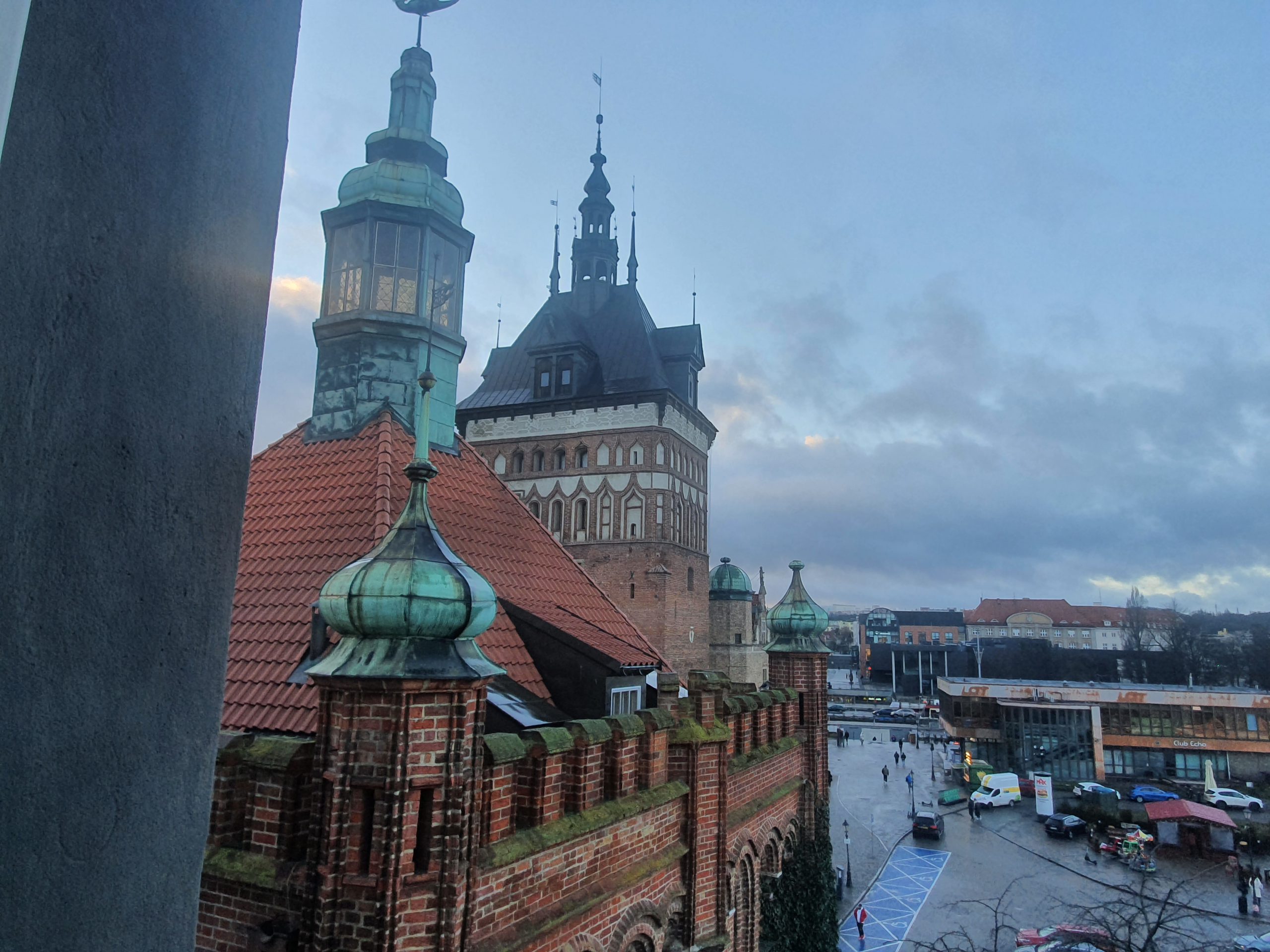
    And the room came with a really quite lovely view of Wieża Więzienna (the Prison Tower), once a major entrance gate into the city. I have been fortunate with my views over Gdansk landmarks on this trip.

    This breakfast really did surprise and delight me, this section had cheeses, cold meats, sun-dried tomatoes, olives and salads, all of a good quality. There were also bread rolls, this was just as I like breakfasts to be. There might have been hot options available, but I was entirely content with this.

    Not a great photo, but there was another table with pastries, cakes and juices.

    There’s a photo of the food, all nicely presented for the few guests that I think the hotel had. This is actually a restaurant in the day, Cafe & Bar Rękawiczka, which I think I visited a few years ago. There’s a back door into the hotel so that guests don’t have to walk all the way around, and they gave me a 10% voucher off food for guests as well.

    Breakfast really was a lovely start to the day, although the coffee machine kept breaking down. That minor issue aside, this is a hotel that I’d stay at again, although the low prices that I was fortunate enough to enjoy are unlikely to be repeated very often.

    There were no noise issues either internally or externally and it was pleasant to hear the city noise from my fourth floor window. There have been complaints about external noise though, with the hotel putting earplugs into the room for guests. I’m never quite sure that’s a welcome treat for guests to find, but perhaps it’s best to offer them. There is a lift to the upper rooms, although I opted for the stairs in a keen attempt to burn off the calories from the beer that I’d been testing that week.

    And with that one-night stay finished, it was time to go to the railway station to go to Elbląg. There’s more information about the hotel here.
  • Malbork – Malbork Castle (Architectural Features)

    Malbork – Malbork Castle (Architectural Features)

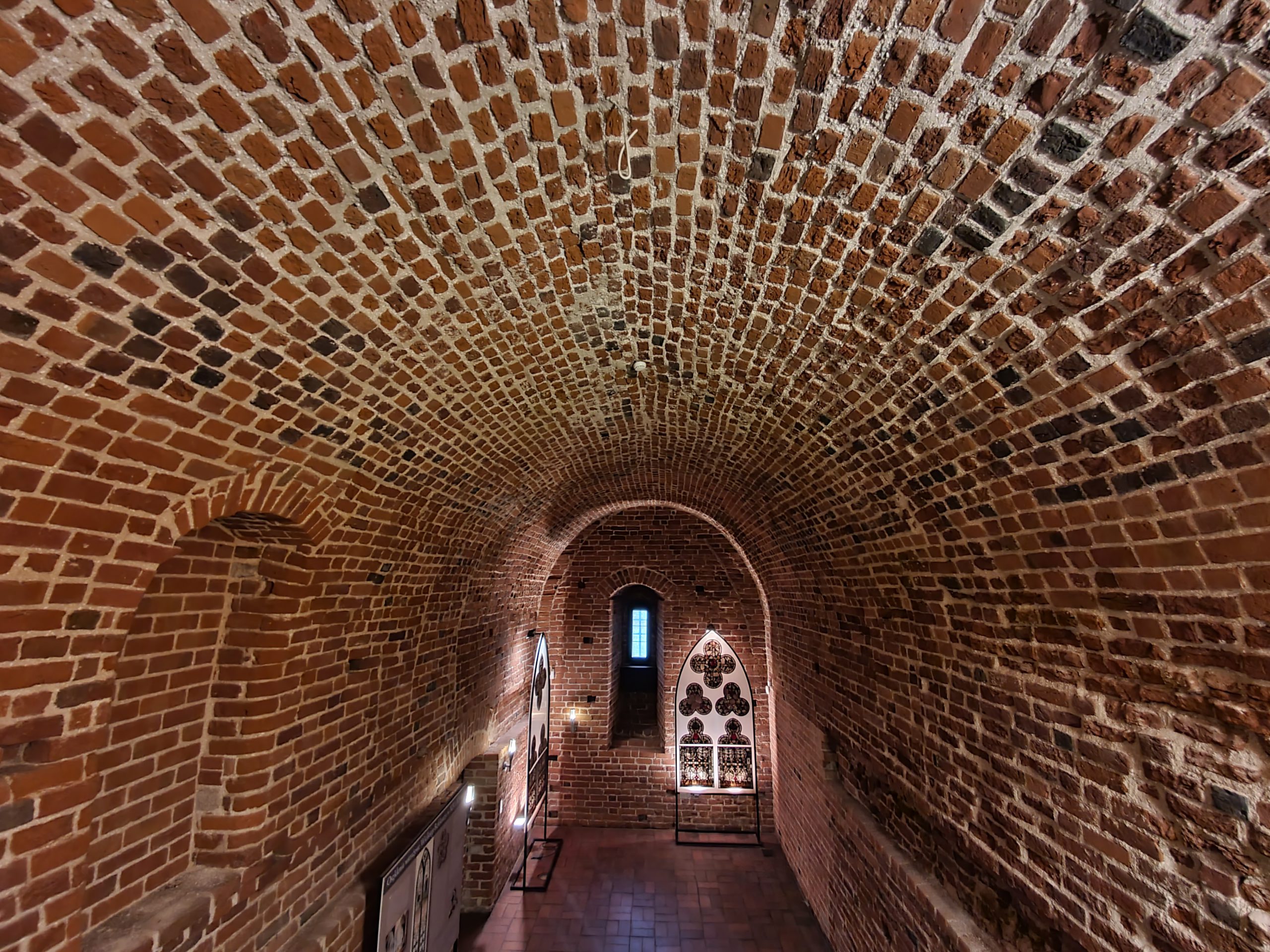
    There aren’t a huge number of exhibits at Malbork Castle, not least because most had already been lost before the Second World War saw the end to most of what was left. However, towards the end of the tourist route (or the tourist route that I took, which I suspect differed from the route that everyone else took) is this collection of architectural features from the castle’s history.

    These are all elements from the early stages of the castle’s construction, when the Knights of the Teutonic Order were in charge. Clicking on the above photo makes it larger, and I particularly liked the item in the centre at the top, which is a figure of King David playing the harp dating from 1300.

    For completeness, the item at the top-right is a support which has the image of a monk (dating to before 1300), the two pillars at the bottom-left are vault supporters from Chapter House (dating to the thirteenth or fourteenth centuries) and the bottom-right is a vault supporter designed to look like a monster (dating to the fourteenth century).

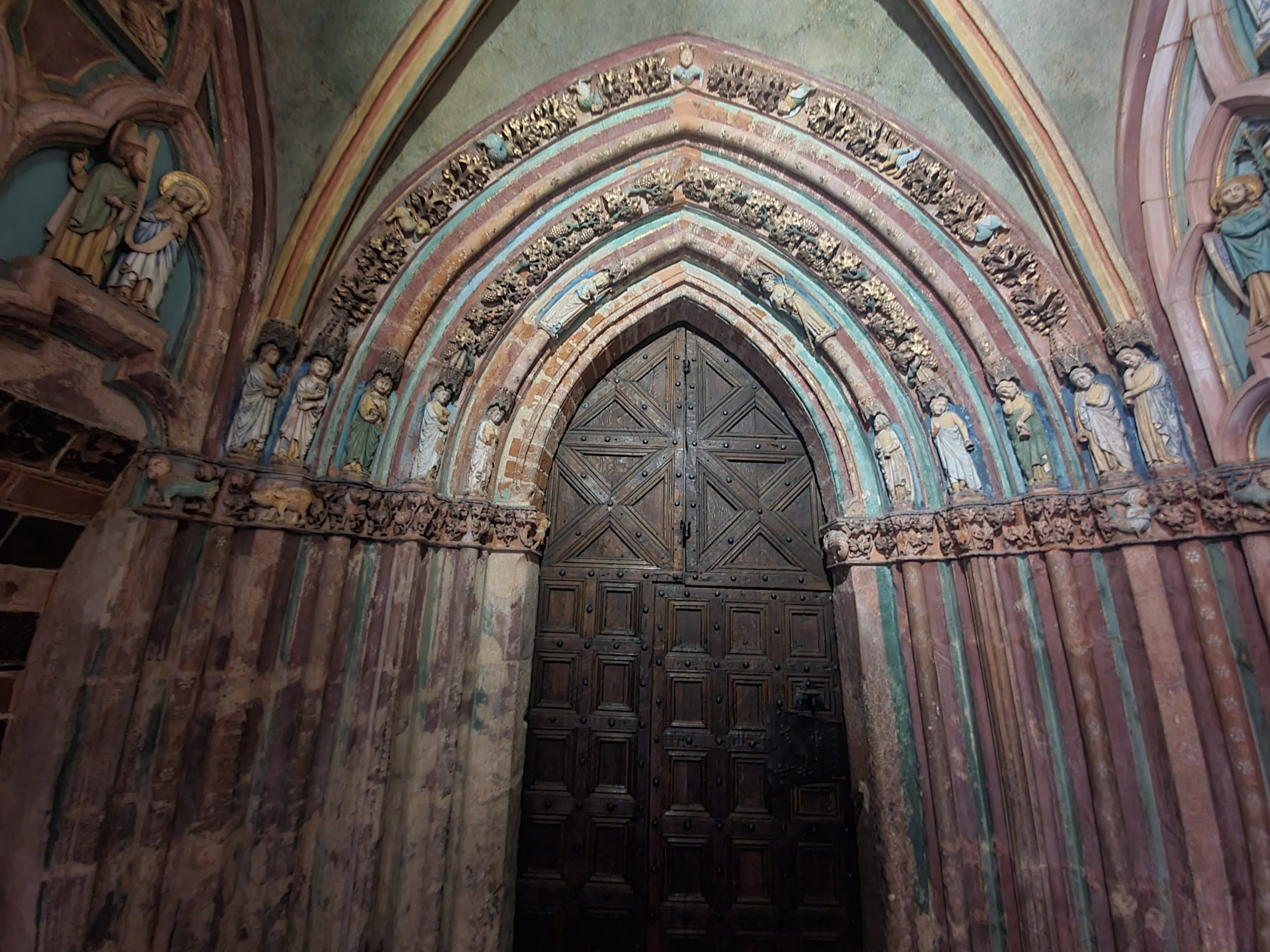
    More sections of stone dating to the thirteenth and fourteenth centuries.

    Decorative pieces dating back to the fourteenth century.

    They carried on the theme over the centuries, the two on the left are from the nineteenth century. The third and fourth ones along are from the fourteenth century, although I think the one on the far right is from another castle.

    I was intrigued by these, as although I had nearly three hours walking around a castle looking at a lot of stone, it was hard to know what was old and what was more modern. Even before the reconstruction after the Second World War there had been much change over the centuries, but it’s known that these two stone and brick structures were from the second quarter of the fourteenth century. The sections are all from the ambulatory and would have been in this building in the first 75 years of its existence. Incidentally, these are also some of the earliest bricks (if we ignore the Romans), the practice of building in brick in this style reached this part of Northern Europe in the twelfth century.

    To see such early bits of stone still in the castle I find in many ways quite assuring. The castle has changed hands on numerous occasions and it’s been in different countries over the centuries. Even just 100 years ago this castle , then Ordensburg Marienburg, was actually on the border between Germany and Poland, the section of East Prussia next to the Polish corridor. Anyway, they might just be bits of stone, but I thought that they were quite interesting bits of stone.

  • Malbork – Malbork Castle

    Malbork – Malbork Castle

    I came to Malbork primarily as its castle is the largest in Europe and it’s one of Poland’s major tourist attractions. I noticed from reviews that the castle got very busy, but when looking to buy tickets on-line in advance they appeared to have sold nearly none on the cold Saturday morning that I intended to visit.

    I think it’s fair to say that I didn’t quite judge the demand for this historic attraction accurately. I turned up just before the ticket office opened so that I could join the queue, but I was the only person there other than the staff. I’ll add now that I didn’t encounter another visitor during my entire visit, although I saw some from afar. For a site where sometimes the queues are over two hours, my impressions of this castle are very different to others.

    The price to get into the castle is very high by Polish standards, coming in at £11. This includes an audio guide, something which I found a completely bloody nuisance. It’s meant to work by GPS tracking your movements inside the castle, but it doesn’t work effectively. It takes you on a journey around the site, but it misses chunks out and it’s also generally impossible to hear something twice if it does go wrong. This would be much easier if there were crowds of other people as it would be evident where to go, but when you’re the only visitor, it’s rather more challenging because entrances were rarely signed. I’m not sure that I missed very much during my visit, but I suspect I missed a few rooms, and only saw some parts of the complex because I ignored the audio guide.

    This is the gatehouse of the castle and this would on its own be a difficult entrance to get through for any invader. As a quick history, this castle was constructed by the Teutonic Order who kept on expanding it during their time of occupation between 1280 to 1457. Between 1457 and 1772 it was the residence of Polish Kings and its defences were never broken during that time. From 1772 until effectively 1945, the castle was occupied by the Prussians, but it returned to the Poles in 1945 following the redistribution of lands following the end of the Second World War.

    Although the Nazis very much liked this castle as it reminded them of what they considered to be their Teutonic heritage, it was badly damaged during the Second World War as this photograph shows.

    Below are photos from my visit, and I’ll save some highlights for later posts, but these give an indication of the variety of the rooms and also the size of them. I was fortunate not to have to battle for space during my visit, having the freedom to visit the castle interior was enjoyable, even if it did mean I perhaps missed a small portion of what there was to see. Everything was certainly peaceful. The outdoor areas were also extensive and it was possible to walk around many of the buildings, including a chance to visit the graveyard from the Teutonic period.

    In terms of general comments about the structure of the visit, I thought it was all a bit muddled. Not least the signage was terrible and the audio guide basic, meaning that there was nearly no written material to read. I suspect they’re trying to avoid needing to translate material into numerous languages, but things felt unstructured and disorganised. An audio guide system where visitors typed in the number of where they were on the site would have been better than one which was trying to, wrongly, work out where visitors were. However, as I mentioned, I doubt this is a problem when it’s busy, which seems to be most of the year.

    Like with many things, the destruction during the Second World War was very unfortunate, but it’s positive that so much has been recreated. They could keep expanding this museum for many years to come given the space that they have, as the building is of a huge size and there are what seem like endless out-buildings. Although I didn’t encounter any visitors, there were staff in most rooms, but they tended to be in the corner and out of the way, which was helpful when taking photos.

    To be able to explore a UNESCO World Heritage site nearly alone was really quite a treat, so a very memorable day in Malbork.


  • Elbląg – Museum of Archaeology and History (Coat of Arms Epitaph from Blessed Virgin Mary Church)

    Elbląg – Museum of Archaeology and History (Coat of Arms Epitaph from Blessed Virgin Mary Church)

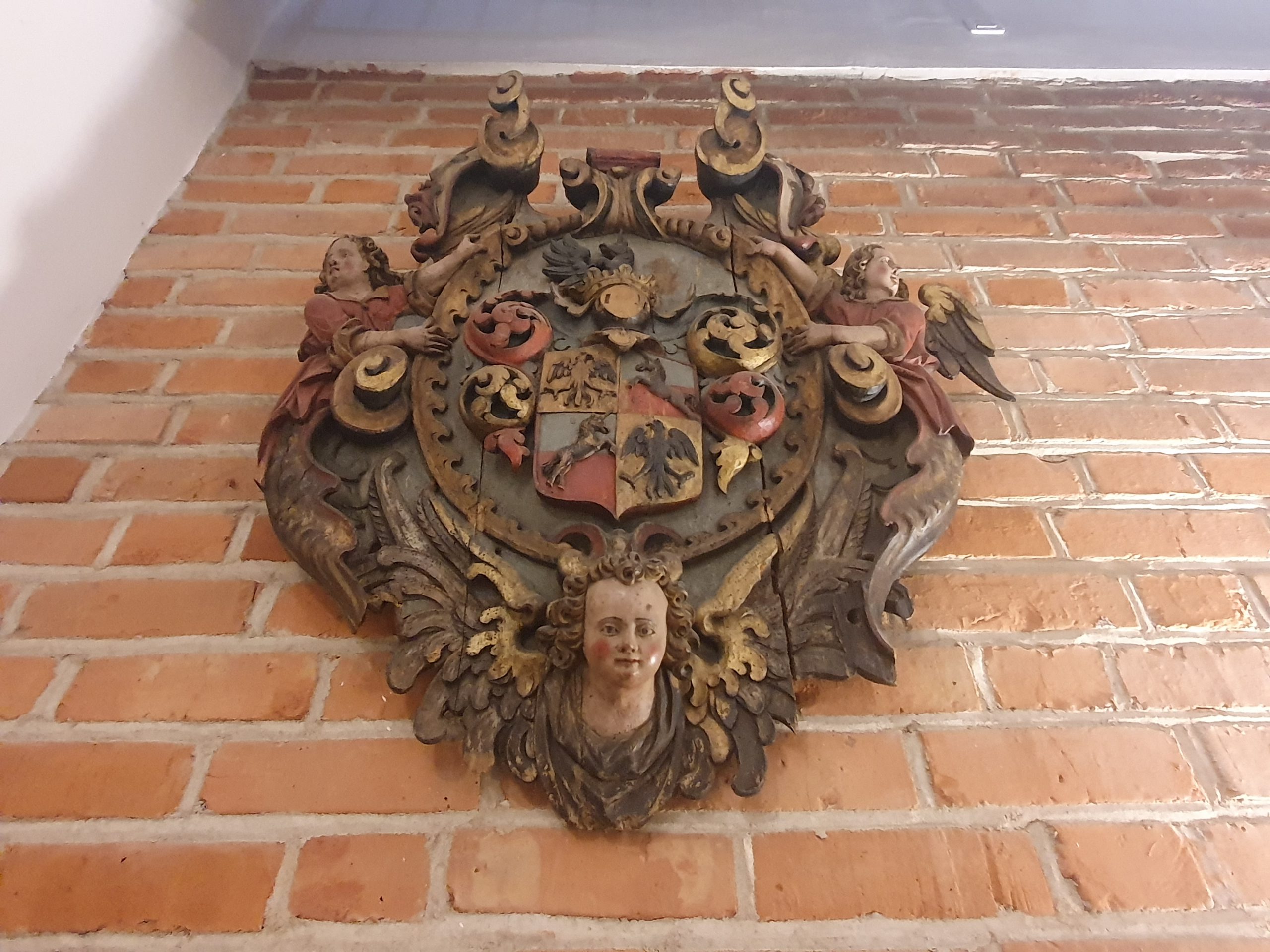
    This epitaph comes from the Church of the Blessed Virgin Mary in Elbląg which is now an art gallery, but is now on display at the Museum of Archaeology and History in the city.  It’s carved out of wood with polychrome decoration and it dates from the seventeenth century. The museum doesn’t give information on who it commemorated or why it’s here and not still in the church. I know little about heraldry, but that’s the Prussian Eagle since it’s black, rather than the white Polish Eagle.

    I mention this just because I like to see things that survive when a building is so badly destroyed, which the church was during the Second World War when there was a large fire. It seems unlikely that it was removed before the church was damaged, so this is perhaps one of the few items that avoided destruction. I’m guessing it was given to the museum at this stage to preserve it, which is why it never made its way back to the church.

    And one thing I didn’t realise when writing about the museum is that although it was founded in 1954 in its current form, it has collections which date back to the original museum which was founded in 1864. They were fortunate to discover that the collections of that municipal museum had been moved by the Germans to a basement in Raków for safekeeping, so they didn’t have to start entirely from scratch with finding new exhibits.

  • Malbork – Po Lodzie?

    Malbork – Po Lodzie?

    It’s not the warmest in Malbork today, although most of the rain has stopped, but the wind is quite persistent. Nonetheless, a cafe seemed to be a pleasant place to visit given the temperatures outside and this one near to Malbork Castle was well reviewed on-line.

    I was the only customer in the cafe when I arrived, although it got a little busier later on. The service was personable and friendly, although I’m conscious I’m writing that for nearly every place that I go in Poland. The surroundings are very pink, but they were clean and warm, that sufficed my requirements.

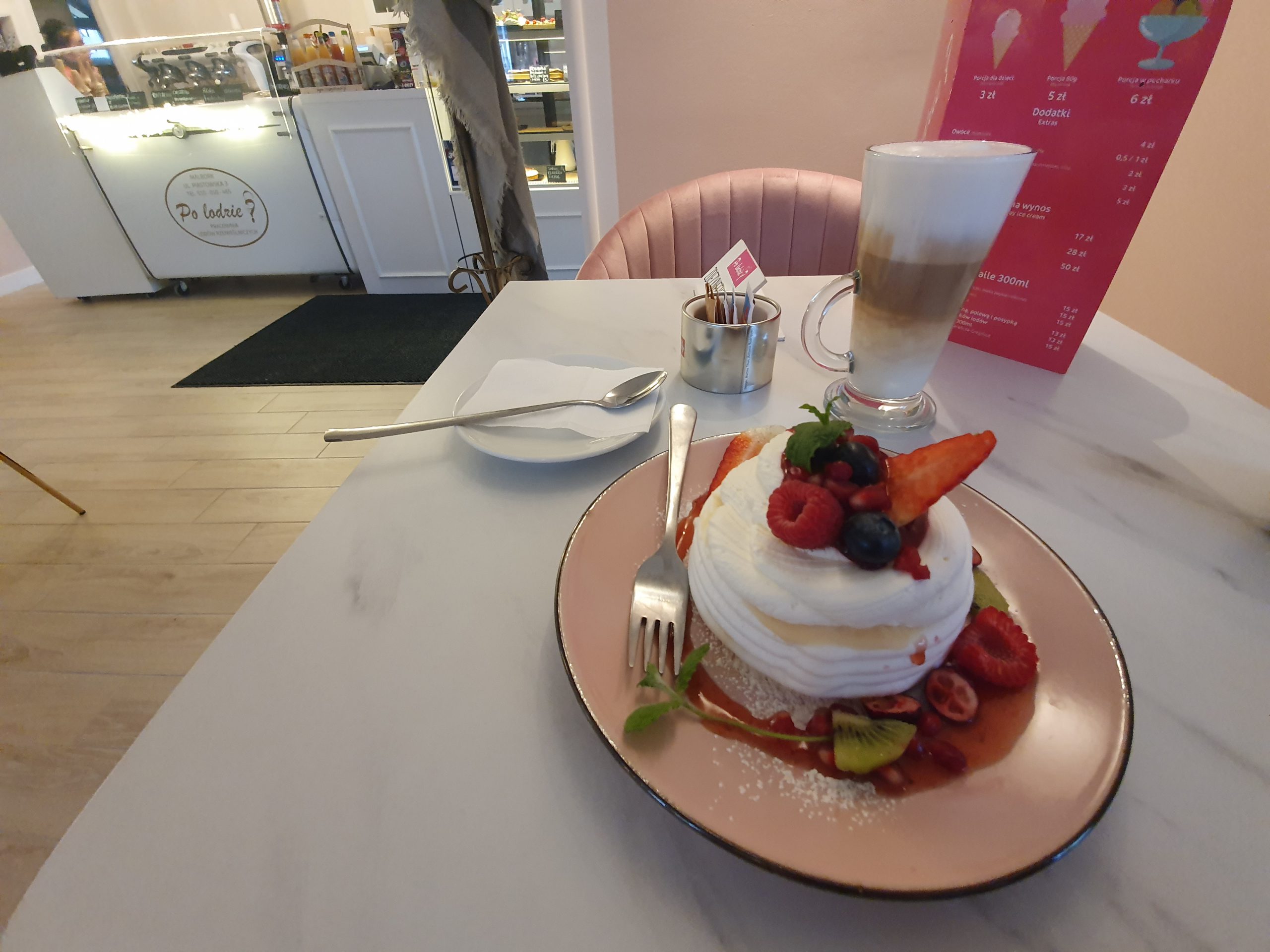
    And I’m going to pause for a moment just to remember this meringue, as it was one of the best desserts that I can recall having. The meringue was light and melted in the mouth, the fruit had been freshly prepared and ingredients I couldn’t identify added texture and to the arrangement. The latte was also of a decent quality, but it’s that meringue that will be the lingering memory. There was nothing that I could fault here.

    Inevitably I’d recommend this cafe, with a friendly service, a clean environment and excellent food and drink. The drink and cake came to £4, which I thought was really rather good value for money given the quality. I’ve mentioned this with regard to other locations, but I imagine it must be very hard to get a table here during the summer months, given it’s around the corner from one of the country’s major tourist attractions.

  • Elbląg – Museum of Archaeology and History (Elbinger Zeitung)

    Elbląg – Museum of Archaeology and History (Elbinger Zeitung)

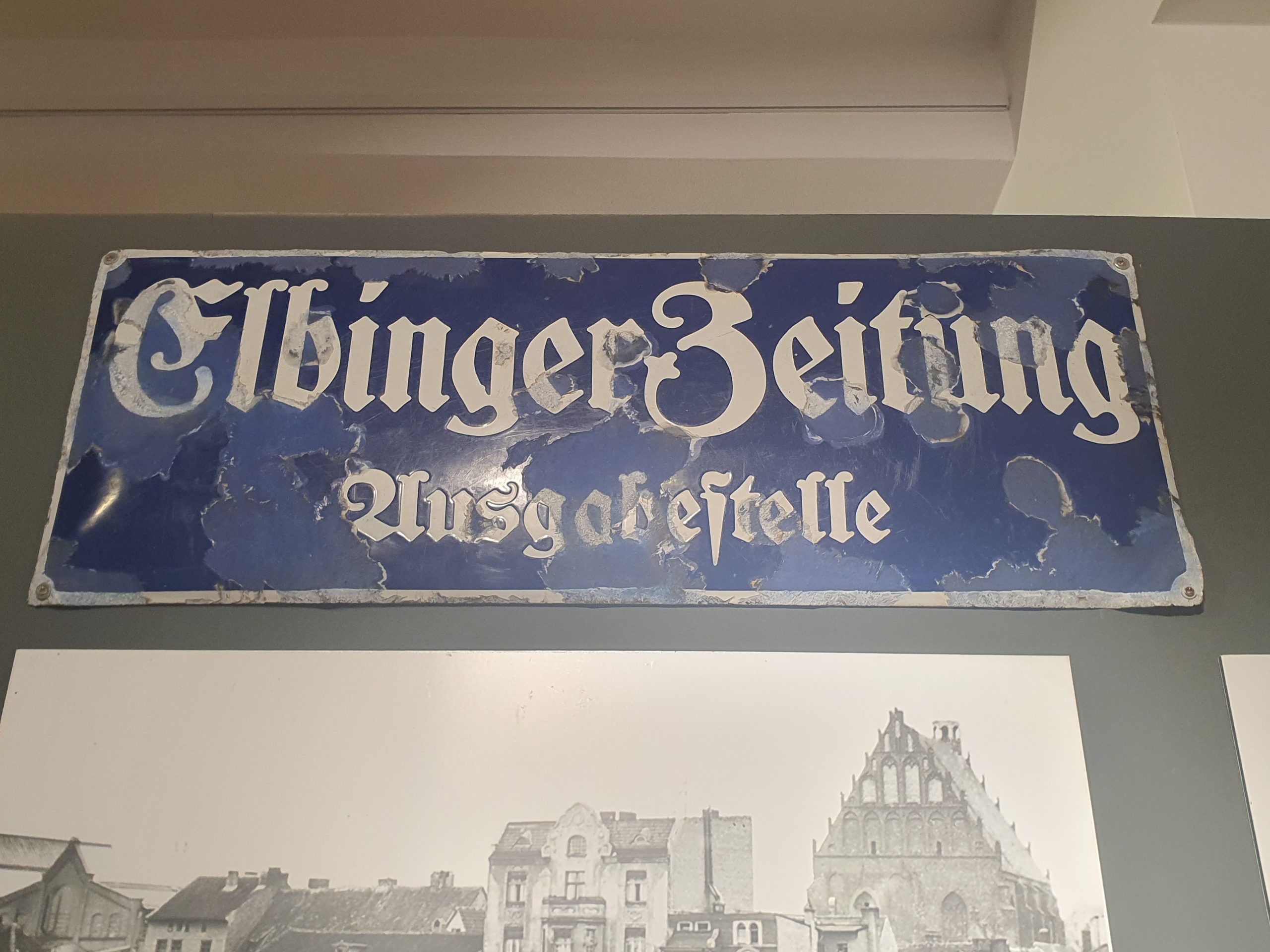
    This sign is on display at the Museum of Archaeology and History in Elbląg

    Posts like this one are just my never ending supply of random material which is of peripheral interest at best, but it’s something that I think is intriguing about the history of a city. The sign in the photo was used at a location which supplied the Elbinger Zeitung or collected material for it, which was the German newspaper of the time about Elbing (or what is now Elbląg).

    There are two reasons why this sign interested me, partly because it’s the end of a newspaper, suddenly brought to an end with a changing population, a changing country and a changing language. I’m assuming that the editorial staff would have all moved to Germany as part of the forced repatriation when Polish citizens were moved in, and that must have been a challenge for them given their entire careers had been writing about a city where they had to move away from.

    Also, it’s one of thousands of signs in Elbląg that must have been torn down as they were replaced with Polish signage in the late 1940s. I’d quite like to know what happened to this sign, whether it was acquired soon after for a museum collection, whether it was found recently or whether an individual took it as a memento. So many questions…..

  • PKP – Elbląg to Malbork

    PKP – Elbląg to Malbork

    Back to Elbląg railway station, this time for the twenty minute journey into Malbork, which is another new town for me.

    I didn’t look too much at this before, but it’s the grand hall at Elbląg railway station. There’s a little shop and waiting area to the left, with the ticket office on the right. I don’t buy tickets at the railway stations, it’s easier for me to do that on-line and just have the ticket on my phone.

    Mine was the 11:17 train, but there were fewer trains than I expected leaving from the station, roughly one per hour.

    Looking back at the station’s main hall from platform 2.

    And on time, my train pulls into the station, with something like 12 carriages. It was busier than I expected, but it’s an Intercity service rather than a regional train. An elderly Polish lady barged me and two other passengers out of the way, before realising that her large bag was too big to fit by her seat, so she caused a queue of people to wait whilst she shuffled back along the carriage with her excessive luggage. That sort of behaviour is unusual in Poland, but I’d have waited for her to board anyway, I was unsure of her desperate rush.

    The seat reservation system on Intercity trains has always been respected when I’ve been on Polish trains, something that the British system fails to achieve. The carriage was fairly full, but my seat was available without an issue. My ticket wasn’t checked, but there wasn’t much time for the staff to perform those checks given the short length of the journey. The view was mostly just countryside, this is a rural part of Poland, and unlike the regional trains, this Intercity train didn’t stop at the smaller railway stations en route.

    The train arrived into Malbork two minutes early.

    Rather wide platforms I thought…. The train fare to get here was £2 and everything ran as expected this time, unlike my journey to get to Elbląg.

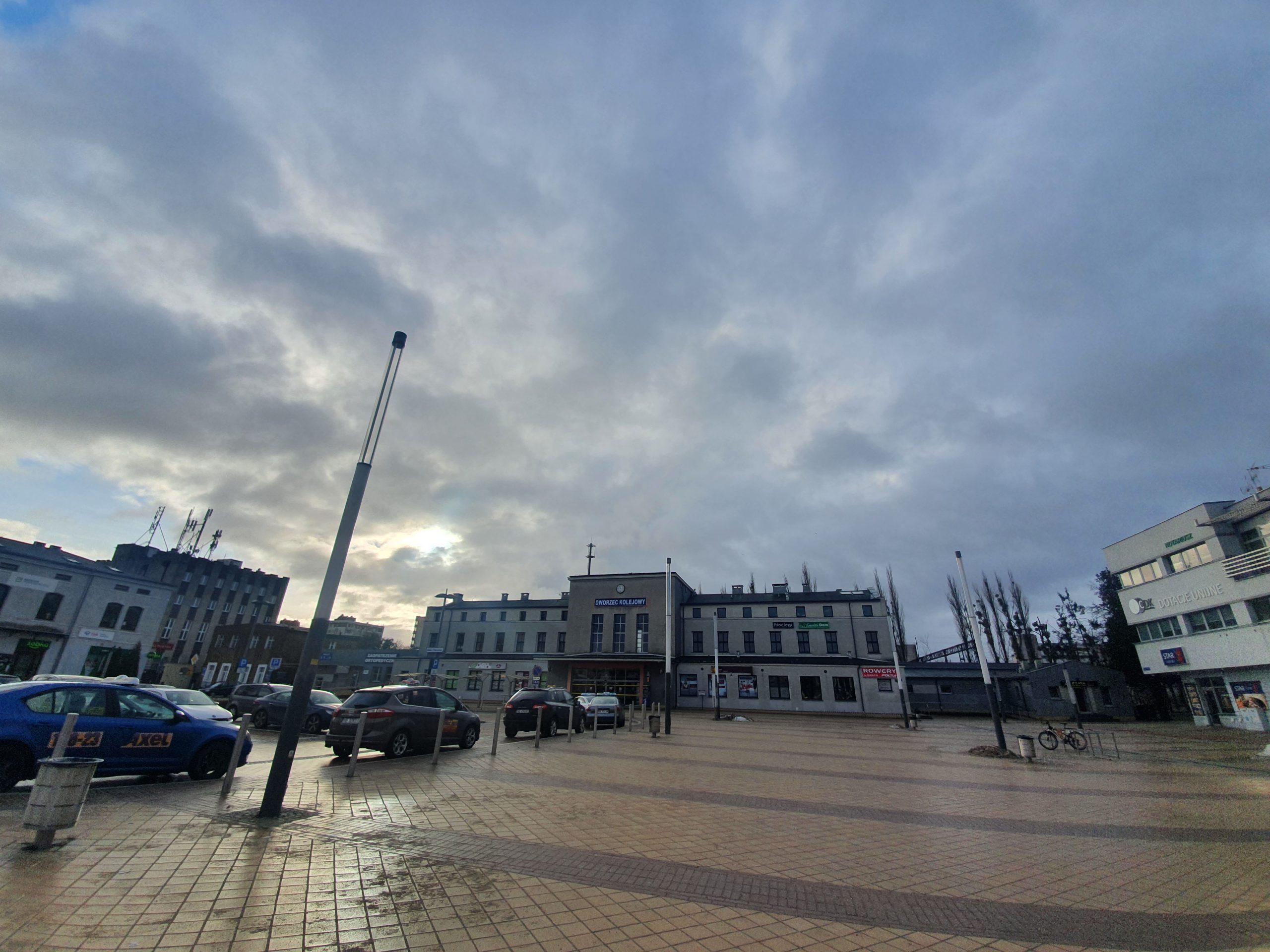
    It’s a cold day in Malbork, it’s something of a temperature shock to go from the warmth of the train to the cold surroundings of Poland in January. The very Germanic looking building was constructed in 1891 and it survived the Second World War, but only because the Polish authorities were able to save it from an arson attack led by the Red Army.

    As an aside, the town (then known as Marienburg) voted in 1920 to join Eastern Prussia rather than Poland, so this was a German run railway station until the end of the Second World War. Although railway stations in Ireland were once operated by Great Britain before the country gained independence, this concept of places changing their names and being in different territories is still one that fascinates me, as it isn’t something I’ve needed to think about when in England for example.

  • Elbląg – Museum of Archaeology and History (15th Century Glasses)

    Elbląg – Museum of Archaeology and History (15th Century Glasses)

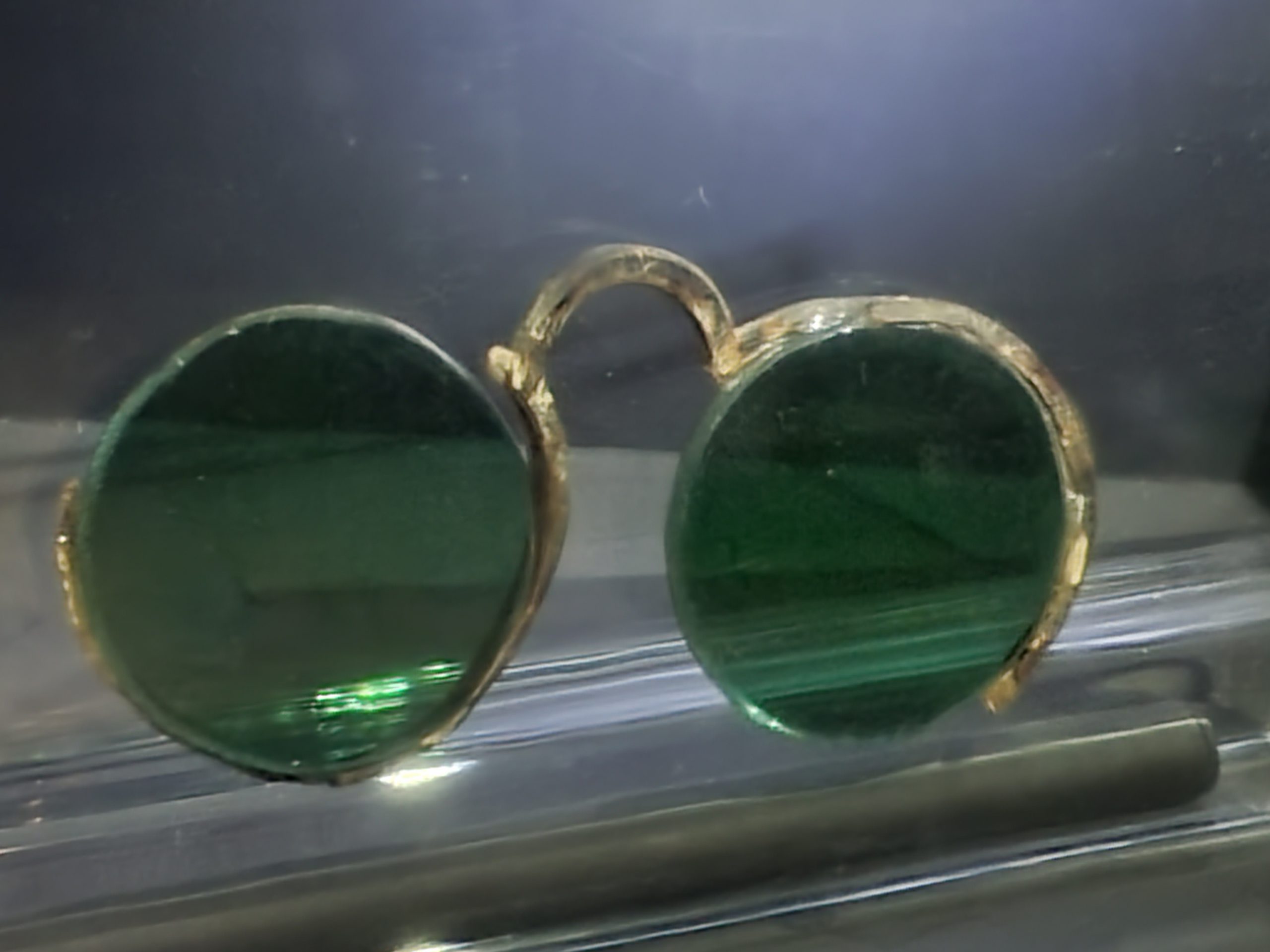
    These glasses with green lenses date from the early fifteenth century and are amongst the displays at the Museum of Archaeology and History in Elbląg. I use the phrase “a remarkable survival” relatively regularly, and given the history of the city, it’s something of a surprise that they have survived the last 600 years or so. They were found in an archaeological dig in the city, and unsurprisingly, they were the only undamaged pair of glasses that were found. Even more exciting (excitement is relative I admit, but I’m sure that the archaeologists were thrilled) they suspect they know who the owner of the glasses was, likely Nicholas Vilelype, a wealthy merchant and politician who lived in Elbląg.

    The reason that I found these glasses of particular interest are that they wouldn’t be entirely unfashionable today, the green adds a certain depth to the design and they’re a little John Lennon as well. It’s a look back in time though to think that these glasses were once an important, and expensive, item that an individual living 600 years ago was wearing in the city.

  • Elbląg – Hotel Atrium

    Elbląg – Hotel Atrium

    There are no chain hotels in Elbląg, but the Hotel Atrium in the heart of the city was well reviewed and not particularly expensive. I checked in at 15:00 and the usual receptionist wasn’t there, but I was given my key and went back down to deal with the other administrative issues later on in the day. The welcome was friendly and everything in the hotel was clean and orderly, so my first impressions were positive.

    I had only paid for a single room, but they gave me a twin room as they seemed to have a low occupancy. Internal noise wasn’t a problem, but there was a lack of sound insulation generally from inside the hotel. The owners also have a dog which made itself heard quite a lot, but not to a degree that became annoying. Externally, I could hear the cathedral bells ringing, but I like noise like that, it’s part of the heritage of the city and the building has been for 800 years or so.

    This is the view from my window and the reason that I could hear the cathedral bells so easily.

    The breakfast area downstairs in the cellar. Although the hotel has space to offer evening meals as this room has seven or so tables, they don’t do that, not least perhaps as there are so many nearby restaurants for guests to choose from. There were some takeaway menus in the drawer of the desk in the room as well, and it might be allowable for guests to get them delivered and eat them downstairs (the food that was delivered, I don’t mean to eat the takeaway menus themselves).

    There is a cooked breakfast option included, in addition to the cold buffet selection.

    I did struggle a little with this, due to my picky nature that I can’t eat bacon that has uncooked fat on it and the eggs were way too oily, so I felt quite guilty that this remained mostly uneaten.

    The cold buffet selection, all nicely presented and regularly restocked.

    On the second morning I limited myself just to the cold buffet options, and they were delicious, with decent rolls, cheese that had some taste to it and some cold meats alongside the coffee, tea and orange juice. I’m never really in need of cooked options, but it’s useful that the option is there.

    The reviews for the hotel were broadly very positive, and the only negative one on Google was an angry guest who got charged for towels the hotel said that he’d pinched. Other than that, the hotel seems to have kept its guests very happy over the last few years, the reviews are complimentary about the cleanliness and the quality of the breakfast.

    This was a pleasant enough stay and the hotel staff were friendly, it feels something of a family managed arrangement. I’m not sure they’re making much money given the limited number of guests at the moment, but I can imagine this is a bustling environment during the summer months. I’m not sure that I have a need to revisit Elbląg in the near future, but I’d willingly stay here again if I need to return.

    There’s more information about the hotel here.

  • Elbląg – St. Nicholas Cathedral

    Elbląg – St. Nicholas Cathedral

    Starting off as a Catholic church, before becoming Lutheran, and then becoming Catholic again, this has been in the centre of the old town since 1247. It was damaged by a fire in the late eighteenth century, but worse was to come during the Second World War when it was nearly entirely destroyed, so much of what is here now has been reconstructed recently.

    I find cathedrals can very often be quite confusing to get in, but these side doors are the entrance. As an aside, I used to think it was just me who got confused easily at things like this, that was until watching other people faffing about, which made me feel better……

    Pope John Paul II is very important to the Polish people and he visited the cathedral on Sunday 6 June 1999 and the Vatican have a copy of his homily.
    This photo doesn’t really show just how dark the cathedral was internally, but it was quite difficult to see because of the lack of lighting. I used my phone’s night mode and have brightened it, which makes things much more visible now than they were to me when I was inside the building. To all intents and purposes, I took this photo in the dark.

    The beautiful stained glass.

    The destruction of the church in January 1945 could have marked the end for this building, as there was no guarantee of it being reconstructed. The city’s population was much reduced, there were limited funds and so much to rebuild across the country. However, the priests were dedicated to the rebuilding project and work started removing the rubble in 1948. Disaster hit in 1955 when a storm damaged the building again, but by 1965, the reconstruction efforts had been completed.

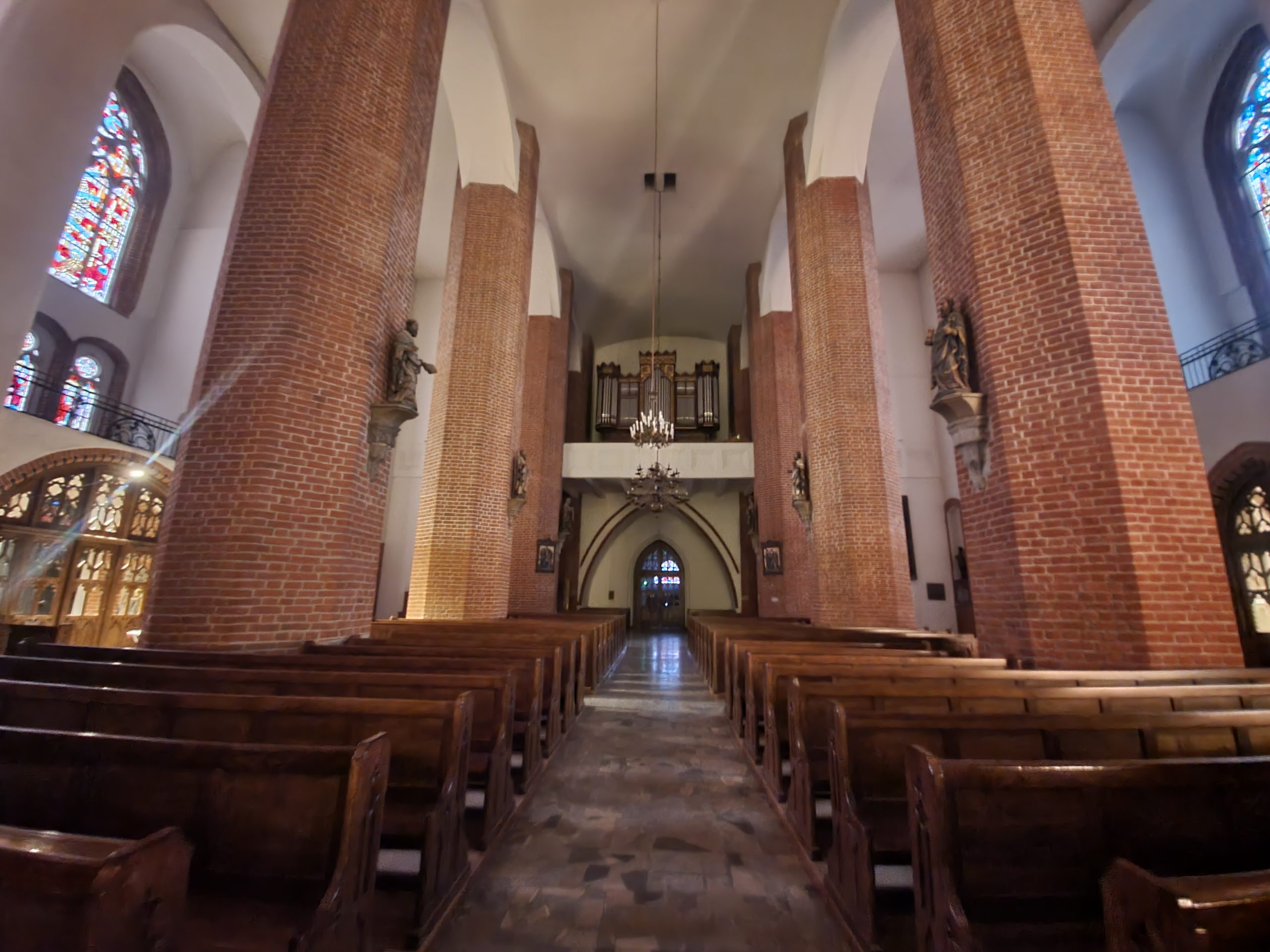
    The aisle of the cathedral and there’s more about the architecture of the building at https://medievalheritage.eu/en/main-page/heritage/poland/elblag-st-nicholas-cathedral/.

    The interior is relatively plain and simple, with most of the furnishings having come from other churches.

    Ignoring the plastic around parts of it, this is I think a Gothic bronze baptismal font dating back to 1387, very much the pride of the cathedral. There was only one other person in the cathedral when I was there and he praying near to this, so I didn’t go and disturb his private thoughts.

    This cathedral has gone very much full circle, back to the Catholic church which it was first constructed as, although the building itself has been wrecked on multiple occasions and little remains of what there once was. It was a determined effort to ensure that the reconstruction took place at all, a credit to the local parish and individuals who were so keen to rebuild.