Tag: London

  • London – Christ Church Greyfriars

    London – Christ Church Greyfriars

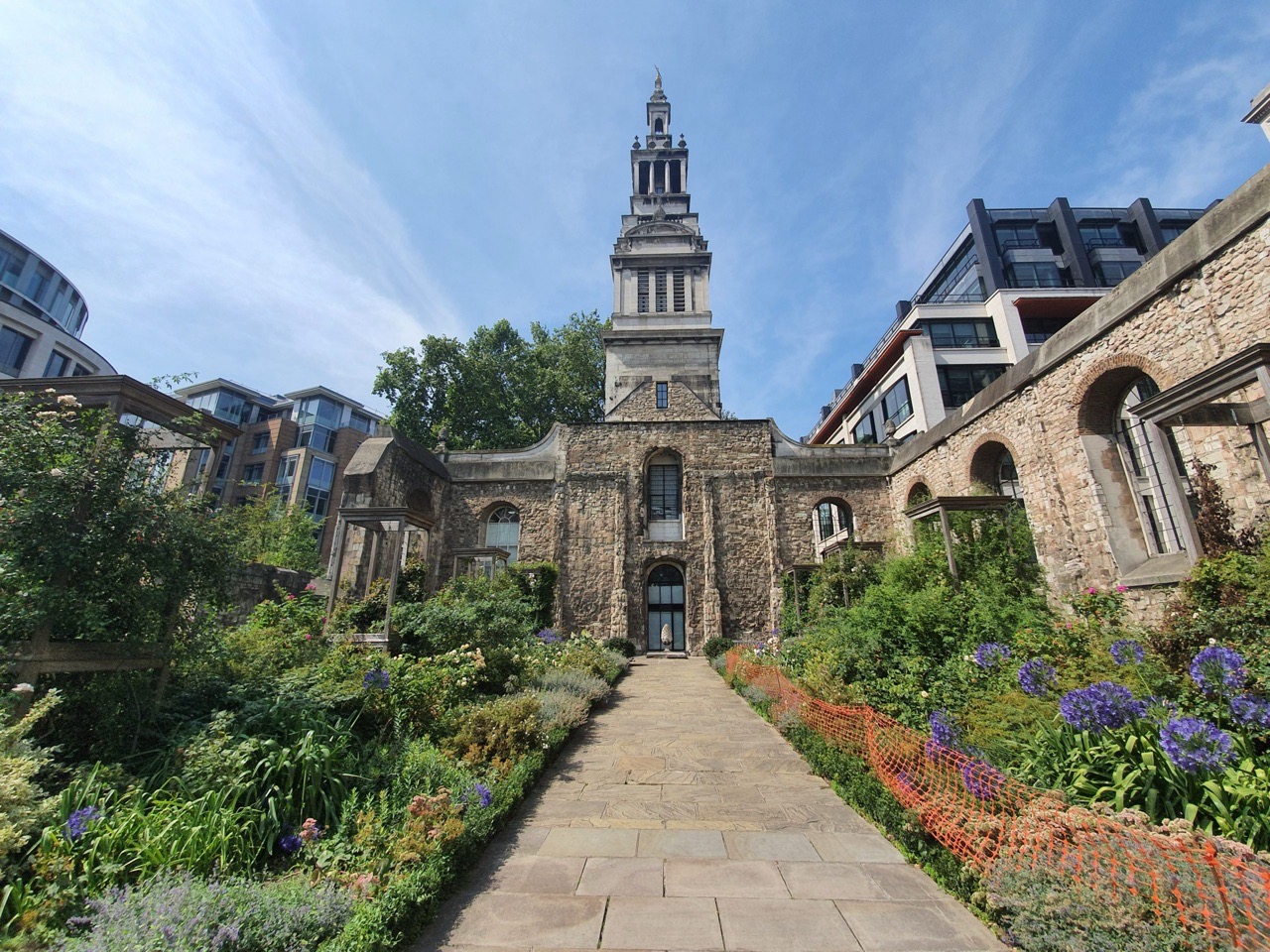
    I haven’t paid much attention to these ruins before, but they have a considerable heritage as they are from a monastic church built in the thirteenth century on what is now Newgate Street. The monastery was dissolved during the Reformation and was turned into a parish church which was given by King Henry VIII to the Mayor of London for the use of the city’s population. This church building was though lost, along with most others in the heart of the city, during the Great Fire of London in 1666. The replacement building was designed by Sir Christopher Wren, but this in turn was unfortunately destroyed in 1940 during the London Blitz.

    The few sections of the remaining church still standing were demolished following the end of the Second World War, with the site turned into public gardens. There are some important people who have been buried at this site over the centuries, including Isabella of France (also the Queen of England), Marguerite of France (another Queen of England) and Joan of England (who was the Queen of Scotland). I’m equally confused as to who was Queen of where, but it’s evidence of the importance of the church.

    Some of the surviving arches and it’s positive that it was decided to keep this as a public park, rather than shoving up another office block on the site.

    The former door into the nave.

    The gardens are impressive and before this health scare meant fewer people came into London, I imagine that this was a busy place for those wanting to eat their lunch.

    The tower, which was completed in 1704, survived the London Blitz and was restored in 1960.

    There are many more photos of how the church used to look at https://thecitizensmemorial.wordpress.com/2012/05/19/11/.
  • London – Chinatown

    London – Chinatown

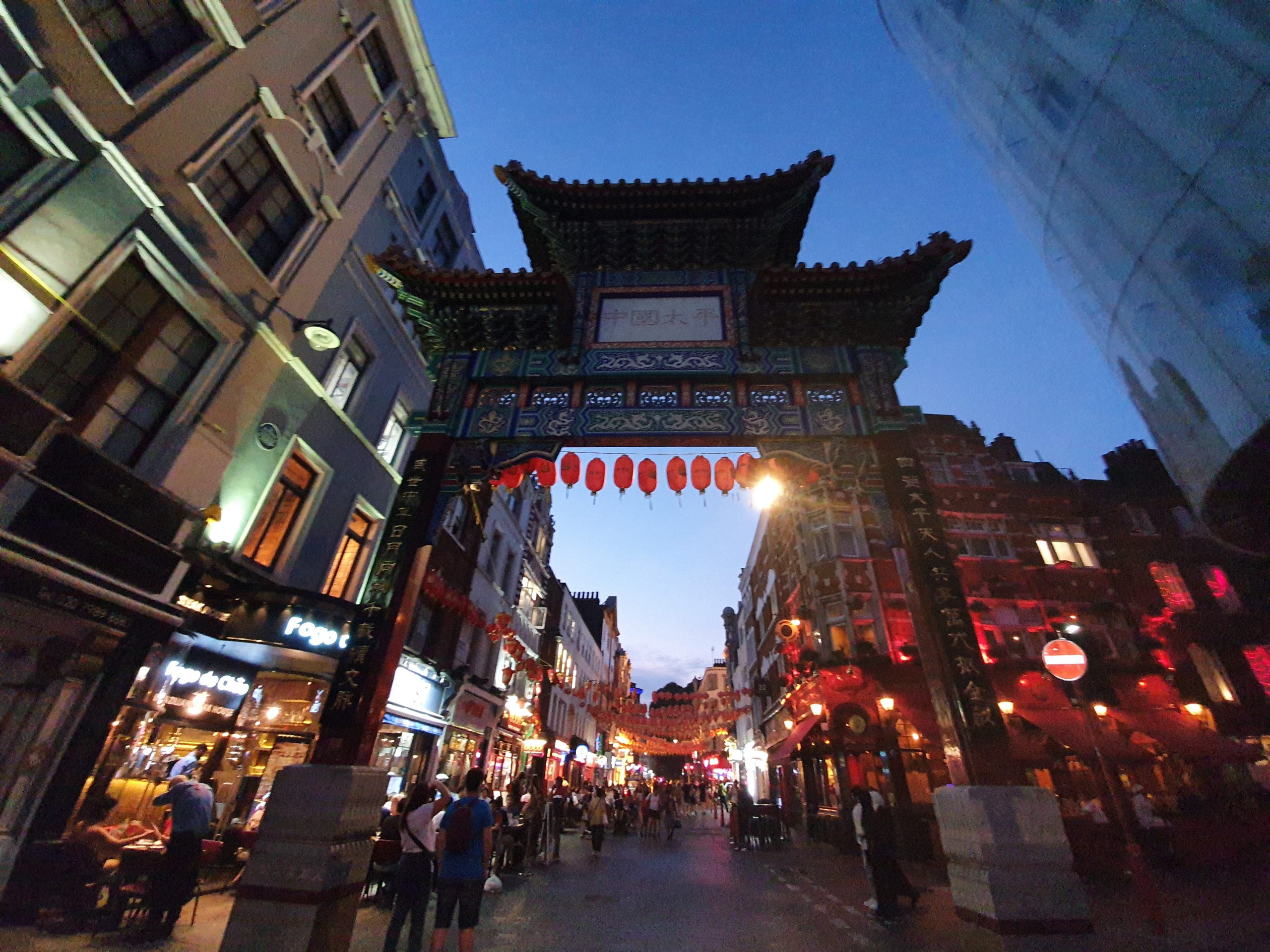
    Some photos from Chinatown in London on Monday evening. Although London had felt quiet all day, there was a bit more vibrancy with people taking part in the Eat Out to Help Out scheme and most restaurants looked pretty full. Within a short distance of Chinatown and Soho though it remained a different matter, numerous restaurants and takeaways not even opening at all this month.

  • London – British Museum (Postwick Grove, Norwich)

    London – British Museum (Postwick Grove, Norwich)

    I usually visit the British Museum three or four times a year, something which is a little difficult to do with the current virus situation, primarily because it’s shut. However, they’ve placed hundreds of thousands of images on their web-site, so this will have to do me for the moment. The images can be used non-commercially, as long as the British Museum is credited. So, this is their credit.

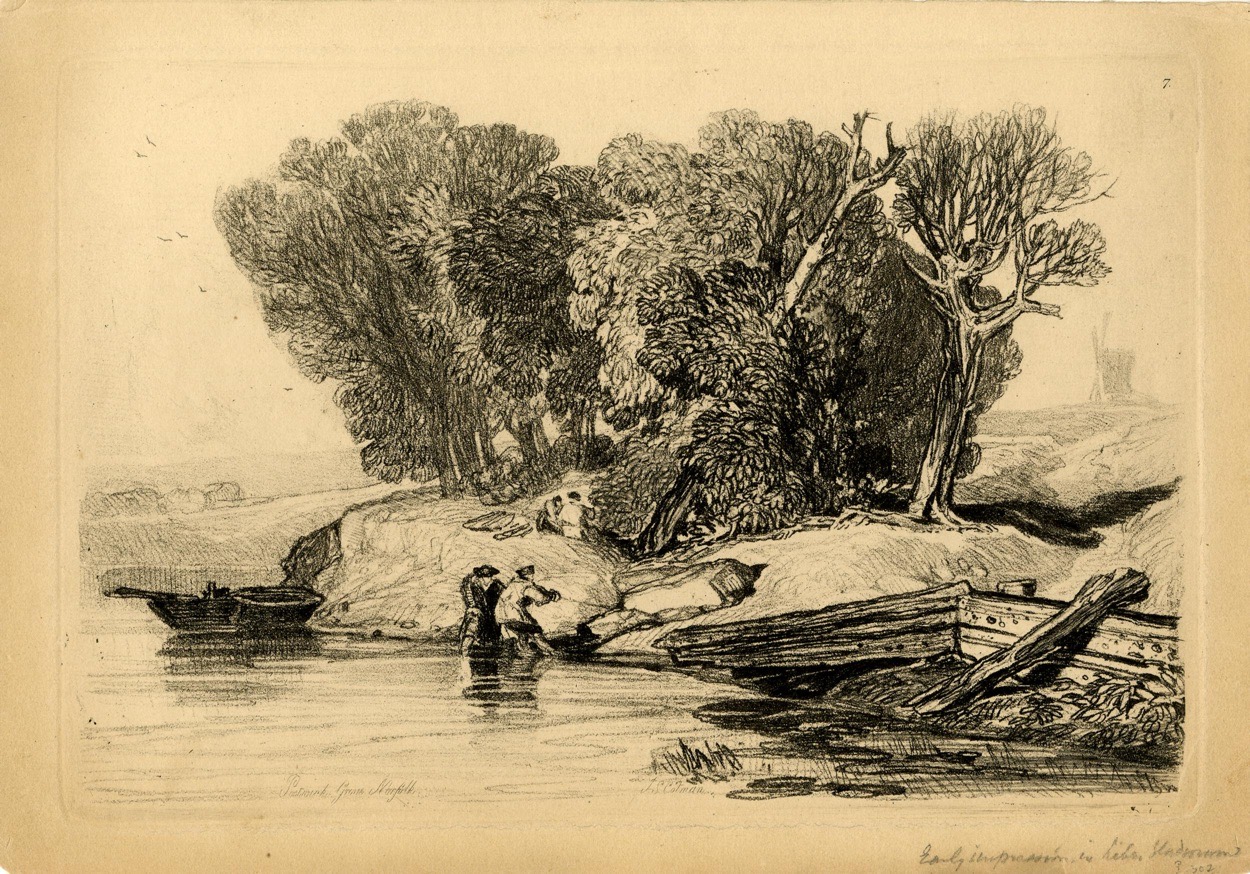
    I like this print which is in the collections of the British Museum as it’s painted at Postwick Grove. I’d never heard of this place until we walked through it on Saturday, but it’s a once quiet area of the city where painters would come and be inspired by the peace and countryside. These painters would have also walked the similar route to the one we did on our 22-mile walk (more on that soon), although they didn’t have to cross the Norwich Southern Bypass.

    The print was produced by John Sell Cotman and there’s no precise production date, just sometime between the dates of 1813 and 1838. Handily the museum knows that it’s from before 1838 as Cotman included it in a book which he produced in that year, the ‘Liber Studiorum – A Series of Sketches and Studies’ published by HG Bohn. The print isn’t on display in the museum and was acquired by them in 1902 from James Reeve, a long-time custodian of the Norwich Castle Museum.

    This is what the artists would have seen at Postwick Grove, with the railway line to Reedham and Great Yarmouth to the top of the image, but it’s missing the huge dual carriageway which now ploughs vertically through the area. The addition of the Norwich Park and Ride parking area hasn’t done much for the peace and quiet either, but there is still an element of tranquility left.

  • London – British Museum (Ship Tavern, Great Yarmouth)

    London – British Museum (Ship Tavern, Great Yarmouth)

    I usually visit the British Museum three or four times a year, something which is a little difficult to do with the current virus situation, primarily because it’s shut. However, they’ve placed hundreds of thousands of images on their web-site, so this will have to do me for the moment. The images can be used non-commercially, as long as the British Museum is credited. So, this is their credit.

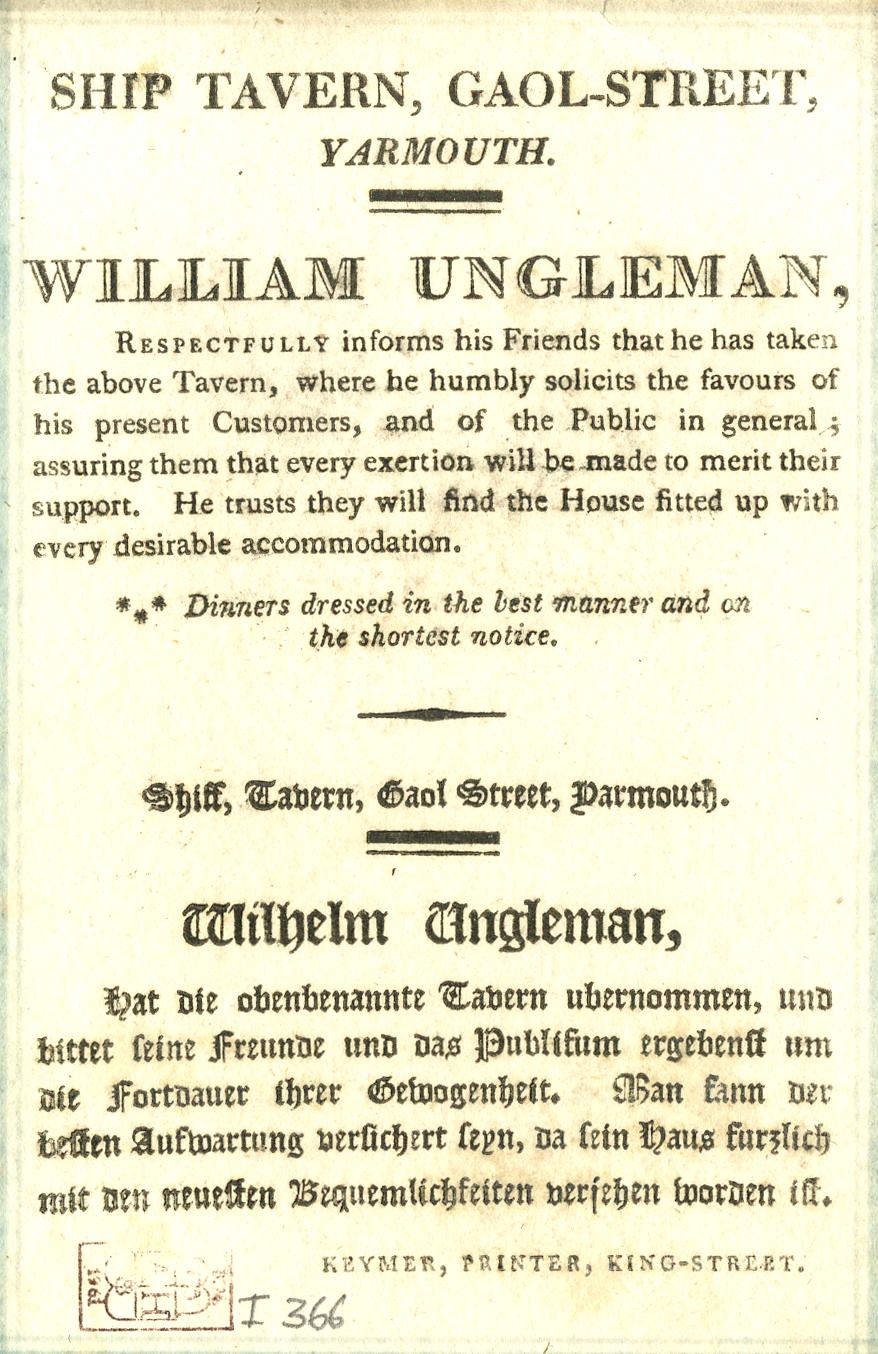
    I’m not sure that there’s much advertising from pubs at the turn of the nineteenth century surviving, especially not in two languages. But this advertising card in English and German is now in the collection of the British Museum and they acquired it in 1960 from the estate of Sir Ambrose Heal. Heal was a collector of trade cards, and had a large number in his collection, as well being the chairman of Heal’s on Tottenham Court Road, which is still trading.

    The Ship Tavern is though sadly no longer trading, it lasted from the 1760s until 2010, being located next to Row 84 in the town. But there’s something quite captivating about how multi-national the docks and port of Great Yarmouth once were. Indeed, in 1797 this pub had welcomed (I use welcomed slightly loosely here….) Dutch naval prisoners from the Battle of Camperdown. As for William Ungleman who produced these trade cards, he ran the pub between September 1809 and 1819, but I have no idea where he went after that.

  • London – British Museum (Bishopgate Bridge by John Thirtle)

    London – British Museum (Bishopgate Bridge by John Thirtle)

    I usually visit the British Museum three or four times a year, something which is a little difficult to do with the current virus situation, primarily because it’s shut. However, they’ve placed hundreds of thousands of images on their web-site, so this will have to do me for the moment. The images can be used non-commercially, as long as the British Museum is credited. So, this is their credit.

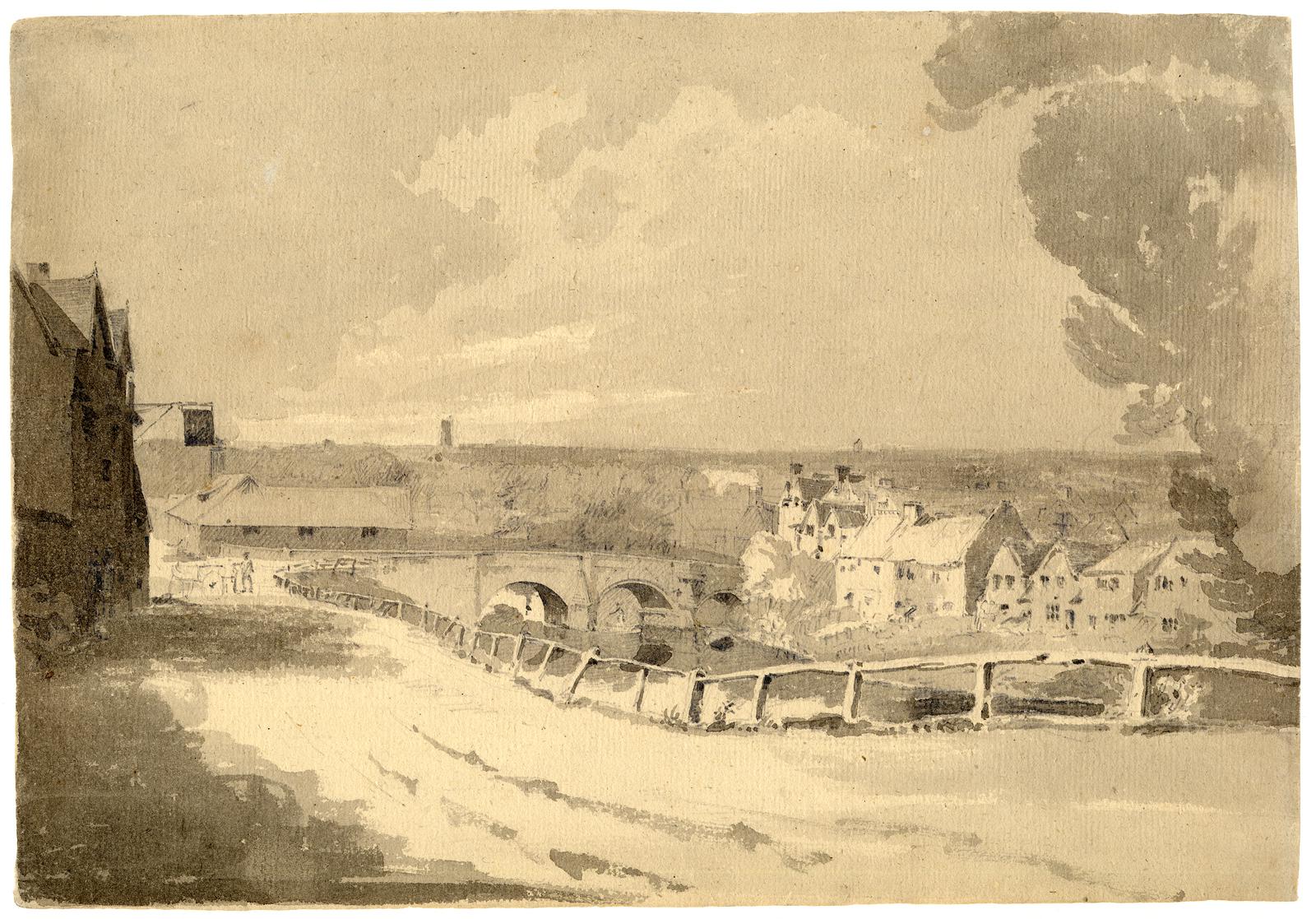
    This drawing was made by John Thirtle, likely at the very end of the eighteenth century or the early part of the nineteenth century. The museum purchased the drawing from Andrew Wyld in 1977, a dealer in fine art. Like nearly everything I seem to look up, this artwork isn’t on public display and they don’t seem to have used it in any exhibitions or the like. It’s a pen and grey ink drawing with a grey wash, showing Bishopgate Bridge. Thirtle is buried in the Rosary Cemetery, a reminder to myself that I should go and have another investigation there as I haven’t visited in a while.

    I think this photo was taken from around the same place as the above drawing was made, I was slightly hampered by three things. One were bushes, one was a big tree and the other was a blasted fence where I wanted to stand to take the photo. I didn’t fancy having any little incidents by climbing over that small fence and falling into the River Wensum, so this is the best that I could safely get.

  • London – British Museum (Great Yarmouth Fisher Girl by John Sell Cotman)

    London – British Museum (Great Yarmouth Fisher Girl by John Sell Cotman)

    I usually visit the British Museum three or four times a year, something which is a little difficult to do with the current virus situation, primarily because it’s shut. However, they’ve placed hundreds of thousands of images on their web-site, so this will have to do me for the moment. The images can be used non-commercially, as long as the British Museum is credited. So, this is their credit.

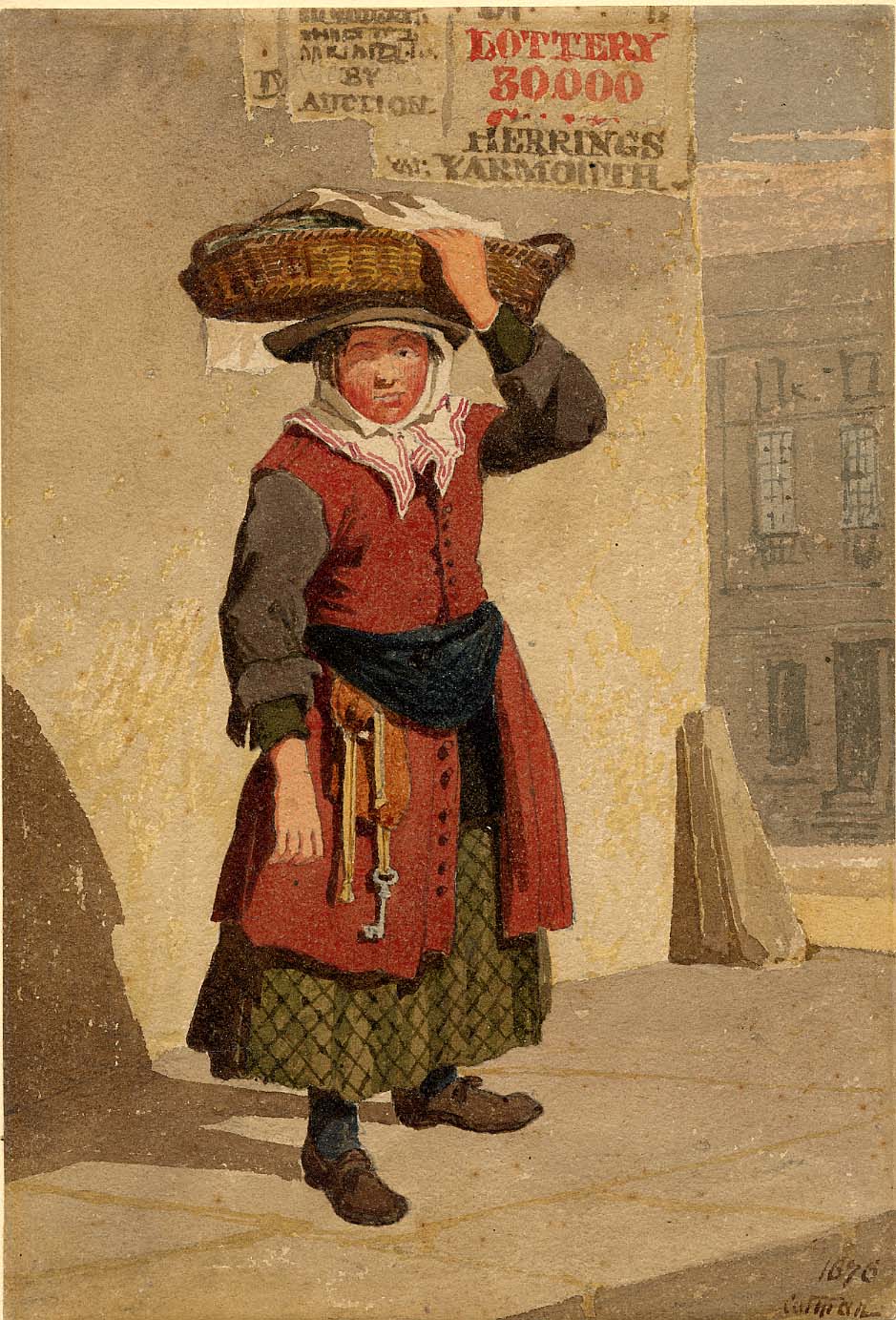
    A watercolour of a fishwife in Great Yarmouth by John Sell Cotman (1782-1842) which was acquired by the British Museum in 1902 from James Reeve. They don’t know when it was painted, but Cotman lived in Great Yarmouth between 1812 and 1823, so it was probably then. There’s something quite intriguing about this one-eyed lady, standing in front of a lottery sign, with her key at her waist and her fish on her head. I’m not sure that I can think of another painting which is more evocative of Great Yarmouth at that time. I’m equally unsure what that says about Great Yarmouth or me, but there we go….

  • London – British Museum (1787 Print of Norwich Cathedral by John Sanders)

    London – British Museum (1787 Print of Norwich Cathedral by John Sanders)

    I usually visit the British Museum three or four times a year, something which is a little difficult to do with the current virus situation, primarily because it’s shut. However, they’ve placed hundreds of thousands of images on their web-site, so this will have to do me for the moment. The images can be used non-commercially, as long as the British Museum is credited. So, this is their credit.

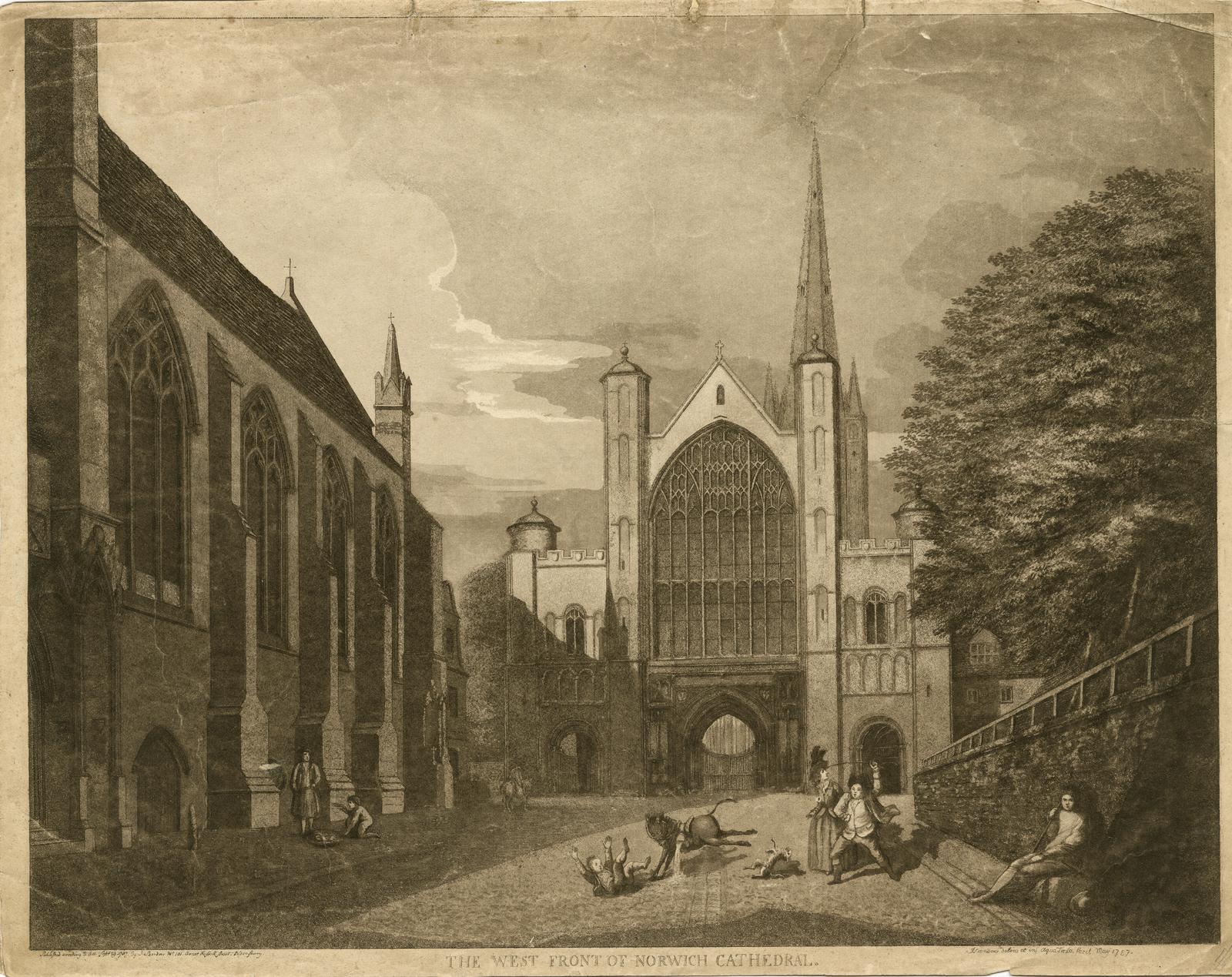
    This plate is from 1787 and has the beautiful Norwich Cathedral at the rear, whilst a donkey chucks a boy off its back, kicks a dog and then gets whipped by its owner. Eventful to say the least…. The plate isn’t on display and was acquired by the British Museum in 1873 from George Mason, who was a bookseller.

    I’m puzzled what that wall to the right is, there’s no obvious building on any overhead map from the period. It is though the site of whether Norwich Cathedral’s bell tower once stood, but this was torn down in the late sixteenth century and the bells flogged off. The building on the left is Norwich School’s chapel, the chantry chapel and college of St John the Evangelist which was built in 1316.

    And a photo from around the same spot today. Unfortunately, no donkeys were visible to liven proceedings up.

  • London – British Museum (Cicely Ormes)

    London – British Museum (Cicely Ormes)

    I usually visit the British Museum three or four times a year, something which is a little difficult to do with the current virus situation, primarily because it’s shut. However, they’ve placed hundreds of thousands of images on their web-site, so this will have to do me for the moment. The images can be used non-commercially, as long as the British Museum is credited. So, this is their credit.

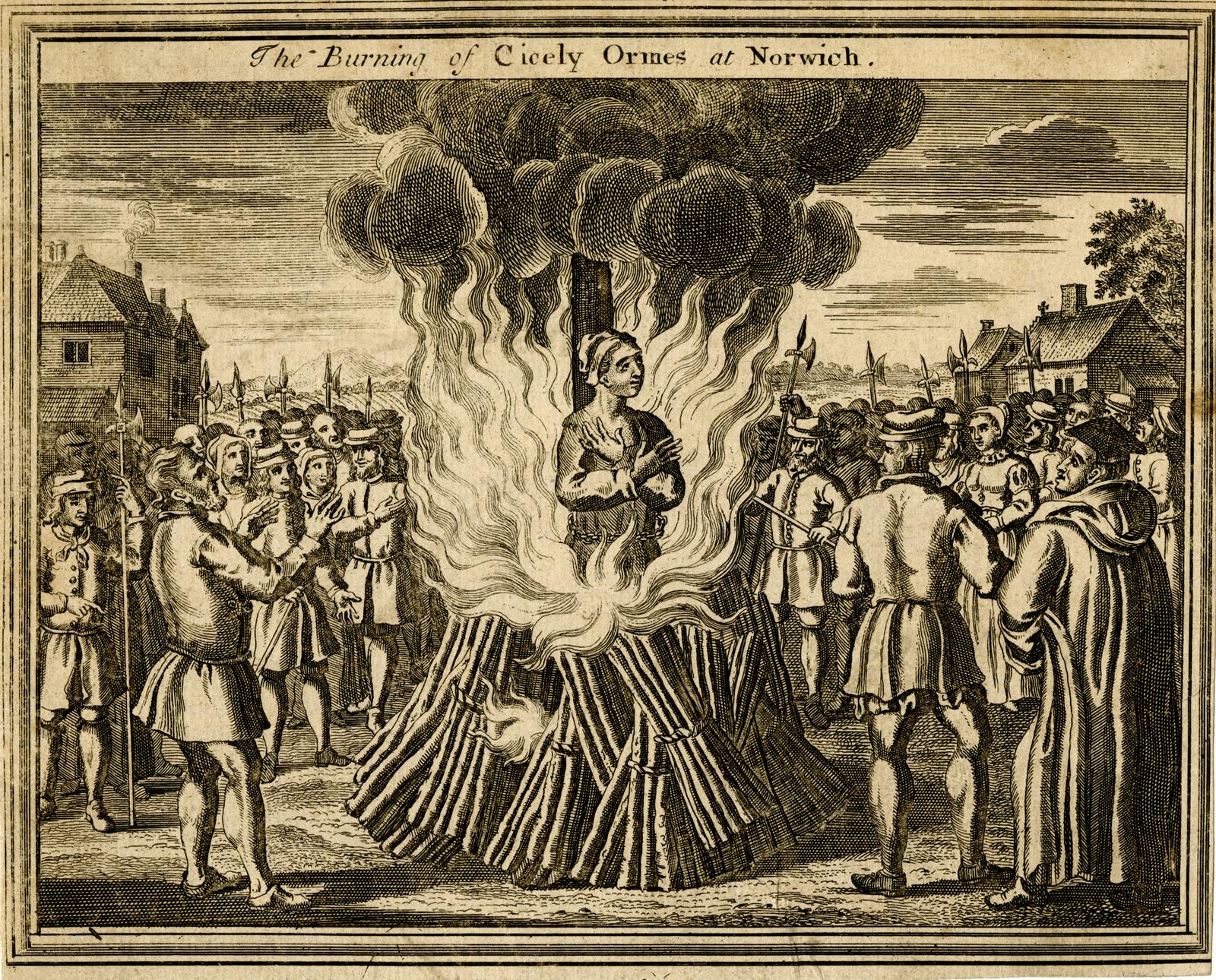
    This print was made by Thomas Bowles II in the mid-eighteenth century and it was donated to the British Museum in 1901 by Sir Sidney Colvin. The image tells the story of Cicely Ormes, a brave woman from Norwich who was burned at the stake on 23 September 1557.

    Ormes, who was born in East Dereham, lived in the St. Lawrence parish of the city and when she was aged 21, she was pressured by a Catholic magistrate to denounce her Protestant faith. She did, but she regretted this, and so she recanted. Ormes, the wife of a worsted weaver, was then arrested a few months later and ordered to shut up about her refusal to accept the Catholic faith. She said no, so the magistrate ordered that she be burned to death.

    At the stake she stood firm and said:

    “Welcome thou cross of Christ” and “my soul doth magnify the Lord, and my spirit rejoiceth in God my Saviour”.

    It was common for people to change their religion at this time, indeed, it was pretty essential as the Monarchs kept faffing about with their decision on what the national religion should be. But, they were allowed to just change their minds to suit the situation, which most people did for a quiet life. Cicely Ormes was clearly braver than that, she didn’t want to sacrifice her beliefs and so she died at the age of 22. She was reported to feel no pain as she died, and she was clearly very courageous, and I’m not sure that Norwich has really recognised that bravery.

  • London – British Museum (1500s Map of Nordovicum)

    London – British Museum (1500s Map of Nordovicum)

    I usually visit the British Museum three or four times a year, something which is a little difficult to do with the current virus situation, primarily because it’s shut. However, they’ve placed hundreds of thousands of images on their web-site, so this will have to do me for the moment. The images can be used non-commercially, as long as the British Museum is credited. So, this is their credit.

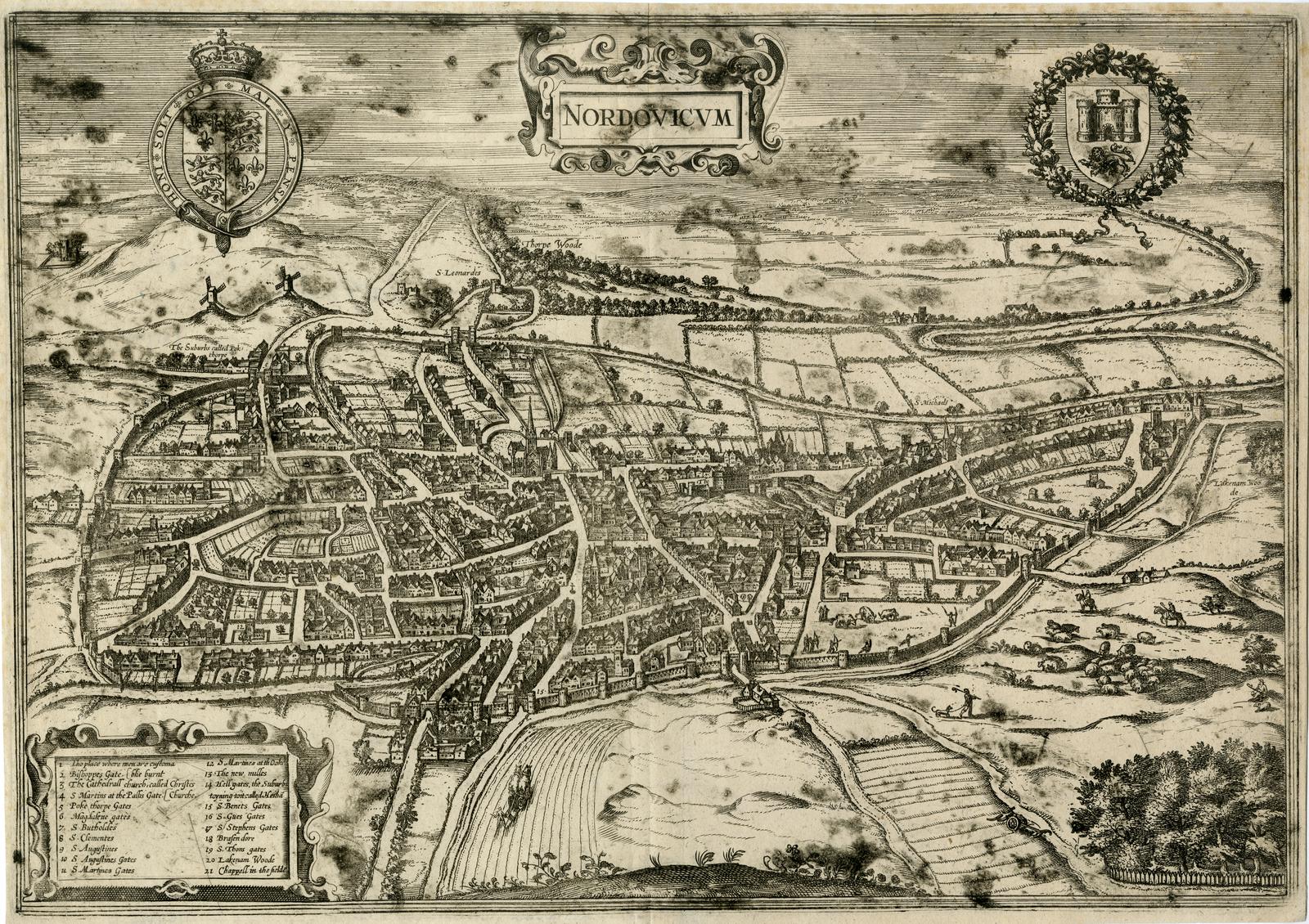
    Clicking on the above image will bring up a larger version. It’s one of the better known plans of Norwich (or Nordovicum), issued at some point after 1581. It’s been in the British Museum collections for so long they don’t know when they got it, but it was before 1811.

    Anyway, it’s gorgeous. At the top is Bishopgate Bridge, when it still had its gate, and Cow Tower is visible to the left of that. To the bottom, at number 14, is “Hell Gates”, which is more usually called Heigham Gate, but I prefer the version on this plan of the city. And near number 17, which is St. Stephen’s Gate, is near where the St. Stephen’s outlet of Greggs is now located.

  • London – British Museum (Ephesus Takeaway Menu)

    London – British Museum (Ephesus Takeaway Menu)

    I usually visit the British Museum three or four times a year, something which is a little difficult to do with the current virus situation, primarily because it’s shut. However, they’ve placed hundreds of thousands of images on their web-site, so this will have to do me for the moment. The images can be used non-commercially, as long as the British Museum is credited. So, this is their credit.

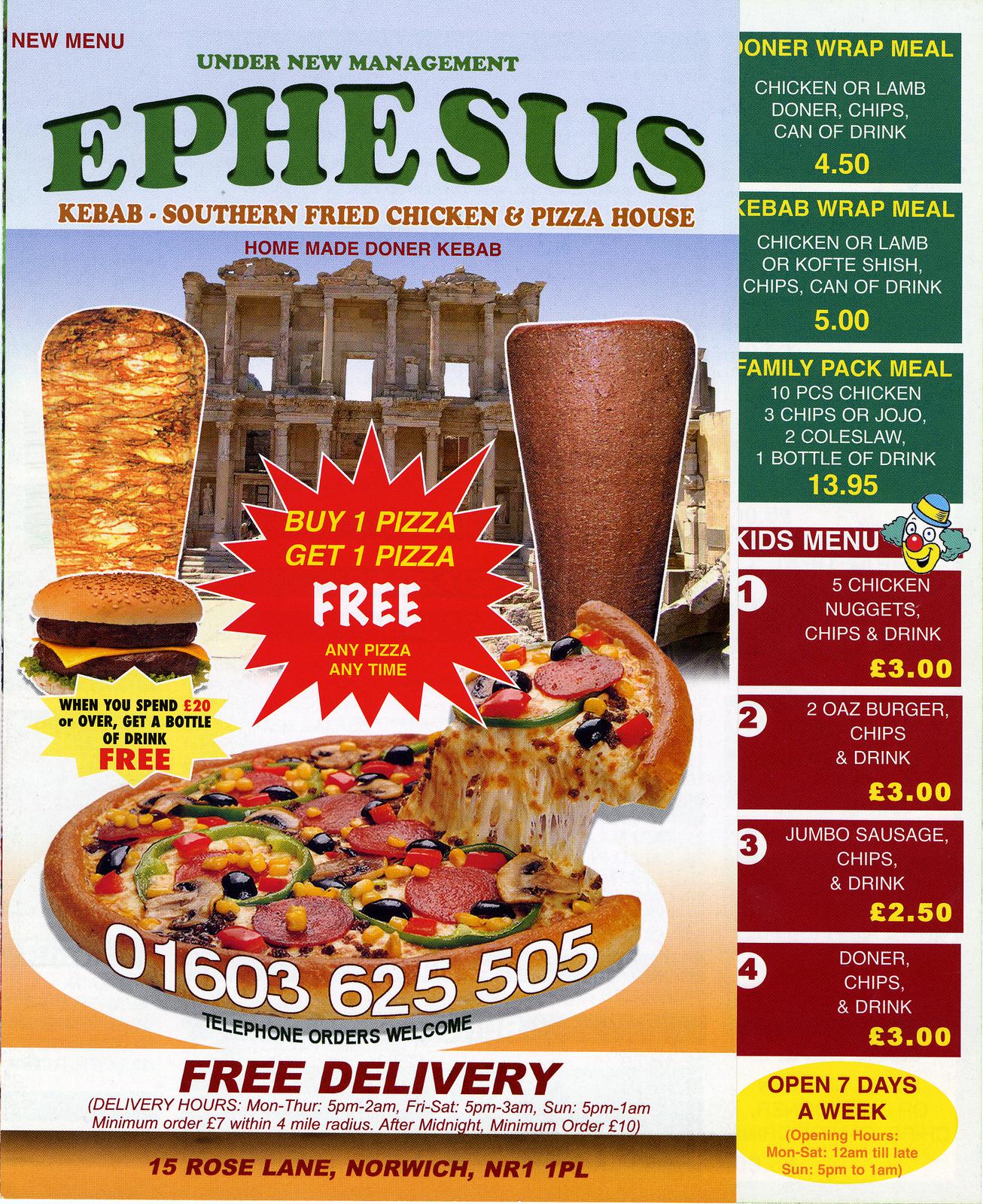
    This is perhaps one of the more surprising items in the collections of the British Museum, a takeaway menu from Ephesus on Rose Lane in Norwich. It was given to the museum by St John Simpson, who is a curator specialising in items from the Middle East. Perhaps I’ll send the British Museum a nice JD Wetherspoon menu for their collection. Unsurprisingly, the museum hasn’t put this on display.