
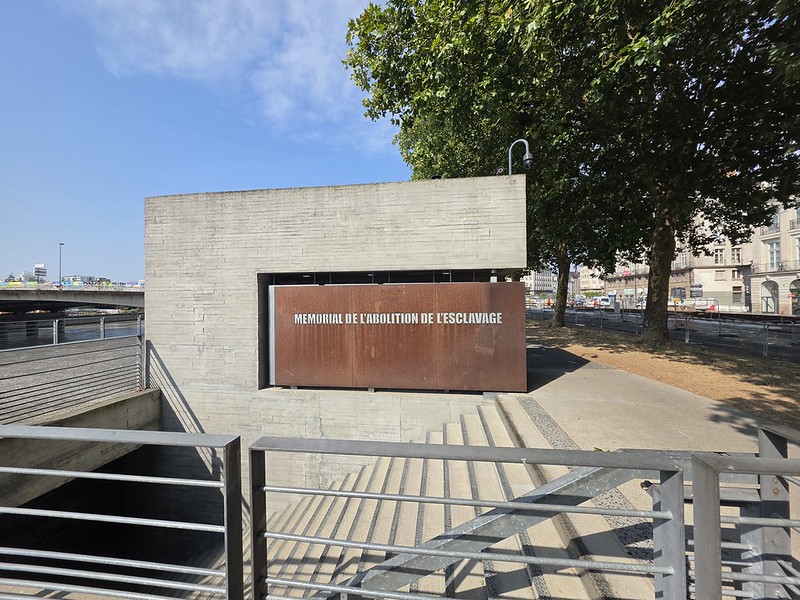
This memorial was created to confront Nantes’ history as France’s leading slave trading port, while honouring both the victims of slavery and those who campaigned against it. The project developed from the city’s broader examination of this uncomfortable past during the 1990s, with the City Council approving plans for a permanent memorial in 1998 and choosing the winning design in 2002. Construction began in 2010 and the completed memorial opened to the public on 25 March 2012.
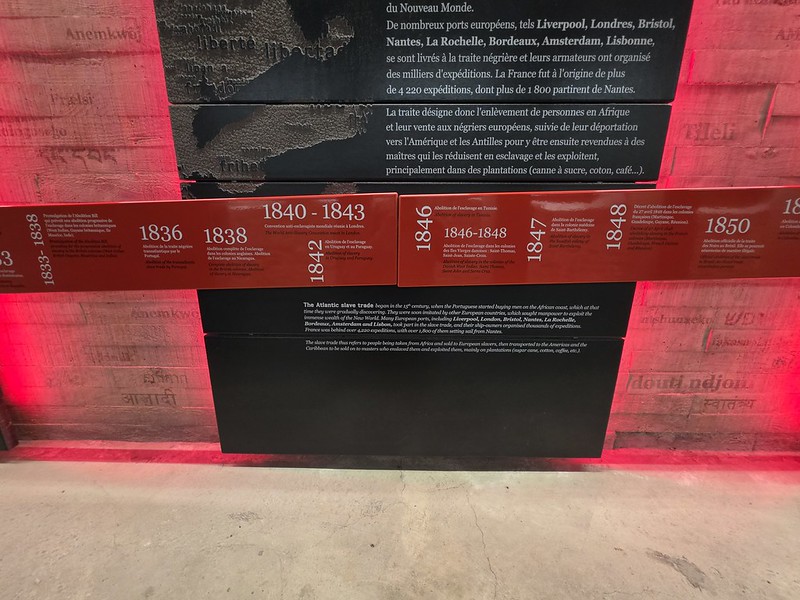
Steps lead down beneath the promenade into a long, confined passage containing texts about slavery, resistance, abolition and human rights. The design is deliberately stark, with old stonework, bare concrete and a wooden walkway running through the space. It feels less like a conventional museum and more like entering the concealed structure beneath the city’s prosperity, which is presumably the point.
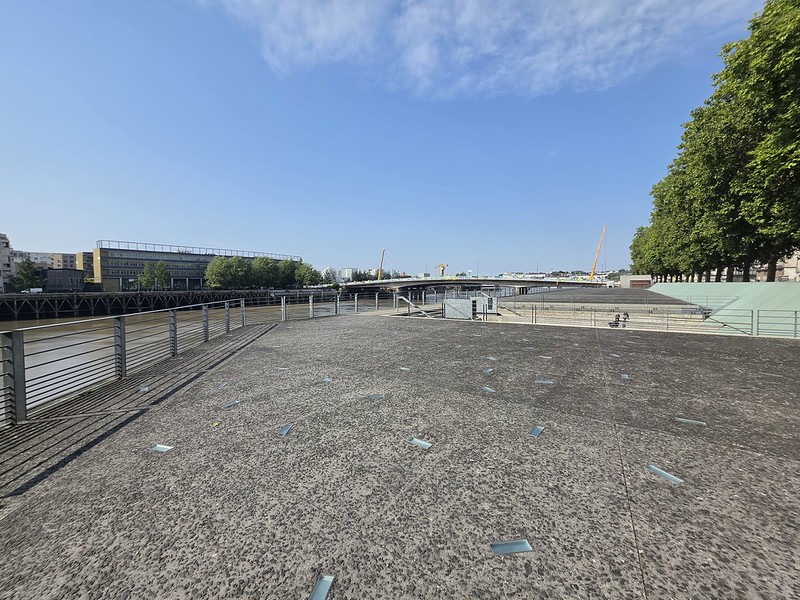
Along the Quai de la Fosse are around 2,000 glass plaques naming slave ships and the ports involved in the trade. They are embedded discreetly into the ground, meaning that visitors walk among the evidence rather than being presented with a single monument which can be admired briefly before everyone moves on to somewhere selling coffee. The setting beside the Loire is calm and attractive, but that is precisely what makes it effective: the peaceful modern waterfront sits directly above the place from which ships once departed on voyages built around the treatment of human beings as cargo. It was a vast system of kidnapping, forced transportation, violence and exploitation, with consequences that lasted long after abolition.
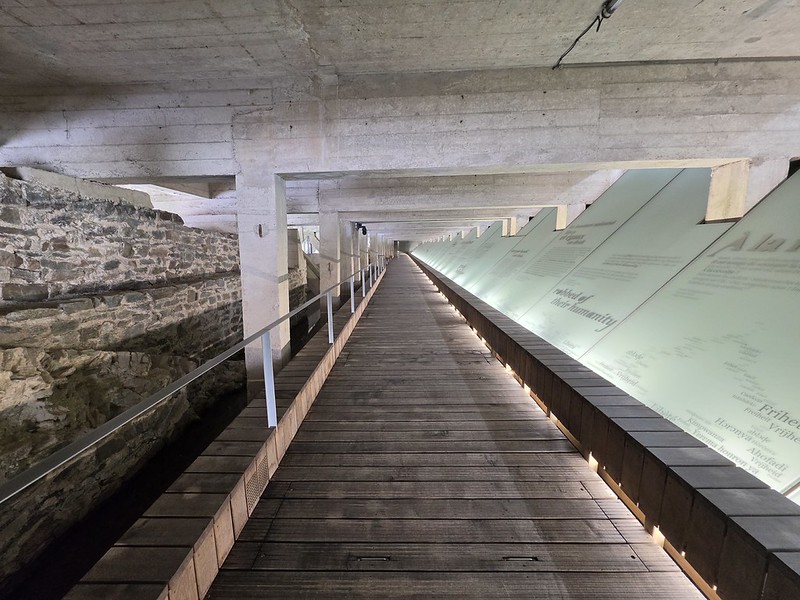
The displays beneath the riverside promenade set out the long and deeply uncomfortable chronology of the Atlantic slave trade, including the repeated attempts to abolish it and the repeated determination of those profiting from it to find reasons why abolition should perhaps wait a little longer. Nantes was France’s leading slave trading port during the eighteenth century, and the exhibition makes no attempt to disguise that history. France abolished slavery more than once, only for Napoleon to restore it in the French colonies in 1802, placing imperial and financial interests above the freedom that had briefly been granted. It was finally abolished permanently in 1848.
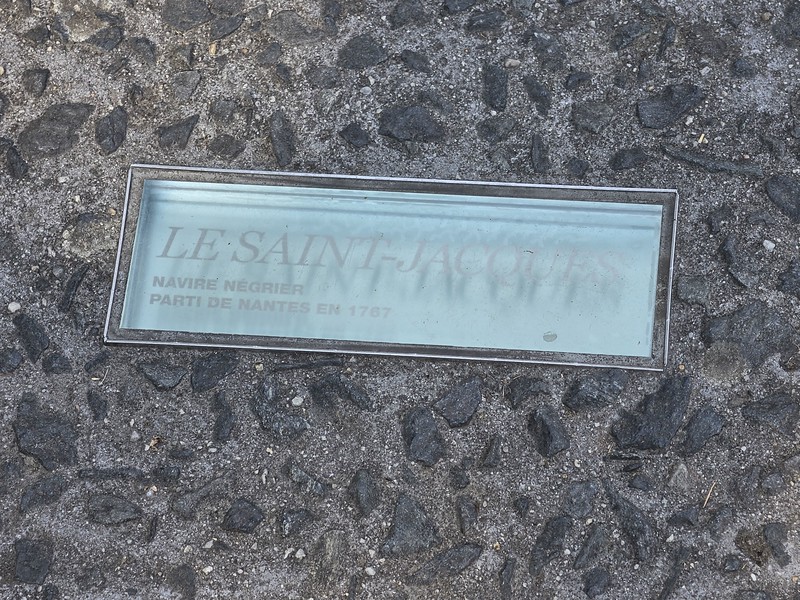
Individual plaques record the names of ships such as Le Saint-Jacques, which left Nantes in 1767. A ship’s name can otherwise sound rather romantic, suggesting distant ports, brave sailors and an adventurous life at sea, so the description “navire négrier” is an important corrective to any temptation to become sentimental. There are a fair number of online reviews noting that the memorial makes no mention of the Barbary slave trade. I cannot say that I noticed anything about it either, although much of the material was of course in French, so it is entirely possible that I missed it.
The memorial was free of charge, thoughtfully designed and was conveniently cool which was handy given the extreme heat in Nantes when I was visiting. There is perhaps a little more that they can do here, as I only found out more about the memorial after having visited and there were many more stories that could be told.