
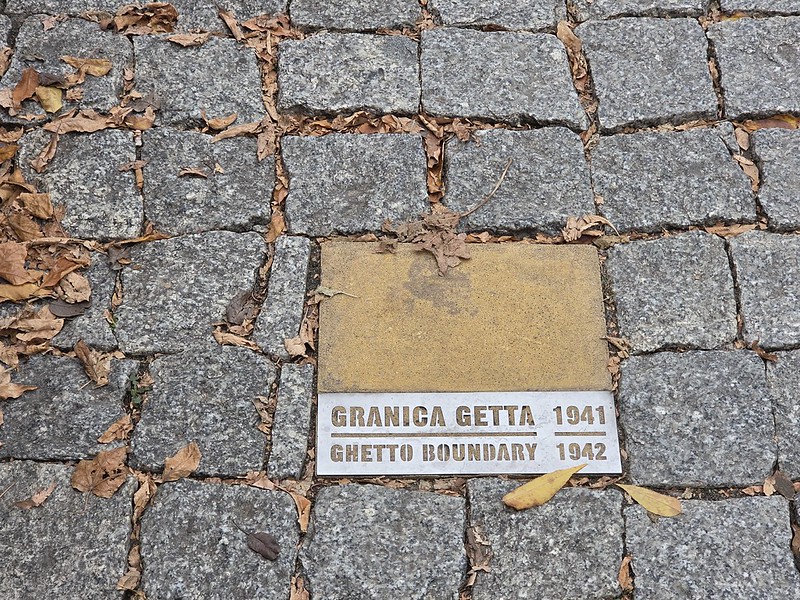
The German occupying authorities established the Lublin ghetto in March 1941 in the Podzamcze district, beneath the castle and around streets including Szeroka and Lubartowska. Jewish residents were forced to move into the designated area, where overcrowding, food shortages and poor sanitation made daily life increasingly difficult. Today, the former ghetto boundaries are marked on the street and I walked around trying to find as many of these markers as I could.
The liquidation of the ghetto began on the night of 16 to 17 March 1942, as part of Operation Reinhard, the German programme to murder the Jews of the General Government (the German administered territory in occupied Poland). Over the following weeks, approximately 26,000 people were deported to the Bełżec extermination camp, while others were murdered in Lublin. Several thousand survivors were moved to a smaller ghetto at Majdan Tatarski, which was itself liquidated in November 1942, with residents murdered or taken to Majdanek. This is the concentration camp on the edge of the city that I visited last time I was in Lublin.
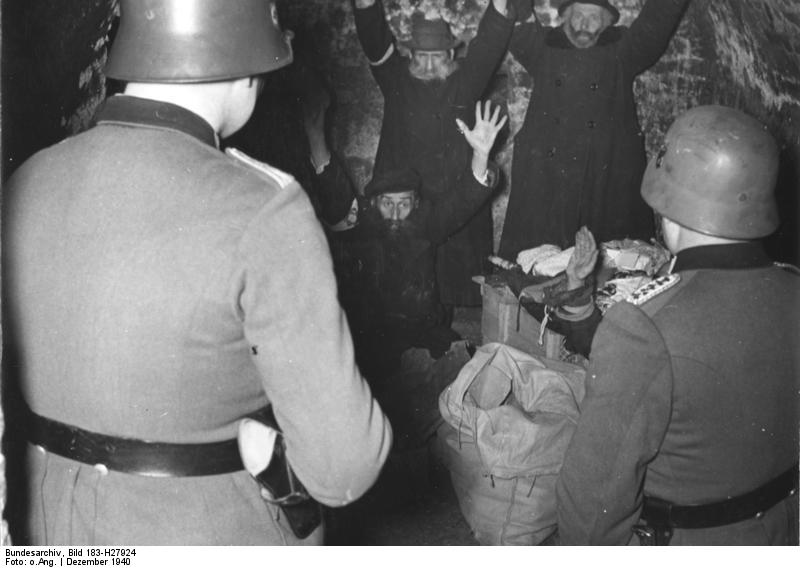
This photograph from the German Federal Archives is particularly haunting. It shows German police descending into cellars in Lublin during a raid dated December 1940, before the formal establishment of the ghetto. The accompanying archive descriptions record arrests and the seizure of hidden food and possessions. Even at this time before the ghetto was established, those caught faced the danger of violence, imprisonment and forced labour.
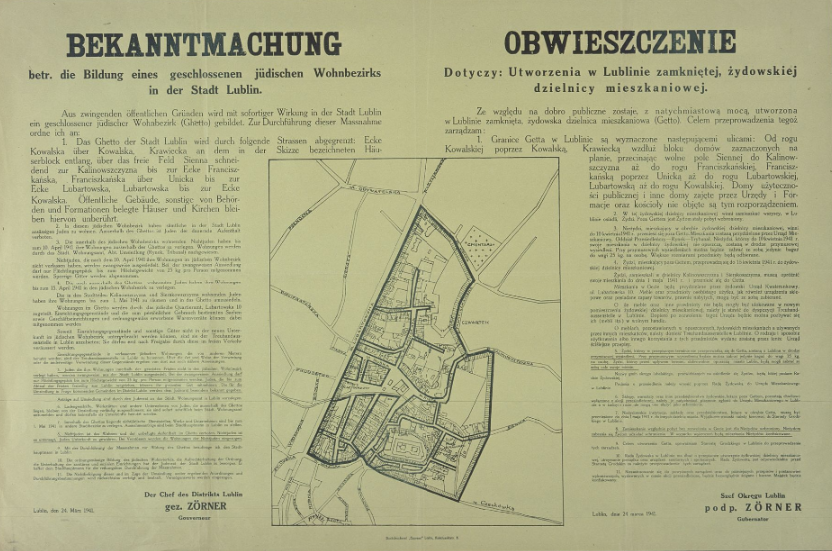
Also from the state archives, this is the announcement in March 1941 of the creation of the ghetto. The Germans stated that it was for “compelling health reasons” using public health as a pretext for forcibly segregating the city’s Jewish population.