
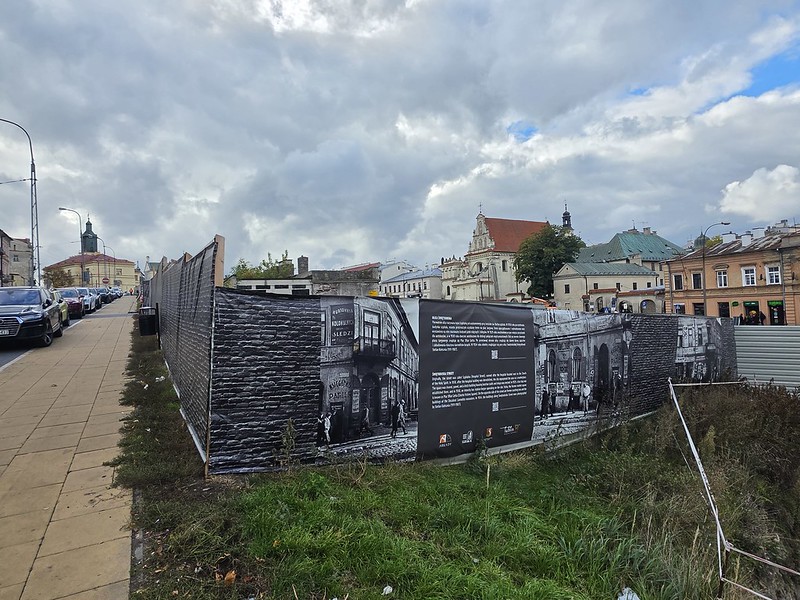
Between 1937 and the outbreak of war in September 1939, Lublin’s Jewish inhabitants faced growing antisemitism, including organised attempts to discourage customers from using Jewish shops. A boycott campaign launched by the National Party in 1936 formed part of this increasingly hostile atmosphere. One Jewish resident, Sara Grinfeld, recalled students picketing a shop in the spring of 1939 and attaching notices telling people not to buy from Jews. Businesses continued trading and everyday life carried on. These photographs taken by Stefan Kiełsznia in the 1930s capture that everyday activity, although they cannot show all the hostility and uncertainty behind it.
German troops occupied Lublin on 18 September 1939, and persecution of its Jewish inhabitants began in the first weeks of occupation. Forced labour was imposed, and from 1 December 1939 Jews aged ten and over were required to wear identifying armbands bearing the Star of David. Looking at the shopfronts here, it is difficult to reconcile their ordinary appearance with how quickly life in the city changed.
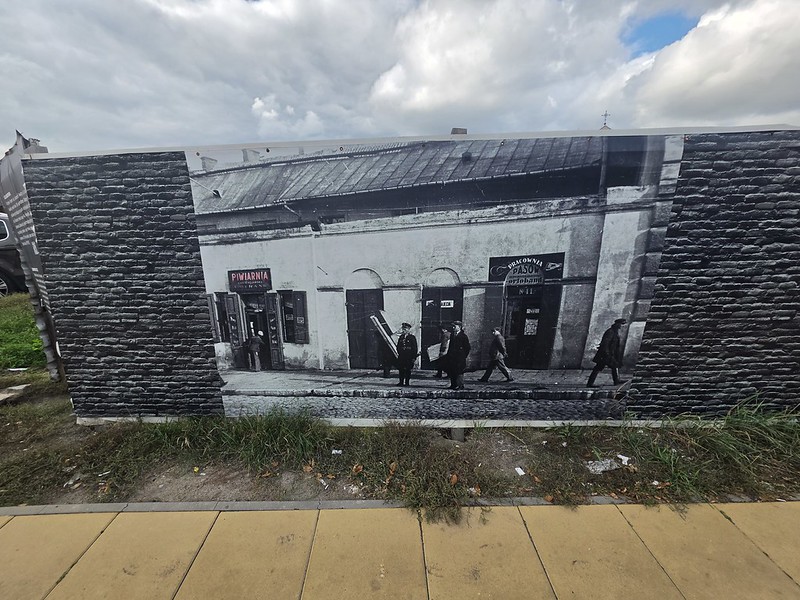
The first photograph shows a low building with a long sloping roof, a beer house on the left and a belt-making workshop on the right. Between them are doorways beneath shallow arches, with pedestrians passing along the narrow pavement. There is nothing particularly dramatic happening, just people walking past businesses and getting on with their day.
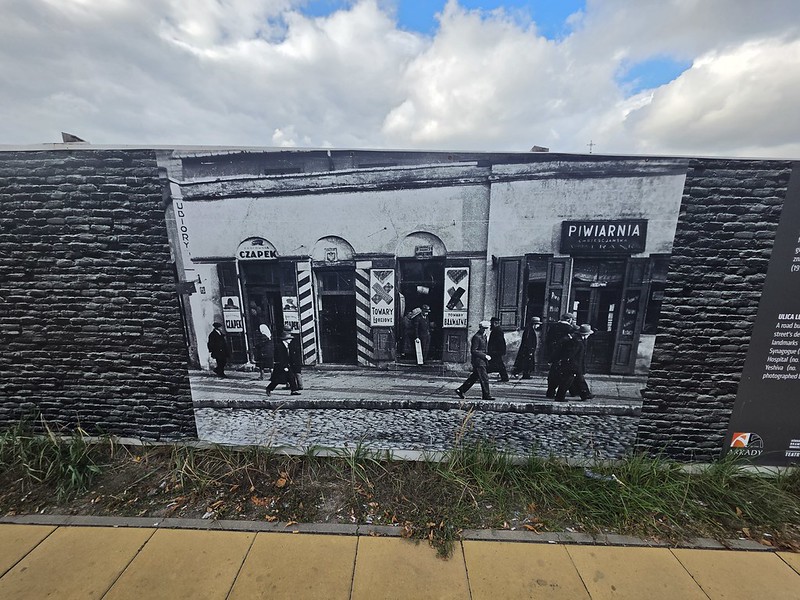
The second photograph offers another view of the beer house, alongside shops advertising caps and fabrics. The fabric shop has particularly conspicuous painted panels around its entrance, making rather good use of the limited space between the doors. Several people are passing, while others stand near the open shopfronts. There is rather more variety here than the plain building initially suggests, with each small business finding its own way to attract attention. The large “PIWIARNIA” sign makes the beer house especially easy to identify, even with my limited Polish.
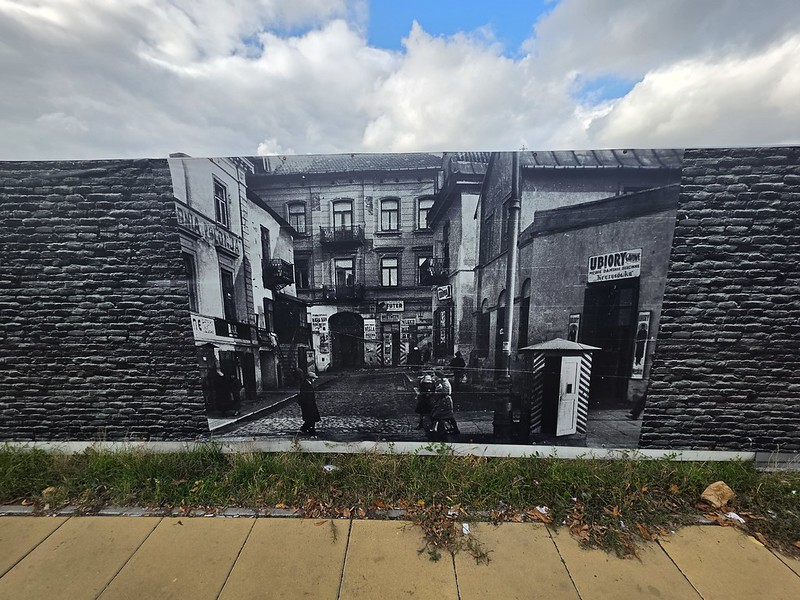
The third photograph looks into a cobbled courtyard or passage off the street, with more businesses tucked around its edges. A clothing sign is visible on the right, while further shop signs surround the archway at the back. The one element that I haven’t been able to entirely understand is which, if any, of these properties are still standing.