
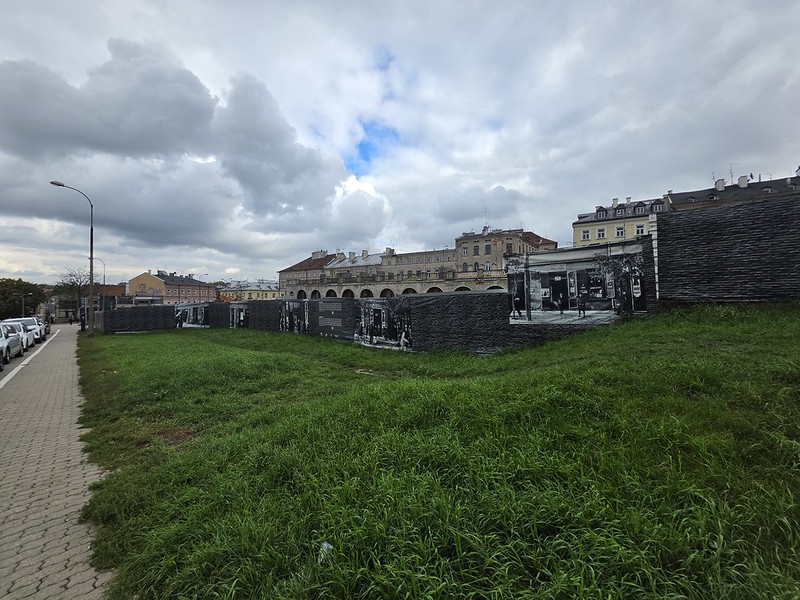
Before the Second World War, around a third of Lublin’s inhabitants were Jewish, part of a community whose history in the city stretched back centuries. Jewish shops, schools, religious institutions and businesses were an integral part of everyday life. Under German occupation, that community was devastated by persecution, deportation and mass murder, while much of the old Jewish district was destroyed. I’ll write more about Lublin’s Jewish history and the ghetto established here during the German occupation in future posts.
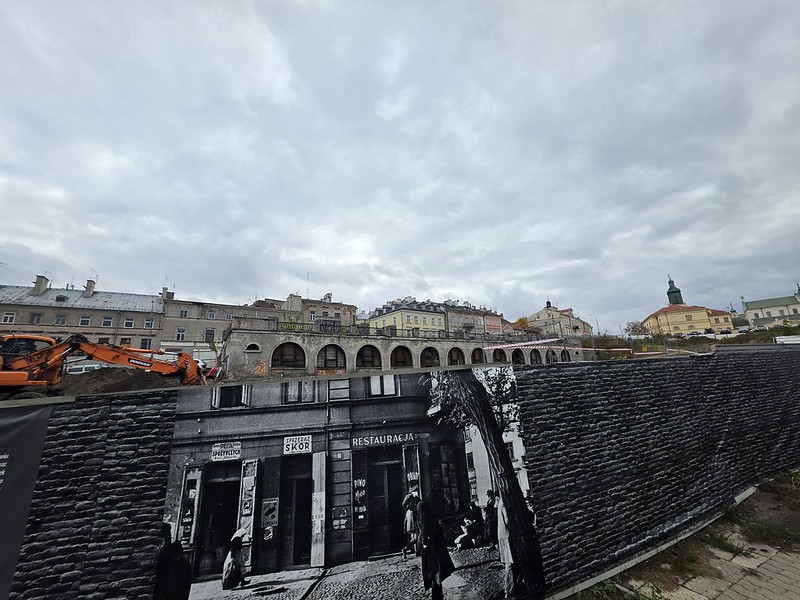
This outdoor exhibition makes rather good use of the fencing around the former Arkady site, alongside Lubartowska and Świętoduska streets. Installed in 2025 through a collaboration between the Old Town District Council and the Brama Grodzka – Teatr NN Centre, it features photographs taken by Stefan Kiełsznia during the 1930s. There are explanations in Polish and English, with QR codes providing links to further information. I like this approach, placing images of the old streets amongst their modern surroundings and giving passers-by a reason to stop. Construction fencing has rarely been so informative and I took rather a large number of photos, so that’s several blog posts to come.
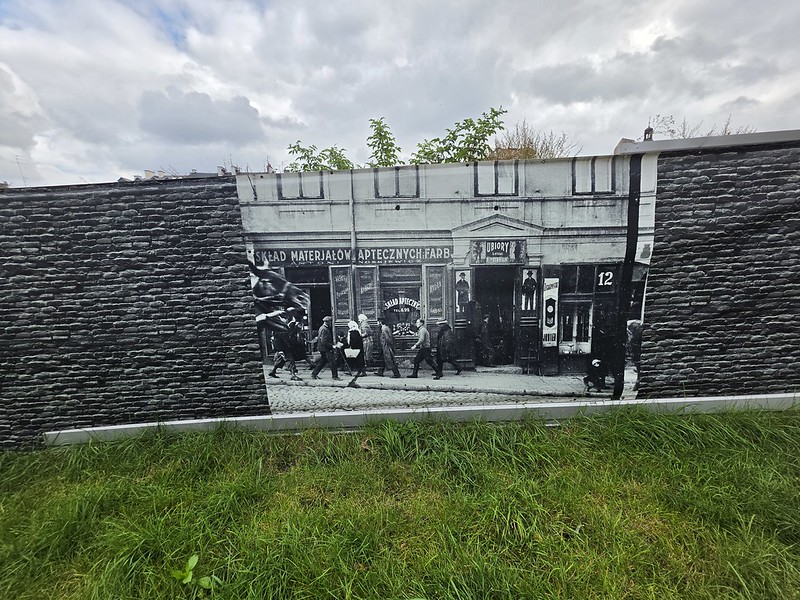
The first photograph shows a row of businesses along ul. Lubartowska shows a row of businesses beneath the upper floors of a substantial building, with pedestrians passing along the pavement. One sign advertises pharmaceutical supplies, while another offers clothing, illustrated by pictures of rather formally dressed men beside the doorway. These were ordinary scenes at the time, but without these photos there would perhaps be no permanent record of many of these shops even existing.
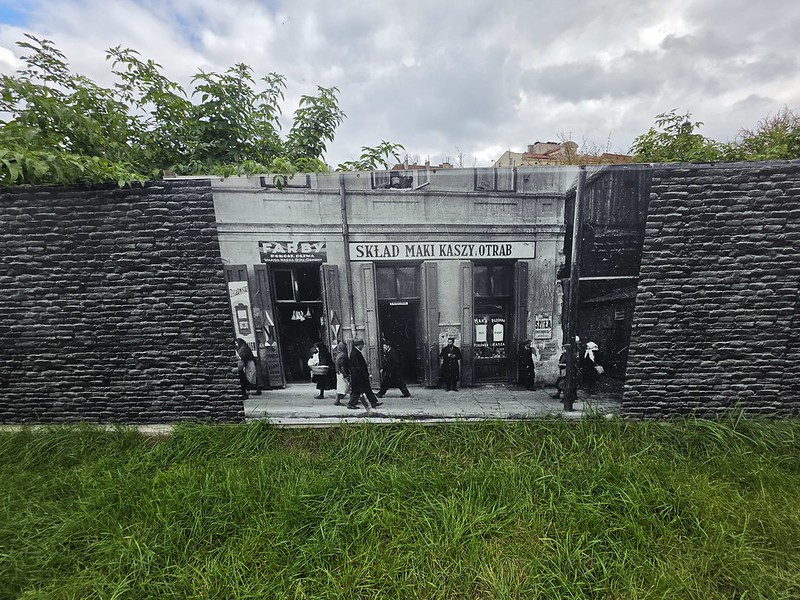
The second photograph has more substantial lettering advertising flour, groats and bran, with a paint shop next door. The open doors offer glimpses into the premises, whilst people stand outside or continue along the pavement. The signage rarely leaves much doubt about what is being sold.
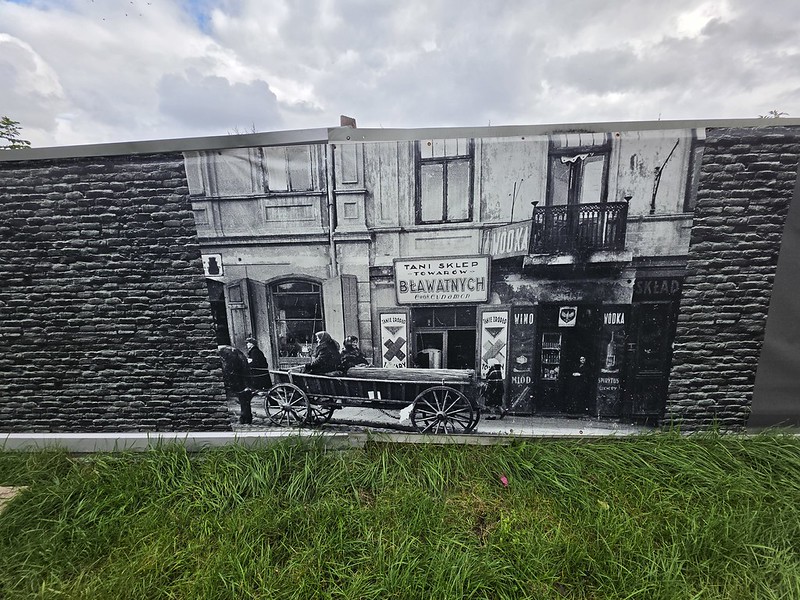
The third photograph includes a horse-drawn cart outside a shop advertising inexpensive fabrics, alongside premises selling wine, vodka and mead. Above them are tall windows and a small balcony, perhaps with the shop owners living above. It is another photograph that perhaps rewards a closer look, recording the working life of a street rather than just its architecture.
I had intended to walk past this building site, but the fencing turned out to have rather more reading material than expected. It doesn’t take much for me to get distracted.