
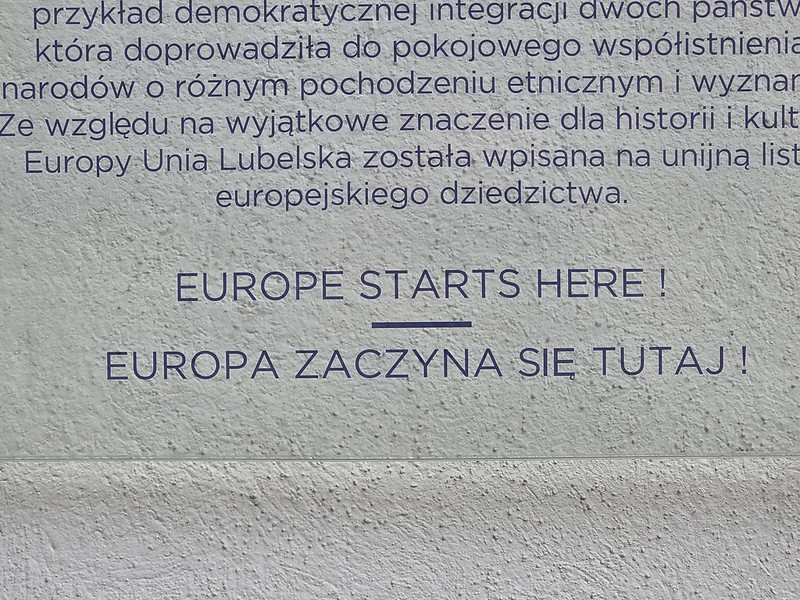
“Europe starts here” is perhaps quite a claim to encounter outside a church in Lublin, but there is a reasonable historical argument behind it. On 1 July 1569, the Union of Lublin brought the Kingdom of Poland and the Grand Duchy of Lithuania together in the Polish-Lithuanian Commonwealth. The two states already shared a ruler, but the agreement established a closer union with a common parliament and a jointly elected monarch, whilst preserving separate laws, armies and treasuries. All very handy and it was an important experiment in governing together without surrendering separate identities.
The connection with the Dominican basilica is also more than geographical convenience. Following the ceremonies at Lublin Castle, a thanksgiving service was held here in the presence of King Sigismund II Augustus. The Commonwealth brought together populations with different languages, traditions and religions, and the Warsaw Confederation of 1573 subsequently established important guarantees of religious peace among the nobility.
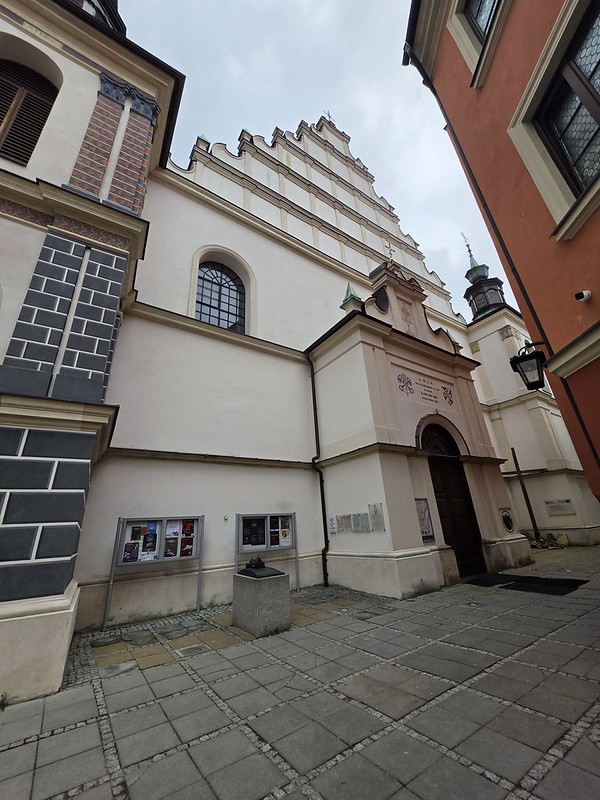
Europe might not have begun outside these basilica doors, but the events commemorated here represent an important chapter in the history of European cooperation. Shared institutions and separate identities were already being negotiated in 1569, but this was progress and now Lublin stands firmly as an important part of the European Union.